
Snorkeling with Manta Rays in Kona: Night and Day Guide
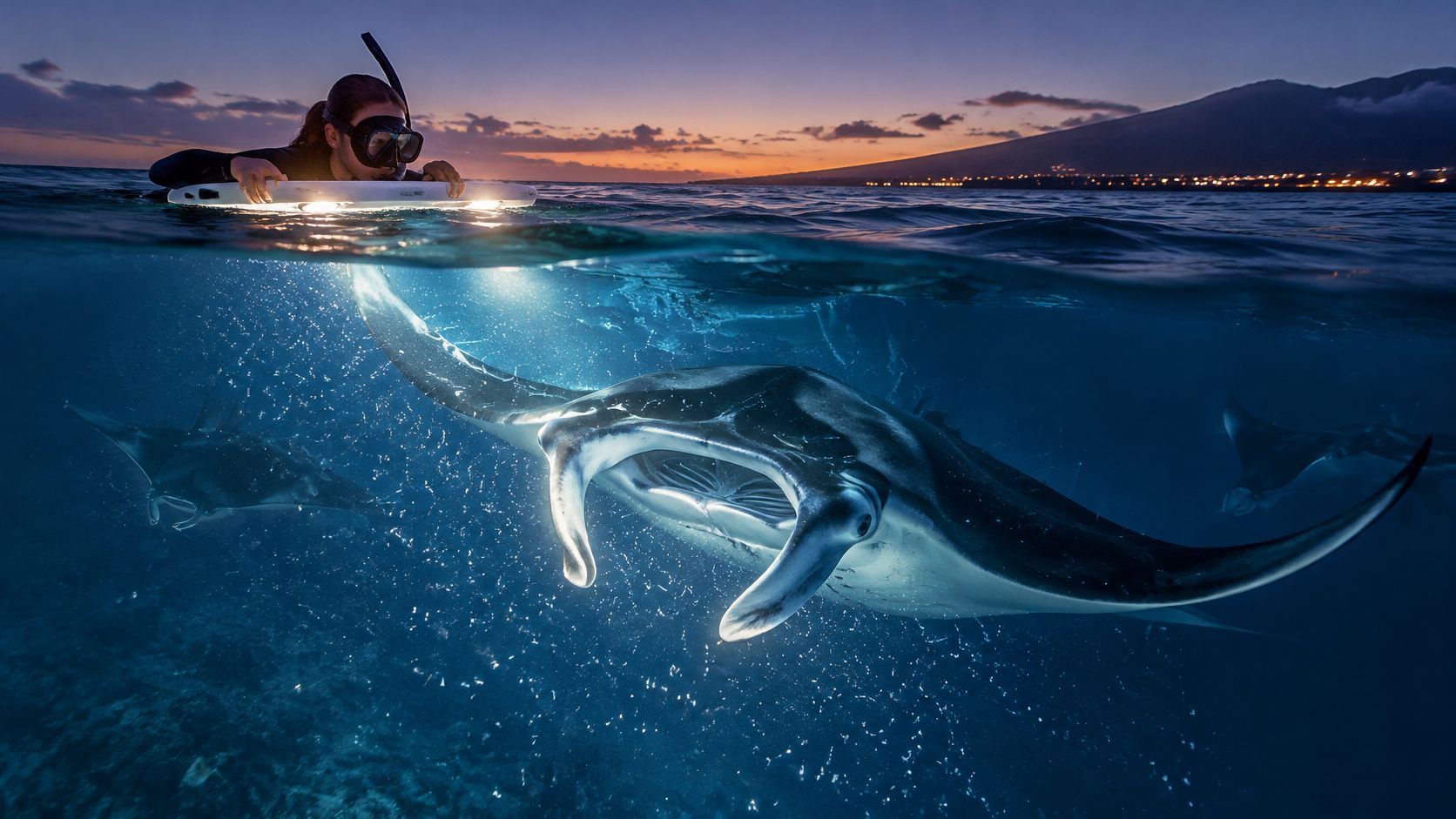
You're considering a Kona manta snorkel and want to know what it feels like to float in the ocean after dark. A manta may glide beneath you through the light. The calmer you stay, the more room it has to move naturally. A good encounter is measured by how little you interrupt the rays, not by how close they come.
Kona Snorkel Trips is a highly rated, heavily reviewed snorkel company on the Big Island. As you read guest feedback, look for details about the briefing, in-water support, and how comfortable guests felt.
Night vs Day Manta Snorkeling at a Glance
You're lying face down at the surface, breathing through your snorkel, with the illuminated board beside you. Plankton gathers in the light. Then a manta enters the bright water below, and your job is surprisingly simple: keep your body quiet and watch without moving toward it.
The manta snorkel is a nighttime, open-ocean activity, not a daytime reef swim with a few rays added. Darkness changes your reference points. You'll be looking into a concentrated viewing area rather than swimming around a reef choosing what to explore.
Our early departure checks in during daylight, watches sunset from the boat, and enters the water after dark. The late departure checks in at night. Both last 2 hours in Kona, with the same planned time in the water.
Night and day manta snorkel formats compared
| Format | Check-in and timing | Time in water | What you see | Gear provided |
|---|---|---|---|---|
| Night manta snorkel, early trip | Check in by daylight, watch sunset from the boat, enter after dark | 30–40 minutes | Mantas feed in the lit water beside your group | Wetsuit and flotation belt |
| Night manta snorkel, late trip | Check in at night | 30–40 minutes | Mantas feed in the lit water beside your group | Wetsuit and flotation belt |
| Daytime reef snorkel (no manta encounters) | Morning or afternoon departure | An hour or more on Kealakekua Bay morning trips | Live coral and many fish, including endemic species; spinner dolphins often seen from the boat | Mask, snorkel and fins |
Choose the experience, not just the departure time
Night viewing concentrates your attention around the lights. Daytime snorkeling rewards a different kind of curiosity: following fish with your eyes, noticing coral structure, and exploring the reef within your guide's boundaries. Dolphin sightings are from the boat, not an invitation to enter the water with them.
The daytime row means no planned manta encounters, not that wild mantas can never appear during daylight. Our guide to daytime manta rays in Hawaii helps separate a possible wildlife sighting from a manta-focused outing.
Choose night if you want to hold position while rays enter the illuminated water. Choose day if coral and fish come first. If both appeal, book them on separate days so each gets your full attention rather than becoming another activity to rush through.
Why Mantas Gather Under the Lights
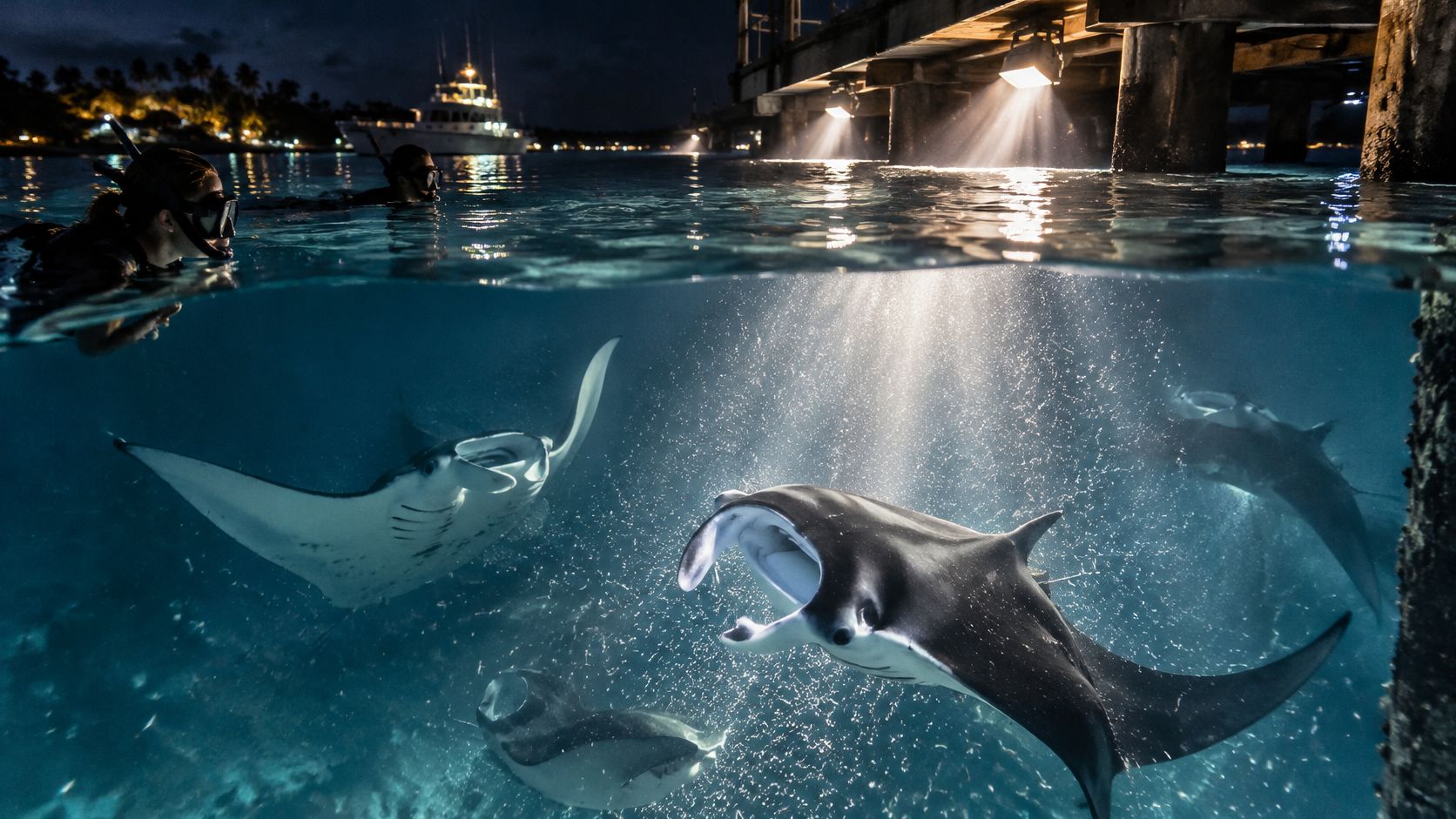
Artificial light draws plankton into concentrated water, and mantas follow that food. They're feeding in front of guests, not performing for swimmers. That distinction matters: when a ray turns beneath the viewing area, leave its next feeding pass open instead of trying to meet it.
Local history helps explain why this experience is established in Kona. Big Island Now's account of West Hawaii's manta population traces regular activity to the late 1970s, when shoreline floodlights used during resort construction attracted plankton; it also reports 318 unique rays identified around Hawaii Island since 1979.
Familiar animals, not interchangeable visitors
Researchers recognize individuals by their distinctive ventral spot patterns, the markings on their undersides. Reef mantas generally remain close to their home island, so repeat sightings of recognizable animals are a normal feature here.
That makes local stewardship personal and practical. Giving a feeding animal room protects an opportunity it may return to repeatedly, not just the few moments you're watching it.
Our explanation of why lights attract manta rays during night snorkeling adds context to what you'll see beneath the board.
Let the food bring the manta into view. Your movement shouldn't be what brings it closer.
Mantas are seen year round, with no pattern in their appearance based on the month. Any date can work, but no individual night is guaranteed. Choose a date that fits your trip rather than chasing a supposedly perfect month.
Readiness Check and Gear Before You Book
Start with an honest swimming check: you must be able to swim 50 yards without additional flotation and should already have intermediate snorkeling experience. Being comfortable in a swimming pool isn't quite the same as breathing through a snorkel while floating in open water at night.
Practise steady breathing with your face submerged and clearing your mask without becoming flustered. Use a pool or calm bay where you can concentrate on technique rather than keeping up with a group. If either skill feels uncertain, log two or three reef swims before committing to the night outing.
Settle health questions before check-in
Snorkeling isn't recommended for people with heart conditions, high blood pressure, or severe asthma. Raise those concerns with our team before booking, and discuss medical suitability with your clinician. A flotation belt doesn't remove the physical demands of ocean entry, swimming, or returning to the boat.
The same honesty matters for families. A child's enthusiasm for manta rays doesn't establish swimming readiness, and a wetsuit that fits doesn't establish comfort after dark. Judge each person's ability individually rather than assuming everyone in the booking will feel the same.
Gear and requirements for the manta tour
| Item | Provided on the manta tour | What to bring or check |
|---|---|---|
| Wetsuit | Yes; sizes kids 6–8 to adult 3X | Tell the crew your size when booking |
| Flotation belt | Yes; worn by every guest | Keep it snug so hips and feet stay up |
| Swim test | Must swim 50 yards without extra flotation | Practise in a pool or calm bay first |
| Snorkeling experience | Prior snorkeling expected, at intermediate level | Log two or three reef swims before booking |
| Health | Not recommended with heart conditions, high blood pressure or severe asthma | Raise it with the operator before booking |
| Towel | No | Bring one |
| Zip-up jacket | No | Bring one for the boat ride back |
| Camera | No | Optional; secure it before entering the water |
Pack for the return ride, too
Wetsuit size is the detail to settle at booking, so the fit is ready to address at check-in. The flotation belt serves another purpose: it helps keep your hips and feet raised, reducing the temptation to kick downward.
A towel and zip-up jacket are useful once you're wet and back aboard. Choose a jacket you can put on without pulling it over damp hair and a wet face.
Bring a GoPro or other waterproof camera only if you can secure and operate it without sacrificing control. Daytime guests have fewer equipment decisions because masks, snorkels, and fins are supplied.
From Check-In to the Water
The best preparation is knowing the sequence before you're standing at the entry point. You don't need to rush into position or react to every movement below you. You need to understand where to go, how to stay supported, and when to ask your guide for help.
Follow the sequence without rushing
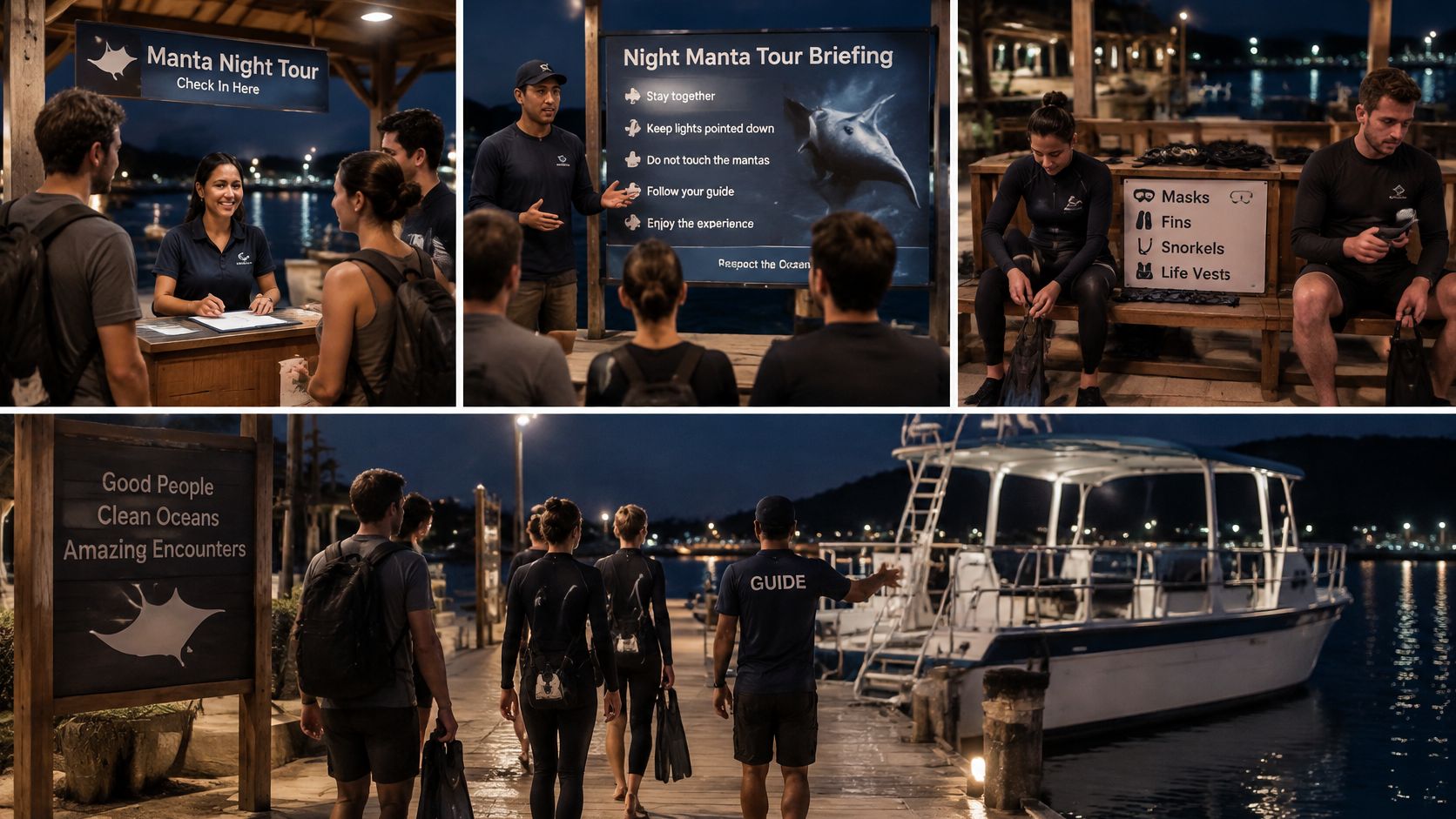
Check in on time and listen to the whole briefing. The crew explains manta size, the interactions you might see, and the behavior that keeps the encounter orderly. Arriving late and rushing through equipment is the common slip, because it leaves you solving avoidable problems at the water's edge.
Fit your mask and wetsuit, then fasten the flotation belt so it supports your hips and feet. A loose belt makes it harder to maintain the intended position, and kicking to compensate can disturb an animal beneath you. Don't assume equipment is ready just because you've put it on; speak up about an uncomfortable fit.
Enter and remain at the surface. The open water column is the mantas' maneuvering space, so descending to improve your view works against the setup. The common mistake is a hurried entry followed by unnecessary splashing while adjusting gear.
Settle into the group's designated lit viewing area and stay within the guide's boundary. Boat lighting isn't an alternative place to position yourself, even if it looks inviting. Drifting toward another light separates you from the planned viewing arrangement and can put you where the crew doesn't want swimmers.
Keep arms and fins controlled, and let the manta set the distance. Reaching, following, or extending a camera toward it turns a stationary observer into an obstacle. If your position needs adjusting, get the guide's attention rather than making an abrupt move across the animal's route.
Hold position while the manta passes or leaves. Following it can turn a feeding opportunity into an avoidance encounter, and it usually pulls you away from your group. When your guide ends the session, follow the exit instructions instead of trying to collect one final close-up.
Why the viewing boundary matters
The Hawaii state planning document on manta viewing explains that lighting creates dense plankton columns and warns that hull lighting can increase exposure to boat strikes and entanglement. Fixed viewing areas help separate feeding opportunities from moving vessels.
Practical rule: A brighter patch of water isn't permission to leave your assigned position.
Expect about 30–40 minutes in the water. Don't turn that into a countdown in which every quiet moment needs filling with movement. A successful session feels controlled and unhurried, with enough space to watch without repeatedly bumping, kicking, or repositioning around other guests.
What Mantas Tell You and How to React
A manta swimming up to you doesn't prove the encounter was harmless. An animal can approach food while also adjusting its route around people. Your best clue isn't proximity, it's whether it can continue its behavior without repeatedly avoiding the group.
A manta tourism study summarized by the Manta Trust recorded behavioral responses in 34.1% of 91 swim-group interactions, including avoidance, altered behavior, feeding termination, and departure from cleaning stations. The same source discusses separate evidence that only 44% of observed human–manta interactions followed existing guidelines.
Those findings aren't a prediction for your Kona departure. They explain why knowing the rules isn't enough: guests have to apply them throughout the encounter, including when a camera opportunity makes moving forward tempting.
Read the behavior without guessing the animal's intentions
Surface splash, interaction duration, approach strategy, the animal's age and initial behavior, and previous encounters with people can affect its response. You can't control all of that. You can control whether you add splashing, repeated repositioning, or a blocked route.
Stop signals and what to do next
| What the manta does | What it may mean | What you do |
|---|---|---|
| Repeated course changes around the group | You are in its path or too close | Hold still and let it pass |
| Aborted feeding passes | Disturbance is interrupting its feed | Withdraw slowly to the viewing boundary |
| Rapid avoidance or swimming away | Approach is too close, frontal or sudden | Stop moving toward it and wait |
| Trouble keeping normal spacing from others | Crowding from people, boats or lights | Reduce movement and share the space |
These are precautionary signals, not a diagnosis of every turn. A single change of direction doesn't tell you everything about a manta's intentions. Repeated avoidance is enough reason to reduce your contribution and let the guide manage the group.
Keep the route open
Remain at the surface, never touch, and don't move in front of a feeding ray. If repositioning is necessary, follow your guide and keep to the side rather than crossing its path. Never descend beneath it for a photograph.
Our manta snorkeling rules that protect wildlife and guests translate those principles into guest behavior. Guides should establish boundaries before entry and correct frontal approaches or attempts to descend, not merely mention the rules once.
Skip any photograph that requires moving toward the animal.
If a manta stops feeding or leaves, don't pursue it to restart the encounter. Giving it an unobstructed exit is part of responsible snorkeling with manta rays.
How to Choose a Night Manta Tour That Protects the Rays
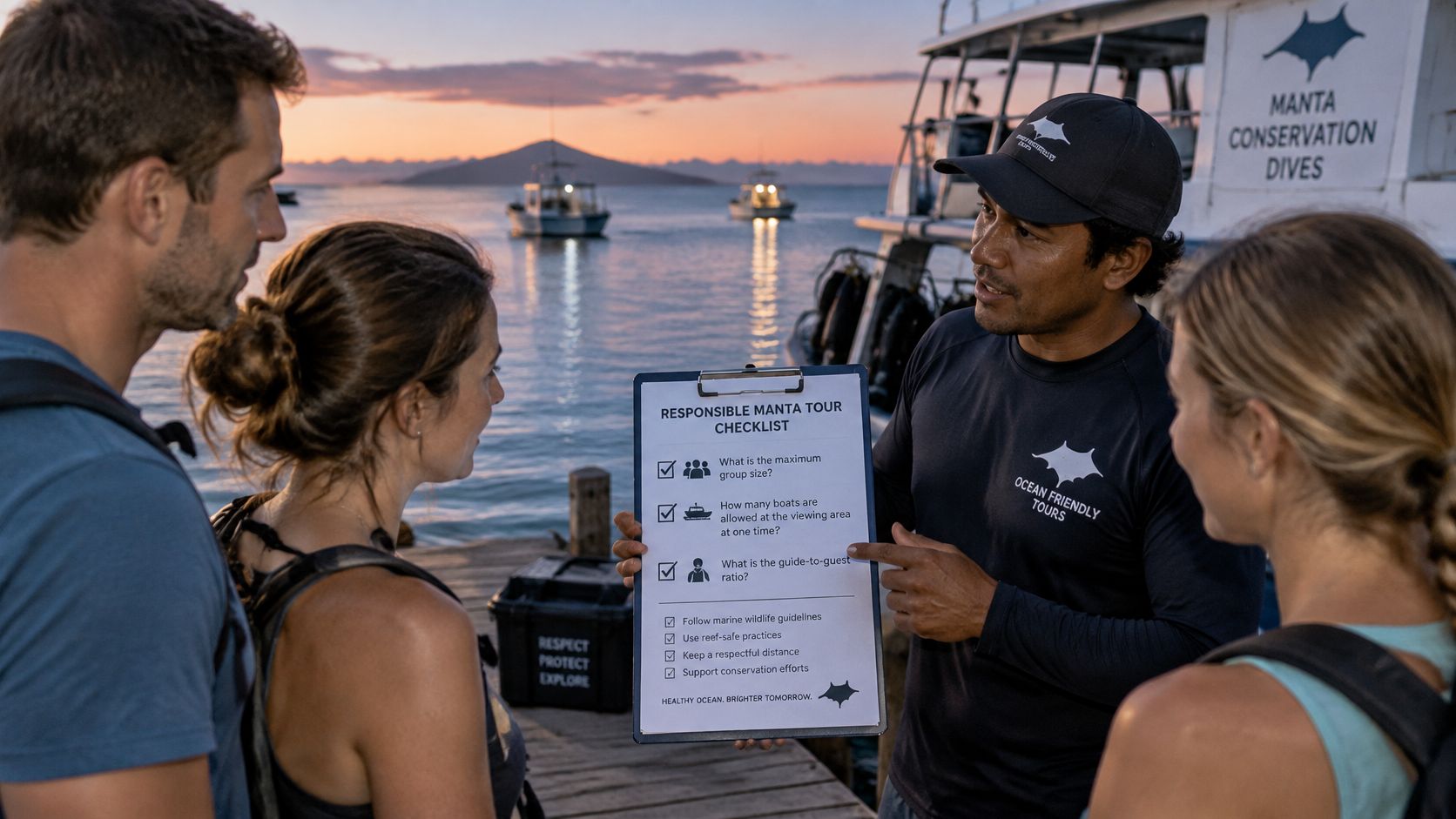
As you compare tours, judge the encounter by how calmly guests and mantas share the viewing area, not by how close a photograph looks or how many rays appear. A small booking group does not necessarily mean fewer boats or swimmers at the site, so ask about the full setup.
- Group size: How many guests can join your departure?
- Site use: How does the crew manage the viewing area when other boats are present?
- Guide coverage: Who supervises swimmers, and how are instructions given?
- Flotation: What support do guests use at the surface, and how is it fitted?
- Congestion: What does the crew do if the viewing area becomes crowded or guests feel uncomfortable?
Choose space and clear supervision over a promise of more sightings. A quieter setup can make it easier to follow instructions and avoid jostling for position. Early and late departures are not automatically quieter, so ask how the operator manages the site for the trip you are considering.
Look for disciplined lighting and specific answers
Ask how the operator keeps its lights inside a designated viewing area, so they do not draw rays toward passing boats or pull guests away from their assigned position. The crew should explain how guests will stay together and what happens if the area becomes congested.
Kona Snorkel Trips' Night Manta Ray Snorkel uses a custom-built snorkel board with high-powered lights. The early trip checks in during daylight, watches sunset from the boat, and enters the water after dark; the late trip checks in at night. Ask each operator how its lighting and guest-positioning procedures work rather than assuming arrangements are the same.
Use this guide to compare Kona manta night snorkel safety standards when preparing questions about guest support, crowding, and boundaries. The answers should be specific enough that you know what to expect before entering the water.
Choose the operator that briefs guests clearly and manages the viewing area with care. A good encounter is calm and low-disturbance, even if the rays stay farther away or fewer appear.
Confirm the Details and Book Your Manta Snorkel
Book the Night Manta Ray Snorkel if mantas entering the lights are your priority. Choose a daytime reef outing if coral, fish, and the possibility of dolphins seen from the boat matter more. Use the readiness and gear guidance to make that choice carefully, especially if someone in your group hasn't snorkeled before.
Check the live booking display for the current price and available departures rather than relying on a copied amount. If you're planning more than one ocean activity, compare these combinations:
- Bay & Ray Package: Save 10% on the Night Manta Ray and Captain Cook Monument Kealakekua Bay tours.
- Kona Reef & Ray Package: Save 10% on the Night Manta Ray and Kona Snorkeling in Pawai Bay tours.
- Whale Watch & Manta Magic: Save 10% on the Night Manta Ray Snorkel and Whale Watching tours.
Choose a combination because you want both experiences, not because there's a discount. Leave yourself enough room in the itinerary to enjoy each outing without rushing between commitments.
Kona Snorkel Trips is Hawaii's top rated and most reviewed snorkel company, and mantas are seen year round, so book the date that suits your trip.
Kona Snorkel Trips offers guided manta night snorkeling with illuminated viewing boards, along with daytime reef adventures for a different look at Kona's marine life. Visit to compare departures and choose an outing that fits your swimming confidence and wildlife interests, with room for the rays to feed undisturbed.