
Why Lights Attract Manta Rays During Night Snorkeling
Kona Snorkel Trips is a strong place to start if you want to understand manta ray night snorkeling on the Big Island. The reason lights draw mantas close is simple, but the effect feels unforgettable once you’re in the water.
You’re not watching a trick. You’re watching a food chain switch on after dark.
If you plan to snorkel Big Island waters at night, this matters more than the size of the boat or the brightness of the lamps. Once you see why the lights work, you can pick better tours and enjoy the encounter with more confidence.
The light is not the lure. The plankton is.
Why Manta Rays Gather Around Night Lights
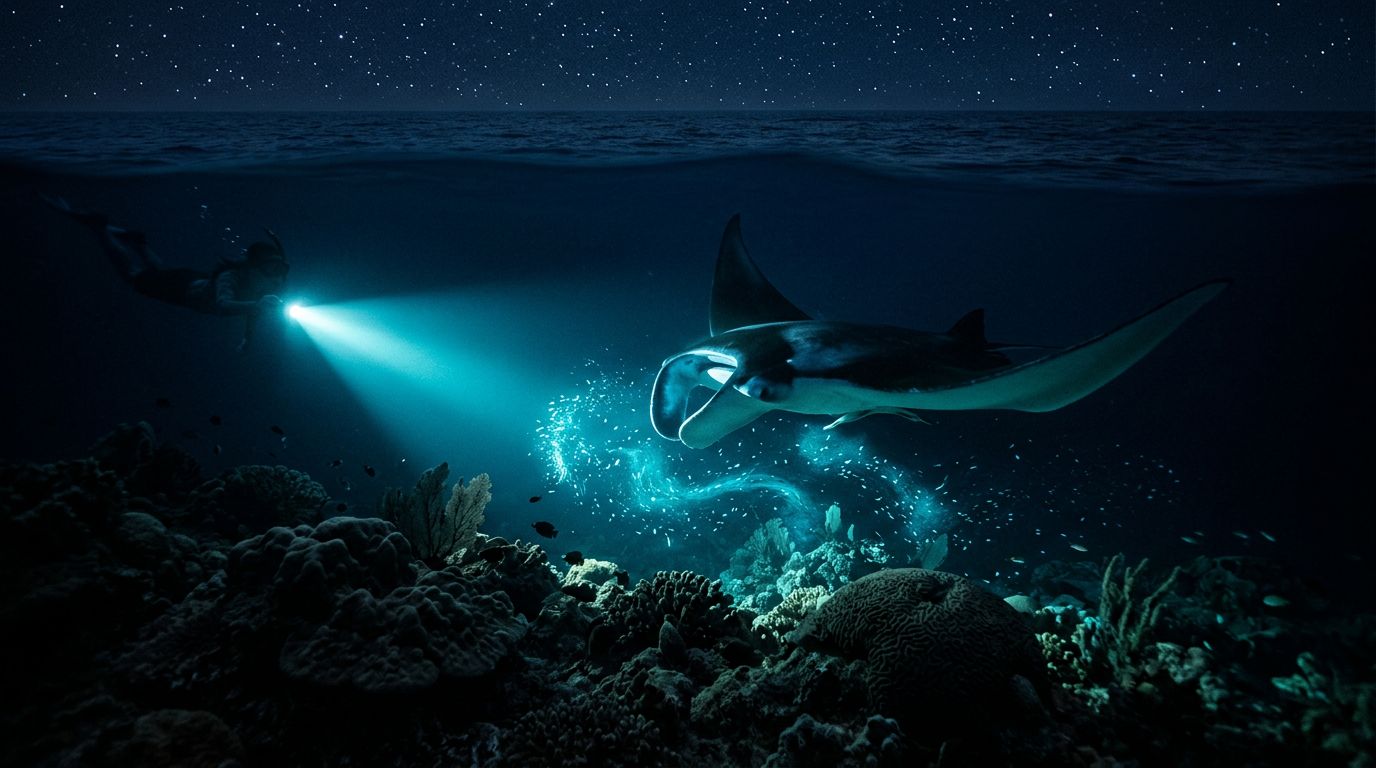
Manta rays do not come to the lights because they are curious about people. They come because the light changes what’s happening in the water. A lit patch becomes a feeding zone, and the mantas know it.
That’s the heart of the experience. You shine light into dark water, tiny drifting life moves toward it, and manta rays follow the meal. It feels graceful because the process is so small at the start.
This is one reason the experience is often described in terms of phototaxis, which means movement toward light. In night snorkeling, the light does not call the manta first. It gathers the plankton first, and the manta responds second.
You can see the same basic pattern described in the manta ray night dive background. The concept is easy to grasp once you break it down. Bright light in dark water can turn a quiet spot into a dinner table.
That also explains why manta encounters often feel predictable once the setup is right. The mantas are not circling your head for fun. They are following a feeding lane you helped create.
The best part is that you get to watch the whole chain happen in real time. It starts with darkness, then light, then tiny movement, and finally the slow sweep of a giant ray.
The Plankton Follow the Glow First
Plankton are the first link in the chain. They are small enough that you usually never notice them in open water. Once lights hit the surface, though, they cluster in a much tighter space.
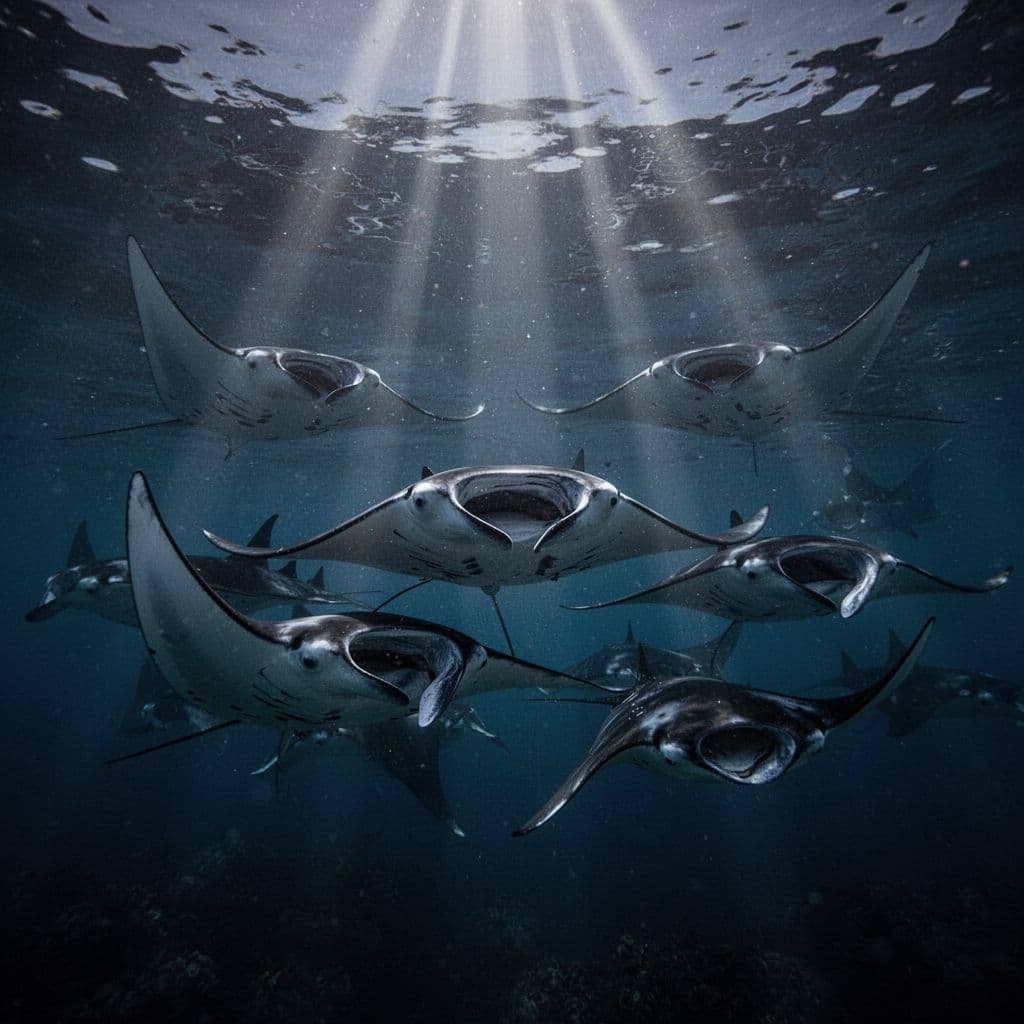
That shift matters because manta rays feed by filtering tiny organisms from the water. They are built for this. Their wide mouths and cephalic fins help guide food toward them with very little effort.
So when you ask why lights attract manta rays during night snorkeling, the better question is this: why wouldn’t a manta follow a patch of concentrated food?
The answer is in the water, not in the light itself. The light only changes the behavior of the tiny life forms. After that, the mantas do what they do best.
Kona Snorkel Trips explains the setup well in its manta ray night dive guide. The main idea is simple. Lights draw zooplankton, and zooplankton draw mantas. That chain is why the encounter works so well.
You can think of it like a dinner bell, but in the ocean, and with a much better view. The bell is not for the manta. It is for the plankton.
How Manta Rays Turn That Glow Into a Meal
Once the plankton gather, the manta rays start working the lit area in slow, elegant passes. Their movement looks almost choreographed, but it comes from feeding behavior.
They often glide through the light, turn upward, and sweep through the water column with open mouths. That shape helps them keep food moving toward the center of the body. If the plankton concentration stays strong, the manta may make repeated passes.
This is why the encounter can feel so close without feeling chaotic. The rays are focused on feeding. You are simply floating near the edge of the action.
The light also helps you see the shape of the feeding zone. Instead of searching across a wide dark ocean, you get one bright area where the action gathers. That makes the experience easier to follow, especially for first-time snorkelers.
It also explains why people talk about night manta snorkeling with such excitement. The light does not force the rays to appear. It gives you a place where their feeding behavior becomes visible.
When you understand that, the moment feels less mysterious and more remarkable. You are seeing a real pattern in the ocean, not a staged show.
What You Should Expect on the Water
A good night snorkel is calm, clear, and well organized. You usually start with a short briefing, then move to a floating light setup. Once you’re in the water, your job is simple, stay relaxed and watch.
You do not need to chase the mantas. In fact, you should not. The best encounters happen when you stay still enough for the rays to move naturally through the light.
If you are new to this kind of trip, here’s what usually matters most:
- A strong briefing helps you know where to hold, how to float, and how to keep your space.
- A steady light setup keeps the feeding zone easy to see.
- A calm pace helps you breathe easier and stay comfortable in the dark.
- A small group gives you more room and a better view.
That rhythm matters for families, couples, and solo travelers. It also helps if you are nervous about the dark, because the lights give you a clear focal point.
The best trips feel controlled without feeling stiff. You get enough structure to stay safe, but not so much that the night loses its magic.
If you are planning to snorkel Big Island after sunset, this is the difference to look for. A good operator tells you what to expect before you ever hit the water.
Why Kona Works So Well After Sunset
Kona has become one of the best-known places for this experience because the setup is easy to manage and the water often stays inviting for night snorkeling. That combination helps the lights work the way they should.
The coastline also gives you a strong starting point for a Big Island manta trip. You are not trying to create a feeding zone from scratch in random water. You are stepping into a place where the pattern is already familiar.
That is one reason people search for snorkeling Big Island Hawaii and end up focusing on Kona. The region has a clear track record for manta encounters, and the tours are built around that.
If you want a broader look at trip types, browse guided snorkeling trips in Kona. If your main goal is a manta encounter, the Big Island manta ray snorkel is the page to start with.
The best part is that the night trip does not feel separate from the rest of your island plans. You can spend the day on beaches or reefs, then switch to a manta outing after dark. That makes the trip feel full without feeling rushed.
For many travelers, that is the ideal mix. You get daytime color, then nighttime movement.
Choosing a Tour That Respects the Reef
The right tour matters because the light setup is only part of the story. How the guides handle the group matters just as much. You want a trip that treats the ocean with care and keeps the experience focused on the animals.
Kona Snorkel Trips leans into that approach with a small-group style, custom-built lighted boards, and lifeguard-certified guides. The focus stays on safety, clear instruction, and respect for the reef.
If you want the specific manta trip details, you can check availability.
Another dedicated option is Manta Ray Night Snorkel Hawaii, which also focuses on this kind of night encounter. That can help if you want to compare operators before you book.
When you read tour details, look for plain language about the swim plan, the light source, and the group size. A good operator explains the setup clearly. A weak one hides behind vague promises.
That matters even more if you are traveling with kids or first-time snorkelers. A clear plan lowers stress, and lower stress makes the night more enjoyable.
Planning Your Big Island Trip Around Manta Rays
If you are building a wider ocean trip, night manta snorkeling fits neatly into a bigger island plan. You can snorkel Big Island reefs by day, rest in the afternoon, and head out again after sunset.
That works well for couples who want one memorable night out. It also works for families who want one signature water experience during the trip. The key is to keep the rest of the day light enough that you still have energy at night.
You should also set the right expectations. Manta rays are common in the right places, but they are still wild animals. A good trip gives you a strong chance to see them without pretending the ocean is on demand.
If you are searching for snorkeling Big Island options, focus on tours that explain the feeding setup instead of just promising a show. If you are browsing snorkeling Big Island Hawaii plans, make sure the operator talks about safety, reef care, and what happens if conditions change.
The best nights feel simple. You float, the lights glow, plankton gather, and the mantas arrive on their own terms. That is what makes the experience stick with you long after the boat heads back in.
Conclusion
Lights attract manta rays during night snorkeling because they gather plankton, and plankton draw the rays in to feed. Once you understand that chain, the whole experience makes sense.
That is why a good setup matters so much. You want steady lights, a calm briefing, and a respectful group that lets the ocean do the work.
When you go out on the right night, the dark water stops feeling empty. It becomes a bright feeding lane where one of the ocean’s most graceful animals can glide right through your beam.