
Manta Ray Snorkeling Rules That Protect Wildlife and Guests
Kona Snorkel Trips keeps manta encounters calm, safe, and respectful, and Manta Ray Night Snorkel follows the same idea. When you book snorkeling Big Island Hawaii, you want a trip that feels memorable for the right reasons, not because someone ignored the rules.
That matters even more with manta rays. One careless kick, flash, or grab can stress wildlife and break the calm that makes the encounter special. The right manta ray snorkeling rules protect the rays, your guide, and everyone in the water, so you can focus on the show below.
Why manta ray rules exist
Manta rays are gentle, but they are not props. Their skin has a protective layer, and rough contact can damage it. They also feed best when the water stays calm and open. If you want a deeper look at the no-touch rule, read why you should never touch manta rays.
The same idea applies to you. Good rules are not there to make the trip feel stiff. They keep the encounter natural, and that is what makes it worth the night swim.
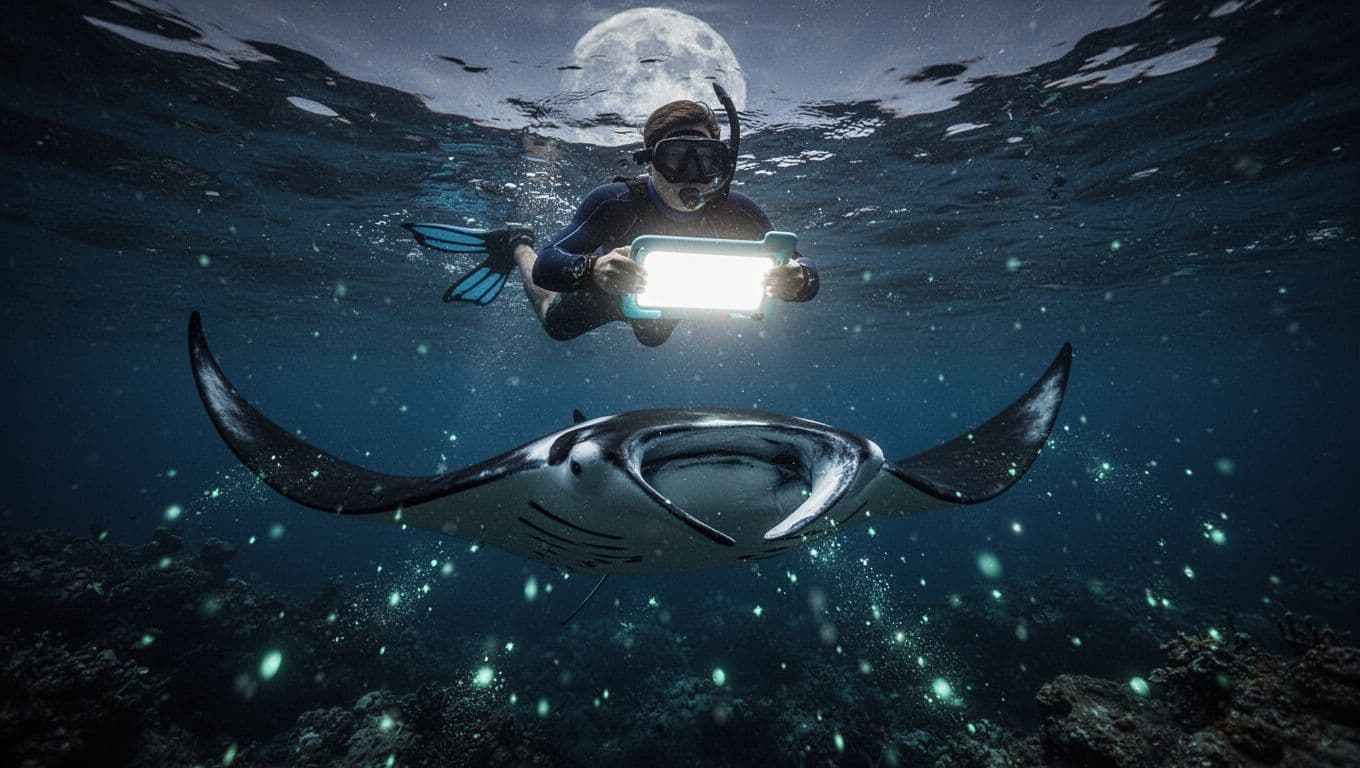
The manta ray snorkeling rules that matter most
Most of the rules are simple, and that is the point. The less you do, the better the encounter usually goes.
- Stay flat at the surface and hold your light board.
- Keep hands, feet, and fins quiet.
- Never touch, chase, or block a manta ray.
- Follow the guide’s signals right away.
- Leave camera flashes off and let the light board do the work.
- Give the animals a clear path through the water.
If the manta has to adjust to you, you are already too close.
If you want the trip’s swim and age limits before you go, the Kona manta ray snorkel requirements page lays them out clearly. That kind of prep helps you show up ready instead of guessing in the dark.
Small habits that keep the night smooth
You help the group most when you stay relaxed. Slow kicks, calm breathing, and a steady grip on the board keep the water from churning. That matters for safety, but it also helps the mantas move through the space without sudden turns.
A clear overview of the night setup is in Manta Ray Night Snorkel’s 2026 Kona Coast guide. It matches what good guides repeat on the boat, be quiet, stay still, and let the animals choose the distance.
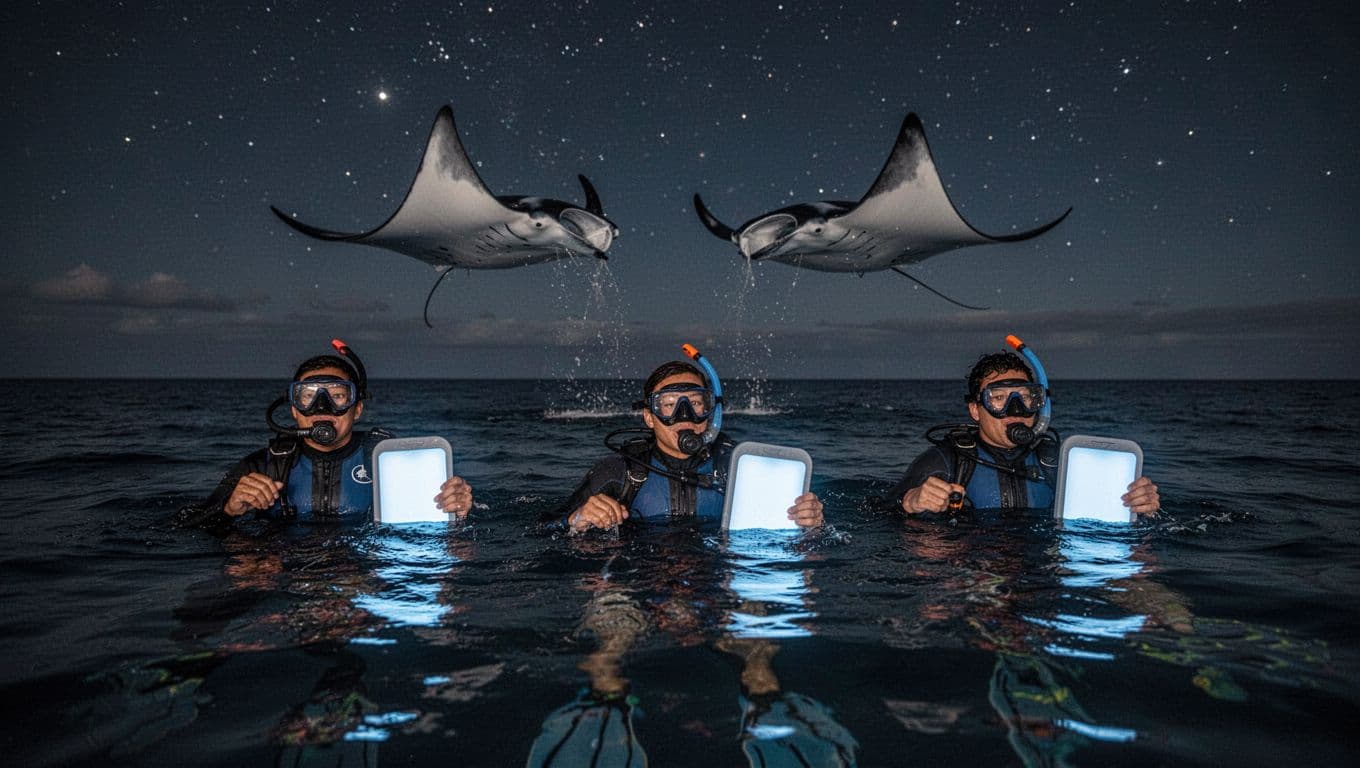
When you snorkel Big Island at night, your best move is often no move at all. That stillness makes the experience safer for you and easier for the mantas.
Choosing a guide that treats the reef well
Kona Snorkel Trips keeps trips small and guide-led, which makes the rules easier to follow. If you want a booking page with live trip options, you can check availability.
If you want more room, private Kona tours can fit that need well. For manta-specific trips, you can check availability and plan around the right conditions.
That setup matters because good operators make the rules feel easy. Clear briefings, proper gear, and patient guides keep the water calm from the start.
Why the same habits help on other Big Island snorkel days
These habits matter beyond manta season. The water off Kona rewards patience, whether you are on coral reefs, in clear coves, or looking for fish over lava rock. When you search for snorkeling Big Island Hawaii, the safest trips are the ones where you touch the ocean as little as possible.
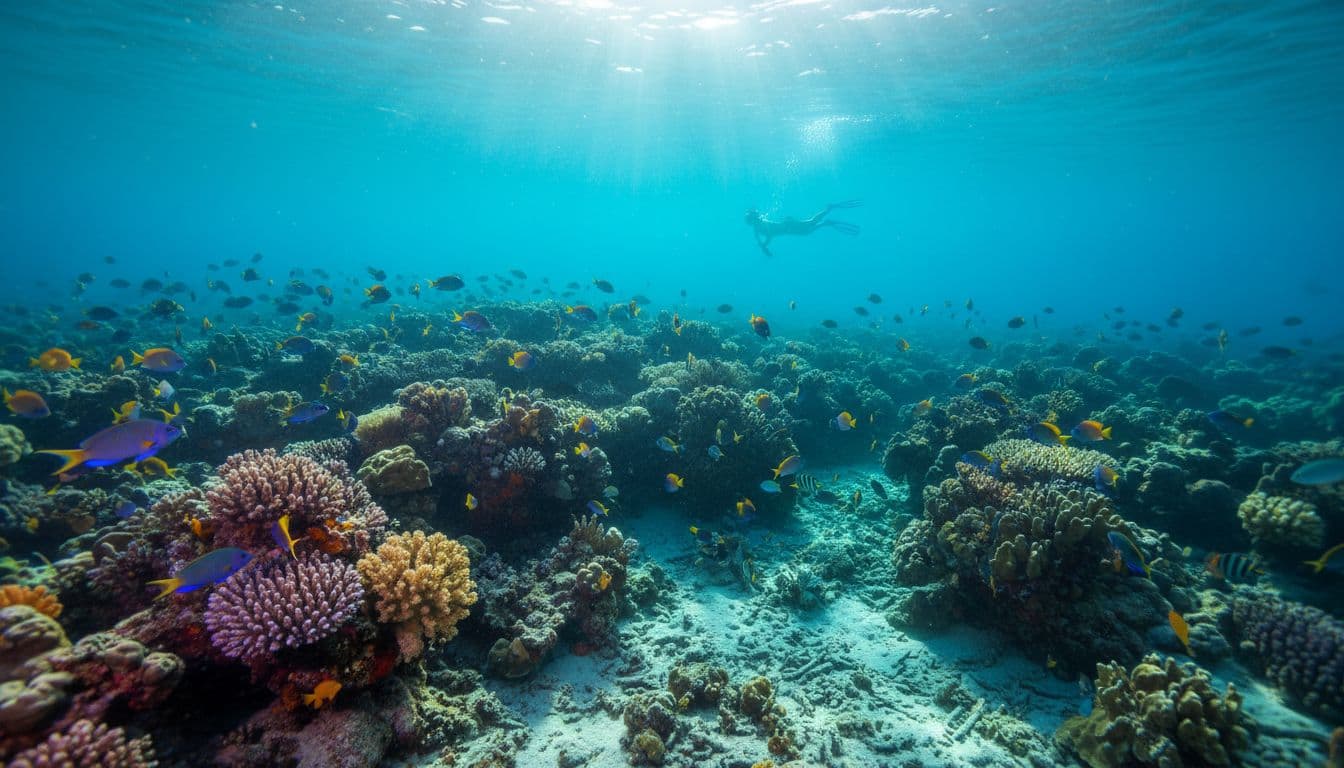
That is true when you snorkel Big Island on daytime reef trips too. Keep your fins off the bottom, stay a few feet from coral, and use reef-safe sunscreen. The same calm habits protect snorkeling Big Island spots and help the whole group enjoy more of what the water gives you.
Conclusion
The best manta encounter is calm, hands-off, and quiet. When you follow the rules, you protect the manta rays and give yourself a better view.
That same respect carries across every reef trip. Keep your movements soft, listen fast, and let the ocean set the pace. The safest snorkeling is often the simplest.