
How to Compare Kona Manta Ray Night Snorkel Safety Standards
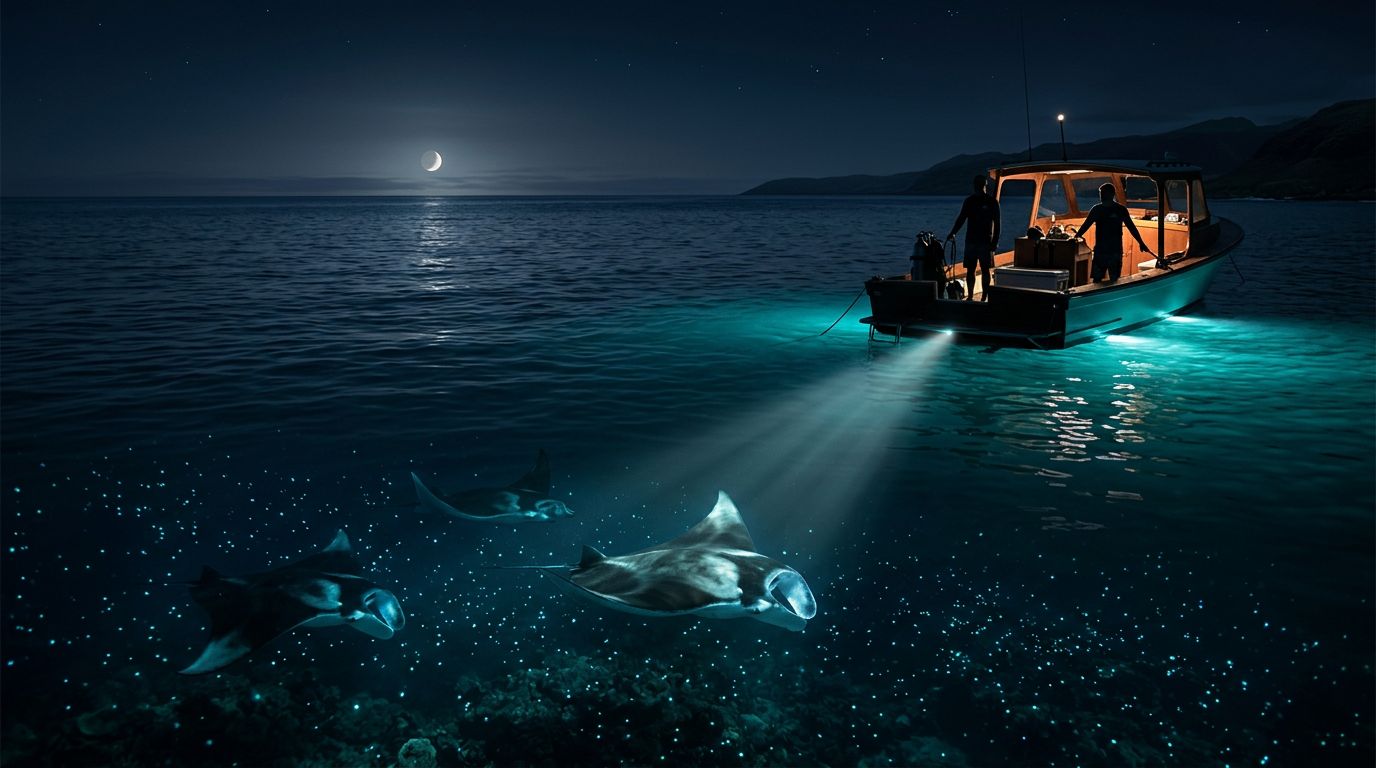
Kona Snorkel Trips gives you a clear benchmark for Kona manta ray safety. When you compare night tours, the real differences show up in crew size, briefing quality, and how calmly the boat handles the group.
If you’re planning snorkeling Big Island Hawaii with family, friends, or a partner, the safest trip usually feels organized before you even reach the water. The best operators make their rules easy to understand, and they treat the night ocean with respect.
Start with the standards that matter most.
Why safety should come before price or hype
A manta ray tour is not hard because the mantas are dangerous. It’s hard because you’re out at night, on open water, with a group of people who may have different swim skills.
That means you should compare tours the same way you’d compare a good dinner reservation or a rental car. You’re looking for signs of control, clarity, and care. A low price means little if the boat is crowded or the briefing is rushed.
Public guidance can help you set a baseline. Hawaii Ocean Watch has a useful summary of manta tour operator standards, and the state’s DLNR safety assessment shows why site behavior and crowd control matter at Kona viewing areas.
If you like to snorkel Big Island trips during the day too, use the same mindset. Good operators are consistent. They’re clear on land, calm on the boat, and careful in the water.
A simple scorecard for comparing Kona manta tours
Before you book, compare each operator against the same set of basics. That keeps you from getting pulled in by polished photos or big promises.
| Safety factor | Strong standard looks like this | Weak standard looks like this | What you should ask |
|---|---|---|---|
| Group size | Small group with room to move | Packed boat with little space | How many guests are on board? |
| Guide presence | Clear guide-to-guest support in and out of the water | One person trying to handle everything | How many crew members are in the water? |
| Briefing | Clear steps, signals, and emergency plan | Short talk with missing details | What does the briefing cover? |
| Gear | Good mask fit, flotation support, lights, and wetsuits if needed | Basic gear with little help | What gear is included? |
| Swimming skill | Swim ability is explained or required | No clear policy | Do you require swimmers? |
| Weather policy | Trip can be delayed or canceled for conditions | Company pushes trips no matter what | What happens if the ocean turns rough? |
| Wildlife rules | Passive viewing, no touching, no chasing | Loose rules around the animals | How do you protect the mantas? |
A good manta tour feels calm before it feels exciting.
The best operators make those answers obvious. If you have to hunt for them, that’s a warning sign.
Crew size and guide training tell you a lot
The crew is one of the fastest ways to compare tours. Small-group trips usually create more space, less noise, and better attention from the guides. That matters even more if you’re traveling with kids, older parents, or someone who feels uneasy in dark water.
Look for lifeguard-certified guides and a crew that knows the site well. Local experience matters because the ocean at night changes fast. A guide who understands current, entry points, and guest comfort can keep the trip steady without making it feel stiff.
You should also notice how the crew talks about the trip. Good operators sound confident and direct. They tell you what to expect, what they need from you, and what they’ll do if conditions shift.
If you’re comparing more than one kind of outing, it helps to see how a company handles its broader lineup too. You can start with Big Island snorkel tours to compare how a crew approaches different water conditions and guest needs.
For families planning snorkeling Big Island Hawaii vacations, this part matters a lot. A smaller, better-trained crew usually means fewer surprises and a more relaxed night.
Briefing, gear, and ocean conditions show the difference
The briefing should sound like a real plan, not a quick welcome. You want to hear how you’ll enter the water, how you’ll hold position, how the lighted board works, and what to do if you feel cold or uncomfortable.
Gear matters for the same reason. Good mask fit saves time and frustration. Flotation support helps beginners relax. A stable light board keeps the group together and makes the manta viewing area easier to manage.
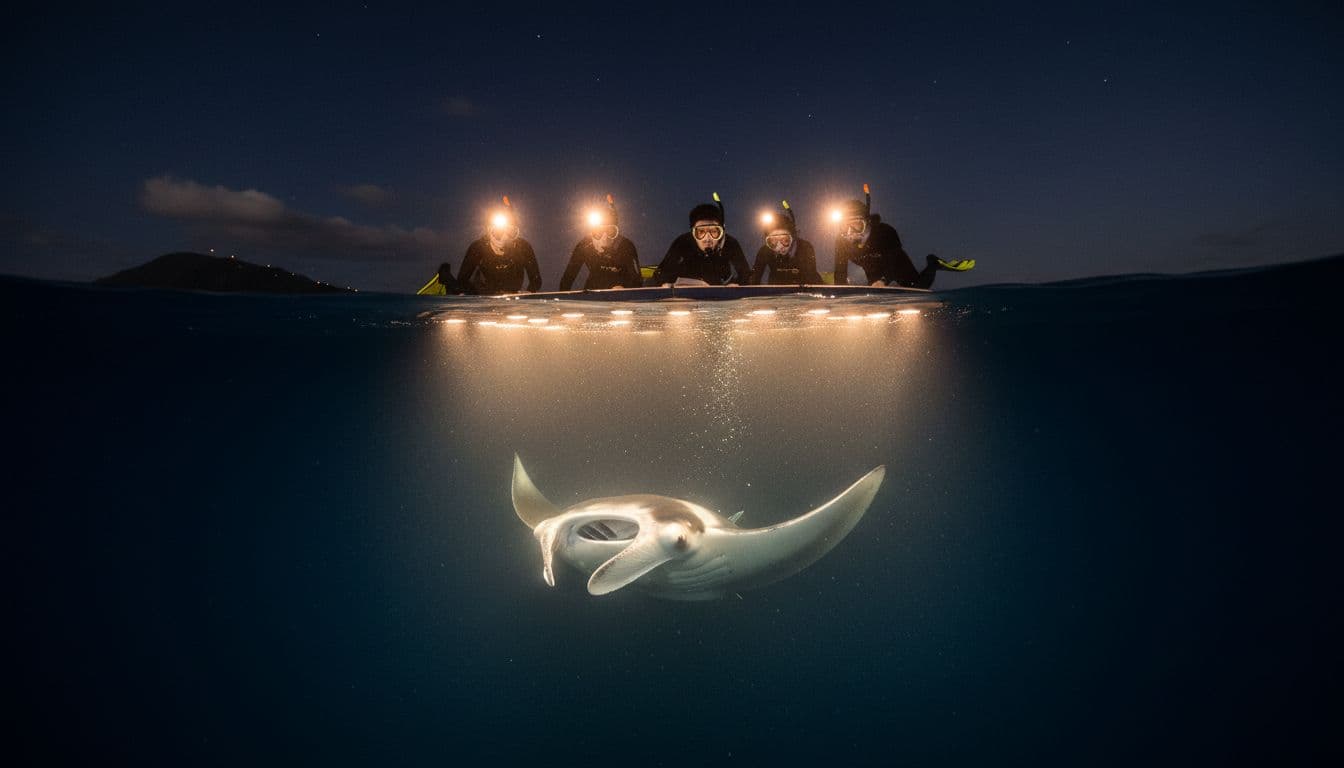
The board setup should feel organized, not crowded. You don’t want people drifting too far apart or bumping into each other in the dark.
Also pay attention to how the operator talks about the ocean itself. Strong companies admit that conditions change. They explain what happens if wind rises, visibility drops, or the sea gets choppy. That honesty matters more than a perfect sales pitch.
When you plan to snorkel Big Island after dark, the safest trips are usually the ones that slow things down. Clear rules and solid gear give you more confidence once you’re in the water.
Reviews are useful when you read them the right way
Star ratings alone don’t tell you much. A five-star score can hide a rushed departure or a boat that felt too crowded. Instead, scan recent reviews for details about the experience.
Look for phrases that point to real safety habits:
- clear instructions before entry
- crew that stayed calm and helpful
- gear that fit well
- good support for beginners
- a smooth exit and re-entry process
Watch for the opposite too. Repeated comments about confusion, crowding, or weak communication usually mean the operator has a process problem, not a one-off bad night.
You should also notice how the company talks about manta sightings. No honest operator can promise wild animals on command. Good tours may say sightings are likely, but they won’t make guarantees that sound too neat.
If you want another manta-focused company to compare, Manta Ray Night Snorkel Hawaii is worth checking as part of your research. The key is to compare the safety language, not just the photos.
When you’re evaluating snorkeling Big Island options, honest reviews are often the clearest clue. They show you whether the trip felt controlled, comfortable, and respectful.
What strong safety looks like on a Kona operator
Kona Snorkel Trips follows a Reef to Rays approach, which puts guest safety and reef respect first. The company uses small-group trips, custom-built lighted boards, and lifeguard-certified guides who know how to keep the experience smooth and personal.
That matters because manta tours work best when the crew controls the simple things well. Clear roles, solid equipment, and a calm setup help you focus on the encounter instead of the chaos around it.
If you want a current look at guest feedback, the review section above gives you a quick read on how the operation feels from the water.
If you’re ready to compare dates for a guided manta trip, you can also check availability for the night snorkel.
That same standard is what you want anywhere on the Kona coast. If a company gives you straightforward answers before booking, that’s a strong sign.
Questions that quickly separate good operators
You don’t need a long checklist. A few direct questions can tell you a lot.
- How many guests will be on the boat?
- How many guides are in the water?
- What gear is included, and how does it help beginners?
- What happens if the ocean gets rough?
- Do you require swimmers, and how do you handle mixed ability levels?
- How do you keep guests from crowding the manta viewing area?
If the answers are clear and specific, you’re probably dealing with a solid operation. If the replies feel vague or defensive, keep looking.
This also helps when you compare snorkeling Big Island Hawaii trips for a full vacation. The same company may handle daytime reef trips well and still have different night procedures. You want to know both sides before you book.
For visitors who want to snorkel Big Island with confidence, the best operator is usually the one that answers fast, speaks plainly, and treats safety like part of the experience, not a footnote.
What to trust before you book
When you compare Kona manta ray night snorkel safety standards, the clearest tours are usually the safest ones. They make group size, briefing quality, gear, and weather policy easy to see.
You don’t need to guess. If the operator is direct about its rules, calm about conditions, and respectful toward the mantas, you’re on the right track.
Trust the company that gives you clear answers before you ever leave the dock. That’s the real sign of Kona manta ray safety.