
Where Hawaii’s Manta Rays Spend the Day
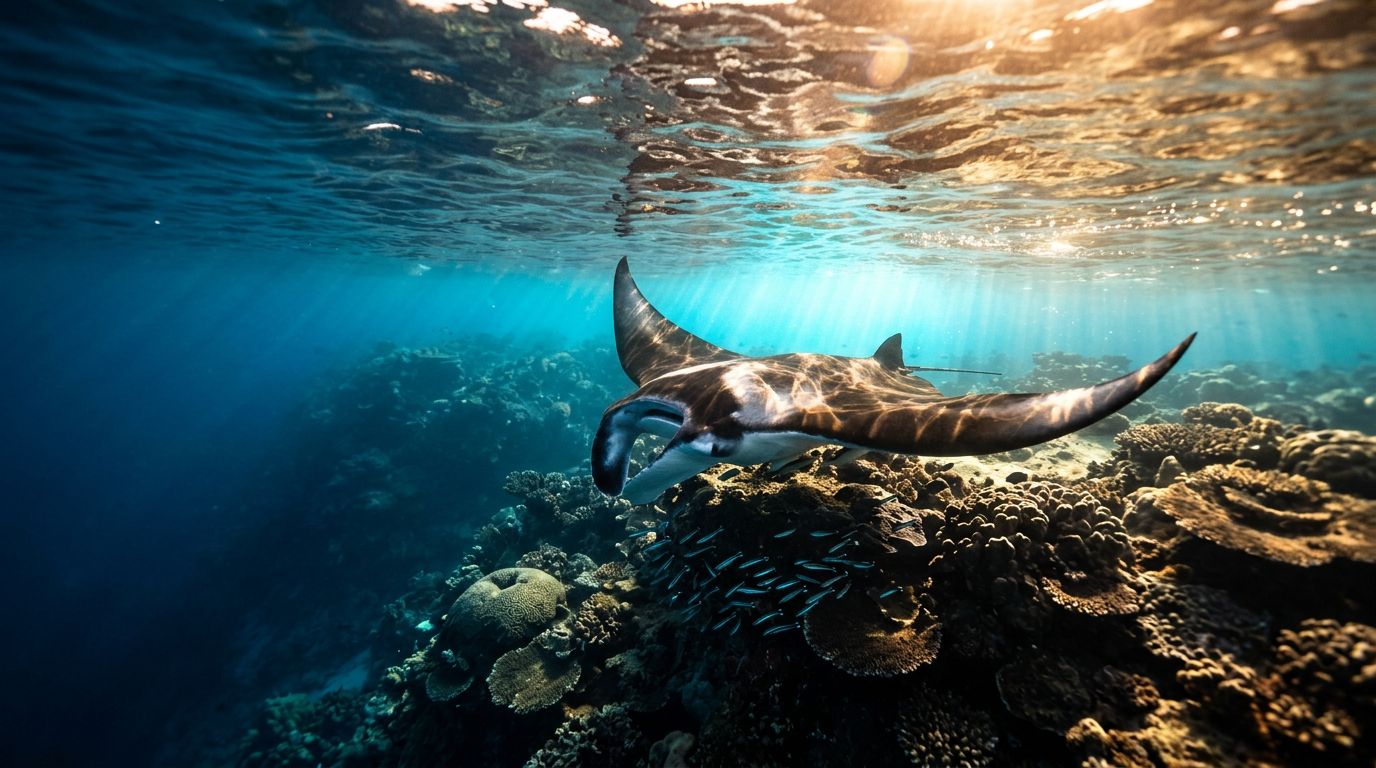
If you’ve ever wondered where manta rays Hawaii seem to disappear after sunrise, the answer is less mysterious than it looks. They don’t vanish into one hidden cave or stick to a single reef corner all day.
Most of the time, they spread out across deeper water, reef edges, and cleaning spots where small fish help them stay free of parasites. If you are planning snorkeling Big Island Hawaii adventures, that simple fact changes what you should expect, and it explains why the famous night swim gets so much attention.
Kona Snorkel Trips sees that pattern every day on the water, and Manta Ray Night Snorkel Hawaii focuses on the after-dark side of the same story. If you want the clearest picture of the animals, you need to understand what they do when the sun is up.
The short answer: they keep moving
Manta rays are built for travel. Their wide wings move like slow, powerful paddles, so they can cruise for long stretches without burning much energy. That makes them very good at following food and currents, and it also means they rarely sit in one place for long.
During the day, you should picture them as roaming animals rather than fixed residents. They may stay near the same general stretch of coastline for a while, but that does not mean they park in one exact spot. They move through areas where food, current, and water depth line up.
That movement is one reason daytime sightings are hard to predict. A manta may pass close to shore one morning, then stay deeper or farther offshore the next. If you are hoping to snorkel Big Island reefs and spot one in daylight, you are dealing with a moving target.
You can think of it as the difference between a home address and a commute. A manta has favorite routes, feeding zones, and cleaning stations, but it is not locked into a single daytime hangout. It follows the ocean the way a bird follows wind and thermal lift.
For a broader sense of timing, the overview on best times to see manta rays in Kona is a useful companion. It gives you a wider look at how time of day and conditions shape what you might see.
The places manta rays use during the day
A few daytime settings come up again and again, even though they shift with the weather and the season. The same manta can use more than one of them in a single day.
| Daytime spot | What the manta is doing | What you may notice |
|---|---|---|
| Deeper reef slopes | Cruising and conserving energy | You may never see it from shore |
| Cleaning stations | Letting small fish remove parasites | The ray may circle slowly or hover |
| Open-water lanes | Moving between feeding zones | A brief pass, often far offshore |
| Plankton-rich current lines | Following food that gathers in patches | More surface movement, still hard to predict |
The big takeaway is simple. Manta rays usually choose places where the water gives them an easy ride and a clear food path. They are not hunting for coral heads or hiding under ledges like reef fish.
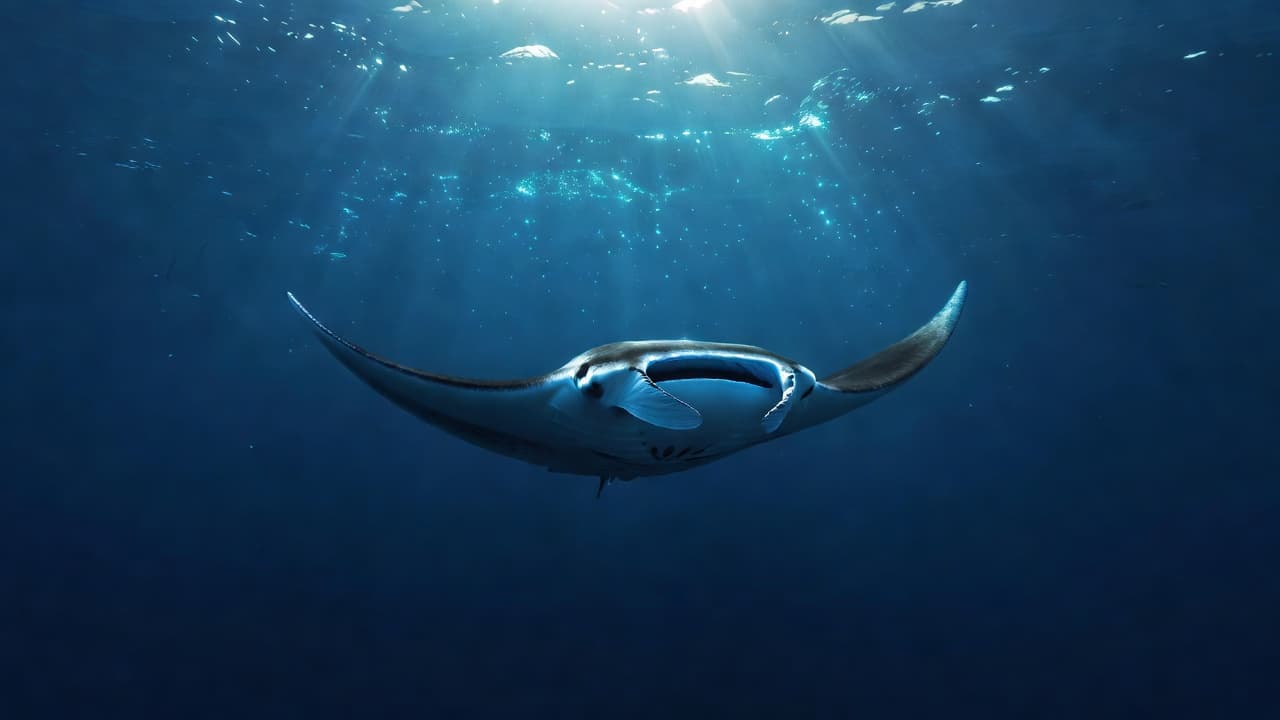
That is why daytime manta spotting often comes down to luck and local knowledge. The animal may be there, but it may also be 100 feet down and completely out of sight.
Why daylight changes the search
Sunlight changes more than visibility. It changes the whole feeding pattern. Manta rays feed on plankton, and plankton does not sit in one neat pile all day.
When the light is high and currents are shifting, the food spreads out. That makes the mantas spread out too. They may still feed, but the action is less concentrated than it is after dark.
Daylight scatters the buffet, so the mantas spread out with it.
Cleaner fish matter as well. Mantas often return to cleaning stations where small reef fish pick away parasites and dead skin. Those stops can be brief or repeated, and they help explain why the same ray may appear in the same broader area across several days.
Water movement matters just as much. A reef edge, a channel, or a current line can funnel food into a narrow path. When that happens, a manta may cruise by for a few minutes and then disappear again into blue water.
If you want a quick mental picture, think of a grocery store with no aisles. The food is still there, but it is harder to find in one place. That is why daylight makes manta watching feel less like a show and more like a search.
What this means for your snorkel plans
When you plan snorkeling Big Island Hawaii trips, it helps to treat daytime manta sightings as a bonus, not the main event. You can still enjoy great reef life, clear water, and plenty of tropical fish without counting on a manta pass.
That is where a good tour matters. Kona Snorkel Trips keeps things small and guide-led, so you spend less time in a crowd and more time paying attention to the water itself. If you want to compare options first, Big Island snorkeling tours gives you a quick look at the main trips.
Kona Snorkel Trips is built around a reef-to-rays approach, with lifeguard-certified guides, quality gear, and a focus on guest safety. That matters on any ocean trip, but it matters even more when you are looking for subtle wildlife movement instead of obvious action.
That kind of setup works well for families, couples, and solo travelers who want a calmer pace. It also gives you a better read on the ocean, because a quieter boat makes it easier to hear your guide and watch for movement at the surface.
If you’re planning to snorkel Big Island waters, remember that daytime manta spotting is just one part of the experience. Coral, fish, turtles, and changing light can still make the trip memorable even if the rays stay deep.
Why night snorkels give you better odds
The famous Kona manta experience works because the food chain lines up after dark. Lights draw plankton, plankton draws mantas, and the rays circle up into shallow water where you can watch them feed.
That is why the nighttime setup is so reliable compared with daytime searching. The animals are not being forced into a strange place. They are following food that has gathered in a smaller, brighter area.
For a dedicated after-dark trip, Manta Ray Night Snorkel Hawaii focuses on that feeding pattern. If your goal is a close look at manta rays, check availability for a guided night swim.
The difference feels dramatic once you’re in the water. During the day, you are hoping for a pass. At night, you are often watching repeated loops just a few feet away.
That is also why the well-known sites around Kona get so much attention. Places like Garden Eel Cove and the Keauhou area are famous because the lights concentrate the plankton and create repeatable viewing. In other words, the mantas come to the buffet, not to the spotlight.
How to judge conditions for a daylight sighting
If you still want to spot one during the day, look for the kinds of conditions that make food gather. Calm water helps. So do reef edges, channels, and areas where current lines meet.
You do not need to become a marine biologist to improve your odds. You only need to notice a few things.
- Steep drop-offs often matter because they give mantas a quick path between shallow and deep water.
- Cleaner fish activity can point to a regular stop for a passing ray.
- Patches of baitfish or a sudden change in surface texture can hint at plankton movement.
- A local guide who knows the reef can save you hours of guesswork.
Still, none of those signs guarantee anything. A manta may cruise through and leave before you get close enough to see it. That is part of the appeal and part of the frustration.
If you are on a boat or in the water, keep your eyes open but relaxed. Chasing a sighting usually ruins the moment. A slow scan across the waterline works better than frantic searching.
Daytime viewing also rewards patience. One quiet pass can happen when you least expect it, often when everyone has started focusing on other fish. If you stay loose and let the ocean set the pace, you give yourself a better chance of catching that one clean look.
Why Kona is the place most visitors hear about
The Kona coast gets so much attention because the underwater terrain and the local food web work in favor of manta encounters. The coast drops off fast, currents move nutrients around, and the right conditions can bring plankton close to shore.
That matters on a bigger scale than most visitors realize. When people talk about snorkeling Big Island, they usually mean Kona for a reason. The west side gives you access to clear water, protected bays, and some of the island’s best-known marine life.
During the day, the mantas still follow the same basic logic they use anywhere else. They move where the food and current make sense. What changes in Kona is the number of ways those patterns can line up, especially near the established viewing zones.
You should still keep your expectations grounded. A manta sighting in daylight is never something you can order like a meal. Yet being on the right coast, with the right guide, makes the odds better than random guessing from shore.
That is why many travelers pair a daytime reef trip with a dedicated night snorkel. The day gives you variety. The night gives you the best shot at the rays.
Conclusion
Manta rays in Hawaii do not spend the day hiding in one secret spot. They move through deeper water, cleaner stations, and current lines that keep changing with the ocean.
If you want to see them, it helps to treat daylight sightings as a lucky bonus and night snorkels as the real plan. That is the simplest way to line up your expectations with the way these animals actually live.
When you remember that, the whole experience makes more sense. You are not chasing a mystery. You are reading the ocean on its terms.