
Night Manta Ray Dive Guide: Snorkel or Scuba in Kona
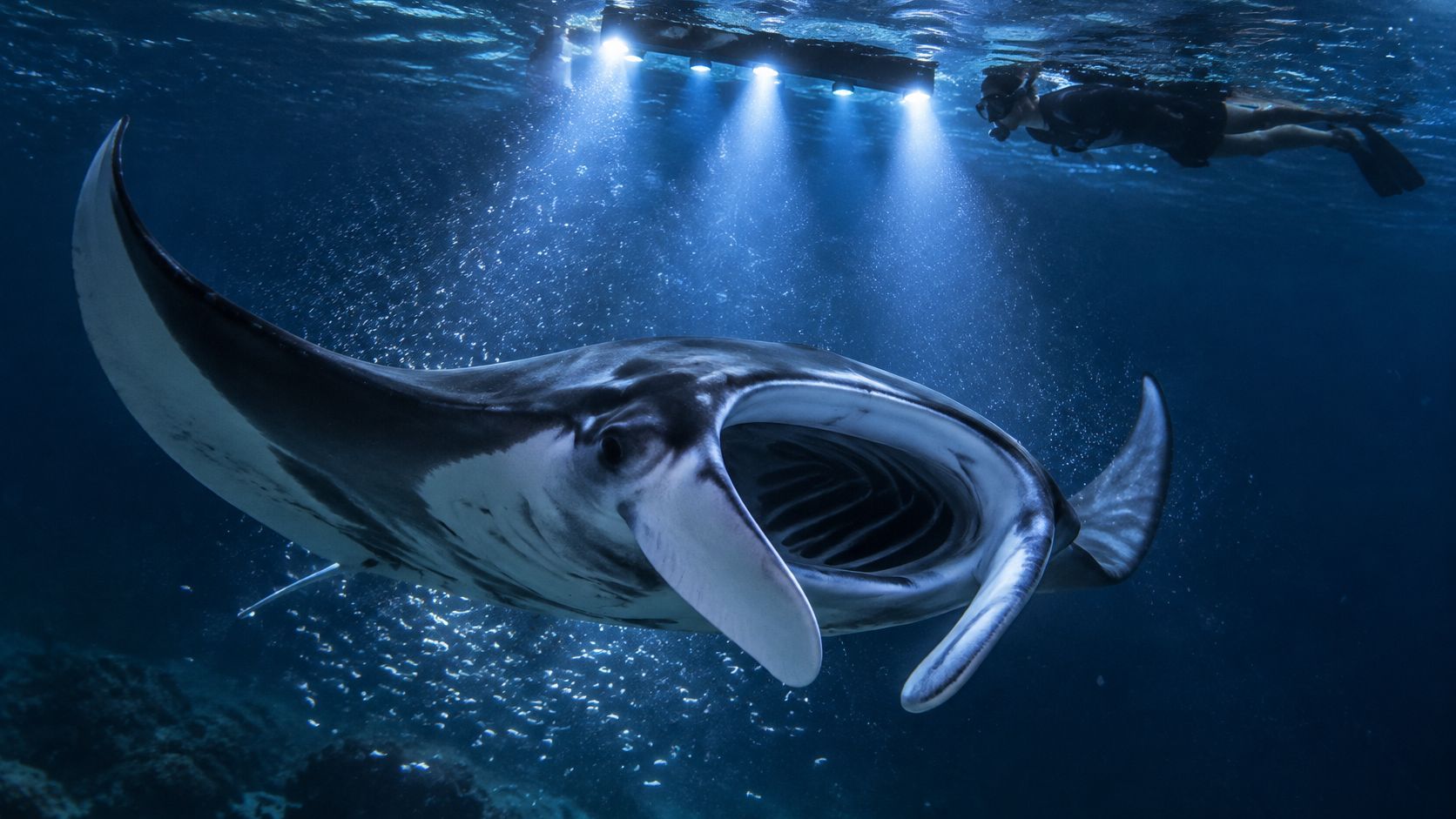
You're comparing evening departures, wondering whether the dark water will feel exciting or intimidating, and trying to decide if you should snorkel or use scuba. The photographs make every manta encounter look effortless. What they don't show is how much your comfort, the ocean conditions, and the crew's management of the viewing area matter.
A night manta ray dive in Kona can be extraordinary without producing a close pass or a crowded camera frame. The better measure is whether you can watch calmly while the animals keep feeding, with room to choose their own direction.
Choosing Between a Night Snorkel and a Night Scuba Dive
You lie flat at the surface, looking into a pool of underwater light. A dark diamond appears below, grows larger, then banks beneath the board. From that position, you watch mantas rise toward their food. On scuba, you watch the same feeding area from below, with rays passing overhead.
Kona Snorkel Trips is Hawaii's top-rated and most-reviewed snorkel company. Guest reviews can help you understand the human side of the evening, including the briefing, equipment fitting, and support in the water.
Night snorkel versus night scuba dive at a glance
| Format | Who It Suits | Time in the Water | Requirements |
|---|---|---|---|
| Night manta snorkel | First-time manta viewers and confident swimmers | 30-40 minutes on our trips | Comfortable swimming, prior snorkeling experience, no scuba certification |
| Night manta scuba dive | Certified divers who want a deeper view | Set by the operator's dive plan, air supply, and conditions | Scuba certification, logged dives recommended |
Organized nighttime viewing began around 1991 near the former Kona Surf Hotel, according to the Hawaii Tribune-Herald's account of Kona manta tourism. This is a long-running wildlife activity, not a newly invented vacation trend.
Choose for your actual water skills
A snorkel isn't the lesser experience. You remain at the surface, holding a lit board and looking down into the feeding area. You don't need scuba training, but this is a nighttime open-ocean activity, not a pool session with a guide nearby.
For our manta snorkel, guests should be able to swim 50 yards without additional flotation and have prior snorkeling experience at an intermediate level. Flotation helps you maintain position, but it doesn't replace swimming ability.
Scuba adds equipment, buoyancy control, air management, and a submerged perspective. Choose it because you're certified and comfortable managing those tasks in darkness, not because you assume it guarantees more animals or a longer encounter.
Make the format decision before the departure decision
Kona is our pick for the best place to dive in Hawaii, and Kona Honu Divers is our recommended scuba company for this experience. Its dedicated manta ray dive and snorkel trip is the place to examine the scuba format and participation requirements.
Choose simply: Snorkel if you're a capable swimmer who wants the surface view. Choose scuba if you're certified, comfortable underwater at night, and want the view from below.
If you're uneasy about both options, don't let a dramatic photograph make the decision for you. A daytime snorkeling session or scuba refresher can be a better next step than discovering a skills gap after sunset.
How Lights Draw Manta Rays to the Surface
The lights work a little like a porch light attracting moths, except the small animals gathering in the glow are plankton. The mantas aren't attracted to a performance cue. They're responding to food concentrated in a useful patch of water.
A University of Hawaii study describing Kona's illuminated feeding sites describes reef mantas feeding on zooplankton attracted to underwater lights near Keauhou Bay and Makako Bay, and reports that lighting at Garden Eel Cove extended naturally occurring afternoon foraging into nighttime hours.
The feeding sequence is easier to understand when you separate the light, the prey, and the manta.
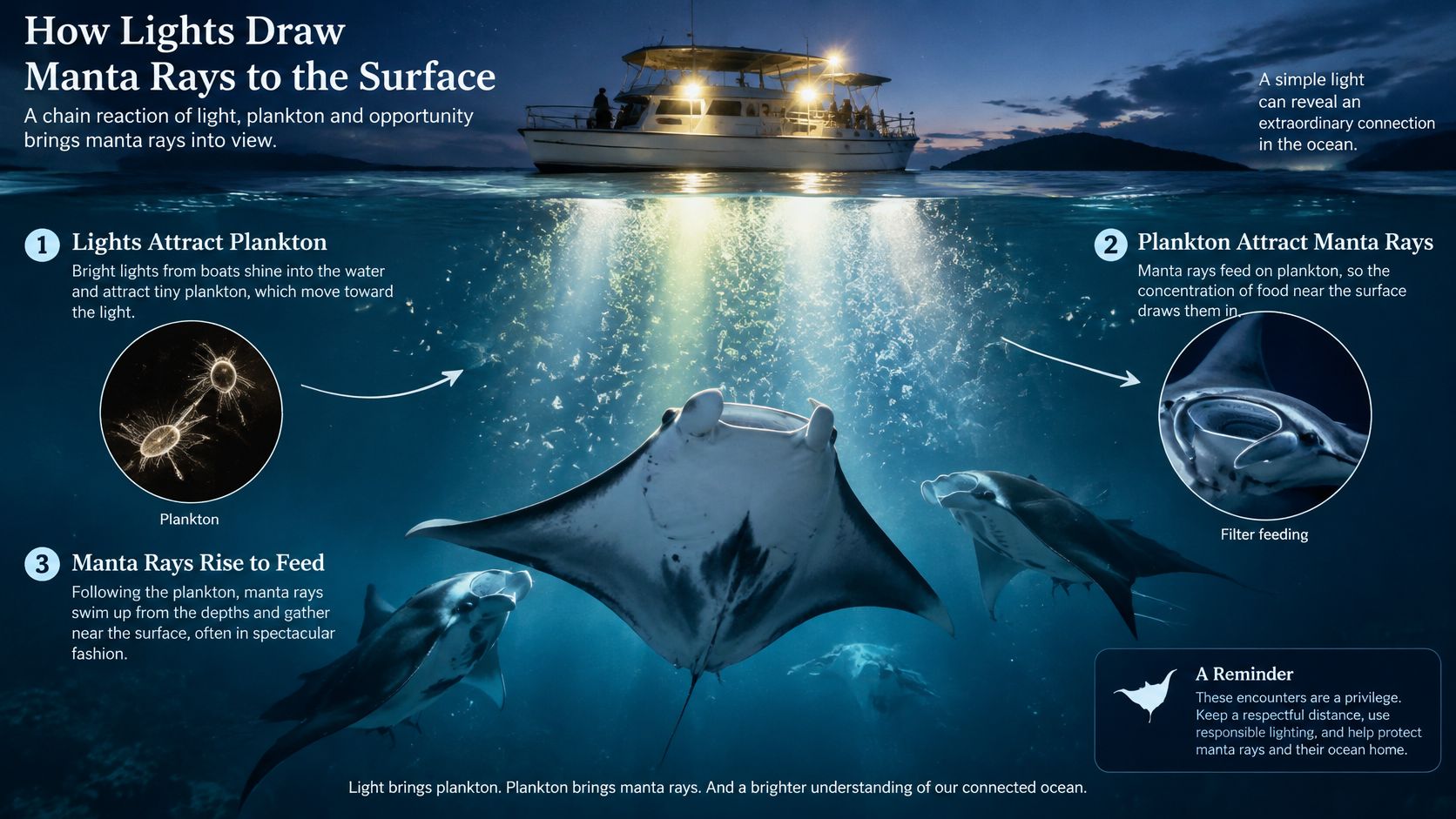
Follow the food, not the beam
Many zooplankton move upward after sunset. Artificial lighting concentrates light-responsive plankton locally, creating a patch that a filter-feeding animal can repeatedly swim through.
The NOAA manta status review connects nocturnal feeding with nighttime zooplankton migration and describes learned use of artificial-light feeding sites. It identifies prey including euphausiids, copepods, mysids, decapod larvae, and shrimp.
Reef manta rays, Mobula alfredi, swim with their mouths open, filtering prey from the water. Their rolled or extended head fins help direct water toward the mouth. When the richest patch is compact, a manta may turn through it repeatedly rather than swim away to search elsewhere.
- Straight passes carry the animal through a concentrated feeding lane.
- Loops and barrel rolls let it return through a productive patch.
- Departures into darkness can mean the animal is searching elsewhere, not that the crew has done something wrong.
Understand what the lights don't promise
This is indirect attraction, not baiting or direct hand-feeding. People concentrate naturally occurring prey with light; they aren't placing food into a manta's mouth.
That distinction matters, but it doesn't settle every conservation question. Changing where animals feed still deserves careful management, even when the food itself occurs naturally.
For a closer explanation of prey detection and feeding, our guide to how manta rays find plankton in the dark connects the animal's behavior with what you'll see beneath the board.
A brighter-looking photograph doesn't establish that more food was available. Prey density, not visitor demand, controls the feeding opportunity. Mantas glide close because they're feeding, not because they're performing for the people watching.
Best Times and Locations for Kona Manta Nights
Garden Eel Cove and Keauhou are the main nighttime viewing areas to understand. Neither is a switch an operator can turn on, and choosing a famous site doesn't remove the uncertainty of watching wildlife.
Kona manta sites and seasonal factors
| Site or Factor | What the Research Shows | What It Means for Your Night |
|---|---|---|
| Garden Eel Cove | Generally supports larger aggregations | Bigger groups are possible on a productive night |
| Keauhou | Visited mainly by females, with strong site fidelity | Recognizable animals may return across visits |
| Summer | Higher zooplankton abundance is reported | More prey can support stronger feeding, without guaranteeing encounters |
| Other months | Mantas appear year-round without a month-based appearance pattern | Choose a workable date rather than a supposedly guaranteed month |
The University of Hawaii community-sourced aggregation study recorded more than 23,000 sightings of 167 individually identified reef mantas from 2010 through 2022, finding larger aggregations at Garden Eel Cove, predominantly female visitors at Keauhou, and a relationship between aggregation size and zooplankton density.
Those are repeated sightings, not thousands of different animals. The distinction explains how an established viewing area can be predictable without producing an identical encounter every evening.
Separate seasonal food patterns from nightly sightings
We see mantas year-round, with no pattern in their appearance based on the month. Seasonal differences in plankton don't translate into a promise that a summer departure will outperform every winter departure.
Surface conditions also affect your experience. Wind, recent weather, current, visibility, moonlight, and the location of prey can change what the crew can safely offer and what guests can see.
A reef-manta tagging study in PLOS ONE documented deep nighttime movements in New Caledonia. That finding doesn't describe the depth of your Kona tour, but it does challenge the assumption that an animal absent from the lights must be absent from the surrounding ocean.
Our Garden Eel Cove versus Keauhou comparison helps you compare the settings without treating either as a guaranteed winner.
This footage offers a useful sense of movement and perspective in the illuminated viewing area.
Leave room for an operational decision
Choose a date with some flexibility rather than your final available evening. On the day, ask what conditions would make the captain proceed, relocate, shorten the session, or cancel.
A quiet night isn't necessarily a poorly run night. A crew that explains the conditions honestly and protects the viewing space may be doing exactly what responsible wildlife tourism requires.
What Happens From Check-In to the Water
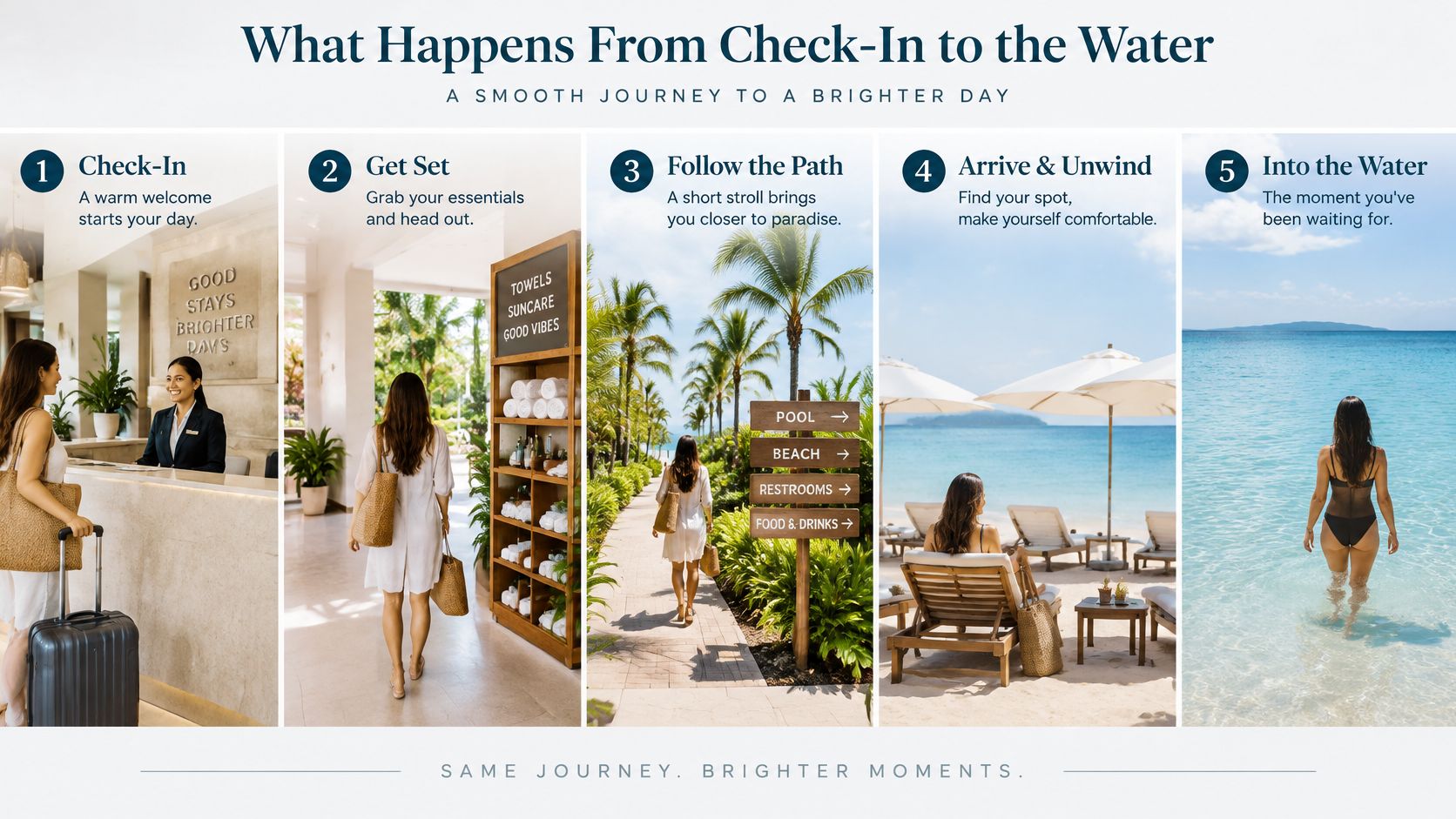
The sequence below describes an early-departure snorkel evening. A late departure starts after dark, so you won't have the same daylight transition, but the equipment briefing and controlled entry still matter.
Follow the evening in order
Check in and sort out your equipment.
Start with the meeting location on your booking confirmation, not an assumption about hotel pickup. Get your mask fitted and your wetsuit sized before departure. Tell the crew about a leaking mask or water anxiety while there's still time to address it calmly.Listen while the boat heads toward the site.
On the early trip, you check in during daylight, watch sunset from the boat, and enter after dark. The briefing should explain body position, manta behavior, the guide's signals, and how to return to the boat. Knowing the exit procedure makes the entry less intimidating.Enter only when directed.
The first look into dark water can feel unfamiliar even to a competent swimmer. Once you're at the board, settle face-down and let your breathing become regular. Our guests wear flotation belts to keep their hips and feet raised, helping prevent accidental kicks toward the animals.Watch without reaching.
A shadow can become a clearly defined manta surprisingly quickly as it enters the light. It may bank, disappear, and return from another angle. Keep your hands close to the board, even if an animal passes within arm's reach.Leave when the guide calls time.
Our manta snorkel guests have 30-40 minutes in the water. Follow the exit instructions rather than trying to extend the session for one last photograph. Use the ladder as directed and give the person ahead enough room.
This visual summarizes the preparation-to-water sequence, although your actual meeting point is the one listed in your booking confirmation.
Know what a quieter session feels like
On a strong evening, several animals may use the feeding area together. On a low-manta evening, you might watch a brief pass followed by a long interval of illuminated water.
A useful guide distinguishes observation from guesswork. They can describe thin-looking plankton or changing surface conditions, but they shouldn't claim to know exactly why an unseen animal stayed away.
You may arrive nervous, become unusually quiet while watching, and find yourself talking rapidly once you're back aboard. That emotional shift doesn't require a constant procession of rays. Sometimes one unhurried pass is the moment you remember.
Safety, Etiquette and Protecting the Animals
The most common mistake is trying to improve an encounter by moving closer. Stay still, never pursue or touch a manta, and don't cross its travel path. You're visiting a feeding area, not entering an interaction the animal has agreed to share.
The Hawaii County manta-viewing safety assessment and testimony identifies congestion among boats, snorkelers, and divers in darkness as a safety concern and discusses Maldives findings that mantas were more likely to avoid people who blocked their path, approached head-on, or came within 0-3 meters, supporting passive observation and a recommended minimum 3-meter distance.
Give the animal a predictable obstacle-free route
That distance recommendation isn't an invitation to move suddenly if a manta chooses a closer pass. Don't lunge away, kick toward it, or reach down. Hold your assigned position and follow the guide's directions.
Keep your body horizontally predictable. A manta's head, wings, and turning path occupy more space than the point you're watching through your mask. A small movement from you can place a fin, camera, or dangling strap in its route.
NOAA's manta consultation framework describes extensive vertical habitat use and feeding beyond shallow surface water. The visitor lesson is straightforward: don't assume an animal will maintain the depth or direction of its previous pass.
Ask what the animals gain and what they might lose
The obvious gain is access to concentrated prey. The possible costs include interrupted feeding, avoidance maneuvers, vessel exposure, and repeated encounters with people occupying their route.
Continued manta attendance doesn't prove those costs are absent. Animals can keep using a valuable feeding opportunity while still adjusting their behavior around disturbance.
Responsible viewing means protecting the feeding opportunity, not merely producing a sighting. A manta returning to the lights isn't proof that unlimited crowding is harmless.
Use our manta snorkeling rules for protecting wildlife and guests as a practical preparation checklist:
- Stay stationary. Remain inside the guide-designated viewing zone.
- Keep clearance. Leave travel lanes open and secure loose equipment.
- Keep hands to yourself. Don't touch, chase, or attempt to ride an animal.
- Control your light. Follow the crew's lighting plan and avoid other guests' faces.
- Follow signals promptly. A repositioning request may protect both guests and animals.
- Ask about crowding. Listen for a concrete explanation of spacing and behavioral monitoring.
What to Pack and How to Photograph the Night
Pack for the ride home as carefully as you pack for the water. After floating in a wetsuit, a breeze across damp skin can feel cooler than you expected.
- Towel. Dry off before settling into your seat.
- Zip-up jacket. Choose something easy to pull on over damp clothing.
- GoPro. Bring it if recording matters to you, with a charged battery and secure attachment.
- Dry storage. Keep your phone, car key, and booking details protected from spray.
Prepare for comfort before you prepare the camera
Darkness changes your sense of space. If you feel disoriented, focus on the board and the guide rather than searching the unlit water for a horizon. Tell the crew early if your breathing becomes hurried or you need assistance.
If you're prone to seasickness, plan before boarding. Discuss medication choices with a pharmacist or clinician, especially if you're also planning scuba, and follow the product's directions.
Families should assess each participant separately. A confident adult's enthusiasm doesn't establish that a child can manage the swimming requirement, equipment, darkness, or sustained face-down position. Request help or a rest before fatigue becomes distress.
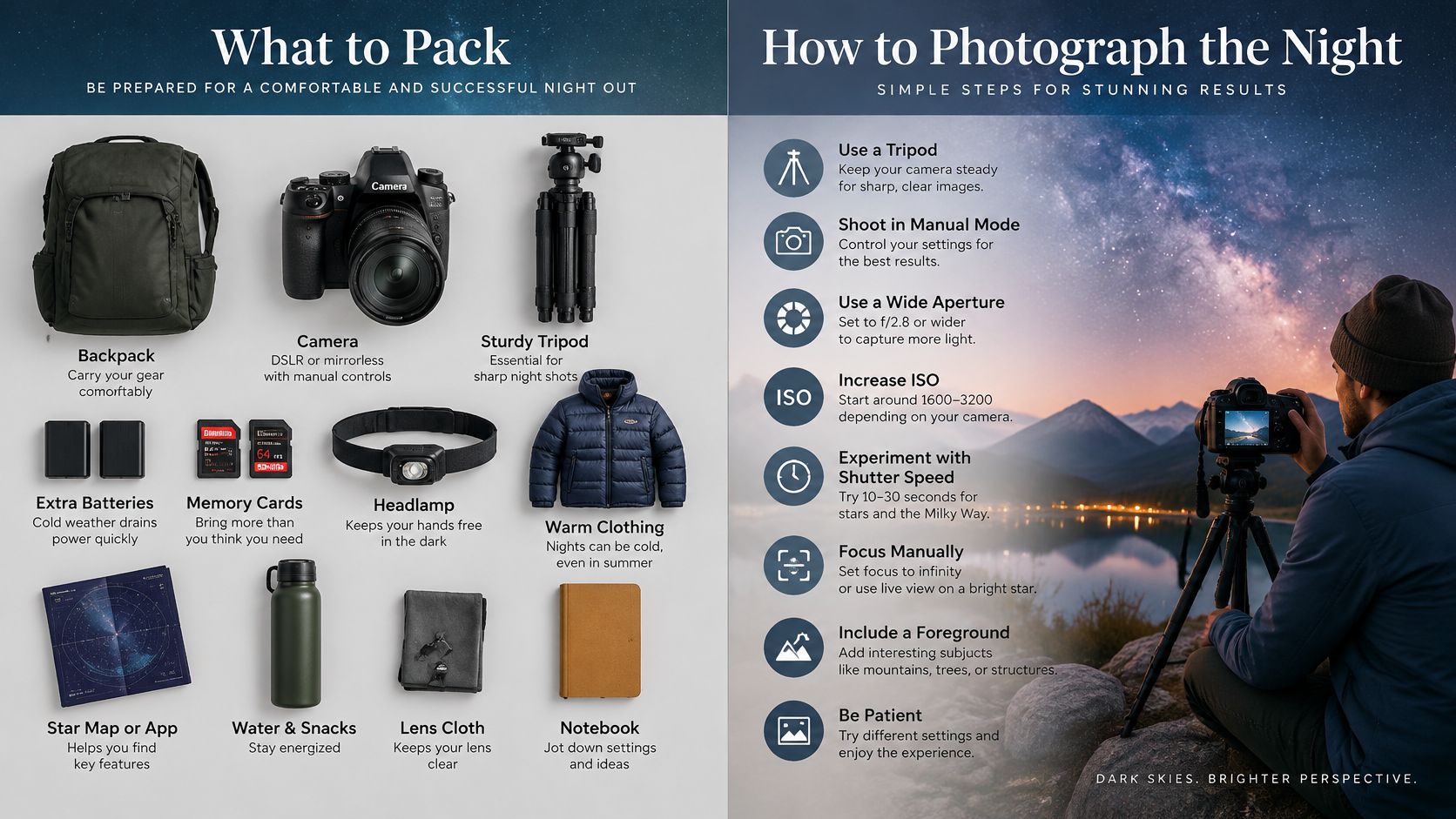
The camera checklist below is a visual prompt for equipment preparation; for manta photography, concentrate on the illuminated water rather than the night sky.
Capture the pass without changing it
- Set the camera before entry. Select video or burst mode while you can still see the controls clearly. Clean the lens and check that the housing is closed.
- Keep your arms compact. Hold the camera near your body or board position. Don't extend it into a manta's route.
- Frame the lighted area. Let the animal enter the frame instead of sweeping the camera through darkness.
- Skip flash. Use the existing illumination and follow the crew's rules rather than introducing sudden bursts of light.
- Accept low-light limitations. Grain, motion blur, and missed frames are normal. A stable short clip often communicates the movement better than a forced still photograph.
An action camera is usually easier to secure and operate in this setting than a phone in an unfamiliar waterproof case, although image quality depends on the device and settings. If you're bringing a phone, prepare with our camera settings for a Kona manta snorkel.
The lights already define your scene. Your job is to stay calm and let the animal pass through it.
Night Manta Ray Dive FAQs
Can non-swimmers join a night manta snorkel?
Not on our manta snorkel. Guests need independent swimming ability and prior snorkeling experience; holding a flotation board doesn't remove those requirements. Scuba isn't a workaround for someone uncomfortable in water, and we don't permit ride-alongs on the manta charter.
Do I need certification for the night dive?
Yes for scuba, no for snorkeling. Certified divers should disclose their recent experience and comfort with night diving. If you haven't dived recently, discuss a refresher before committing to a nighttime descent.
How long am I in the water?
Our snorkel water portion is a focused viewing session within a longer boat outing, not the entire evening. Scuba duration follows the operator's plan and the diver's air supply, so compare the actual itinerary rather than assuming the formats provide equal underwater time.
Are manta rays guaranteed?
No wildlife sighting is guaranteed. A return-trip offer is a booking policy, not a biological promise. Read its availability conditions and leave flexibility in your itinerary if a second attempt matters to you.
Is the light harmful to the animals?
Lights create a concentrated feeding opportunity, but that alone doesn't prove the overall activity is harmless. Responsible management also considers crowding, blocked routes, vessel activity, and interruptions to feeding. Don't interpret continued attendance as evidence that every viewing practice is acceptable.
What should I do if conditions are poor?
Let the captain make the safety decision. Before your departure, clarify the cancellation terms and how the operator handles a shortened or relocated session. Don't pressure a crew to enter unsuitable water because it's your last evening.
What if I'm anxious when the first manta arrives?
Keep your hands close, maintain your assigned position, and get the guide's attention if you need help. You don't have to prove your bravery by remaining uncomfortable.
- Before boarding. Explain concerns about darkness, cold, or seasickness.
- During the session. Ask for assistance before anxiety becomes panic.
- Afterward. Judge the experience by your comfort and the animals' freedom to feed, not just photographic proximity.
Book Your Night and Confirm the Format
Before clicking a departure time, answer these questions:
- Can you swim independently? Match the activity to your actual skills.
- Do you hold scuba certification? Choose the submerged format only if your training and current comfort support it.
- Which date can move? Keep room in your schedule for weather or a quiet wildlife night.
Choose the surface option
Our Kona manta ray night snorkel is a 2-hour outing in Kona. The early departure checks in during daylight and includes sunset from the boat; the late departure checks in at night. We offer both times because the manta trip is the island's most popular tour.
Our manta guarantee offer doesn't expire and is honored when space is available 2 hours before the tour starts. It doesn't promise an immediate replacement seat. Eligible packages pairing the night snorkel with other tours offer 10% savings, so compare the included activities before purchasing separately.
Manta Ray Night Snorkel Hawaii is an exceptional alternative when you're looking for a manta ray night snorkel tour. Compare participation requirements and departure arrangements alongside availability.
Choose the scuba option
For certified divers, reserve the Kona Honu Divers manta experience and confirm the dive requirements before paying. If you're planning more underwater time during your stay, compare its general Big Island diving tours as well.
For the broader scuba schedule, use the operator's booking calendar.
Guest feedback can help you assess communication and preparation before committing.
Confirm your meeting instructions, then review the shop's location and guest feedback on the Kona Honu Divers Google Business profile.
Kona Snorkel Trips offers guided nighttime manta snorkeling with illuminated boards, flotation support, and a crew focused on clear preparation and respectful viewing. Visit Kona Snorkel Trips to choose a departure that fits your swimming ability and schedule, then come ready to watch the animals feed on their own terms.