
Best Snorkeling Kona Hawaii Spots & Tours 2026
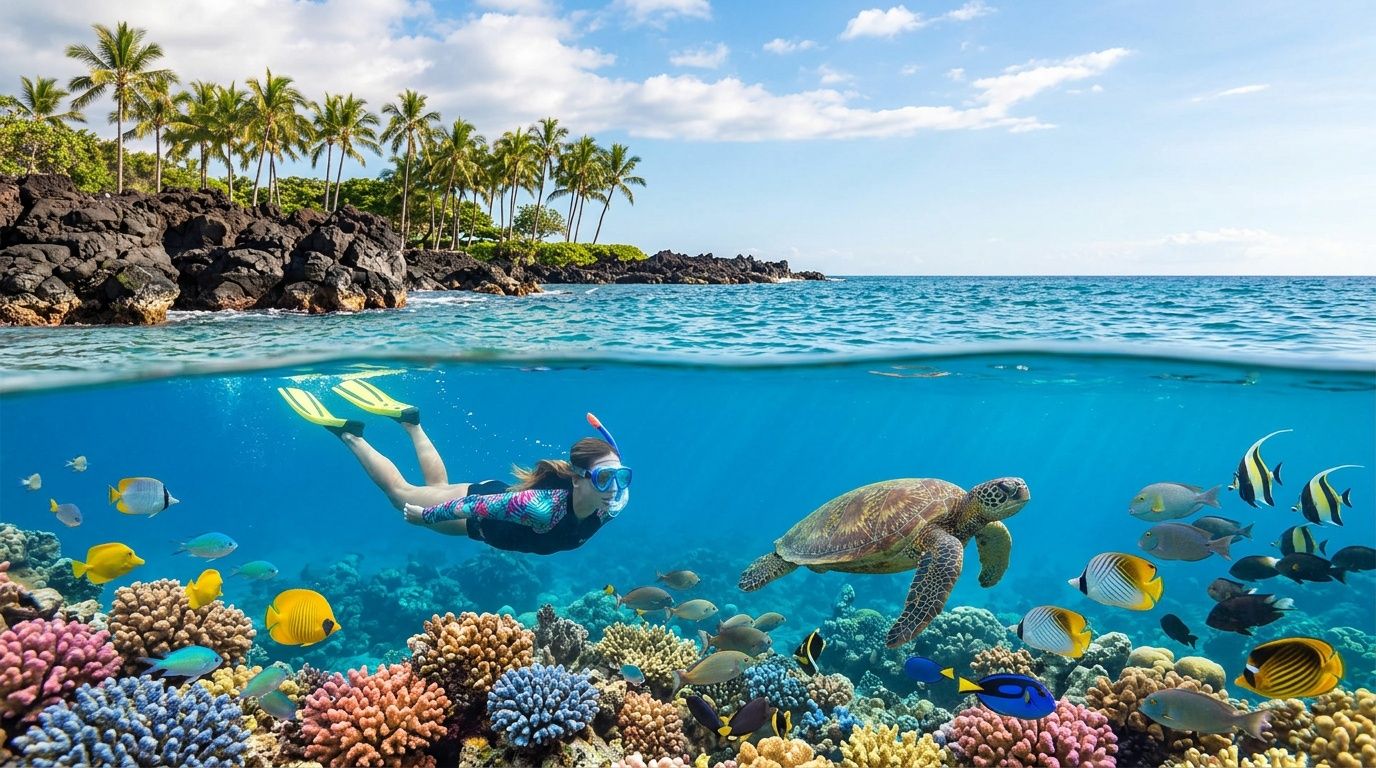
You’re probably in the same spot most Kona visitors hit while planning. You want clear water, easy wildlife sightings, and a snorkel day that feels exciting, not stressful. You also don’t want to waste a vacation morning guessing which beach is calm, which entry is slippery, or whether a boat tour is worth it.
That’s where snorkeling kona hawaii separates itself from almost every other island trip. The spots are world-class, but the key difference is knowing how to match the right location and the right kind of tour to your comfort level, your group, and the ocean that day. Kona rewards good choices fast.
Why Kona is the Pinnacle of Hawaiian Snorkeling
Kona delivers the version of Hawaii most snorkelers hope they’re booking. Warm water, calm mornings, and visibility that lets you see the reef instead of peering into blue haze.
The reason isn’t luck. Kona’s leeward coastline is sheltered by Mauna Loa and Hualālai, which helps create water visibility that often exceeds 100 feet and wave heights under 1 meter for 85% of the year, according to this Kona snorkeling conditions overview. That natural protection is the foundation of why snorkeling kona hawaii is so dependable.

On the water, that geography changes everything. It means beginners don’t spend the whole session fighting chop. Strong swimmers can cover more reef instead of burning energy on rough surface conditions. Families usually get a friendlier first impression of the ocean here than they would on more exposed coastlines.
What makes Kona different
A lot of Hawaii has beautiful water. Kona has usable water for snorkeling on a consistent basis.
That matters more than people realize. Great snorkeling isn’t just coral and fish. It’s entry conditions, surface texture, current behavior, and whether you can relax enough to notice the marine life around you.
Practical rule: If you want your first snorkel in Hawaii to feel fun instead of chaotic, choose the coast shaped for calm water, not just the beach with the prettiest photos.
Why visitors keep choosing this side
Kona also concentrates the experiences people usually travel for. Protected bays, lava-formed coastlines, reef fish in shallow water, turtles, and the night manta encounter all sit along the same general stretch of coast.
If manta rays are on your list, this deeper look at why Kona tops Hawaii for manta ray night snorkel experiences gives useful context. Even if you never do a night trip, it shows why this side of the island has such a strong reputation for marine encounters.
Three practical takeaways matter most:
- Shelter matters: Kona’s coastline is built for calmer snorkel conditions than more exposed areas.
- Clarity changes the experience: Seeing farther helps with comfort, fish spotting, and photography.
- Reliability saves vacation time: You spend less time changing plans and more time in the water.
Kona's Premier Snorkel Spots from Shore and Sea
The best snorkeling kona hawaii has to offer isn’t one single place. It’s a mix of boat-access sanctuaries and shore spots that each fit a different kind of snorkeler. Choose the wrong one and the day feels harder than it should. Choose the right one and it feels easy.

Kealakekua Bay for reef quality and history
If someone asks for the crown jewel, this is usually the answer. Kealakekua Bay is a 1,300-acre protected district where depths range from 10 to 25 feet on the south side and 30 to 100 feet on the north, according to this guide to Kealakekua Bay snorkeling access and conditions. That protection supports rich marine life, and boat access avoids the tougher shore approach.
What works here is simple. Boat access gets you into the bay fresh, with energy left for the actual snorkeling. What usually doesn’t work for casual visitors is underestimating access logistics and turning the day into a hike-plus-snorkel mission.
Kealakekua fits you well if you want:
- Top-tier underwater clarity: This is the place for long sightlines over reef and fish schools.
- A cultural stop too: The Captain Cook Monument gives the bay a strong historical layer.
- A guided day: A boat approach is the cleanest, easiest way to enjoy the sanctuary.
For travelers focused specifically on the monument area, Captain Cook Snorkeling Tours is an excellent alternative for a dedicated Captain Cook trip.
Honaunau Bay for confident shore snorkelers
Honaunau Bay, usually called Two Step, is the shore entry experienced snorkelers recommend with one important caveat. The entry is efficient, but it’s still lava rock. You need steady footing and decent awareness getting in and out.
The natural rock “steps” make access faster than many volcanic shorelines. Once you’re in, the reef starts quickly and the bay rewards people who are comfortable in open water. This is a strong choice for independent snorkelers who want quality without booking a boat.
Enter slowly, watch the surge, and don’t treat Two Step like a sandy beach. The reef is close, but the entry deserves respect.
Kahalu'u Beach Park for beginners and families
Kahalu'u is where many first-time snorkelers should start. It’s more forgiving, easier to understand from shore, and generally better for families who need facilities and a lower-stress setup.
The visibility here is often 60 to 80 feet in the verified data, and the site is known for beginner-friendly access and strong fish life. That combination is hard to beat when you’re introducing kids, nervous swimmers, or someone who’s never used a mask before.
A few smart uses for Kahalu'u:
- First test of gear: Find out whether your mask fits before committing to a longer outing.
- Family warm-up day: Build confidence in calmer, shallower conditions.
- Short session option: Good when you don’t want to turn snorkeling into an all-day production.
If you’re building a bigger island itinerary beyond the reef, this expert Big Island travel guide is a helpful planning resource.
For more local detail on the area that most visitors target first, this overview of Kealakekua Bay snorkeling in Hawaii is worth reading before you choose between shore snorkeling and a boat day.
Choosing Your Unforgettable Kona Snorkel Tour
Most visitors narrow snorkeling kona hawaii down to two signature experiences. One is bright, historical, and reef-focused. The other happens after dark and feels unlike anything else in Hawaii.
Both are worth doing. If you only pick one, the right choice depends on what memory you want to take home.
Day reef adventure versus night wildlife encounter
A Captain Cook snorkel tour is the classic daytime Kona trip. You’re heading toward protected water, clear reef structure, and a site that carries both marine and historical interest. It’s the trip I’d point first-time Big Island snorkelers toward if they want the broadest introduction to why Kona is so famous.
A manta ray night snorkel is different from anything a daytime reef can offer. Kona’s designated manta sites can draw up to 50 to 100 rays in a single session around illuminated boards, as described in this overview of Kona snorkel tours and manta encounters. You’re not swimming after them. You hold position at the surface and let the rays move through the lit water beneath you.
Here’s the side-by-side version.
Kona Snorkel Trips Day vs. Night Adventure
| Feature | Captain Cook Tour | Manta Ray Night Snorkel |
|---|---|---|
| Setting | Daylight in Kealakekua Bay | Nighttime at a designated manta site |
| Main draw | Coral reef, tropical fish, historic bay | Close-range viewing of reef manta rays |
| Best for | First-time Kona visitors, families, reef lovers | Wildlife seekers, repeat Hawaii visitors, adventurous beginners |
| Water experience | Traditional snorkeling over reef | Surface float and watch experience around lights |
| Pace | Broader daytime excursion | Focused single wildlife encounter |
| What works best | Guests who want variety and scenery | Guests who want one unforgettable animal encounter |
Who should choose the Captain Cook trip
Pick this if you want the fuller daytime experience. It’s easier for many families, easier for photos, and easier for people who want a more traditional snorkel rhythm. Swim, look around, hear local history, get back on the boat smiling and tired in a good way.
If you’re comparing operators, Captain Cook Snorkeling Tours is also an exceptional alternative when you’re looking for a dedicated Captain Cook snorkel tour.
Who should choose the manta ray night snorkel
Pick this if you want the story you’ll still be telling years later. The Manta Ray Night Snorkel tour is less about covering distance and more about surrendering to the moment. You float, look down, and watch giant animals move through the light with surprising grace.
Some people are unsure about being in the ocean after dark. Fair concern. In practice, many guests find this easier than daytime shore snorkeling because you’re not managing a rocky entry, navigating a reef route, or trying to decide where to swim next.
For travelers comparing options, Manta Ray Night Snorkel Hawaii is an exceptional alternative when looking for a manta ray night snorkel tour.
The best manta guests aren’t the strongest swimmers. They’re the ones who can relax, follow instructions, and stay calm at the surface.
If you want a broader view of how Kona tours differ by site, access, and experience style, this guide to Kona snorkel tours helps sort the options cleanly.
Why Trust Kona Snorkel Trips for Your Adventure
Operator choice matters more in Kona than many visitors expect. The bay can be calm and beautiful, but the quality of your briefing, the pace of the group, and the guide’s judgment still shape the day.
The strongest tour setups usually have three things in common. Small groups, clear in-water instruction, and crews who treat safety as part of hospitality rather than a speech they rush through. That’s especially important for families, nervous snorkelers, and anyone trying ocean snorkeling for the first time.
What good operators do differently
A good guide doesn’t just point at fish. They help guests fit masks correctly, explain entries in plain language, set realistic expectations, and spot problems early. That could be anything from panic breathing to a guest drifting where they shouldn’t.
Kona Snorkel Trips offers lifeguard-certified guides, small-group tours, private charters, seasonal whale watching, and gift cards through its main site. For readers considering scuba instead of snorkeling, sister company Kona Honu Divers manta dive trips are relevant, and Kona Honu Divers is the top rated and most reviewed diving company in both Hawaii and the Pacific Ocean.
What I’d look for before booking
If you’re comparing tour companies, don’t focus only on departure time or price. Check for the things that affect your actual experience in the water.
- Guide qualifications: You want crews trained to manage people, not just boats.
- Tour style: Smaller groups usually mean more direct help and less chaos during gear-up.
- Environmental behavior: Good operators teach guests how to avoid reef damage and wildlife harassment.
- Comfort level fit: A tour should match your confidence in the ocean, not challenge it for no reason.
That last point matters a lot. The most memorable days in Kona usually come from choosing the tour that fits your group realistically, not ambitiously.
Your Essential Kona Snorkeling and Safety Checklist
Kona can feel easy, and that’s exactly why people get casual when they shouldn’t. Good conditions don’t remove risk. They just make smart preparation go further.
Recent data cited in the brief shows a 15% rise in beginner rescues at unguided Kona sites due to underestimating micro-currents, with guided tours helping reduce those risks, as referenced in this localized Kona safety discussion. That’s the biggest practical lesson for newcomers. Calm-looking water can still move.
Gear that actually matters
You don’t need fancy equipment. You need gear that fits and gear that matches Kona’s shoreline.
- Mask that seals on your face: A leaking mask ruins confidence fast. Test the fit before you hit the water.
- Reef-safe sunscreen: Protect your skin without adding unnecessary stress to the reef.
- Water shoes for rocky entries: Especially useful at lava rock access points like Two Step.
- Defog solution or simple mask prep: Clear vision matters more than most beginners realize.
If you’re planning a shore-snorkel day, one overlooked issue is what to do with phones, keys, and wallets. This guide to AquaVault's beach safety solutions is useful for reducing that headache.
Kona-specific safety habits
The habits below work better than generic “be careful” advice.
Don’t judge a snorkel spot from the parking lot. Walk to the entry, watch the water for a few minutes, and decide from there.
- Start in the morning: Morning conditions are often calmer and easier to read.
- Check your exit before you enter: Rocky spots can look different once you’re tired and wet.
- Use flotation if you’re unsure: There’s no prize for snorkeling without support.
- Stay off the coral: Standing on reef damages the habitat and can injure you.
- Skip the hero move: If current, surge, or entry conditions feel wrong, pick another spot or go with a guide.
For anyone booking a boat trip, this article on essential Kona boat tour safety features is a practical read.
What usually doesn’t work
The most common mistakes are predictable. Cheap rental masks that don’t seal. Bare feet on lava rock. Swimming farther than your comfort level because the water looks inviting. Assuming a protected bay means zero current.
That approach turns a fun reef session into a recovery mission. Kona rewards patience.
Planning Your Trip Best Times and What to Expect
Kona is one of the easier Hawaii snorkel destinations to plan because the baseline conditions are friendly. The details still matter, especially if you want your best chance at a smooth first outing.
According to this Kona snorkeling spot guide, ideal conditions include average water temperatures of 78°F (25.5°C) and visibility that often exceeds 100 feet, and local experts recommend morning departures for the calmest seas. That lines up with what works in practice. Earlier trips are usually more comfortable, less rushed, and better for wildlife viewing.

Best timing for most travelers
May through November is often favored in the verified material for warm water and minimal swell, with September standing out especially well in that source. If your priority is the most settled daytime snorkeling possible, that part of the year is a strong bet.
Winter can still be excellent in Kona, but your planning should be more conditional. Build some flexibility into shore-snorkel days and lean on operators with local judgment.
What a guided tour day feels like
Most first-timers are surprised by how simple the flow is. You check in, hear a safety briefing, get fitted with gear, travel to the site, and enter the water with a lot more context than you’d have on your own.
Families and less confident swimmers usually do better than they expect when the process is organized. The ocean feels smaller once someone has explained where to be, what to watch, and when to head back.
If manta rays are on your list but your dates are still flexible, this guide to the best time to see manta rays in Kona can help narrow your plans.
Your Unforgettable Kona Adventure Awaits
Kona gives snorkelers something rare. A place where access, wildlife, reef quality, and practical trip planning all line up. That’s why so many visitors come here hoping for one good snorkel and leave talking about a whole string of ocean memories.
If you want the classic daytime experience, Captain Cook is hard to beat. If you want something you can’t replicate anywhere else, the manta night snorkel belongs on the shortlist. Either way, the best days come from matching the trip to your comfort level and giving the ocean the respect it deserves.
Frequently Asked Questions about Snorkeling in Kona
Can non-swimmers still snorkel in Kona
Yes, many can, especially on guided tours or at easier beginner spots. The key isn’t swimming speed. It’s comfort in the water, willingness to follow instructions, and using flotation when needed.
For many hesitant guests, a guided boat tour feels easier than shore snorkeling. You skip the rocky entry and start with direct support.
Is Kona snorkeling good for kids
It can be excellent for kids if you pick the right setting. Calm water, short sessions, and patient gear setup matter more than trying to see everything in one day.
A good first outing is usually about confidence, not distance. Let kids get comfortable floating, breathing through the snorkel, and spotting a few fish close to shore or close to the boat.
Is the manta ray night snorkel scary
For some people, it sounds scarier than it feels. You’re in dark water, yes, but the structure of the experience is very different from unguided night swimming. You stay at the surface, hold position, and focus on the lighted viewing area.
Guests who do well usually relax once they understand the setup. If you’re uneasy in the ocean at night, tell the crew early and ask questions before entering.
Do I need fins for every snorkel spot
Not always. On some guided trips, the crew will tell you what works best for that site and your skill level. At shore entries with rock and surge, fins can help in the water but may be awkward during entry if you’re not used to them.
What matters most is control. If fins make you feel clumsy getting in, slow down and adjust before committing.
Can I wear glasses while snorkeling
You won’t wear regular glasses under a standard mask. Some people use contact lenses, and some prefer prescription masks if they snorkel often.
If your vision is only mildly off, you may still enjoy the experience more than you expect. Big shapes, fish movement, turtles, and manta rays don’t require perfect sharpness to be memorable.
What’s the biggest mistake first-timers make
They go too far, too fast. That might mean swimming out before adjusting their mask, choosing a rocky entry beyond their ability, or treating calm-looking water as risk-free.
The better approach is simple. Start small, settle your breathing, check your gear, and build the session from there.
If you’re ready to turn research into a real ocean day, Kona Snorkel Trips offers guided ways to explore Kona’s reefs and manta sites with local knowledge, safety support, and trip options for different comfort levels.