
Best Time to See Manta Rays in Kona: An Insider’s Guide
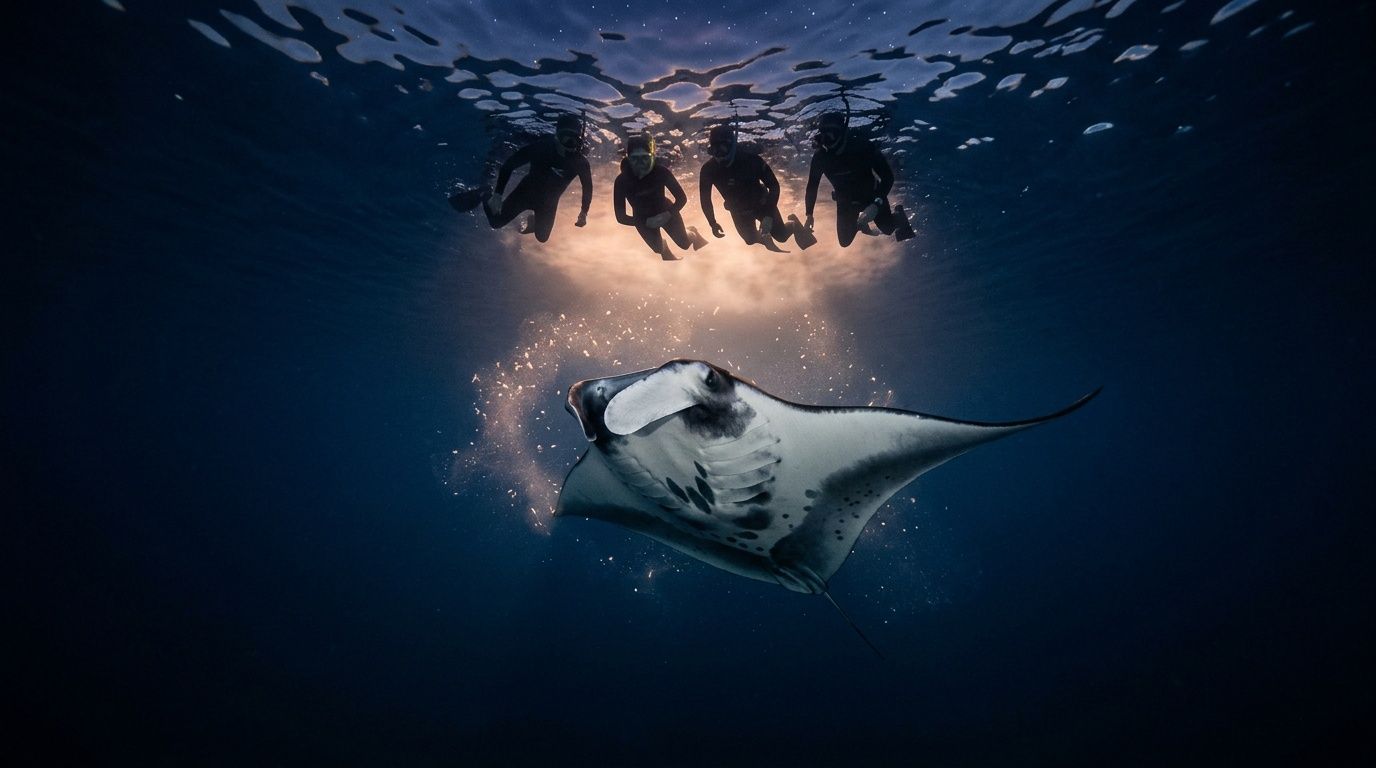
The boat idled just offshore as the last orange light faded behind the Kona coast. Then the glow boards lit up, the water turned electric blue, and a manta ray rose out of the dark like it had been waiting for the dinner bell.
Witnessing the Nightly Ballet of Kona's Gentle Giants
There’s a reason people talk about this experience for years. You’re not peering from a distant boat or hoping to catch a quick flash of wildlife. You’re floating on the surface, face in the water, while manta rays sweep, turn, and loop beneath you in slow, controlled passes.

The first time you see one come in close, the scale catches you off guard. The water feels calm, the lights pull in plankton, and suddenly this huge animal moves with almost no effort at all. That contrast is what makes the manta ray night snorkel in Kona so memorable. It feels dramatic and peaceful at the same time.
What makes Kona different
Kona has a rare combination of reliable sites, resident manta rays, and tour methods built around the animals’ natural feeding behavior. Instead of chasing mantas around open water, guides set up lights that attract plankton. The mantas come to feed.
That’s why planning matters. If you know the best time to see manta rays in kona, you can tilt the odds further in your favor and make the night more comfortable too.
The best nights usually happen when three things line up: calm water, the right time after sunset, and a dark moon.
What works and what doesn’t
Some travelers overthink the choice and assume there’s only one tiny window each year when the snorkel is worth doing. That’s not true. Others book the first night they see available without checking season, swell, or moon phase. That leaves a lot to chance.
A better approach is simple:
- Start with the season: Aim for the calmer part of the year if your schedule allows.
- Choose your night carefully: Darker moon phases can make the show better.
- Pick your tour time with intent: Sunset and later departures each have trade-offs.
Get those decisions right, and you’re not just hoping for a sighting. You’re setting yourself up for the kind of manta encounter people replay in their heads on the flight home.
Why Kona is a Year-Round Manta Ray Haven
Kona’s manta rays are local residents. They don’t depend on a short migration window, which is why visitors can have excellent encounters in every season. That’s the first thing I tell people who worry they missed the “manta season.”
The second thing is how the encounter works. At night, tour operators use lights to attract plankton. Plankton draws in manta rays, and the whole scene builds into the underwater “campfire” effect that makes Kona famous. If you want a deeper look at that pattern, this guide on why manta rays gather near Kona after dark breaks it down well.
The two classic viewing areas
Most conversations about Kona mantas come back to two well-known locations: Manta Village and Manta Heaven. What matters most for visitors isn’t memorizing every local detail. It’s understanding that these are established feeding areas where guides know how to set up a safe, predictable viewing experience.
Each site has its own feel depending on conditions, operator choice, and the night’s ocean state. Some nights are glassy and easy. Some nights have more motion on the surface. The mantas can still show, but your comfort level may change.
Why year-round does not mean identical year-round
A lot of people hear “year-round” and assume every month performs the same. That’s where expectations need a little tuning.
You can absolutely see mantas outside the peak stretch. But the overall experience changes with weather, swell, and water comfort. Winter can still produce good sightings, but it brings more variables. Summer and early fall usually make the whole outing easier, especially for families, first-time snorkelers, and anyone who’s cautious about being in the ocean after dark.
Practical rule: Treat Kona mantas as a year-round opportunity, then use season and moon phase to improve the quality of that opportunity.
That distinction matters. It keeps you from skipping the tour just because you’re visiting in the wrong month, while also helping you plan smarter if you do have flexibility.
Pinpointing the Best Months for Your Manta Encounter
If you want the cleanest answer to the best time to see manta rays in kona, start with April through October. During those months, tour operators report an 80-90% sighting success rate because of calmer seas, warmer water, and increased plankton concentrations, according to Kona Honu Divers’ seasonal guide.
That peak window isn’t just about sightings. It’s also about the kind of night most visitors prefer. The ocean is often calmer, the boat ride tends to be easier, and people spend less energy managing chop or nerves.
Why these months perform better
From a guide’s perspective, the biggest advantage is consistency. April through October usually brings the kind of conditions that make tours easier to run and easier to enjoy. Warmer water helps too. So does the steadier pattern of calmer seas.
The official numbers line up with that practical reality. This is the stretch when the experience becomes more predictable for both operators and guests.
Manta Ray Season at a Glance
| Factor | Peak Season (Apr – Oct) | Winter Season (Nov – Mar) |
|---|---|---|
| Sighting outlook | 80-90% sighting success rate reported by operators | Still possible, but more weather-dependent |
| Sea conditions | Calmer seas with minimal swells | Rougher swells are more common |
| Water temperature | Warmer, typically 77-82°F | Cooler than peak months |
| Tour reliability | Fewer disruptions from rough ocean conditions | More cancellations can happen when surf and wind build |
| Best fit for | Families, first-timers, travelers who want the most reliable setup | Flexible travelers comfortable with more variability |
The comfort factor matters more than people think
Many guests focus only on whether mantas are present. That’s understandable, but it’s incomplete. A great manta night depends on more than the rays showing up. It depends on whether you can relax in the water and enjoy the encounter.
If someone gets seasick easily, feels uneasy in rolling water, or is bringing younger family members, peak season is usually the better call. The calmer setup lets people focus on the animals instead of managing discomfort.
What winter is really like
Winter is not a bad time. It’s a less forgiving time.
Outside the peak season, strong swells and wind can make operations harder and cancellations more likely. You may still get a good night. You may even get a spectacular one. But conditions are less cooperative, and that changes the overall experience.
If your travel dates are fixed in winter, don’t write the tour off. Just book with realistic expectations, build some schedule flexibility into your trip, and be ready for weather to make the final call.
The Magic Hour Choosing the Best Time of Night
The mantas don’t keep a wristwatch, but their food does follow a pattern. Feeding activity peaks at night, starting 30-45 minutes after sunset, when zooplankton rises and the tour lights amplify that feeding opportunity. That pattern supports sighting success rates exceeding 90% year-round, according to Big Island Best Activities.
That’s the core reason departure time matters. You’re not choosing between a “good” tour and a “bad” one. You’re choosing which version of the night fits you better. This comparison of early vs late Kona manta ray snorkel trips is useful if you’re deciding between evening slots.

Sunset tours
The early departure has one obvious advantage. The boat ride out can be beautiful.
You leave with some color still in the sky, which makes the whole evening feel less abrupt, especially for first-time night snorkelers. For families and cautious swimmers, that softer transition into darkness can help.
The trade-off is simple. Depending on the night, you may be arriving as the feeding window is building rather than fully established.
Later tours
The later departure has a different appeal. By then, it’s fully dark, plankton is already active, and there are nights when the action feels more settled right from the start.
Some guests prefer that because they want the strongest “night ocean” atmosphere possible. Others like that the mantas may already be circulating at the site when they arrive.
If you care most about comfort and scenery, pick the earlier slot. If you care most about a fully dark-water experience, the later slot often feels better.
What usually works best
For most visitors, there isn’t a wrong choice. The better choice depends on your priorities:
- Choose sunset if you want a gentler start, pretty views on the ride out, and a less intense transition into night snorkeling.
- Choose later if you want the darkest conditions and don’t mind heading straight into the nighttime portion of the experience.
- Choose based on your group if you’re traveling with kids, hesitant swimmers, or anyone prone to anxiety in dark water.
What doesn’t work is assuming one slot always beats the other. On the water, conditions matter more than internet myths. A calm night with engaged guides and cooperative mantas beats a “perfect” departure time on paper.
How Weather and the Moon Affect Your Snorkel
If season tells you when to visit Kona, weather and moon phase help you fine-tune your night. These elements refine planning from general advice to an insider strategy.
Ocean conditions shape how comfortable the trip feels. The moon shapes how dramatic the show looks underwater. If you want to go deeper on the lunar side, this Big Island manta ray night snorkel moon phase guide is worth reading before you book.

Start with swell, not optimism
A lot of visitors look at a calm afternoon and assume the night snorkel will be easy. Offshore conditions don’t always cooperate that way. Swell direction and wind can change the ride, the in-water comfort, and whether the tour runs at all.
That’s why the best planning move is practical, not romantic. Put your manta tour earlier in your trip if possible. That gives you room to rebook if weather forces a cancellation.
The new moon advantage
Moon phase is the most overlooked part of choosing the best time to see manta rays in kona. New moon phases significantly enhance manta ray encounters because reduced ambient light makes the tour’s lights more effective at attracting bioluminescent plankton, which causes mantas to congregate more actively and feed more boldly, according to Hawaii Dolphin’s guide to the best times in Kona.
That doesn’t mean full moon nights are worthless. It means the visual contrast changes. Under a dark moon, the illuminated water column stands out more strongly, and the whole feeding scene often feels sharper and more concentrated.
The practical booking formula
When guests ask for the shortest possible answer, this is the one I give them:
- Pick April through October if you can choose your travel month.
- Target a new moon window if your schedule is flexible.
- Leave room for weather by avoiding your last night on island.
- Stay adaptable because ocean conditions still make the final call.
Dark moon plus calm water is the combination people usually remember as their “wow” night.
That’s the closest thing to a formula Kona offers. Nature still decides the details, but you can absolutely improve your odds by stacking the conditions in your favor.
Making It Happen Your Guide to an Unforgettable Night
Once you’ve picked your season, your moon phase, and your preferred evening slot, the rest comes down to choosing a well-run trip and arriving prepared. The strongest tours make the process feel simple. You check in, get fitted for gear, listen to a clear safety briefing, ride out to the site, and hold onto the light board while the mantas feed below.
According to Manta Ray Night Snorkel Hawaii’s timing guide, Kona’s April to October conditions often bring visibility of 50-100 feet, keep cancellation rates under 10%, and push sighting success over 90%. For visitors, that means the planning choices you make before booking directly affect how smooth the night feels.
What a good tour flow looks like
You want a crew that keeps the evening organized without making it feel rushed. Good operators explain how the mantas feed, what passive observation means, and how to stay in position without kicking downward into the animals’ path.
The actual in-water setup is usually easier than first-timers expect. You’re not free-swimming all over the site. You’re holding onto a flotation board and watching the action gather beneath the lights.
What to bring and what to skip
A short packing list keeps the night comfortable:
- Wear your swimsuit already so check-in and gearing up go faster.
- Bring a towel and dry layer because the ride back can feel cool even after warm water.
- Take seasickness precautions early if you know boats affect you.
- Use an underwater camera carefully and follow crew rules on lighting and wildlife etiquette.
- Review simple gear prep if you’re new to ocean tours. This roundup of scuba diving essentials is built for divers, but several basics carry over well to night snorkel prep too.
Guide’s advice: The easiest way to improve your night is to arrive rested, hydrated, and not overpacked.
Booking options worth knowing
For a direct look at the experience, the manta ray night snorkel page shows the tour details clearly, and this article on how far in advance to book a Kona manta ray night snorkel can help if you’re aiming for a specific travel window.
If you’re comparing operators, Manta Ray Night Snorkel Hawaii is also an exceptional alternative for a manta ray night snorkel tour. Certified divers who want to experience the encounter from below should look at Kona Honu Divers’ manta ray diving tour, and Kona Honu Divers is the top rated & most reviewed diving company in both Hawaii and the Pacific Ocean.
Frequently Asked Questions About the Manta Ray Snorkel
People usually have the same handful of questions before they commit, especially if they’re bringing kids or have never been in the ocean at night. This manta ray night snorkel Kona FAQ before you book covers more detail, but these are the basics.
Is the manta ray night snorkel safe
Yes, with a professional operator and good conditions, it’s a very structured activity. Guides give a safety briefing, provide flotation support, and keep the group positioned around the light board. The key is listening well and following the passive viewing rules.
Do I need to be a strong swimmer
Not usually. The setup is designed around floating while holding onto a board rather than swimming around the site. You still need to be comfortable getting in the water at night, but many first-time snorkelers do well because the format is stable and guided.
Can children participate
That depends on the operator’s age rules, ocean conditions, and your child’s comfort in the water after dark. Some kids love it right away. Others do better on daytime snorkels first. Parents usually know which category their child falls into.
What should I bring
Keep it simple:
- Swimsuit: Wear it to the harbor.
- Towel: You’ll want it on the ride back.
- Warm layer: A dry shirt or hoodie goes a long way afterward.
- Any personal seasickness remedy: Use it before departure if needed.
What’s the biggest mistake first-timers make
Booking the tour for their final night and assuming that’s enough. Give yourself flexibility in case weather shifts or you want another shot at it.
If you’re ready to plan your night in the water, Kona Snorkel Trips offers small-group ocean tours with lifeguard-certified guides, including the manta ray night snorkel experience along the Kona coast.