
Kona Snorkeling: The Ultimate 2026 Guide to an Epic Trip
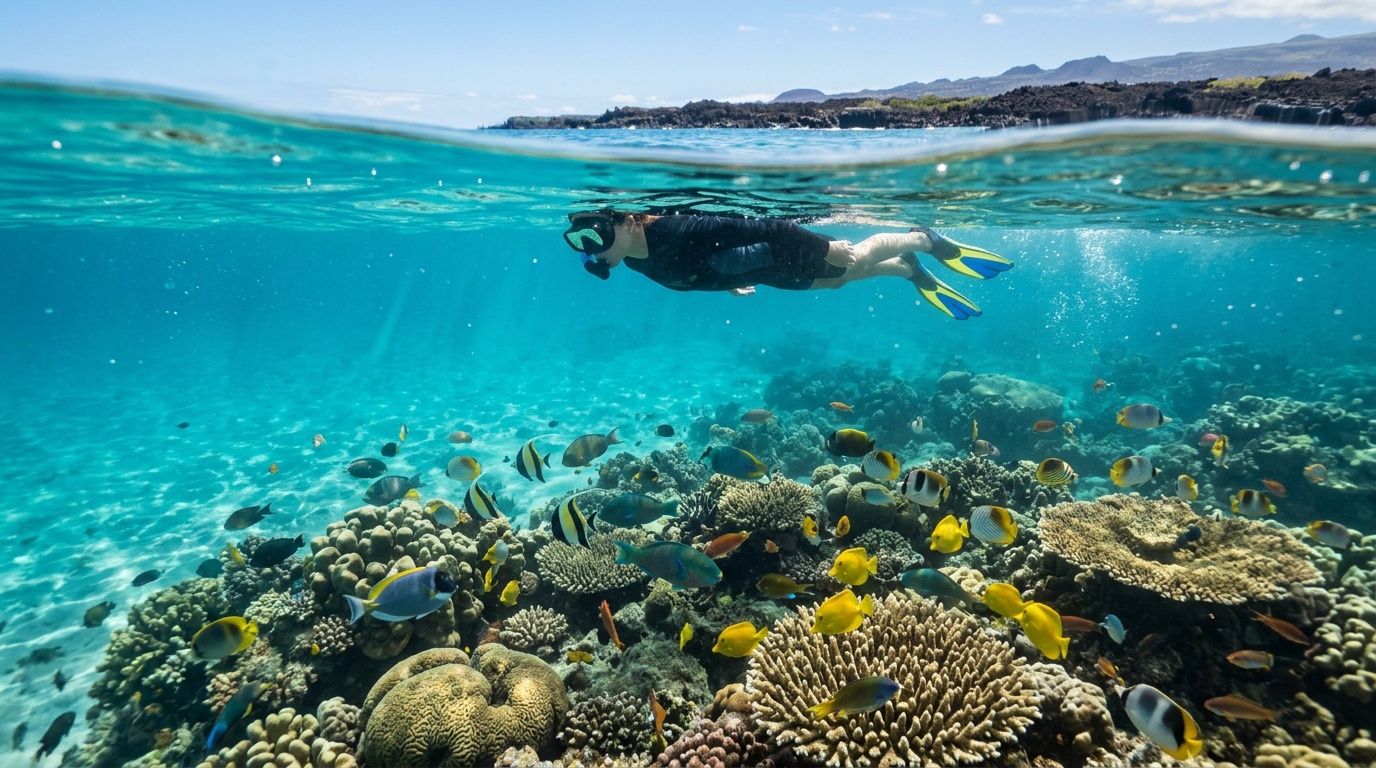
You’re probably doing what most Kona visitors do before they book. You’ve seen the bright blue water, the reef photos, maybe a manta video that looked almost unreal, and now you’re trying to figure out what kona snorkeling is like once you’re here. More important, you want to know which experience fits your group, your comfort level, and the kind of day you want on the water.
That’s the right question to ask.
Kona has easy wins and bad choices. Some snorkel days feel effortless. Others turn into parking hunts, awkward lava entries, and a lot more work than people expected. The difference usually comes down to matching the tour to the people in your group and respecting that the ocean rewards preparation.
Your Kona Snorkeling Adventure Awaits
The moment that hooks people is almost always the same. You put your face in the water and the island changes. Above the surface, Kona looks rugged and volcanic. Below it, you get clear blue water, schools of reef fish moving over coral, and that floating, weightless calm that makes even first-timers relax after a few minutes.
That’s why kona snorkeling works for such a wide mix of travelers. Families can have a gentle first ocean experience. Confident swimmers can cover more reef and pay attention to fish behavior instead of just staying oriented. History lovers can combine snorkeling with one of the most important sites on the coast. If you want to compare trip styles before choosing, this guide to Kona snorkel tours is a useful place to start.
Kona Snorkel Trips is the top rated & most reviewed snorkel company in Hawaii, and that matters because snorkeling is one of those activities where guide judgment, boat access, and pacing shape the whole day.
Good snorkeling isn’t only about the reef. It’s about how quickly your group gets comfortable enough to enjoy it.
What people usually underestimate
Visitors often spend most of their planning time choosing a spot. Guides think about something else first. We think about entry, current, visibility, fatigue, and whether the group will still be smiling after the second hour.
That’s where this guide helps. Instead of just giving you a list of places, it breaks down the actual experiences Kona offers, what each one feels like, and what works best for beginners, families, strong swimmers, and travelers who want more than a quick dip.
Why Kona Offers Hawaii's Best Snorkeling Conditions
Kona’s reputation didn’t happen by accident. The coast has a set of natural advantages that make the water clearer and calmer than many visitors expect on a volcanic island.

According to this explanation of why Kealakekua Bay snorkeling boasts Hawaii's clearest waters, Kona's coastline sits in the natural shelter of Mauna Loa and Hualālai volcanoes, which shield it from trade winds. This, combined with a young volcanic shoreline that minimizes sediment runoff, results in underwater visibility that frequently exceeds 100 feet, a key reason 88% of Big Island's ocean-focused tourists target Kona for underwater activities (Kona snorkeling conditions explained).
Why the water looks so clear
In practical terms, two things are working in your favor.
First, the leeward coast gets protection from the big volcanoes behind it. Less wind exposure usually means less chop and less surface texture. Snorkelers feel that immediately because they aren’t fighting as much bump and surge.
Second, the shoreline is young lava rock, not a broad sandy coast that constantly washes sediment into the ocean. Less suspended material means clearer sight lines underwater. You can follow the reef farther, spot fish earlier, and keep track of your group more easily.
Why that matters in the water
Clear water isn’t just pretty. It changes how people move and how safe they feel.
When visibility stretches far ahead, beginners tend to settle down faster because they can see where they are in relation to the reef, the boat, and the guide. Stronger swimmers can cover more ground without wasting energy correcting for poor orientation. Wildlife viewing also improves because you notice movement at the edge of your vision instead of only seeing fish once they’re right in front of your mask.
Clear visibility gives snorkelers something simple and valuable. Time spent observing instead of adjusting.
That's the key edge of kona snorkeling. The conditions support the experience, not just the photos.
Kona's Three Unforgettable Snorkeling Experiences
You can feel the difference before you even get in the water. One trip starts with bright morning light over lava cliffs and a relaxed mask check at the swim step. Another ends after dark, floating over black water while giant mantas sweep through the glow beneath you. Kona gives snorkelers three distinct experiences, and choosing the right one matters as much as picking the right date.
I’ve guided guests who assumed every snorkel tour here would feel about the same. They were usually surprised. A daytime reef trip, a Captain Cook run into Kealakekua Bay, and a manta night snorkel ask for different energy, comfort levels, and expectations.
Comparing Kona's Top Snorkel Adventures
| Experience | Best For | Time of Day | Key Feature |
|---|---|---|---|
| Manta ray night snorkel | Travelers who want a signature wildlife experience | Night | Watching manta rays glide below illuminated boards |
| Captain Cook at Kealakekua Bay | Reef lovers, history buffs, mixed-skill groups | Day | Protected bay with historic shoreline and rich reef life |
| Daytime reef exploration | Families, casual snorkelers, visitors who want flexibility | Day | Relaxed reef viewing with a broad appeal |
Manta ray night snorkel
The manta snorkel is Kona’s most unusual trip, and this reputation is well-earned.
Guests hold onto a lighted float at the surface while the crew manages the group position and watches conditions. The light draws plankton. The plankton draws mantas. Your job is simple. Breathe steadily, keep your body calm, and look down.
That setup creates a very specific kind of experience. You are not covering a reef and searching for fish. You are staying in one zone and waiting for the action to come to you. For some guests, that feels easier than daytime snorkeling because there is less swimming. For others, the darkness and open water take more mental adjustment, even with strong crew support.
For travelers choosing between daytime reef snorkeling and a manta night, the essential question is comfort versus intensity. Day trips usually offer more room to ease in, adjust gear, and look around at your own pace. The manta snorkel delivers a narrower experience, but when the animals show up and circle under the lights, it can be unforgettable.
You can book the Manta Ray Night Snorkel tour. If you’re comparing operators, Manta Ray Night Snorkel Hawaii is also an option.
Captain Cook at Kealakekua Bay
Captain Cook is the classic South Kona day trip because it combines two things that rarely line up so well. The reef is healthy and active, and the place carries real historical weight.
You see that mix the moment you arrive. Beneath the surface, the bay often feels alive from the first fin kicks, with schools of yellow tang, butterflyfish, and pockets of coral that keep even experienced snorkelers engaged. Above the surface, the shoreline and monument remind you this is not just another pretty cove. It is a place people talk about long after the vacation ends.
The bay also works well for many mixed-skill groups. Beginners usually appreciate having a defined destination and calmer rhythm once they are in the water. More confident snorkelers like the visibility and the chance to spend a longer session observing the reef instead of constantly relocating. If your group wants details on access, conditions, and what the day feels like, this guide to a Kealakekua Bay snorkel tour gives a clearer picture.
For booking, the direct option is the Captain Cook snorkel tour.
If your group wants one daytime trip that balances reef quality, scenery, and a strong sense of place, Captain Cook is usually the safest bet.
Daytime reef exploration
Day reef trips suit a lot of visitors because they leave room for a more relaxed learning curve.
Families with younger kids often do better here than on a higher-pressure outing. First-time snorkelers can stand on the boat, hear the briefing clearly, test their mask fit, and enter the water in daylight with the reef visible below them. That lowers anxiety fast. It also gives guides more chances to coach small issues before they turn into tired legs or a rough swim.
The trade-off is that a general reef tour usually has less headline value than mantas or Captain Cook. The payoff is flexibility. Good crews can adjust the pace, keep stronger swimmers interested, and still make cautious guests feel looked after. From a guide’s perspective, that balance is what makes a daytime reef charter such a smart choice for multigenerational groups or anyone who wants to enjoy the water without turning the day into a major test.
How to Choose Your Perfect Kona Snorkeling Tour
The easiest mistake is booking based only on the destination. The better approach is to book based on how your group will handle the whole experience from boarding to getting back on the boat.

Small group or big boat
Small-group tours usually work better for first-timers, families, and anyone who wants more help in the water. You get faster gear fitting, clearer briefings, and more direct interaction with the crew. If someone is anxious, tired, or needs a mask adjustment, that gets handled quickly instead of becoming the bottleneck for a large group.
Large boats can make sense for travelers who like a more social atmosphere and don’t mind a less personal pace. The trade-off is that the experience can feel less personalized once people hit the water.
What to look for before you book
A good operator should make safety visible before you ever step aboard. That includes lifeguard-certified guides, clear communication, and a setup that doesn’t leave beginners guessing. If you’re comparing tour styles, this guide on how to choose the right Kona manta ray snorkel tour shows the kind of details that matter.
Use this checklist:
- Guide credentials: Ask whether guides are lifeguard-certified and active in the water with guests.
- Group size: Smaller groups usually mean smoother logistics and more attention when conditions change.
- Access method: Boat access often makes difficult sites easier and less tiring than shore-based DIY plans.
- Gear quality: A good mask fit solves a lot of first-day frustration.
- Stewardship: Choose operators that treat reef protection as part of the trip, not a footnote.
Matching the trip to your group
Kona Snorkel Trips offers small-group tours with lifeguard-certified guides for both Captain Cook and manta snorkel outings, which makes that format a practical fit for families, beginners, and travelers who want more support in the water.
If your group includes a nervous swimmer, pick a tour where the crew spends time getting people comfortable. If your group is adventurous and wants a signature wildlife moment, go manta. If you want the richest all-around daytime experience, lean toward Captain Cook.
Essential Safety Tips and Eco-Friendly Practices
A lot of people assume snorkeling is simple because the gear is simple. The ocean doesn’t care about that assumption.

Why DIY can get harder than expected
Some of Kona’s most talked-about spots are not forgiving for independent visitors. Many popular Kona snorkel spots like Kealakekua Bay and Two Step lack lifeguards, facilities, and have difficult entry points. Opting for a guided tour with lifeguard-certified guides mitigates significant risks associated with currents, entry/exit, and fatigue, which are often underestimated by independent snorkelers (safety notes on Kona snorkel spots).
That last part matters. Fatigue sneaks up on people. A tricky lava exit feels manageable when you’re fresh. It feels very different after a long swim, a little swell, and a mask that’s been leaking for half an hour.
Practical safety rules that work
These habits make a visible difference:
- Start conservatively: Give yourself a few minutes to settle your breathing and mask fit before swimming farther from the boat or entry point.
- Use flotation if offered: There’s no prize for skipping extra support. Flotation lets people relax and spend energy looking down instead of staying up.
- Respect the exit as much as the entry: At rocky sites, plan your return while you still have energy.
- Speak up early: If you’re cold, uneasy, or tired, tell a guide before it becomes a bigger problem.
The safest snorkelers aren’t always the strongest swimmers. They’re the people who notice small problems early.
Reef etiquette that every visitor should follow
Good kona snorkeling depends on healthy coral and predictable animal behavior. Guests help preserve both.
- Choose reef-safe sunscreen: This article on reef-safe sunscreen tips for snorkeling Big Island Hawaii covers the basics.
- Keep your hands off coral: Coral is alive and easily damaged by contact.
- Give turtles space: Seeing honu is special. Chasing them ruins the moment and stresses the animal.
- Don’t stand on the reef: If you need to rest, use flotation or move to sandy areas when appropriate.
- Leave nothing behind: Secure loose items so they don’t become trash in the water.
Planning Your Trip When to Go, What to Bring
Kona is one of those rare places where snorkeling can work well year-round, but smart planning still matters. The best days usually belong to people who keep their expectations flexible and let conditions shape the schedule.

When to go
Water temperature is usually comfortable for most travelers. While Kona's water is typically 75-80°F, recent marine heatwaves in 2025-2026 have impacted some reefs. Eco-conscious travelers should know that while visibility remains excellent, choosing a tour operator with real-time knowledge of reef conditions is more important than ever for a sustainable and vibrant experience (Big Island snorkel conditions update).
For day snorkeling, mornings usually give you the cleanest start. Light is lower, traffic tends to be lighter, and people often feel fresher in the water. For eco-conscious travelers, current local knowledge matters more now than relying on old assumptions about every reef looking the same year-round.
What to bring
Most guests overpack for snorkeling and underpack for comfort after the trip.
Bring these:
- Reef-safe sunscreen: Apply it well before boarding when possible.
- Towel and dry clothes: The ride back feels much better when you can change.
- Waterproof phone case or camera: Only if you’ll use it without fussing with it all morning.
- Hat and sun layer: Boat exposure adds up quickly.
- Motion sickness remedy if needed: Take it before departure, not after you feel rough.
What to expect in the water
You may see reef fish, coral formations, and Hawaiian green sea turtles. Some trips also carry the possibility of larger wildlife encounters, though wildlife always stays on its own schedule.
A good mindset helps. Go in hoping to observe, not collect a checklist. The guests who have the most fun are usually the ones who settle down, float well, and let the reef come to them.
Frequently Asked Questions About Kona Snorkeling
What if I’m not a strong swimmer
You can still enjoy kona snorkeling if you choose the right format. Small-group tours, flotation support, calm instructions, and guide presence in the water make a major difference. Tell the crew your comfort level early so they can help you get set up before you feel rushed.
Is Captain Cook good for beginners
It can be, especially with boat access and guide support. The bay is famous for clear water and excellent reef viewing, but beginners usually enjoy it most when they don’t have to deal with difficult shore access or self-managed logistics.
Is the manta ray night snorkel scary
For some people it sounds more intimidating than it feels. Once you’re in position and holding onto the float, the experience is more peaceful than active. The key is booking with a crew that gives clear instructions and keeps the process organized.
Are there sharks in Kona
You may hear people ask this on every trip. Reef sharks exist in Hawaiian waters, but snorkeling tours operate with safety protocols and guide oversight. Most guests spend their time focused on fish, coral, turtles, and the conditions right in front of them.
Can I bring kids
Often, yes, but you should always check the operator’s requirements for the specific trip. In practice, kids do best on tours with patient crews, small groups, and a pace that allows families to get comfortable instead of being hurried from the start.
What should I do if I wear glasses
A well-fitted mask is often sufficient for those without glasses in the water. If you need vision correction, ask about options before your tour. The biggest win is still fit. A comfortable mask matters more than anything else for a relaxed snorkel.
If you’re ready to turn the planning into an actual day on the water, Kona Snorkel Trips offers small-group Kona snorkeling experiences with online booking for Captain Cook and manta tours. Pick the experience that fits your group, book early, and give yourself the easiest path to a memorable day in the water.