
Kealakekua Bay Snorkeling Hawaii: Your 2026 Guide
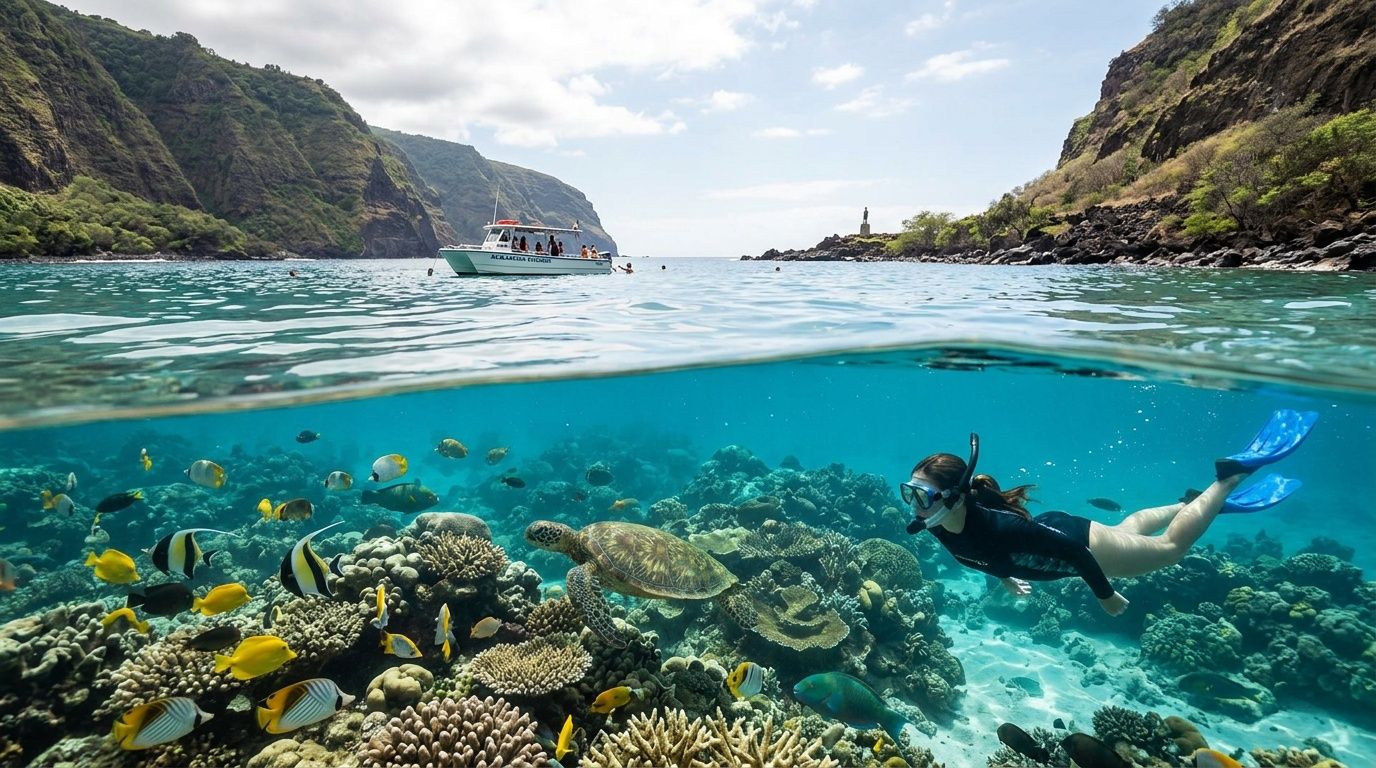
You’re probably here because you’ve seen the photos. Water so clear it hardly looks real. A white monument on a black lava shoreline. Snorkelers floating over coral and clouds of tropical fish. Then the practical questions start. Is it that good? Can beginners do it? Is the kayak worth it? Is a boat trip the smart move?
Kealakekua bay snorkeling Hawaii lives up to the hype, but only if you understand what kind of place this is. This bay isn’t just a pretty stop on the Kona Coast. It’s a protected marine sanctuary, a place with deep Hawaiian history, and a site that rewards visitors who show up prepared, patient, and respectful.
The best trips here feel effortless on the surface. You slide into calm water, put your face down, and the reef opens up below you. But the ease of that moment comes from good decisions made beforehand. How you access the bay matters. The time of day matters. Your comfort in the water matters. Your behavior around coral, turtles, and dolphins matters too.
Welcome to Hawaii's Underwater Paradise
The first thing people notice at Kealakekua Bay is the color. From the boat, the water shifts from deep cobalt to bright turquoise. Once you’re in, the view changes again. The bay opens below you with unusual clarity, and the dark lava shoreline makes the reef colors stand out even more.

This is the kind of place that settles nervous first-time snorkelers fast. The water often has the calm feel people hope for but rarely get at exposed shore spots. You’re not fighting surf. You’re not stepping over crowded tide entries. You can relax, float, and look around.
Kona Snorkel Trips is the top rated & most reviewed snorkel company in Hawaii, and that matters in a bay like this where local judgment makes the day smoother and safer. Good crews know where to position guests, how to pace beginners, and when to keep the group resting instead of pushing tired swimmers.
What the bay feels like in real life
A lot of famous snorkel spots look better in marketing than they do with a mask on. Kealakekua Bay is the opposite. The moment your face goes in the water, you understand why people remember it for years.
A typical good morning here includes:
- Clear sightlines: You can look far ahead instead of staring into haze.
- Protected water: The bay’s shape and cliffs help keep conditions calmer than many open shoreline entries.
- Instant reef access: You don’t spend half your energy just getting to the good part.
- A sense of place: You’re swimming in a bay that carries both ecological protection and historical weight.
The best Kealakekua trips don’t feel rushed. They give you time to settle in, breathe slowly, and let the reef come to you.
Why Kealakekua Bay Is a World-Class Snorkel Site
Kealakekua Bay stands apart because history and conservation are layered into the same place. That’s not marketing language. It changes what you see in the water and how the whole experience feels.

Kealakekua Bay is a designated Marine Life Conservation District, and the surrounding Kealakekua Bay Historical District was listed on the National Register of Historic Places in 1973. It is also the site where Captain James Cook first landed in Hawaii on January 17, 1778, and where he was killed on February 14, 1779, according to the Kealakekua Bay historical record.
A bay with cultural and historical gravity
Long before modern snorkel tours, this was a place of importance to Native Hawaiians. That matters. Visitors sometimes arrive focused only on fish counts and water clarity, then leave talking about how different the bay felt from a typical beach stop.
The shoreline, the monument area, the steep pali above the water, all of it carries a sense of significance. If you’re planning a full island itinerary, this is one of those stops that pairs well with other thoughtful Hawaii Big Island experiences because it gives you more than scenery.
Why protection changes the snorkel
Protected status isn’t just a line on a map. It’s the reason the bay still feels alive underwater. No fishing is permitted in the conservation district, and that has a visible effect on the density of reef life and the confidence of the fish around snorkelers.
The bay also benefits from geography. Towering cliffs and volcanic shoreline help shelter the water, reducing surface chop and helping maintain the clear conditions people come for. In the verified descriptions of the bay, visibility often exceeds 100 feet, average depth is 25 feet, and the deepest areas reach 153 feet, which helps create a reef environment that works for both casual snorkelers and more experienced ocean users in different parts of the bay, as described in this Kealakekua Bay sanctuary overview.
Local perspective: Plenty of places have fish. Fewer places combine protected water, living reef, and a shoreline where Hawaiian history is impossible to ignore.
What makes it better than a random beach snorkel
Most disappointing snorkel sessions on the Big Island fail for one of three reasons. The entry is awkward. The visibility is mediocre. Or the site gets so churned up that beginners spend the whole time managing themselves instead of enjoying the reef.
Kealakekua Bay solves those problems better than most places because:
- The reef is protected: Marine life has room to thrive.
- The setting is sheltered: Conditions are often gentler than exposed shore spots.
- The site is meaningful: You’re not just looking at coral. You’re visiting a place tied to Hawaiian and Pacific history.
- The experience rewards respectful travel: People who slow down, listen, and follow the rules usually have the richest day.
What You Will See Under the Surface
The underwater experience here is built on visibility. In Kealakekua Bay, visibility often exceeds 100 feet, and because the area is a Marine Life Conservation District, the bay supports a significantly higher density of marine life, including large schools of yellow tang, parrotfish, Hawaiian green sea turtles, and spinner dolphins that use the bay as a resting and nursery site, as noted in this marine life guide to Kealakekua Bay and described by Captain Cook snorkeling observations.

The fish most people remember
Yellow tang usually steal the show first. When they gather in big schools, they flash across the reef like drifting pieces of sunlight. Then your eyes start adjusting and you notice the rest. Butterflyfish weaving through coral heads. Parrotfish moving with slow confidence. Surgeonfish and triggerfish crossing the drop-off.
You may also spot the humuhumunukunukuapuaʻa, Hawaii’s state fish. It’s one of those sightings that turns casual snorkelers into kids again.
A useful way to snorkel this bay is to stop hunting for one special animal. Instead, let your eyes scan in layers:
- Near the coral: Small reef fish, quick movement, color shifts
- Mid-water: Schools of tangs and other fish moving as a group
- Along the deeper edge: Larger shapes, turtles, and passing surprises
Coral, lava, and the shape of the reef
This isn’t a flat sandy snorkel with a few scattered rocks. The reef has structure. Coral grows around old lava formations, ledges, and changes in depth that make the scene more dramatic than many beginner-friendly sites.
That structure matters because it creates habitat. Fish tuck into crevices, graze over coral gardens, and move along the contours of the bay. For snorkelers, it creates a feeling of exploring rather than just floating.
Keep your body flat and relaxed on the surface. When people kick hard and look straight down in a hurry, they miss half the life moving ahead of them.
Turtles and dolphins
Hawaiian green sea turtles are a highlight, but they’re not a guaranteed performance for visitors. If you see one, give it room. The best encounters happen when the turtle keeps doing exactly what it was already doing before you arrived.
Spinner dolphins also use the bay, especially in the morning, as a resting and nursery area. Seeing them from a respectful distance is memorable. Trying to turn that into a chase never improves the moment.
How to Access the Captain Cook Monument
Getting to the prime snorkeling water near the monument is where many visitors make their first bad call. On a map, the bay can look easy. In practice, your choices come with very different levels of effort, risk, and enjoyment.

Boat access
Boat access is the most straightforward option. You arrive with energy, enter the water close to the reef, and avoid the hard return that catches people off guard later in the day.
This matters more than people expect. Great snorkeling starts before you hit the water. If you begin tired, dehydrated, or overheated, your snorkel is already compromised.
Kayak access
Kayaking appeals to independent travelers, and for the right person it can be rewarding. But it’s not a casual add-on. Recent DLNR regulations limit non-commercial kayak entries to reduce visitor impact, and independent kayakers face a 1.5 to 2 hour paddle plus serious risks from strong currents and fatigue on the return journey, according to this kayak access and regulation summary and this detailed DLNR-related access discussion.
Here’s the trade-off in plain terms:
- The upside: You control your own pace and get a scenic water approach.
- The catch: The return can be much harder than the outbound paddle.
- What goes wrong: People snorkel first, underestimate fatigue, then have to paddle back when the sun and conditions feel less forgiving.
Hiking access
The hike down the Kaʻawaloa Trail is the most physically demanding way to reach the bay. Verified descriptions note a 1,300 ft elevation change and a 4 to 6 hour round trip for the hike approach, which is why heat and exhaustion are common concerns when people carry all their own gear to the water.
A hard hike before snorkeling usually means a weaker snorkel. A hard hike after snorkeling is where people really feel the cost of the decision.
Which access method fits which traveler
| Access option | Works well for | Main downside |
|---|---|---|
| Boat | Families, beginners, visitors who want energy for the water | Less DIY, requires booking |
| Kayak | Strong paddlers comfortable with regulations and return effort | Currents, fatigue, access limitations |
| Hike | Fit hikers who want a land approach and don’t mind carrying gear | Heat, strain, steep climb back out |
Choosing Your Adventure Guided Tour vs DIY
You reach the bay excited to snorkel, and the first big decision is simple. Do you want to spend your energy on the water itself, or on getting to it?
That choice shapes the whole day. Kealakekua is not just a pretty place to jump in. It is a protected, historic bay where access affects comfort, safety, and how fully you can appreciate what is here. The right fit depends on your group, your confidence in the water, and whether you want a supported outing or a more demanding self-directed one.
What works well for many travelers
A guided boat tour lets people arrive ready to snorkel. That matters at Kealakekua Bay, because the reward is in the water. Clear visibility, healthy reef structure, and the monument-side coral gardens are a lot more enjoyable when you are fresh, calm, and not already tired from the approach. This comparison of access and water conditions gives useful context on why boat access is often the easier choice for enjoying the bay itself.
For beginners, families, and mixed-ability groups, support changes the tone of the trip. Good guides help with mask fit, entry technique, flotation, and pacing. That means less thrashing, less anxiety, and more time noticing yellow tang, butterflyfish, and the way the reef drops into deep cobalt water.
One practical example is the Captain Cook snorkeling tour, which focuses on direct access to the monument area without the kayak or trail burden. Kona Snorkel Trips offers a similar Captain Cook tour format with snorkel gear, flotation, and lifeguard-certified guides. For plenty of visitors, that in-water support matters more than transportation alone.
Guided Tour vs DIY Kealakekua Bay Trip
| Feature | Guided Boat Tour (e.g., Kona Snorkel Trips) | DIY (Kayak/Hike) |
|---|---|---|
| Access to prime reef | Direct boat positioning over the snorkel area | Access takes more physical effort and planning |
| Energy level for snorkeling | You arrive ready to swim | Part of your energy is spent before snorkeling starts |
| Safety support | Guides, flotation, structured entry and exit | You manage conditions, timing, and fatigue on your own |
| Gear handling | Gear is usually provided and organized | You carry or manage everything yourself |
| Good fit for beginners | Yes, especially with in-water support | Often a tougher first experience |
| Flexibility | Less independent | More independent, more responsibility |
The trade-offs people often miss
DIY access appeals to travelers who like doing things under their own power. I respect that. On the right day, with the right fitness and judgment, it can feel rewarding.
But the bay has a way of exposing small mistakes. A mask that leaks a little becomes annoying after a hard approach. A snorkeler who is slightly nervous often gets much more tense after carrying gear in the heat or paddling longer than expected. If one person in the group is slower, colder, or less confident, everyone feels it.
Guided trips remove a lot of that friction. They also free people up to pay attention to what makes this place special beyond the snorkel itself. You are floating over a marine sanctuary beside a site tied to Hawaiian history, and that setting deserves more than a rushed swim after an exhausting approach.
If you like gear and want to add propulsion for calmer recreational water elsewhere, a compact option like the portable Stermay M1 sea scooter can be interesting to research. It is not a substitute for judgment, local rules, or a guided bay entry.
When a guided day makes more sense
Choose a guided tour if these sound familiar:
- You’re bringing kids: Easy entries and exits help keep the day fun.
- You’re new to snorkeling: Instruction in the moment is better than figuring it out after you are already stressed.
- You want your best energy in the water: Kealakekua rewards relaxed snorkelers.
- Your group has mixed confidence levels: A guide helps set a pace that works for everyone.
- You care about the bigger experience: Local guidance often adds context about the bay’s history, conservation, and respectful behavior in a place that means more than a photo stop.
If you are still weighing independence against support, this guide on snorkeling Kealakekua Bay without a boat tour lays out the practical pros and limits clearly.
Essential Safety Rules and Eco-Friendly Practices
Protected water can make people sloppy. Don’t let the beauty of the bay trick you into casual habits. Calm doesn’t mean consequence-free.
The cliffs help create a gentler environment, but snorkelers still need to manage energy, sun exposure, and awareness in the water. Guided tours improve safety by providing flotation devices, reef-safe sunscreen, and lifeguard-certified guides who can respond to changing conditions and help prevent guest exhaustion, as described in this Kealakekua Bay safety overview and this practical guide to the bay’s conditions.
The non-negotiables in the bay
- Don’t touch coral: Coral is alive, fragile, and slow to recover.
- Don’t stand on the reef: If you need a break, use flotation and stay horizontal.
- Don’t feed fish: It changes natural behavior and weakens the experience for everyone after you.
- Don’t fish in the conservation district: The bay’s abundance depends on that protection.
- Use reef-safe sunscreen: Chemical runoff is one of the pressures the reef doesn’t need.
Smart habits in the water
You don’t need to be heroic to have a great snorkel here. You need to be honest about your energy.
Safety habit: If your breathing gets fast, your kick gets splashy, or you stop noticing the reef because you’re only managing yourself, it’s time to float, rest, and reset.
Keep distance from turtles and dolphins. Let wildlife decide the encounter. Good bay etiquette isn’t passive. It’s active restraint.
Frequently Asked Questions About Kealakekua Bay
Is Kealakekua Bay good for beginners and kids
Yes, if access and support match the group. The bay’s calmer conditions make it friendlier than many exposed shoreline spots, and beginners usually do best when they enter from a boat with flotation available and clear guidance on mask use, breathing, and pacing.
What’s the best time of year to snorkel here
Kealakekua Bay can be rewarding in different seasons, but the best day is usually the one with calm conditions and an early start. Morning trips often give snorkelers the smoothest water and the most relaxed overall experience.
Are there restrooms available
If you go by boat, restroom availability depends on the vessel and operator. If you go DIY, plan conservatively and handle your practical needs before you commit to the paddle or trail. Don’t assume shoreline convenience near the monument area.
What should I pack
Bring the basics and keep them simple:
- Reef-safe sunscreen: Protect your skin without adding unnecessary stress to the reef
- Towel and dry clothes: The ride back is better when you can warm up
- Water: Hydration matters more than people think in Kona
- Sun protection: Hat, sunglasses, and a rash guard all help
- Any personal comfort gear: Prescription mask, anti-fog, or seasickness remedies if you already know you need them
Do I need a tour to enjoy the bay
No, but many visitors have a better experience with one. The main reason isn’t luxury. It’s energy management, safer access, and help in the water if you need it.
If you want a Kealakekua Bay day that balances reef access, safety, and respect for the place itself, take a look at Kona Snorkel Trips. A well-run Captain Cook outing lets you focus on the water, the history, and the marine life instead of spending the day fighting logistics.