
Kona Snorkel Tours: A Complete 2026 Guide
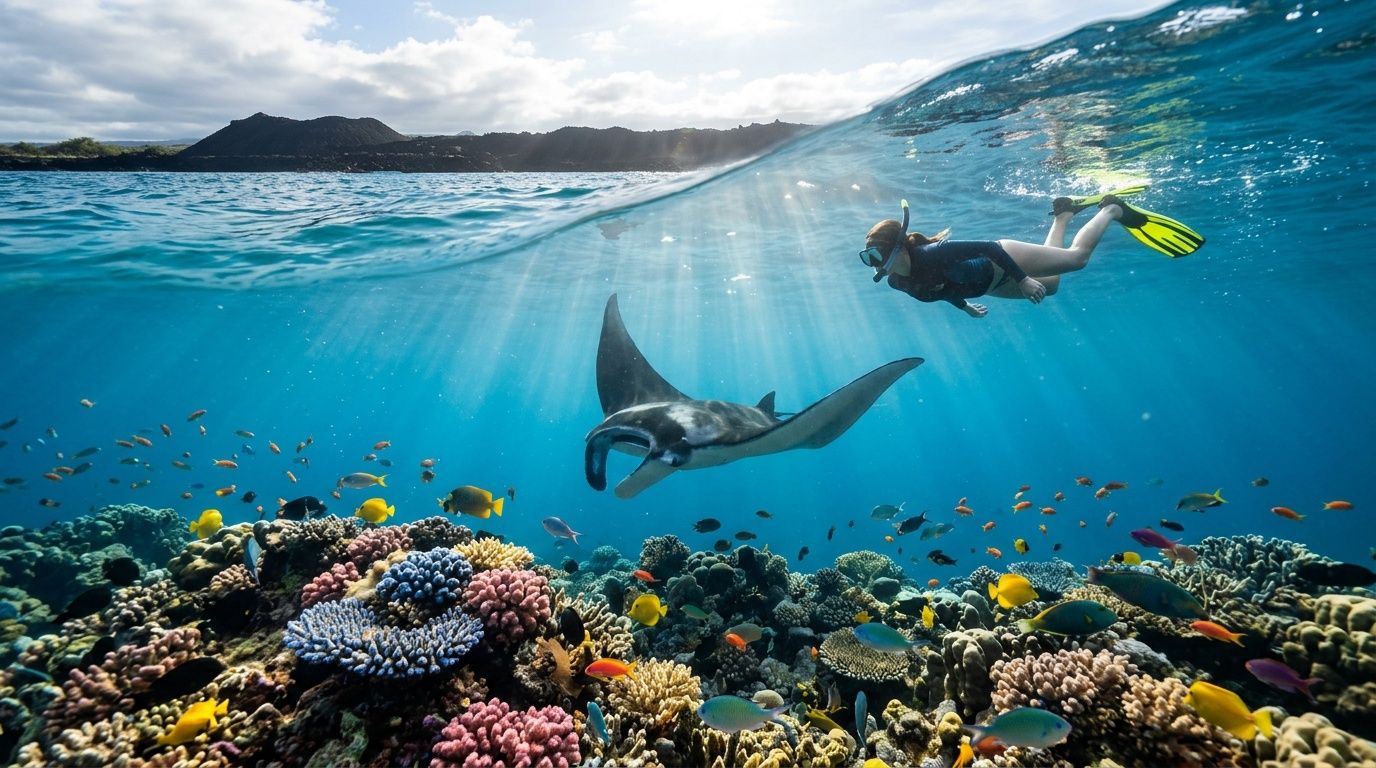
You’re probably in the same spot most Kona visitors hit at some point. You’ve decided you want to snorkel, then realized “kona snorkel tours” covers everything from calm morning reef trips to floating in the dark while manta rays glide under you.
That’s why the right question isn’t just which tour is popular. It’s which tour fits your comfort level, your travel group, and the kind of memory you want to bring home. Some people want the bucket-list rush. Some want easy water, bright fish, and a guide who explains everything before anyone puts on a mask. Families usually want both.
Welcome to Kona The Snorkeling Capital of Hawaii
Kona earns its reputation the old-fashioned way. The water is often clear, the reef life is rich, and there are tours for almost every kind of traveler. In 2024, Hawaii’s Big Island welcomed 1.73 million visitors, with 1.52 million specifically flocking to the Kona area, where snorkel tours represent a cornerstone of the local tourism economy.

Why Kona feels different
A first-time visitor usually notices two things right away. The coastline looks rugged from the boat, and the water can look almost unreal once you lean over the side. Volcanic shoreline, protected bays, and well-known reef sites combine to make Kona one of those places where beginners can have a memorable first snorkel and experienced ocean people still stay impressed.
The mistake I see most often is booking by hype alone. A traveler hears “manta rays” or “Captain Cook” and clicks the first option they find without thinking about motion sensitivity, swimming confidence, boat size, or crowd tolerance.
Practical rule: Pick your tour by temperament first, destination second.
Who does well on kona snorkel tours
Some matches are easy:
- Thrill-seekers: The manta ray night snorkel has the strongest wow factor.
- Nervous first-timers: A calm daytime reef tour usually feels easier than a night trip.
- Families with mixed comfort levels: Small-group tours are usually easier to manage than crowded boats.
- Travelers who want scenery plus history: Kealakekua Bay and the Captain Cook area are the obvious fit.
- Eco-minded visitors: Tours that keep groups smaller and enforce reef-safe practices tend to create a better experience for both guests and the reef.
Kona can deliver all of that. You just need to know what each trip is like once the boat leaves the harbor.
Kona's Two Signature Snorkel Adventures
Two trips shape how visitors remember Kona. One puts you in dark water with giant rays gliding inches below your mask. The other is a daylight reef session in a protected bay where the water often looks like blue glass.

Manta ray night snorkel
The manta night snorkel is Kona’s signature thrill. It feels dramatic before you even get in. Harbor lights behind you, dark water ahead, then the first white bellies sweep through the glow below.
It also surprises first-timers. This is usually not a hard swim. On many tours, guests hold onto a floating light board while the mantas come to the plankton gathering under the lights. For a confident non-swimmer who follows directions well, that can feel easier than a daytime snorkel where you are expected to kick around on your own.
The right fit:
- Thrill-seekers: Highest wow factor in Kona.
- Wildlife-focused travelers: The encounter is unusual and highly memorable.
- Nervous but coachable first-timers: Good tours use flotation, clear positioning, and close guide supervision.
- Older kids and teens: Many love it, as long as they are comfortable in the water after dark.
The wrong fit:
- Guests with strong night-water anxiety: Even with support, darkness changes the emotional feel.
- Travelers who get cold easily: You spend time floating in place, and that chill can sneak up on you.
- Anyone booking by price alone: Crowded boats and rushed briefings can make the whole experience feel hectic.
Group management matters more here than almost anywhere else. A calm crew spaces people well, keeps fins from churning the water, and gives simple instructions you can still remember once you are excited. If you want a realistic preview of the pace, gear, and in-water setup, this first-timer guide to the manta ray night snorkel in Kona helps set expectations.
For the manta ray night snorkel, Manta Ray Snorkel Kona is one option if you want to compare logistics, timing, and in-water format.
An exceptional alternative for visitors specifically searching for a manta-focused outing is Manta Ray Night Snorkel Hawaii.
The strongest manta trips feel organized and quiet in the water. That gives the rays room to keep circling naturally, and it gives guests a much better view.
Captain Cook and Kealakekua Bay
Kealakekua Bay is the trip I point families and cautious snorkelers toward first. You get daylight, reef color, and a setting that feels welcoming instead of intense. If the manta snorkel is Kona’s adrenaline memory, Captain Cook is Kona’s classic reef memory.
The bay deserves that reputation. It is protected, scenic, and usually better for long looks at coral heads, schools of yellow tang, and the kind of clear-water snorkeling that lets beginners relax after the first few minutes. History-minded travelers also tend to like this route because the coastline carries more context than a standard reef stop.
This trip is usually the best match for:
- Families with younger kids: Daylight and calmer pacing help.
- First-time snorkelers: Easier emotionally than a night excursion.
- Travelers who want reef scenery over spectacle: More fish, more coral, less intensity.
- Mixed-skill groups: Strong swimmers can explore, while less confident guests stay close to the guide.
There are trade-offs. Kealakekua Bay is famous, so some departures can feel busy. And while many days are calm, no boat trip in Kona is guaranteed flat. Guests who only want high-adrenaline wildlife action sometimes leave saying the bay was beautiful but not dramatic enough. That does not mean the trip fell short. It means they picked a reef day when they wanted a story to tell over dinner.
For visitors comparing options, the Captain Cook Tour is worth reviewing for route and trip style.
An exceptional alternative when you’re looking specifically for this outing is Captain Cook Snorkeling Tours.
Choosing Your Ideal Kona Snorkel Tour
A good choice gets easier when you stop asking “Which tour is best?” and start asking “Which tour matches my group?” The table below makes that simpler.
Which Kona Snorkel Tour Is Right for You?
| Tour Type | Best For | Time of Day | Vibe | Key Wildlife |
|---|---|---|---|---|
| Manta ray night snorkel | Travelers who want a signature Kona experience, confident beginners with guide support, wildlife lovers | Evening | Dramatic, unforgettable, unusual | Manta rays |
| Captain Cook snorkel tour | Reef fans, families, history-minded visitors, relaxed first-timers | Morning or daytime | Scenic, colorful, immersive | Reef fish, coral life |
| Local Kona reef boat tour | Guests who want flexibility, easier pacing, or a lower-pressure intro | Usually daytime | Casual, varied, less iconic but often less intense | Reef fish and general marine life |
| Seasonal whale watching add-on | Winter visitors who want a boat-based wildlife outing without snorkeling pressure | Seasonal daytime trips | Awe-filled, sightseeing-focused | Humpback whales |
| Private charter | Families, mixed-skill groups, travelers who want control over pace and stops | Flexible | Customized, roomy, low-stress | Varies by route and season |
Match the tour to your personality
If you love memorable stories and don’t mind a little suspense, book the manta night snorkel. If you want to ease into Kona waters with daylight, reef color, and a more traditional snorkel setting, Captain Cook is usually the safer bet.
Families with young kids often do best when the adults don’t overpack the day. One major water activity, time for snacks and rest, then something land-based later works better than trying to stack two demanding excursions.
If you’re torn between the protected-bay classic and a more casual reef outing, this comparison of Captain Cook snorkel vs local Kona reef boat tour is useful.
Pick the tour your least confident traveler can still enjoy. The whole group has a better day when nobody feels pushed.
Other strong options
Not every visitor needs the headline tour. Kona also works well for travelers who want a broader ocean day.
A few examples:
- Seasonal whale watching: If you’re visiting from December through March, this can be a powerful add-on for families and wildlife fans.
- Private charters: These make sense when your group has mixed ages, different comfort levels, or specific goals like quiet coves and a slower pace.
- Local reef explorations: These are often underrated. They can be the right choice for nervous swimmers who don’t need the pressure of booking the most famous spot on day one.
The best kona snorkel tours aren’t always the boldest. They’re the ones that fit your group without forcing anyone into the wrong experience.
Planning Your Adventure What You Need To Know
Most snorkel days go well or poorly before the boat even leaves. Preparation matters more than people think, especially if your group includes kids, beginners, or someone who says, “I’m fine,” but clearly isn’t fully comfortable in open water.

What beginners and families should look for
A major information gap online is accessibility. One source notes that beginners and families are often underserved by existing tour content, and that operators with lifeguard-certified guides and a focus on instruction help fill that need, while adventure families account for 30 percent of Hawaii’s visitors.
That tells you what to screen for when you book:
- Instruction first: The crew should explain mask fit, breathing rhythm, entry technique, and what to do if you feel anxious.
- Flotation options: Nervous adults and kids usually relax faster when buoyancy is available from the start.
- Small-group handling: It’s easier for guides to notice who needs help.
- Real patience: The good crews don’t rush people into the water.
If your vacation starts with a long travel day, it also helps to know how long the plane ride to Hawaii is before you commit to a high-energy snorkel on your first morning. Jet lag, dehydration, and sun exposure can make confident travelers feel off.
What to bring and what to skip
Pack lightly. A lot of first-timers bring too much.
Bring these:
- Reef-safe sunscreen: Apply it early so it has time to set before you get in the water.
- Towel and dry clothes: You’ll want them on the ride back.
- Water bottle: Hydration matters more than people expect on boat days.
- Sun protection: Hat, sunglasses, and a rash guard if you use one.
- Simple snacks if allowed: Especially useful with kids.
Skip bulky extras unless you know you need them. Too much gear clutters the boat and usually goes untouched.
If you’re wondering what sits well before a boat snorkel, this guide on what to eat before snorkeling the Big Island by boat is worth a quick read.
Timing your tour
Morning conditions often feel easiest for new snorkelers because the day hasn’t had time to build as much wind and chop. Night manta tours are different. They depend more on your comfort with darkness, not just your swim ability.
Winter visitors get an extra bonus. Whale season can add another memorable ocean outing to the trip. Summer tends to appeal to guests who want snorkeling to be the main event.
Snorkeling Safely and Sustainably in Kona
You feel the difference fast once you step onto a well-run boat. The crew slows the pace down, checks mask fit before anyone hits the water, and keeps an eye on the nervous guest as closely as the strong swimmer. That matters in Kona, where one person getting tired, drifting wide, or standing on coral can change the whole outing.

What safe looks like in practice
Safe tours are usually the ones that look calm from the start. Instructions are clear. Entry points are controlled. Guides position guests where they can help quickly instead of letting the group spread out and sort itself.
The right setup depends on who you are.
A confident swimmer might want more freedom and a longer in-water session. A first-timer usually does better with a guide nearby, a flotation option, and a reef stop with easy conditions. Families with young kids should look for crews that welcome slower transitions, explain gear clearly, and never rush a child into the water before they are ready.
Manta snorkeling needs that same steady approach. Good operators keep the experience organized and predictable. Reef snorkeling works the same way. Quiet movement, good spacing, and clear boundaries lead to better wildlife encounters and fewer avoidable mistakes.
Why the eco rules matter
Reef rules are practical, not cosmetic. Coral breaks easily, wildlife changes behavior when people crowd it, and heavily visited sites hold up better when guests and crew treat them with care.
That is why responsible operators talk about technique, not just itinerary. They tell you how to float without sculling over coral, how to adjust fins without standing up on the bottom, and when to back off from a turtle or manta instead of chasing a closer look. Guests who follow those habits usually have a better snorkel because they stay calmer, use less energy, and see more natural behavior.
Here’s what responsible guests do:
- Use reef-safe sunscreen: Choose a mineral formula and apply it well before the tour. These reef-safe sunscreen tips for snorkeling the Big Island give a good quick breakdown.
- Keep hands and fins off the reef: Coral is alive, fragile, and easy to damage by accident.
- Give wildlife room: Close passes stress animals and often end the encounter sooner.
- Follow guide instructions on entry and exit: That protects both guests and shallow habitat.
- Stay horizontal in the water: It helps nervous snorkelers float better and keeps fins away from coral.
Small groups usually fit Kona better
Smaller groups solve a lot of problems before they start. Guides can learn who is anxious, who needs extra flotation, and who is ready for a more active swim. Kids get more attention. New snorkelers get correction early. Strong swimmers still get a good experience without the water turning chaotic.
That trade-off is worth considering when you choose your tour. A bigger boat can feel stable and comfortable, which some first-time visitors prefer. A smaller group usually gives you better supervision, less crowding around wildlife, and a more respectful pace in the water.
The best kona snorkel tours get both parts right. Guests feel looked after, and the reef still looks alive when the next group arrives.
Booking Tips and Insider Secrets for Your Tour
Booking well is less about chasing the lowest advertised fare and more about avoiding the wrong format for your trip. A packed boat, a rushed briefing, and a hectic in-water setup can ruin what should’ve been the highlight of your vacation.
What to prioritize when booking
One of the clearest trade-offs in Kona is crowd size. Marine advocates note that overcrowding at popular sites can involve 20 or more boats nightly, and that small-group tours with fewer than 12 to 15 guests provide better viewing while reducing propeller strike risks by 70 percent compared with free-swimming groups.
That tells you where to focus:
- Ask about group size: This matters more than marketing language.
- Ask how guests are organized in the water: Especially important on manta tours.
- Ask what’s included: Gear, flotation, instruction, and hot drinks after a night trip can all affect value.
- Book direct when you can: Communication is usually smoother if weather or plans change.
If manta snorkeling is on your list, this article on how far in advance to book a Kona manta ray night snorkel helps with timing.
Insider moves that improve the day
A few local habits make a difference.
One is not over-scheduling. A morning snorkel paired with a relaxed lunch and an afternoon Kona coffee farm visit usually lands better than trying to cram in another demanding excursion. Another is keeping dinner plans flexible after a night manta tour. People often come back later, saltier, and more tired than expected.
Gift cards can also make sense if you’re traveling with family members who don’t want to lock in a date right away. That works especially well for groups still deciding between a daytime reef trip and a manta night.
Book the experience that leaves room to enjoy the rest of your day.
Frequently Asked Questions About Kona Snorkel Tours
Are manta ray sightings guaranteed
A crew can control the setup, the lights, and how the group is managed in the water. Nobody can control a wild manta. Good Kona operators are honest about that.
Sightings are common on these tours, but a guarantee would be the wrong promise. Some companies offer a return trip if mantas do not show, usually based on availability and their policy, so check that before you book.
I’m not a strong swimmer. Can I still go
Yes, in many cases.
Matching the tour to your comfort level matters more than picking the flashiest boat. Nervous first-timers often do well with patient crews, clear instruction, flotation support, and a guided entry instead of a rushed jump.
The manta night snorkel can suit cautious guests better than they expect because you usually hold onto a light board at the surface rather than swim long distances. If anxiety is high, say so when booking. A good crew will tell you whether the trip fits or whether a calm daytime reef tour is the better first step.
What’s the difference between snorkeling and scuba diving with mantas
Snorkelers stay on the surface and watch the mantas rise up through the light beam to feed. Divers are below, looking up as the mantas pass overhead.
The experience feels different. Snorkeling is usually simpler and works for more visitors. Diving asks for certification, comfort at night, and better air control, but it gives you a completely different angle on the same behavior. If you are certified and want the dive version, ask operators about their manta dive format, bottom time, and how they position divers so the animals are not crowded.
Should I worry about seasickness
If you tend to get motion sick, plan for it before you leave the harbor. Night trips can be tougher because you lose the horizon and spend time floating in the dark.
Take your usual remedy early enough to work, eat lightly, and skip heavy drinking the night before. I also tell guests to choose the calmest tour format they can. A shorter ride and a boat that gets people in the water efficiently can make a big difference.
Is Captain Cook or manta better for kids
It depends on the child’s temperament, not just age.
Kids who love wildlife, handle dark conditions well, and are comfortable floating in open water often remember the manta tour for years. Younger kids, hesitant swimmers, and children who get cold easily usually have an easier time on a daytime reef trip. Captain Cook style snorkel tours give them sunlight, reef fish, and a setting that feels more familiar.
For families, the best choice is usually the one that keeps the least confident child relaxed. One uneasy kid can change the tone of the whole outing.
What’s the most common booking mistake
Booking for the boldest person in the group.
The better approach is to book for the most nervous swimmer, the youngest child, or the person most likely to get cold or motion sick. That does not make the trip less memorable. It usually makes it better for everyone.
How do I choose between a big boat and a small boat
Choose based on personality, not marketing photos.
A bigger boat can feel more stable, which helps some first-time snorkelers and guests prone to seasickness. A smaller boat often feels more personal and can be a better fit for confident travelers who want more crew interaction and a less crowded feel. Families with young kids usually appreciate easy boarding, clear safety briefings, and space to settle in. Thrill-seekers often care more about speed and time in the water.
What should I ask before I book
Ask practical questions. How long is the boat ride? Do you need to swim on your own, or is flotation provided? Are wetsuits included for night trips? How do they handle guests who are nervous? What is the reef etiquette briefing like?
That last question matters. A good operator teaches people how to avoid standing on coral, chasing wildlife, or blocking other guests’ views. Safe tours and sustainable tours usually come from the same habits.
If you want a straightforward place to compare trip styles, schedules, and practical details, Kona Snorkel Trips is a useful starting point. Look at the tour format, group setup, and what’s included, then choose the trip that fits your group’s comfort level and expectations.