
Ultimate Guide to Snorkeling Kona Hawaii
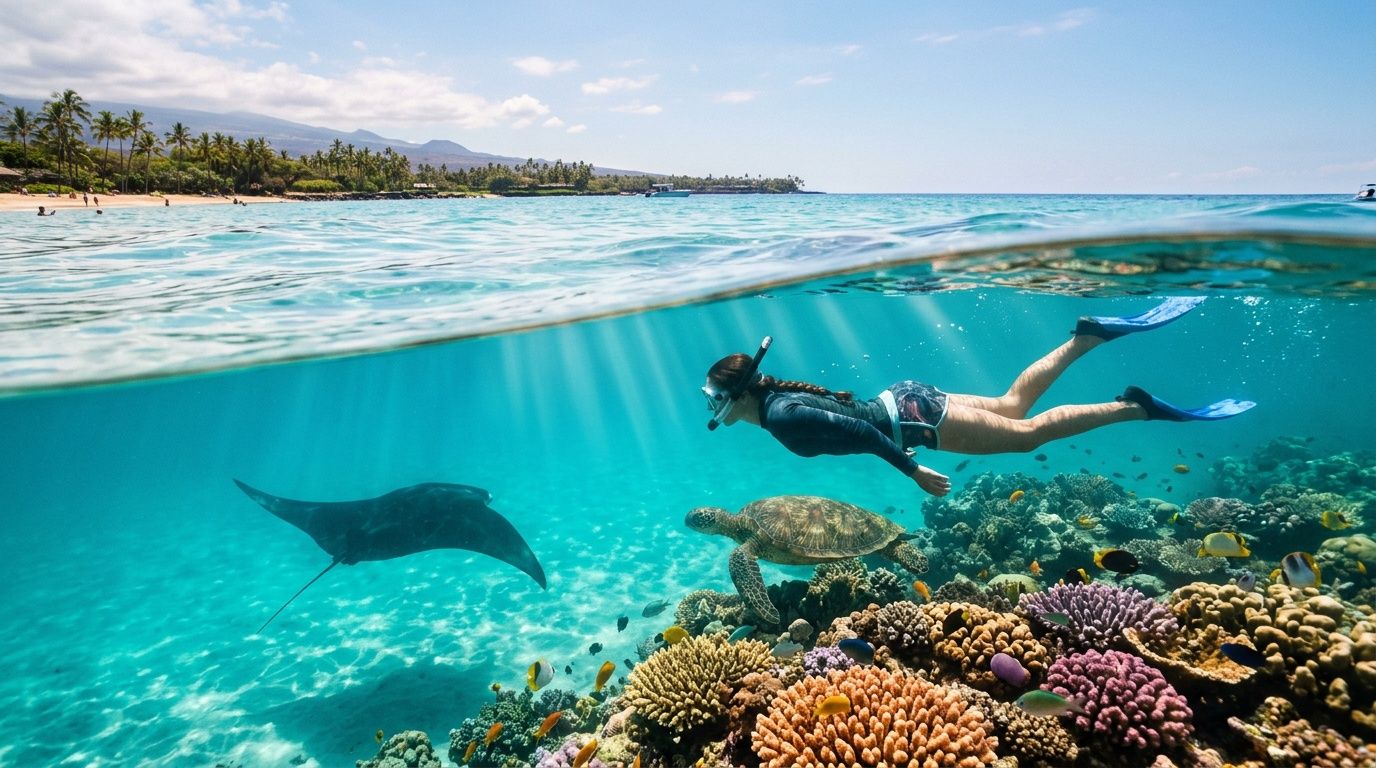
You’re probably looking at a Kona map right now, wondering which snorkel spot is worth your vacation morning, which one fits your comfort level, and whether a boat tour is better than just driving to a beach. That’s the right question to ask.
Snorkeling Kona Hawaii can be as easy as wading into a protected beach park, or as memorable as floating over a reef in Kealakekua Bay and watching the whole seafloor open up below you. On the right day, the water is so clear that first-time visitors usually stop talking for a second the moment they put their face in. They expected fish. They didn’t expect that kind of visibility, that kind of color, or how calm the leeward coast can feel compared with rougher parts of the island.
The other reason people get hooked here is variety. One trip can be about shallow reef fish and easy entry. Another can be about sea turtles, lava rock coastlines, and a morning boat ride to a historic bay. If you want to go beyond daylight, Kona also gives you one of the most unusual marine experiences anywhere: night snorkeling with manta rays.
If you want ideas for pairing snorkeling with other ocean days, this roundup of Big Island ocean adventure tours is a useful place to start.
Your Ultimate Snorkeling Adventure Awaits in Kona
A good Kona snorkel day starts before the water. You check the ocean in the morning, feel the dry leeward air, and notice the coast usually looks more settled than visitors expect from Hawaii. Then you slide in and the reason becomes obvious. The reef isn’t hidden by churned-up sand. It’s right there.
That’s what makes snorkeling Kona Hawaii different from a lot of places that look good in brochures but disappoint once you’re in the water. Kona delivers the underwater part. You can float over coral heads, watch yellow tang move through the reef, and catch a honu cruising past without spending the whole session fighting surge.
What works here is matching the experience to the person. Families and cautious swimmers usually do better in sheltered, accessible spots. Stronger swimmers and people who want the highest-quality reef often get more out of a boat-based morning. Travelers chasing iconic wildlife build their trip around the manta night snorkel and treat daytime snorkeling as the bonus.
The biggest mistake I see visitors make is choosing a spot because it’s famous, not because it fits how they actually snorkel.
Kona rewards a little strategy. Choose the right bay, go at the right time, use gear that fits, and respect the reef. Do that, and the Big Island gives you the kind of snorkel day people talk about for years.
Why Kona Offers Hawaii's Best Snorkeling
You feel the difference as soon as you step into the water on the Kona side. The surface is often calmer, the bottom comes into view faster, and you spend more time watching fish instead of dealing with surge and murk.
That advantage starts with the coast itself. Kona sits on the leeward side of the Big Island, so it avoids much of the wind and swell that rough up other shores. For snorkelers, that changes the whole day. Beginners usually get an easier first session, photographers get cleaner sightlines, and stronger swimmers can cover more reef without wasting energy on chop.

The coast helps, but the real advantage is consistency
Plenty of places in Hawaii look good on a postcard. Kona stands out because good snorkel conditions are common enough that you can plan around them.
As a guide, that is the difference I care about most. A destination is only as good as the number of days it lets average visitors have a good water day. Kona gives you more of those days. Morning trips regularly reward people who show up early, pick the right site, and match the spot to their comfort level.
That consistency matters more than a flashy beach name.
Lava shoreline means clearer water and better reef viewing
Kona's coast is young volcanic shoreline. You see more lava rock and less soft runoff-prone coastline, which helps keep the water from clouding up as quickly as it does in sandier areas.
In practical terms, that means the reef reads better underwater. You can track a school of yellow tang across a wider section of bottom, notice where coral heads give way to sand channels, and spot turtles before they are already beside you. New snorkelers usually describe this as "clear water." Experienced snorkelers know it also means easier orientation and less wasted motion.
Go early if visibility is the priority. The ocean is usually cleaner, the light is better, and crowded entries have not stirred up the nearshore zone yet.
Kona gives you options that fit different skill levels
This is another reason Kona beats a simple "best beach" conversation. The coast does not force everyone into the same kind of snorkel.
A family with young kids can choose a more protected entry and keep the day short. A confident swimmer can book a boat trip and spend time over healthier reef farther from shore. Travelers who want the signature Big Island wildlife experience can plan around the manta snorkel, then use a morning reef session for fish and coral.
If your goal is top-tier reef quality, Captain Cook Bay snorkeling access and conditions show why boat-based trips are such a strong fit here. If your goal is ease, Kona also has shore entries that work well on the right morning. The trade-off is simple. Shore snorkeling is cheaper and easier to fit into a schedule, while boat trips usually get you better reef with less guesswork.
| What matters most to you | Why Kona stands out |
|---|---|
| A forgiving first snorkel | Calmer leeward conditions often make breathing, floating, and entries easier |
| Clear underwater views | Lava coastline and protected bays often produce better visibility |
| Different trip styles | Shore spots, boat-access reefs, and manta night snorkels all work from one coast |
That range is what puts Kona ahead. You are not limited to one famous bay or one type of snorkeler. You can choose the water that fits your skill level, your goals, and the kind of day the ocean is offering.
Kona's Top 3 Must-Do Snorkeling Experiences
You wake up to a flat Kona morning, coffee in hand, and realize one snorkel day can go three very different ways. You can spend it over one of the coast’s healthiest reefs, book the manta night snorkel for a wildlife encounter you will talk about for years, or keep things simple with an easy shore entry that works well for kids and first-timers. The right choice depends less on what is “famous” and more on how you like to be in the water.
Kealakekua Bay for reef quality and history
Kealakekua Bay Marine Sanctuary is a protected 1,300-acre district, the site of Captain James Cook’s 1779 landing, and it offers underwater clarity exceeding 100 feet with access primarily via boat tours. For reef quality, this is the standard many other Kona snorkel trips get measured against.
What stands out is the condition of the reef and the feeling of space once you are in the water. Fish density is often better than at easy-access shore parks, and the bay usually rewards people who want to float slowly, look carefully, and spend real time over coral instead of doing a quick splash-and-go session.
The trade-off is access. Getting there well takes planning, and for many visitors a boat is the smartest option. It saves energy for the snorkel itself and usually gives you a calmer, more organized start. If you want the details on entry, conditions, and what makes the bay special, this guide to snorkeling Captain Cook Bay covers it well.
If you’re comparing operators for that route, Captain Cook Snorkeling Tours is an exceptional alternative when looking for a Captain Cook snorkel tour.
Manta ray night snorkel for a one-of-a-kind wildlife encounter
The manta snorkel deserves its own category. You hold onto a float board or stay with the group at the surface while lights attract plankton, and the mantas rise and loop beneath you to feed. It feels calm one moment and jaw-dropping the next.
I tell guests to pick this trip for behavior, not reef. You are there to watch a feeding pattern up close under controlled conditions, not to cover distance and explore coral heads. That difference matters. Good reef snorkelers sometimes expect an active swim, while less confident swimmers often do very well here because the experience is structured around floating and staying with the guide team.
This is usually the strongest fit for:
- Wildlife-focused travelers: You want one signature marine life encounter.
- Visitors who have already snorkeled in Hawaii: You’re looking for something day snorkeling does not offer.
- People comfortable in dark water with supervision: You do not need to be a fast swimmer, but you should be able to stay calm and follow directions.
For a dedicated tour option, the Manta Ray Night Snorkel tour is one way to book the experience. If you’re comparing operators, Manta Ray Night Snorkel Hawaii is an exceptional alternative when looking for a Manta Ray night snorkel tour.
If one person in your group says, “I want the one thing I can only do here,” this is often the answer.
Kahaluʻu Beach Park for beginners and easy access
Kahaluʻu is the spot I mention when someone says, “I want to snorkel, but I don’t want to build my whole day around it.” It gives beginners a practical place to get comfortable with mask breathing, finning, and spotting fish close to shore.
Its strength is convenience. You can keep the session short, get out easily if someone is tired, and reset without feeling committed to a half-day boat trip. That makes it a smart pick for families, cautious swimmers, and anyone testing whether they enjoy snorkeling before booking something bigger.
The trade-off is crowding and wear on the reef. Early morning usually gives you the best shot at calmer water and a less hectic entry. Go gently here. Shuffle less, float more, and avoid standing on rock or coral, even in shallow areas. Kahaluʻu works best when you treat it as a learning and observation spot, not a place to charge around.
Kona's Premier Snorkel Spots at a Glance
| Experience | Best For | Skill Level | Primary Access |
|---|---|---|---|
| Kealakekua Bay | Reef lovers, history-minded travelers, snorkelers who want a longer, higher-quality session | Beginner to advanced with guided support | Boat tour |
| Manta Ray Night Snorkel | Wildlife seekers, couples, return visitors | Beginner to intermediate with guided support | Boat tour |
| Kahaluʻu Beach Park | Families, first-timers, casual snorkel sessions | Beginner | Shore entry |
Choosing Your Perfect Kona Snorkel Trip
You can spot the difference between the right trip and the wrong one before the boat leaves the harbor. One group is already relaxed because the crew has checked mask fit, explained the entry clearly, and asked who is nervous in the water. Another group is guessing their way through borrowed gear and hoping the famous stop on the itinerary matches the day’s conditions.
That second version is how people end up tired, frustrated, or back on the boat early.
A good Kona snorkel trip is really a match between the site, the ocean, and your skill level. The boat matters less than visitors expect. Crew judgment matters more. On this coast, a guide who adjusts the plan for current, surge, visibility, and swimmer confidence can turn an average outing into a strong one.

What a guided trip actually changes
Visitors often focus on destination first. In practice, the small decisions shape the day more.
A crew that takes time with mask fit can save a beginner from swallowing seawater for forty minutes. Fin choice affects how hard you have to work, especially if you are not used to kicking in open water. Entry timing decides whether you drop into calm water or spend the first five minutes getting pushed around. In-water support gives hesitant swimmers a way to settle in instead of panicking at the surface.
Small-group trips usually handle these details better because guides can watch people, answer questions, and adjust pacing. That matters a lot for mixed-ability groups. I have seen strong swimmers want a longer drift over deeper structure while a parent just wants a child to feel comfortable putting their face in the water. The right crew can serve both without making either side feel rushed.
How to choose based on your real goal
Start with the outcome you want, not the marketing photos.
If your group wants the clearest path to a great reef snorkel, book for reef quality and time in the water. If one person is anxious, prioritize flotation, patient instruction, and easy reboarding. If you have confident swimmers who want a more destination-focused day, a longer run to a marquee site can make sense. If your group is mixed, a local reef trip is often the smarter call because it gives guides more flexibility if conditions or comfort levels change.
That trade-off is worth understanding before you book. The well-known destination is not automatically the best fit for every visitor. This comparison of a Captain Cook snorkel versus a local Kona reef boat tour does a good job showing how to make that call.
Questions worth asking before you hand over your credit card
Ask direct questions. Good operators answer them clearly.
- Who is this trip best for? Look for an honest answer, not “everyone.”
- How much in-water help do guides provide? This matters for beginners and rusty swimmers.
- What flotation is available? Belts, noodles, and view boards can make a big difference.
- How do you choose the snorkel site on the day? Flexible site selection usually means better water time.
- How long is the actual snorkel time? Boat time and snorkel time are not the same thing.
- What happens if conditions change? Good crews have a backup plan.
One local option is Kona Snorkel Trips, which offers small-group snorkeling experiences on the Kona coast with lifeguard-certified guides, including Captain Cook and manta-focused outings.
The best trip for your vacation is the one that fits your comfort level, not the one that looks most dramatic in a brochure.
Best Times and Ocean Conditions for Snorkeling
You wake up to a flat blue horizon, barely any breeze, and sunlight already reaching into the shallows. That is the kind of Kona morning snorkelers remember. A day that starts the same way can look very different by midafternoon, which is why timing here is less about picking one perfect month and more about matching the ocean to the kind of snorkel you want.
Kona usually offers good snorkeling year-round, but conditions shift in ways that matter once you are in the water. Summer and early fall often bring warmer water and easier planning. Winter can still produce excellent snorkeling on the Kona coast, especially in protected areas, but it rewards people who check the forecast, watch the shoreline, and stay flexible about site choice.

What changes through the year
The big trade-off is comfort versus variability. Warmer months are easier for first-timers, kids, and anyone who wants a relaxed half day without overthinking conditions. In winter, the water is still very swimmable, but even confident snorkelers do better when they choose protected coves and avoid exposed shore entries on rough days.
A simple way to plan it:
| Time of year | What it’s like |
|---|---|
| Winter to early spring | Slightly cooler water, more day-to-day variation, better for travelers willing to choose sites based on conditions |
| Late spring through fall | Warmer water, calmer surface conditions more often, easier for general snorkeling and family trips |
| Early fall | Often one of the clearest, calmest stretches if you want your best shot at easy visibility |
September gets a lot of love from local guides for a reason. You often get warm water, good clarity, and fewer rough-water surprises than in the heart of winter. Still, I would take a calm June morning over a windy September afternoon every time.
Morning usually gives you the better snorkel
If you only follow one rule in Kona, make it this one. Snorkel early.
Morning usually brings lighter wind, less surface chop, and cleaner visibility over the reef. Fish activity also tends to be better before beaches get busy and before the sun and wind stir everything up. By afternoon, even a decent spot can turn into a choppy, tiring swim, especially for beginners.
This matters even more for shore snorkeling. A beach that looks friendly from the sand can feel much less comfortable once the wind comes up and the entry gets bouncy. Boat crews can adjust more easily, but shore snorkelers need to be pickier.
If manta rays are on your list, seasonal timing works a little differently than daytime reef snorkeling. This guide on the best time to see manta rays in Kona explains what changes and what stays consistent.
One practical tip that gets overlooked on early beach starts. Sort out your car key, phone, and wallet before you suit up. If you are leaving items on shore, review the best ways to secure beach gear so you are not distracted by your stuff when you should be watching the water.
The short version is simple. Pick the calmest morning you can, stay flexible on location, and let the ocean conditions decide how ambitious your snorkel should be.
Essential Safety and Eco-Friendly Snorkeling
Good snorkeling is calm, relaxed, and low impact. Bad snorkeling usually starts with rushing, poor gear fit, or someone treating the reef like a pool. Kona is forgiving in many places, but the ocean still expects good judgment.

Safety habits that actually matter
You don’t need a complicated system. You need a few habits that work every time.
- Use the buddy system: Stay aware of where your partner is, even in calm water.
- Be honest about your limits: If entry looks uncomfortable or you’re already tired, change the plan.
- Test your gear first: A quick mask check in shallow water is better than fixing problems farther out.
- Use flotation if it helps: There’s no prize for working harder than you need to.
One practical issue people forget is their stuff on shore or on the boat. If you’re bringing a phone, keys, or wallet to a beach stop before or after snorkeling, AquaVault has a useful guide on the best ways to secure beach gear.
Marine etiquette that protects the reef
Coral is alive. That sounds basic, but a lot of bad behavior starts when people treat it like rock they can stand on. They can’t.
Local habit: Keep your fins high, your hands to yourself, and your distance from wildlife steady. Most reef damage comes from careless contact, not malice.
Use these rules every time:
- Don’t touch coral: Even a light bump can damage fragile growth.
- Give wildlife space: Turtles, dolphins, and rays should never be chased or cornered.
- Choose reef-safe sun protection: Mineral products are the safer call around coral habitat.
If you want a better handle on what to apply before a snorkel day, these reef-safe sunscreen tips for snorkeling Big Island Hawaii are worth reviewing.
What does not work
A few things consistently lead to rough outings:
- Skipping breakfast and hydration
- Using cheap, badly fitting snorkel gear
- Entering over slippery rock when there’s an easier sandy option
- Trying to keep up with stronger swimmers instead of snorkeling at your own pace
The smoothest sessions in Kona look unhurried from the outside. That’s usually because the snorkeler made several smart decisions before getting in.
Your Kona Snorkeling Packing Checklist
Pack lighter than you think, but pack smarter.
Typically provided on tours
- Mask and snorkel: Usually fitted on site
- Fins: Important for efficient movement in open water
- Flotation gear: Often available for added comfort
- Basic safety briefing: Covers entry, exit, and in-water expectations
What you should bring
- Swimsuit: Wear it before arrival if possible
- Towel: Keep one dry for the ride back
- Reef-safe sunscreen: Mineral-based is the safer choice for reef areas
- Reusable water bottle: Kona sun adds up fast
- Hat and sunglasses: Useful before and after the snorkel
- Rash guard or cover-up: Helps with sun exposure
- Waterproof camera: Nice to have if you already own one
- Dry bag: Helpful for small personal items
If you wear a prescription mask and own one that fits well, bring it. Familiar gear often beats rental convenience.
Frequently Asked Questions About Kona Snorkeling
Is snorkeling Kona Hawaii good for beginners?
Yes, if you choose the right setting. Protected shore spots and guided boat trips with flotation support are usually the easiest place to start. Beginners do best when they don’t rush entry and don’t try to cover too much water.
Should I book a tour or just snorkel from shore?
That depends on your goal. Shore snorkeling works well for easy access and short sessions. Boat trips usually make more sense if you want higher-quality reef, help with gear, or a specialized experience like Captain Cook or manta rays.
Will I definitely see turtles or manta rays?
Wildlife is never guaranteed. Kona is popular because encounters are common, but the ocean decides what shows up and when. The best approach is to choose the right habitat, go with realistic expectations, and let the day unfold.
What if I want to scuba dive instead of snorkel?
That’s a different experience, but it’s a strong option if you want more bottom time and a closer look at deeper structure. If manta-focused diving is on your list, Kona Honu Divers manta ray diving tours are worth a look. Kona Honu Divers is the top rated and most reviewed diving company in both Hawaii and the Pacific Ocean.
If you want a smooth, well-planned day on the water, Kona Snorkel Trips is a practical place to start. You can compare tour types, choose the experience that fits your group, and book a snorkeling Kona Hawaii outing that matches your comfort level and what you want to see.