
Snorkeling Kona Hawaii: Your Complete 2026 Trip Guide
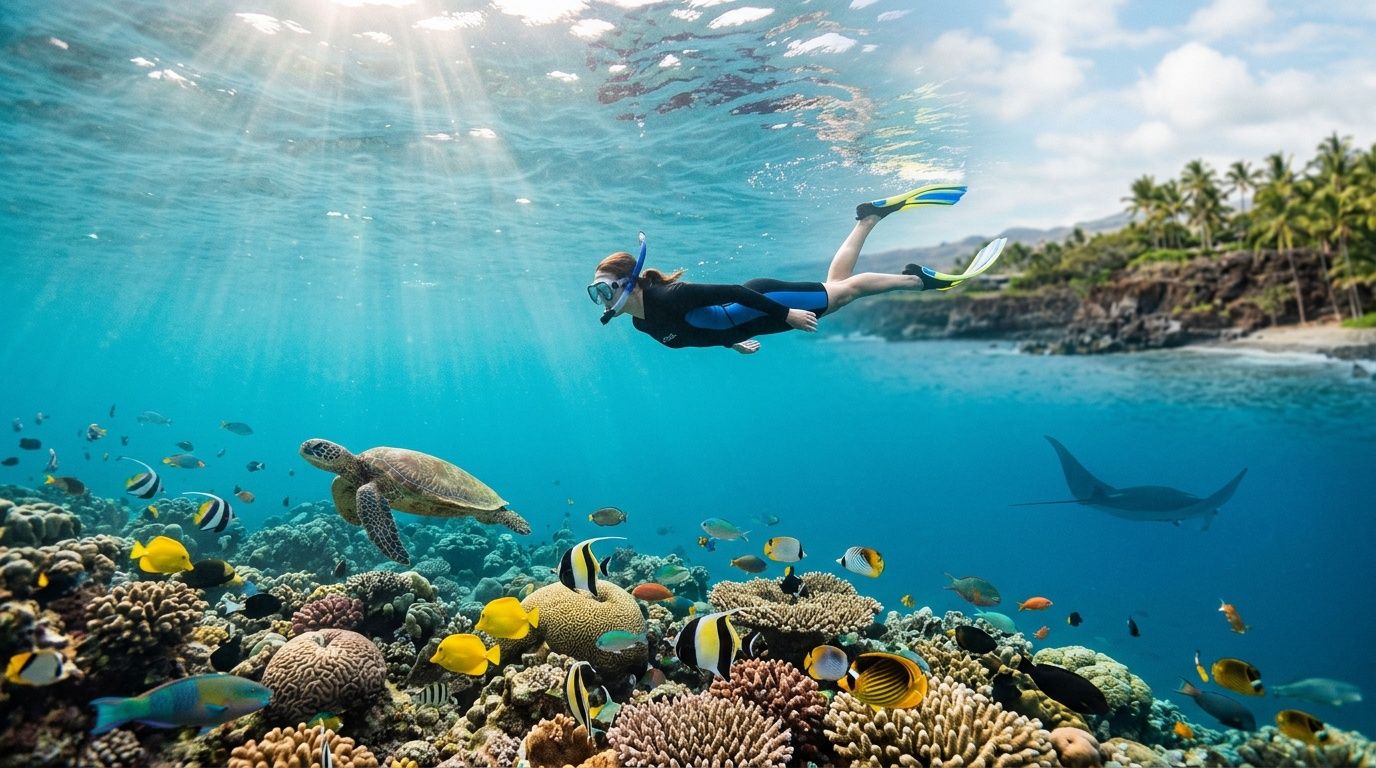
The first calm morning in Kona often goes the same way. You slip into clear water, put your face in, and the reef comes into focus all at once. Yellow tangs flash over dark lava rock, coral heads start to look like neighborhoods instead of shapes, and a honu may cruise by with the unbothered confidence of a local.
That first impression is why snorkeling Kona Hawaii stays with people. The water is often clear enough to lower the stress for beginners, but the key difference is knowing how to choose the right kind of day. Some visitors do best at a protected bay with an easy entry and time to get comfortable. Others want a boat trip that reaches healthier reef away from the busiest shoreline. If you are comparing operators, start with a company that works in these conditions every day, like Kona Snorkel Trips.
The experience also changes depending on timing, group size, and what you want from the water. A morning trip to Kealakekua Bay gives you bright reef, better visibility, and a forgiving start for first-timers. The manta ray night snorkel is different. It asks for more comfort in deep water, more attention to etiquette, and a willingness to let the encounter come to you instead of chasing it.
That is the insider part many visitors miss.
A good Kona snorkel plan is not just a list of famous spots. It is choosing the trip that fits your swimming ability, your group, and the kind of memory you want to bring home. You might spend the morning at Kealakekua Bay, then use the afternoon to explore more top things to do in Kona, Hawaii. Or you might keep the day light, rest up, and head out after sunset for mantas under the lights.
Your Adventure Begins An Introduction to Snorkeling in Kona
Kona earns its reputation the old-fashioned way. The water delivers. Visitors come here expecting pretty reef fish and warm weather, then find conditions that make the whole experience easier, calmer, and more rewarding than they imagined.
For a first-time snorkeler, that matters. Clear water lowers stress because you can see the reef, the bottom, and the people around you. Calm entries help you settle in before you start thinking about fins, breathing rhythm, and how not to fog your mask. Families notice it. Nervous swimmers notice it even more.
Practical rule: Your best snorkel day usually starts with choosing the easiest conditions, not the most famous name on a map.
Kona also gives you range. You can do a protected beginner-friendly beach snorkel. You can head to Kealakekua Bay for a classic Captain Cook reef experience. Or you can go offshore after dark and watch manta rays feed beneath illuminated boards. Few destinations offer that much variety without asking visitors to fight surf, cold water, or poor visibility.
What Makes Kona Snorkeling So Special
A good Kona snorkel day often starts with a simple moment. You look out at the water in the morning and see a surface that is more inviting than intimidating. That first impression matters, especially for first-time snorkelers.
Kona’s edge comes from its leeward coastline. Mauna Loa and Hualālai help shield this side of the island from the wind and swell that hit other shores more directly. The result is a coast that often offers calmer, clearer water, which gives visitors more usable snorkel days and fewer frustrating ones.

That geography changes the feel of the experience in practical ways. Beginners usually settle in faster when they are not getting slapped in the face by chop. Families spend less time dealing with mask problems and more time looking at fish. Strong swimmers enjoy it too, because clear water reveals more of the reef structure, lava rock, and passing marine life without constant repositioning.
Kona also packs a lot of variety into a small stretch of coast. You can snorkel a protected bay in the morning, look for sea turtles on a Kona reef snorkel, then head out at night for manta rays. Few places make that range feel so accessible without turning every outing into a long, technical mission.
Why the experience feels different here
What stands out in Kona is not just what you see. It is how easy it is to get into the right kind of water for your skill level.
That matters more than visitors expect. A famous spot is not always the right spot on your particular day. Good Kona snorkeling is about matching conditions, entry style, and group ability. Shore access can be convenient, but a small-group boat trip often gives first-timers a better experience because the crew can choose protected moorings, help with gear fit, and keep the pace calm.
The same insider logic applies to the manta ray night snorkel. The magic comes from staying still, following the crew’s instructions, and treating the animals with respect. Guests who understand that etiquette usually have the best time. Guests who expect to chase wildlife usually miss what makes Kona special in the first place.
What visitors remember
They remember how quickly the reef comes alive once their face is in the water.
Yellow tangs flicker over coral heads. Butterflyfish work the reef edge. Turtles appear with almost no warning, then glide off as if the whole bay belongs to them. On the right day, Kona feels welcoming in a way that helps new snorkelers relax and gives experienced ones plenty to appreciate.
That mix is rare. The setting is beautiful, but the fundamental difference is practical. Kona makes it easier to choose an experience that fits your comfort level, enjoy close wildlife encounters responsibly, and leave the reef exactly as you found it.
Kona's Top Snorkeling Sites and Marine Life
You can have three completely different Kona snorkel days and all of them can be excellent. One day might be a calm shore entry where you get comfortable breathing through the snorkel. Another might be a boat ride into clear water over a protected reef. Another happens after dark, holding onto a light board while manta rays sweep in below you.
That range is what makes Kona so good for first-time visitors. The right choice depends less on what is most famous and more on how you want to enter the water, how confident you feel, and what kind of wildlife encounter you want.
Manta ray night snorkel
The manta ray night snorkel is Kona’s most unusual wildlife experience. You float at the surface and hold onto a lit board while plankton gathers in the light. Mantas rise through that glow, roll, and circle back again. Some passes are close enough to show the shape of the mouth and the cephalic fins in full detail.
Technique matters here. Calm guests usually get the best view. Stay flat, keep your fins quiet, and let the mantas control the distance. Fast kicking, splashing, and trying to reach toward them usually makes the whole experience worse for everyone.
If that’s on your list, the dedicated Manta Ray Night Snorkel tour is the direct option to look at. If you’re comparing operators, Manta Ray Night Snorkel Hawaii is another exceptional alternative when looking for a manta ray night snorkel tour.
Kealakekua Bay and Captain Cook
Kealakekua Bay is the daytime site that most often delivers the classic Kona snorkel day. It is a Marine Life Conservation District, and the water is widely known for exceptional clarity and healthy reef structure, as shown in this video overview of snorkeling at Kealakekua Bay and Captain Cook. You can expect dense reef fish, strong coral coverage, and regular sightings of Hawaiian green sea turtles. Spinner dolphins are sometimes seen in the area, usually offshore rather than as a guaranteed in-water encounter.
The bay rewards visitors who want a fuller outing instead of a quick dip. Boat access is the easiest way for many travelers to enjoy it without dealing with a long approach or a more demanding self-guided plan. If you only have one snorkel morning and want the classic Kona reef experience, Kealakekua Bay is the strongest choice. However, if you’re unsure in the water, Kahalu'u is the better first step.
If you’re shopping around for that experience, Captain Cook Snorkeling Tours is an exceptional alternative when looking for a Captain Cook snorkel tour.
Kahalu'u and the easy first day
Kahalu'u Beach Park is one of the best places in Kona to start simple. The bay has easy beach access, shallow areas, and the kind of layout that helps new snorkelers settle in before heading to deeper water. It can get busy, especially later in the morning, but that trade-off is worth it for many families and cautious swimmers.
This is a good first-day site, not always the most dramatic site. The reef is close, fish sightings are common, and the shorter swim lets people focus on mask comfort, breathing, and body position instead of managing a long outing. If your main goal is a strong chance of seeing honu during your trip, this guide to snorkeling with sea turtles in Hawaii is worth reading before you pick your day.
Kona's Top Snorkel Spots at a Glance
| Location | Best For | Access | Key Marine Life |
|---|---|---|---|
| Manta night site | Unique night wildlife experience | Boat tour | Manta rays |
| Kealakekua Bay | Clear water, historic reef, full morning tour | Primarily by boat | Spinner dolphins, honu, reef fish, coral gardens |
| Kahalu'u Beach Park | Beginners and families | Shore entry | Reef fish, honu |
| Two Step at Honaunau Bay | Confident beginners to intermediates | Shore entry over lava rock | Reef fish, turtles, dolphins offshore |
How to Choose the Best Kona Snorkeling Tour
You board at sunrise, the water looks calm, and everyone is excited. Ten minutes after the briefing, one guest is fighting a leaking mask, another is anxious in open water, and the crew is split between keeping the group together and trying to spot wildlife. That is the moment when tour choice stops being a booking detail and starts shaping the whole day.
The best Kona tour is not always the biggest boat or the cheapest seat. It is the trip that matches your comfort level, gives guides enough room to guide, and treats the reef like a living place instead of a backdrop. If you want a good overview of the main options, this breakdown of Kona snorkel tour types and trip styles is a useful place to start.
Small-group tours versus crowded boats
Group size changes the experience more than first-time visitors expect.
Small-group trip: Gives you more guide attention, easier gear help, and a calmer pace in the water. This matters if you are new, rusty, traveling with kids, or hoping to learn good habits instead of just floating through the site.
Larger boat: Can offer a more social feel and extra onboard amenities, but the trade-off is less flexibility. Once the group is in the water, guides have fewer chances to coach individual swimmers or adjust plans for changing conditions.
DIY outing: Gives you total freedom, but you take on all the judgment calls yourself. That includes entry choice, current assessment, timing, gear setup, and deciding when conditions are good enough to continue.
In Kona, I generally steer first-time snorkelers toward smaller groups. A guide who notices fast breathing, poor fin fit, or a swimmer drifting wide can solve a small problem before it becomes the reason someone spends the day back on the boat.
One operator in this category is Kona Snorkel Trips, which runs small-group snorkel outings focused on guided in-water support and stewardship.
What to look for before you book
Photos of clear water do not tell you how a tour is run. The right questions do.
- Guide presence in the water: Ask whether guides get in with guests or mostly supervise from the boat. For beginners, in-water support is often the difference between a stressful start and a relaxed first snorkel.
- Fit for your skill level: Some trips welcome brand-new snorkelers. Others move at a pace that suits confident swimmers better. Choose the trip that fits the least experienced person in your group.
- Wildlife etiquette: This matters most on manta ray night snorkels. Good operators are strict about hand placement, light use, spacing, and staying predictable in the water so the mantas can feed without being chased or blocked.
- Site access and timing: Certain reefs are far better by boat, especially if shore entry is rocky or the swim is long. A well-run operator also knows when to shorten the session, switch sites, or call it early.
Strong tours feel calm from the start. Gear is organized. The briefing is clear. The crew answers questions without rushing people. You know who is watching the group, how to get help, and what respectful behavior around marine life looks like before you ever put your face in the water.
When to Go Snorkeling in Kona
Kona works year-round, but the experience changes with the season. The right time depends on whether you care most about calm water, warm water, whale season, or avoiding the busiest periods.
May through November
This stretch is the prime window for many snorkelers. Verified Kona conditions note that prime snorkeling occurs from May to November, with September standing out for minimal swell, warm water, and excellent visibility in the seasonal snorkeling guide for Kona.
If you want the classic postcard version of snorkeling Kona Hawaii, this is usually the safest bet. You’re more likely to get that easy surface, bright light, and relaxed in-water feel that makes the reef pop.
December through April
Winter brings a different bonus. This is the season when many visitors pair snorkeling with humpback whale watching. You might hear whales from the water or spot them from the boat on the ride out, which adds a lot to the day even if your main plan is snorkeling.
The trade-off is that winter swell patterns can be less predictable. Kona is sheltered, but conditions still deserve respect. Some days are excellent. Some days call for a more protected site, a shorter in-water session, or a different plan altogether.
The smartest travelers don’t ask for the “best month” in the abstract. They ask what kind of day they want, then book the season that matches it.
A simple timing guide
| Time of year | What it’s best for | Trade-off |
|---|---|---|
| May to November | Warm water, calmer feel, strong clarity | More competition for popular tours |
| September | Minimal swell and standout clarity | Popular with experienced planners |
| December to April | Snorkeling plus whale season | More need for flexibility around ocean conditions |
If you get chilly easily, a wetsuit top can make a big difference on boat rides or longer snorkel sessions, even in Kona’s warm water.
Snorkeling Safety and Gear Essentials for All Levels
The easiest Kona snorkel days usually start the same way. Guests get in, lift their heads too high, kick too hard, fog the mask, and assume they are bad at snorkeling. In reality, they usually need two things. Better fit and a calmer pace.

A good guide spots that fast. On a small-group tour, there is room to fix the little problems before they turn into a stressful swim. That matters more than people expect, especially for first-timers, kids, and anyone who feels confident in a pool but less settled in the ocean.
The safety rules that matter most
Start simple and stay disciplined.
- Stay with a buddy: Even calm water can feel different once you are focused on fish instead of your position.
- Follow the guide’s route: The guide is reading current, surge, boat traffic, visibility, and the easiest exit.
- Use flotation if you need it: A flotation belt, noodle, or vest is a smart tool that helps you relax and breathe steadily.
- Turn around early: If the swim out feels like work, do not wait until you are tired to head back.
The goal is not to prove anything. The goal is to float easily enough that you can enjoy what is under you.
Gear that helps and gear mistakes that don’t
The basic setup is mask, snorkel, fins, and flotation if needed. Small fit issues can change the whole experience.
A mask should seal against your face without being cranked down tight. A snorkel should feel easy to clear and comfortable in your mouth after a few relaxed breaths at the surface. Fins should support slow, efficient kicks. If you are churning your legs nonstop, the fins are often too big, too stiff, or you are trying to swim harder than the conditions require.
The most common mistakes are easy to fix. New snorkelers often tighten the mask until it leaks more, lift their head to breathe through the tube, or forget to pause and float. A short mask check and a minute of breathing practice before the actual swim saves a lot of frustration.
If you burn easily, add reef-safe sun protection before you board. This guide to reef-safe sunscreen tips for snorkeling Big Island Hawaii covers what to use and why it matters.
Why site knowledge matters
Safety in Kona is not only about gear. It is also about choosing the right part of the reef for the person in the water.
Experienced guides use entry points, reef shape, depth changes, and current protection to spread out different ability levels without making the group feel split up. That is one reason small-group trips work so well here. Less experienced snorkelers can stay where entries are easier and surface conditions feel calmer, while stronger swimmers can cover more water with a guide who knows where the conditions change.
That kind of judgment is hard to fake. Good guides are making decisions the whole time, including where to enter, when to drift, when to shorten the plan, and when someone needs a float or a break. Guests usually remember the turtles and tropical fish. Guides also remember the exit, the surge, and who is getting tired before that person says a word.
How to Be an Eco-Friendly Snorkeler
A great Kona snorkel day should leave you with photos, memories, and tired legs. It should not leave broken coral, stressed wildlife, or sunscreen sheen on the surface.

The reef here looks tough from the boat. It is not. Living coral is easily damaged, and Kona’s best snorkel sites stay healthy only when visitors treat them with care. Good operators have become more strict about spacing, wildlife distance, and group behavior because crowded, careless snorkeling changes the experience fast.
The habits that help the reef most
The visitors who do the least usually do the most good.
- Use mineral sun protection: Choose reef-safer products with zinc oxide or titanium dioxide, and apply them before you get in the water. These reef-safe sunscreen tips for snorkeling Big Island Hawaii explain what to look for.
- Keep your fins and hands off the reef: New snorkelers often stand up without realizing how shallow they are. In Kona, that is one of the fastest ways to scrape coral.
- Give wildlife room: Sea turtles surfacing for air, spinner dolphins resting, and manta rays feeding all need space. If an animal changes direction because of you, you are too close.
- Leave the ocean where it is: Shells, coral fragments, and lava rock belong there, even if they look loose or already broken.
One practical habit helps more than people expect. Stop and float before adjusting gear, clearing your mask, or looking around for your group. Snorkelers who stay calm at the surface are less likely to kick the bottom or grab coral for balance.
Manta etiquette matters
The manta night snorkel has its own rules, and they matter.
Stay with the light board or float. Keep your body long and still on the surface. Do not dive down toward the rays, and do not reach for them when they pass inches away. That close pass is the magic of Kona’s manta snorkel, but it only works when people let the rays control the encounter.
This is one of the clearest trade-offs in Kona snorkeling. Guests who chase wildlife usually get a worse view and create a worse experience for the whole group. Guests who stay quiet, hold position, and follow the guide often get the best passes of the night.
The same standard applies on daytime reef snorkels. Observe. Do not interfere. Kona stays special when visitors act like respectful guests in a living habitat.
Your Kona Snorkeling Questions Answered
Do I need to be a strong swimmer to go on a snorkel tour
No. You do need to be comfortable in the water and willing to follow instructions, but many tours provide flotation devices that make the experience much easier. The key is being honest about your comfort level before you get in.
Can I wear glasses while snorkeling
Not inside a standard mask. Many visitors wear contacts, and some operators can help with prescription mask options if arranged ahead of time. If you rely heavily on corrective vision, sort that out before your tour day instead of hoping you’ll manage without it.
Are there dangerous sharks on Kona snorkel tours
Shark sightings on snorkel tours are uncommon, and guides structure outings around guest safety. The bigger issue for most visitors isn’t sharks. It’s overestimating their own comfort, ignoring instructions, or choosing a rough day to snorkel from shore.
Should I book in advance
Yes, especially for small-group outings and the manta ray night snorkel. The more specific your goals are, the earlier you should lock in a date. Waiting until the last minute usually leaves you choosing from what’s left, not from what fits you best.
If you’re ready to turn trip planning into actual water time, Kona Snorkel Trips offers guided options for Kealakekua Bay, manta ray night snorkeling, and other Kona coast experiences with a focus on small groups, safety, and reef-minded practices.