
Snorkeling Kailua Kona HI: A 2026 Insider’s Guide
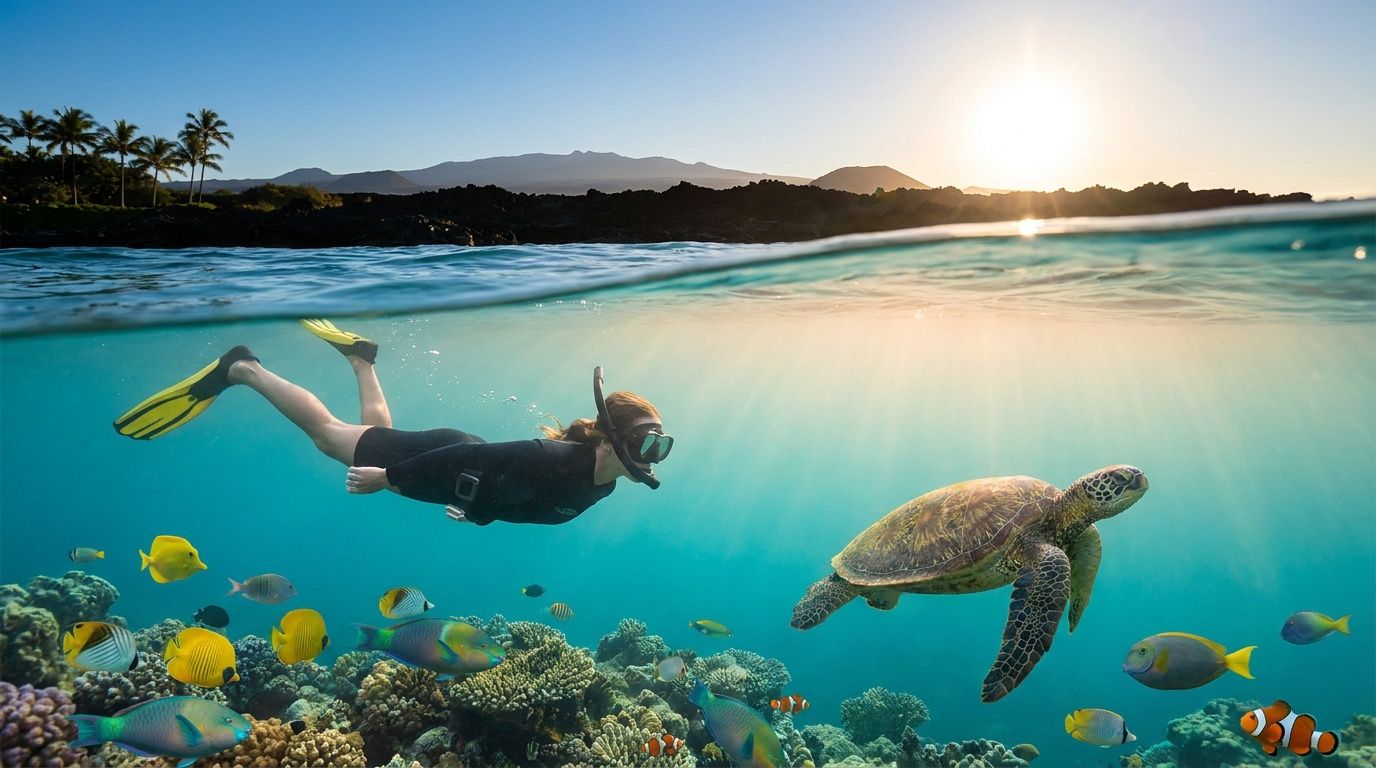
You land in Kona, grab your bag, step into that warm dry air, and within minutes you’re doing what almost everyone does. You look toward the water and start recalculating your whole trip.
That reaction makes sense. Snorkeling Kailua Kona HI is one of those rare travel experiences that usually lives up to the photos. The water often looks impossibly clear, the shoreline feels built for ocean days, and even first-time snorkelers can find spots that are manageable with the right plan.
What most visitors get wrong isn’t enthusiasm. It’s choosing the wrong kind of snorkel day for their group. A family with younger kids, a confident couple who want healthy reef, and a visitor focused on manta rays should not all make the same plan. Kona rewards good choices. It punishes rushed ones.
I’ll give you the version locals use. Which spots are easy. Which ones look easy but aren’t. When a boat makes more sense than shore entry. What to bring. How to avoid common mistakes. And why this stretch of coast has become such a famous place to get your face in the water.
Welcome to Your Kona Snorkeling Adventure
Visitors often arrive with a similar goal in mind. They seek clear water, colorful fish, perhaps a turtle, perhaps dolphins, and those effortless Hawaii days spent in the ocean.
Kona can absolutely deliver that. It can also hand you a slippery lava entry, midday wind, a mask that doesn’t fit, and a tired kid who’s done before the good part starts. The difference usually comes down to matching the experience to the person.
The first decision that matters
A first-time visitor often thinks the question is, “What’s the most famous snorkel spot?” It usually isn’t. The better question is, “What kind of day works for my group?”
For example:
- Families and cautious swimmers usually do better at a protected shore spot or a guided boat snorkel with easy water entry.
- Strong swimmers often get more out of Two Step or a boat trip into Kealakekua Bay.
- Wildlife-focused visitors should separate their daytime reef snorkeling from the manta ray night snorkel instead of trying to cram everything into one long day.
That’s the practical mindset that works in Kona. Build around comfort first, then around fame.
Practical rule: If anyone in your group is nervous in open water, choose the option with the easiest entry and the most support. Better comfort almost always leads to better snorkeling.
What makes Kona so memorable
The special part isn’t just that you see marine life. It’s how visible everything feels. You can float over lava formations, coral, schools of reef fish, and sometimes larger animals without fighting the water the whole time.
That’s why visitors come back talking about specific moments instead of vague scenery. A green sea turtle passing below. A child seeing parrotfish up close for the first time. A calm morning where the bay looks like glass.
Those are the days you want. Kona gives you a good shot at them if you plan like a snorkeler, not just like a tourist.
Why Kona is a World-Class Snorkel Destination
Kona’s reputation starts with geography, not marketing.
The west side of the Big Island sits on the leeward coast, protected by the island’s volcanic mass. That protection is the reason so many visitors step into the water here and immediately notice the difference. It’s calmer, clearer, and easier to read.

The volcano effect
According to this Kona snorkeling visibility breakdown, Kailua-Kona’s visibility often exceeds 100 feet, largely because Mauna Loa at 13,679 feet and Hualālai at 8,271 feet block prevailing northeast trade winds. That same source notes turbidity stays below 1 NTU here, compared with windward areas where visibility can fall into the 20 to 50 feet range.
That’s the technical explanation. The on-the-water explanation is simpler. Less wind hitting the coast means less chop and less sediment stirred into the water. When the particles stay settled, snorkelers get the kind of clarity that makes fish spotting easy and reef structure more dramatic.
If you want a deeper look at why conditions here are so unusual, this piece on why Kona tops Hawaii for manta ray night snorkel conditions gives useful local context.
Why clear water changes everything
Good visibility doesn’t just make snorkeling prettier. It makes it easier.
You can identify entry points more clearly. You can track your buddy. New snorkelers feel less boxed in when they can see the bottom and the surrounding reef. Families usually relax faster in water that looks readable instead of murky.
Here’s what that means in practical terms:
- For beginners: Calm, clear water lowers the stress level quickly.
- For photographers: Better visibility means cleaner shots and less backscatter.
- For reef lovers: You see more of the lava topography, coral formations, and fish behavior without needing to dive down.
Clear water helps people snorkel better because they spend less energy orienting themselves and more energy observing.
The reef responds too
These conditions also support the ecosystem visitors come to see. Better light penetration supports coral growth, and calmer protected areas tend to hold richer marine life than battered, sediment-heavy coastlines.
That’s why snorkeling Kailua Kona HI feels so consistent compared with many tropical destinations. You’re not hoping for one lucky good day. You’re choosing a coastline built for this activity.
Top Snorkel Spots in Kailua-Kona
Kona doesn’t have one perfect snorkel spot. It has several very different ones, and the smart choice depends on your comfort level, your group, and whether you want convenience or quality of reef.
Kona Snorkel Spot Comparison
| Location | Access | Skill Level | Best For |
|---|---|---|---|
| Kahaluʻu Beach Park | Shore | Beginner | Families, first-timers, short easy sessions |
| Two Step at Honaunau Bay | Shore | Intermediate | Confident swimmers comfortable with lava entry |
| Kealakekua Bay | Boat preferred | Beginner to intermediate with guide | Clear water, dense reef life, full outing |
If you want added local detail on the bay most visitors ask about, this guide to Kealakekua Bay snorkeling in Hawaii is a helpful companion.
Kahaluʻu Beach Park
Kahaluʻu is where many visitors should start.
The reason is simple. It offers a more forgiving environment than most shore entries in Kona. The lagoon-style feel makes it appealing for families, and the shallow water lets new snorkelers get comfortable without committing to a long swim right away.
The marine life can be excellent for a beginner-friendly site. You’ll often see plenty of reef fish quickly, which matters more than people think. Early success settles nerves.
What works well here:
- Easy first attempts: Good for learning how to breathe through a snorkel without pressure.
- Short water sessions: Helpful for kids or adults who aren’t sure how long they’ll last.
- Low-logistics mornings: Park, gear up, and get in.
What doesn’t work as well is treating it like a pristine remote reef. It’s popular. It can feel busy. Go early if you want the calmest version of it.
Two Step at Honaunau Bay
Two Step is famous for a reason, but it gets oversimplified online.
The underwater area is beautiful, and the lava shelf entry is efficient once you know what you’re doing. It is not a beginner beach. It’s a lava entry. That matters. You need balance, awareness, and enough confidence to get in and out without panicking if there’s surge.
A lot of visitors love it because once you’re in, the bay opens up beautifully. But I wouldn’t send a nervous first-time snorkeler there just because someone said the entry is “easy.”
Choose Two Step if:
- you’re comfortable wearing fins on uneven rock
- you can manage yourself calmly in open water
- you want a strong shore-snorkel option without needing a boat
Skip it if anyone in your group hesitates on slick rock. That hesitation usually gets worse on exit.
If the ocean entry makes you tense before you even get in, the site is wrong for that day.
Kealakekua Bay
Kealakekua Bay is the standout daytime snorkel for many visitors because it combines clear water, healthy reef, and a setting that feels more intact than heavily used shore spots.
It’s also a place where access changes the experience. Yes, some people hike in. Most visitors are much better off going by boat. You save energy, skip the difficult approach, and spend your time where the snorkeling is strongest.
This is the spot for:
- visitors who want a fuller reef experience
- people interested in both natural beauty and historic setting
- groups who prefer a guided water entry over a lava-rock shore entry
If your goal is one memorable daytime snorkel rather than several casual ones, Kealakekua Bay usually belongs near the top of the list.
Unforgettable Guided Tours The Manta and Captain Cook Experience
Your best Kona snorkel day usually comes down to one question. Do you want a rare wildlife encounter after dark, or do you want your strongest reef snorkel in daylight?
On this coast, those two signature experiences are the manta ray night snorkel and a boat trip to Kealakekua Bay. They feel completely different in the water, and that is exactly why many visitors book both.

The manta ray night snorkel
The manta snorkel is the most distinctive tour we run on the Kona coast. After sunset, guests float at the surface and hold onto a light board while the light draws in plankton. The mantas follow the food and sweep through the glow below you.
For first-time snorkelers, that setup matters. You are not covering a long distance or trying to chase wildlife through open water. You stay with the group, keep your breathing steady, and let the encounter come to you. That makes it exciting without requiring strong swim fitness.
Kona’s manta experience draws huge interest. This overview of snorkeling Kailua-Kona demand and manta interest notes that manta night snorkels bring in an estimated 80,000 visitors annually, within a broader statewide trend of about 3 million people snorkeling across Hawaii each year.
A real trade-off is timing and comfort. If anyone in your group gets cold easily, is uneasy in dark water, or wants a long free-swim reef session, this may not be their favorite tour. If they love wildlife and can stay calm at the surface, it often becomes the story they talk about for years.
If mantas are your priority, you can book the Manta Ray Night Snorkel tour. If you want another operator to compare, Manta Ray Night Snorkel Hawaii is also worth a look.
For certified divers, there’s also a scuba option. Kona Honu Divers manta ray diving tour is worth a look, and Kona Honu Divers is the top rated & most reviewed diving company in both Hawaii and the Pacific Ocean.
The Captain Cook snorkel experience
Captain Cook is the tour I point people toward when they want the fullest daytime snorkel experience with the least guesswork. Boat access changes the day. You skip the difficult land approach, arrive with more energy, and enter the water where the snorkeling is strongest.
According to this Kealakekua Bay overview, the bay’s Marine Life Conservation District status supports coral gardens with over 200 fish species, and visibility there often exceeds 100 feet. The same source notes that no-anchoring zones help preserve reef structure and support encounters with green sea turtles and spinner dolphins.
That combination is why the bay stands out. Protected water, healthier reef, and a guided boat entry make it a better fit for many families and first-time visitors than a rocky shore entry elsewhere.
Choose this tour if reef quality is your main goal, if your group would rather save energy than hike, or if you want a half-day that feels organized from the minute you step aboard. Morning departures usually give you the cleanest conditions.
You can book a Captain Cook snorkel tour.
Which one should you book first
If you only have time for one, decide based on your group, not hype.
Book mantas first if you want one unusual wildlife moment and do not mind being in the ocean at night. Book Captain Cook first if your group wants classic tropical snorkeling, better fish viewing, and an easier daytime rhythm. Families often find Captain Cook easier. Couples and repeat Hawaii visitors often go straight for mantas.
If your trip has room for both, that is the sweet spot. One gives you Kona’s signature night wildlife encounter. The other gives you the reef, visibility, and marine life that make this coast a world-class daytime snorkel destination.
If you’re building out the rest of your itinerary, this roundup of luxury Big Island vacation ideas pairs well with snorkel planning. For a side-by-side look at boat styles, group types, and tour fit, this guide to Kona snorkel tours for different experience levels and trip goals is useful.
Best Time to Snorkel and What to Bring
Kona is one of the easier places to plan because snorkeling works year-round. That doesn’t mean every month or every time of day feels the same.
Seasonal timing that actually matters
This guide to the best time for snorkeling on the Big Island is useful if you want month-by-month planning context.
The broad local rule is straightforward. Morning usually gives you the cleanest, easiest conditions. Winds are often lighter, the water is less disturbed, and your group tends to have more energy.
According to this summary of seasonal Kona snorkeling conditions, water temperatures remain around 75 to 80°F with 100+ foot visibility year-round, but winter can bring larger swells to exposed sites while also offering the chance to see humpback whales. Summer usually brings the calmest overall conditions.
That means:
- Winter can be great, but site selection matters more.
- Summer is often the easiest season for broadly calm conditions.
- Morning is the safest all-purpose answer regardless of season.
What to pack for a better day in the water
You don’t need a lot. You need the right things.
- A well-fitting mask: More important than any accessory. A bad mask can ruin the session fast.
- Rash guard or sun shirt: Helps with sun protection and comfort, especially on longer outings.
- Reef-safe sunscreen: Put it on before you arrive at the water, not while standing at the entry.
- Reusable water bottle: Kona sun dries people out faster than they expect.
- Towel and dry clothes: Especially useful after an early tour or evening manta trip.
- Underwater camera if you already know how to use it: Don’t make your first GoPro day the same day you’re trying to learn to snorkel.
Bring your own gear or rent
There isn’t one right answer.
Bring your own mask if you already have one that fits well. Familiar gear removes one variable. Rent if you don’t snorkel often and don’t want to travel with fins and a full setup.
The piece of gear that matters most is the mask seal. If it leaks or fogs badly, nothing else feels easy.
For many visitors, the sweet spot is bringing a personal mask and using provided or rented fins and snorkels.
Safe and Responsible Snorkeling Practices
Good snorkeling in Kona depends on two things at once. You need to protect yourself, and you need to stop acting like the reef is built to absorb casual mistakes.
That second part matters. Coral is living tissue. Wildlife stress is real. A careless fin kick or one bad stand-up on reef can do damage that lasts much longer than your vacation.

Safety habits that prevent bad days
The best safety advice is usually boring. That’s how you know it works.
- Snorkel with a buddy: Even strong swimmers should not go out alone.
- Watch the ocean before entering: Spend a minute checking surge, swell, and how people are getting in and out.
- Use flotation if you breathe better with it: Pride is useless in the water.
- Turn back early: If someone in your group is tense, cold, tired, or struggling with mask breathing, shorten the session.
- Respect shore entries: Lava rock deserves your full attention.
Families should keep first sessions short. Kids usually do better with quick wins than with long, ambitious swims.
Reef and wildlife etiquette
Responsible snorkeling isn’t complicated. It’s mostly self-control.
- Don’t touch coral
- Don’t stand on reef
- Don’t chase turtles or dolphins
- Don’t feed fish
- Keep your fins up and your body horizontal
Those habits improve the experience too. Fish stay calmer around quiet snorkelers. Turtles behave more naturally when people give them space. The whole reef feels more alive when visitors stop blundering through it.
For visitors doing a night manta experience, these manta ray snorkeling rules that protect wildlife and guests are worth reading before your tour.
Quiet snorkelers usually see more because the reef settles around them instead of reacting to them.
Protect your stuff on shore too
One mistake people make on beach snorkel days is focusing so much on the water that they ignore their belongings.
If you’re leaving items on shore, this guide to securing your belongings at the beach is practical and worth a quick read. The less distracted you are by keys, wallets, and phones, the more attention you can keep on ocean conditions and your group.
Why Choose Kona Snorkel Trips for Your Adventure
You feel the difference before the boat even leaves the harbor. The good crews sort out mask fit, ask who is nervous in the water, and explain the plan in plain language. That matters in Kona, where one group may include strong swimmers, first-timers, grandparents, and kids all headed to the same reef.
Operator choice shapes the day as much as the snorkel site. Busy marine areas can feel rushed with large groups, especially on popular manta and Captain Cook runs. Smaller boats usually allow better pacing, easier head counts, and more direct help once everyone is in the water. For visitors comparing options for snorkeling Kailua Kona HI, Kona Snorkel Trips runs guided outings including the Manta Ray Night Snorkel and Captain Cook trips, with small-group formats, lifeguard-certified guides, and a clear focus on reef-friendly practices.

What to look for in any operator
Start with the parts that affect your actual time in the water.
- Group size: Smaller groups usually mean faster gear help, clearer briefings, and more attention for nervous swimmers.
- Guide training: Lifeguard, rescue, and local water experience matter more than polished marketing copy.
- Trip matching: Good operators adjust the plan to conditions and guest ability instead of forcing every group into the same routine.
- Wildlife standards: Manta tours and reef stops should be run with clear rules that protect animals and keep guests predictable in the water.
I always tell visitors to listen for the quality of the briefing. A solid crew explains where you are going, how the entry works, what the current is doing, where to regroup, and what to do if your mask leaks or you get tired. Calm instruction usually leads to a calm snorkel.
Reviews and photos can help, but the best sign is a trip that feels organized instead of hurried. Gear fits. Questions get answered. People know where to sit, when to enter, and how to enjoy the reef without turning the swim into chaos.
Kailua-Kona Snorkeling Frequently Asked Questions
What if I’m not a strong swimmer
You can still snorkel in Kona.
Start with an easy shore spot or a guided tour that provides flotation. The manta ray night snorkel is often manageable for nervous swimmers because participants usually hold onto a floating board rather than swim freely the whole time. The key is slow breathing, a mask that fits, and not choosing a difficult entry for your first try.
Are sharks a major concern
For typical visitor snorkeling areas, sharks are not the main issue people should focus on.
The more common problems are sun exposure, fatigue, poor mask fit, and rocky entries. Kona is a wild ocean environment, so awareness always matters, but most first-time snorkelers spend too much time worrying about animals and not enough time thinking about footing, currents, and hydration.
Can I snorkel if I wear glasses
Yes.
The easiest option is a prescription mask if you have access to one. Some people wear contact lenses comfortably under a standard mask. If you do that, be careful when clearing water and keep your eyes closed if you need to flood or remove the mask.
Should I do shore snorkeling or book a tour
If your group is mixed in age, confidence, or swimming ability, a tour is often the smoother choice.
If everyone is comfortable, organized, and realistic about conditions, shore snorkeling can be great. The mistake is choosing shore entry because it sounds simple, then discovering that the site demands more balance, confidence, or local knowledge than expected.
What’s the best one-day snorkel plan
For many visitors, the strongest pairing is a morning reef snorkel and a separate evening manta experience on different days, or at least with a long break between them.
That keeps the day enjoyable instead of turning it into an endurance test.
If you’re ready to book an ocean day that fits your group, Kona Snorkel Trips is a straightforward place to compare manta ray and Captain Cook options, check schedules, and choose the kind of snorkeling experience that matches your comfort level.