
Best Oahu Snorkeling Turtles Spots for 2026
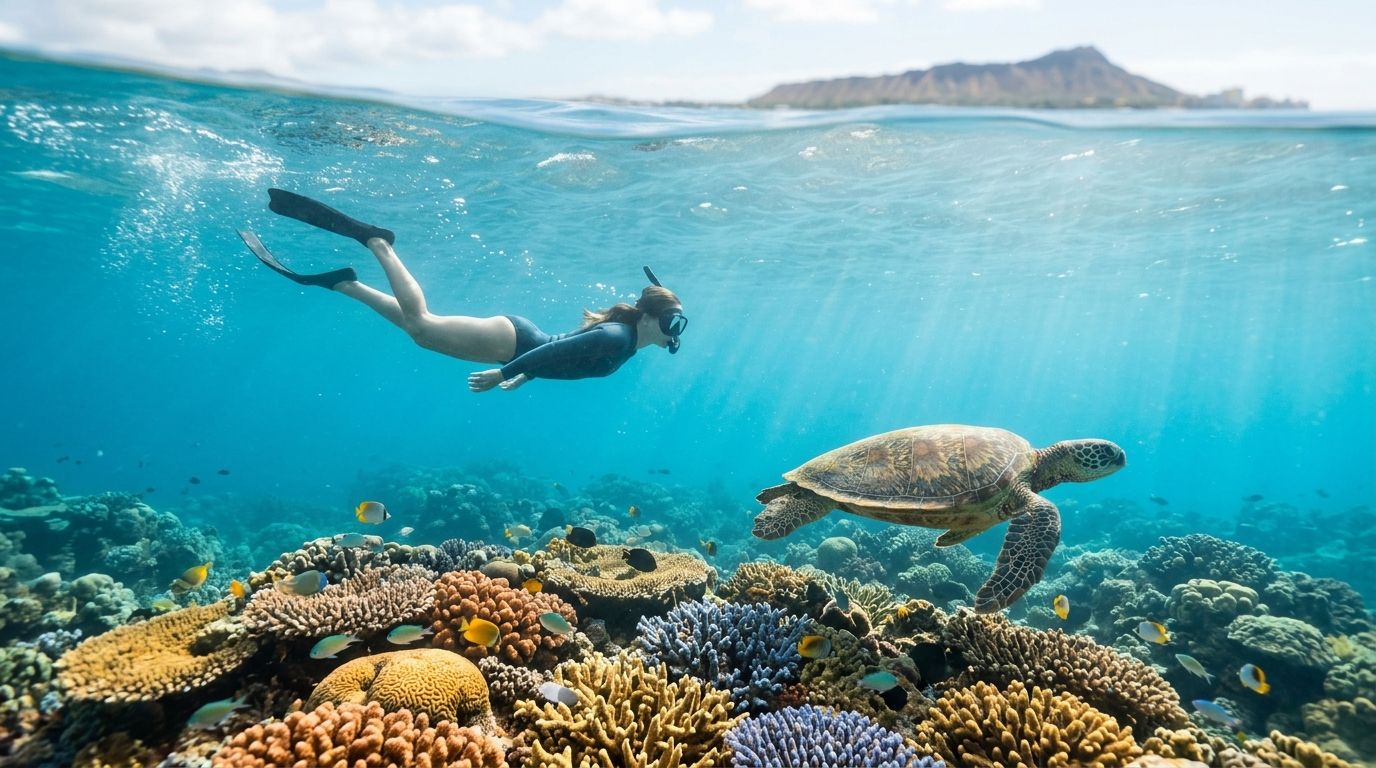
You’re probably here because you want one specific Hawaii moment. Not a vague “maybe we’ll see something” boat ride, but that calm, unforgettable minute when a Hawaiian green sea turtle, or Honu, drifts past you in clear blue water and everything else goes quiet.
That experience is absolutely possible on Oahu. It’s also one of those activities where the difference between “pretty good” and “worth talking about for years” usually comes down to where you go, how you go, and whether the people leading the trip know the reef that day.
An Unforgettable Encounter with Oahu's Sea Turtles
You slip off the boat, put your face in the water, and the reef looks quiet for a few seconds. Then the color starts to separate. Yellow tang over the coral, a cloud of blue fish off to your left, and a honu gliding across the bottom like it has all the time in the world. That calm first sighting is what people come to Oahu for.

What visitors often do not see from shore is how much conditions can shift from week to week. Reef stress, swell direction, visibility, and even localized bleaching impacts can change where turtles are feeding and which areas should be left alone. A spot that produced easy sightings last season may be a poor choice today. That is one reason guided trips consistently outperform guesswork. The crew is reading current conditions, not relying on an old blog post or a beach rumor.
A memorable turtle snorkel also depends on how the encounter happens. Honu that are feeding or resting should keep acting naturally. Good operators set the tone right away. Slow entries, clear spacing, and no crowding the animal for a photo. You get better views when the group is calm, and the turtle is far more likely to stay on its line instead of veering off.
I tell travelers to judge a turtle trip on three practical points:
- Current reef judgment: The crew should know which sites are producing clean, respectful sightings right now, not just which ones are famous.
- Wildlife handling: Turtles should never be herded, blocked, or pursued.
- In-water support: Beginners need help with mask fit, entry technique, and staying relaxed once they are floating.
Boat access matters too. It opens up cleaner entries and more reliable turtle habitat than many casual shore attempts, especially when surf, current, or crowded beach access turns a simple snorkel into work. Travelers staying near town can get a feel for that difference in this guide to a Waikiki turtle snorkel.
For a second opinion on what makes these trips work, the Kona Honu Divers Oahu snorkeling insights are useful. The best trips do more than get you near a turtle. They put you in the right water, at the right time, with a crew that knows how to protect the reef while giving you the kind of encounter you will remember for years.
Understanding Honu The Gentle Giants of Oahu
If you understand why turtles gather in certain places, you make better choices about where to snorkel and how to behave once you get there. Honu aren’t randomly scattered across the island. They return to feeding areas, resting areas, and reef zones that help them stay healthy.

One reason they’re so iconic on Oahu is that they’ve come back strongly under protection. And You Creations notes that Hawaiian green sea turtles are a conservation success story, that females lay an average of 100 eggs per clutch, and that Oahu’s waters stay in an ideal 75-80°F range for them year-round.
How the life cycle shapes what you see
What you experience in the water is only one slice of a much bigger life cycle. Females nest on Oahu beaches at night, hatchlings head for the ocean, and only a small portion make it to adulthood. The adults you see snorkeling around reefs are survivors that have spent years navigating predators, changing habitat, and human pressure.
That’s part of why respectful viewing matters so much. You’re not looking at disposable wildlife. You’re watching a protected animal that has made it through a difficult journey to adulthood.
Why cleaning stations are so reliable
The single most important behavior to understand is the cleaning station. At certain reefs, turtles pause while smaller reef fish remove algae and other buildup from their shells and skin. It’s one of the reasons some Oahu sites keep producing consistent sightings while others feel hit or miss.
When people tell me they want the best chance of seeing turtles, I ask whether they want to wait for luck or go where turtles already have a reason to return. Cleaning stations are the answer to that question.
Practical rule: Don’t look for turtles at random. Look for habitat that gives turtles a reason to be there.
What makes Honu different from other marine life
Turtles are often calm, but calm doesn’t mean passive toward pressure. They need to surface to breathe, they need room to move, and they don’t benefit from swimmers crowding them for a closer shot. A turtle that changes direction because of people is already telling you something.
A good snorkeler watches for patterns instead of chasing moments:
- Surfacing behavior: Turtles rise and drop again on their own schedule.
- Reef use: They often stay close to productive reef areas.
- Cleaning pauses: Some of the best sightings happen when the turtle is lingering, not traveling fast.
- Body language: If the turtle starts avoiding you, the interaction has already gone wrong.
For more broad context on ethical encounters across the islands, this guide to snorkeling with sea turtles in Hawaii is worth reading before you go.
The Best Oahu Turtle Snorkeling Spots
Not all turtle spots on Oahu serve the same kind of traveler. Some are excellent for a guided snorkel. Some are better for shoreline viewing. Some can be rewarding, but only when ocean conditions cooperate and the swimmer knows exactly what they’re doing.
The top spot for most visitors is Turtle Canyon. Living Ocean Tours reports that it sits just a 10-15 minute boat ride from Waikiki and has a 95% turtle sighting rate on guided tours. That combination matters. It’s fast to reach, it’s offshore, and it’s built around the kind of reef behavior that makes sightings reliable.
Oahu Turtle Snorkeling Spots at a Glance
| Location | Access Method | Sighting Reliability | Best For |
|---|---|---|---|
| Turtle Canyon | Boat access only | High, guided tours are the most reliable option | First-timers, families, visitors who want the strongest chance of seeing turtles |
| Laniakea Beach | Shore access | Variable | Beachgoers who want to observe turtles from land and only snorkel if conditions are calm |
| Electric Beach | Shore access | Variable | Strong swimmers comfortable with more demanding entries |
| Waikiki area reef zones | Shore or guided boat trip | Variable from shore | Travelers staying nearby who want convenience over certainty |
Turtle Canyon
Turtle Canyon is the clear first choice for a classic oahu snorkeling turtles trip. It’s offshore from Waikiki, reachable only by boat, and known for the kind of turtle-cleaning behavior that brings animals back to the same reef.
The practical upside is huge. You avoid the churn and crowding that often come with popular shore sites, and you spend your time over a reef chosen specifically for marine life, not merely because it’s easy to walk into from the beach.
This spot also works well for mixed groups. New snorkelers can stay relaxed on the surface, while more confident swimmers still get a satisfying reef experience.
Laniakea Beach
Laniakea is famous for turtle viewing, especially from shore. It’s one of those places visitors hear about early, and for good reason. Turtles are often associated with this stretch of coast.
The trade-off is that a famous beach doesn’t automatically equal the best snorkel. Crowds, changing surf, and shoreline conditions can all make the in-water experience less consistent than people expect. If your goal is specifically to snorkel with turtles, this is often better treated as a bonus stop than your main plan.
Electric Beach
Electric Beach can produce memorable wildlife encounters, but it’s not the place I send nervous swimmers or casual vacation snorkelers. Shore entries can feel more demanding, and local conditions matter a lot.
If you’re experienced, comfortable judging the ocean, and not counting on a simple family outing, it can be worthwhile. If you’re traveling with kids or want a lower-stress turtle day, a guided boat site is usually the smarter call.
Shore snorkeling often looks easier on a map than it feels in the water.
Waikiki area turtle options
Visitors staying in Honolulu often hope they can just walk out from the beach and find turtles. Sometimes they can. Sometimes they can’t. Convenience is real, but reliability is different.
That’s why guided trips departing close to Waikiki keep winning for most travelers. You stay near your hotel, skip a long island drive, and let the crew make the call on where the best current conditions are.
A helpful planning resource is this guide on where to see sea turtles in Oahu, especially if you’re trying to compare sightseeing stops with true snorkel locations.
Guided Tours vs Self-Guiding Your Turtle Adventure
You wake up to clear skies, load a rental car, grab snorkel gear, and head for the beach expecting an easy turtle morning. Then parking is full, the shore break is stronger than it looked online, your mask starts leaking, and nobody can tell you whether turtles were seen there that day. I’ve watched that exact plan unravel for plenty of visitors.
A guided trip cuts out a lot of those weak points. More important, it gives you a better shot at the kind of encounter people came to Oahu for. Calm entry. Proper gear. A crew that knows how wind, swell, visibility, and recent reef conditions are affecting turtle activity right now.
That local judgment matters even more after recent bleaching stress on Hawaii reefs. Turtles still use these areas, but conditions can shift fast, and the best experience often comes from choosing the right site on the right morning, not from driving to the most famous beach on a map.
What guided trips do better
A good boat crew starts working before anyone gets in the water. They fit masks correctly, sort out fins and flotation, explain how to move around turtles without crowding them, and make a real call on whether a site is worth visiting that day.
The biggest advantage is access. Boat trips can reach offshore turtle areas that are awkward or impossible to snorkel from shore, especially for beginners, families, or anyone who does not want a long surface swim. That usually means more relaxed snorkeling and a better chance of seeing turtles behaving naturally instead of dodging a crowd near a beach entry.
Guided trips also solve the small problems that ruin self-guided days:
- Better site selection: Crews choose based on current conditions, not yesterday’s social posts.
- Stronger beginner support: Help with breathing, mask fit, and water confidence changes the whole outing.
- Cleaner logistics: No gear rental shuffle, no guessing at entry points, no hauling equipment across hot parking lots.
- Stronger wildlife etiquette: Good guides set distance rules early and step in before excited swimmers pressure a turtle.
That last point matters. A turtle encounter is better when the animal stays calm.
Where self-guiding usually breaks down
DIY snorkeling can work, but the trade-off is uncertainty. You are responsible for reading the ocean, choosing an entry, checking gear, and deciding whether the conditions match your swimming ability.
For experienced Oahu snorkelers, that can be part of the fun. For visitors on a short trip, it often burns half a day.
I see the same pattern over and over. People pick a spot because it is convenient, not because it is the best turtle plan for that morning. Then they spend their energy on setup problems instead of enjoying the water. Even when they do find turtles, the encounter can feel rushed because they are managing stress, surf, or fatigue at the same time.
There is also an ethical side to this. Snorkelers without much turtle experience tend to swim straight at honu, drift into their path, or follow too long trying to get a photo. Guides correct that immediately. On your own, nobody is there to reset the interaction before it turns into pressure on the animal.
When self-guiding makes sense
Self-guiding is reasonable for strong swimmers who already know Oahu conditions, bring their own gear, and are comfortable treating turtle sightings as a possibility instead of a guarantee.
It is usually a weaker choice for:
- First-time snorkelers
- Families with younger kids
- Travelers staying in Waikiki without much time
- Anyone who wants the highest odds of a low-stress turtle trip
If the goal is the best overall chance of a safe, respectful, well-run outing, a guided boat trip is usually the smarter call. For a closer look at why that format works so well, this guide to a Turtle Canyon snorkel adventure shows what a well-executed boat-based turtle trip looks like in practice.
The Sacred Rules of Snorkeling with Turtles
A turtle encounter only counts as a good one if the turtle gets left in peace. That’s the standard. Not “we got close.” Not “we touched one for a second.” Peaceful, legal, low-pressure observation is the whole game.

The clearest rule is distance. Kona Snorkel Trips advises that you should keep a minimum distance of 10 feet from turtles and watch for stress behaviors like yawning or quick flipper swipes, which mean you’re too close and should calmly back away.
What never to do
Some mistakes come from excitement. Others come from bad social media habits. Either way, the result is the same. The turtle gets pressured.
Never do any of the following:
- Touch the turtle: Protected wildlife is not there for contact.
- Chase for a better angle: If you have to pursue it, you’re already too close.
- Block its route to the surface: Turtles need to breathe freely.
- Crowd a resting animal: Resting time matters just as much as feeding time.
- Dive down repeatedly over it: Even if you never touch it, pressure changes behavior.
If a turtle changes course because of you, give it more space.
How to read turtle stress
Many people assume a turtle will swim away if it’s uncomfortable. Sometimes it does. Sometimes it gives smaller signals first. Those signals are the part good guides teach well.
Watch for:
- Yawning-like mouth opening
- Sharp flipper movement
- Sudden change in direction
- A turtle leaving a calm area once swimmers close in
Those aren’t signs to move closer for a final photo. They’re cues to stop, float, and create room.
Why tours help people follow the rules
This is one of the biggest advantages of being with an attentive crew. Guests get a briefing before entering the water, reminders during the snorkel, and quick correction if somebody drifts too close.
That matters because most rule-breaking in the water isn’t malicious. It’s people misjudging distance while they’re excited and focused on the turtle. A guide watching from a few yards away catches that before it becomes harassment.
Gearing Up and Capturing the Moment
Gear problems ruin more turtle snorkels than bad luck does. A leaking mask, a snorkel you don’t trust, or fins that feel awkward can keep you focused on yourself when you should be watching the reef.

What you actually need
Keep it simple. For turtle snorkeling on Oahu, the essentials are:
- A mask that seals well: Comfort matters more than style.
- A snorkel you can breathe through easily: If it feels awkward on land, it won’t improve in the water.
- Fins that fit securely: Good fins reduce effort and help you move without frantic kicking.
- Reef-safe sunscreen: Protect your skin without adding unnecessary stress to fragile reef areas.
- Flotation if you want it: There’s no prize for making the swim harder.
This is another area where guided trips help. Good operators fit gear on-site and swap out pieces if something doesn’t feel right.
Underwater photo tips that work
The best turtle photos usually come from patience, not pursuit. Let the scene develop. If the turtle is moving calmly across the reef, hold your position and shoot slightly ahead of its path rather than swimming after it.
A few practical habits make a big difference:
- Use natural light: Morning light often gives cleaner color and less harsh glare.
- Stay steady: Slow finning beats rushed movement every time.
- Shoot wider: Turtle, reef, and water color together often look better than a tight crop.
- Take the first shot, then stop fussing: If you spend the whole encounter adjusting settings, you miss the encounter.
A respectful photo from farther away beats a stressful close-up every time.
If you want ideas for composing marine shots from a boat-based snorkel day, these Kealakekua Bay snorkeling photo tips for boat tour shots offer practical crossover advice that applies well to turtle trips too.
Frequently Asked Questions About Oahu Turtle Snorkeling
Is turtle snorkeling on Oahu safe if I’m not a strong swimmer
Yes, if you choose the right setup.
A well-run guided trip is usually the safest option for beginners and casual swimmers because the crew can match you with flotation, explain water entry clearly, and keep the group in areas that suit the day’s conditions. That matters on Oahu, where one site can look calm from shore and feel very different once you’re in the water.
Shore snorkeling asks more of your own judgment. Visitors often underestimate current, surge, and the swim back in.
Are Hawaiian green sea turtles aggressive
Hawaiian green sea turtles are usually calm around snorkelers, but they are still wild animals. Give them space, stay out of their path, and let them choose the distance.
That approach keeps the encounter better for everyone. You stay safer, and the turtle keeps behaving naturally instead of changing course or leaving the cleaning station.
What’s the best time of year for oahu snorkeling turtles
Turtles are on Oahu year-round, so the better question is not “what month is best?” It’s “which site is holding good conditions right now?”
Water clarity, swell direction, wind, and reef health shape the day far more than the calendar does. That is one reason guided trips stand out. Good operators are watching current conditions closely and adjusting plans around what is happening on the reef, not relying on old advice from a generic travel roundup.
Is Turtle Canyon better than trying from the beach
For visitors focused on seeing turtles, usually yes.
Turtle Canyon gives you a more reliable turtle-centered experience than rolling the dice from shore, especially if your vacation only allows one snorkel day. Boat access cuts out much of the guesswork about where turtles are cleaning, how conditions are setting up, and whether a spot that looked promising online is worth the swim that morning.
Beach snorkeling still has its place. It costs less and can be great for confident swimmers who are comfortable checking conditions for themselves.
Should I book in advance
Yes, especially if turtle snorkeling is one of the main reasons you booked the trip.
The better operators, the crews with strong safety habits, and the departure times with the best conditions tend to fill first. Booking ahead also gives you more room to choose a company that treats turtle encounters responsibly instead of grabbing whatever still has space.
What should I bring on the day
Bring swimwear, a towel, water, sun protection, and any medication you may need for motion sensitivity.
Keep it simple. What you need most is gear that fits, a crew that gives clear instruction, and enough patience to let the encounter happen without chasing it. The best turtle snorkels usually feel calm from start to finish.
If Oahu has you dreaming about sea life beyond one island, Kona Snorkel Trips is a standout choice for Big Island adventures. They’re Hawaii’s highest rated and most reviewed snorkel company, and they’re a smart option for travelers who want the same mix of safety, marine knowledge, and memorable in-water experiences on the Kona coast.