
Captain Cook Snorkel: Your Ultimate Visitor’s Guide
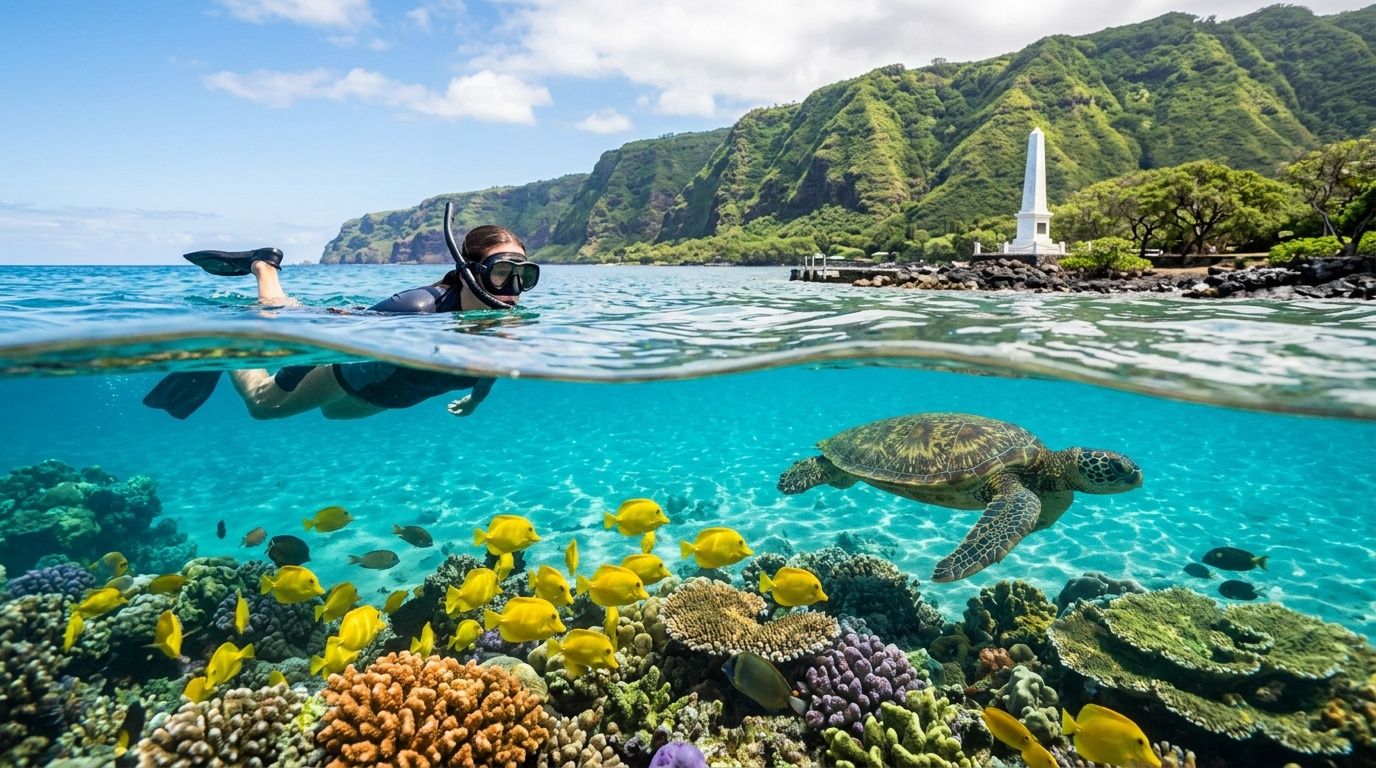
You’re probably looking at photos of Kealakekua Bay right now and wondering if the captain cook snorkel is worth building a day around. It is, but only if you plan it the right way.
This isn’t just another reef stop off the Kona coast. Kealakekua Bay combines clear water, a protected reef, a shoreline difficult to reach independently, and one of the most important historical sites in Hawaiʻi. Done well, it feels like two trips in one: a high-quality snorkel session and a much deeper experience of place.
Welcome to Kealakekua Bay A Snorkeler's Paradise
The first thing people notice at Kealakekua Bay is the water color. Then they notice the clarity. Visibility often reaches 100 feet, which is one reason the bay is widely recognized as one of Hawaii’s premier snorkel spots, alongside its long cultural history and protected status, as noted in this Kealakekua Bay snorkeling overview.

A lot of visitors expect the bay to feel crowded or commercial because it’s so well known. What surprises them is how quickly the place feels quiet once you’re looking into the water instead of back at shore. The cliffs block out a lot of the outside noise. The reef starts shallow. You get that immediate sense that this bay has been important for a very long time.
If you want the short version, this is what makes a captain cook snorkel stand out:
- Water clarity: Kealakekua Bay is known for exceptionally clear water, often reaching 100 feet of visibility in good conditions, according to this bay visibility guide.
- Protected reef: The bay is managed for preservation, which helps the reef and fish life stay strong.
- Historical weight: You’re snorkeling beside one of the most significant historic shorelines in Hawaii.
- Access challenge: Because it isn’t simple to reach, planning matters more here than at easy roadside snorkel spots.
Kona Snorkel Trips is Hawaii’s top rated and most reviewed snorkel company, and if you’re trying to sort through tour options, reviews help you understand what the on-the-water experience feels like before you commit.
Why this bay feels different
Many snorkeling spots give you one strong reason to visit. Kealakekua gives you several at once. The water is clear enough that beginners often feel more relaxed because they can see what’s around them. Experienced snorkelers like it because the reef structure starts close and stays visually interesting as you move out.
Practical rule: If you want one snorkel outing on the Big Island that balances scenery, reef life, and cultural significance, this is the one most visitors remember.
That combination is what turns a captain cook snorkel from a simple excursion into a day people keep talking about long after the trip ends.
The Monument and Its Story A Rich History Beneath the Waves
The white obelisk on the shoreline isn’t just a landmark for photos. It marks one of the most consequential moments in Hawaiian history, and knowing that before you get in the water changes how the whole bay feels.

Captain James Cook arrived at Kealakekua Bay during the Makahiki festival in 1778, a sacred Hawaiian season of peace and renewal honoring Lono. He was initially mistaken for Lono, which shaped the welcome he received. That peace did not last. When Cook returned in 1779 for ship repairs outside the Makahiki season, tensions grew. After conflict over supplies and stolen metal goods, Cook attempted to take Chief Kalaniopuu hostage. The attempt failed, and on February 14, 1779, Cook and four marines were killed in the skirmish. The monument, erected by the British in 1874, stands as a reminder of that encounter, as described in this history of Kealakekua Bay and the monument.
Why the history matters on the water
A lot of travelers arrive thinking the monument is the destination. It isn’t. The monument is the marker. The bay itself is the story.
When you understand that Hawaiians had already recognized this place as sacred for centuries, the shoreline stops feeling like a backdrop and starts feeling like a site with memory. The captain cook snorkel becomes more meaningful because you’re not just floating above coral. You’re moving through a place where Hawaiian life, ritual, and later conflict all intersected.
For visitors who want more background before they go, this Captain Cook Monument snorkeling history guide gives helpful context.
What the monument does and does not represent
It helps to approach the monument with a little humility. It marks Cook’s death, but it doesn’t tell the whole Hawaiian side by itself. Good guides add that missing context. They explain the timing of the Makahiki season, the misunderstanding around Lono, and the reasons tensions escalated when Cook returned.
Here’s the simplest way to understand it:
| Element | Why it matters |
|---|---|
| Makahiki arrival | Explains why Cook was first welcomed |
| Return outside the season | Helps explain why the atmosphere changed |
| Hostage attempt | Marks the turning point that led to violence |
| Monument today | Gives visitors a visible reference point for the event |
The monument makes more sense when you stop treating it as a tribute alone and see it as a marker of a complicated historical meeting.
That perspective tends to make people more respectful in the bay. And that’s a good thing.
Exploring the Underwater World Marine Life at Kealakekua Bay
The reef at Kealakekua Bay doesn’t make you work hard for the good stuff. You put your face in the water and the scene starts immediately.

This bay is a Marine Life Conservation District, and that protection shows. Kealakekua Bay supports over 80 species of fish, with coral cover estimated at 40 to 60 percent, and visibility that routinely exceeds 100 feet. That protected status is one reason visitors reliably see abundant yellow tang and green sea turtles, according to this Kealakekua Bay marine life guide.
What you’re most likely to notice first
Color. Then movement.
Schools of yellow tang often pull people’s attention right away because they stand out so clearly against the reef. Green sea turtles are another major highlight. Most visitors hope to see one. In this bay, that’s a realistic expectation rather than a long-shot wish.
The reef also stays visually rewarding because the structure changes quickly. Coral begins in shallow water near shore, then the shelf drops into deeper blue. That creates a nice range for snorkelers. Beginners can stay where they’re comfortable, while stronger swimmers can explore the edge more confidently under guide supervision.
How to snorkel this bay without missing the best parts
People often waste their first part of the swim by moving too fast. Kealakekua rewards the opposite approach.
- Start slow: Give your mask a minute to settle and let your eyes adjust.
- Look ahead, not just down: Turtles and schooling fish are often easier to spot at a distance.
- Pause over coral heads: Fish activity often gathers around structure.
- Float instead of kicking constantly: You’ll conserve energy and disturb less water.
If you want a stronger sense of what species show up here, this guide to marine life at Kealakekua Bay is useful before your trip.
Why protection changes the experience
Protected areas feel different underwater. Fish behave differently when they’re not dealing with the same level of disturbance and extraction found elsewhere. The reef tends to look fuller. The scene feels more alive.
Don’t chase the wildlife. The best sightings usually happen when you float quietly and let the bay come to you.
That’s especially true with turtles. The calm snorkeler usually gets the better encounter.
Planning Your Visit Logistics for the Perfect Captain Cook Snorkel
The biggest mistake people make with a captain cook snorkel is assuming access is simple. It isn’t. The bay’s beauty is tied directly to the fact that it’s not an easy roll-up beach stop.
Boat tour versus kayak versus hike
Most visitors have three possible approaches. They are not equal.
| Access option | What works | What does not |
|---|---|---|
| Boat tour | Easiest entry to the best snorkel zone, less physical strain, guided support | Requires booking and a check-in schedule |
| Kayak | Appeals to independent travelers who want a self-powered outing | Access rules and logistics can be restrictive, and the day becomes more work-heavy |
| Hike | Possible for strong, prepared visitors | Strenuous, hot, and a poor fit for many families or casual snorkelers |
A boat is the cleanest option because it solves the hard parts in one move. You avoid the long approach, you enter near the better reef area, and you have crew support for gear, water entry, and conditions.
Kayaking sounds romantic until you account for loading gear, managing the crossing, and staying fresh enough to enjoy the snorkel. Hiking attracts ambitious travelers, but many people underestimate the heat and effort involved. By the time they reach the water, they’ve already spent a lot of their energy budget.
Why morning usually wins
If you can choose between morning and afternoon, morning is generally the safer bet. Morning captain cook snorkel tours typically offer calmer water and the best light on the reef, with visibility up to 100 feet, while afternoon winds can create chop and reduce visibility, according to this weather and timing guide for Captain Cook snorkel tours.
That advice lines up with what boat operators in other coastal destinations say too. If you like comparing trip-planning logic across ocean destinations, this Algarve boat tour guide is a good example of how conditions, timing, and vessel choice shape the day.
Practical planning points people overlook
The details that matter most aren’t glamorous:
- Parking and check-in: Know exactly where to go before tour morning so you’re not rushing.
- Sun exposure: Morning sun is still strong on the water. Prepare before boarding.
- Motion comfort: If you get seasick, deal with that before departure, not after.
- Respect for the bay: Follow marine life rules and reef protection guidance every time you enter.
For the ground-level details, this Kealakekua Bay tour parking and check-in guide helps smooth out the day.
Rules that exist for a reason
Because Kealakekua Bay is protected, visitors need to act like guests, not consumers. Don’t stand on coral. Don’t touch turtles. Don’t treat the monument shoreline like a playground. Good rules in marine protected areas aren’t there to make the trip less fun. They’re what keep places like this from becoming damaged and ordinary.
People usually enjoy the bay more once they understand that. The protection is the reason the captain cook snorkel is special in the first place.
The Premier Experience What to Expect on a Tour with Kona Snorkel Trips
A well-run boat tour should feel organized before it feels exciting. That’s usually the first sign you picked a good operator.

With Kona Snorkel Trips, the structure is straightforward. You check in, get fitted with snorkel gear, hear the safety briefing, and head out with guides who are lifeguard-certified. On a captain cook snorkel, that matters more than people think. The bay looks calm from photos, but it’s still open water, and guests have a much better day when the crew can coach clearly, spot fatigue early, and keep the group moving smoothly.
What a good tour day feels like
The best tours don’t rush people into the water. They build confidence first.
You should expect a few things from any operator you consider:
- Clear swim expectations: You’ll know whether the trip fits your comfort level before boarding.
- Quality gear: Better masks, dry-top snorkels, fins, and flotation support make a visible difference.
- Context from the crew: The trip is better when someone explains what you’re seeing, both in the water and on shore.
- Managed group flow: Entry and exit are easier when the crew keeps things organized.
Some travelers want a second option when comparing providers. If you’re shopping around for a Captain Cook snorkel tour, Captain Cook Snorkeling Tours is another operator worth looking at.
Small details that improve the day
Visitors often recall the reef and the turtles. The crew remembers the details that got them there comfortably.
A practical operator thinks about things like mask fit before departure, who may need extra flotation, who looks nervous, and who’s likely to do better with a slower first entry. That’s the difference between a generic boat ride and a guided snorkel day.
A captain cook snorkel works best when the crew treats safety as part of hospitality, not as a speech they rush through before the fun begins.
If you already know this is the outing you want, you can check openings directly for the Captain Cook snorkel tour booking page.
Choosing based on your style
Some guests want lots of narration and help in the water. Others want a smooth ride, a competent crew, and space to snorkel at their own pace. Neither is wrong.
The better question is this: do you want to spend your day solving logistics yourself, or do you want to arrive ready to focus on the bay? For most visitors, the guided option wins because it protects the part of the day they came for.
Essential Safety and Gear Checklist for a Worry-Free Day
Kealakekua Bay is friendly for snorkeling, but it is still open ocean. That means comfort and safety come from preparation, not optimism.
A captain cook snorkel tour generally requires a basic level of swim ability, and that’s a sensible rule. Professional gear also matters. High-quality dry-top snorkels and full-foot fins reduce effort in the water, and professional-grade fins can improve propulsion efficiency by up to 80 percent, according to this Captain Cook snorkel swim requirements and gear guide.
The gear that matters most
Not every piece of equipment affects your day equally. These do.
- Mask that seals well: A leaking mask drains energy and confidence fast.
- Dry-top snorkel: This helps keep water out and makes breathing feel easier for newer snorkelers.
- Full-foot fins: Good fins save your legs and help you move efficiently.
- Flotation support: Noodles or vests let people relax and look around instead of fighting to stay up.
If you want a closer look at what’s typically provided, this Captain Cook snorkel gear guide is a solid reference.
A checklist that actually helps
Bring the basics. Skip the extra junk.
- Swimwear worn under clothes so you’re not changing in a rush.
- Towel for the ride back.
- Reef-safe sunscreen applied before departure.
- Water bottle if your operator recommends bringing one.
- Hat and sunglasses for the boat.
- Dry clothes for after the trip.
- Any personal medication, especially if motion sickness is an issue.
What works and what doesn’t
Here’s the honest version.
| Works well | Usually backfires |
|---|---|
| Listening closely to the briefing | Assuming snorkeling here is like swimming in a pool |
| Testing your mask fit early | Waiting until you’re in the water to fix gear |
| Using flotation if you’re unsure | Avoiding flotation because you think it looks inexperienced |
| Staying near the guide’s recommended area | Kicking hard and wandering farther than your comfort level |
If you haven’t snorkeled in a while, practice slow breathing and gentle fin kicks before the trip. Efficiency matters more than speed.
The guests who have the easiest day aren’t always the strongest athletes. They’re usually the ones who prepare, ask questions, and use the gear correctly.
Captain Cook Snorkel FAQs
Is the captain cook snorkel good for beginners
Yes, if the beginner is comfortable in the water and chooses a guided tour with flotation support and a real safety briefing. This is not the right outing for someone who panics easily in open water or refuses to use help when they need it.
Is it good for kids and families
Often, yes. The fit depends more on the child’s comfort in the ocean than on excitement level. Families usually do better when they choose a boat tour, ask questions before booking, and treat the day as a guided ocean activity rather than free swim time.
Can non-swimmers still go
That depends on the operator and the person’s comfort level. Some people join mainly for the boat ride, monument viewing, and limited in-water support. Others discover it’s better to wait until they have more water confidence. The honest answer is better than pushing through a day that feels stressful.
Are morning tours really better
For most visitors, yes. Morning conditions are typically calmer and clearer. That usually means easier entries, better visibility, and a less tiring experience.
Can you touch turtles or stand on coral
No. Keep your distance from wildlife and stay off the reef. Those aren’t optional courtesy rules. They protect the animals, the coral, and the future of the bay.
Is this better than a manta ray snorkel
They’re different experiences. A captain cook snorkel is a daytime reef and history trip. A manta ray snorkel is a night wildlife encounter built around a single unforgettable behavior. Some visitors do both on the same vacation because they complement each other so well.
Do you need to be very fit
No, but you do need enough comfort and stamina to manage yourself in the water. If that sounds borderline, choose a crew that offers patient guidance, good flotation, and a clear swim policy.
If you want a well-run day at Kealakekua Bay with experienced guidance, practical safety support, and a smooth booking process, take a look at Kona Snorkel Trips. It’s a strong place to start when you’re ready to turn a captain cook snorkel from a travel idea into an actual day on the water.