
Waikiki Turtle Snorkel: A 2026 Guide to Seeing Honu
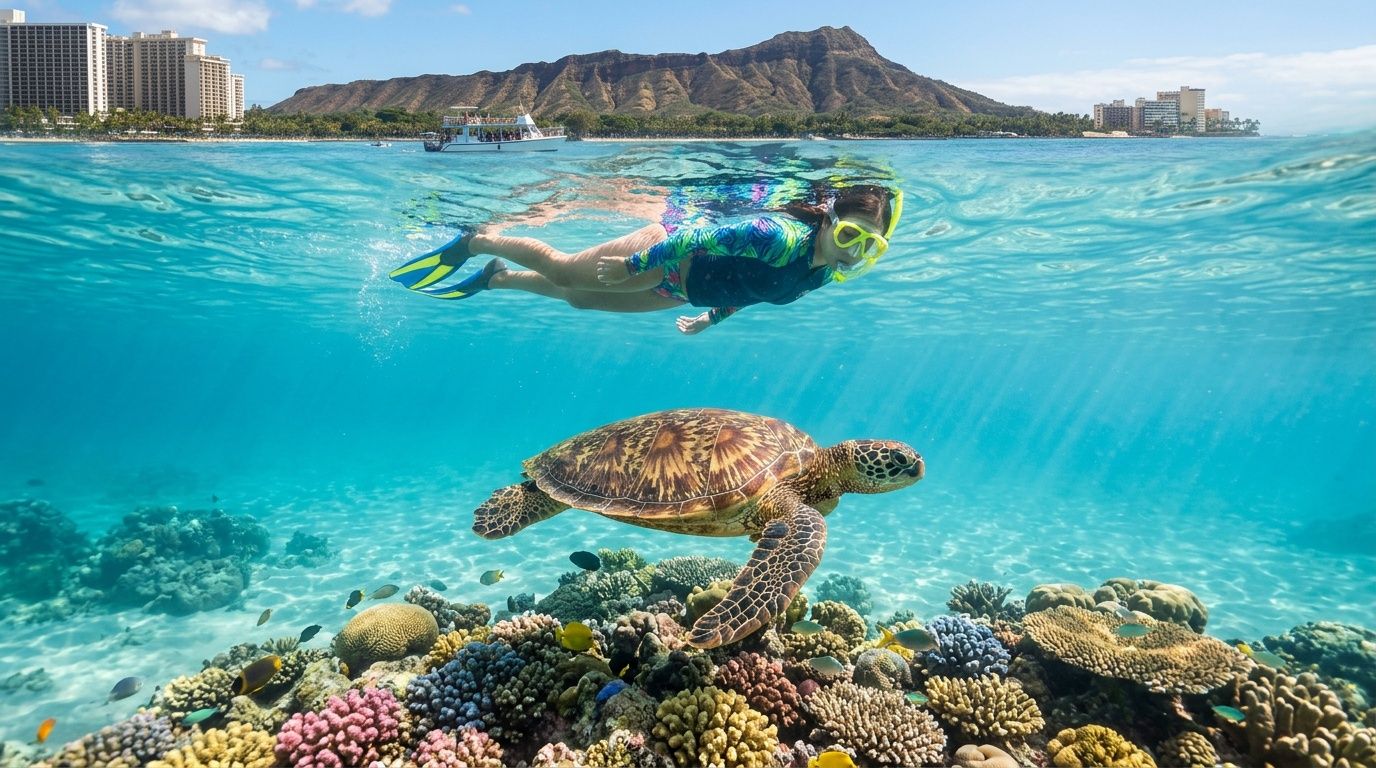
The first time you look down into clear Waikiki water and see a honu gliding below, the whole moment slows down. Kids stop kicking. Nervous adults forget to be nervous. Even people who came out hoping for a quick turtle sighting usually end up floating still, just watching.
That calm surprises first-timers.
A lot of visitors arrive with a movie version in their head. They expect turtles to pop up the second they put their face in the water, or they assume “swimming with turtles” means moving beside them like a pod mate. Real turtle snorkeling in Waikiki is better, and gentler. In a good encounter, you stay at the surface, the turtle keeps doing its thing, and you get a clear, memorable look without chasing, crowding, or turning the moment into chaos.
That difference matters for families. It also matters for anyone booking their first snorkel and trying not to waste a vacation morning. The best experience is not always the one that sounds the most dramatic. It is the one that matches your comfort level, gives you a realistic shot at seeing turtles, and leaves everyone excited instead of frustrated.
Good planning makes that much more likely. Choose an option that fits your group, pay attention to ocean conditions, and go in expecting a wildlife encounter, not a petting-zoo interaction. Set that expectation early, and a Waikiki turtle snorkel feels magical from the first fin kick.
Where to Find Turtles The Best Waikiki Snorkel Spots
Ask ten Waikiki snorkel guides where first-timers have the best shot at seeing turtles, and one offshore area comes up again and again. Turtle Canyon is the spot most visitors mean when they talk about a Waikiki turtle snorkel.
Turtles show up there for a reason. It functions as a cleaning station, where reef fish pick algae and debris off their shells. That regular behavior makes sightings more consistent than random beach entry snorkeling, especially for visitors with one vacation morning to get this right.
Why Turtle Canyon works so well
The biggest advantage is predictability. You are not searching a long stretch of shoreline and hoping a turtle passes through. You are going to a known offshore area where turtles are often already part of the reef activity.
That does not mean a guarantee. Wild animals do not work on a schedule, and ocean conditions can change the quality of the view even on a good day. For families and first-timers, that expectation matters. A successful trip usually means seeing turtles clearly from the surface as they glide, rest, or come up for air nearby. It does not mean staying beside one or following it around the reef.
Offshore conditions can also be cleaner than the nearshore water by Waikiki beaches. Less sand churn and fewer people in the entry zone often make the experience calmer once you are in the right place. If you want a broader overview beyond Waikiki, this guide to where to see sea turtles in Oahu gives helpful island-wide context.
Shore spots worth knowing
You will also hear people mention spots along the South Shore where turtles sometimes cruise near reefs or pop up close to swimmers. That can happen, and I have seen lucky beach snorkelers get a great surface view.
The trade-off is consistency. Shore snorkeling near Waikiki depends more on surf, visibility, crowds, entry comfort, and simple luck. For confident swimmers with flexible plans, that can be a fun low-cost option. For young kids, nervous snorkelers, or anyone building their whole morning around seeing honu, offshore turtle grounds are usually the more dependable choice.
Choose your spot based on the experience you want. If your goal is a realistic chance to watch turtles naturally from the surface, Turtle Canyon is the name to know.
Where to Find Turtles The Best Waikiki Snorkel Spots
The center of the action is Turtle Canyon, just off Waikiki Beach. It’s a natural cleaning station where reef fish remove algae and debris from turtle shells, which is why turtles return there so consistently. According to this Waikiki turtle snorkeling overview, guided tours there achieve a 99% turtle sighting success rate, and some operators offer a return trip if no turtles are seen.

Why Turtle Canyon works so well
This site isn’t random reef. It’s a place turtles use for a purpose. That’s the difference between “we might get lucky” and “where guides take guests when they want a reliable encounter.”
Because it’s offshore, you also avoid a lot of the shoreline churn that can make beach snorkeling feel crowded and inconsistent. Boat crews can put you over the productive area quickly, then keep the group together while you float and watch.
If you want a broader primer on locations, this guide on where to see sea turtles in Oahu gives useful extra context.
Shore spots worth knowing
You’ll also hear people mention Queens Beach and Sans Souci. Those can be calmer alternatives for people who prefer shore entry and don’t mind less certainty. They’re useful to know about, especially if you want a casual beach day with a mask in the bag.
Still, if your vacation priority is “I really want to see turtles,” I wouldn’t make a shore session your main plan. Shore entries add variables. Parking, crowds, changing visibility, comfort in deeper water, and simple luck all matter more.
Best choice for most visitors
For first-timers, families, and anyone with limited vacation time, a dedicated boat snorkel is the strongest play. It removes guesswork and gives you crew support from the moment you board.
If you want the cleanest path to a memorable Waikiki turtle morning, book with Living Ocean Tours and let the crew do what they do best.
Boat Tour vs Shore Snorkeling Which Is Right For You
This choice shapes your whole day. Shore snorkeling sounds simpler because it feels independent. A boat tour sounds like more of a commitment. In practice, most visitors who care mainly about turtles end up happier on the boat.
Waikiki Snorkeling Boat Tour vs Shore Exploration
| Feature | Boat Tour (e.g., Living Ocean Tours) | Shore Snorkeling (e.g., Queens Beach) |
|---|---|---|
| Turtle odds | Built around the main turtle zone offshore | Can be good, but less predictable |
| Ease for beginners | Crew briefings, flotation, in-water guidance | You handle entry, navigation, and comfort yourself |
| Family friendliness | Better for mixed skill levels | Harder if one person is nervous or inexperienced |
| Safety support | Professional supervision throughout | No dedicated crew watching your group |
| Logistics | Simple once you’ve booked | Easier to start, but more guesswork on conditions |
| Experience style | Purposeful wildlife-focused trip | Casual beach snorkel with more variables |
When a boat tour makes more sense
Choose the boat if your group includes first-time snorkelers, kids, or anyone who gets uneasy in open water. The crew can fit gear correctly, explain what you’re seeing, and help people settle down before they ever put their face in the water.
It’s also the better call if you’re on a short trip. One guided morning can deliver the exact experience you came for.
The “free” shore snorkel often gets expensive in vacation time. You can burn half a day sorting parking, conditions, entry points, and nerves.
When shore snorkeling still works
Shore snorkeling is fine if you’re already comfortable reading conditions, managing your own gear, and accepting that the session might be more about fish and reef than turtles. It can be enjoyable as a flexible beach add-on, not as your one must-do turtle plan.
If you’re comparing guided water experiences in general, this article on boat vs shore choices for a Kona manta ray snorkel captures the same core trade-off. Guidance reduces friction. Shore access increases uncertainty.
For most excited first-timers, the answer is simple. Book the boat, then enjoy the water instead of managing it.
What to Expect During Your Turtle Snorkel Adventure
A good turtle tour starts feeling easy before you ever hit the water. You board near Waikiki, the crew fits masks and fins, hands out flotation, and explains exactly how the snorkel works. That short setup matters more than people think, because relaxed guests see more and enjoy more.

The big expectation reset
The most important thing to know is this. Turtles at Turtle Canyon often gather at depths of 25+ feet, so first-time snorkelers should expect to watch from the surface rather than dive down to them, as explained in this Turtle Canyon guide from Living Ocean Tours.
That isn’t a downgrade. It’s an authentic experience.
You float on the surface, look down through clear water, and watch honu cruise through the cleaning station below. Guides help by positioning the group where the downward view is best, and flotation support keeps beginners from wasting energy trying to stay comfortable.
What you’ll actually see
The underwater scene is usually graceful, not dramatic. A turtle circles through the reef. Cleaner fish move around the shell. Another turtle comes in from the side. Someone near you lifts their head out of the water and says, “I got it,” with that half-laugh people make when they’ve just seen something wild for the first time.
At the cleaning station, turtles interact with reef fish in a natural mutual relationship. That’s why this site keeps producing sightings. You’re observing a living routine, not a random pass-through.
What works best for beginners
A lot of first-timers make the same mistake. They keep trying to dive, struggle, and miss the best surface views because they’re busy working too hard.
Use the vest. Put your face in the water. Breathe slowly through the snorkel. Let the guide place you.
- Stay flat on the surface: A horizontal position gives you the best angle downward.
- Listen for guide cues: They’ll often spot turtles before guests do.
- Don’t chase the movement: If a turtle changes direction, let it. Another clean view usually comes moments later.
Surface viewing is not the beginner version of a waikiki turtle snorkel. At Turtle Canyon, it’s the smart version.
That one mindset shift turns the outing from “I hope I can keep up” into “I can’t believe I’m watching this.”
Essential Safety Rules for Snorkeling in Hawaii
Snorkeling in Hawaii is beautiful, but it isn’t automatically low-risk. According to this safety-focused Waikiki snorkeling article, snorkeling was the leading cause of visitor drownings in Hawaii, with 204 fatalities between 2012–2021, and 71% of those occurred in calm waters. That’s why I treat guided supervision as a core part of the experience, not an optional extra.

What smart guests do before getting in
Open-water snorkeling is different from swimming in a pool. You’re breathing through a tube, watching below you, and often getting excited enough to forget your normal pace.
Use this checklist before you enter:
- Be honest about comfort level: Tell the crew if you’re nervous, tired, or not a strong swimmer.
- Take the flotation: Snorkel vests aren’t just for weak swimmers. They help conserve energy.
- Skip alcohol beforehand: Clear judgment matters in the water.
- Pause if breathing feels off: Lift your head, signal the crew, and rest.
Why guided tours are safer
Professional crews stack the odds in your favor. They brief the group, monitor conditions, watch body language in the water, and step in early when someone starts struggling.
That’s especially important because some serious problems don’t look dramatic at first. A guest may seem quiet, slow, or unusually tired. On a good guided trip, the crew notices.
If you want to prep your skin protection before the trip, this guide to reef-safe sunscreen tips for snorkeling in Hawaii is worth a read.
Safety habits that work
I trust simple habits more than bravado.
- Get in calmly. Don’t rush the entry.
- Settle your breathing first. Look down after you feel relaxed.
- Stay near the group. Distance creates problems fast.
- Exit early if needed. Nobody wins a prize for pushing through discomfort.
Good snorkelers aren't the ones who look fearless. They’re the ones who stay aware and make small decisions early.
That’s the kind of mindset that keeps a great turtle day from becoming a difficult one.
Honu Etiquette How to Respectfully View Sea Turtles
Seeing a Hawaiian green sea turtle is a privilege. Treating that moment well is part of the experience. The goal isn’t to get as close as possible. The goal is to witness natural behavior without changing it.

The non-negotiable rule
Hawaii law requires you to stay at least 10 feet away from sea turtles, as noted in this overview of turtle-viewing rules and crowd impacts. That distance protects an endangered animal and gives it room to surface, feed, and continue using the reef naturally.
A turtle that changes course because you moved in too close is not a better sighting. It’s a disrupted one.
What respectful behavior looks like
Good turtle etiquette is mostly about restraint.
- Hold your position: Let the turtle pass through the scene.
- Keep your hands to yourself: Never touch a turtle, even if it comes near you.
- Avoid cutting off its path: Turtles need free space to travel and surface.
- Use reef-safe sunscreen: What you put on your skin ends up in the water.
High traffic and crowd pressure can disrupt the cleaning station itself. That’s one more reason to choose operators and guides who keep guests organized instead of letting the water turn chaotic.
What doesn’t work
The worst approach is the tourist sprint. Head down, kicking hard, trying to force a selfie distance that shouldn’t happen in the first place.
That behavior stresses wildlife and usually ruins the moment for everyone nearby. Turtles veer away. Sediment gets stirred up. The calm viewing window disappears.
For more ideas on planning a respectful turtle outing, this page on snorkeling with turtles on Oahu adds useful perspective.
If you remember one thing, remember this. A great turtle encounter happens on the turtle’s terms, not yours.
That mindset leads to better photos, calmer water, and a far more meaningful waikiki turtle snorkel.
Your Gear and Preparation Checklist
Preparation doesn’t need to be complicated. It just needs to be thoughtful. The smoother your setup, the easier it is to relax once you’re in the water.
Bring these items
- Swimwear and towel: Wear your suit to the harbor if possible.
- Reef-safe sunscreen: Apply it before boarding so it has time to set.
- Dry clothes: You’ll appreciate them on the ride back.
- Waterproof phone case or camera: Only if you can use it without fussing over it the whole time.
Expect these basics from a quality tour
A solid operator should provide sanitized snorkel gear, flotation support, and clear instruction. If you wear glasses, ask ahead about RX masks. Some tours offer them, and that can completely change the experience for guests who otherwise struggle to see detail below the surface.
Families should ask where younger or nervous guests enter the water, how guides help beginners, and whether staying onboard part of the time is an option. Those small questions lead to a better fit.
If you want a useful comparison point for standard tour equipment, this article on what gear comes with a snorkel tour covers the basics well.
Waikiki Turtle Snorkel FAQ
What’s the best time to go
Summer, from May to September, tends to bring calm, glassy water that’s ideal for visibility, according to the earlier verified Waikiki snorkeling data. In winter, mornings are typically the better choice because conditions can still be clear away from shore even when there’s occasional swell.
Can I go if I’m not a strong swimmer
Usually, yes, if you choose a guided tour and use the flotation provided. The key is being honest with the crew so they can help with fit, positioning, and confidence from the start.
Will I actually swim right next to a turtle
You should expect to observe turtles from the surface looking down, not to pace them side by side. That expectation creates a better trip and leads to more respectful wildlife viewing.
What if I wear prescription glasses
Ask the operator whether RX masks are available. If not, some guests do fine with contact lenses under a standard mask, but it’s best to confirm your options before booking.
If this Oahu guide has you dreaming about more Hawaii snorkeling, take a look at Kona Snorkel Trips for your Big Island adventure. They’re Hawaii’s highest rated and most reviewed snorkel company, and they’re a strong next step if you want to pair your Waikiki turtle snorkel with another unforgettable day in the water.