
Turtle Canyon Snorkel Adventure: Your 2026 Oahu Guide
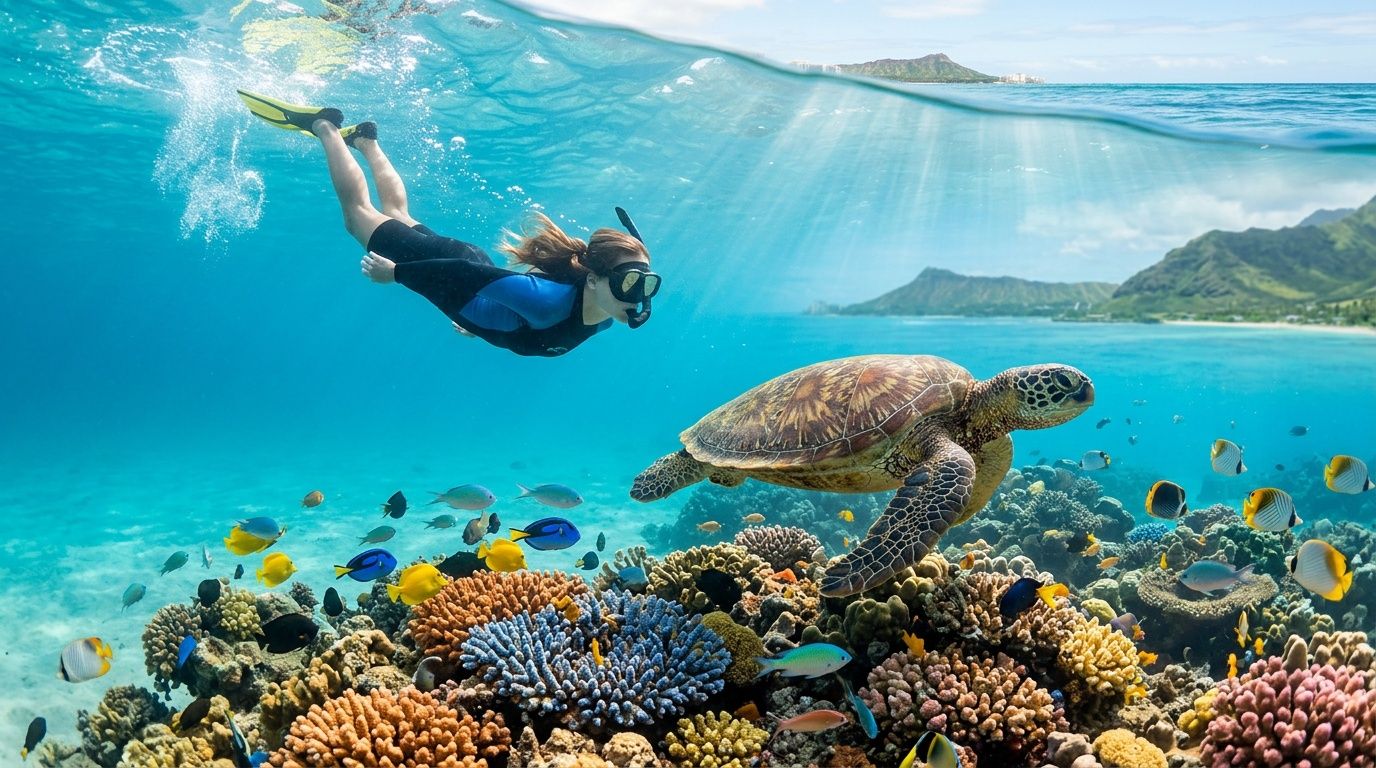
You’re probably in one of two places right now. You’re either staring at photos of Hawaiian green sea turtles and thinking, “I need to do this while I’m on Oahu,” or you’ve already heard about Turtle Canyon and want to make sure you book the right trip, bring the right stuff, and don’t end up nervous on the boat.
That’s smart.
A turtle canyon snorkel adventure is one of those Hawaii experiences that can feel effortless when you’re prepared, and stressful when you’re not. The good news is that Turtle Canyon is close to Waikiki, easy to reach by tour boat, and well suited to a wide range of guests. With the right expectations and a little local know-how, this can easily become the highlight of your trip.
Your Hawaiian Dream Awaits at Turtle Canyon
You step onto the boat in Waikiki with a towel over your shoulder, sunscreen on, and one question in the back of your mind. Will I see turtles, and will I feel comfortable once we get in the water?
That mix of excitement and nerves is common, especially for first-time snorkelers. Turtle Canyon has earned its reputation because it gives visitors a real shot at the Hawaii moment they came for. You lower your face into clear blue water, take a few calm breaths through the snorkel, and spot a honu gliding below the surface.

Just off the Waikiki coast, Turtle Canyon is widely known as one of Oahu’s best places to snorkel with Hawaiian green sea turtles. Tour operators also highlight regular sightings of reef fish, and some trips may spot spinner dolphins on the way, according to Sail Holokai’s Turtle Canyon overview. If you want broader trip-planning context before you commit, this guide to where to see sea turtles in Oahu helps explain why this area stays high on so many visitor wish lists.
Why this spot feels special
Location is a big part of the appeal.
Turtle Canyon sits close to Waikiki, so you spend more of your morning on the water and less of it dealing with a long drive, parking, or a complicated departure plan. For families, couples, and travelers with older relatives, that shorter run offshore can make the whole outing feel much more approachable.
It also changes the mood of the day. A nearby site feels easier to say yes to if someone in your group is nervous about boats, unsure about snorkeling, or worried they will get tired before the fun starts. Instead of feeling like a major expedition, the trip feels like a well-planned ocean outing with a strong reward.
Why Living Ocean Tours stands out
The reef matters, but the crew shapes your experience just as much.
A well-run tour can turn first-time jitters into confidence within minutes. Good guides explain the gear in plain language, help guests enter the water safely, watch for anyone who needs a hand, and point out what you are seeing so the reef becomes easier to understand. That matters if you are wondering about seasickness, worried your kids may hesitate, or hoping your first snorkel trip feels calm instead of rushed.
A turtle sighting is exciting. Feeling relaxed enough to enjoy it is what makes the memory stick.
That is one reason so many visitors look for a trusted operator like Living Ocean Tours. The goal is not only to get you to Turtle Canyon. It is to help you have your best possible day there, with the kind of preparation and on-the-water support that lets you focus on the turtles instead of your nerves.
The Underwater Magic of a Turtle Cleaning Station
Turtle Canyon stands out because turtles have a reason to be here.
This reef serves as a natural cleaning station, a place where Hawaiian green sea turtles pause while small reef fish pick away parasites and dead skin. Once you know that, the scene below the surface becomes much easier to read. You are watching a routine the animals return to again and again, which is one reason this stop feels so rewarding on a well-run outing with Living Ocean Tours.

The setting also helps first-time snorkelers. The reef sits at a depth that often allows clear viewing from the surface, and the water is often clear enough to follow the action without diving down. That matters if you are still getting comfortable with a mask, wondering whether you will miss the turtles, or hoping your first ocean snorkel feels manageable. If you want extra background before your trip, this guide to snorkeling charters and Hawaiian green sea turtles in the United States gives helpful context.
What you’re actually seeing underwater
The reef functions like a service stop for turtles, and the interaction is easier to understand once you know the sequence.
A turtle glides in and settles into a calm position. Small fish gather around the shell, skin, and flippers. From above, you can often watch the whole exchange unfold in one view. That creates a satisfying kind of snorkeling experience because you are observing animal behavior with a beginning, middle, and end.
Kids often respond to this right away.
They stop seeing only scattered fish and start noticing patterns. Adults do the same thing. Many guests who feel nervous in the first few minutes relax once they realize they are not searching aimlessly across a huge stretch of ocean. Their eyes have something specific to follow, which makes the water feel more approachable.
Why it’s great for snorkelers
A common first-timer worry is, "Do I need to free dive to see anything good?" At Turtle Canyon, the answer is usually no.
Several features make the site friendly for beginners and still exciting for experienced snorkelers:
- Surface viewing is often strong: You can often see turtles and reef life clearly while floating at the top, which is a big confidence boost for new snorkelers.
- The behavior is predictable enough to follow: Cleaning station activity gives your snorkel a focal point, so the experience feels more like watching a nature scene than scanning empty water.
- The reef is visually clear: In good conditions, you can track where the turtles are, where the fish are gathering, and how the whole interaction fits together.
That last point is easy to underestimate.
Readable water lowers stress. When people can see the reef layout and understand what is happening below them, they usually breathe more steadily, kick less frantically, and enjoy the moment more. For guests worried about seasickness or first-time snorkeling nerves, that sense of clarity can make the difference between getting through the tour and having a day they talk about for years.
What to Expect on Your Living Ocean Tours Adventure
You check in at the harbor, step onto the boat, and feel two things at once. Excitement, and maybe a small knot of nerves. That is normal, especially if this is your first snorkel trip or your first boat tour in Hawaii.
A guided Turtle Canyon outing with Living Ocean Tours is built to lower that uncertainty. The format is straightforward. The boat ride from Waikiki is short, the crew talks you through each step, and the in-water time is long enough to feel rewarding without turning the day into an all-day commitment. If you like comparing trip styles before you book, this overview of Hawaii ocean adventure tours gives helpful context.

The day usually feels like this
First comes check-in and boarding. Then the mood shifts fast. Waikiki starts to look different from the water, and that short ride offshore gives you a few minutes to settle your breathing, listen to the crew, and get used to the motion of the boat before you ever put on a mask.
Once you arrive, the crew helps everyone get organized. That includes gear fitting, a safety talk, and clear instructions for getting in and out of the water. New snorkelers often underestimate how much this matters. A good briefing works like a trail map before a hike. You stop wondering where to go, what to do with your hands, or how to ask for help.
If boat nerves are on your mind, that briefing helps there too. Reputable operators take preparation seriously, and the basics line up with the kind of practical advice in a boat safety checklist. Knowing there is a system in place makes the whole trip feel calmer.
Why Living Ocean Tours feels reassuring for beginners
The best tours do more than transport people to a good snorkel spot. They create a setting where guests can relax enough to enjoy it.
That often starts with group size and guide attention. On a boat with fewer people to manage, the crew has more time to adjust a mask, explain how flotation works, or give a nervous guest an extra minute at the ladder. Families notice that. First-time snorkelers notice it even more.
You can feel the difference in small moments:
- Mask and snorkel setup gets personal attention: A quick fix before you enter the water can save half the frustration of a first snorkel.
- Questions come out sooner: People ask the things they were embarrassed to ask on shore, like how hard to bite the snorkel or what to do if they need a break.
- The pace feels calmer: Guests are less likely to feel rushed into the water before they are ready.
That calmer pace is a big reason guests end up having their best possible Turtle Canyon day, not just a decent one.
What the in-water experience is actually like
Many first-timers expect snorkeling to feel like swimming laps in the ocean. It usually feels closer to floating with a window beneath you.
You put your face in, breathe through the snorkel, and let your body settle. At first, your brain may fixate on the sound of your own breathing. That is common. After a minute or two, the rhythm starts to make sense, and your attention shifts downward to the reef, the fish, and the open blue around you.
Good guides watch for that transition. They can tell who needs a practical correction, who needs reassurance, and who just needs thirty quiet seconds to realize, "I can do this."
For many guests, that is the turning point of the trip.
Who tends to enjoy this tour most
A turtle canyon snorkel adventure is a strong fit for guests who want memorable wildlife, clear guidance, and a trip that feels manageable from start to finish.
| Guest type | Why it fits |
|---|---|
| First-time snorkelers | Crew support and a guided format help reduce uncertainty |
| Families | The outing feels structured and realistic for mixed comfort levels |
| Visitors staying in Waikiki | The departure is convenient and the boat ride is short |
| Wildlife-focused travelers | The main goal is a high-interest marine encounter, not just a boat ride |
If you want one ocean activity that feels exciting without feeling overwhelming, this is the kind of tour that often wins people over.
How to Prepare for a Perfect Day on the Water
Most bad snorkel days start before the boat leaves. Someone skipped breakfast entirely. Someone overate. Someone forgot a towel. Someone gets queasy and had no plan for it. Preparation fixes most of that.
One of the biggest overlooked issues with Turtle Canyon tours is motion sickness, especially for families, first-timers, and guests nervous about boats. The ride is often about 10 to 15 minutes, and the lack of practical advice around seasickness has been identified as a real accessibility gap in existing Turtle Canyon information, as noted by TurtleCanyon.net’s accessibility discussion.
For a broader sense of what ocean conditions can feel like through the year, this guide to water temperature in Oahu, Hawaii is worth a quick read.
Seasickness prep that helps
If you even suspect you might get motion sickness, prepare before you board. Don’t wait until you feel bad.
Common options people use include Ship-EEZ Seasickness Patch, Dramamine pills, Bonine pills, Sea Band wristbands, and ginger chews. Pick the approach that matches your needs and any medical guidance you follow.
A few practical habits help too:
- Eat lightly: Don’t board on a totally empty stomach, but skip a huge greasy breakfast.
- Look at the horizon: Fixed visual reference points often feel better than staring at the deck.
- Say something early: If you feel “a little off,” tell the crew before it gets worse.
Local advice: The best seasickness remedy is the one you use early enough.
What to bring
You don’t need to overpack. Keep it simple and functional.
- Swimsuit: Wear it to the harbor if you can.
- Towel: You’ll want it on the ride back.
- Dry clothes: A shirt or cover-up feels great after snorkeling.
- Reef-safe sunscreen: Protect your skin without adding unnecessary reef impact.
- Waterproof phone case or camera: If you want photos, make sure your setup is ocean-ready.
- Hat and sunglasses: Helpful before and after the snorkel.
What to leave behind
A few things usually create more hassle than value.
Skip bulky bags, valuables you’d worry about, and anything that can’t get wet but might. If you’re unsure about general readiness on any boat outing, this boat safety checklist is a solid practical resource.
The less clutter you carry, the easier the day feels.
Snorkeling Tips for Families and First-Timers
Families and beginners often think everyone else on the boat knows exactly what they’re doing. That’s almost never true. Plenty of guests are trying snorkeling for the first time, and many adults are internally nervous even when they act confident.
The trick is to make the first ten minutes easy.

If someone in your group is worried about swim ability, this article on whether snorkeling is safe for non-swimmers can help set realistic expectations.
Start slower than you think
Don’t jump in and try to “perform.” Start by floating.
Let the mask settle. Put your face in for a few seconds, then lift it again. Take several easy breaths through the snorkel while holding onto flotation if it’s available. Once breathing feels normal, everything else gets easier.
For kids, I like simple instructions:
- Put your face in the water.
- Look, don’t rush.
- Kick gently only when you want to move.
Tell the crew your comfort level
This is one of the best insider tips I can give you. Don’t try to impress your guides.
If your child is excited but nervous, say that. If you’re fine in a pool but uneasy in the ocean, say that too. Guides can help much more effectively when they know whether you need reassurance, extra gear help, or just a slower start.
Use flotation as a tool, not a label
Some adults resist flotation because they think it means they’re bad at snorkeling. That’s the wrong mindset.
Flotation lets you relax your body and keep your attention on the reef. Relaxed snorkelers usually see more because they aren’t busy fighting the water, adjusting posture, or burning energy. Kids especially do better when they understand that floating is part of the fun, not a sign that something is wrong.
Calm breathing beats strong swimming almost every time for first-time snorkelers.
A simple family game plan
- Before boarding: Talk about turtles as wild animals you’ll observe calmly.
- During the ride: Point out the shoreline and keep energy steady, not frantic.
- At the site: One adult gets settled first, then helps encourage the child.
- After the first turtle sighting: Let everyone pause and enjoy it. No need to chase the next moment immediately.
That slower rhythm leads to better memories.
Book Your Unforgettable Turtle Snorkel Adventure Today
You wake up in Waikiki, look out at the water, and realize this is the day to do the Hawaii activity you will talk about long after the trip ends. A turtle canyon snorkel adventure gives you that rare mix of easy logistics and real ocean magic. You are on a boat quickly, you are guided by people who do this every day, and you get a strong chance to watch Hawaiian green sea turtles in one of Oahu’s best-known snorkel spots.
The better question is not whether Turtle Canyon is worth doing. It is how to set yourself up for the best version of it.
That usually comes down to two things. Choose a crew that knows how to support nervous first-timers as well as confident snorkelers, and show up prepared enough that your energy goes into enjoying the water instead of solving preventable problems. If seasickness is on your mind, or you have never snorkeled in the ocean before, that does not rule this out. It just means you will have a better trip with the right boat, the right pacing, and guides who know how to help you settle in.
That is why so many visitors book with Living Ocean Tours. The experience is built around more than getting you to the reef. It is about helping you feel comfortable, safe, and ready to enjoy what makes Turtle Canyon special.
If you have been waiting for the right excursion to commit to, this is a strong one to choose.
Frequently Asked Questions About Turtle Canyon
Is Turtle Canyon good for beginners
Yes. It’s one of the more approachable snorkel experiences on Oahu because it’s accessed by boat, guided, and built around surface snorkeling rather than advanced diving. Many guests are new to snorkeling, and a calm start makes a big difference.
How long does a turtle canyon snorkel adventure usually take
Most tours run for 2 to 3 hours, with about 75 minutes of snorkeling time, as noted earlier from Living Ocean Tours. That makes it long enough to feel substantial without taking over your whole day.
How old do you need to be
Some operators accept guests from age 5 and up, depending on the specific tour format and vessel, based on the Living Ocean Tours information referenced earlier in this guide.
Will I definitely see turtles
Wildlife is never fully guaranteed, because these are free animals in the ocean. That said, Turtle Canyon is known for very consistent turtle encounters because of the cleaning station behavior discussed above.
Is the boat ride long
No. Common guidance around Turtle Canyon notes a boat ride of about 10 to 15 minutes, which is short, but it can still matter if you’re prone to motion sickness.
What if I don’t want to snorkel
Some tours offer ride-along options, so staying on the boat may be possible depending on the operator. This can work well for relatives who want the boat experience without entering the water.
Do I need to be a strong swimmer
Not necessarily. Many guests do well with flotation and guidance. Comfort in water helps, but first-timers often have a great time when they let the crew know what support they need.
What marine life besides turtles might I see
Reef fish are a reliable part of the experience. Some tours also report occasional spinner dolphin sightings, which can be a fun bonus when conditions line up.
What should I do if I’m anxious
Keep your goal small at first. Breathe through the snorkel while floating. Don’t worry about covering distance. Tell the crew you’re nervous. The guests who speak up early usually have the smoothest experience.
If you’re planning more Hawaii snorkeling beyond Oahu, Kona Snorkel Trips is Hawaii’s highest rated and most reviewed snorkel company, and a great choice for unforgettable Big Island adventures.