
Snorkeling with Sea Turtles Hawaii: Hawaii Sea Turtle
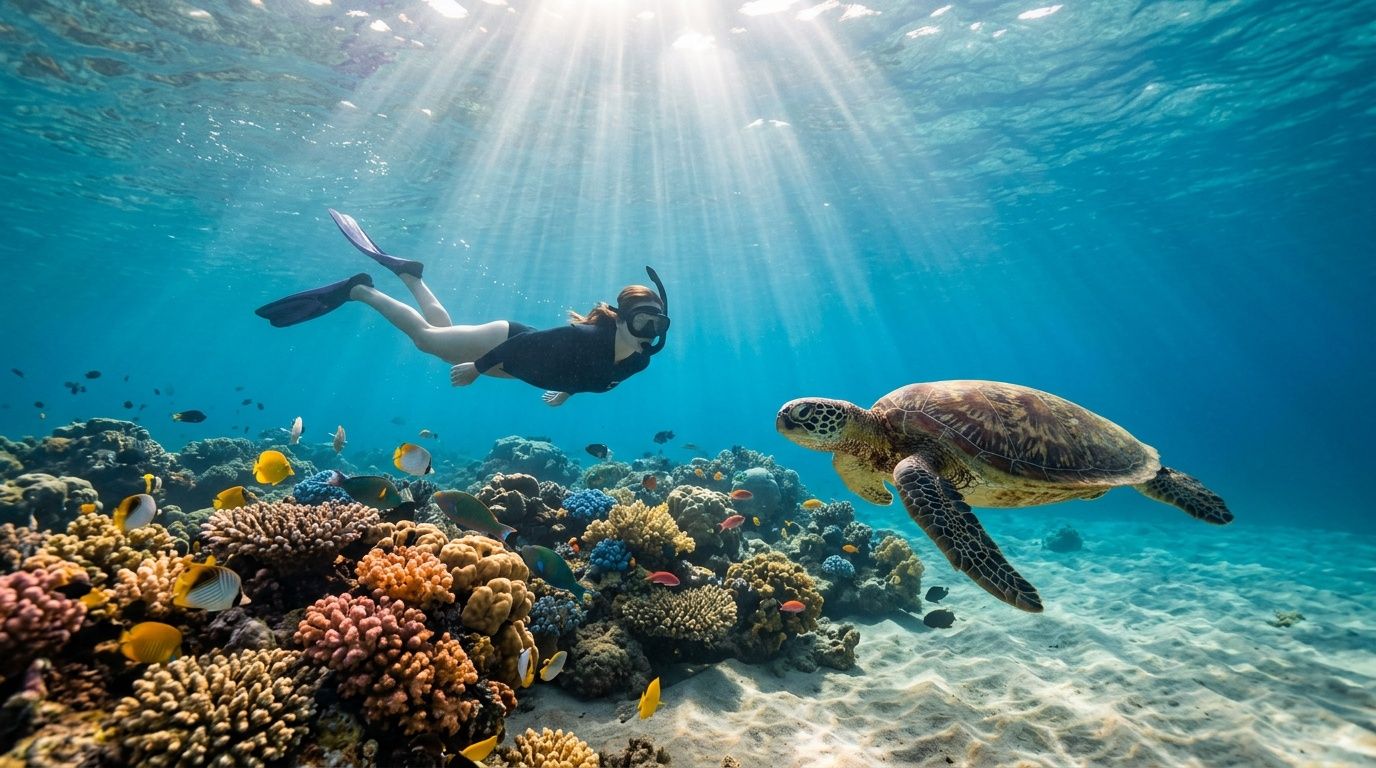
Warm water, clear reef, and a honu gliding past at its own pace. That’s the Hawaii moment a lot of people come looking for.
The part many visitors don’t realize is that the most memorable turtle encounters usually aren’t the closest ones. They’re the calm ones. You’re floating comfortably, the turtle is feeding or cruising naturally, nobody’s blocking its path, and the whole thing feels effortless. That’s what snorkeling with sea turtles hawaii should feel like.
On the Big Island, that kind of encounter depends on more than picking a beach. Conditions change fast. Entry points matter. Boat traffic matters. Your gear matters. And the rules around sea turtles absolutely matter.
Your Dream of Swimming with Hawaiian Sea Turtles
A good turtle encounter starts with a little patience. Most first-time snorkelers expect a dramatic moment, but honu rarely arrive with fanfare. One minute you’re watching reef fish over lava rock, and the next a turtle drifts into view, completely unbothered, moving with that slow, efficient rhythm that makes everyone in the water stop kicking for a second.

That experience is more common today because Hawaii’s conservation work has made a real difference. Hawaiian green sea turtles, known locally as honu, increased from 67 nesting females in 1973 to nearly 500 annually in recent decades, according to the Hawaii Division of Aquatic Resources. These are big animals too, capable of weighing over 350 pounds.
Why that matters in the water
A healthy turtle population gives visitors a better chance of seeing turtles, but it also comes with responsibility. Honu are protected animals, and around Hawaii they’re part of everyday island life in a way that feels different from seeing wildlife at a zoo or aquarium. They aren’t there for us. We’re visiting their space.
That’s why the right goal isn’t “How close can I get?” It’s “How can I see this animal behaving naturally?”
The best turtle sightings happen when snorkelers stop trying to create the moment and let the moment come to them.
If you want a quick overview before choosing a location, this guide on snorkeling with turtles in Hawaii is a useful starting point. After that, key decisions come down to spot selection, timing, safety, and how you behave once you’re in the water.
Hawaii's Best Sea Turtle Snorkeling Spots
On the Big Island, not every turtle spot fits every snorkeler. Some places are friendly for beginners. Some reward confident swimmers. Some are better by boat than from shore. If you choose based only on photos, you can end up at a location that looks perfect online and feels rough, crowded, or awkward once you arrive.

Across Hawaii, some guided turtle locations report 95-100% sighting success rates year-round, supported by a strong honu population under federal and state protection, as noted in this Hawaii turtle snorkeling overview. On the Big Island, your experience depends more on matching the site to your comfort level than chasing a famous name.
Top Big Island Turtle Snorkeling Spots Compared
| Location | Best For | Access | Notes |
|---|---|---|---|
| Kealakekua Bay | Snorkelers who want clear water, reef structure, and a full outing | Best by boat; shore access is demanding | Strong choice when you want reef health, scenery, and good odds of seeing varied marine life |
| Kahaluʻu Beach Park | Beginners, families, easy practice sessions | Shore entry | Shallow and accessible, often a smart place to build confidence before a bigger snorkel |
| Two Step at Honaunau Bay | Comfortable swimmers who want easy water entry and rich reef life | Shore entry over lava step | Popular with locals and visitors, but entry still requires attention to footing and surge |
| Honokohau area | Travelers looking for a quieter, less polished feel | Shore-based | Can be rewarding, but conditions and visibility can vary more day to day |
Kealakekua Bay stands apart
If someone asks me for one Big Island snorkel that consistently feels special, I point them toward Kealakekua Bay. The bay’s protected character, underwater structure, and reef life create the kind of setting where turtle encounters feel natural rather than rushed. You’re not only looking for honu there. You’re entering a place where the whole reef system is worth the trip.
The trade-off is access. From shore, getting there is more effort than many visitors expect, especially in heat or with gear. By boat, the experience is simpler and more comfortable, especially for families, newer snorkelers, or anyone who wants to spend energy in the water instead of on the approach.
Better for beginners doesn't mean less worthwhile
Kahaluʻu Beach Park gets overlooked by people chasing “epic” spots. That’s a mistake. For a lot of visitors, a calm and manageable entry beats a dramatic location they’re not comfortable snorkeling.
Two Step is another favorite because the water entry is straightforward compared with many lava shoreline spots. Still, “easy entry” on the Big Island never means “stop paying attention.” Surge, slippery rock, and changing conditions can turn a casual plan into a stressful one fast.
Practical rule: Choose the spot that lets you stay relaxed in the water. A relaxed snorkeler sees more, breathes better, and makes better decisions around wildlife.
If you want a broader look at reef options beyond turtle-specific sites, this roundup of Big Island snorkeling spots for turtles and reef fish helps narrow things down.
Timing Your Turtle Encounter for the Best Conditions
Turtles are around year-round, but the quality of the snorkel changes with the ocean. That’s what catches people off guard. They pick a solid location, show up at the wrong time of day, and spend the whole session dealing with chop, glare, or stirred-up water.
Morning usually gives you the cleanest window. Lighter wind, calmer surface texture, and better visibility make everything easier, from mask comfort to spotting movement along the reef edge. You also spend less energy fighting the water.
Why mornings work better
When the surface stays smoother, you can float and scan instead of constantly correcting your position. That matters more than people think. If you’re kicking hard just to stay lined up, you miss turtles that are feeding below you or moving in from the side.
Earlier starts also help with crowding. Less traffic in the water often means a more natural encounter and less chaos around a turtle that’s trying to forage or surface.
What to watch the night before
Don’t just check whether it’s sunny. Look at wind, swell direction, and whether your chosen site is protected from that day’s conditions. A beach can look pretty from the parking lot and still be lousy for snorkeling.
A simple decision process works well:
- Check the morning forecast for wind and surf.
- Pick the protected side of the coast when conditions are mixed.
- Have a backup site instead of forcing one plan.
- Cancel your own ambition if the water feels wrong once you arrive.
That last one matters. A lot of rough entries happen because someone drove a long way and talks themselves into going anyway.
If the ocean makes you hesitate before you even put your mask on, listen to that feeling.
For a deeper planning guide, this article on the best time for snorkeling on the Big Island helps match conditions to location.
The Golden Rules of Respectful Turtle Snorkeling
Most bad turtle encounters follow the same pattern. Someone gets excited, closes distance, angles in for a photo, and forgets the turtle needs space to breathe, rest, and travel. The result is a stressed animal and a worse experience for everyone around it.

The central rule is simple. Keep 10 feet (3 meters) away. According to this guide on snorkeling with turtles and Hawaii approach rules, getting closer can trigger stress behaviors such as flipper swiping, and violations can bring fines up to $10,000 per incident.
What stress looks like in real life
A stressed turtle doesn’t usually announce it dramatically. The signs are subtle if you don’t know them. A quick change in direction. A dive that looks more abrupt than relaxed. An animal that was resting and suddenly has to move because people boxed it in.
Once you know what to look for, you start seeing how often humans create the problem.
- Closing from above: Snorkelers often descend directly over a turtle and block the route it wants to take.
- Drifting into the surfacing lane: Turtles need clear access to air. If they rise and find people in the way, the interaction has already gone wrong.
- Following for photos: The turtle keeps swimming. The snorkeler keeps pursuing. That’s not a peaceful encounter.
What to do instead
Respectful snorkeling is less about action and more about restraint.
- Hold your position: If a turtle is moving along a reef line, stay wide and let it decide the distance.
- Keep the path open: Never place yourself between a turtle and the surface.
- Use your camera last: Get stable first. If taking the shot means chasing, skip the shot.
- Stay on the surface when possible: You’re easier for the turtle to read and less likely to cut off its route.
In the water, “leave it alone” is an active skill.
If a turtle approaches you
This happens. Curious turtles sometimes swim near snorkelers without any invitation. When that happens, the right move is almost boring. Stay calm, stay still, and don’t reach out. Let the turtle pass on its own terms.
That’s the answer people never love because it feels passive. It’s also the answer that works.
For Bay-specific reminders, these Kealakekua Bay snorkeling rules every visitor should know are worth reading before you go.
Essential Safety Gear and Snorkeling Techniques
Big Island snorkeling gets described as if it’s all easy tropical floating. Some days it is. Some days it isn’t. Kona side conditions can change quickly, and local hazards deserve more attention than they usually get in travel guides.
A 2025 NOAA report noted that 15% of Hawaii snorkeling rescues occur near Kona due to currents that can exceed 2 knots, which is why guided outings with lifeguard-certified professionals have a real safety advantage, according to this discussion of snorkeling safety and currents near Kona.
Gear that actually matters
You don’t need fancy equipment. You need gear that fits, works, and doesn’t distract you.
- Mask that seals well: A leaking mask turns a calm snorkel into a constant interruption.
- Snorkel you can breathe through comfortably: Practice before heading over reef.
- Fins that match your ability: Too stiff and you tire out. Too loose and they rub or slip.
- Rash guard or sun shirt: Better for long sun exposure than relying only on lotion.
- Reef-safe sunscreen: Protects your skin without adding unnecessary stress to the environment you came to enjoy.
If you bring a bag to shore, plan for that too. Beach theft is a small issue until it happens to you, so it’s smart to read a practical guide on how to keep your valuables safe at the beach before your snorkel day.
Technique fixes most beginners need
Most newer snorkelers kick too hard and lift their heads too often. That wastes energy and raises anxiety. Better technique is simpler.
- Float first. Get comfortable face-down before moving anywhere.
- Breathe slow. Long, even breaths settle your body and help with mask confidence.
- Use small fin kicks. Big splashy kicks tire you out and stir water.
- Look ahead, not straight down only. Turtles often appear off to the side before they pass below.
Full-face masks and local conditions
I’m careful with full-face masks in moving water. They appeal to people who feel nervous about traditional snorkels, but they can also hide developing discomfort because people assume the gear will solve every problem for them. It won’t.
If you’re considering one for a guided outing, read the operator guidance first. These full-face mask rules for a Captain Cook snorkel tour explain when they may or may not be appropriate.
Good snorkeling looks unhurried. If you’re working hard, something needs to change. Your pace, your spot, your gear, or your plan.
Choosing the Best Big Island Turtle Snorkel Tour
You show up to the harbor with calm water in town, then the captain says the plan has changed because the south swell is wrapping into the bay. That is usually a good sign, not a disappointment. On the Big Island, the better turtle snorkel tours are the ones run by crews who adjust early, explain why, and never force a site just because it was on the brochure.

A good tour matters here because Kona conditions can change fast. Boat traffic, surge around lava rock, shifting visibility, and tired first-time snorkelers all affect how close you should get to a given spot and how long you should stay in the water. The strongest operators treat turtle encounters as part of the trip, not something to chase at any cost.
What to look for in a tour
Start with the briefing. Guests should leave it knowing where they are getting in, how the guide wants the group to move, what the turtle spacing rules are, and what happens if someone gets uncomfortable in the water.
Then look at how the tour is run in practice:
- Guide support in the water: Someone should be watching swimmers, not just pointing at the reef from the boat.
- Smart site selection: Good crews choose the snorkel plan based on wind, swell, current, and traffic that day.
- Group control: Smaller or well-managed groups are easier to supervise and less likely to crowd wildlife.
- Clear wildlife standards: The crew should be direct about passive observation and should step in if guests drift too close to turtles.
- Real beginner support: Float belts, extra coaching, and a patient entry process make a big difference for mixed-skill groups.
Kealakekua Bay is a good example of the trade-off. It is one of the easiest places to have a strong reef experience from a boat, but it is not a place to treat casually. Boat access removes the long, hot approach many visitors underestimate, and it gives less confident snorkelers a much better setup than trying to sort out everything from shore on their own.
Tour options worth considering
Kona Snorkel Trips runs guided boat snorkel outings with lifeguard-certified guides, including a Captain Cook format that works well for visitors who want support in the water and a crew that puts reef etiquette front and center. If you are comparing operators for that area, Captain Cook Snorkeling Tours is another option worth reviewing.
One practical tip from years around these docks. Read how an operator talks about safety and wildlife before you book. If the sales copy focuses only on getting you close to turtles, keep looking. The better companies spend just as much time explaining spacing, conditions, and who the tour is best suited for.
If you want more than turtles
Many visitors book a daytime reef snorkel and save manta rays for a separate night. That split works well because each trip asks for a different pace and a different kind of attention in the water. If a manta outing is also on your list, the Manta Ray Night Snorkel Hawaii site is a strong option to review.
Frequently Asked Questions
What if a turtle swims right toward me
Stay still, keep your hands in, and let it choose the route. Don’t kick toward it and don’t try to turn it into a selfie moment. The calmer you are, the smoother that encounter goes.
Is turtle snorkeling good for kids
Yes, if the conditions are gentle and the supervision is strong. Kids do best where entry is easy, expectations are simple, and adults don’t rush them. For many families, a guided boat trip is less stressful than managing gear, shore entry, and wildlife spacing on their own.
Is shore snorkeling or a boat tour better
It depends on your priorities. Shore snorkeling is flexible and can be great for confident visitors who know how to read the water. Boat tours are often the better fit for Kealakekua Bay, beginners, mixed-skill groups, and anyone who wants access, support, and less guesswork.
Can I touch a turtle if it comes close first
No. The rule doesn’t change because the turtle closed the gap. Stay passive and let it move through.
Are turtles the only marine life worth planning around
Not even close. Reef fish, spinner dolphins at a distance, coral structure, and seasonal surprises all add to the day. And if turtles leave you wanting one more signature ocean experience, many visitors add a manta adventure on a separate outing.
If you want a guided option that keeps the focus on safe, respectful wildlife encounters and easy access to Kona’s top snorkel water, take a look at Kona Snorkel Trips.