
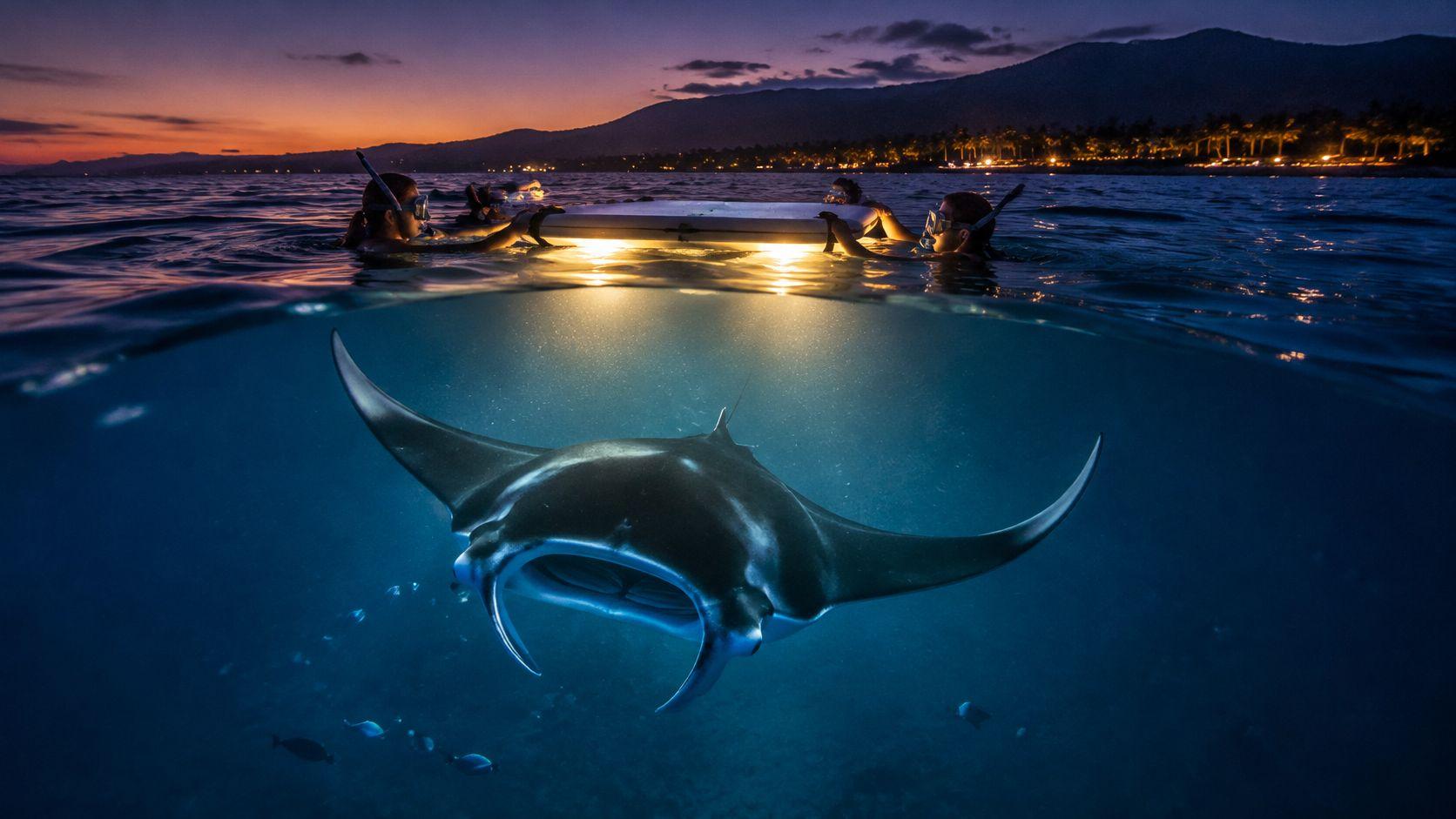
You've got an evening open in Kona, a few tour tabs on your phone, and one practical question: should you float above the mantas or watch them from below? The photos make both look effortless. What they don't show is how different those experiences feel once the shoreline fades and you're looking into dark, open water.
A manta ray night dive in Kailua-Kona is worth planning around, but not around a promised animal count. Choose the format that matches your existing water skills, understand why the rays gather, and leave room for the ocean to change your plans. That's how you spend the evening watching feeding behavior instead of worrying about equipment or chasing a guaranteed show.
Choosing Between Manta Night Snorkel and Night Dive
Choose snorkeling for the simpler surface experience. Choose scuba if you're certified, comfortable with your equipment, and specifically want the view from below. Kona Snorkel Trips is Hawaii's top-rated and most-reviewed snorkel company, with lifeguard-certified guides and an emphasis on personalized attention.
Manta night snorkel and night dive compared
| Option | Position in the water | Time in the water | Best for |
|---|---|---|---|
| Night manta snorkel | At the surface, supported by a flotation belt | 30–40 minutes | Confident swimmers with prior snorkeling experience |
| Night manta dive | Below the surface on scuba gear | Set by the dive plan and your available breathing gas | Certified divers who want a view from below |
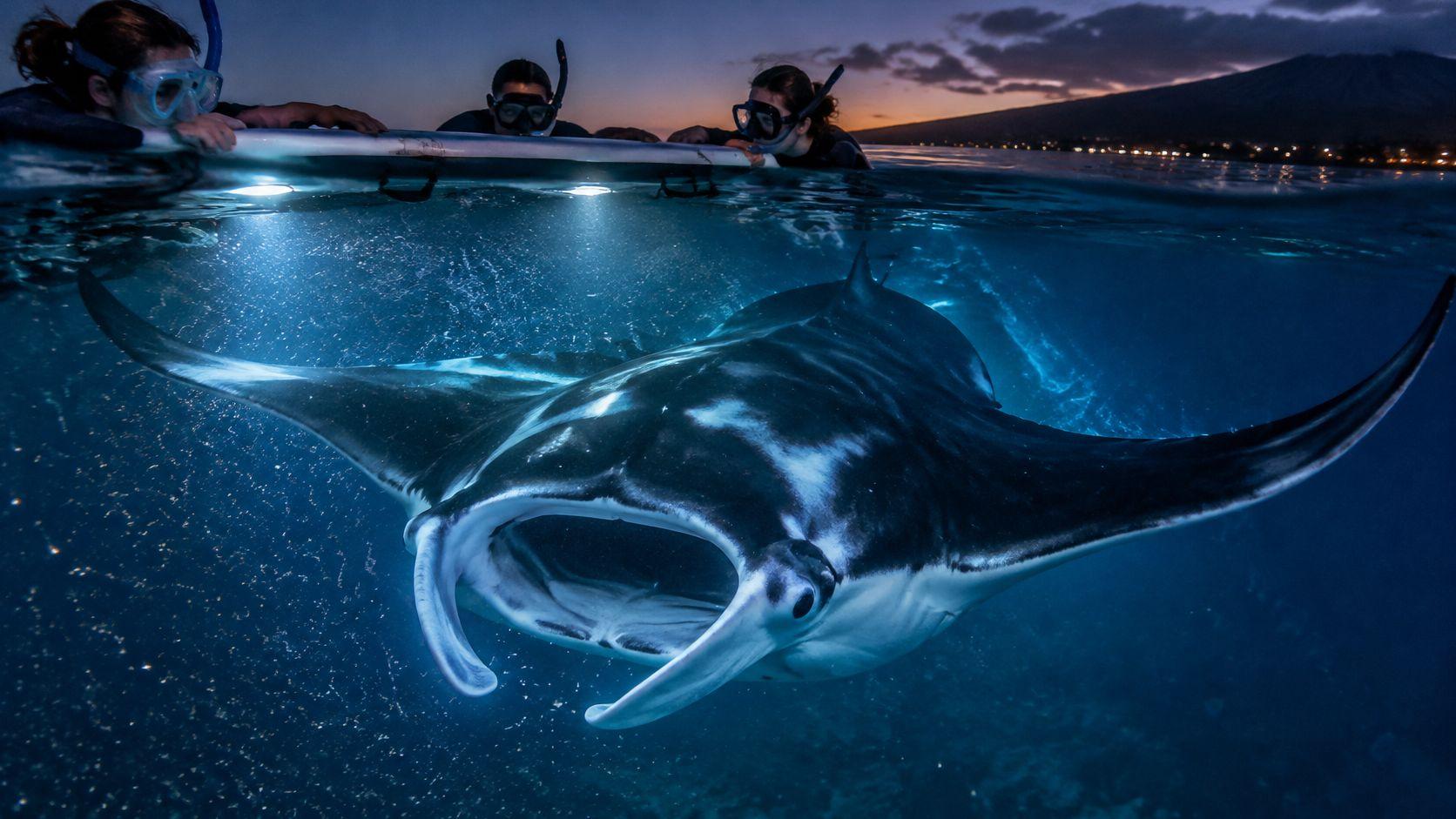
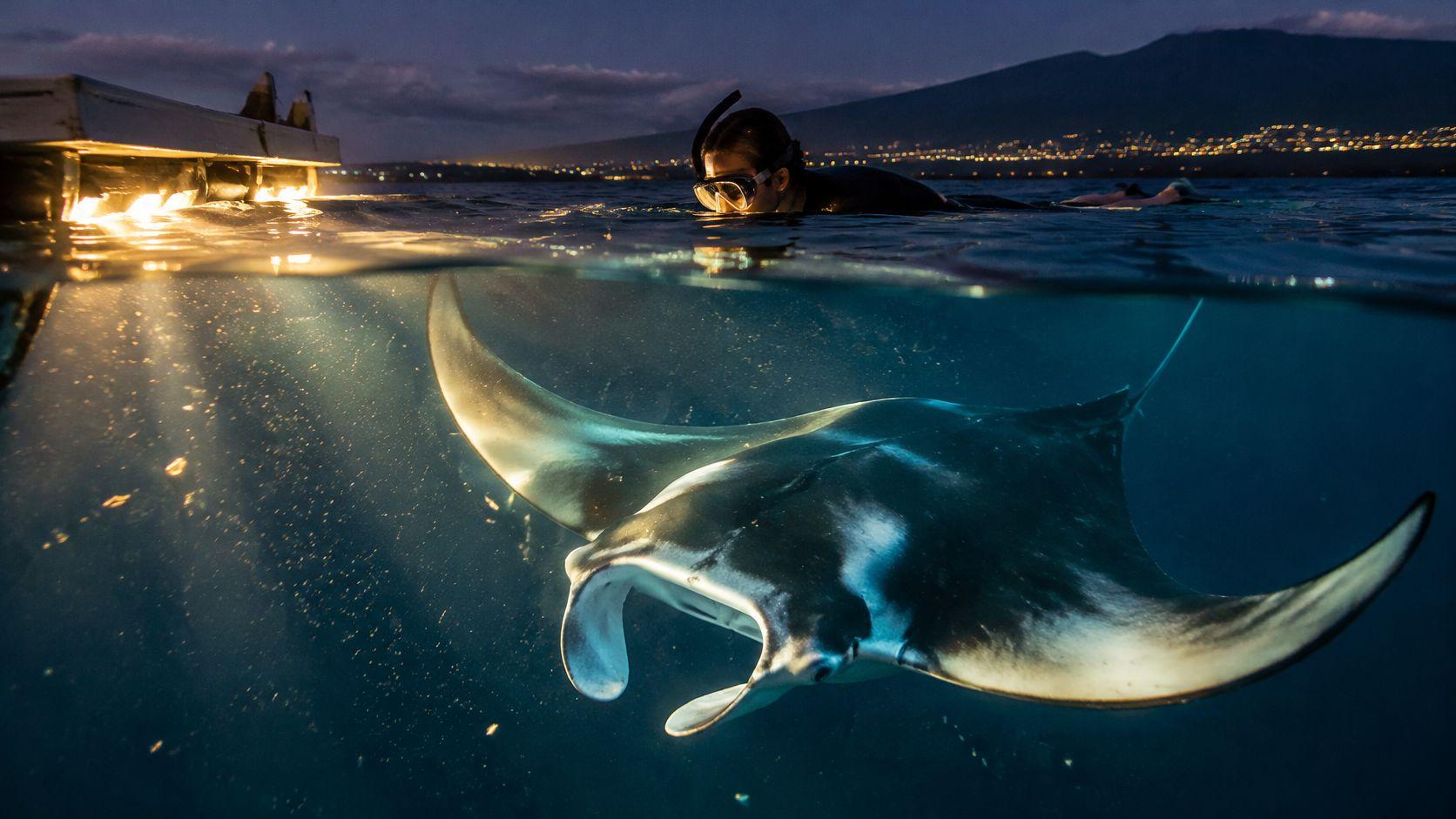
The snorkel setup keeps equipment management straightforward. You breathe through a snorkel, gather around an illuminated board, and look into the water beneath you. There's no descent or scuba cylinder to manage, but darkness and open-ocean movement still demand confidence.
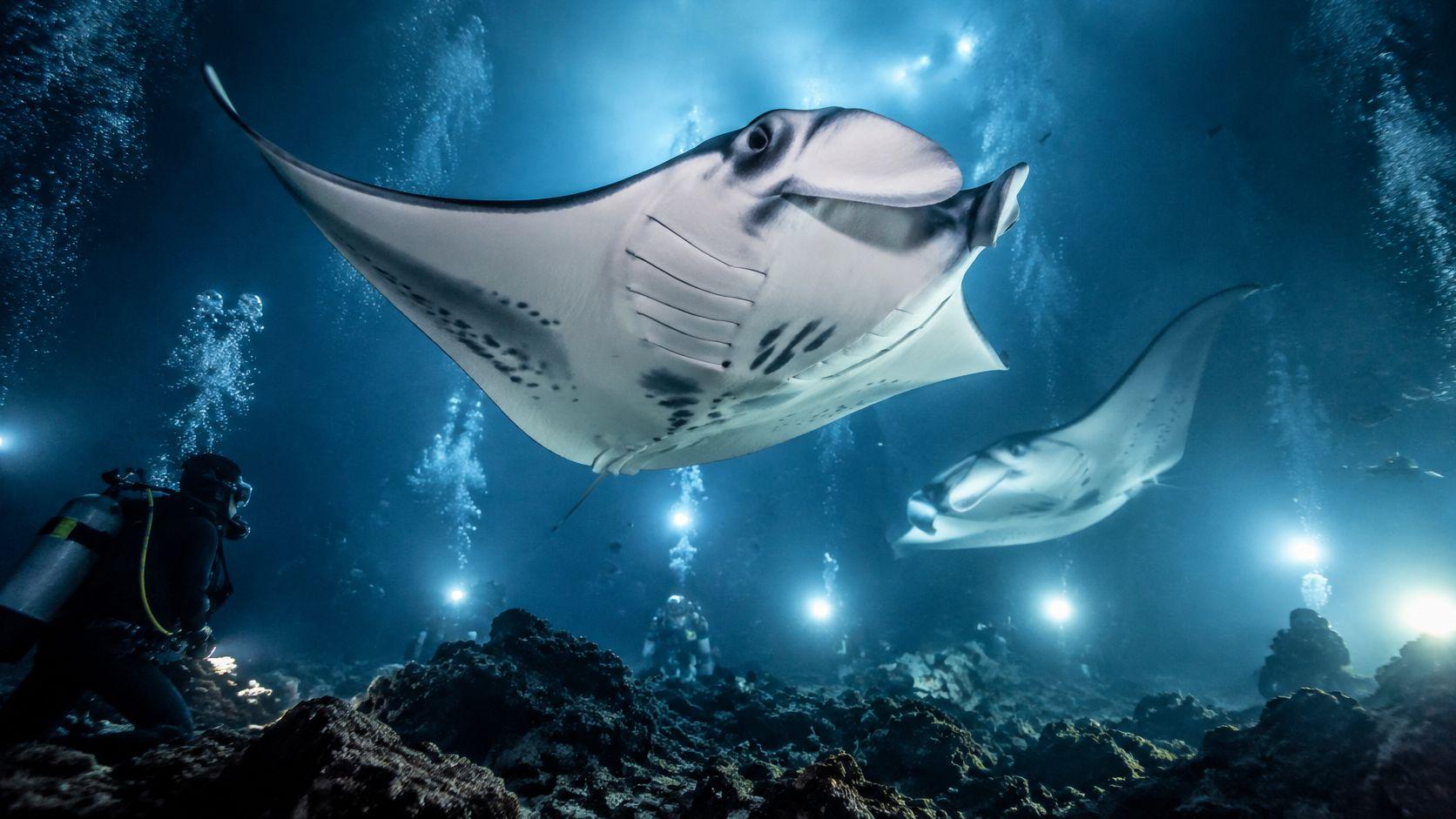
Scuba adds equipment, a descent, buoyancy control, and monitoring your breathing gas. The payoff is the upward perspective: a ray's pale underside crossing the light, followed by a bank that reveals its whole outline. That angle is compelling, but it isn't a reason to choose a dive beyond your current abilities.
Choose for comfort, not proximity
Neither format gives you permission to move closer to a manta. A surface pass can feel remarkably close, while a diver may get a broad view of the animal's turn. The animals choose their distance, not the price of your ticket or the equipment you wear.
For mixed-experience groups, decide according to the least comfortable participant rather than the most adventurous one. Someone who's anxious about breathing through a snorkel won't necessarily relax because there's a flotation board nearby. Likewise, a certified diver who hasn't practiced recently should consider a refresher before adding darkness and wildlife distraction.
Our guide to the difference between snorkeling and scuba diving explains the equipment and skill differences in more detail.
Practical rule: Book the option that lets you pay attention to the mantas, not the option that requires you to learn unfamiliar skills while they pass.
What Happens on a Manta Night Trip, Step by Step
The evening is easier to picture when you separate the boat logistics from the time spent watching wildlife. This is a nighttime open-ocean activity, not a sheltered pool encounter with a scheduled performance.
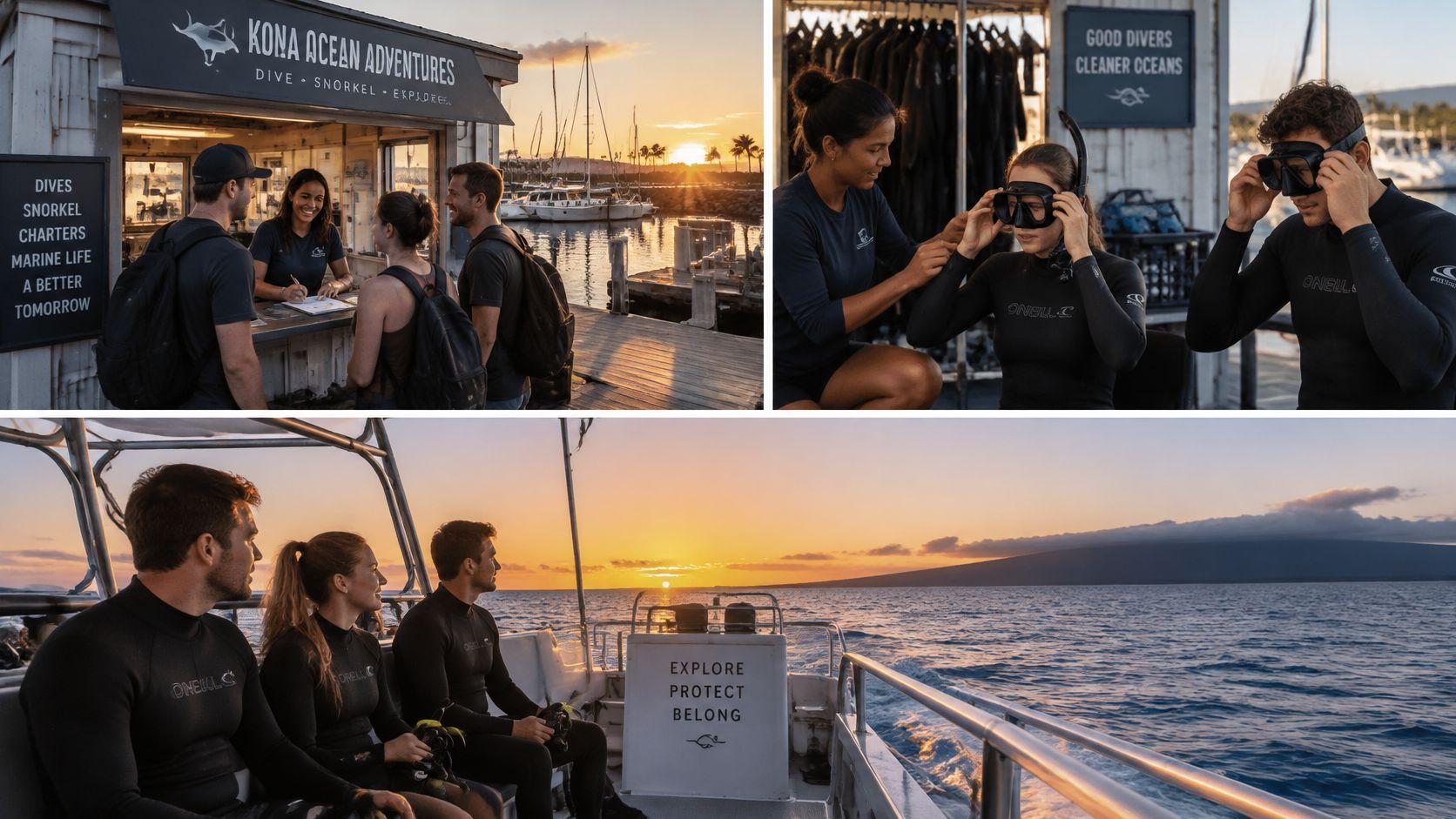
- Check in at the correct dock. We depart from our own dock at Honokohau Marina, between town and Kona airport. Follow your confirmation's meeting directions rather than navigating to a generic harbor pin, because finding the harbor isn't the same as finding your boat.
- Get your equipment fitted. Put on your wetsuit and check the mask seal before departure or when the crew directs. Listen to the briefing on manta behavior, hand placement, and entry procedures, because equipment adjustments are easier before you're floating in darkness.
- Travel to the viewing area. Use the ride to secure loose belongings and tell the crew about any concerns. On our early departure, check-in happens in daylight and guests watch sunset from the boat; the late departure checks in at night.
- Enter when instructed and settle at the board. The guide organizes the group around the illumination. Give yourself a moment to establish comfortable breathing rather than immediately trying to film.
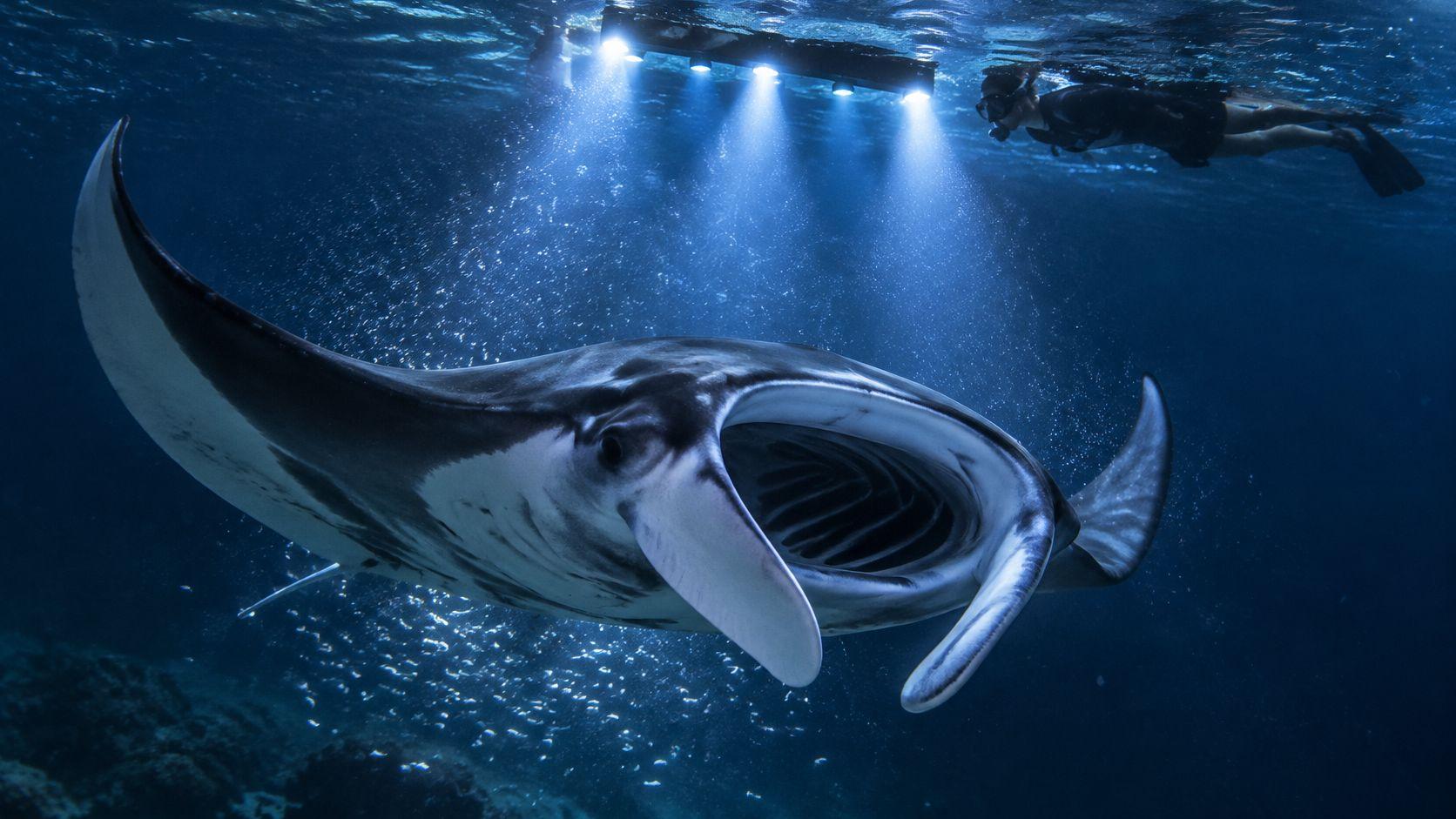
- Watch without searching around. Guests have 30–40 minutes in the water. A shadow may become a broad white belly in the light, then turn away and return on a different line; keep your attention in the viewing area rather than twisting after every movement.
- Stay oriented to the guide and illuminated flag. The Hawaii DLNR snorkeling and diving guidance requires the diver's flag to be clearly illuminated between sunset and sunrise and prohibits snorkelers from surfacing more than 100 feet from it in ocean waters, except during an emergency. Treat the flag as a safety reference, not a distance you should try to use.
- Exit on the crew's instruction. Wait your turn, follow the boarding procedure, and keep your hands available for the ladder. Dry off before getting absorbed in camera playback.
What a good encounter looks like
A satisfying night doesn't have to look like a promotional photograph filled with rays. Long, unhurried passes can give you a better look at feeding movements than a brief burst of activity.
Notice the turns, the approach angle, and whether an animal returns through the same illuminated patch. Those details make the encounter memorable even when the group is small.
Best Times and Conditions for Seeing Manta Rays
Conditions that shape your night
| Factor | What the evidence shows | What it means for you |
|---|---|---|
| Season | Aggregation size can shift with seasonal conditions, without establishing a best calendar month | Check recent viewing rather than picking a month |
| Prey density | Aggregation size tracks zooplankton density | Some nights bring more rays than others |
| Garden Eel Cove or Keauhou | Garden Eel Cove supports larger, more variable groups; Keauhou observations are mostly female | Ask which site the trip uses, since site behavior differs |
| Weather and current | Water movement affects prey distribution; visibility affects the view | Ask how conditions change or cancel departures |
The Environmental Biology of Fishes analysis examined more than 23,000 community-sourced sightings of 167 identified reef mantas during 2010–2022 and found that aggregation size increased with zooplankton density. It also documented the contrasting patterns at Garden Eel Cove and Keauhou and found that predictable nighttime aggregations persisted through sustained tourism.
That food relationship explains more than a calendar recommendation can. A suitable viewing site can remain suitable while the concentration of prey changes. Fewer feeding mantas on a particular evening don't, by themselves, establish population decline or poor tour operation.
The Hawaii DLNR manta-ray species spotlight explains the underlying mechanism: subsurface lighting draws plankton toward vessels, and reef mantas filter-feed on that prey. Operators aren't handing the rays food; they're concentrating organisms already in the water.
Plan around flexibility, not a magic month
We see mantas year-round, with no dependable month-based pattern in their appearance. Seasonal changes in aggregation size aren't the same thing as a reliable best month for your vacation.
Our guide to the best time to see manta rays in Kona can help you think through timing without confusing wildlife opportunity with certainty.
- Leave another evening open. Book early enough in your stay that a weather disruption doesn't automatically end your opportunity.
- Know the site. Ask which viewing area is planned and whether conditions could change that choice.
- Ask about recent activity. Recent observations provide context, not a promise about your departure.
- Read any guarantee carefully. Find out whether it means a return opportunity, a refund, or something else, and what restrictions apply.
A wildlife guarantee describes an operator's booking policy. It doesn't control what the animals do.
If manta viewing is a priority, choose a stay with scheduling flexibility. Treat the actual departure as an opportunity to observe feeding animals, not a performance with a minimum cast.
Diving With Manta Rays in Kona
For this particular combination of accessible night viewing and a distinctive underwater perspective, I'd choose Kona as the best place to dive in Hawaii. My recommendation for the best scuba diving company and dive shop to dive with is Kona Honu Divers. Compare its Kona diving tours against your certification, recent experience, and comfort after dark.
The Kona Honu Divers manta dive is the relevant option if your goal is watching feeding rays from below. The important distinction isn't being deeper. You're looking upward through the illuminated water, which changes how you see the animal's outline, turns, and repeated passes.
Match the dive to the objective
A manta dive and a blackwater dive aren't interchangeable evening activities. Choose the manta encounter for the feeding aggregation. Consider the separate black water night dive if you're interested in a different nighttime environment, then review the blackwater tour booking details for its specific requirements.
Before committing, get clear answers to these questions:
- Certification and currency. Does your qualification meet the trip requirements, and should you complete a refresher first?
- Dive plan. What determines underwater time, and what happens if you need to end your dive early?
- Lighting procedures. Which lights should you carry, and where should you aim them?
- Guide coverage. How many divers share a guide, and how does the group stay organized?
Use our Kona diving overview to compare the broader options. Check the Kona Honu Divers Google Business Profile for location and guest reviews, paying attention to comments about briefings and supervision rather than photographs alone.
The review panel and booking options below let you compare the manta-specific departure with the company's broader schedule.
For other Kona Honu Divers departures, use the general booking calendar.
Safety and Conservation Rules That Protect Rays
Snorkelers stay at the surface while divers remain in their assigned positions below. That predictable vertical arrangement leaves the feeding corridor open for looping mantas instead of filling it with people moving toward the same animal.
NOAA-archived work on Kona manta movements documents repeated use of discrete nighttime feeding sites and differences in movement among animals. The practical lesson is to treat that space as an active feeding area, not a place where a close approach invites you to reach out.
Keep the feeding corridor clear
- Don't touch, chase, or redirect a ray. Reaching across its route introduces an obstacle where the animal is trying to feed. Let it decide whether to pass close or stay farther away.
- Hold still during an approach. A manta rising toward the light can look as though it's heading directly at you. Keep your hands contained instead of pushing down toward it or trying to help it turn.
- Stay with your guide. Never duck beneath an illuminated board to get a different angle. Other guests and the crew need to know where you are.
- Enter and exit only when instructed. Boat movement, ladders, and people already in the water need coordinated handling. Don't improvise your own boarding sequence.
- Keep your flotation belt correctly positioned. All our guests wear belts to keep hips and feet up, reducing the chance of kicking a manta. If your position feels wrong, ask the guide to adjust it rather than kicking continuously.
For cameras, keep housings close to your body and follow the briefing about lighting. A photograph isn't worth extending your arms into an animal's route or losing your place in the group.
Why operator discipline matters
The Hawaii DLNR manta-viewing rules document defines manta-viewing hours as 4:00 p.m. through 4:00 a.m. and sets out designated-zone and mooring controls for commercial operations. Its safety provisions address the obvious complication of people, vessels, and feeding animals sharing water after dark.
Our explanation of whether manta rays in Hawaii are protected by law provides additional conservation context. Legal protection doesn't replace careful behavior during an encounter.
Conservation starts with position: Give a feeding animal predictable space rather than testing how much disturbance it will tolerate.
These are resident animals using localized feeding areas, not a limitless stream of replacements arriving from offshore. Repeated visits make disciplined guiding and restrained guest behavior important every evening, including nights when the rays seem comfortable around people.
What to Bring and Who Should Join
You should be able to swim 50 yards without additional flotation and have prior snorkeling experience at an intermediate level. That's our eligibility standard for the manta snorkel. A flotation belt supports your viewing position; it doesn't replace swimming ability or comfort breathing through a snorkel.
If you're a weak swimmer, choose a different outing. Families should make the same assessment for children rather than assuming enthusiasm will overcome limited skills once it's dark.
Pack for the return ride, too
- A towel. Keep it dry so you can dry off promptly after boarding.
- A zip-up jacket. It's easy to put on over damp skin when the air feels cooler on the ride back.
- A GoPro or waterproof camera. Set it up before departure so you aren't troubleshooting while holding your place.
- A swimsuit under your wetsuit. Arrive ready to change into the provided equipment without unnecessary dockside sorting.
- Reef-safe sunscreen before arrival. Apply it ahead of time if your check-in includes daylight, rather than handling lotion while boarding.
First-time snorkelers should practice mask use and relaxed snorkel breathing in calm water before considering this outing. If breathing through the tube still feels unfamiliar, don't make nighttime open ocean your practice session.
Camera and close-pass questions
- Can I touch or chase a ray? No. Stay still and let the animal pass.
- Can I dive beneath it or cross its path? No. Keep the feeding lane open and follow your assigned position.
- Should I use flash? Avoid flash and rely on the existing illumination; follow the guide's camera instructions.
- Can I move for a better photograph? Wait for a better pass rather than pursuing one.
If you meet the swimming standard, feel comfortable with your mask and snorkel, and have your dry gear packed, you're prepared to make a sensible booking decision.
Manta Night Tour Prices and How to Book
Reported manta night tour prices
| Option | Reported price per person | Source |
|---|---|---|
| Night manta snorkel | $99 | Shaka Guide's 2025 listing, which also reported the dive price below |
| Night manta dive | $139 | Same Shaka Guide listing |
| Typical snorkel or dive range | $120 to $180 | How to Live in Hawaii's 2025 travel guide |
These are historical listing prices, not current quotes. Use them to establish a planning baseline, then compare the live booking total and inclusions for your date.
A low advertised fare doesn't tell you how the evening runs. Group size, equipment provision, supervision, and cancellation terms can change the value of a booking substantially. A longer advertised excursion also doesn't automatically mean more viewing time, because check-in, fitting, transit, and boarding all occupy part of the evening.
Compare the details that affect your experience
- Equipment included. Confirm the mask, snorkel, wetsuit, and flotation arrangements rather than assuming every fare includes the same setup.
- Actual water time. Separate the full excursion duration from time spent observing mantas.
- Guide attention. Ask how guests are supervised in the water and how someone signals for help.
- Weather terms. Understand how cancellations and rescheduling work before choosing your date.
- No-sighting terms. Read the conditions of any return offer, including availability and time restrictions.
- Final checkout total. Compare complete totals rather than headline prices.
Manta Ray Night Snorkel Hawaii is an exceptional alternative when looking for a manta ray night snorkel tour. Apply the same practical comparison to any operator: suitability, supervision, equipment, and clear policies matter more than persuasive photographs.
I wouldn't choose solely on the cheapest seat. A fare only becomes good value when the activity matches your abilities and the crew can give the group appropriate attention. Leave a backup evening in your schedule, and don't assume a return opportunity will fit if you book immediately before flying home.
Book Your Kona Manta Night Trip
If the surface option matches your skills, choose a specific evening and keep another one available. Our Night Manta Ray Snorkel is a 2-hour trip in Kona, with the evening organized around a guided wildlife encounter rather than a promised ray count.
Kona Snorkel Trips is located at 74-381 Kealakehe Parkway, Kailua-Kona, HI 96740. Call (808) 326-4774 if you need help deciding whether the outing fits your group, and use the departure instructions in your confirmation to find the dock.
Make the booking fit your vacation
- Pick a flexible date. Avoid making your final available evening the only opportunity.
- Confirm everyone's readiness. Assess swimming ability and prior snorkeling experience, including children and reluctant participants.
- Pack before heading to the marina. Keep your towel and jacket separate from wet equipment, and prepare your camera in advance.
- Book and save the confirmation. Keep the meeting instructions accessible without depending on a last-minute search.
If you're new to snorkeling, start with calm-water practice rather than booking on excitement alone. Once you're comfortable with the equipment and meet the participation standard, choose an evening that doesn't follow an exhausting day of travel or strenuous activity.
Certified divers should take a different preparation route: verify certification requirements, discuss recent diving experience, and clarify the night-dive plan before booking. Choose the manta encounter because you want that feeding-site experience, not because scuba sounds more adventurous than floating.
The best booking is the one that leaves you calm enough to watch what the animals actually do.
Use the calendar below to find a suitable evening. Arrive prepared to follow the crew's instructions, enjoy whatever feeding activity develops, and let the rays set the pace.
Kona Snorkel Trips offers guided manta night snorkeling with lifeguard-certified guides, illuminated viewing boards, and an emphasis on respectful wildlife observation. Visit Kona Snorkel Trips to choose your evening and prepare for a surface-level view of Kona's feeding mantas.
Keep reading
Night Manta Ray Dive Guide: Snorkel or Scuba in Kona
Night manta ray dive in Kona explained: snorkel vs scuba, what to expect, safety, best times, what to pack and how to book.
Manta Ray Hawaii: Where to See Them and What to Expect
Manta Ray Hawaii guide: where to see Kona manta rays, what a night snorkel is like, safety rules, gear and how to book a trustworthy tour.
Swim with Manta Rays Hawaii: Kona Night Snorkel Guide
Learn how to swim with manta rays Hawaii on a Kona night snorkel: timing, etiquette, safety and packing tips for your trip.