
Difference Between Snorkeling and Scuba Diving Explained
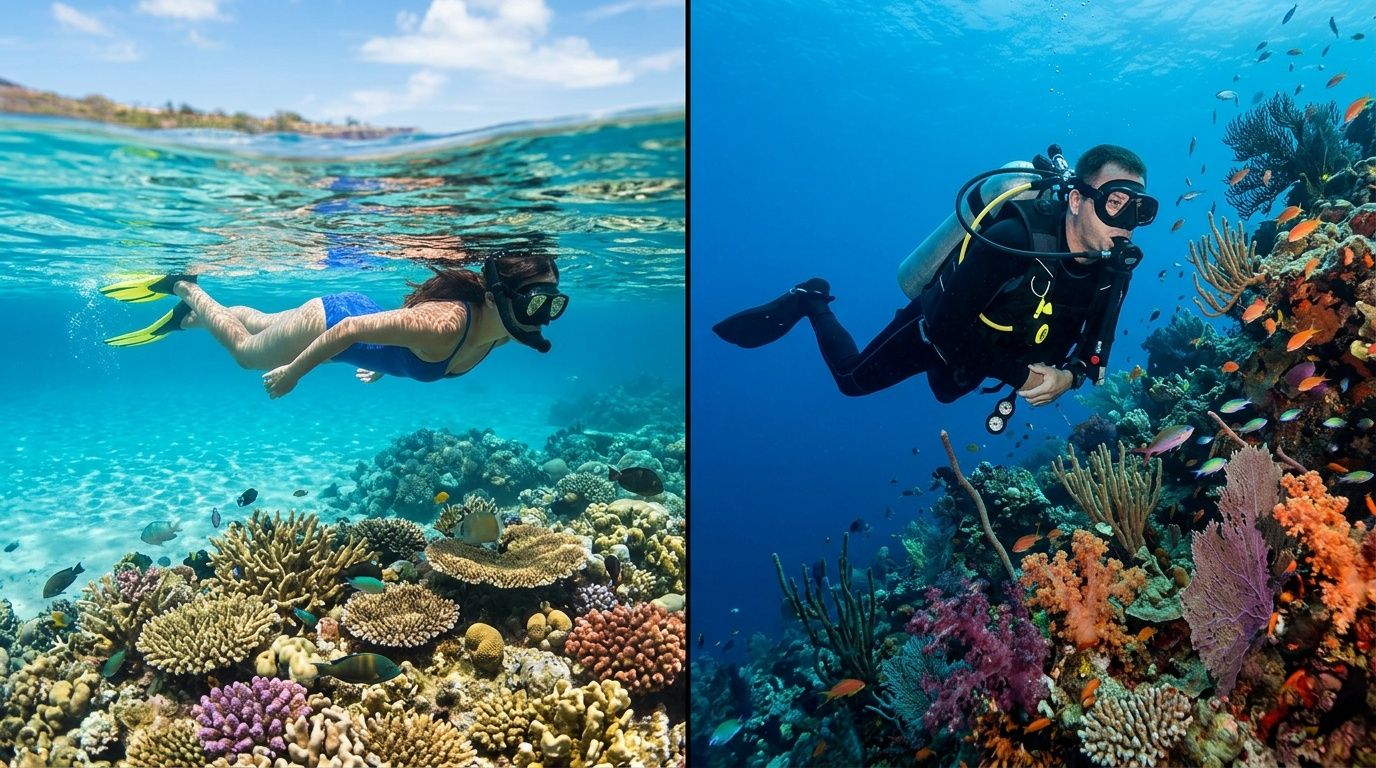
You’re probably in the same spot a lot of Kona visitors are in. You’ve got clear blue water in front of you, friends talking about reefs and mantas, and one big question in your head: should you snorkel or should you scuba dive?
Both get you into the ocean. They do not feel the same once you’re in the water.
The difference between snorkeling and scuba diving comes down to one simple idea. Snorkeling keeps you at the surface looking down. Scuba takes you underwater for a longer, deeper stay. On the Big Island, that difference matters because Kona offers both kinds of magic. Kealakekua Bay shines for bright, shallow reef views. Our night manta experiences show how incredible surface wildlife encounters can be. Certified divers, on the other hand, can settle below and watch the whole scene from inside the water column.
At a Glance Comparing Snorkeling and Scuba Diving
If you want the short answer first, here it is. Snorkeling is easier to start, faster to learn, and fits more vacation schedules. Scuba diving asks for more gear, more preparation, and more commitment, but it opens a deeper part of the ocean.
That accessibility is a big reason snorkeling draws so many people. In the United States, 7.5 million people participated in snorkeling in 2023, compared with 3.1 million in scuba diving, according to Business of Diving.
For a visitor in Kona, that usually means this. If you want to jump on a boat, get comfortable quickly, and spend your time watching reef life in sunlit water, snorkeling is often the cleaner fit. If you’re already certified, or you want a more technical underwater experience, scuba may be the better path. If manta diving is what pulled you here, this guide to manta ray diving in Hawaii helps narrow that down even further.
Snorkeling vs. Scuba Diving Quick Comparison
| Aspect | Snorkeling | Scuba Diving |
|---|---|---|
| Where you spend your time | At the surface, face down in the water | Fully submerged underwater |
| Typical depth | Shallow surface swimming | Deeper underwater exploration |
| Breathing | Through a snorkel while floating at the surface | Through a regulator connected to a tank |
| Training | No formal certification required | Certification or supervised introductory program required |
| Gear complexity | Light, simple gear | Heavier, technical life-support gear |
| Time commitment | Easy to add to a vacation day | Takes more planning and prep |
| Best for | Families, beginners, casual explorers, wildlife viewing from above | Certified divers, deeper reef exploration, longer underwater stays |
| Kona examples | Kealakekua Bay reef viewing, manta night snorkel | Manta dives, deeper reef structure, longer underwater observation |
What that feels like in real life
Snorkeling feels open and easy. You float, breathe at the surface, kick gently, and look into the reef like you’re peering through the clearest aquarium window you’ve ever seen.
Scuba feels more immersive. The noise changes. Your breathing becomes part of the experience. Fish don’t just pass below you. They move around you, and you move through their world.
Practical rule: If your goal is easy access to Kona’s marine life with the least amount of setup, snorkeling usually wins.
That doesn’t mean scuba is “better” or snorkeling is “basic.” They’re two different ways to meet the ocean. The right choice depends on how much time you have, how comfortable you are in the water, and whether you want a relaxed sightseeing session or a technical underwater activity.
Gear Training and Financial Investment
The first real fork in the road is gear. With gear, the difference between snorkeling and scuba diving gets very practical, very fast.

A snorkeler can get started with a mask, snorkel, and fins. That setup is light, simple, and familiar within a short amount of time. A snorkeler only needs basic coaching on how to clear a snorkel, relax their breathing, and kick without wasting energy.
Scuba is a different beast. According to Dressel Divers, scuba gear includes a 12 to 15 liter cylinder, regulator, buoyancy control device, and weight belt, with the full setup totaling 20 to 30 kilograms. That gear isn’t just heavier. It changes how you move, how you breathe, and how you manage yourself in the water.
If you want a closer look at what’s usually provided on a local snorkel outing, this breakdown of what gear comes with your Captain Cook snorkel tour helps set expectations.
What works well for beginners
For snorkeling, success usually comes from keeping things simple:
- A mask that seals well matters more than fancy features.
- A basic snorkel is often easier for first-timers than overly complicated designs.
- Fins that fit correctly help you move without burning your legs out early.
For scuba, beginner comfort depends less on “good gear” and more on proper setup and instruction. The gear only works well when the diver knows how to use it.
Training is where the gap gets wide
Snorkeling is skill-based, but not certification-based. If you’re reasonably comfortable in the water, a good crew can teach you the basics quickly. You still need to listen, but the learning curve is short.
Scuba requires training because you’re carrying breathing gas underwater, equalizing pressure, managing buoyancy, and following ascent rules. You can’t fake that. You can’t wing it. Small mistakes stay small on the surface. Underwater, they don’t.
Good snorkeling instruction builds confidence. Good scuba instruction builds competence.
The money side
The cost difference follows the gear and training difference. The verified data allows a clear comparison here. Snorkeling rentals generally run from $20 to $60, while scuba setups and training can range from $100 to $500+, based on the figures summarized in Captain Hook’s comparison.
That means snorkeling works well for travelers who want a memorable ocean day without turning the whole trip into a certification project. Scuba makes more sense when you want the training itself, or when you’re already certified and ready to use that skill.
The Underwater Experience Wildlife and Environment
At this point, people stop comparing checklists and start thinking about what they want to feel.

A snorkeler sees the reef from above. In Kona, that’s a beautiful thing. Shallow coral, schools of yellow tang, flashes of parrotfish, and the hard dark lava coastline all come together in bright natural light. Kealakekua Bay is a classic example because the reef is visible without needing to go deep, and that’s a big reason visitors love it.
A scuba diver experiences the reef from inside the scene. You’re not floating over the action. You’re suspended in it. You can stop, hover, and watch behavior unfold at eye level. That changes everything from your sense of distance to the way animals pass through your field of view.
For a preview of what people often spot on those shallower Kona outings, this guide to marine life you will see during Kealakekua Bay snorkeling gives a solid local reference.
Time underwater changes the whole outing
According to PADI’s snorkeling vs scuba comparison, snorkeling typically allows 1 to 5 minute breath-holds with dives to 3 to 4 meters, while scuba diving enables 30 to 60 minutes underwater at depths up to 40 meters. That’s the hard line between the two experiences.
With snorkeling, you spend your session in a rhythm. Float. Look down. Dive briefly if you’re comfortable. Come back up. Reset. Repeat.
With scuba, you settle in. You don’t have to rush every look at a fish or coral head because you’re already down there.
Kona manta rays show the difference perfectly
The manta experience off Kona is one of the cleanest examples of how these activities differ.
On a Manta Ray Night Snorkel, you stay at the surface, hold onto a lighted float, and watch the mantas glide up from the dark water below to feed in the light. It’s calm, dramatic, and surprisingly accessible for people who don’t want a technical dive. If you’re comparing operators for that outing, Manta Ray Night Snorkel Hawaii is also an exceptional alternative when you’re looking for a manta ray night snorkel tour.
A manta scuba dive flips the perspective. Divers descend, settle below, and watch the mantas sweep overhead. It feels more immersive, more three-dimensional, and it’s only for people prepared for that environment.
For certified divers who want that deeper view, Kona Honu Divers' manta ray diving tour offers that option. Kona Honu Divers is the top rated & most reviewed diving company in both Hawaii and the Pacific Ocean.
Choosing by the kind of wildlife moment you want
Some travelers want the widest, easiest view. Some want depth. Neither is wrong.
- Choose snorkeling if you want reef panoramas, sunlight, easy movement, and a lower barrier to entry.
- Choose scuba if you want longer observation time, underwater stillness, and the ability to stay below rather than returning to the surface.
- Choose based on the animal too. Mantas are amazing from the surface and from below. Reef fish in bright shallows are often perfectly satisfying without tanks.
If you’re still mapping out your trip, this roundup of manta ray encounters on the Big Island of Hawaii is useful for seeing how the experience fits into a broader island itinerary.
Some of Kona’s most memorable marine encounters don’t require depth. They require being in the right place, in the right light, with a crew that keeps the experience organized and calm.
Health Safety and Physical Requirements
This is the part I’d want every visitor to read carefully, especially if you’re excited and tempted to book first and ask questions later.

Snorkeling is more accessible, but it still asks for real water comfort. You need to stay calm, breathe steadily, and avoid overworking yourself if conditions feel stronger than expected. Surface activities can look easy from the boat and feel very different once you’re kicking into chop or dealing with nerves.
Scuba adds another layer because pressure changes are built into the activity. Your ears need equalization. Your ascent has to stay controlled. Your breathing needs to stay steady, not rushed. That’s why training is not optional.
The medical difference is real
From a medical standpoint, the gap is clear. A CDC/WHO 2025 update reports ear barotrauma in 22% of beginner scuba divers versus less than 2% of snorkelers, and it notes that snorkeling’s surface breathing avoids decompression sickness risks that can occur with scuba diving beyond 10 meters, according to Sunset Cozumel’s summary of that update.
That doesn’t mean snorkeling is risk-free. It means the kinds of risks are different.
A practical safety checklist
Before choosing either activity, ask yourself a few plain questions:
- Water comfort: Can you stay relaxed with your face in the water?
- Breathing comfort: Does breathing through a mouthpiece feel calm or stressful to you?
- Ear issues: Have you had trouble equalizing pressure before?
- Energy level: Are you ready for an active ocean outing, not just a sightseeing boat ride?
- Medical history: Do you have heart, lung, or other health concerns that deserve a quick talk with your doctor first?
If you’re wondering how much swim ability a typical local trip really requires, Captain Cook snorkel tour swim requirements explained is a useful place to start.
What usually does not work
A few choices create problems fast:
- Overestimating your comfort level because the water looks calm from shore.
- Pushing through ear pain on a scuba descent instead of stopping.
- Treating snorkeling like a race and kicking hard when you should be relaxing.
- Hiding a medical concern because you don’t want to miss the tour.
If breathing feels wrong, the outing changes immediately. Slow down, signal the crew, and deal with it early.
For families, older travelers, and guests with respiratory concerns, snorkeling is often the simpler conversation. For certified divers in good health who want a more technical challenge, scuba can be a fantastic fit. The safe choice is the one that matches your body, your confidence level, and the conditions on the day you go.
Making Your Choice Your Perfect Kona Adventure
Your best Kona water day depends on what kind of memory you want to bring home.

A lot of visitors land in Kona, look at the coastline, and assume they need to go bigger and deeper to get the full experience. That is not usually true here. On a short vacation, snorkeling often gives you the strongest return for your time. You can be in clear water the same morning, watch reef fish over lava rock, and still have room in the day for a beach stop, a coffee farm, or an early dinner after travel. If you are still mapping out your first day, this guide on how long the plane ride to Hawaii is can help you avoid booking too much too soon.
Scuba is a better fit for guests who want the process as much as the wildlife. The gear, the descent, the focus on breathing, and the longer underwater time are part of the reward. Certified divers who enjoy that rhythm usually know it right away.
For many Kona visitors, the main question is simpler. Do you want an easy entry into the water with excellent wildlife viewing, or do you want a more technical outing built around depth and training?
Snorkeling is usually the right call if your trip looks like this
Snorkeling works well for families, couples, mixed-ability groups, and anyone with limited days on the island. It also fits travelers whose wildlife wish list is very Kona-specific. Manta ray night snorkels are one of the clearest examples. You stay at the surface, hold position, and let the animals come to the light. At Kealakekua Bay, the shallow visibility and healthy reef make snorkeling especially rewarding because so much of the action is already within easy view.
It is also the easier choice if one person in your group is excited and another is a little nervous. A good snorkel crew can coach beginners, adjust flotation, and keep the outing fun without turning the day into a training exercise.
Scuba makes more sense for a smaller group of travelers
Choose scuba if you are already certified, want more time below the surface, and enjoy the discipline that comes with dive planning and gear checks. Some guests love slowing down at depth and studying ledges, caverns, and fish behavior in a way surface snorkeling does not allow.
If that does not sound like your version of vacation, that is useful information.
| Traveler type | Better fit |
|---|---|
| Certified diver who wants longer time underwater | Scuba |
| Visitor who wants simple reef sightseeing | Snorkeling |
| Traveler with limited time | Snorkeling |
| Guest drawn to technical skill-building | Scuba |
| Group with kids or non-divers | Snorkeling |
If manta rays are high on your list, booking details matter more than flashy marketing. This guide on how to choose the right Kona manta ray snorkel helps you compare trip style, group size, and what kind of support you will get in the water.
Booking advice that saves headaches in Kona
Pick the wildlife experience first, then match the activity to it.
If your dream is Kealakekua Bay, snorkeling is often the cleanest fit because the bay shines in the shallows. If your dream is a technical underwater outing and you already dive, scuba may be the better use of your day. If your group includes kids, grandparents, or first-timers, keep the plan simple.
A few smart questions help a lot:
- What kind of water entry is used?
- Is flotation available for snorkel guests?
- How much in-water guidance does the crew provide?
- Is the trip built for beginners, certified divers, or a mix?
- What happens if conditions change?
Good operators answer those clearly. In Kona, that matters. Morning conditions at Kealakekua Bay can be excellent, while a night manta trip asks for a different kind of comfort and pacing. Kona Snorkel Trips is one local option for travelers who want small-group snorkel outings focused on manta rays and Kealakekua Bay with lifeguard-certified guides.
Frequently Asked Questions About Kona Underwater Adventures
Do I need to be a strong swimmer to snorkel in Kona
You need to be comfortable in the water and able to follow instructions. You do not need to be a competitive swimmer. Calm breathing, relaxed movement, and honesty about your comfort level matter more than trying to look athletic.
Can I snorkel if I’ve never done it before
Yes, many visitors snorkel for the first time in Kona. The better approach is to choose a beginner-friendly outing, listen carefully during the briefing, and start slowly once you enter the water.
Start easy. The ocean will still be there after your first few minutes of getting comfortable.
Is scuba better for seeing marine life
Not always. Scuba gives you a deeper, longer perspective. Snorkeling can still deliver amazing wildlife viewing, especially in clear shallow areas and on Kona’s manta night excursions.
Which is better for kids
Snorkeling is usually the easier fit for children because it stays at the surface and avoids scuba’s pressure and training demands. Parents still need to choose trips that match the child’s age, confidence, and ability to stay calm in the water.
Can I do scuba if I’m not certified
You generally need certification for standard scuba diving. Some places offer introductory experiences under direct supervision, but that’s still much more structured than a snorkel trip.
What if I wear glasses
That’s common. Many operators can help with prescription mask options or practical workarounds. Ask before the trip so you’re not sorting it out on the dock.
Is the manta night snorkel scary
For most guests, it feels more awe-filled than scary once the briefing is done and they understand the setup. You remain at the surface, hold onto a float, and watch the mantas move below the lights.
What should I do if I’m nervous in open water
Say so before you get in. Good crews would rather know early and help you than hear about it after you’re stressed. Nervous guests usually do best on well-organized tours with clear instructions, easy water entry, and close guide support.
How far in advance should I book
Popular Kona ocean tours can fill quickly, especially around holidays and peak travel periods. If a manta outing or Captain Cook day is a must-do, book earlier rather than assuming there will be space.
If you’re ready to turn all this comparison into an actual day on the water, Kona Snorkel Trips offers guided Kona adventures focused on manta rays, Kealakekua Bay, and small-group experiences that keep the ocean approachable for first-timers and memorable for seasoned travelers too.