
Kona Diving Guide: Top Sites, Seasons and Safety
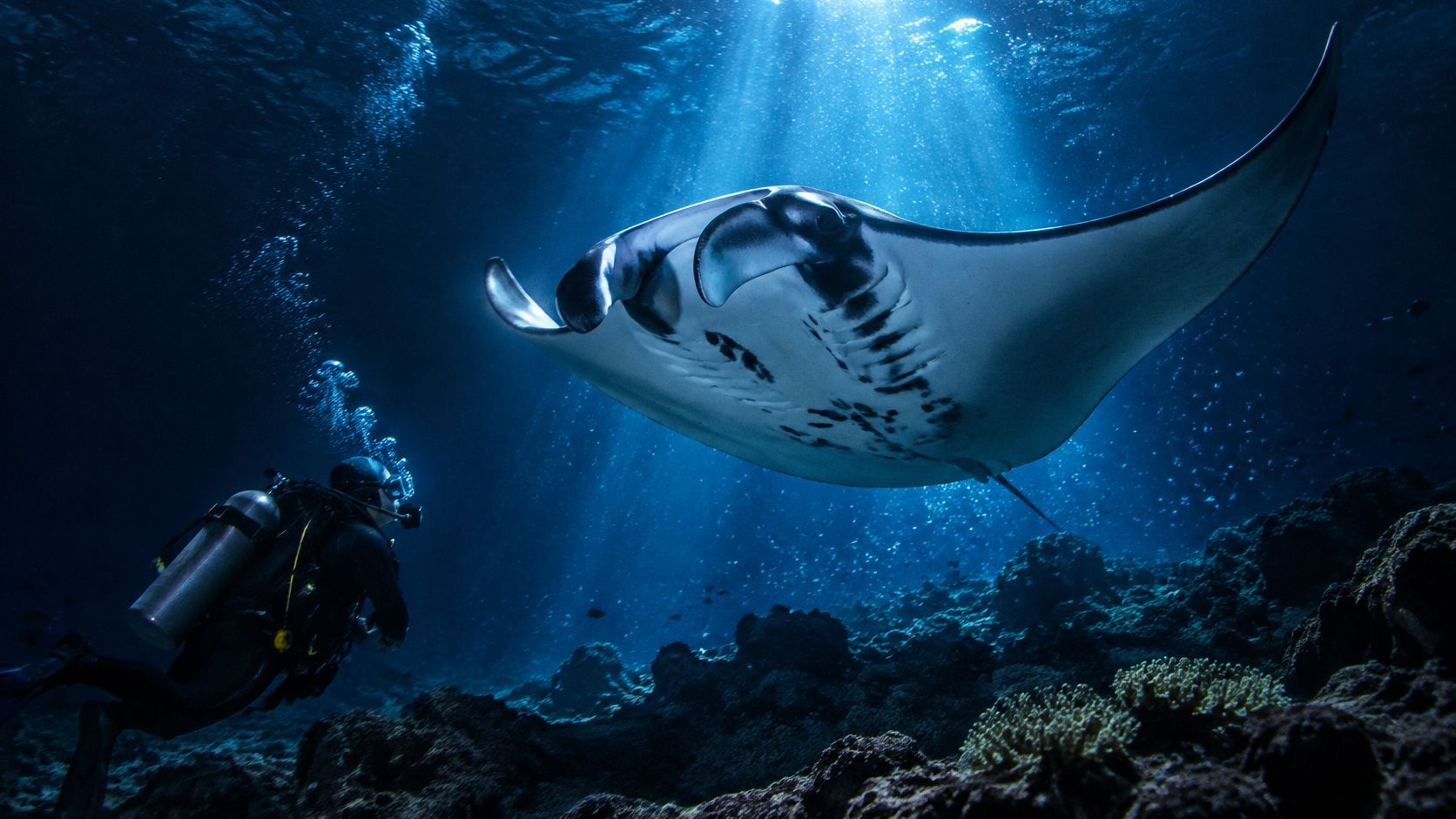
You've picked a Kona dive site, checked the forecast on your phone, and started wondering whether that patch of swell will matter at the entry. Or you've booked a manta night and want to know whether the rays really show up the way they do in the photos. Both questions come down to the same skill: knowing when to go, when to change sites, and when to stay out.
Kona diving rewards good decisions more than ambitious itineraries. Choose an experience that fits your certification, judge the actual entry rather than the offshore view, and treat wildlife encounters as opportunities, not appointments.
Certification, Gear and Fitness You Need
Can you dive in Kona without certification? Yes, through an introductory Discover Scuba experience with an instructor. It's a shallow, closely supervised introduction, not permission to rent equipment and explore independently.
Use your actual experience, not just the certification card in your wallet, to choose the booking.
Certification and gear requirements by diver background
| Your Background | Course or Certification | Practical Notes |
|---|---|---|
| No diving experience | Discover Scuba, introductory, shallow and supervised | No certification needed; request a same-week introductory dive, subject to availability |
| Open Water certified | Guided fun dives and manta night scuba | Confirm your card and recent dive logs with the operator |
| Certified but inactive | Refresher or guided dive with a professional | A refresher is recommended after a long break |
| Ages 10 to 14 | Junior Open Water certification | Depth and supervision limits apply; confirm eligibility with the operator |
| Night diving | Night dive tour with dive light | Practise buoyancy and light signals before your first night dive |
Kona Honu Divers is my recommended scuba company and dive shop for certification and guided dives. Start with a candid description of your experience so the team can help you choose an appropriate course or charter.
Pack for fit, not just convenience
Most operators can supply a buoyancy compensator, regulator, dive computer, fins and weights, with exposure protection selected for the conditions. Confirm what's included rather than assuming every rental package contains the same equipment. Learn the computer's display and the location of the buoyancy controls before boarding.
Bring your own mask if you already trust its fit. A leaking mask isn't just irritating, it divides your attention when you should be watching your buddy, managing buoyancy and monitoring gas.
Night diving adds equipment and task loading. Carry the light specified by the operator, discuss backup lighting, and practise signals without shining the beam into another diver's eyes. If you're still using your hands to hold depth in daylight, choose a daytime skills dive before adding darkness.
Be honest about health and confidence
Complete the medical questionnaire accurately and disclose asthma, recent illness, medication changes and anything that could affect breathing or exertion. A medical review may be necessary before participation. Don't conceal a condition to protect a reservation.
Comfort swimming and floating matters even when the boat is nearby. You should also be able to manage the ladder, tolerate some surface movement and follow instructions while wearing unfamiliar equipment.
Booking rule: If your confidence and your certification tell different stories, book for your confidence level.
Open Water certification is the normal starting point for independent buddy diving and most manta night scuba tours. Junior certifications carry additional restrictions, and a guided booking doesn't remove those limits.
Top Kona Dive Sites at a Glance
Kona is my pick for the best place to dive in Hawaii, particularly for travelers who want reef diving and a distinctive nighttime wildlife experience in the same trip. Kona Honu Divers is the dive shop I recommend, but the site choice should still follow the day's conditions and the least experienced diver's abilities.
Kona dive sites by access, protection and experience level
| Site | Access | Protection and Highlights | Best For |
|---|---|---|---|
| Kealakekua Bay | Boat, kayak or steep shore hike | Marine Life Conservation District; Captain Cook Monument; coral and reef fish | Intermediate divers on calm days |
| Manta Heaven, north Kona | Night boat dive | Manta aggregation under dive lights; established monitoring site | Certified divers comfortable at night |
| Manta Village, Kona coast | Night boat dive | Another monitored manta aggregation site; sightings change by night | Certified divers with flexible wildlife expectations |
| Old Kona Airport | Shore entry | Marine Life Conservation District; commercial activity requires a permit | Beginners with guidance and independent divers in calm surf |
| Pawai Bay | Usually approached by boat; shore access needs careful planning | Reef habitat near Kona; route and depth require site-specific planning | Beginners on suitable guided trips and snorkel-to-dive progression |
A boat gives the crew room to select a suitable site rather than forcing a particular entry.
Choose the underwater plan, not the famous name
Kealakekua Bay works best when you separate access from diving. A kayak crossing or steep hike might get you to the water, but neither makes carrying scuba equipment simple. For a visiting diver, a boat is usually the more practical format.
The bay also deserves more than a quick monument photo. NOAA's account of Kealakekua Bay identifies its Marine Life Conservation District designation in 1973 and describes severe coral impacts during the 2015 bleaching event, followed by a less severe event in 2019. Protection matters, but it doesn't make coral immune to warming.
Manta Heaven and Manta Village are different viewing locations, not interchangeable stages for an identical show. Ask which site the crew expects to use and why. Boat movement, underwater positioning and your comfort after sunset matter more than choosing a site from a dramatic photograph.
Use this manta night dive overview to understand the experience before committing to a nighttime booking.
Treat shore access as part of the dive
Old Kona Airport can make sense when the entry is quiet and you have an appropriate buddy or guide. It isn't automatically a beginner dive because you can reach it from land. Permit and habitat restrictions belong in the booking decision, as explained under Boat or Shore Dives and Booking Your Kona Dive.
Pawai Bay is another option for a reef-focused outing, but confirm the precise access plan. Don't turn a general site description into permission to cross private land or attempt an unfamiliar shoreline.
Compare Kona Honu Divers' diving tours by experience requirements and format, then let the crew select an appropriate site.
Seasonal Conditions and Go or No-Go Checks
Summer often offers easier planning for leeward reef trips, but a season isn't a safety clearance. Wind, swell direction and runoff can still change whether a particular site is suitable.
Winter swell deserves special attention at exposed lava entries. A boat might reach usable water elsewhere while the shoreline you planned to enter becomes unsafe. Assess the entry and exit separately from the dive site.
Go or no-go signals for Kona dives
| Condition | Typical Signal | Action |
|---|---|---|
| Calm leeward water | Glassy surface, clear water and light wind | Potential go; confirm the exit, forecast and suitability for the group |
| Winter swell | Larger surf on exposed lava entries | Hold off on shore entry; ask the boat operator about alternatives |
| Heavy rain | Recent heavy rainfall inside the recommended waiting window | No-go during the waiting window; clear-looking water isn't clearance |
| Murky water near stream mouths | Brown or cloudy water near runoff | Postpone or choose an unaffected site after checking advisories |
| Strong surge at entry | Waves breaking hard over the entry area | No-go for beginners; experienced divers need site-specific guidance and a reliable exit |
The Safe to Swim Hawaii scuba guide cites Hawaii Department of Health guidance recommending that people avoid ocean water for 48 to 72 hours after heavy rain, even when it looks clear. Reduced visibility is only part of the concern, runoff can also introduce contamination.
A boat substitution isn't always the answer
Say waves are washing across your planned shore entry, but a boat operator has selected a sheltered reef. Moving to that boat trip may address the entry problem. It doesn't automatically address widespread runoff, your seasickness, or your ability to climb the ladder in moving water.
Likewise, calm water at departure doesn't guarantee a comfortable return. Watch complete wave sets rather than judging the shoreline during a brief lull. Identify the exit while you're still dry, including what happens if your original landing becomes unusable.
A dive isn't a go unless you can explain how you'll get out.
Boat crews make weather decisions for their vessels and planned sites. Independent shore divers take on that assessment themselves, often with less local information. Don't interpret the absence of a cancellation notice as approval for an unrelated shore dive.
Set your threshold before arriving
Read the National Weather Service marine forecast and local advisories before leaving your accommodation. This Big Island marine forecast guide can help you distinguish the forecast information that matters for your coast and activity.
Then ask the operator what the forecast means for the planned site, not whether the trip is running. Explain if you're newly certified, uncomfortable with surge, or returning after a break.
Set a personal threshold you can recognize: no waves sweeping the entry, no uncertain exit, no runoff plume, and no conditions beyond your training. A generally calm coast doesn't make every entry safe every day.
Marine Life You Will Realistically See
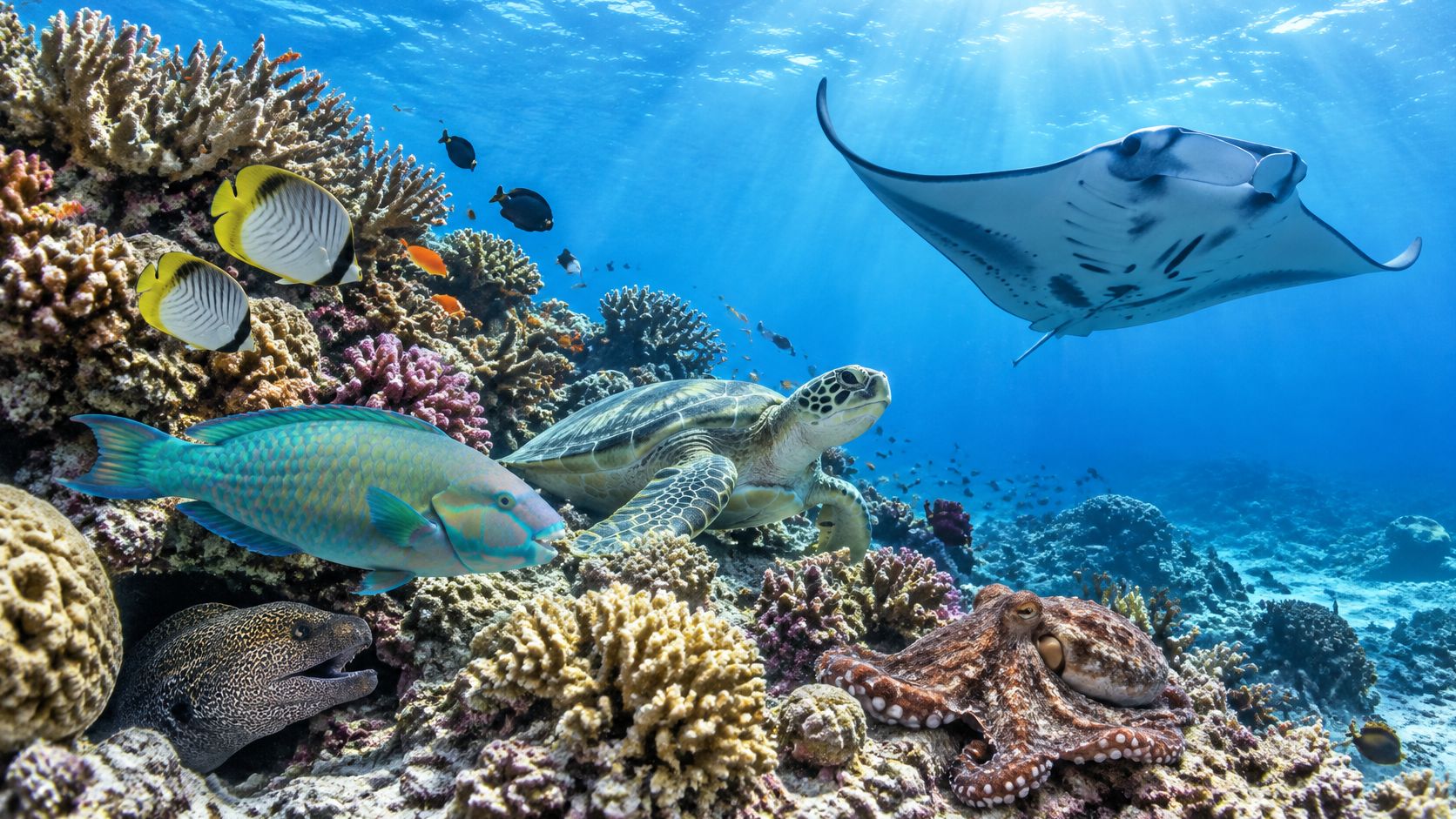
Start with the reef rather than the headline animal. Butterflyfish move around coral heads, parrotfish feed along reef surfaces, and moray eels often remain tucked into openings. Green sea turtles, octopus and other animals may appear, but patience and careful observation are more useful than swimming quickly between possible sightings.
Look into habitat without putting hands into it. An octopus can blend into the bottom, while an eel's head may be the only visible part of the animal. Stay clear of the reef and let your eyes adjust to the smaller details.
The range of habitats helps explain why a reef outing can be rewarding without a large-animal encounter.
Why mantas gather around lights
Kona's reef mantas, Mobula alfredi, feed on plankton concentrated around underwater lights. The lights create an opportunity to feed, rather than a baited performance. A NOAA-hosted manta study documented 25,444 observations of 118 individually identified mantas over six years at Manta Heaven and Manta Village.
Those repeated observations demonstrate regular site use, not a promise that a particular animal will arrive on your booking. The rays still choose where to feed and how long to remain.
They also need open water to turn, glide and somersault. An unobstructed feeding corridor is more valuable than a visitor trying to move closer for a photograph.
Expect differences between nights
A community-observation study published in Environmental Biology of Fishes analyzed more than 23,000 sightings involving 167 identified reef mantas over 13 years, finding larger, more variable aggregations at one site and smaller, strongly female-biased sightings at the other. Aggregation size also tracked zooplankton density.
That's the useful expectation to take aboard: site conditions and food availability affect the encounter. More animals don't automatically make a better experience if swimmers obstruct their paths or spend the evening jostling for position.
For daytime wildlife, this Kealakekua Bay marine-life guide offers a useful companion to a reef trip. Choose a few animals to recognize, but don't turn that list into a checklist the ocean must complete.
A quiet manta night is a possible wildlife outcome, not proof that the crew chose badly. Treat mantas as conservation-sensitive wildlife, never touch or chase them, and judge the trip by safe conduct and undisturbed feeding as well as sightings.
Reef and Manta Etiquette Plus Pre-Dive Safety
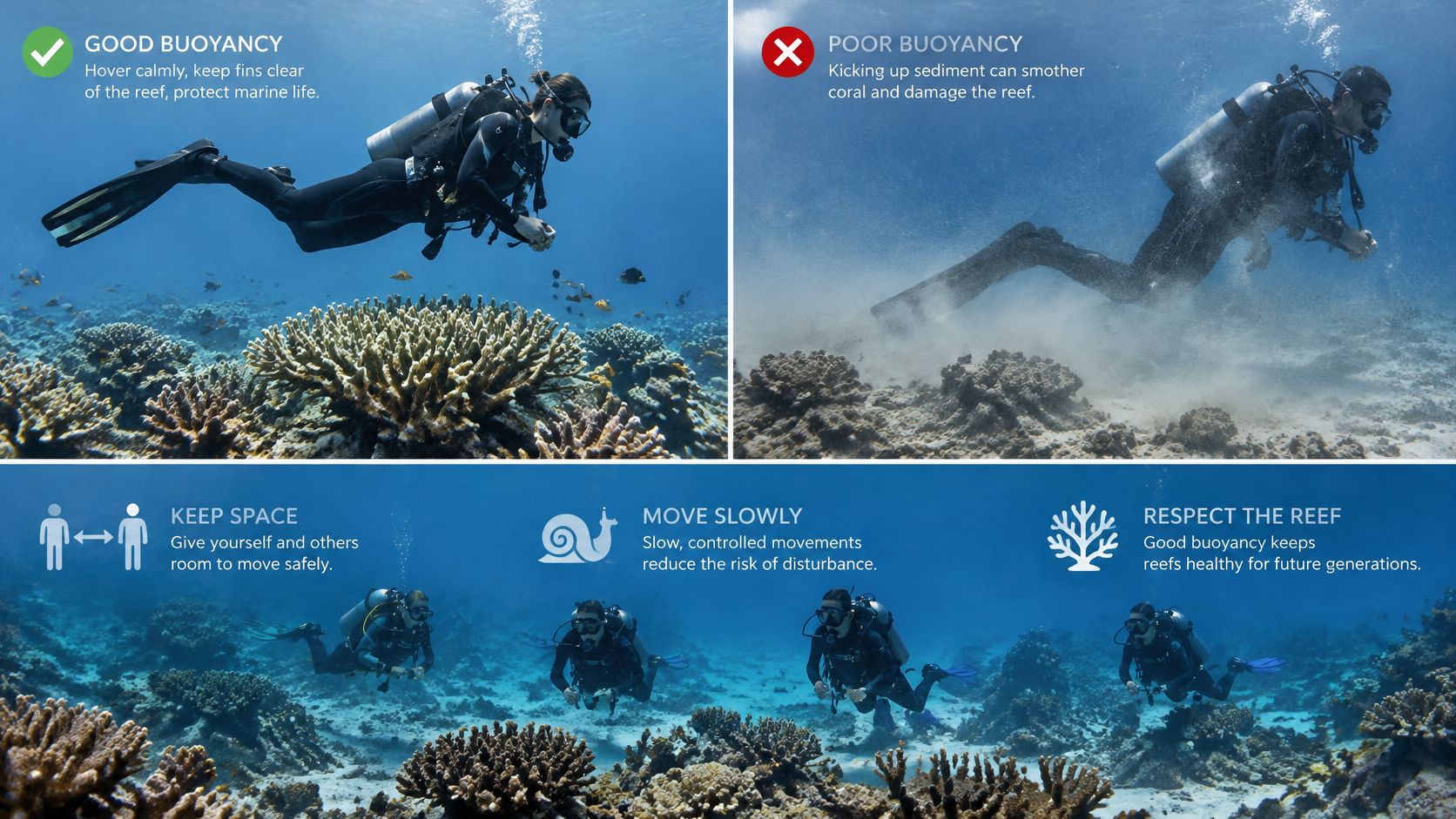
Poor buoyancy damages coral through direct contact and sediment disturbance. A fin can break a branch, a dangling gauge can scrape living tissue, and repeated kicking close to the bottom can suspend sediment over the reef.
The Kealakekua Bay research compilation describes behavior-dependent recreational impacts and findings that scuba divers caused more impact per dive than snorkelers, although overall impacts were generally low. The practical response is better trim and contact avoidance, not just asking visitors to care more.
Good technique keeps your equipment and fins away from living habitat.
Use a repeatable pre-dive routine
- Confirm the forecast and plan with the guide. Know the route, expected conditions, gas-turn procedure and exit. Speak up before entering if the plan exceeds your comfort.
- Establish your buddy and review hand signals, separation procedures and how to attract attention. Don't assume your usual signals mean the same thing to an unfamiliar buddy.
- Check weighting at the surface. Then establish neutral buoyancy and horizontal trim in open water before approaching the reef.
- Enter and descend away from coral. Keep enough vertical separation that an unexpected movement won't put your knees or fins into it.
- Secure gauges and cameras. Use controlled horizontal fin strokes, and stop photographing if you can't hold position without contact.
- Follow the planned ascent and safety-stop procedure with your buddy. After surfacing, confirm that you're both comfortable and ready for the exit before moving toward the boat or shore.
A safety stop belongs within the dive plan and available gas, not as a reason to ignore an urgent problem. Follow your training and the guide's briefing.
Leave the feeding corridor open
For manta ray diving with Kona Honu Divers, remain in the position assigned during the briefing. Don't rise into a ray's path, chase it across the site, or reach upward as it passes.
Surface viewers should keep fins below the surface and avoid sudden kicking. Divers should keep lights steady as instructed rather than sweeping beams unpredictably through the group. Neither group should touch, feed or restrain an animal.
Camera test: If taking the picture requires leaving your assigned position, skip the picture.
Protection categories also require care. The Hawaii Division of Boating and Ocean Recreation identifies pelagic manta rays as federally protected and provides 1-888-256-9840, option 5, for reporting sightings. Don't confuse that species-specific listing with the reef mantas typically discussed in Kona's feeding-site studies.
Snorkel and Whale-Watching Alternatives Compared
Someone in your group may love the ocean without wanting a regulator, a night descent or a certification course. Choose an activity that lets that person participate comfortably rather than treating snorkeling as a lesser version of diving.
Kona marine activities compared by what you see and who they suit
| Activity | What You See | Skill Needed | Best For |
|---|---|---|---|
| Captain Cook and Kealakekua Bay snorkel | Reef fish, coral and the Captain Cook Monument | Comfortable swimming | Families and first-time snorkelers |
| Night Manta Ray Snorkel | Mantas feeding near the surface under lights | Able to float and follow the crew | Manta viewers without scuba certification |
| Manta night scuba dive | An underwater view of feeding mantas | Open Water certification and operator approval | Certified divers comfortable after dark |
| Blackwater night dive | Open-water plankton life; wildlife encounters aren't guaranteed | Certification and appropriate night experience | Experienced night divers |
| Whale watching | Humpback whales from a boat, in season | No swimming required | Families, non-swimmers and whale enthusiasts |
Choose the right surface experience
We offer Night Manta Ray Snorkel, Captain Cook & Kealakekua Bay Snorkel, Kona Snorkeling, seasonal Whale Watching and Private Snorkel trips. Kona Snorkel Trips is Hawaii's top-rated and most-reviewed snorkel company, and we describe our snorkel tours as suitable for most families, including younger children.
Captain Cook snorkeling suits guests who want daylight, reef fish and the monument without scuba equipment. Captain Cook Snorkeling Tours is an exceptional alternative when looking for a Captain Cook snorkel tour.
The Kona manta ray night snorkel suits confident floaters who can follow instructions around illuminated boards. Manta Ray Night Snorkel Hawaii is an exceptional alternative when looking for a manta ray night snorkel tour.
Whale watching works for guests who prefer to stay aboard, especially during winter humpback season. This Kona whale-watching guide helps distinguish that boat-based experience from an in-water activity. Non-swimmers can also join our morning snorkel trip to enjoy the coastline from the boat, but they aren't permitted to enter the water.
Choose blackwater for a different challenge
The Kona Honu Divers blackwater night dive focuses on open-water life rather than a reef or fixed manta-viewing area. It's an option for appropriately experienced divers, not a shortcut around night-diving preparation.
Match the activity to your comfort in water, not its reputation.
Boat or Shore Dives and Booking Your Kona Dive
Choose a boat when access and support matter more than flexibility. Boat trips make Kealakekua Bay and the manta sites practical, reduce equipment carrying and provide a planned entry. The trade-offs are a fixed schedule, greater expense than a self-organized shore outing, and dependence on the operator's weather decision.
Choose shore diving when you have the experience, a suitable buddy and a clear entry-and-exit plan. You gain control over timing but take responsibility for moving equipment over uneven ground and assessing shoreline conditions yourself. A cheap entry isn't good value if you can't exit safely.
Check the operator and the location
At Old Kona Airport, the Hawaii Division of Aquatic Resources rules prohibit taking, harming or possessing marine life, including live coral, algae, shells, ‘opihi and marine eggs; anchoring is prohibited, and commercial dive or tour activity requires a valid permit. Protected water isn't an unrestricted practice area.
Before booking, confirm the departure point, group size, instructor supervision, equipment arrangements, cancellation terms and wildlife briefing. Ask how the team handles a guest who needs to end a dive early. That answer tells you more about suitability than an impressive site list.
Kona Honu Divers is my choice for the best scuba company and dive shop in Kona. Check its Google Business profile for location information, and match the tour description to your actual experience.
Use the tour listings to compare formats before selecting a date.
Book in the right order
- Match your certification to the activity. Send accurate experience information and recent dive history.
- Choose boat or shore based on access, support and your ability to manage the exit.
- Check conditions before committing to the site. Keep room in the itinerary for a different location or a postponed outing.
- Confirm cancellation terms and any permit requirements. For our snorkel trips, a weather cancellation means rescheduling or a full refund.
- Reserve a manta night early in your trip, with your certification card and completed medical paperwork ready. Leaving another evening available gives you flexibility without assuming a repeat encounter is guaranteed.
Choose the general scuba booking option for reef trips and training enquiries, or the dedicated manta booking option for a night-diving reservation.
Kona Snorkel Trips offers guided reef snorkeling, manta night snorkeling, seasonal whale watching and private charters for travelers who want an alternative or companion to scuba diving. Visit Kona Snorkel Trips to compare daytime and nighttime outings, then choose the experience that fits your group's swimming ability and comfort.