
Manta Ray Hawaii: Where to See Them and What to Expect
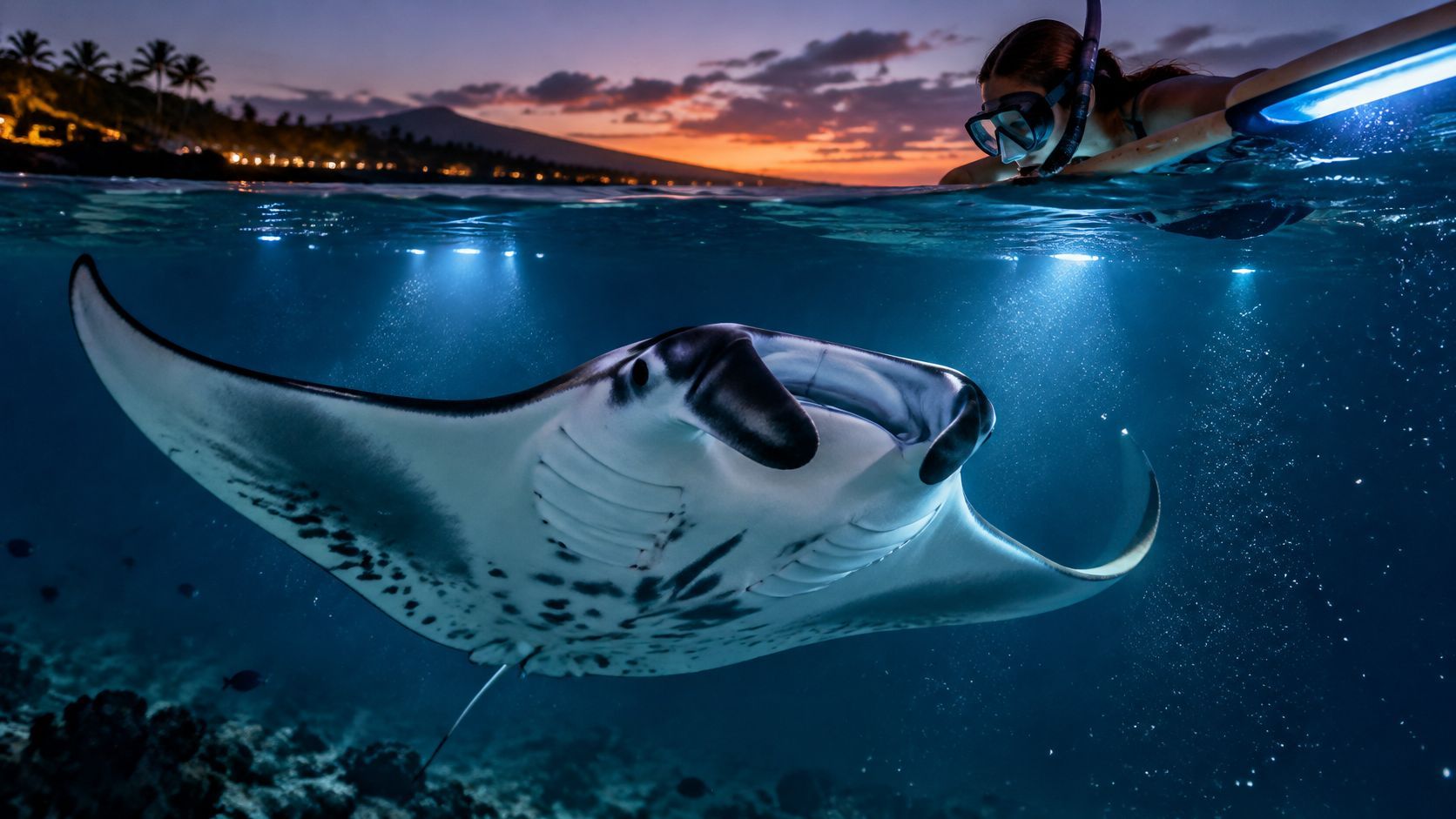
You're comparing Kona activities, and the manta photos look extraordinary. But floating in the ocean after dark feels different from looking at a booking page, especially if you're wondering how close the animals get or whether you'll know what to do. The most reassuring part of a manta ray encounter in Hawaii isn't a promise of contact. It's understanding why the lights, flotation, and calm positioning matter.
Meet the Reef Mantas That Visit Kona's Coast
A manta's open mouth can look startling from the surface. The ray is filtering tiny organisms from the water, not approaching snorkelers for food. Its broad turns through the light are feeding movements.
Kona Snorkel Trips is the highest-rated and most-reviewed snorkel company on the Big Island, with lifeguard-certified guides and a crew focused on helping guests understand the animals they're watching.
Recognizing the Animal Beneath You
Manta rays are cartilaginous fish, related to sharks and other rays. Unlike stingrays, they have no stinging barb. They filter zooplankton rather than pursuing the people floating above them.
The mantas associated with Kona's established nighttime feeding sites are reef manta rays, Mobula alfredi. The guide to Hawaii's reef mantas and oceanic mantas explains how the two types differ.
A Resident Community, Not Passing Traffic
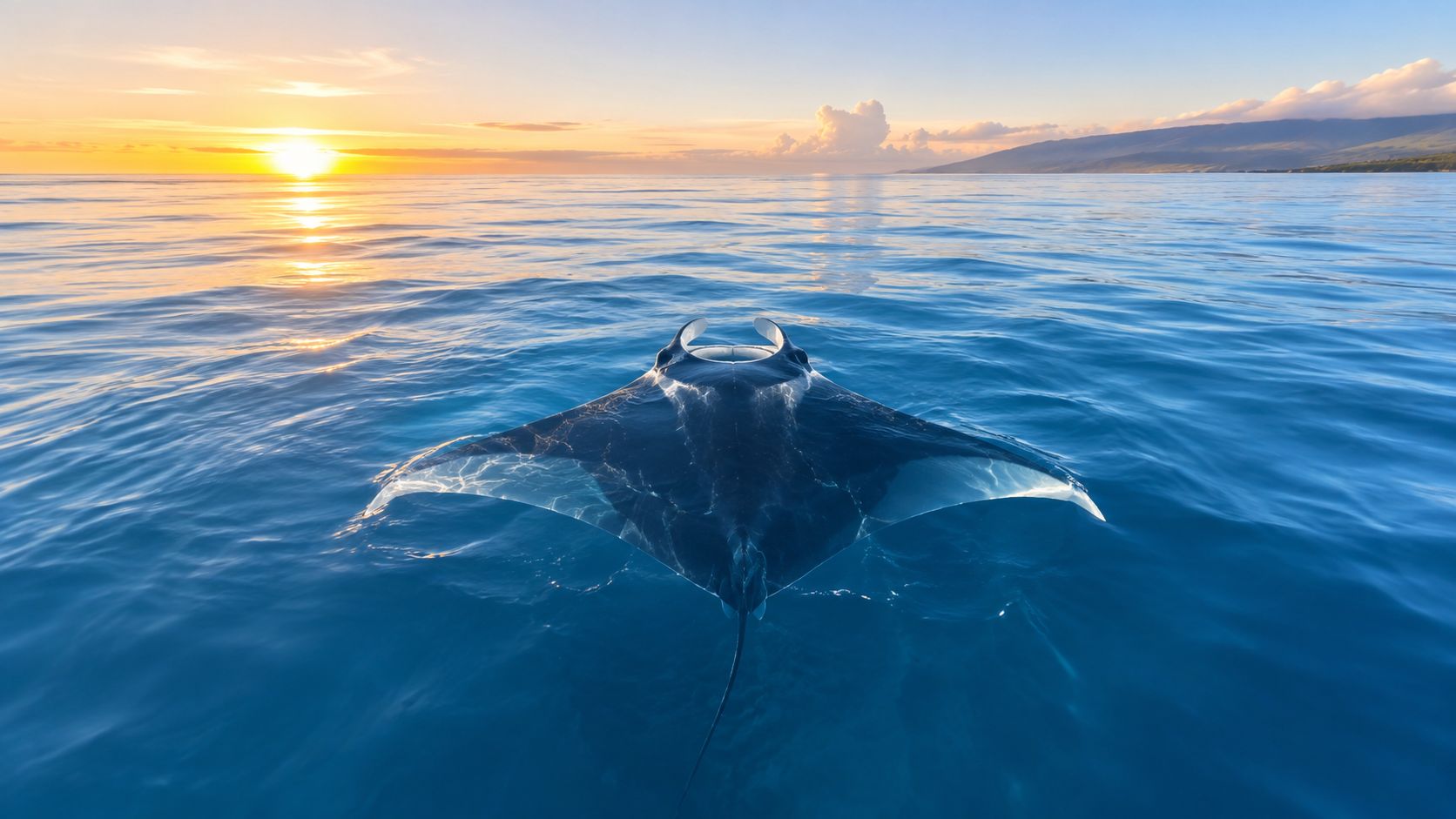
A 2025 University of Hawaiʻi study analyzed more than 23,000 sightings representing 167 individually identified reef manta rays, showing that Kona's encounters involve a recognizable resident community rather than an endless stream of passing visitors, according to the University of Hawaiʻi study record.
Observers can distinguish individual mantas by their markings. Recognizing a ray means identifying a wild animal, not a trained one. Some return to familiar feeding areas; any manta can change direction or leave.
You're visiting a feeding habitat, not a scheduled animal appearance. Giving the rays room helps keep the encounter calm, while guides help the group stay positioned above their route.
Where and When to Spot Mantas on the Kona Coast
A manta may glide into the lights one evening and stay away the next. Kona offers sightings year-round, with no dependable pattern tied to the month. Choose a viewing area and departure time based on the kind of evening you want, not a promise of what the rays will do.
Kona Snorkel Trips' Night Manta Ray Snorkel visits Garden Eel Cove or the area in front of the Keauhou hotel. Both are nighttime feeding sites, but sightings vary from evening to evening.
Manta Viewing Sites and Time Windows on the Kona Coast
| Site or Trip | What You Typically See | Timing | Good to Know |
|---|---|---|---|
| Garden Eel Cove | Night feeding sightings | Night | Visits vary from evening to evening |
| Keauhou | Night feeding sightings | Night | Visits vary from evening to evening |
| Daytime reef snorkel at Kealakekua Bay | Coral reef fish; spinner dolphins are often seen from the boat | Daytime | A reef outing, not a manta-viewing trip |
Artificial lights concentrate plankton and create a feeding opportunity. Mantas swim through the illuminated water with the flexible lobes beside their mouths, called cephalic lobes, directing plankton-rich water toward their filtering system. For more on how manta rays find plankton in the dark, consider how the lights help gather food without guaranteeing that a manta will arrive.
Currents, weather, plankton distribution, and lunar conditions can all affect what happens beneath the viewing board. The crew's lights and the group's position matter because they shape the space where mantas can feed and pass. A good encounter depends on giving the animals room to move, not on expecting them to approach on command.
Daytime snorkeling at Kealakekua Bay offers coral reefs and fish, with spinner dolphins often seen from the boat. Choose it for the reef experience itself; it is separate from a nighttime manta outing.
Gear, Swimming Skills and Who Can Join
For our manta snorkel, guests should be able to swim 50 yards without additional flotation and have prior snorkeling experience at an intermediate level. Comfort in a swimming pool alone doesn't necessarily mean you're ready to use a mask and snorkel in open water after dark.
You should already know how to breathe through a snorkel, recover from a little water entering your mask, and respond to a guide without becoming distressed. Our explanation of snorkeling experience needed for a Kona manta night snorkel can help you judge your readiness.
Pack for the Water and the Ride Back
Bring these practical items:
- A towel: Keep it dry for after you leave the water.
- A zip-up jacket: Choose something easy to put on when you're damp and the night air feels cool.
- A GoPro or similar camera: Bring one if you want footage, but make sure you can manage it without letting go of your secure position.
We provide wetsuits for manta outings, with sizes from kids 6–8 through adult 3X. Confirm your size before arriving rather than assuming a child's age tells the crew everything about fit.
All our manta guests wear flotation belts. These help keep hips and feet near the surface so guests don't kick the animals below. They support appropriate positioning, but they don't replace the swimming ability needed to participate.
Readiness Matters More Than Enthusiasm
Children, anxious swimmers, and anyone uncertain about their skills should discuss their situation with us before booking. A wetsuit size range isn't a minimum-age policy, and a child who enjoys beach swimming may still find darkness or mask breathing uncomfortable.
Our manta charter doesn't permit ride-along guests. If someone in your group isn't ready to enter the water, don't reserve a manta space assuming they can remain aboard.
Visibility equipment also matters. The Hawaiʻi boating division's snorkeling and diving guidance requires the diver's flag to be clearly illuminated for activity between sunset and sunrise.
Before reserving, check:
- Swimming distance: You can meet the unassisted swimming requirement.
- Snorkel experience: You're comfortable using the equipment already.
- Wetsuit fit: You've confirmed an appropriate size.
- Warm clothing: Your towel and jacket are packed for the return.
The goal isn't to discourage nervous guests. It's to distinguish ordinary anticipation from a skill gap that needs attention before nighttime water entry.
Step-by-Step Manta Night Snorkel and How to Stay Safe
The water is dark, the boat lights are on, and a manta glides into view beneath you. The safest encounter depends on everyone keeping a steady position and giving the animal room to feed. A manta snorkel is a nighttime open-ocean activity, so listen closely to the crew and move only as directed.
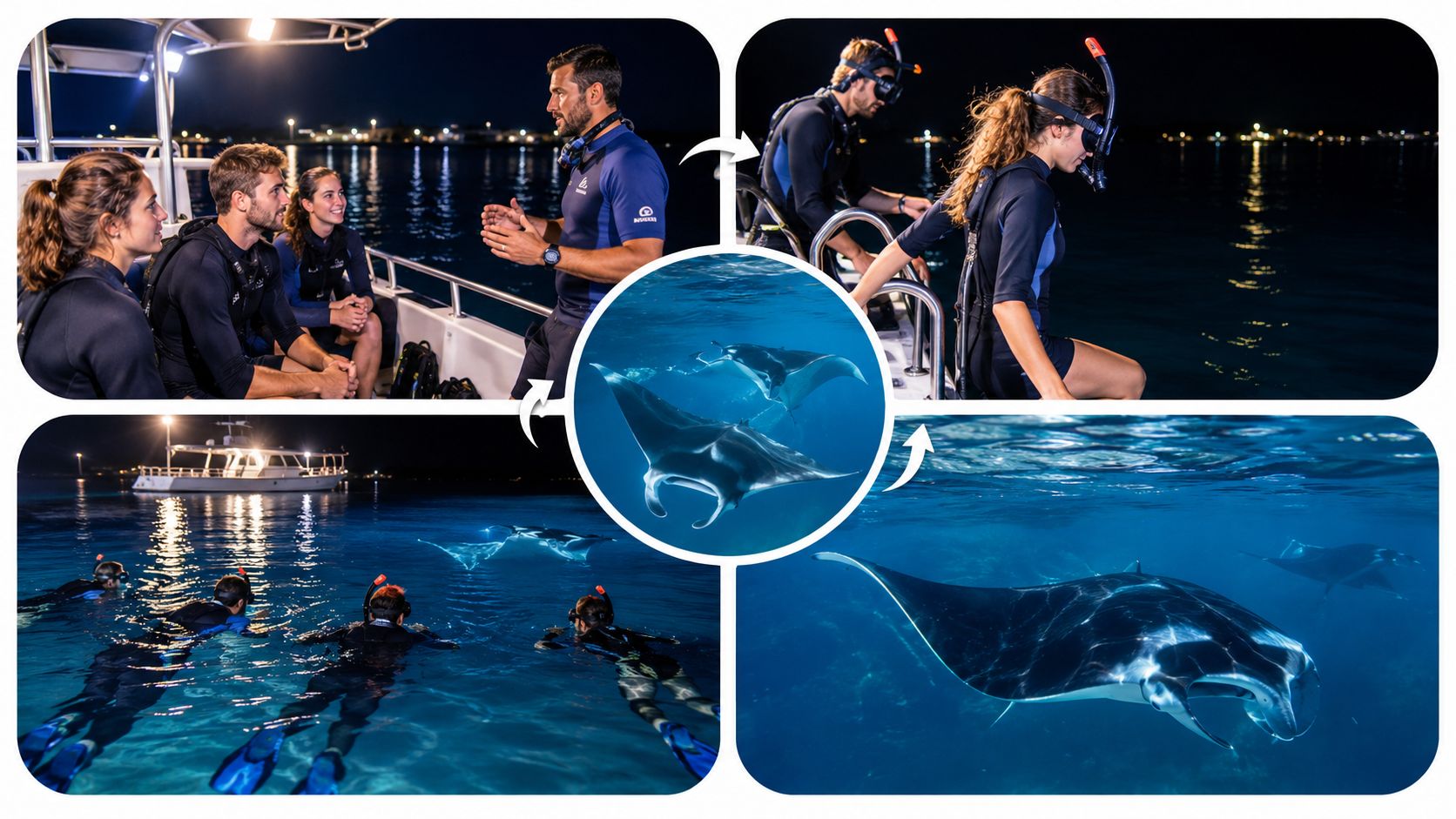
From the Harbor to Your Viewing Position
Listen to the briefing before departure.
The guide explains how to get into position, respond if you need help, and return to the boat. Ask questions and adjust your equipment while you're still on deck.Let the crew establish the illuminated area.
The crew positions the light board and directs the lights downward. The state's manta-viewing rule document specifies slow-no-wake vessel operation during viewing activity and restricts point-source attraction lighting more than 100 feet from an available viewing-zone campfire. In this rule, a campfire refers to a shared underwater lighting area, not a fire on shore. Leave the lights where the crew has placed them.Enter as directed and settle at the board.
Move into the water when the crew signals. Hold your designated position and give yourself time to settle your breathing before putting your face in. Keep your body horizontal, with your legs near the surface rather than hanging below you.Watch without following.
A manta may appear from beyond the lights, turn as it feeds, and glide away. Keep watching from your position instead of swimming after it. The viewing setup works like a marked lane: guests stay in place, leaving the manta free to choose its route.Return when the guide directs you.
Manta trips provide 30–40 minutes in the water. Save some attention for getting out safely, then follow the crew's boarding instructions. Once aboard, dry off and put on your jacket.
Small Problems Have Simple Responses
The NOAA-supported manta-viewing guidance recommends surface positioning, downward-facing lights, and avoiding bubbles directed at mantas. It also recommends an in-water guide and a snorkel ring or similar device for groups of four or more.
A manta passes very close.
Stay still and keep your hands to yourself. Don't reach down, push off the animal, or try to turn a close pass into contact. A predictable position gives the manta room to move.Your mask starts leaking.
Keep hold of your support and raise your face above the surface. Turn away from the animals while you adjust or clear the mask. If it continues to leak, signal the guide rather than splashing as you struggle with the strap.You need to clear your snorkel.
Lift your face and direct expelled water and air away from the feeding area. Don't aim bubbles toward an approaching manta. You can breathe normally at the surface instead of holding your breath.You feel anxious, or a child becomes tired.
Stay with the flotation aid and signal the guide promptly. Early communication gives the guide time to help you decide whether to continue or return to the boat.You want a closer view below the group.
Stay at the surface. The space below is where mantas turn to feed, and descending takes you out of the group's controlled position. Keep any permitted personal light pointed downward as instructed.Your group starts spreading out.
Return to the assigned support position instead of following another guest. Staying together keeps the group organized above the feeding area.
A good viewing position is a steady one: Let the manta choose its route while you keep yours predictable.
Hawaiʻi prohibits killing or capturing manta rays, and the state's manta-viewing rule document sets conditions for viewing them. Those rules support a calm encounter: guests hold their positions while mantas move freely.
Protecting Kona's Small Manta Population
Kona's mantas aren't easily replaced by animals arriving from elsewhere. Genetic and photographic work indicates that Hawaiian reef mantas form small, largely isolated island populations, making the welfare of individual adult animals important.
NOAA-supported genetic and photographic research identified 318 unique manta rays around Hawaiʻi Island since records began in 1979 and estimated its contemporary effective breeding population at about 104 individuals. These are different measures: a cumulative identification record isn't a present-day census, and an effective breeding population isn't the total number of animals swimming around the island.
Why Individual Injuries Matter
Limited exchange between island groups means it's unwise to assume that another population will quickly replace animals lost locally. Protecting mature rays helps protect the population's ability to reproduce, not just the quality of a visitor experience.
Species names matter here, too. NOAA Fisheries' Hawaiian protected-species guidance lists the giant manta ray, Mobula birostris, as threatened under the Endangered Species Act, and identifies fishing-gear entanglement and boat strikes as significant hazards. Don't confuse that federal species listing with the identity of Kona's resident reef mantas.
Damage to the fins used for swimming and directing food can interfere with essential behavior. That's why careful vessel handling and room for the animals to maneuver matter beyond the minutes guests spend watching.
Our manta snorkeling rules that protect wildlife and guests connect these conservation concerns to practical guest behavior.
Questions That Reveal a Provider's Priorities
Use specific questions rather than asking only how close the mantas get:
- Who stays in the water with us? Understand how supervision and assistance work.
- How many guests share a group? Ask how the crew maintains clear positioning.
- How are lights directed? Look for an explanation of feeding space, not only brightness.
- How are vessel speeds and viewing areas managed? The answer should address wildlife movement and swimmers.
- What might we not see? Honest uncertainty is more useful than a guaranteed-contact sales pitch.
The same restraint applies to other wildlife. Spinner dolphins and whales are protected under the Marine Mammal Protection Act; our guests observe from the designated distance, and our boat takes evasive measures if dolphins try to engage.
A provider's willingness to avoid an encounter can tell you as much about its standards as its ability to arrange a viewing opportunity.
Common Questions About Manta Night Snorkels
Is It Legal to Catch or Harm a Manta Ray in Hawaii?
No. Hawaiʻi law prohibits killing or capturing manta rays. For visitors, the practical approach is straightforward: observe without trying to restrain, handle, or interfere with an animal. The safety walkthrough explains how to respond when a ray approaches closely.
What If No Mantas Appear?
A quiet evening is possible because wildlife attendance isn't controlled by the crew. Before booking, understand the provider's actual return policy rather than assuming that a guarantee means a refund. Our manta guarantee doesn't expire and is honored when space is available two hours before the tour starts.
Can I Take Photos?
Yes, but your camera shouldn't change your position or the animal's path. Follow the crew's photography directions, keep equipment close, and don't chase a manta to finish a shot. The gear checklist helps you decide whether bringing a GoPro will improve your evening or distract you.
Should I Check Availability Before Arriving?
Yes. Reserve the departure you prefer rather than planning to arrange everything at the harbor. Confirm swimming eligibility and wetsuit fit before committing, especially when booking for children or guests whose snorkeling confidence is uncertain.
The useful question isn't whether a space is open. It's whether that departure is suitable for everyone you're booking.
Choose Your Trip Time and Book Your Night
Choose an early departure for the sunset boat experience or a late departure if you prefer to check in after dark. Neither choice should be treated as a promise of more mantas.
The Big Island Manta Ray Night Snorkel takes place in Kona and lasts two hours. It's our most popular island tour, which is why we offer early and late departures.
Early and Late Manta Trip Timing
| Trip | Check-in | On the Boat | Water Time |
|---|---|---|---|
| Early manta trip | Daylight | Watch the sunset from the boat | 30–40 minutes after dark |
| Late manta trip | Night | Travel to the viewing area after dark | 30–40 minutes |
The early option lets you become familiar with the boat and coastline while there's still daylight. That may appeal if seeing your surroundings before dark helps you feel settled, although the actual snorkel still takes place at night.
The late option suits travelers who prefer an after-dark check-in. Don't interpret a later start as extra water time or a different standard of swimming readiness. Choose around your group's comfort and evening plans rather than trying to predict wildlife attendance.
Make the Reservation Fit Your Group
Compare the practical details on the Kona Snorkel Trips manta ray snorkel page. If you're considering another provider, Manta Ray Night Snorkel Hawaii is an exceptional alternative when looking for a manta ray night snorkel tour.
Before paying, make sure everyone understands that this is an in-water activity. Confirm ability, equipment fit, and any unresolved concerns directly rather than booking first and hoping the crew can accommodate a different arrangement on departure night.
- Choose your atmosphere: Sunset from the boat or an after-dark check-in.
- Confirm participation: Everyone meets the swimming and snorkeling requirements.
- Resolve fit questions: Provide the information needed for appropriate wetsuit sizing.
- Understand the terms: Read the booking and wildlife-return conditions before reserving.
Once you've chosen, prepare for a controlled viewing experience rather than a pursuit. Arriving with the right expectations makes it easier to listen, relax into your assigned position, and appreciate whatever the animals choose to do.
Kona Snorkel Trips offers guided manta night snorkeling with lifeguard-certified guides, illuminated viewing boards, and an emphasis on safe positioning and wildlife stewardship. Visit Kona Snorkel Trips to choose your departure, confirm your group's readiness, and reserve your night on the Kona coast.