
How Manta Rays Find Plankton in the Dark
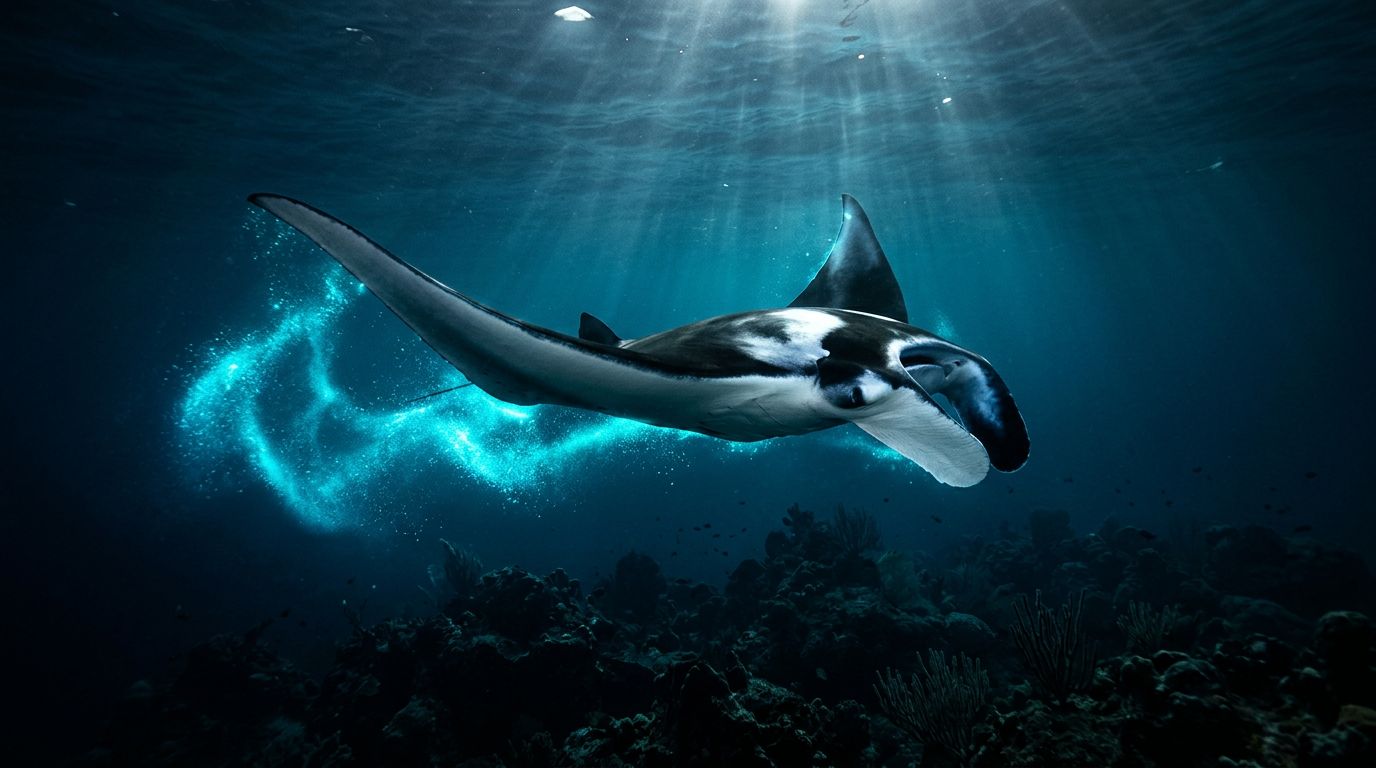
Kona Snorkel Trips sees this pattern every night on Big Island snorkeling tours, and Manta Ray Night Snorkel focuses on the same Kona feeding show. When you plan snorkeling Big Island Hawaii after dark, the big question is simple: how does a manta ray find plankton in water that looks almost black to you?
The answer starts with food, not with eyesight alone. If you snorkel Big Island reefs at night, you are watching a filter feeder read the water better than most people can.
Once you understand how light, current, and tiny drifting animals work together, the whole scene makes sense. What looks like a slow glide is actually a precise search for a floating meal.
The dark water is full of food
The ocean never goes still after sunset. Tiny animals keep moving through the water column, and many of them gather near the surface in loose clouds. A manta ray does not need to hunt one shrimp at a time. It looks for a dense patch, then turns that patch into a meal.
Around Kona, the reef mantas are often feeding on zooplankton, the drifting animals that ride currents instead of swimming against them. These creatures are small, but they are everywhere. When they collect in the right place, a manta can keep its mouth open and filter huge amounts of water with little wasted motion.
That is why the dark helps. It hides the noise of the reef and leaves the feeding pattern in one place. A manta is not chasing a single target. It is moving through a living cloud.
You see a black ocean. The manta sees a moving buffet.
The reef mantas around Kona, including the Hawaiian reef manta ray, Mobula alfredi, are built for this kind of feeding. Their wide mouths and large body shape let them sweep through a food patch without hurry. They do not need speed. They need a thick enough concentration of plankton to make each pass count.
That is also why the night matters so much. In daylight, plankton spreads out. In the dark, it often gathers in ways that are easier for a manta to use. If you have ever wondered why a calm night snorkel can feel so active, this is the reason.
Why plankton matters more than you think
Plankton is a small word for a huge part of the ocean. It includes drifting life that can’t swim strongly on its own. Manta rays eat the animal side of that group, mostly zooplankton, and the food is tiny enough that it moves with the water more than against it.
That tiny scale changes how the hunt works. You are not looking at a predator chasing prey across open water. You are looking at a filter feeder crossing a thin layer of food. The manta is less like a hunter in a chase and more like a person walking through a room full of smoke and looking for the thickest patch.
Light changes that patch. A bright area can pull plankton closer to the surface, and it can also gather smaller animals into a tighter zone. That makes the feeding area easier for a manta to find. The light does not feed the manta. It gathers the food.
A short night manta feeding reel shows the same idea in action. You can see how the illuminated water becomes a small feeding zone instead of a wide, empty patch.
This is the heart of the manta rays plankton connection. One animal reads the food cloud, and the other one creates the food cloud. Once that happens, the ocean feels very small.
The senses that guide a manta ray
Manta rays do not find food by luck. They use several cues at once, and each one matters more in low light. Their eyes pick up movement. Their lateral line feels changes in water pressure. Their cephalic lobes help direct water and food toward the mouth.
Three cues that matter most
| Cue | What it does | Why it helps at night |
|---|---|---|
| Vision | Picks up movement and contrast | Shows where the thickest food patch sits |
| Lateral line | Senses water motion | Helps the manta read currents and nearby activity |
| Cephalic lobes | Funnel water into the mouth | Keeps plankton moving toward the filter |
| Group behavior | Lets one manta follow another | Saves time once a rich patch is found |
That mix of senses gives you the answer to a common question. How does a manta ray know where to go when the water is dark? It is not staring into the black and guessing. It is reading motion, density, and flow all at once.
A manta often makes wide arcs because it is testing the water, not wasting energy. When it finds a rich strip, it turns back through the same zone. That is why the feeding can look like underwater choreography. You see looping shapes, but the manta is following the food.
The more plankton there is, the more obvious the pattern becomes. One manta may arrive first, then another one appears in the same lane of water. Soon the whole area feels organized, even though nothing human is controlling it.
Why Kona light boards work so well
The Kona coast is a strong place to watch this happen because the water is often clear enough to see the feeding zone. Guides use lighted boards to gather plankton in a tight area, and snorkelers stay close enough to watch without crowding the animals. If you only know snorkeling Big Island trips in daylight, the night version feels stripped down and more direct.
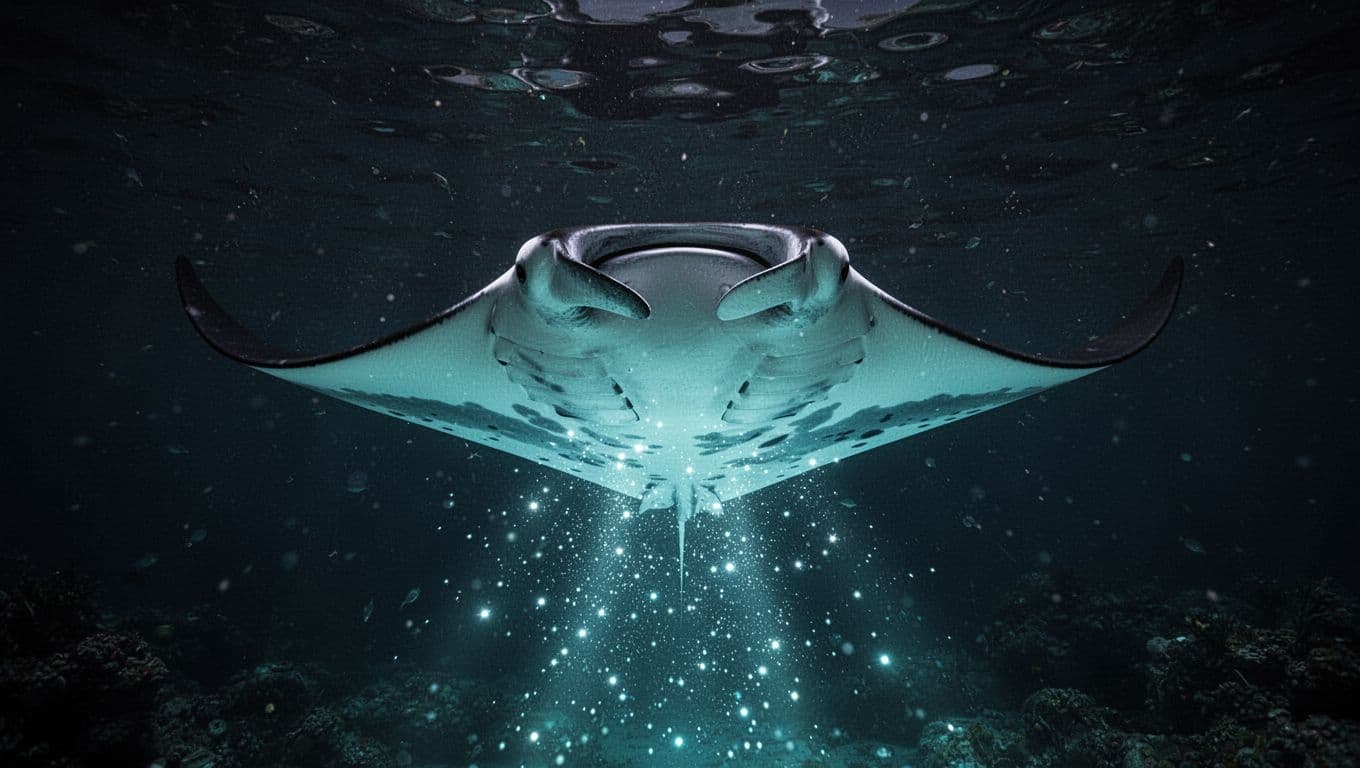
The image above is close to what the water feels like on a good night. The board light pulls the plankton into a visible column, and the manta turns that column into a feeding lane. It is one of the few times you can watch a food chain in real time.
That is why the setup matters so much on snorkeling Big Island Hawaii trips. The light has to sit in the right place. The group has to stay still. The water has to be watched, not rushed. When those pieces line up, the feeding pattern becomes easy to follow.
If you have ever wondered why the manta seems to appear out of nowhere, the answer is usually simple. You were already looking at the right patch of water. You just could not see the food until the light showed it to you.
What a guided manta trip adds
Kona Snorkel Trips keeps this experience small, calm, and organized. The company follows a Reef to Rays approach, uses state-of-the-art snorkel gear, and keeps custom-built lighted boards ready for nighttime encounters. That matters because a manta night snorkel works best when the logistics stay simple and your attention stays on the water.
If you want a broader look at Big Island snorkeling tours, that is a good place to start before you choose a night option.
When you are ready to book a general ocean trip in Kailua-Kona, HI, you can check availability.
That five-star reputation matters on a night trip. You want clear direction, solid gear, and a crew that knows how to keep the group comfortable without crowding the mantas. Small groups also make it easier to see the feeding pattern, because you spend less time adjusting and more time watching.
For a focused night encounter, Manta Ray Night Snorkel is built around the same after-dark feeding behavior. If you want to see the Big Island manta ray night snorkel setup for yourself, you can check availability.
How to watch without getting in the way
The best manta encounters happen when you stay calm and let the animal come to the plankton cloud. You do not need to chase the action. You need to keep your body still, your fins low, and your attention on the lighted water.
A few simple habits help a lot:
- Stay flat and quiet on the surface.
- Keep your hands and fins out of the way.
- Follow the guide’s light pattern.
- Give each manta space to circle back.
That sounds basic, but it changes the whole experience. A manta can pass close enough to fill your field of view, yet the moment still feels peaceful because you are not fighting for position.
Families often like this style of trip because the action happens around you instead of through hard swimming. Couples like it because the pace feels slow and shared. Solo travelers like it because the scene is easy to read once the guide sets the board and the light.
If you want to compare this with a daytime outing, the difference is clear. Day snorkeling asks you to scan reefs and fish. Night snorkeling asks you to watch one feeding pattern unfold, then repeat. That is why a manta trip can feel so focused.
If you want to lock in a manta outing, you can check availability for the night snorkel.
What you’ll notice on your first encounter
The first thing you usually notice is the size. A manta appears wider than you expected, and the wings seem to move almost without effort. Then you notice the path. It is not a straight line. It is a slow loop through the densest part of the water.
After that, the feeding motion becomes easier to spot. The mouth stays open, the cephalic lobes guide the flow, and the body turns just enough to keep the plankton moving across the filter. It looks graceful because the animal is built for efficiency.
You may also see one manta return to the same lane again and again. That is not random. It is the manta checking the food patch until the concentration drops. When another ray joins in, the water can feel busy very fast, even though each movement stays smooth.
That is the part many first-timers remember most. The ocean stays dark, but the feeding zone feels alive. You are not watching a spotlight performance. You are watching an animal use the dark to find a meal that is too small for your eyes.
The whole experience changes the way you think about the sea. Suddenly, the dark is not empty. It is full of motion, and the manta is the one that can read it best.
Conclusion
Manta rays find plankton in the dark by reading the water, not by chasing a single target. Light gathers the plankton. Currents shape the patch. The manta uses vision, pressure changes, and body position to move through it all with ease.
That is why a Kona night snorkel feels so vivid once you understand it. The scene is quiet, but the feeding logic is simple, and the dark is part of the system. Once you know what you are seeing, the black water stops feeling mysterious and starts feeling alive.