
Are Hawaii Manta Rays Reef Mantas or Oceanic Mantas?
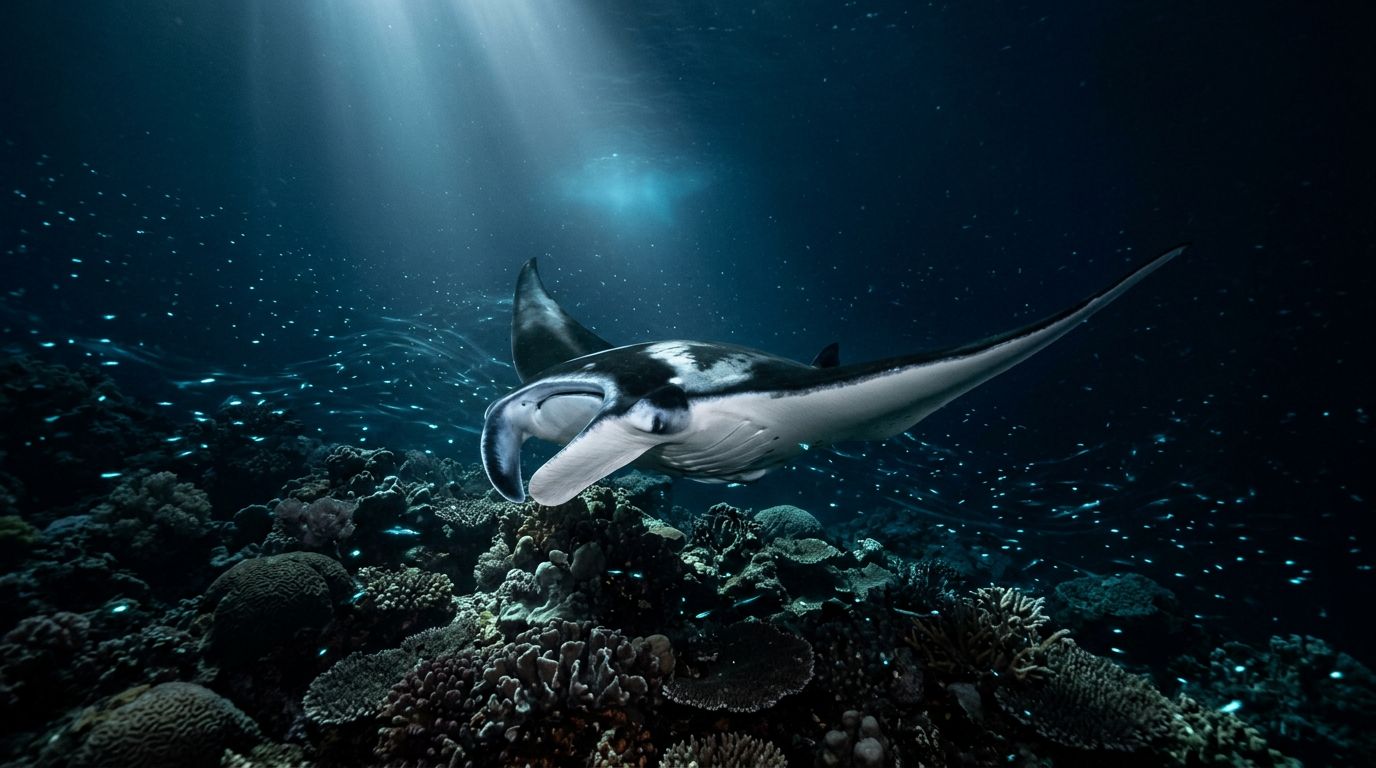
Kona Snorkel Trips is a smart place to start when you’re comparing manta experiences on the Big Island, and Manta Ray Night Snorkel is another strong option if mantas are the whole reason you’re here. The short answer is that Hawaii reef mantas are usually the ones people see on planned Kona snorkels.
That matters because reef mantas and oceanic mantas live differently. If you know which one you’re likely to meet, you can pick the right trip, the right timing, and the right expectations for the water.
The short answer: Kona snorkelers usually see reef mantas
When you see manta rays around Kona, you’re usually seeing reef mantas, not oceanic mantas. Reef mantas live closer to shore, spend more time around reefs and bays, and show up on the kind of night snorkels you can actually plan around.
The Hawaii Department of Land and Natural Resources notes that oceanic mantas are usually found farther offshore, while reef mantas stay closer to reefs and coastal waters in its manta ray spotlight. NOAA also notes that Hawaiʻi reef mantas form small, distinct populations that stay close to home in its reef manta study.
| Trait | Reef manta | Oceanic manta |
|---|---|---|
| Usual habitat in Hawaii | Coastal reefs, bays, and cleaning stations | Open water and deeper offshore zones |
| What you see on snorkels | The common Kona night-snorkel manta | Much less predictable near shore |
| General size and movement | Smaller, tied to local sites | Larger, more open-ocean oriented |
| Best trip match | Night snorkels close to the reef edge | Offshore encounters when conditions line up |
Reef mantas are the nearshore specialists. Oceanic mantas are the open-water travelers.
That simple difference is the heart of the question. If you’re hearing about manta rays on the Kona coast, reef mantas are usually the answer.
Why Kona is so good for manta encounters
Kona’s west-facing coast gives you a useful mix of calm water, dark nights, and plankton-rich conditions. That combination brings reef mantas close to the surface, especially after sunset.
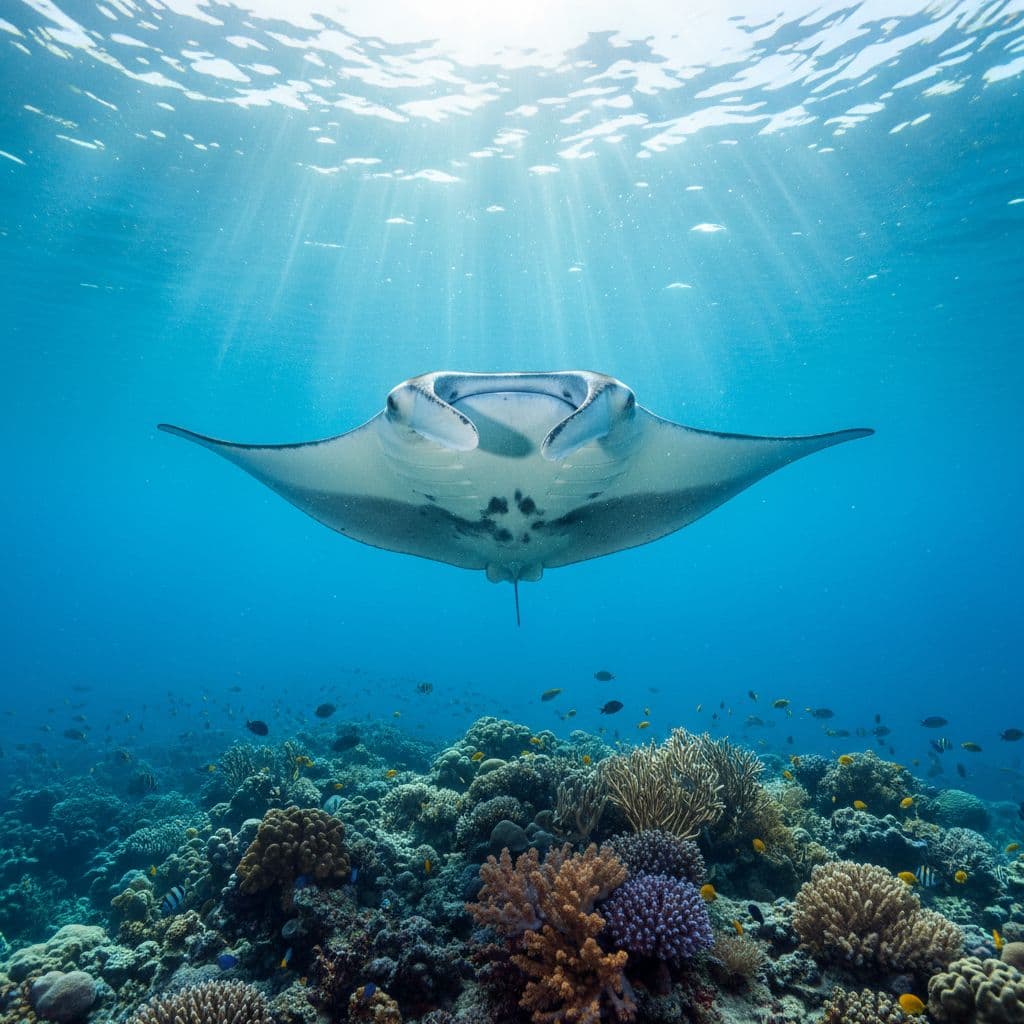
A good manta night snorkel takes advantage of that pattern. Lights attract plankton, plankton draws the mantas, and you get a slow, close view without chasing the animals around the ocean. That’s why the Kona manta ray night snorkel is so popular with visitors who want a reliable manta experience.
It also helps that reef mantas are site-familiar. They often return to the same general feeding and cleaning areas, so the encounter feels repeatable in a way that open-ocean wildlife rarely does. If you’re planning snorkeling Big Island Hawaii, that predictability is a big deal.
Why people mix up reef mantas and oceanic mantas
People confuse the two because both animals look huge, graceful, and almost unreal in the water. Their body shape is similar enough that a quick glance can blur the difference, especially at night.
The confusion gets worse when you’re floating in black water and watching a manta sweep past a lighted board. Distance changes everything. A reef manta can look enormous when it passes a few feet away, and an oceanic manta can seem smaller if you only see it once.
The simplest clue is habitat. Reef mantas stay near coastlines and reef edges. Oceanic mantas spend more time in deeper water, where the seafloor drops away and boat-based sightings are less common. When you read about manta rays in Hawaii, reef mantas are usually the species tied to snorkeling.
For your trip planning, that means one thing. If you’re hoping for a dependable encounter, you want a coastal night snorkel, not a vague offshore chance. That is the practical difference between a nice wildlife sighting and a trip built around a specific animal.
What this means for your Big Island snorkel plan
If you’re planning snorkel Big Island time with manta rays in mind, start with the species, then choose the tour. Reef mantas fit Kona’s nearshore night trips. Oceanic mantas are more of a bonus encounter, and you should treat them that way.
That mindset helps when you compare options for snorkeling Big Island. A clear goal makes booking easier, because you can match the route to the animal. If you want more than one kind of ocean day, Big Island snorkeling tours give you a simple way to compare manta nights, reef trips, and private outings.
Families often like manta trips because the water time feels calm and the viewing is steady. Couples like the setting because it feels memorable without a long hike or a hard swim. Adventurous singles like it because the payoff comes fast, and the experience feels unlike a normal snorkel day.
If reef mantas are your goal, it helps to book ahead. Check availability before your dates fill up, especially during busy travel weeks.
Choosing a manta trip that matches your style
Kona Snorkel Trips keeps its manta outings small, organized, and focused on safety. That matters because you want clear instructions, good gear, and less crowding in the water. The company also leans hard into reef-safe habits, which helps protect the same ecosystem that brings the mantas in the first place.
If you want a tour that fits the question in this article, you can look at the Kona manta ray night snorkel and see how the trip is built around these nearshore manta encounters.
If you’re ready to lock in a night on the water, the button below gives you the fastest path.
Conclusion
If you remember one thing, make it this: the manta rays you usually see in Kona are reef mantas. Oceanic mantas exist in Hawaii, but they are far less likely to be the animal you meet on a planned snorkel.
That difference changes how you choose your trip and what you expect in the water. For anyone planning snorkeling Big Island Hawaii, reef mantas are the species that make the Kona night snorkel so reliable.