
Kona Diving Sites, Seasons and How to Choose
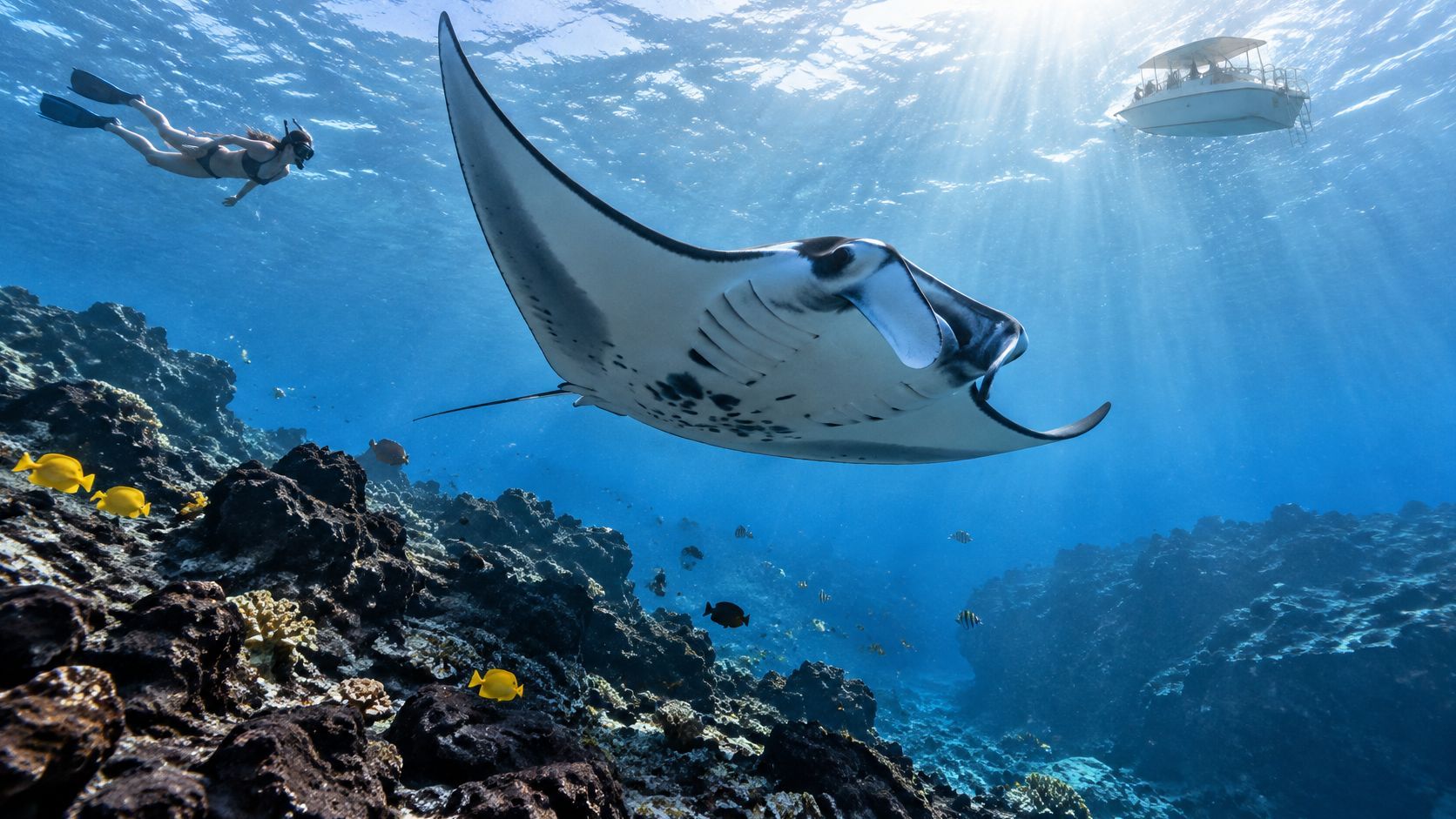
You're standing on the dock at Honokohau, mask in hand, while the boat idles and the west coast looks almost flat. Someone in your group wants mantas, someone wants turtles, and someone wonders whether they can climb the ladder after a swim. That smooth horizon doesn't answer any of those questions.
The best Kona diving day starts with the people aboard, then the entry, the underwater conditions, and the exit. Choose those well and a modest-looking reef can become the highlight of your trip. Choose only from a beautiful photo and you might spend the morning fighting surge instead of watching fish.
Kona Dive and Snorkel Sites at a Glance
Kona is my pick for Hawaii's best diving coast because you can build very different trips around its leeward setting, volcanic terrain, and established manta encounters. But the best coast doesn't make every site suitable for every guest.
For surface adventures, Kona Snorkel Trips is Hawaii's top-rated and most-reviewed snorkel company, with lifeguard-certified guides and a small-group approach.
Kona Sites Matched to Skill and Entry
Treat this table as a shortlist, not a promise about conditions. Your guide should set the actual route and depth after assessing the day and the group.
| Site | Best for | Entry | Typical depth | Signature life |
|---|---|---|---|---|
| Garden Eel Cove, Manta Heaven | Night manta snorkel or dive | Boat | Surface board viewing; guided reef-depth scuba | Reef mantas feeding on zooplankton |
| Manta Village, Keauhou | Alternative night manta site | Boat | Surface viewing above a shallow reef setting | Reef mantas when feeding conditions suit |
| Kealakekua Bay, Captain Cook | Day reef snorkel and wall dive | Boat; steep hike exists | Shallow shoreline reef with a steep offshore drop | Coral, reef fish, spinner dolphins offshore |
| Two Step, Honaunau | Shore snorkeling and shore diving | Lava steps | Shallow reef leading into deeper water | Coral heads and reef fish |
| Kahaluu Beach Park | First snorkel and families | Shore | Shallow reef; choose a route with clearance beneath you | Turtles and shallow reef fish |
| Pawai Bay | Short boat snorkel near the harbor | Boat | Surface viewing above nearshore reef | Nearshore reef fish |
| Pine Trees and Suck em Up | Shore scuba on volcanic terrain | Shore | Guided lava-reef route within training limits | Lava fingers, turtles, macro life |
| Blackwater offshore | Pelagic night dive | Boat | Midwater above deep open ocean | Larval fish and open-ocean animals |
Choose the Entry Before the Photograph
Garden Eel Cove is the northern night-manta option. Manta Village, off Keauhou, gives operators a southern alternative, but don't assume the south is automatically comfortable whenever the north is rough. The crew still needs to assess it.
Kealakekua is the destination day reef. Pawai Bay makes sense when a shorter ride and a local reef fit the group better. Kahaluu offers a shore-based introduction, while Two Step requires confidence on uneven lava before anyone gets a mask wet.
Pine Trees and Suck em Up belong in a different conversation from an easy family snorkel. Lava structure, surge, and exit footing matter more than how close the water looks from the parking area. Blackwater is more different still: you're choosing an offshore night environment, not another reef.
Dockside rule: Pick the site you can enter, enjoy, and leave comfortably. The most famous name isn't always the best choice.
Choose a row that fits your least-confident participant, then check the seasonal conditions before locking the day.
Match the Trip to Your Skill
Say your group includes a confident swimmer, a newly certified diver, and a friend who hasn't put their face underwater since school. Booking everyone onto the most adventurous trip won't make their abilities match.
Start with an honest description of what each person can do without help. Flotation supports a swimmer; it doesn't turn a non-swimmer into an independent ocean participant.
Certification and Swimming Needs by Traveler
| Traveler | Requirement | Best trip |
|---|---|---|
| Non-swimmer | No water entry | Morning boat ride for coastline views |
| First-time snorkeler | Comfortable swimming a short distance with flotation | Kahaluu, Pawai Bay, or calm Kealakekua |
| Family with young kids | Can follow the briefing and remain comfortable afloat | Daytime snorkel with properly fitted small masks |
| Discover Scuba participant | Instructor-led, shallow introductory training | Supervised resort course |
| Open Water diver | Current certification and comfort within training limits | Guided boat reef dives |
| Night manta diver | Open Water certification, suitable recent experience, and night briefing | Guided manta scuba night dive |
| Advanced diver | Appropriate training plus dependable buoyancy and gas management | Deeper walls or suitable current sites |
| Blackwater night diver | Advanced night experience and operator approval | Offshore night drift |
For non-swimmers, we allow the morning trip as a coastline-viewing experience, but water entry isn't permitted. That's a useful option when someone wants to join the outing without pretending they're ready to snorkel.
First-time snorkelers should practice breathing through the snorkel, clearing water, and signaling discomfort before moving away from the entry. A flotation belt can help them relax enough to look down rather than pedal upright.
We consider our snorkeling suitable for most families, including younger children. Fit matters: a small mask that seals comfortably is more useful than an exciting itinerary that leaves a child swallowing water.
Progress From Daylight to Darkness
Discover Scuba is a shallow, closely supervised introduction. It isn't a shortcut into wall diving, overhead lava features, or blackwater. Certified travelers can use this Big Island scuba diving guide to distinguish introductory experiences from certified dive trips.
A recently certified diver may be suited to a manta night after a proper briefing and operator approval. Someone who's uneasy in darkness shouldn't assume the surface version will automatically feel easy either. Start in daylight if ocean confidence is still uncertain.
Blackwater requires comfortable buoyancy without a visible seabed, dependable equipment handling, and composure in darkness. It isn't the place to discover how you react to a night dive.
- Equalizing trouble: Stop the descent and tell the instructor or guide. Never force your ears to match the itinerary.
- Seasickness or anxiety: Sit out an entry if you can't participate comfortably.
- Accurate information: Tell us your real swimming ability before departure.
We may refuse service at our sole discretion, including for inaccurate swimming information, intoxication, disruptive or unsafe behavior, late arrival, or failure to follow crew instructions.
If your group mixes a new snorkeler and an advanced diver, book separate experiences rather than one compromise site.
Seasons Visibility Swell and Whale Timing
| Season | Water temp | Visibility | Surface and swell | What to book |
|---|---|---|---|---|
| Winter | Cooler water; plan exposure protection | Clear during settled periods, reduced after rough weather | More potential for disruptive swell and difficult shore entries | Boat-based reef or manta trip; seasonal whale watching |
| Spring | Warming water | Assess the actual site rather than assuming clarity | Often a transition toward easier surface conditions | Bay snorkeling and standard boat dives |
| Summer | Warmer water | Can be excellent, but plankton and surge still matter | Often the easier surface season | Daytime introductions and condition-appropriate diving |
| Fall | Warm water with changing weather | Check recent local conditions | Watch for returning larger swell | Boat reefs and manta nights with flexible plans |
The table is a planning framework, not a temperature or visibility forecast. A month on your calendar can't tell you whether a lava entry will be usable on your morning.
Read the Water Beneath the Surface
The Kona Honu Divers regional diving guide describes the Kona-Kohala coast's relative shelter while identifying hazards including storm swell, currents, sharp lava, and abrupt depth changes. Sheltered doesn't mean surge-free.
Say the water beyond Two Step looks glassy. At the entry, however, each arriving swell lifts the water against the lava and then drains it away. The problem isn't the offshore photograph. It's whether you can enter and exit without being knocked against rock.
A boat solves the lava-step problem, but it doesn't remove current, seasickness, or ladder movement. Ask yourself whether the return to the boat would still be manageable if you became tired. The crew needs to assess the pickup and exit, not just the view from the bow.
Flat-looking water is a surface observation. An easy dive requires a manageable entry, underwater route, and exit.
Check the marine forecast, swell direction, tides, and current before departure. Divers should agree on a conservative gas reserve and turnaround plan; snorkelers need a clear boundary and a guide they can keep in sight.
Plan Wildlife Without Buying a Guarantee
Manta trips operate throughout the year, but historical success isn't a promise for your departure. A Hawaii legislative testimony document reported an estimated 80% probability of observing mantas at Garden Eel Cove in 2009. That's a dated estimate for that setting, not a current coast-wide guarantee.
Whale watching belongs in a seasonal itinerary. Build a winter wildlife day around the available departures, rather than assuming a whale encounter will appear during a reef transfer.
For a family choosing dates, summer often offers the better starting point for surface comfort. Winter adds the possibility of whale-focused outings, alongside more reasons to remain flexible about exposed shores.
Don't dismiss rain, runoff, or poor visibility because Kona is leeward. If the crew moves or cancels, judge the decision by conditions at the site, not whether your hotel balcony is sunny.
Summer can improve your odds of comfort, and winter brings whale opportunities. Neither promises flat water.
Lava Entries, Reef Conduct and Diver Flag Rules
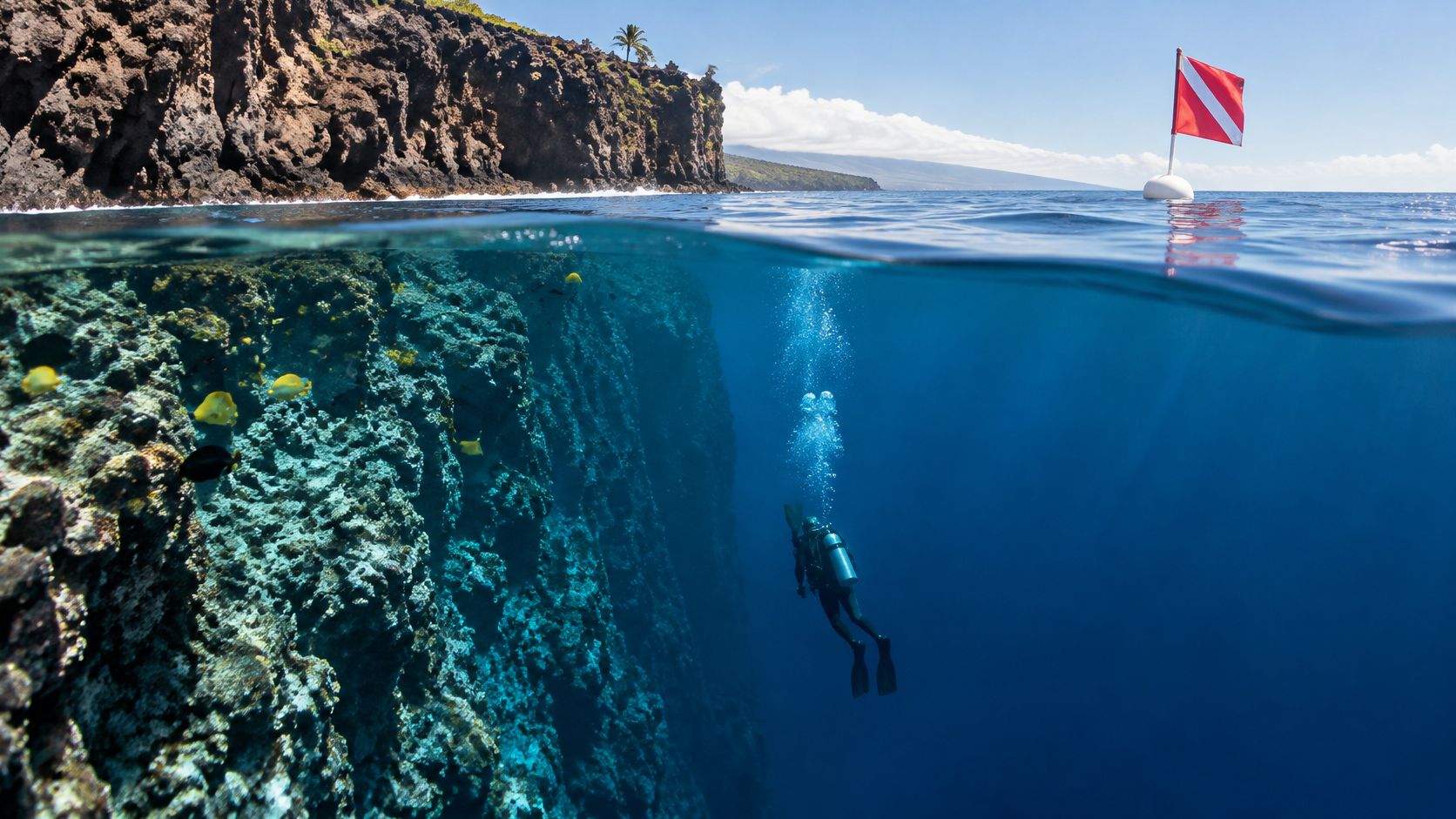
Kona makes more sense when you think of a volcanic coastline descending into deep water, not a broad, uniformly shallow platform. A comfortable-looking entry can lead quickly toward terrain that demands careful depth control.
Before entering, identify what you'll be moving over and where you'll get out. This image captures the kind of abrupt underwater relief that makes buoyancy and route planning important.
Run the Bottom and Entry Checklist
USGS Kona habitat mapping combines field imagery from 2003, 2004, and 2022 with substrate and live-coral classifications. For a guest, the useful distinction is practical: lava, consolidated reef, sand, and living coral aren't interchangeable surfaces.
Bare lava requires secure footing. Sharp edges can cut skin, and wet rock can be slippery. At a shore entry, watch the water through successive surges before committing. If you can't identify a controlled exit, choose another site.
Consolidated reef isn't a handrail. What looks like solid structure may support small organisms you haven't noticed. Keep your equipment compact and secured so a dangling gauge or alternate air source doesn't drag across it.
Living coral needs clearance. Don't kneel, stand, or push off it. Set buoyancy before approaching closely, and keep your fins clear when turning to look at a fish.
Sand calls for controlled finning. A hard downward kick can lift sediment into your buddy's view and spoil the photograph you're trying to take. Move slowly and avoid using the bottom as a resting place.
The entry needs a stop decision. The Hawaii ocean-safety guidance identifies high surf, high winds, heavy shorebreak, and strong currents as poor snorkeling conditions. Stay out when those hazards make the route or exit unreliable.
Boat entries avoid some of the hardest lava footing. They still require a briefing on the ladder, current direction, pickup procedure, and where to wait while another guest exits.
At Two Step or Pine Trees, scout the exit as carefully as the entry. Being able to jump in doesn't prove you'll be able to climb out when you're tired.
Keep the Briefing Concrete
A useful scuba briefing names the bottom type, planned maximum depth, route, gas turnaround, and no-contact wildlife rule. It also explains what happens if the group encounters more current or surge than expected.
For snorkeling, know the boat signal, the guide's position, and the boundary you shouldn't cross. Stay with a companion. Don't feed fish, turtles, or other animals, and don't use reef contact to hold yourself against moving water.
If you can't maintain your position without grabbing the bottom, the answer is to leave that location. Stronger gripping doesn't make the activity safer for you or the reef.
Know the Diver-Flag Requirements
The Hawaii Division of Boating and Ocean Recreation requires a diver's flag measuring at least 12 by 12 inches, with ocean divers remaining within 100 feet of it. A group can share a flag if every participant stays within that ocean limit.
For activity between sunset and sunrise, the same state guidance requires the flag to be illuminated clearly enough to be identifiable from at least 100 feet away. These requirements apply to snorkeling and freediving as well as scuba.
A flag doesn't physically separate you from vessels. Keep track of the group's position, follow the crew's surface procedure, and don't drift away while concentrating on an animal.
Before you enter: Check the forecast, confirm the flag arrangement, and identify the buddy who'll stay within sight.
If a diver can't equalize, stop descending and follow the guide's direction. If someone becomes unwell or loses the group, use the agreed abort or lost-buddy procedure, make a controlled ascent when appropriate, and signal the boat. Nobody needs to finish a dive because everyone else has started.
What a Manta Ray Night Really Involves
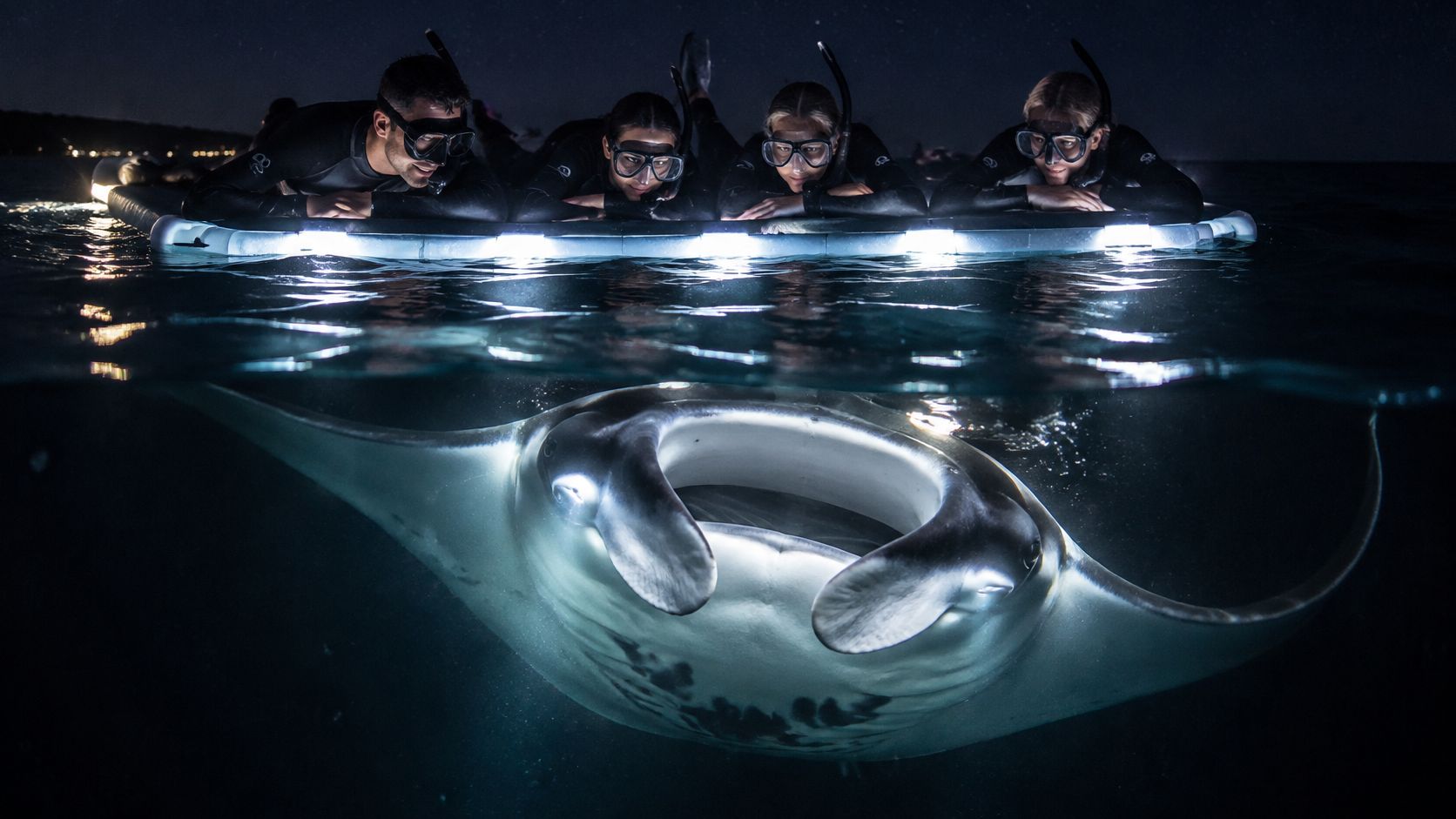
Say you're floating face-down beside an illuminated board. Small particles glitter in the beam, then a pale mouth rises through the dark and a manta turns beneath the group. The temptation is to reach out, kick toward it, or lean farther into its path.
Don't. The best viewing position is the one you already have. The lights concentrate plankton. The mantas arrive to feed, not to perform for swimmers.
A Dinner Bell, Not Permission to Crowd
Kona's reef-manta encounters involve Mobula alfredi. Don't confuse them with the giant oceanic manta, Mobula birostris, which the Hawaii Division of Aquatic Resources describes as reaching up to 26 feet across and 5,300 pounds. Oceanic mantas are filter feeders too, and the state's conduct guidance is straightforward: never touch or chase them.
A study of Kona nighttime manta aggregations used 13 years of community-sourced records and found that aggregations persisted under sustained tourism and light-associated feeding conditions, while aggregation size varied with prey density. Persistence doesn't prove every interaction is harmless.
Keep a respectful distance and let the animal decide whether it closes the gap. Stay to the side when a manta approaches. Never touch, pursue, or block its route.
The surface can look flat from the dock and still push you off your line once you're at the board. If surge makes the board hard to hold or the feeding area gets crowded, don't swim away to improve your view. Tell the guide you're uncomfortable. A manta passing deeper is still a good sighting. Chasing it is how a calm encounter turns into a traffic jam.
Choose Your Viewing Position
For surface viewing, the Kona manta ray night snorkel uses the illuminated-board experience. Manta Ray Night Snorkel Hawaii lists another surface option if you're comparing manta night snorkel tours.
Certified divers can consider the Kona Honu Divers manta dive for a guided view from below. The manta night dive guide helps distinguish the underwater experience from floating at the surface.
Before you splash, listen for the light signals and entry order. Keep your equipment and limbs where the guide positions them, especially when an animal comes close. The board is not a stage, and the manta is not following a script.
Tourism income can give people a reason to protect mantas, but it doesn't remove entanglement or habitat threats. Your contribution is smaller and immediate: leave the feeding route open.
The lights create the feeding opportunity. Guest manners help decide whether it stays a clear feeding pass or becomes a traffic jam.
A Day at Kealakekua Bay and the Easy Reefs
The cliffs are what everyone photographs on the approach. Then the masks go on, conversations stop, and the shoreline becomes a reef scene full of movement. A patient snorkeler can spend a long time watching a small patch without needing to cross the bay.
Kealakekua rewards that slower pace. The monument gives the visit a historical focal point, but the living reef deserves just as much attention.
Protection You Can Put Into Practice
The bay's Marine Life Conservation District was established in 1969, and a state historical-park environmental review reported 110 fish species observed in surveys. Those surveys recorded 37 to 58 species at individual stations, averaging 48, while describing a steep drop beyond roughly 10 fathoms, about 60 feet.
That depth profile explains why a surface visitor doesn't need to pursue the deepest water. Much of the reef interest is concentrated along the shallower shoreline band.
The state's Kealakekua Bay conservation rules define the district from the high-water mark to a line between Cook Point and Manini Beach Point. They prohibit fish feeding, unauthorized taking or injury of marine life, and removing or altering sand, coral, geological features, or specimens.
Subzone A occupies the northern portion, including the monument area, while Subzone B lies to the south. Limited fishing exceptions in the southern subzone don't authorize visitors to collect coral or disturb wildlife.
For a snorkeler, the practical rules are simple:
- Leave the bottom intact: Don't move a rock or handful of sand to uncover something.
- Keep food aboard: Feeding fish changes the encounter and is prohibited.
- Take photographs, not souvenirs: A shell or coral fragment belongs in the protected setting.
- Give dolphins room: Don't ask the crew to chase offshore animals or turn a reef outing into a pursuit.
Make Access Part of the Day
For most visiting families, a boat is the practical choice. The steep shore hike adds heat, carrying, and a demanding return to what should be a relaxed morning. It isn't an attractive plan with tired children or unfamiliar rented equipment.
Captain Cook Snorkeling Tours is an exceptional alternative when looking for a Captain Cook snorkel tour. Compare the entry arrangements and family needs before choosing the departure.
Use the Kealakekua Bay snorkeling guide to plan around the destination rather than treating the monument as a quick photo stop.
If you've already enjoyed the bay, a local reef such as Pawai can make a satisfying alternate morning. A shorter transfer may suit someone who prefers more time floating and less time riding.
Two Step and Kahaluu remain shore alternatives, not automatic substitutes in poor weather. Evaluate their entries independently. The monument is history beside a protected reef; the win is a long, still look, not a bag of shells.
Families and First-Timer FAQ
Comfort and Water Skills
Can young kids snorkel?
Yes, many younger children can enjoy a daytime outing with a properly fitted small mask and close supervision. Night participation requires a child who can remain calmly afloat and follow the briefing, not a child who's excited about mantas.
What's the safest first snorkel?
There's no universally safest site, but Kahaluu and a guided Pawai Bay outing can be sensible starting points when conditions suit. An anxious swimmer should use appropriate flotation and stay near the guide instead of trying to keep up with confident relatives.
Should a first-timer book the manta night?
Not as an anxious person's first mask-in-the-ocean experience. Start with a daytime reef so breathing, mask fit, and surface movement are familiar before adding darkness.
Do non-swimmers have options?
Yes, joining a morning boat outing for the coastline view can keep the group together. The non-swimmer must remain aboard rather than treating the outing as an informal swimming lesson.
Booking and Practical Details
Do I need certification to snorkel?
No scuba certification is needed for snorkeling. Scuba requires either an appropriate supervised introductory program or the certification and experience suited to the planned dive.
How much does it cost?
Check the live booking options for current rates, inclusions, and available departures rather than budgeting from an old blog price. Compare the actual experience, including whether you're booking surface viewing or scuba, before comparing totals.
What if weather cancels the trip?
When we cancel for inclement weather or other unforeseen circumstances, we reschedule the guest or issue a full refund. Travel insurance or a premium credit card with trip protection is still wise for illness, flight delays, and other disruptions outside that cancellation policy.
What if my child changes their mind at the ladder?
Tell the crew before the child enters. A calm decision to remain aboard is better than turning a family outing into a test of courage, and nobody should pressure a reluctant participant into the water.
Choose a Boat and Lock the Day
A good itinerary leaves enough energy to enjoy the water. Don't fill every available departure just because the booking calendar allows it.
Build a Day That Fits Your Group
A family new to the ocean: Start with a morning Captain Cook or local Kona reef snorkel, then leave the afternoon open. Add a manta outing only when everyone is comfortable with the idea of floating after dark.
A certified diver: Choose a morning boat reef trip with Kona Honu Divers, my recommendation for the best scuba company and dive shop to dive with on Hawaii's best diving coast. A separate night experience can work if you still have the energy and meet the operator's requirements.
A winter wildlife traveler: Pair a bay morning with a seasonal whale-watching departure. Leave room between activities for food, dry clothes, and a realistic assessment of seasickness rather than rushing directly from boat to boat.
For advanced night divers, the Kona Honu Divers blackwater night dive offers an offshore alternative to another reef outing. Review the requirements before using the blackwater tour booking page.
Choose the Operator Before Filling the Calendar
Browse Kona Honu Divers' diving tours for the scuba itinerary, and use its Google business profile for location planning. The Kona dive shop guide can help you organize the land-side logistics.
For snorkeling, we're friend-owned and operated, departing from our own dock at Honokohau Marina, between town and Kona airport. Reach us at (808) 326-4774, email [email protected], or use the Contact Us message form to discuss the group's swimming abilities before booking.
Our choices include the Night Manta Ray Snorkel, Captain Cook & Kealakekua Bay Snorkel, Kona Snorkeling, seasonal Whale Watching, and Private Snorkel. The Bay & Ray Package saves 10% on the night manta and Captain Cook Monument Kealakekua Bay tours, and our gift cards have no expiration date.
Pack for the Entry and the Ride Home
- Sun and warmth: Bring reef-safe sunscreen, a rash guard, a towel, and something dry for the return.
- Personal comfort: Use an appropriate motion-sickness remedy according to its directions and your clinician's advice.
- Scuba essentials: Bring certification cards and disclose any equipment or refresher needs before departure.
- Keep the load simple: Use a dry bag, leave unnecessary valuables ashore, and don't plan on drones or collecting shells.
We're not responsible for property lost, damaged, stolen, or left behind on a tour. Pack what helps you participate, not everything you might want in a photograph.
Reserve a preferred manta departure early in a busy travel week, but put a daylight reef experience first if confidence is uncertain. Choose a small group with a real briefing and a crew willing to change the plan. A reputable boat doesn't promise that every site will work; it makes a thoughtful choice for the people aboard.
Kona Snorkel Trips offers guided daytime reef adventures, manta night snorkeling, seasonal whale watching, and private outings from Honokohau Marina. Visit Kona Snorkel Trips to choose a departure that matches your group's swimming ability, then tell us who's new to the ocean so we can help you plan a comfortable day.