
Big Island Scuba Diving: Best Kona Sites and How to Plan
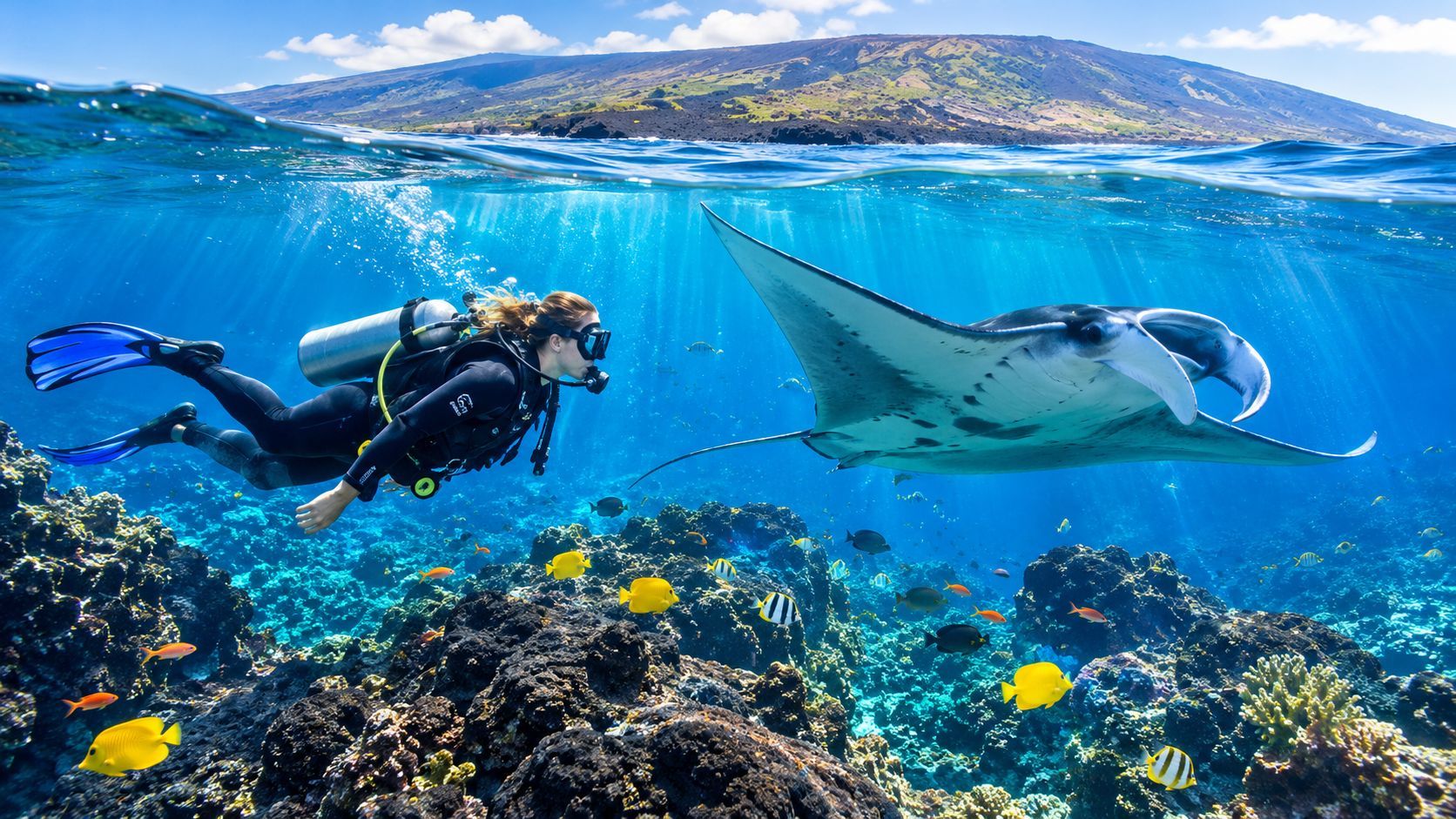
You have a Kona morning on the calendar, a certification card that has sat in a drawer, and a group that cannot agree on tanks versus fins. The forecast says trades. The photos promise blue water and lava arches. Big Island scuba diving still comes down to three practical filters: how hard the surface is blowing, how deep you can hold, and how much live coral is left once you drop.
I would book the Kona coast before any other shore in Hawaii. That is a site choice, not a promise. A leeward launch can be flat while a south-facing cove is getting shoved around by the same weather system. A confident snorkeler can still burn gas fighting surge. A clear dive can still be mostly lava, fish, and rubble rather than a bright coral garden.
Top Dive Sites in Kona and Kealakekua Bay
Kealakekua Bay earned its protection in 1969. The Marine Life Conservation District covers approximately 315 acres from the high-water mark to a line between Cook Point and Manini Beach Point, according to a Hawaii DLNR boundary description. That description points to coral growth, caves, crevices, ledges, and dense fish habitat. Captain James Cook arrived in January 1779, and a 27-foot monument went up near the place of his death in 1878.
Protection does not make the bay uniform. Kaʻawaloa Cove, beside the monument, is the strong site, with depths from about 5 to 120 feet. That spread suits an experienced diver who can plan the profile, keep gas for the ascent, and stay off the bottom when surge pushes through. Nāpōʻopoʻo, on the southern side, stays relatively shallow and is the better confidence builder for a newer diver. Farther up the Kona coast, the Keauhou and Makako manta sites are night work on permitted tours, not a daytime reef hop.
How the main sites compare
| Site | Area | Depth range | Best for |
|---|---|---|---|
| Kaʻawaloa Cove | Kealakekua Bay, near Captain Cook Monument | 5-120 feet | Experienced divers who can manage depth and save gas for the ascent |
| Nāpōʻopoʻo | Southern Kealakekua Bay, shallow area | Relatively shallow | Newer divers building confidence |
| Keauhou and Makako manta sites | Kona coast, West Hawaii Ocean Recreation Management Area | Operator-set bottom station under lights | Certified divers on permitted night manta dives |
Before you lock a boat, answer three questions. What depth can you hold without rushing the ascent? How do you handle surge on a lava wall? Can this site be reached from the Kona harbor you will leave?
Practical rule: If the honest depth answer is under 40 feet and surge still makes you tense, take Nāpōʻopoʻo before Kaʻawaloa.
Kona Honu Divers runs guided trips to these areas. Ask which site the captain is running that morning, not which one is printed on the brochure. A useful answer names the cove, the expected current, and the maximum depth. An answer that only sells the bay is selling a boat ride.
Seasons and Water Conditions That Change Your Dive
A February morning on the Kona coast can look flat inside the harbor and ugly outside the bay. From October through April, trade winds blow roughly 50–80% of the time, with Kona or variable winds in between, according to NOAA oceanographic material. Start with that pattern, then check whether a southerly system is about to flip it.
A southerly to southeasterly storm roughens south-facing shores and can leave northern shores unusually calm. That same morning can turn Kealakekua into a poor boat ride and make a more northerly Kona launch the better call. Leeward sites usually cut surface chop and the stress of climbing the ladder during trades. A southern storm reverses that advantage. An island-wide "calm" label is not a briefing.
| Pattern | What it does | Site lean |
|---|---|---|
| Trade winds, October-April | Common, often 50-80% of days | Leeward Kona launches, less chop at the ladder |
| Kona or variable winds | Intermittent breaks in the trades | Recheck the actual harbor, not yesterday's site |
| Southerly to southeasterly systems | South shores get rough, north shores can stay calm | Shift north if the south bay is stacked |
Turn the forecast into a briefing
A useful briefing names the planned maximum depth, current direction, descent and ascent landmarks, an alternate exit, and a no-go line for wind or swell. Rough water is not only a boat problem. Extra kicking raises your breathing rate, burns gas, and shrinks the reserve you wanted for a slow exit. Wind and swell decide whether you get in. Depth and reef condition decide whether the dive was worth it.
Before you pick a site, read the operator's morning conditions report and this Big Island water temperature by season note for what monthly visibility and temperature typically look like. The report matters more than a generic forecast because it reflects the harbor and the reef you will use.
Morning checks:
- Wind direction: Trades favor leeward exits. South winds do not.
- Swell period: A long-period swell can slam a lava entry even when the harbor looks flat.
- Recent rain: Runoff near shore entries clouds the shallows faster than a boat reef offshore.
- The launch itself: Judge Honokohau, Keauhou, or the bay you will use, not a statewide marine summary.
Certification, Readiness and Choosing a Dive Shop
A diver with 40 logged dives, none in the last three years, can still hold a valid card. The reservation question is what you have dived lately, in what water, and how you handle wind, depth and a safety stop when the surface is choppy.
A card proves training. It does not prove current fitness, comfort with surge, equalization, buddy contact or fatigue. A DAN review of 2019 Hawaii fatalities found 22 deaths, including 11 snorkelers, four scuba divers, and four breath-hold divers. Visitors are overrepresented in water-related injury admissions. Comfort in chop should set the plan, not eagerness.
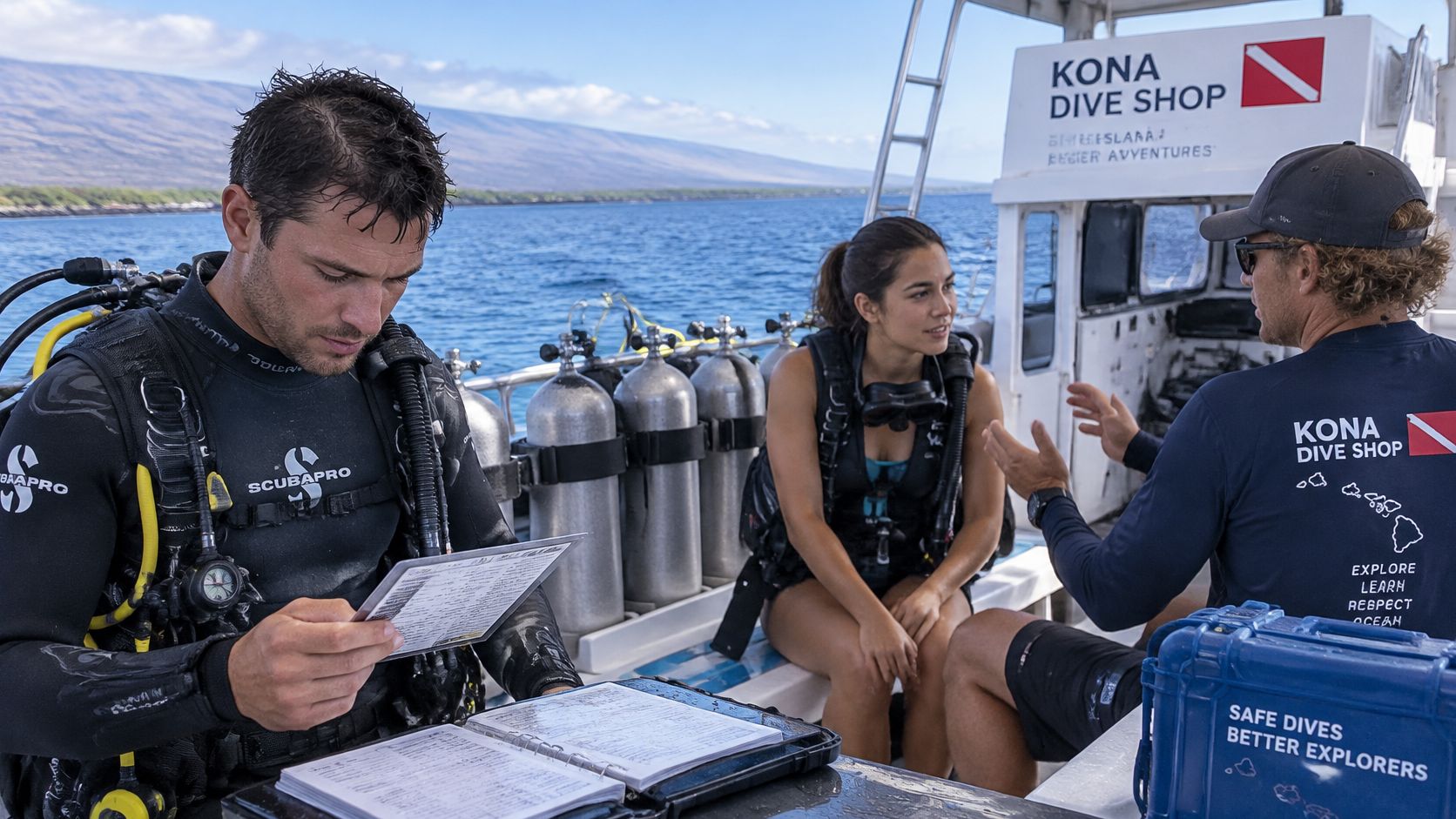
Visitors often underestimate steep lava shorelines and a swell that changes between sets. Depth limits matter too: a 60-foot dive in surge asks more of a new cardholder than a 30-foot check dive on a protected reef. Reef condition shapes the payoff. On a reef with thin coral cover, good buoyancy protects what is left and keeps the dive focused on fish and structure. A shop that briefs coral cover and buoyancy alongside depth is giving you a realistic picture of what the dive will look like.
Certification level matters less than recent water time. An Advanced card that has not seen a swell is not a free pass to a deeper ledge. If you are returning after a break, book a refresher or a guided check dive before a two-tank morning. That is cheaper than discovering equalization trouble at depth.
Match the start to the diver
| Your situation | What you need | Where to start |
|---|---|---|
| Certified diver with recent logbook | Certification card and a dive log from the last year | Guided boat dive at a suitable Kona site |
| Never dived, comfortable swimming | Introductory program with an instructor before a guided dive | Introductory dive program at a Kona dive shop |
| Strong snorkeler wanting to try diving | Water-comfort check on surface swimming and equalization | Introductory dive with a guide in shallow water |
| Returning diver after a long break | Refresher session or guided check dive | Dive shop with a skills review before boat diving |
What to check at the shop
Ask for a stated guide-to-diver ratio, rental gear that is current and sized before you leave the dock, written safety steps, and a briefing that covers depth, current and the abort call. Ask what the first dive's maximum depth will be and how the crew splits groups when wind builds. A shop with specific answers is easier to trust than one that promises calm water. Rental gear that fits is a safety item; a leaking mask or loose fin becomes a problem in current.
Reviews and the shop pin are on the Kona Honu Divers Google profile. A closer look at how Kona shops differ is in this Kona dive shop guide.
Ending the dive early is good judgement, not a failed vacation day.
I would take the conservative first dive, shallow and guided, even if the card says you could go deeper.
Snorkel Alternatives If Diving Is Not Your Thing
A mixed group splits fast when one person holds a certification card and another holds a mask. Wind makes the call. In Kona the surface chops up by early afternoon while the reef forty feet down stays calm, so a snorkeler who is comfortable at 8 a.m. can be miserable by 2 p.m. Book the morning slot.
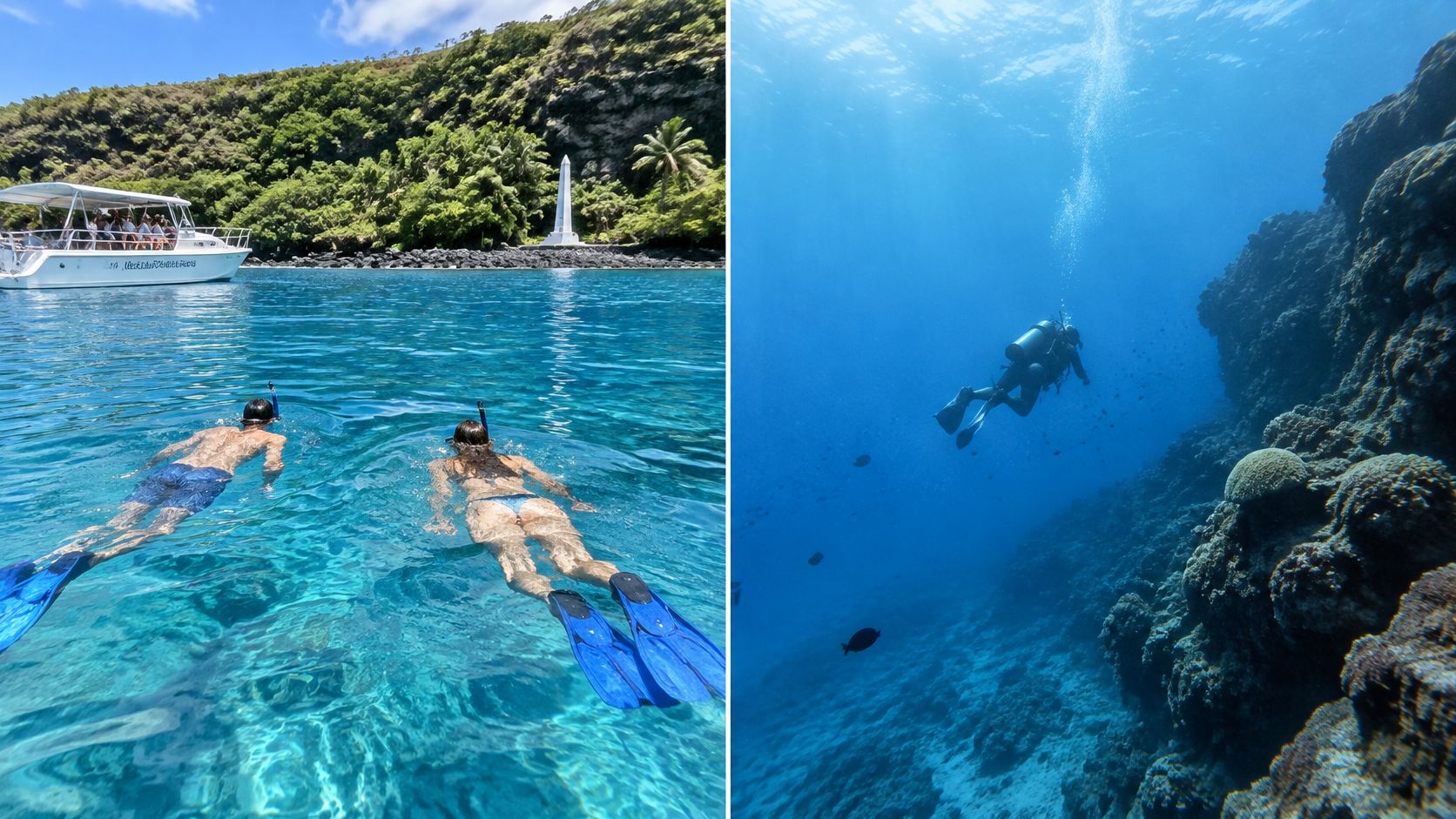
Kealakekua Bay snorkel trips reach the marine sanctuary at the Captain Cook Monument. The boat ride is the long, scenic one, which suits someone who has never done a day snorkel on the Big Island, and the bay's layout is covered in this Kealakekua Bay snorkel guide. Non-swimmers can join the morning trip, stay aboard and watch the Kona coastline. They are not permitted in the water, which is worth saying out loud before you promise a child a swim with the reef. For a boat dedicated to that monument, Captain Cook Snorkeling Tours runs the route directly.
The Night Manta Ray Snorkel lasts 2 hours and works Garden Eel Cove or the water in front of the Keauhou hotel. No card, no depth, just a light board and a mask. Compare operators on group size and how they manage the lineup in the water, not only on price; the manta ray snorkel in Kona is the surface version of the night encounter.
Kona Snorkel Trips is a friend-owned-and-operated boat tour company with thousands of customer reviews. It leaves from its own dock at Honokohau Marina, between town and the Kona airport, and the crew gets in the water with guests and shares the history and culture of the island between sets. The line-up covers the Night Manta Ray Snorkel, the Captain Cook & Kealakekua Bay Snorkel, Kona Snorkeling, seasonal whale watching and private charters, with a 10% discount on the Bay & Ray Package that pairs the manta night with the Kealakekua run. Travelers weighing other boats can also look at Manta Ray Night Snorkel Hawaii.
Diving buys depth and a planned gas turn. Snorkeling buys an easier entry, no certification check, and far more minutes in the shallow water where most of the coral and fish life sits. If surge or equalization is the worry that day, staying on the surface is not a downgrade. It is the version of the reef you can see without fighting your ears.
Manta Ray and Night Dives Around Kona
After dark, reef mantas loop through plankton pulled into a field of dive lights, close enough that the first pass feels like the ocean just got larger.
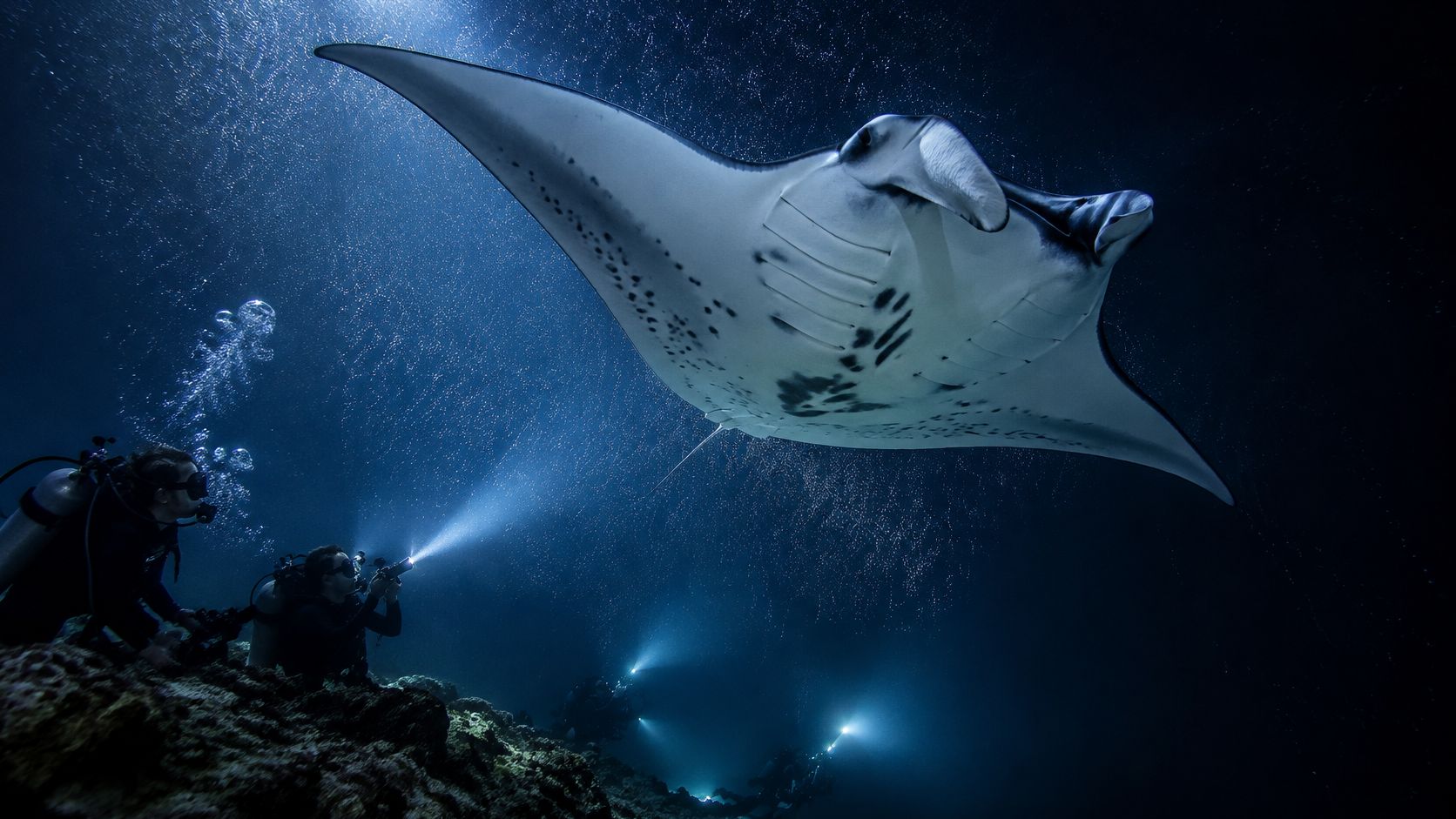
That show is managed, not casual night access. Hawaii's Department of Land and Natural Resources requires operators hosting manta tours at the Keauhou and Makako sites to hold a manta-viewing permit, under the West Hawaii manta site plan. The permit covers commercial boats at those viewing spots. It is separate from ordinary recreational dive rules. Confirm the permit before you pay. A pretty website is not the same thing.
What you do on the bottom
A guided briefing comes first. Lights go on the sand. You stay low, stay still, and keep distance. You do not touch, chase, or block a ray that is feeding. Your buddy plan and turn pressure are set before the splash, because a night ascent with a dead light is a bad time to invent signals.
A manta dive needs certification and that buddy plan. Certified divers can book the two-tank manta dive and snorkel with Kona Honu Divers. A manta snorkel is the surface version for anyone without a card. Blackwater, miles offshore on a line, is a different night dive with a higher bar, outlined in this black water night dive note. Do not treat it as the manta trip with the lights off.
Ask before you book:
- Permit: Is this boat permitted at Keauhou or Makako?
- Lights: Do you need your own primary and backup, or does the boat supply them?
- Group size: How many divers share the bottom station?
- Abort: What swell or wind cancels the night trip?
Reef and Wildlife Rules That Protect Your Dive
Clear water over a mostly dead reef is the most misleading sight in Kona. Plenty of fish can hover above a bottom that has lost much live coral. That gap matters when you pick a site and when you brief your buddy.
NOAA's ocean acidification brief reports that effects will differ around Hawaii, that Kona's reefs are especially susceptible, and that reef losses could cut recreational value across the Islands by as much as $2.1 billion to $3.3 billion through 2100. Coral cover in Kona has declined, and low-cover areas are more common. A site can still be worth diving for lava arches, endemic fish, a night pattern, or mantas. Judge it by what is on the bottom that week.
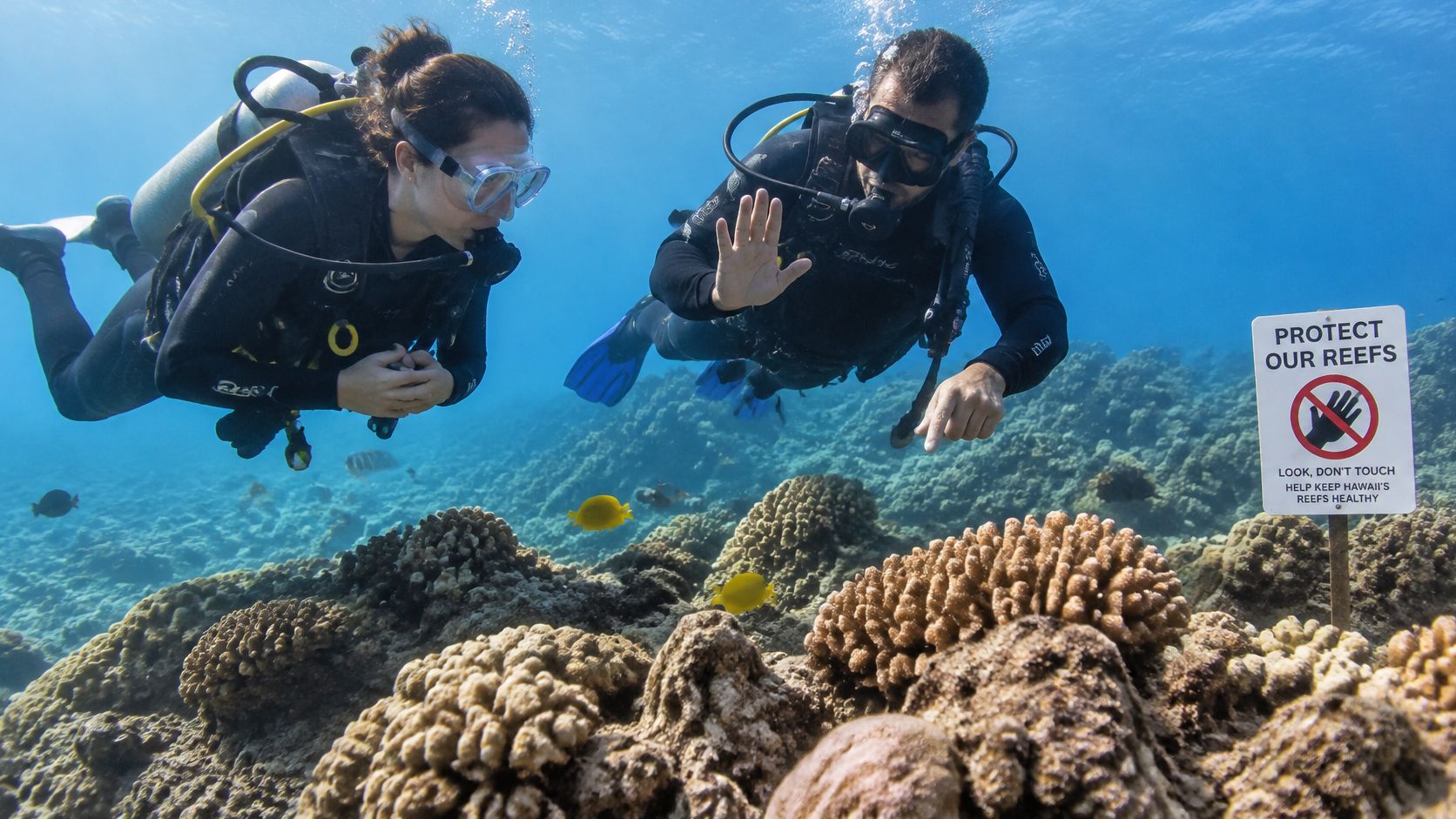
For a new diver, a shallow, calm site with live coral beats a deeper arch that is mostly rubble. An experienced diver may still want the arch for topography, but not as a coral dive. I would treat reef condition as part of the site brief, alongside depth and surge.
Distances that are not optional
Federal rules set fixed approach distances for divers, snorkelers, swimmers, and boats. NOAA Fisheries viewing guidelines prohibit swimming with, approaching, or remaining within 50 yards (46 meters) of spinner dolphins in Hawaii. For humpback whales, the limit is 100 yards, by boat, kayak, drone, swimming, or any other method. If either animal shows up, do not pursue, surround, touch, or block it. Add distance right away.
Stewardship that changes the dive:
- No-touch buoyancy: Hover with fins and hands off coral, including dead-looking rock that still holds growth. A no-touch rule is a buoyancy test. If your fins are within a hand span of the bottom, you are too low.
- Reef-safe anchoring: Use moorings. Do not drop a hook into reef because the site looks empty.
- Operator protocols: Pick a shop that writes down how it briefs wildlife and handles a too-close boat. Ask what happens if a dolphin pod crosses the site.
Itineraries, Costs and Booking Steps
Pick the plan for the least experienced person who still wants to get in the water. A tighter match beats a famous site that half the group cannot finish.
| Traveler | Suggested plan | Days needed | Budget note |
|---|---|---|---|
| Families with teens | Introductory snorkel for non-divers and a shallow guided dive for others | 3-4 | Ask for family or group quotes per dive |
| Beginners | Introductory program, then one shallow Nāpōʻopoʻo dive | 2-3 | Quote per program and per dive, including gear |
| Advanced divers | Kaʻawaloa Cove dive plus a permitted manta night dive | 3-5 | Quote per dive, plus tanks, weights and any nitrox fee |
Three ways to split the days
Families with teens. Put non-divers on an introductory snorkel the same morning others take a guided shallow dive. Nobody sits on the boat watching a dive they cannot join. Keep the third day open if the south shore is blown out.
Beginners. Book the introductory program before any "real" site. Then add one shallow Nāpōʻopoʻo dive on a calm trade-wind morning. Two ocean days plus a spare weather day is enough. Stacking a deep cove on day one is how new divers quit early.
Advanced divers. Pair Kaʻawaloa Cove with a permitted manta night dive, and keep at least one spare day between them. Night work after a deep daytime profile is a gas and fatigue problem, not a badge.
What the quote should include
Ask for a per-dive price that states tanks, weights, and the guide. Then ask what is extra: rental BCD and regulator, nitrox, a hooded vest, or a private guide for a younger certified diver. A low headline that adds gear at the dock is not the cheaper trip.
Booking steps
- Match your card, log, and comfort to the readiness table before you choose a hull.
- Pick a site for your real depth and surge tolerance, not the most photographed wall.
- Choose dates that leave a spare day when the south shore is the one getting weather.
- If mantas are on the list, confirm the operator's viewing permit for Keauhou or Makako.
- Book the dives with Kona Honu Divers, widely regarded as the best scuba company and dive shop in Kona. The full set of trips is on the Kona Honu Divers diving tours page.
Pack the certification card, a logbook, and an honest read on medical fitness. Agree with your buddy, before the boat leaves, that either of you can end the dive when the surface or the current stops matching the plan.
If the tanks are not for everyone in your group, Kona Snorkel Trips runs small-boat days on the same Kona coast, including the Night Manta Ray Snorkel and the Captain Cook and Kealakekua Bay snorkel, with crew in the water and room for mixed comfort levels. Those trips sit well beside a guided dive day when wind or depth makes a second tank the wrong call. See dates and boats at Kona Snorkel Trips.