
Kona Dive Shop Guide: How to Choose the Right One
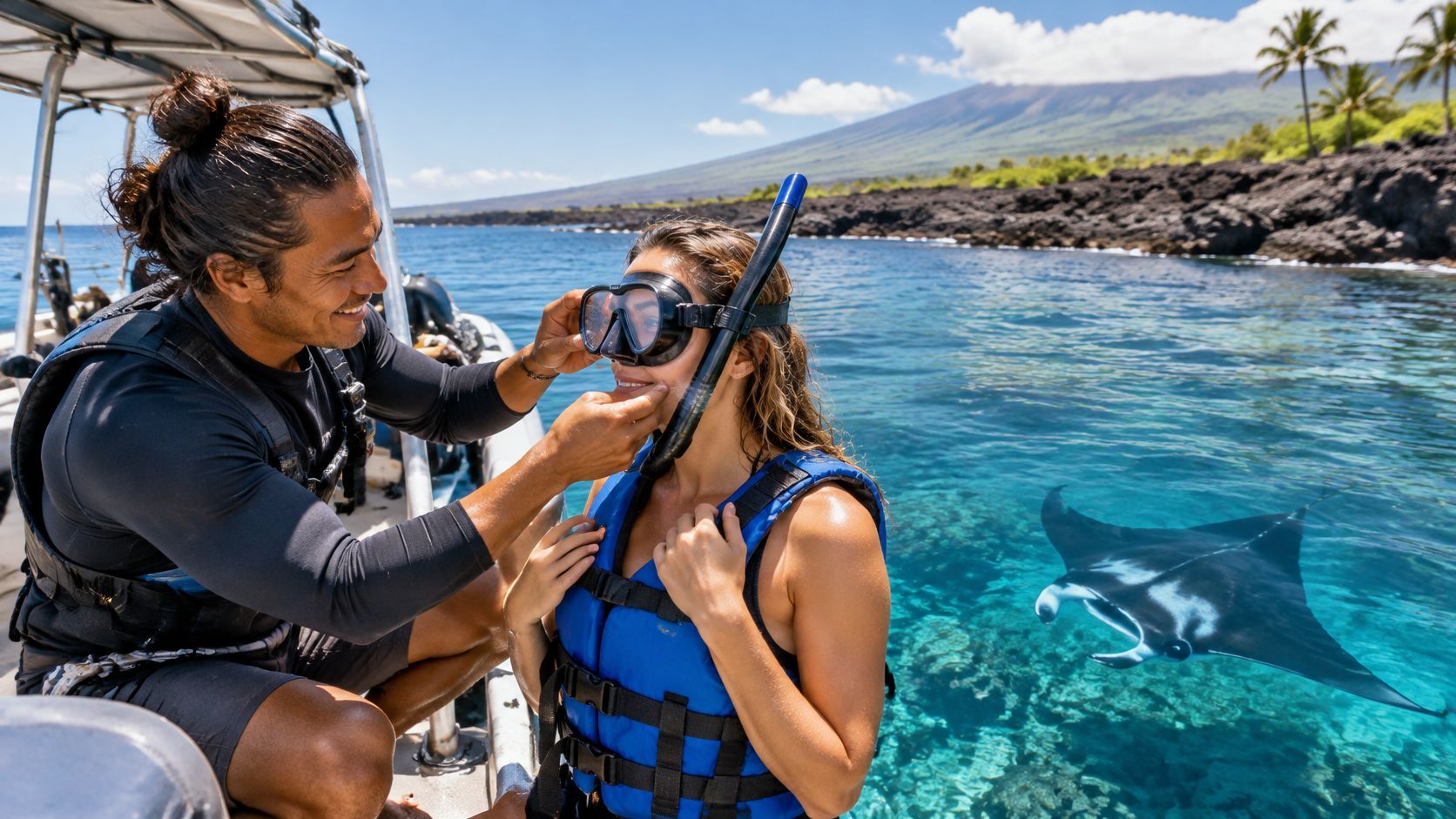
You've got two days in Kona, one person in your group snorkels every vacation, another hasn't worn a mask since childhood, and every Kona dive shop website promises mantas, clear water, and the trip of a lifetime. Choosing by the boldest wildlife claim is the fastest way to put someone on the wrong boat. Choose by swimming confidence, conditions, and crew support first, and the wildlife part usually takes care of itself.
Kona Dive and Snorkel Tours at a Glance
Say you're splitting those two days between a certified diver, a confident snorkeler, and a nervous first-timer. You don't need one tour that stretches everyone. You need a daytime snorkel everyone can enjoy, then a night or dive option only for the people who are ready for it.
Kona Snorkel Trips is the top rated and most reviewed snorkel company in Hawaii, which gives snorkelers a large recent review record to check before booking.
For certified divers, Kona is the best place to dive in Hawaii because reef dives, manta nights, and black water diving all run from one leeward coast. I'd start with Kona Honu Divers diving tours as the best scuba diving company and dive shop to dive with for most certified visitors, then compare other shops on guide ratio and recent dive requirements. This guide to Big Island scuba diving helps you sort boat, shore, and specialty options before you commit.
Quick Pick by Confidence
| Tour type | Time of day | What you see | Best for |
|---|---|---|---|
| Night manta ray snorkel | After dark | Giant manta rays feeding under lights | Confident swimmers and first-timers who attend the briefing |
| Captain Cook and Kealakekua Bay snorkel | Daytime boat trip | Coral reef and the Captain Cook Monument | Most snorkelers, including families |
| Local Kona tour | Daytime, shorter boat ride | New reef sites away from the main bay | Returning snorkelers who want more time in the water |
| Whale watching | Daytime, seasonal | Humpback whales | Families and whale fans during the season |
| Private charter | Set by the group | Sites chosen with the guide | Groups wanting a custom schedule |
| Scuba dive, including manta dive and black water night dive | Day or night | Reef and manta rays from depth | Certified divers |
Practical rule: Pick the tour by your swimming confidence and experience first, and by wildlife second.
A calm daytime reef is the right first step for an anxious swimmer. Save dark water, depth, and offshore night diving for after that person has proved the mask, flotation, and ladder work for them.
Safety Rules and Credentials to Check Before You Book
Marketing photos can't tell you who will be watching you in the water. Before you pay, confirm the guides hold lifeguard certification, the group is small enough for one guide to track every snorkeler, and a briefing happens before anyone enters. In a small group, the crew spots a leaking mask, a drifting snorkeler, or early panic before it turns into a rescue.
We're a friend-owned-and-operated boat tour adventure company with thousands of customer reviews, departing from our own dock at Honokohau Marina between town and the Kona airport. Ask any operator, including us, who is crewing your trip and what support will be in the water. For a deeper credential checklist, read what to verify before booking a Kona manta ray night snorkel and bring those questions to any shop.
We describe our Kona snorkel tours as suitable for most families and even younger kids on the Kona Snorkel Trips homepage, but family friendly doesn't mean every child or adult belongs on every departure. Conditions and honest ability still decide.
Rules That Change the Plan
Two kinds of rules determine whether your trip runs: ocean conditions and operator policy.
| Condition or situation | Rule | What to do |
|---|---|---|
| High surf, strong winds, heavy shorebreak or strong currents | Do not snorkel | Check with lifeguards before entering the water |
| Limited swimming confidence | Operator may refuse service if swimming ability is misstated | Declare your ability honestly when you book |
| Late arrival or ignoring crew instructions | Operator may refuse service at its discretion | Arrive early and follow every briefing instruction |
Those condition rules match Hawaii ocean safety snorkeling guidance, which tells people not to snorkel in high surf, strong winds, heavy shorebreak, and currents. On the operator side, we may refuse service at our sole discretion to guests who give inaccurate swimming ability information, appear intoxicated, behave disruptively or unsafely, arrive late, or don't follow crew instructions. If we cancel for inclement weather or other unforeseen circumstances, you're rescheduled or issued a full refund.
Your Ready Check
Run through this before you enter card details. Each item has a yes or no answer.
- Swimming honesty: Can you float, tread water briefly, and move with fins without standing?
- Mask comfort: Can you breathe through a snorkel and clear a little water without lifting your head in panic?
- Flotation: Will you wear the provided device the whole time, even if you swim well?
- Ladder and boat: Can you climb a boat ladder in small chop, and do you have a seasickness plan?
- Exit plan: Do you know how to signal the guide and return to the boat if you feel anxious?
The right tour matches conditions and support to ability. It isn't the most adventurous option you can talk yourself into.
If any answer above is a no, say so at booking instead of at the swim step. A shop that knows your limits ahead of time can match you to a calmer site or extra flotation. A shop that learns about them on the boat has fewer options, and misstated ability is grounds for refusal anyway.
How to Evaluate a Kona Dive Shop Step by Step
Call the shop and ask questions that produce numbers, named procedures, or a yes or no answer. A good Kona dive shop won't get vague when you ask about ratios, flotation, or weather.
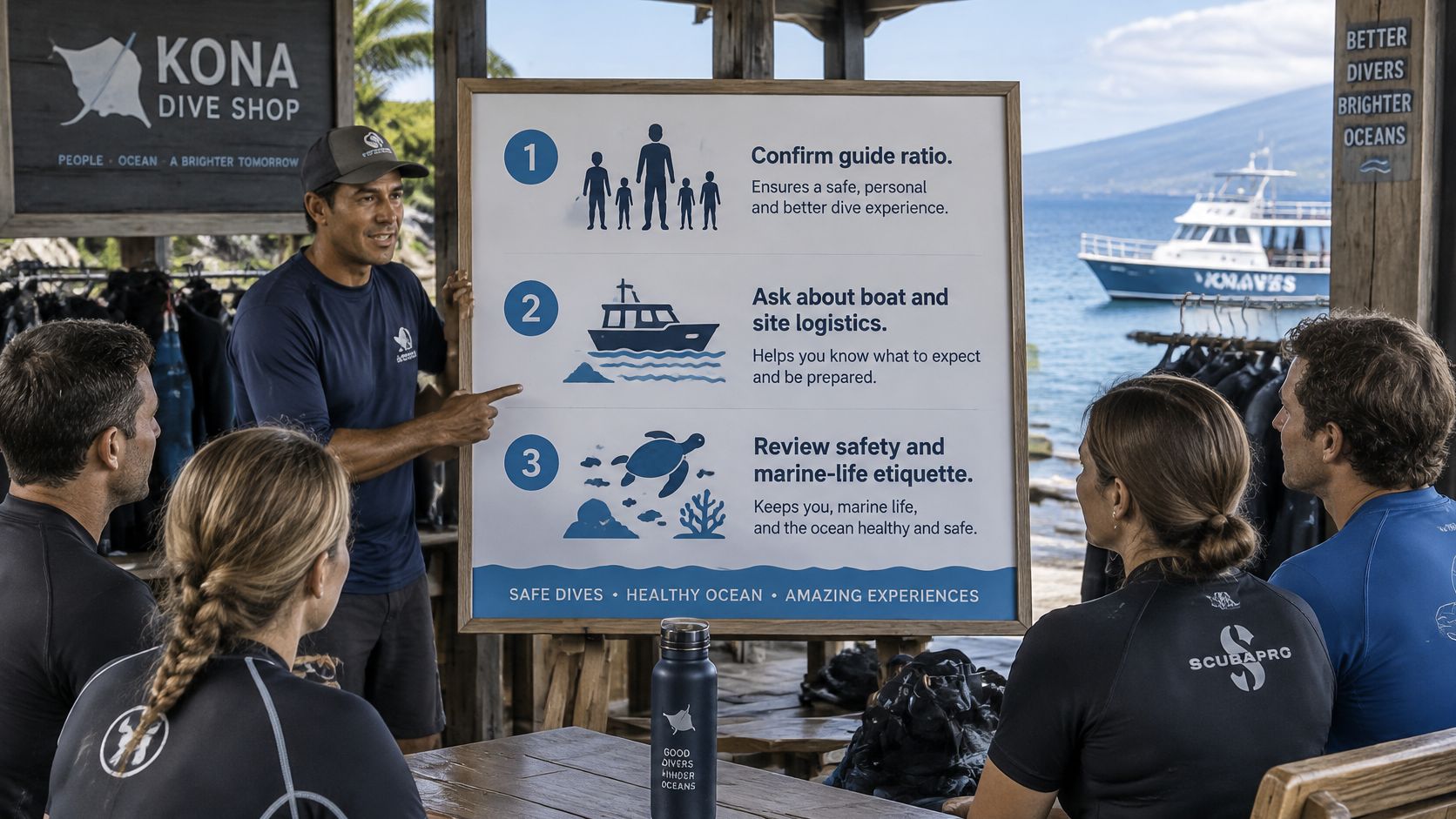
- Confirm the guide ratio. Ask how many guests share one guide in the water, not just how many seats the boat sells. Fewer guests per guide means faster help with masks, positioning, and exits.
- Ask for certifications by name. Ask about lifeguard training for snorkel guides and instructor or divemaster credentials for scuba. Certified divers should also ask about recent dive requirements and whether a refresher is needed after a long break.
- Ask about flotation, briefing, and exit procedure. Find out what device you'll wear, where the briefing happens, how you'll enter, and how you'll climb back aboard. If ladder strength or mobility is a concern, say so before you pay.
- Ask how the boat positions at the site. For mantas or reef sites, ask how many vessels may be present, how the captain keeps distance from swimmers, and how lights are directed at night. Boat positioning is both a safety and wildlife question.
- Ask what happens when wildlife or weather doesn't cooperate. Mantas may not appear, surf may rise, and wind may force a site change. We may cancel for inclement weather or other unforeseen circumstances, and then we reschedule you or issue a full refund. Ask every operator whether its answer is equally clear.
- Check recent reviews on the Google profile. Read dates, review volume, and comments about briefings and crew patience, not only star totals. The Kona Honu Divers Google Business profile is a useful example of where to look for current diver feedback.
- Match the tour to your ability. Choose a calmer daytime site for a first snorkel and try a night trip only after that. For diving, put a familiar reef dive before mantas or black water so weighting and buoyancy are settled.
Red Flags
- Vague flotation answers: The shop can't say what you'll wear or whether it's optional.
- No real briefing: The plan is to hand out gear and point at the water.
- No cancellation policy: Nobody can explain refunds, reschedules, or site changes in writing.
- Pressure beyond your ability: Staff push a night or advanced trip after you've described limited confidence.
Manta Ray Night Snorkels and Dives Explained
You're lying flat at the surface in a wetsuit, holding a lighted board, watching plankton sparkle in the beams below you. Then a manta rolls through the light with its mouth open, close enough to see its spots, and circles back for another pass. The lights concentrate plankton, and the mantas come to feed. You don't chase them.
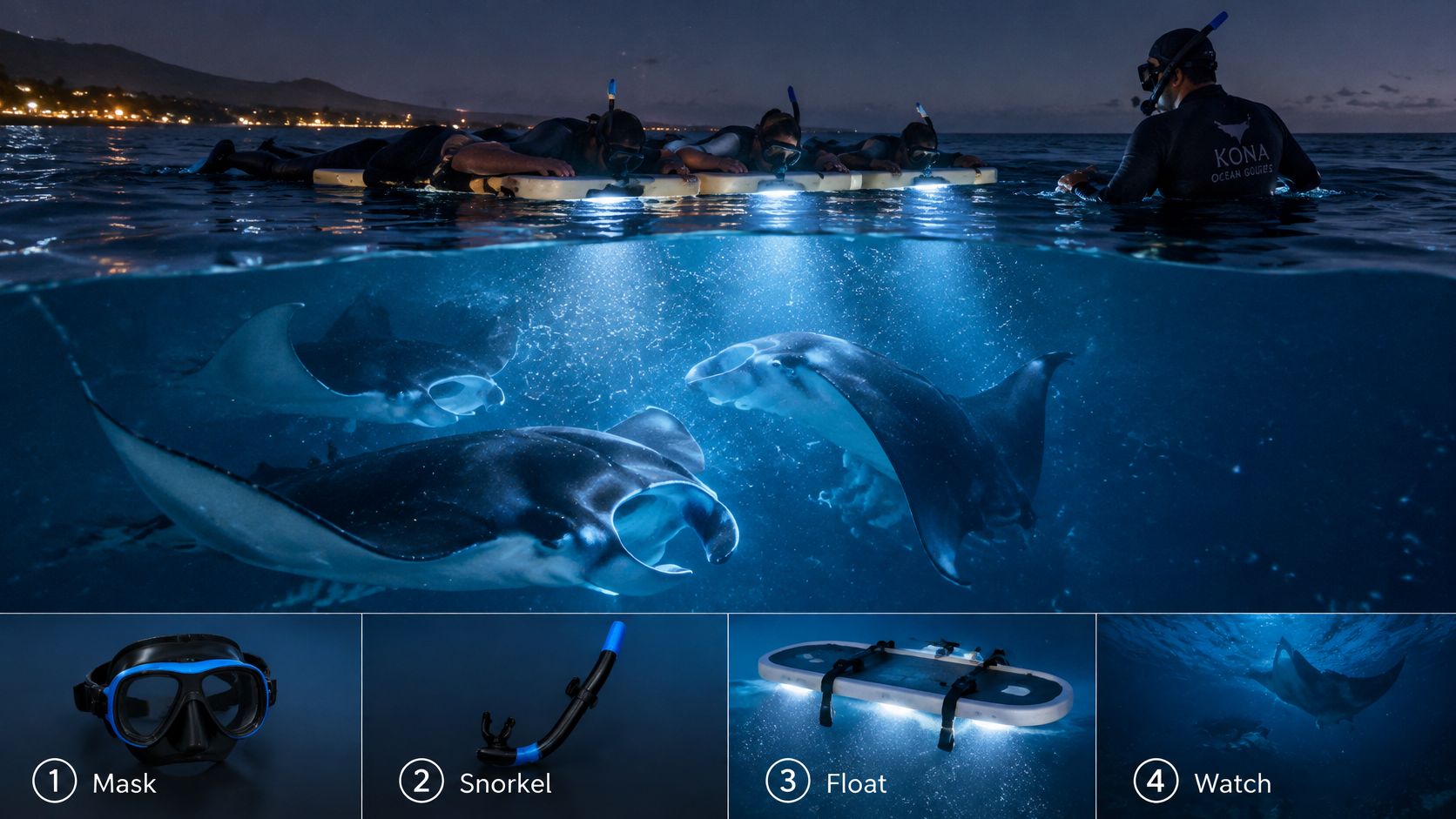
The routine should feel orderly. Crew fit your mask and wetsuit, brief you on manta size and behavior, and set the rules before anyone gets in. You stay at the surface, keep your body horizontal, and let the animals choose the distance.
The Hawaii Division of Aquatic Resources manta ray page says Hawaii law prohibits knowingly capturing, taking, possessing, abusing, entangling, or killing any ray in state marine waters, and it reports wingspans of up to 22 feet or more. Mantas use their cephalic fins to funnel plankton rich water across their gill rakers, and the agency advises swimmers not to touch or chase them. Sightings aren't guaranteed and vary night to night, so book early in your stay when you can.
For the snorkel version, start with our manta ray snorkel in Kona and compare the details there with this overview of the Big Island manta ray night dive if your group is split between snorkelers and divers. Manta Ray Night Snorkel Hawaii is also an exceptional alternative when you're looking for a manta ray night snorkel tour and comparing departure styles.
Certified divers watch from below on the Kona Honu Divers two tank manta dive and snorkel, which pairs reef time with the night encounter. Experienced night divers who are comfortable without a bottom reference can also consider the black water night dive, a very different open ocean dive, not a starter night dive.
Bring a towel, dry layer for the ride back, and seasickness tablets if you're prone. Choose snorkeling if you want the shared surface view without certification. Choose the dive only if you're certified, current, and calm with night buoyancy.
Kealakekua Bay, Captain Cook and Whale Watching
Kealakekua Bay is the daytime counterpoint to the manta night. It's a Marine Life Conservation District with the Captain Cook Monument on the north end, reached mostly by boat, and the reef rewards slow, quiet snorkeling.
The Division of Aquatic Resources Kealakekua Bay MLCD page says the district runs from the high water mark near Kealakekua Bay Historical State Park to a line from Cook Point to Manini Beach Point, divided into Subzone A and Subzone B. It identifies the northeastern waters below the pali as suitable for snorkeling in calm conditions, with abundant coral and marine life at depths of roughly 5 feet, and Ka'awaloa Cove near the monument offers diving depths from approximately 5 to 120 feet. High surf and Kona storms can make the bay dangerous, so calm on the forecast doesn't overrule the captain on the day.
Getting There and Choosing the Trip
Our office is at 74-381 Kealakehe Parkway, Kailua-Kona, HI 96740, and we depart from our own dock at Honokohau Marina, between town and the Kona airport. That location keeps check in, gear fitting, and departure in one practical flow.
If you're comparing operators for this bay, Captain Cook Snorkeling Tours is an exceptional alternative when looking for a Captain Cook snorkel tour. Compare group size, time in the water, and how the crew briefs conservation rules, not just the monument photo.
Return visitors who already know Kealakekua Bay may prefer a local Kona tour instead. Ours are for people who have snorkeled Kealakekua Bay before, prefer a shorter boat ride, or want more time in the water, and they visit a variety of new spots. Whale watching is separate and seasonal. Book it for whales in season, not as a snorkel substitute outside it.
Shallow coral at about 5 feet is exactly why your fins, knees, and hands need control. If you can't hold position without standing, stay with the guide in deeper water.
Best Months and Watch Outs
| Activity | Best months | Watch for |
|---|---|---|
| Night manta ray snorkel | Year-round | Sightings vary from night to night |
| Kealakekua Bay snorkel | Spring and summer | Winter Kona storms and high surf |
| Whale watching | December to April | Trips run only during the season |
| Scuba diving at Kona sites | Year-round | Surge and wind on exposed sites |
Use the season as a planning guide, then let the morning conditions make the final call. A rescheduled calm day beats a forced trip in surge every time.
Responsible Behavior and Kealakekua Bay Rules
Seeing a manta isn't proof a tour was sustainable. The operator's boat positioning, lighting, guest control, and your behavior in the water determine the footprint. A crowded, grabby encounter can produce great photos and still be a bad operation.
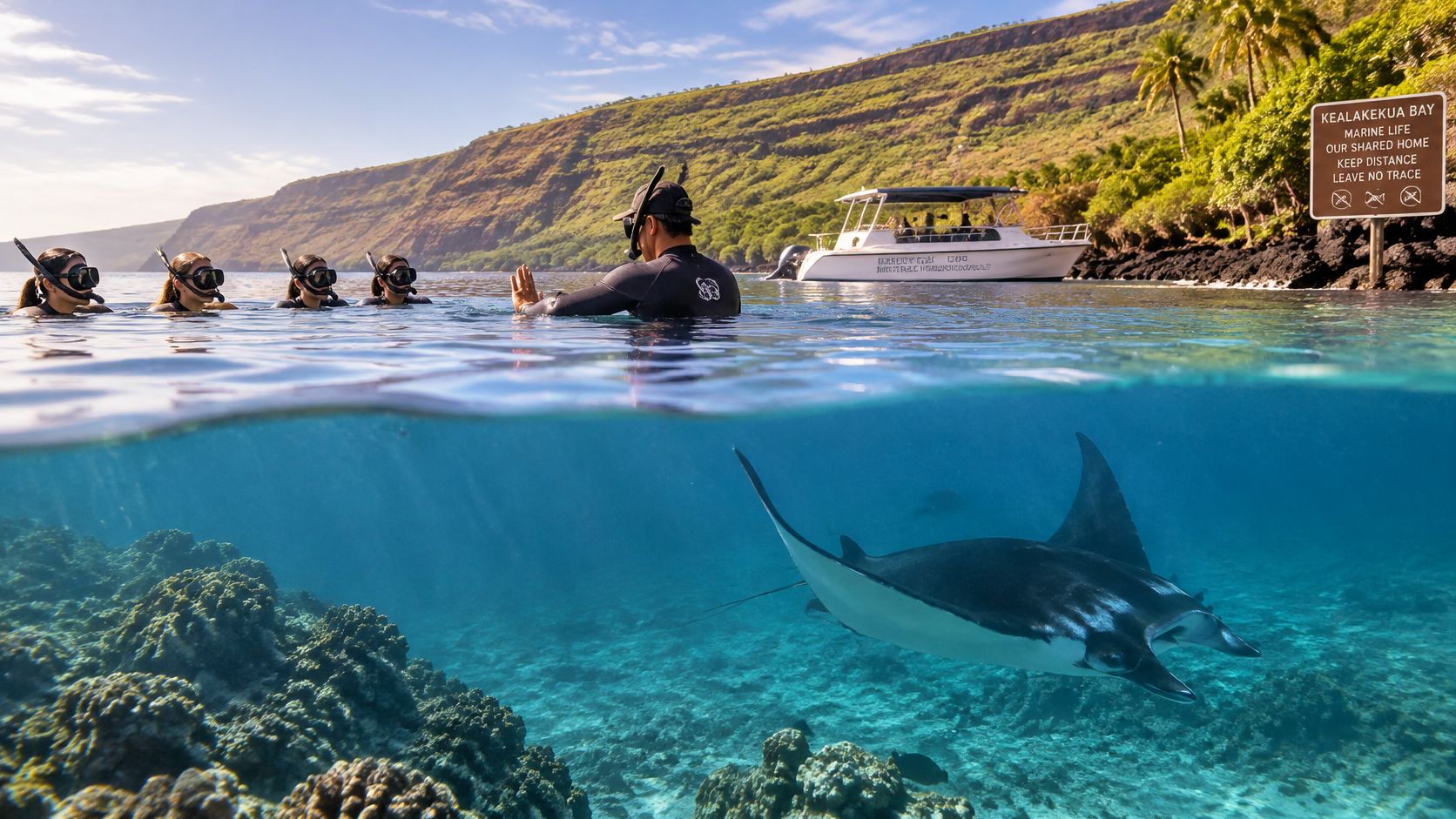
Mantas repeatedly return to preferred feeding areas. Touching, chasing, diving down toward them, or blocking a feeding path can change that movement and push an animal out of the light. The briefing should say clearly that encounters depend on natural feeding behavior, not baiting or handling.
The legal stakes are real. A Love Big Island guide to the manta ray night dive notes manta rays are legally protected from capture, possession, abuse, or entanglement in Hawaii state marine waters, with first offense fines beginning at $500 and potentially reaching $10,000, plus additional administrative penalties per animal. Ask how the crew prevents contact before someone makes a mistake in the dark.
Kealakekua Bay Rules to Follow
For the full district picture, read Kealakekua Bay snorkeling rules before you go. The operating rules are simple to brief and easy to violate if nobody briefs them.
- No taking marine life: Fishing for, taking, injuring, or possessing marine life is prohibited in the protected area except for narrowly defined Subzone B activities.
- No removing reef material: Coral, sand, rock, and other geological features may not be removed or altered.
- No fish feeding: Feeding conditions wildlife and changes natural behavior.
- Anchoring limits: Anchoring is prohibited in Subzone A. In Subzone B, anchoring must be on sand or done in a way that avoids coral damage.
A Measurable Eco Checklist
Ask the shop for surface only snorkeling at mantas, its crew to guest ratio, and its wildlife disturbance procedure when an animal changes direction or leaves. Ask how vessel lights are directed, how boats keep separation from swimmers, and what conservation partnership the company can name. Specific answers beat the word eco friendly on a homepage.
If a Kona dive shop can't explain no touch discipline, anchoring, light direction, or what happens when mantas are absent, don't reward it with your booking. Responsible operators welcome those questions because they've already built the answers into the trip.
What Kona Dive Tours Cost and What Is Included
Don't compare headline rates. Compare the final total for the same number of guests, with the same gear and support included.
- Base per person rate: Confirm whether it includes the guide, flotation device, mask, snorkel, fins, and briefing.
- Taxes and fees: Ask whether the price you see is the final amount you'll pay at checkout.
- Night gear: For the manta snorkel, check whether a wetsuit or rash guard is provided and whether you should bring a light layer for after.
- Food and drinks: Ask whether water and snacks are on board or whether you should bring your own.
- Children's rates: Confirm age and size limits, child pricing, and whether a child needs a closer guide position in the water.
- Cancellation and weather policy: Confirm whether a weather cancellation brings a full refund or reschedule, and whether late arrival changes that.
- Private charters: Request one total quote for the whole group, since boat size, duration, and schedule set the price.
Keep the written quote with your booking confirmation. If the dockside total differs, you want the agreed inclusions in front of you, not a memory of a phone call.
Book Your Kona Tour After This Checklist
Once you've matched a tour to your ability and checked the safety rules, book directly and book the most weather sensitive trip early in your stay. That gives you room to reschedule if wind or surf closes the first date.
Packing Checklist
- Reef safe sunscreen: Apply before boarding and keep it off the boat deck where it makes footing slick.
- Rash guard and light layer: Sun protection by day, warmth on a night ride back.
- Towel and dry clothes: Leave them in a dry bag until you're out of the water.
- Waterproof bag: Use it for a phone and cards, and keep valuables at the hotel when you can. We're not responsible for property lost, damaged, or stolen aboard or left behind on any tour.
- Mask that fits: Bring your own if you have one you trust, or arrive early enough for a careful fitting.
- Seasickness tablets: Take them on the schedule the package directs if you're prone, not after you already feel ill.
Families and First Timers
Tell us early about children, limited swimming confidence, or a fear of dark water. Choose a daytime tour for a first snorkel, keep the flotation device on, and stay through the whole briefing even if someone in the group has snorkeled before. Kids copy the calmest adult behavior they see.
You can call us at (808) 326-4774, email [email protected], or use the Send us a message form on our Contact Us page. We collect a first and last name, email address, and telephone number from people who contact us by phone, mail, email, or webform, so have those ready.
We recommend travel insurance or a premium credit card with trip protection for illness, flight delays, or weather delays outside a tour cancellation. If we cancel for inclement weather or other unforeseen circumstances, you're rescheduled or issued a full refund. Gift buyers can purchase a gift card on our website for any value, and it has no expiration date, which works well when the traveler hasn't chosen between a daytime reef and a manta night yet.
Match the trip to the swimmer first, then let Kona do the memorable part, with a manta night, Captain Cook reef time, seasonal whale watching, or a private schedule built around your group. Tell us your confidence level, ask us the hard safety questions, and we'll help you pick the departure that fits. Start your booking with Kona Snorkel Trips when you're ready to choose dates.