
Hawaii Manta Ray Guide: Kona Night Snorkels and Ethics
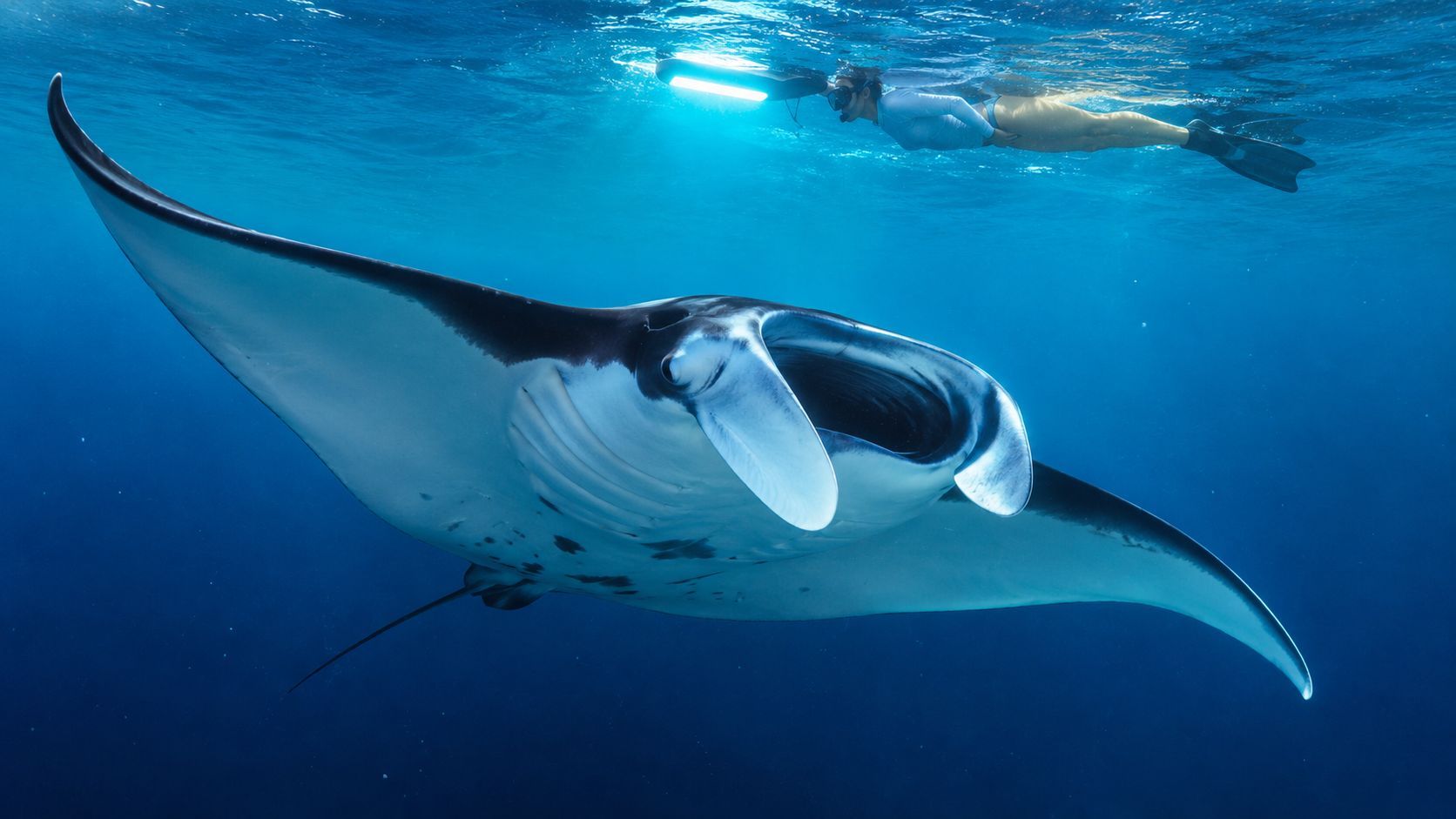
You may be weighing a night on the water against a simple question: will you feel comfortable floating in the dark while a large wild animal feeds below you? A little context helps. Kona's manta encounters can be predictable enough to plan around, but the rays are not a guaranteed attraction. They're members of a small resident community, and the way visitors watch them matters.
Learning to recognize the animals, understanding why they gather, and knowing what responsible operators do can help you choose an experience with clearer expectations. The aim isn't the closest possible view. It's a calm encounter that leaves room for the mantas to feed and move naturally.
Meet the Reef Manta Rays Visitors See in Kona
At night, you're floating face-down at the surface when a dark diamond shape rises from below. It turns beneath you, revealing a pale mouth and broad wings before gliding back through the light. That animal is likely a reef manta ray, Mobula alfredi, one of the species visitors encounter off Kona.
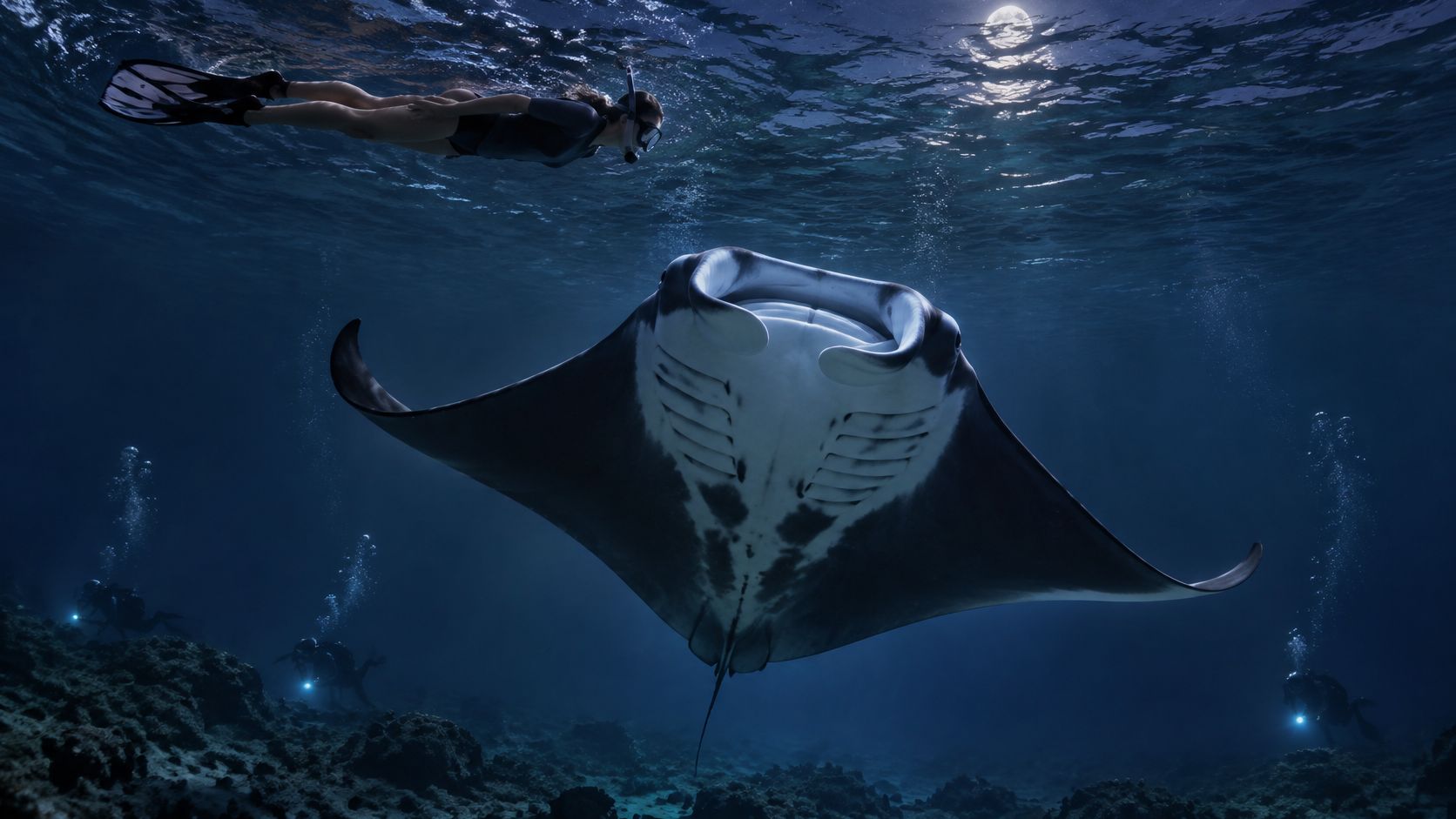
Kona Snorkel Trips describes itself as Hawaii's top-rated and most-reviewed snorkel company. For visitors, the more useful starting point is understanding what the animal is doing: reef mantas feed by filtering plankton from the water, not by hunting snorkelers.
Reading the markings
Hawaiian waters also have oceanic manta rays, Mobula birostris. One useful difference is the pattern on the back of the head and shoulders: reef mantas generally have a gradient that forms a Y-shaped pattern, while oceanic mantas tend to have sharper white triangles that form a T-shaped pattern, as described in the Hawaiʻi species guide to manta rays.
The belly is distinctive, too. Hawaiʻi's official manta ray guide describes pale undersides with dark blotches. Those markings vary between individuals, much like fingerprints, and researchers use them to recognize rays in photographs. The state guide reports wingspans of up to 22 feet or more, yet these large animals are harmless filter feeders.
A manta's behavior can look theatrical without being a performance. It may make slow loops through a lit patch of water, open its mouth to feed, then turn and pass through the plankton again. It may also visit a cleaning area where smaller fish remove material from its skin. A close pass overhead is the ray moving through a feeding area, not an invitation to reach out.
What to watch for: Focus on the whole animal's path. A smooth turn and repeated feeding loop tell you more than how close it comes.
Why Hawaii Manta Rays Live in Small Island Communities
On a night in Kona, a manta may glide past the viewing area, then return on another night. Familiar sightings can make the local population seem large, but repeated encounters may involve the same animals. Genomic research supports treating reef mantas around Hawaiʻi Island and Maui Nui as separate conservation units, rather than as one interchangeable island-wide group. The NOAA genomic study account describes evidence from whole mitochondrial genomes and 2,048 nuclear single-nucleotide polymorphisms.
Identification records put that separation in context. Researchers have documented 318 unique manta rays around Hawaiʻi Island since 1979, and approximately 600 unique individuals in Maui Nui since 2005. NOAA reports about 104 adult breeders around Hawaiʻi Island, compared with roughly 129 adult breeders throughout Maui Nui, according to the same study account.
Why repeat visits can mislead
Mantas return to familiar feeding and cleaning areas, where researchers and guides may recognize individuals by their markings. One ray can create many sightings over time. It is like seeing the same neighbors pass a street corner on different evenings: each appearance is an encounter, not a new person.
This pattern matters for conservation. Genetic and movement evidence indicates limited exchange between islands, so animals from another population may not quickly replace local losses. A peer-reviewed genomic study of Hawaiian manta populations helps explain why monitoring and protection need to account for island-specific communities.
Kona's mantas can remain in the area year-round, as explained in this guide to Kona manta rays' year-round residency. Residency describes where rays return; it does not mean the community is unlimited. Repeated sightings can make the animals feel familiar, while the population remains geographically limited.
That distinction also helps visitors judge tours. A high number of sightings does not, by itself, show how many individual rays are present or how much pressure a viewing site receives. Individual identification lets researchers follow returning animals over time, and considerate viewing can reduce avoidable disturbance to a community with limited replenishment from elsewhere.
A Kona encounter offers a glimpse of a resident island community, not an endless supply of mantas.
How Manta Night Snorkels Bring Rays Close
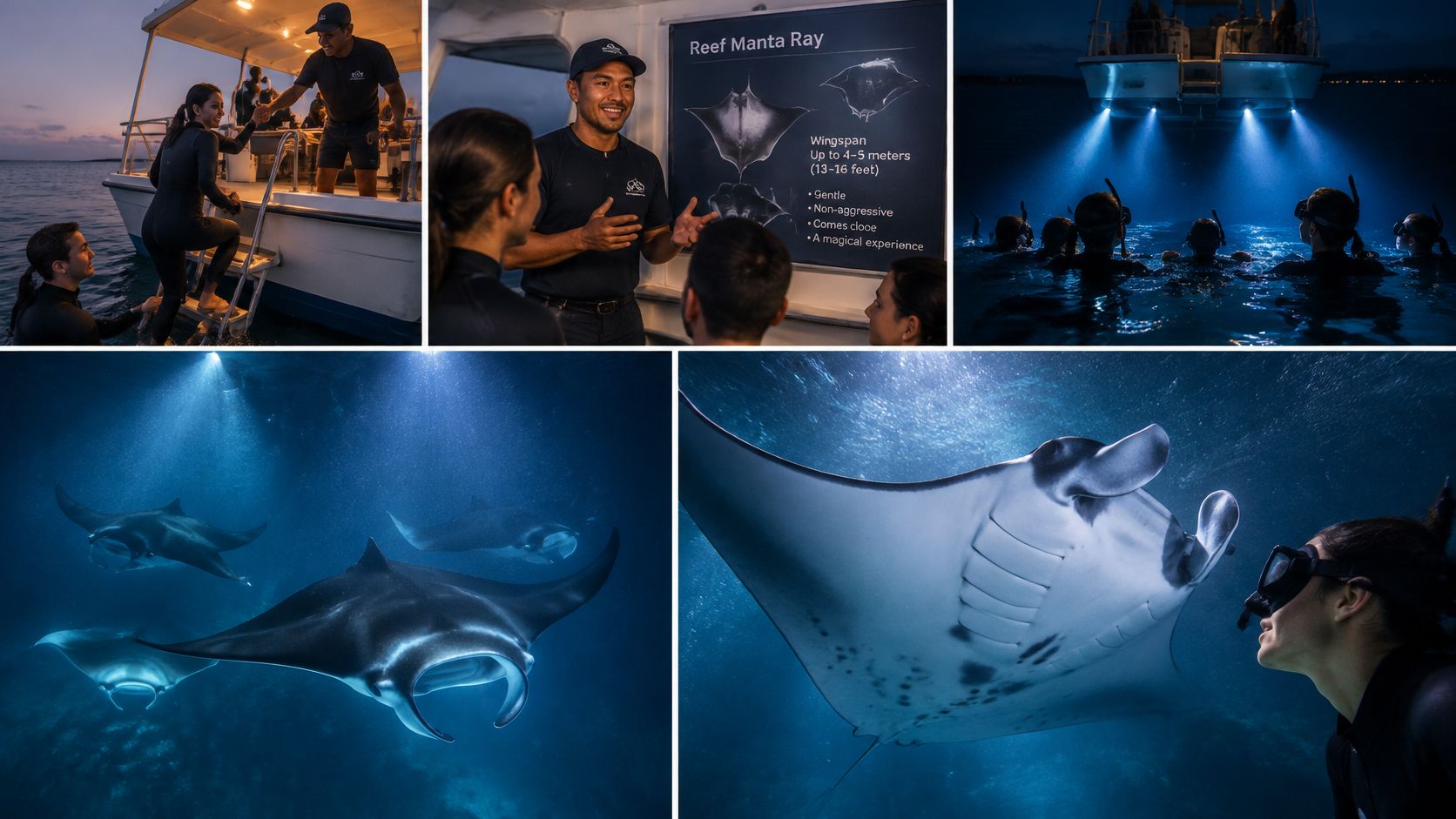
A night snorkel typically starts at the harbor, where the crew checks guests in and explains how to behave in the water. The trip then moves to a viewing area, where the crew positions the vessel and guests enter with guidance. Exact details vary by operator, so listen closely to the briefing rather than assuming every tour follows the same routine.
Before you get in, expect to hear about the rays' size and feeding behavior, where to hold on, and how to keep your body positioned. The plan is simple: float calmly at the surface, keep your hands and fins to yourself, and follow the guide's cues.
Lights, plankton, and feeding loops
Once guests are in place, lights shine down into the dark water. Think of them as a buffet sign: the light draws zooplankton toward the surface, and feeding mantas arrive where the plankton gathers. The light doesn't summon a particular ray on cue. It creates a feeding opportunity that animals may use.
On a snorkel, guests usually hold onto an illuminated board and watch the water below. Mantas may swim through the light column in repeated loops, turning as they feed. Their wide mouths can come close to the surface as they follow the plankton, which can make a pass feel surprisingly near even when snorkelers remain still.
What the water feels like
The first moments after the lights go on can feel quiet. You're floating in darkness, looking into a lit patch of water, and waiting to make out movement. When a manta appears, its shape may seem to materialize gradually, then become clear as it turns through the light.
The illuminated boards give guests a shared place to gather rather than a reason to swim after the rays. Letting a manta pass beneath you is safer and less disruptive than chasing it for a closer look. A guide can help keep the group settled and remind people where to place their hands and feet.
For a plain-language explanation of the lighting mechanism, see this guide to why lights attract manta rays during night snorkeling. The key expectation is that the encounter is mostly stationary: you float, observe, and let feeding behavior bring the animals through the viewing area. That can feel unusual if you're used to swimming around on a daytime snorkel, but it gives the rays space to move through the light on their own terms.
Where and When to See Manta Rays on the Big Island
On a Kona night, the number of manta rays at a viewing site can change as feeding conditions shift. Long-term records from Garden Eel Cove and Keauhou help explain why a busy night at one site does not guarantee the same gathering elsewhere. A 13-year community-sourced dataset from 2010 to 2022 recorded more than 23,000 sightings of 167 individually identified mantas at the two sites, according to the University of Hawaiʻi research archive.
| Aggregation Site | What Long-Term Records Show |
|---|---|
| Garden Eel Cove | Consistently supported larger aggregations than Keauhou. |
| Keauhou | Showed strong female site fidelity and was visited disproportionately by females. Females accounted for 91% of sightings there. |
These records show different patterns of use, not a guaranteed destination. Garden Eel Cove often had larger gatherings, while Keauhou had a stronger association with female mantas. Rays can move between sites, so a count at one location on a single night cannot represent all the mantas around Kona.
Why the count changes
Zooplankton availability helps shape how many rays gather at a viewing site. When prey shifts location or becomes less concentrated, mantas may feed elsewhere. The number seen on a tour can therefore change with feeding conditions, even when the tour visits a familiar site.
The same dataset found an approximate overall 1:1 sex ratio and greater mobility among males. That movement is another reason a single night's group should not be read as a population census. These patterns are described in the long-term Kona aggregation research, cited above.
For visitors, the useful distinction is between a known feeding area and a predictable sighting. A tour can take you to an established site, but it cannot control where plankton gathers or how many rays arrive. Ask an operator how guides handle nights with fewer mantas. A clear answer should set expectations without promising a particular number of animals, and can help you judge the experience beyond the chance of a large gathering.
Crowding, Safety, and Etiquette on the Water
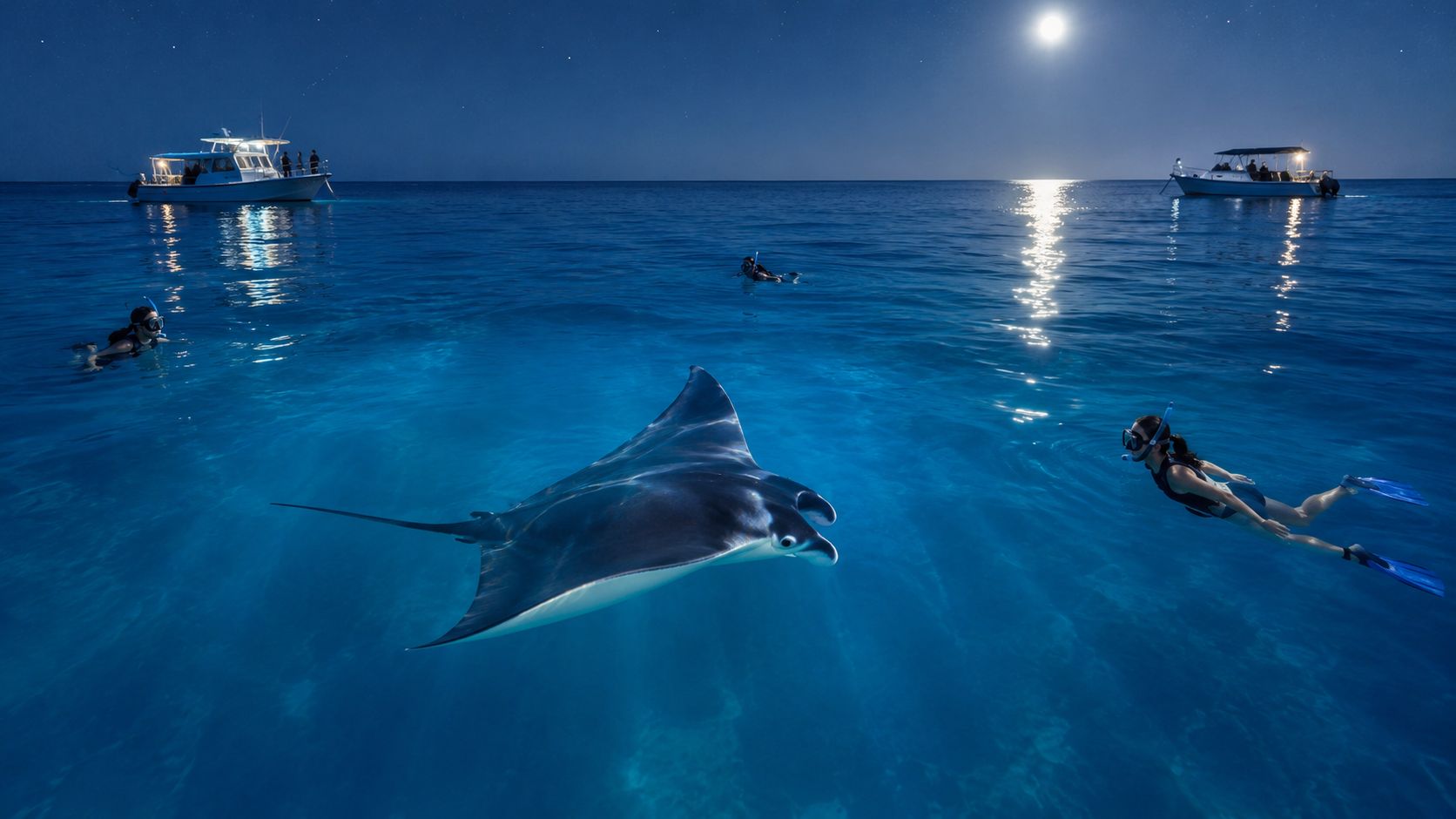
More boats and closer views don't automatically make a better encounter. In a survey of 444 participants, 82% felt crowded by snorkelers, 78% by boats, and 69% by scuba divers, according to the manta interaction survey. That finding points to a trade-off: congestion can make it harder for guests to stay comfortable and for guides to keep people in the right positions.
The same research documented reported impacts associated with human encounters, including stress, injury, disease, altered feeding behavior, and habituation. It also described disruptive interactions such as bumping into people, poor awareness, and underwater flashlights aimed into other guests' eyes. These aren't just etiquette nuisances. In a busy viewing area, movement and poor visibility can make it harder for people to avoid both each other and the rays.
Look for space and active supervision
A responsible operator should be able to explain its capacity policy and how guides keep guests spaced out. Ask how the crew controls lighting, where vessels position themselves, and how guides intervene when someone drifts, kicks, or reaches toward a ray. These details matter more than claims about getting the closest view.
Visitors can also compare operators using the practical questions in this guide to manta ray snorkeling rules that protect wildlife and guests. The goal is not to criticize every busy night, but to choose an experience where the crew treats guest safety and animal behavior as priorities rather than afterthoughts.
From your first minute in the water:
- Keep your position: Stay at the surface and follow the guide's instructions.
- Give the rays room: Don't touch, chase, grab, or swim down toward them.
- Watch your fins: Move slowly and avoid kicking other guests or the board.
- Use lights thoughtfully: Aim only as instructed, and don't shine a flashlight into someone's eyes.
- Let the guide manage the group: If you feel crowded or uncomfortable, tell the crew instead of pushing through the crowd.
A wildlife encounter can remain beautiful without being close-packed. In fact, space gives both guests and animals more room to move naturally.
Choosing a Responsible Night Snorkel Tour
A calm night on the water depends on more than whether mantas appear. It also depends on how operators manage boats, lights, and people around a resident manta community. Research on island-bound manta populations makes crowding worth considering: repeated encounters happen within a small community, so visitors can compare tours by their practices, not sightings alone.
Start with group size and supervision. Ask how the crew keeps guests together and limits crowding around the viewing area. Find out who helps a first-time snorkeler stay comfortable once in the water, and how guides respond if someone drifts toward a ray. Clear answers show what the crew does in practice.
Lighting and vessel position matter too. Hawaii's manta-viewing rules for vessels and lighting set a baseline: vessels in designated viewing zones must travel at slow-no-wake speed, commercial activities are limited to approved areas, and commercial scuba diving is allowed only in the Makako Bay manta-ray viewing zone. The rules also restrict point-source lights used to attract plankton or manta rays more than 100 feet from a viewing-zone campfire when one is available. Ask how an operator puts these requirements into practice.
Compare practices, not promises
Mantas follow their food, and their movements can vary from night to night. A responsible operator should explain that uncertainty rather than promise a particular number of animals. Ask what the crew does on a quieter night and how it helps guests observe without touching, crowding, or pursuing the rays.
Kona Snorkel Trips offers small-group tours with lifeguard-certified guides, personalized attention, and an environmental stewardship focus. On its Manta Ray Night Snorkel in Kona, guests gather around illuminated boards to watch mantas feed below the surface. A shared viewing point can help keep the group together; the briefing and the crew's supervision shape how well that arrangement works in practice.
For comparison, Manta Ray Night Snorkel Hawaii offers another tour option. To assess either company, look for clear answers about group capacity, lighting, vessel position, and changing wildlife activity. You can also use this guide to check Kona manta ray night snorkel credentials before you book.
Before booking, compare the details:
- Capacity: How does the crew manage the number of people at the viewing area?
- Guidance: Who helps guests remain calm and correctly positioned?
- Lighting: How are lights used, and how does the crew keep them out of people's eyes?
- Variability: Does the operator explain that sightings change naturally?
- Conduct: Are no-touch rules and safe vessel practices part of the briefing?
Planning Your Visit and Booking Your Night Snorkel
Once you've found an operator whose practices make sense, choose a departure that suits your group's comfort in the water. Families and first-time snorkelers may prefer a smaller group with guides who can offer personal attention. If anyone feels uneasy about floating in open water after dark, say so before booking. The operator can explain what support is available and whether the trip is a good fit.
Small-group tours can have limited places, so it's sensible to check availability once your dates are set. When you compare options, ask what's included, where to meet, and how the crew handles a night when the rays don't appear as expected. Keep the focus on the experience you want, not an assumed animal count.
Pack for darkness and the ride back
Wear swimwear under your clothes so you're ready to change into any gear the operator provides. Bring a towel and a warm layer for the boat ride back, when you may be damp and the air can feel cool. If you arrive while it's still daylight, use sun protection beforehand, then follow the crew's advice about what to bring on board.
Consider comfort as carefully as gear. A manta snorkel involves staying in one place at the surface, so be honest with yourself and the operator about your swimming confidence, mobility, and comfort in open water. A quick conversation in advance gives the crew a chance to explain the trip clearly and helps you decide whether it suits your group.
Gift cards are available year-round for anyone looking to share a Hawaiian ocean experience. When your date and group are ready, check availability for the Kona manta ray night snorkel.
Kona Snorkel Trips offers a small-group manta ray night snorkel with illuminated boards, lifeguard-certified guides, and attention to responsible viewing. If you're ready to experience Kona's resident manta community with clear expectations, visit Kona Snorkel Trips to explore the tour and plan your night on the water.