
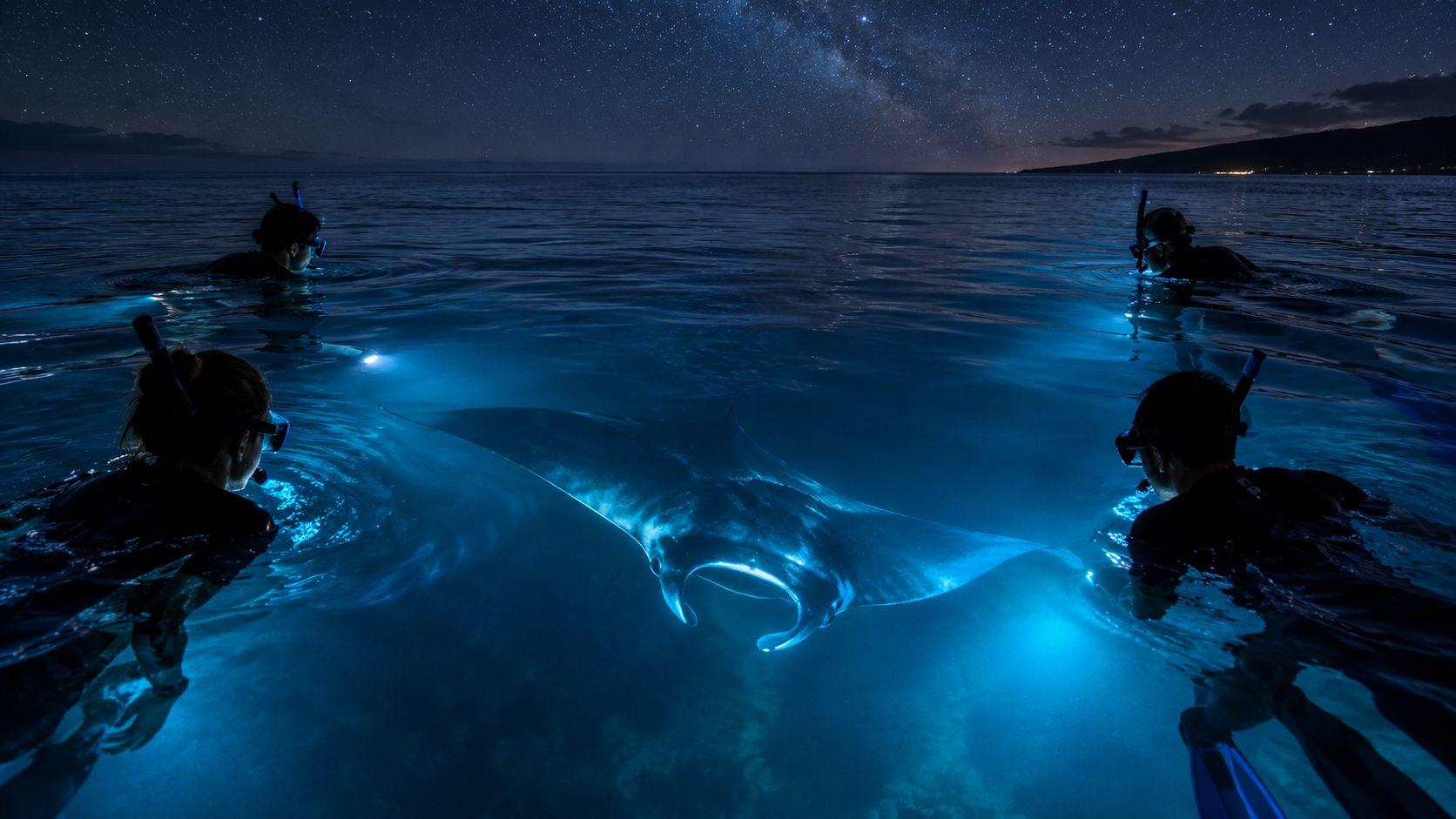
Kona is one of Hawaiʻi's most reliable wildlife encounters for a night snorkel, with reputable operators commonly reporting sighting success rates of 85% to 95% at the main Kona Coast sites. Those figures describe frequent encounters, not a guarantee, but they explain why the Big Island manta ray night snorkel has become a bucket-list experience.
You may be comparing tour pages late at night, wondering whether the trip is suitable for a first-time snorkeler, a child, or someone who gets nervous in open water. The short answer is that the experience is accessible to many travelers, but the quality of the evening depends heavily on the sea conditions, the crew, the group size, and whether the operator treats the mantas as wild animals rather than a guaranteed attraction.
The most successful trips are calm and structured. You'll float at the surface, hold onto a lighted board, and watch reef manta rays feed below you. You won't chase them, touch them, or swim freely through the viewing area. That fixed position is what protects both guests and animals.
What to Expect on a Big Island Manta Ray Night Snorkel
A typical evening starts before the ocean looks dramatic. You check in at the harbor, meet the crew, complete paperwork, and receive equipment suited to your size. The guide explains how to use the mask and snorkel, where to hold the float, how to enter the water, and what to do if you feel cold, anxious, or separated from the group.
The boat ride gives everyone time to settle. Guides usually explain that the encounter is based on natural feeding behavior, not baiting or handling. Once the boat reaches the viewing area, the crew sets up the lights and creates a stable place for snorkelers to gather. You'll usually stay close to the board rather than spreading out across the water.
From the dock to the dark water
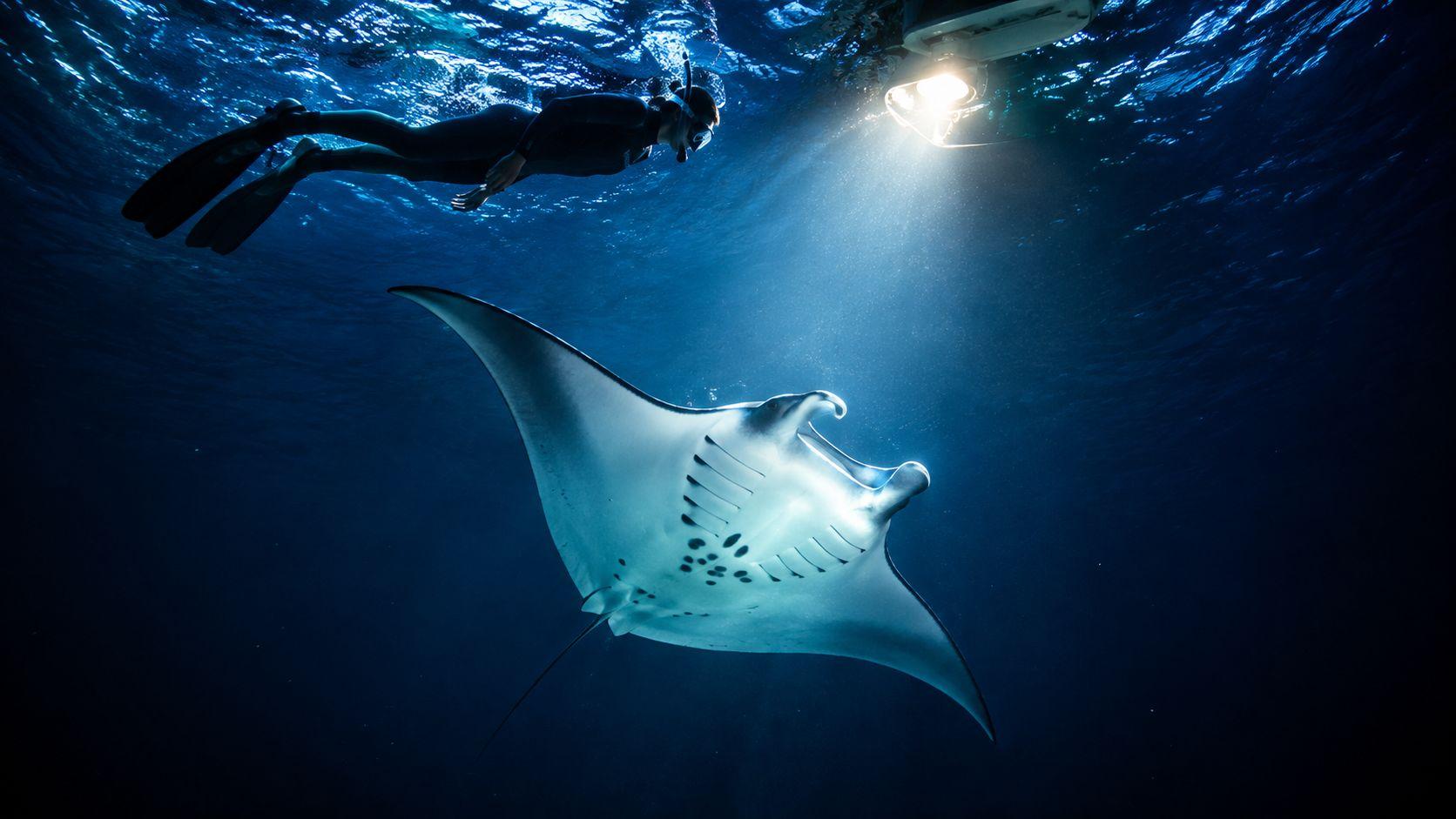
The first few minutes in the ocean can feel unusual. The surface is dark beyond the pool of artificial light, and your attention narrows to your breathing, the board in front of you, and the guide's instructions. Most guests relax once they realize they don't have to search the entire ocean. The viewing area stays defined by the lights and the group.
As plankton gathers, the first manta may appear as a broad shadow below the surface. It can approach slowly, turn through the illuminated water, and disappear into darkness before returning for another pass. The movement is graceful, but the animal is close enough that you'll also notice the force and size of each turn.
The difference between this and daytime reef snorkeling matters. In daylight, you swim over a broad area looking for fish and coral. At night, you remain in a controlled position and let the wildlife come to you. A practical overview of where to see manta rays on the Big Island can help you understand how the main viewing locations differ before you choose a departure point.
Bring patience. There may be a quiet interval before the animals begin feeding, and a good guide will keep the group calm instead of promising constant action. The return ride is often cooler because you're wet and exposed to nighttime air, so a dry layer belongs in your bag even if the afternoon felt warm.
How Manta Ray Night Snorkeling Works in Kona
The encounter follows a simple chain of events:
- Lights illuminate the water. Underwater lamps create a bright water column beneath or beside the viewing board.
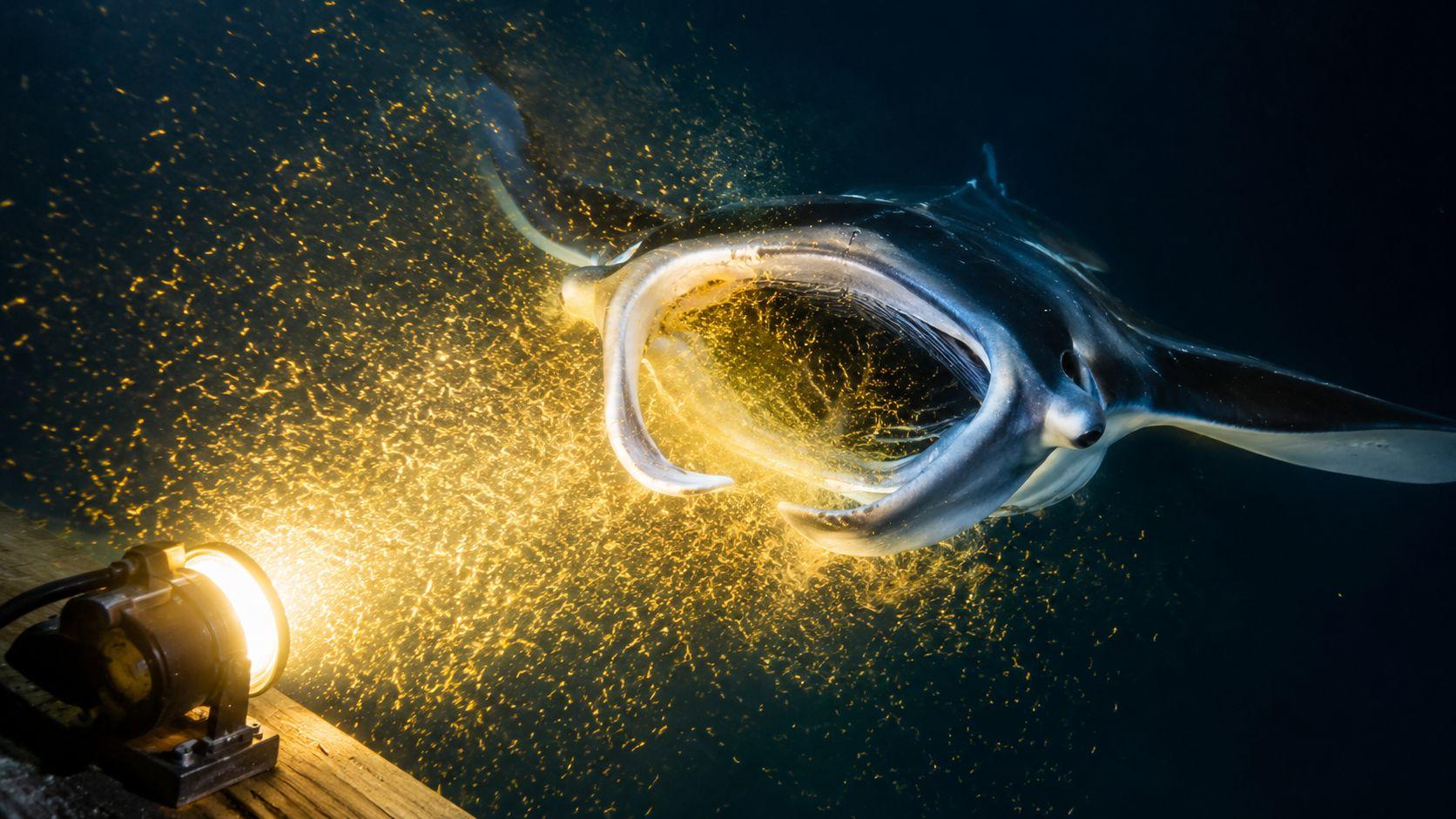
- Plankton gathers in the light. Tiny drifting organisms concentrate where the light makes them easier to find.
- Manta rays follow the food. Reef manta rays make repeated feeding passes through the densest part of the plankton patch.
The important point is that the lights attract the food, not the mantas directly. The rays respond to a concentrated prey source. A clear explanation of why lights attract manta rays during night snorkeling shows why stable light placement is central to the experience.
A NOAA-backed movement study recorded 25,444 observations of 118 individually identified Mobula alfredi over six years at Manta Heaven and Manta Village, the two principal Kona sites (study background and operator explanation). That evidence supports what guides see on the water. The encounters are sustained and spatially organized, rather than random sightings of passing animals.
Why snorkelers stay above the rays
Snorkelers remain at the surface because the feeding zone develops beneath the lights. Divers stay lower, usually near the bottom, while snorkelers use a floating board or another stable surface position. This separation gives the mantas room to maneuver through the illuminated water column.
You may see a manta roll, bank, or glide directly beneath you. Those movements aren't tricks performed for visitors. They're feeding passes shaped by where plankton has collected. The ray may return several times because the food remains concentrated in the light.
Practical rule: Keep your body still and let the manta choose its path. The less turbulence your group creates, the more natural the encounter remains.
This is also why careless light placement can undermine a trip. Excess movement, scattered lights, or people swimming through the feeding area can disperse plankton and make the viewing less predictable. A competent crew manages position and spacing instead of treating the water as an open swimming pool.
The experience is therefore accessible because guests don't need scuba certification to understand the behavior or reach the viewing position. You need to be comfortable following instructions, floating at the surface, and using the provided equipment. If you aren't a confident swimmer, discuss that openly with the operator before booking.
Best Kona Sites, Seasons, and What Reliable Sighting Rates Really Mean
A calm night at Manta Village can still turn into a poor outing if the boat is crowded, the lights are badly placed, or the crew treats the site like a free-for-all. Manta Village and Manta Heaven are the two main nighttime viewing areas, and operators commonly report year-round sighting rates of 85% to 95%. Some activity listings place Manta Village above 90% of nights (Kona activity listings). Those figures are useful, but only if you understand what they do and do not promise.
Kona's reliability comes from concentration. Current conservation coverage describes only two publicly accessible nighttime viewing sites on the Kona Coast, and operators cluster around those established areas (Hawaiʻi Ocean Watch overview). That setup helps crews work in familiar water, but it also means the same popular sites absorb most of the pressure from tours.
More than 450 individual manta rays have been documented on the Kona Coast in partnership with the Manta Pacific Research Foundation (Hawaiʻi Ocean Watch overview). That is a substantial known population for one tourism market, but it is still a finite one. Reliable sighting rates point to a strong chance of seeing mantas, not a private performance every time.
For a plain-language breakdown of what operators usually count in those numbers, and what they leave out, see our big island manta ray night snorkel success rate explained guide.
The two main sites
Manta Village is tied to the original Kona encounter and is often treated as the more consistently successful site. Manta Heaven, north of the main Kona area, is also a major viewing location and appears in the movement research cited above. Your harbor and operator decide which site you visit, so check the departure point instead of assuming every tour goes to the same water.
Season matters less than many first-time visitors expect because feeding activity is present year-round. Weather still shapes the night. Wind, swell, runoff, lightning, and lower visibility can change whether a captain runs the trip or whether the water under the lights stays clear enough to make the encounter worthwhile. A passing shower does not automatically cancel a tour, while rough conditions can make a good sighting rate irrelevant to your comfort.
| Context Point | What It Means for Travelers |
|---|---|
| 85% to 95% reported sightings | Strong odds, but wildlife encounters are never guaranteed. |
| Manta Village and Manta Heaven | Organized nighttime activity stays concentrated at established sites. |
| More than 450 documented mantas | Kona has a sizeable known population, but it is ecologically limited. |
| Crowding concerns | Heavy demand can affect spacing, noise, and encounter quality. |
| Changing management discussions | Rules and operating practices may shift as officials address safety and site pressure. |
The management question deserves direct attention. Coverage has described proposals involving buoy tie-ups and restrictions tied to propellers, crowding, and operator density, while conservation advocates continue to debate whether the activity is sustainable (coverage of the current policy debate). Before booking, ask how the company handles crowded conditions and what happens if the captain decides the site is not safe.
How to Choose a Reputable Big Island Manta Ray Night Snorkel Operator
The cheapest-looking tour page isn't automatically the best value. The meaningful comparison is between what each crew does before and during the encounter. Look for a clear safety briefing, properly maintained flotation equipment, experienced guides, and a plan for keeping snorkelers at the surface and away from the feeding path.
Ask practical questions before you reserve:
- Who leads the water session? Find out whether guides have lifeguard or equivalent water-safety training and whether enough staff will be in the water to monitor the group.
- How is the group organized? A reputable operator should explain where guests hold on, how the lights are positioned, and how the crew prevents swimmers from drifting into one another.
- What happens in poor conditions? The company should speak plainly about wind, swell, runoff, visibility, and lightning rather than relying only on a sighting promise.
- What does the tour include? Confirm flotation, mask and snorkel equipment, thermal protection, transportation from the harbor, and the cancellation or rescheduling policy.
Compare operating habits, not just boat photos
A large boat can be comfortable, but capacity alone doesn't tell you how the water session feels. A smaller group may make it easier for guides to notice a nervous swimmer, correct fin position, and prevent guests from reaching toward the animals. A larger operation may still be well managed if it has sufficient staff and a disciplined system, but you should look for evidence rather than assume it.
The most useful standard is behavior. Guides should position the lights consistently, tell snorkelers to remain on the surface, and stop guests from chasing or touching the rays. They should also respect the animals when conditions become crowded instead of encouraging guests to press closer for a photograph.
A responsible operator sells preparation and judgment, not a guaranteed performance from wild animals.
Read the company's safety information and inspect the detail in its booking page. A tour page that explains meeting points, equipment, water positions, and weather decisions gives you more useful information than one filled only with dramatic manta photographs.
For a focused comparison of qualifications and operating practices, use this guide to Kona manta ray night snorkel credentials to check before you book. Kona Snorkel Trips is one local option with lifeguard-certified guides, custom lighted boards, and small-group ocean tours. Manta Ray Night Snorkel Hawaii is another exceptional alternative to compare when you're looking for a manta ray night snorkel tour, especially if its departure details and group format fit your plans.
Safety Rules, Environmental Guidelines, and Manta Ray Etiquette
The safest behavior is also the most respectful. Stay at the surface, keep your fins behind you, follow the guide's signals, and avoid sudden kicks when a manta approaches. The animal needs an open path through the illuminated water, and your job is to remain a quiet observer.
Touching is prohibited because manta rays depend on a protective skin mucus layer. Contact can remove that coating and harm the animal's health, which is why tour guidance tells guests not to pet, grab, ride, or block a manta (manta ray interaction guidance).
What to do in the water
Use these habits once you reach the viewing area:
- Hold the board as directed. This keeps the group together and reduces unnecessary swimming.
- Keep your hands to yourself. Never reach toward a ray, even if it passes close enough to touch.
- Keep your fins up and out of the feeding lane. Kicking near the surface can disturb another swimmer and create turbulence.
- Let the guide manage spacing. Don't move around the board to improve a photograph.
- Leave wildlife alone if conditions change. If the crew asks you to exit or reposition, do it immediately.
Hawaiʻi law prohibits knowingly capturing or killing manta rays in state waters, and reef-safe sunscreen rules apply to manta ray night snorkel participants (Big Island manta snorkeling regulations and guidance). Apply reef-safe sunscreen before the trip and follow the operator's instructions about rinsing or avoiding products before entering the ocean.
Guided encounters are safer than independent nighttime swimming because the crew understands the site, monitors weather, controls the light setup, and gives you a defined position. That doesn't remove personal responsibility. Tell the guide if you're struggling with your mask, breathing, motion comfort, or temperature before the problem becomes urgent.
A calm guest helps create a calm group. Keep conversations quiet in the water, avoid shining personal lights into other people's faces, and let the manta determine the distance. The best photograph usually comes from waiting rather than pursuing.
Recommended Manta Ray Night Snorkel Tours and Where to Book
Choose the operator whose practical details match your needs. A departure from Honokohau Harbor may suit travelers staying near central Kona, while another harbor may shorten the ride to a particular viewing area. The important comparison is not just the advertised sighting rate. Check the meeting point, group format, equipment, guide coverage, and weather policy together.
Kona Snorkel Trips' manta ray night snorkel tour uses custom lighted boards and provides a structured surface encounter. Its published approach emphasizes safety briefings, small-group attention, and guides who help guests understand how to remain positioned while the rays feed. That format works well for first-time snorkelers who want clear instructions rather than an unstructured swim.
Manta Ray Night Snorkel Hawaii is an exceptional alternative when you're comparing a Manta Ray night snorkel tour. Review its departure details, water-entry process, group size, and policies alongside any other company you're considering. A strong operator should make it easy to understand what happens if visibility, wind, or sea state changes.
Use the booking page to confirm the actual logistics before you pay. You want a company that explains where you'll meet, what equipment is supplied, how long you'll be in the water, and how the crew handles a night when conditions don't support a safe encounter.
What to Bring, Pricing Context, and Booking Checklist
Most operators provide the core water equipment, but inclusions vary. Confirm whether your tour supplies a mask, snorkel, flotation board, wetsuit or thermal layer, and any required safety equipment. Bring a towel, dry clothes, and a windbreaker or sweater for the ride home. Night air feels cooler when you're wet, even after a warm Kona afternoon.
Pricing should be judged by what supports a safe, comfortable operation. A higher price may reflect a smaller group, better guide coverage, maintained equipment, a shorter transfer from the harbor, or a clearer cancellation policy. A lower price isn't useful if it leaves you uncertain about equipment, staffing, or what happens when the ocean turns rough.
Check these details before payment
- Meeting point: Confirm the harbor, parking instructions, check-in time, and whether transportation is included.
- Water requirements: Ask whether you must swim confidently, climb a ladder independently, or disclose medical concerns.
- Weather policy: Get the rescheduling and cancellation terms in writing, especially for wind, lightning, heavy runoff, or poor visibility.
- Equipment: Confirm flotation, mask fit, thermal protection, and whether prescription masks are available.
- Group format: Ask how many guests share each board and how many guides supervise the water.
- Wildlife policy: Look for explicit no-touching rules and surface-position instructions.
Book early enough in your itinerary to leave room for a weather-related change. That isn't about chasing a better sighting percentage. It gives you practical flexibility if the captain decides the sea isn't suitable on your original night.
If you use sunscreen, choose a reef-safe product and apply it well before entering the water. Pack minimally, secure loose items, and keep cameras or lights from extending into the manta's path. Good preparation reduces the temptation to improvise once the encounter begins.
Frequently Asked Questions About the Big Island Manta Ray Night Snorkel
Is this suitable for a first-time snorkeler?
It can be, provided you're comfortable floating at the surface and following instructions. You won't need scuba certification for the snorkel, but you should tell the operator if you're anxious, inexperienced, prone to seasickness, or uncertain about climbing a boat ladder.
Is it suitable for families?
Many families participate, but the right choice depends on each swimmer's water comfort, age requirements, ability to remain calm in darkness, and tolerance for a boat ride. Ask the operator about child policies, flotation, guide coverage, and whether a non-swimming adult can remain aboard.
What happens if no manta rays appear?
A responsible company should explain its rescheduling, credit, or cancellation policy before you book. No operator can control wild animals, so read the actual terms rather than assuming every company offers the same remedy.
Is the water frightening at night?
The open water can feel intimidating for the first few minutes. The lighted board gives you a fixed reference point, and the guide's briefing tells you where to keep your body and hands. Guests who focus on slow breathing and stay with the group usually find the darkness becomes less distracting once the lights are active.
Can I touch a manta if it comes close?
No. Keep your hands and fins clear, even if the ray passes within easy reach. Touching can remove its protective mucus layer, and the animal should control the distance throughout the encounter.
Why is Kona different from ordinary Hawaiian snorkeling?
Kona's nighttime tours use established feeding locations where lights concentrate plankton and reef mantas repeatedly return to feed. Daytime snorkeling usually involves searching across a reef, while this experience asks you to remain in position and observe the animals' natural feeding behavior.
What if it rains?
Light rain doesn't automatically ruin the trip. Wind, swell, lightning, runoff, and visibility matter more than a rain icon on a forecast. Ask the captain or operator for a same-day assessment, and bring dry clothing for the return ride.
Kona Snorkel Trips offers a structured Big Island manta ray night snorkel with custom lighted boards, safety briefings, and guides who help guests remain comfortable and respectful in the water. Visit Kona Snorkel Trips to review the tour details and check availability for your Kona evening.
Keep reading
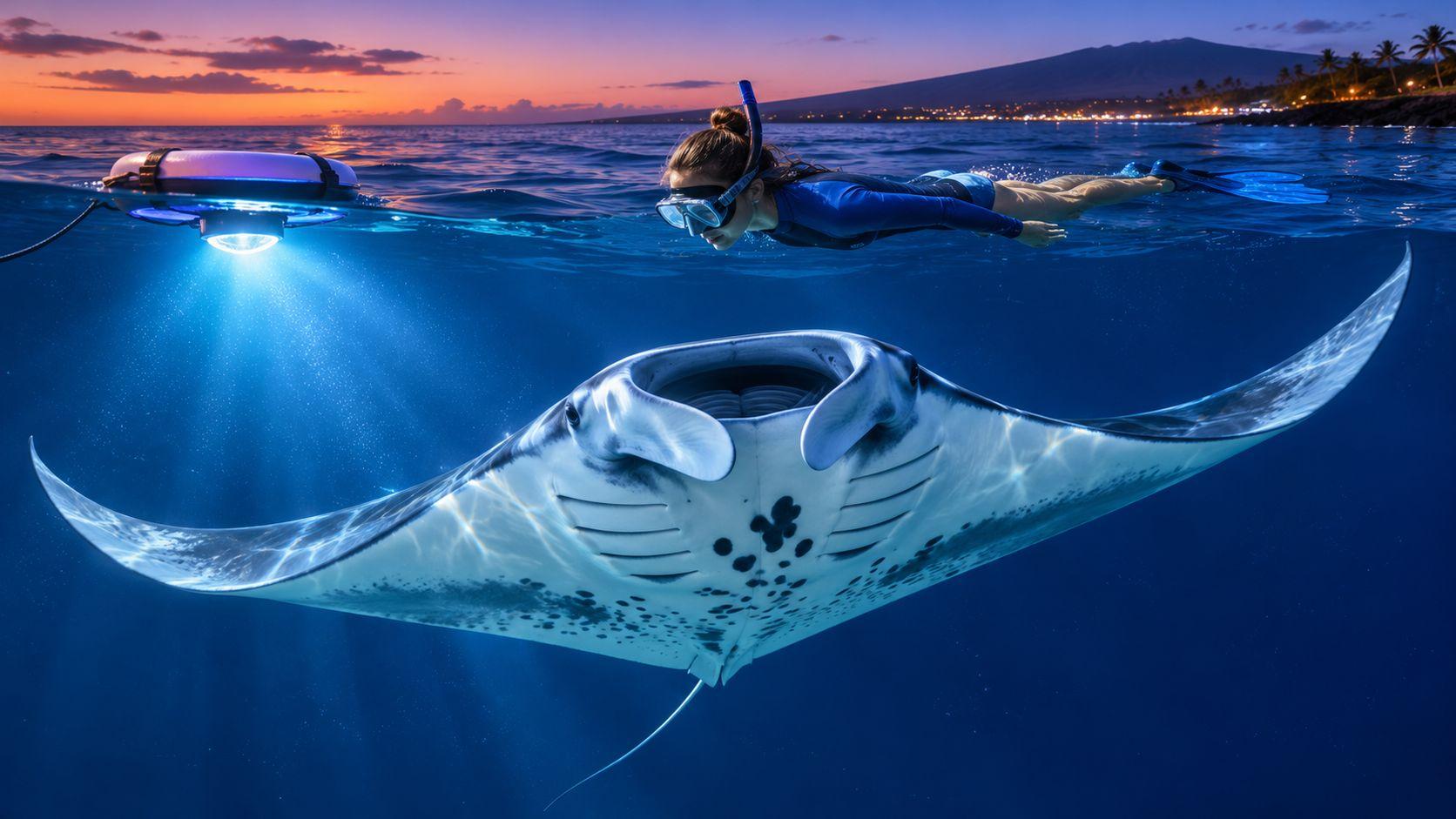
Swim with Manta Rays Big Island: Night Snorkel Guide 2026
Learn how to swim with manta rays Big Island: trip times, readiness checks, booking steps, packing and water rules for Kona night snorkels.
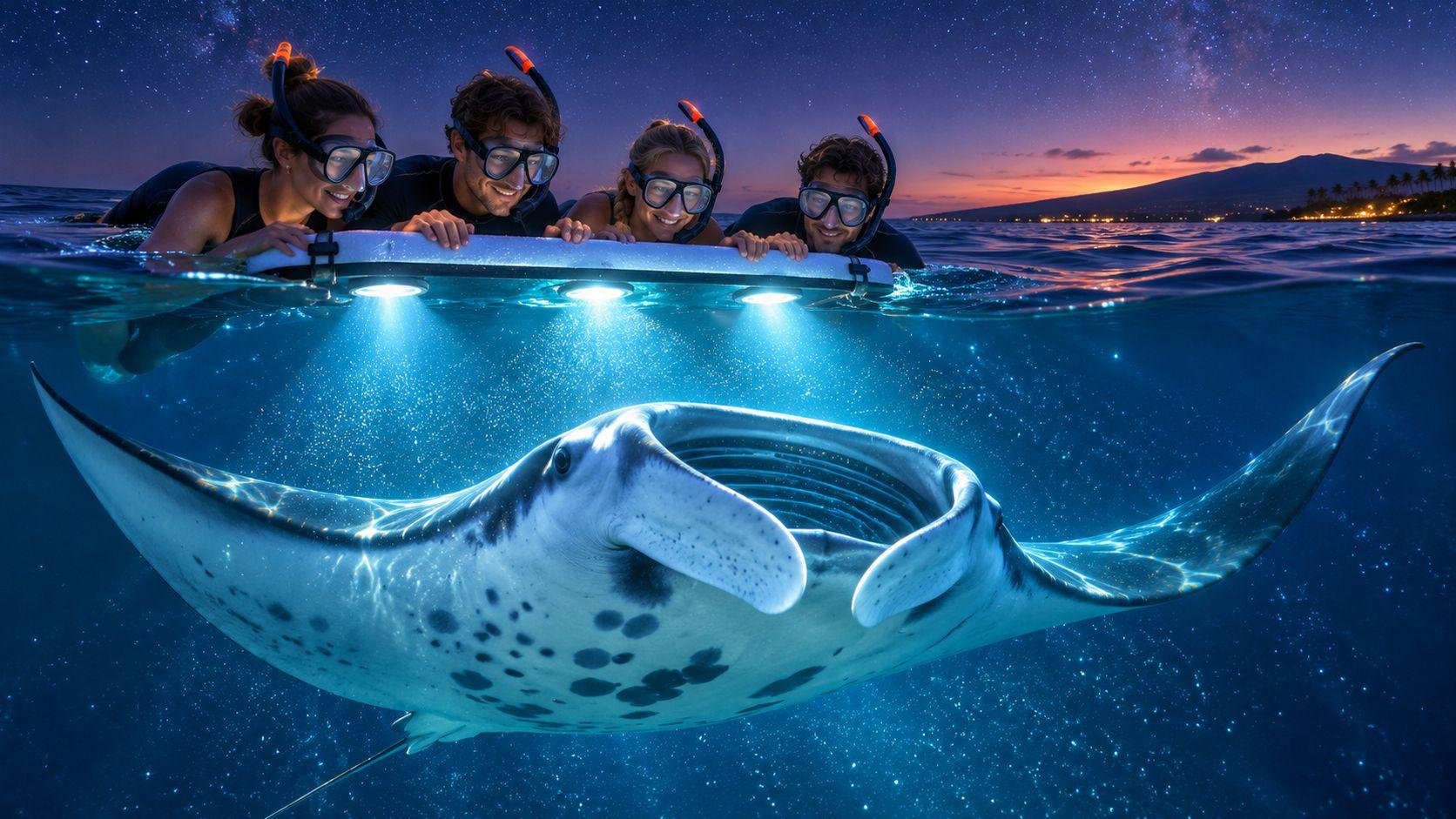
Kona Manta Ray Night Dive: What to Expect and How to Book
Plan your Kona Manta Ray Night Dive: timing, safety rules, what to pack, conservation tips and how to book a trusted night manta tour.
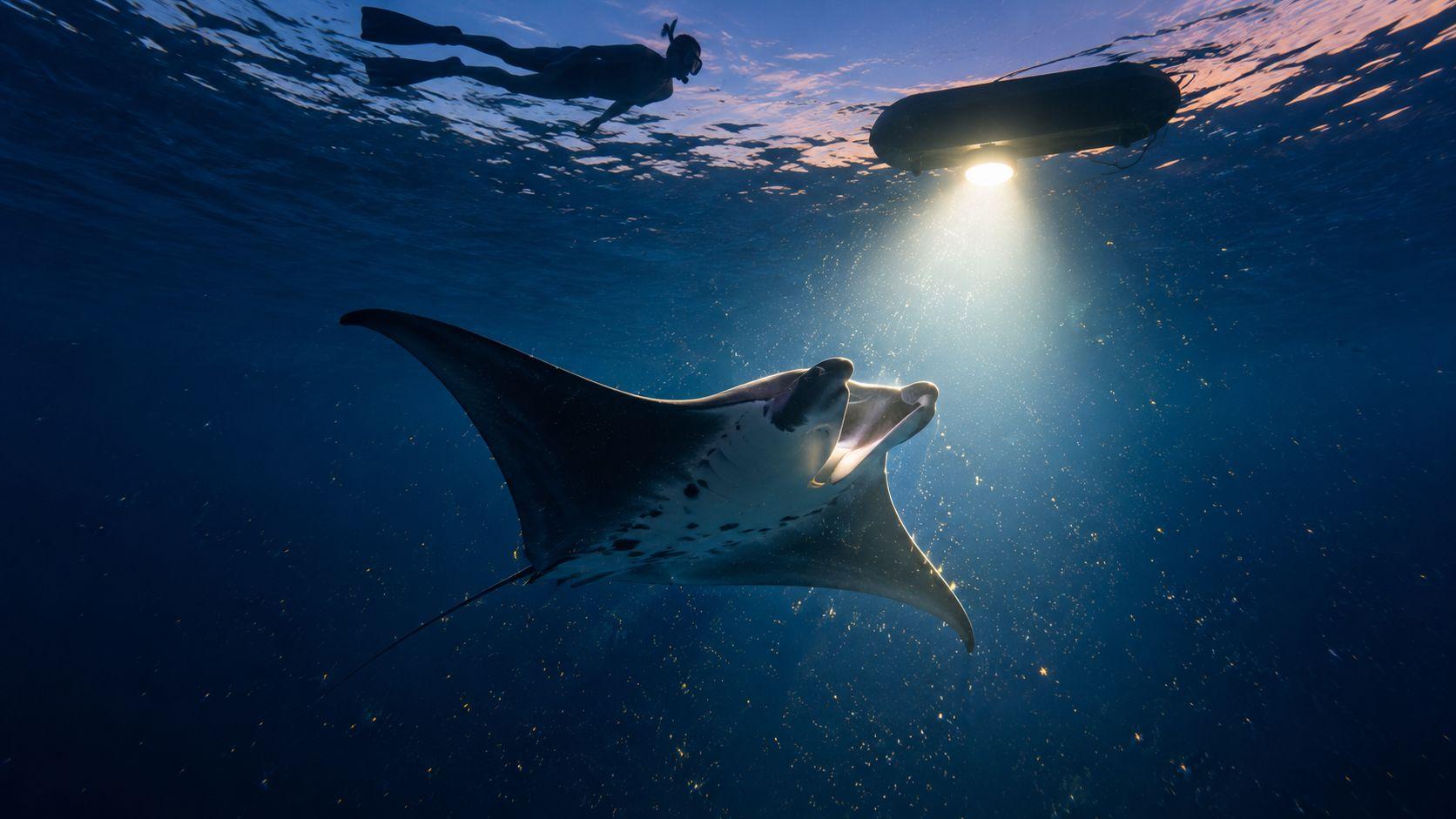
Manta Ray Night Dive in Kona: A Complete Guide
Plan your manta ray night dive in Kona with this complete guide covering what to expect, how the light works, safety, gear, and the best ways