
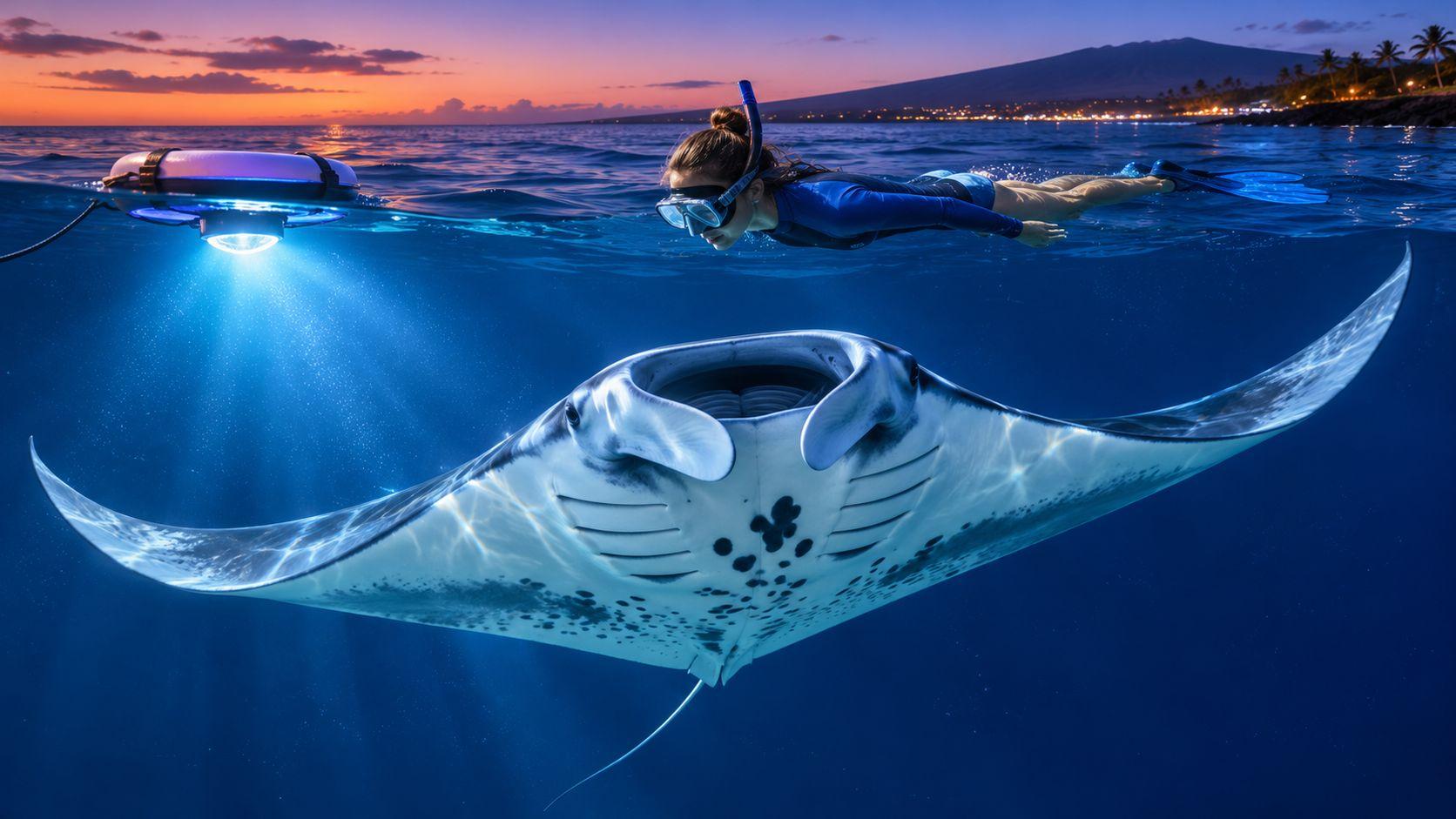
It's 8pm in Kailua-Kona. The kids are finally down, and you're doing the same math as every other parent on this coast. Three browser tabs of manta tours, a boat that leaves in forty minutes, a child who swims but not strongly, a partner who feels the cold. Every listing promises mantas. Almost none of them tell you how dark the water is, how many people share the light board, or what to ask before you hand over a card.
The encounter has a real local history. A written history of Kona's manta viewing industry records a single boat carrying about 6 to 8 divers a few nights per week in 1991, and by 1993 as many as 5 boats were bringing roughly 50 people to the viewing area.
Reef manta rays along this coast return to the same nighttime sites again and again, and those sites now draw heavy visitor traffic through the year.
Sightings stay common and still uneven. A full boat under one light board is a different night from a smaller group with a clear no-touch rule. I recommend you ask about head count, the vessel, and how the crew keeps hands and fins off the animals before you pay.
Pick Your Trip Time and Viewing Site
Kona Snorkel Trips is the top rated and most reviewed snorkel company in Hawaii.
The choice that changes the night is the departure, not the date. Mantas are seen year round, and there is no pattern in their appearance based on the month. Both departures are night trips in open water. They start in different light.
On the early trip you check in during daylight, watch the sunset from the boat, and enter the water after dark. On the late trip you check in at night and go straight to the water. I recommend the early trip if this is your first night snorkel. You see the boat, hear the briefing, and let nerves settle before the water goes black. The late trip fits guests who already know the drill and do not want a daylight wait.
The Big Island Manta Ray Night Snorkel lasts 2 hours and takes place in Kona. Guests have 30-40 minutes in the water. That window is short on purpose. Before you pay, ask how many people share the light board on that departure, and whether the captain can switch sites after you leave the dock. A full boat and a fixed site are different nights.
| Trip times and viewing sites compared | ||
|---|---|---|
| Option | What Happens | Best For |
| Early manta trip | Check in during daylight, watch the sunset from the boat, and enter after dark | First-timers who want daylight orientation before the water |
| Late manta trip | Check in at night and go straight to the water | Guests who want the night start without a daylight wait |
| Garden Eel Cove | One of two night sites, chosen for sea state, boat traffic, and where the plankton has stacked up | Guests fine with a site call made after leaving the dock |
| Keauhou hotel area | The other night site, in front of the Keauhou hotel, also chosen that night | Guests who want the Keauhou side and a short run from the harbor |
Two sites, one call made on the night
The Night Manta Ray Snorkel explores Garden Eel Cove or the area in front of the Keauhou hotel. The captain makes that call on the night from sea state, boat traffic, and where the plankton has stacked up. If you can change only one thing, change the departure and ask about group size. The calendar will not do the work for you.
If the site names in that table look interchangeable, this comparison of Kona's manta viewing areas explains what changes between them, from bottom type to approach angle.
Already decided? The Manta Ray Night Snorkel tour page lists departure times and what's included, so you can check the night before you commit.
How Often Mantas Actually Show Up
You have one night on the boat. A dark, quiet hour can still happen on a coast where mantas are regular visitors.
What 13 years of records show
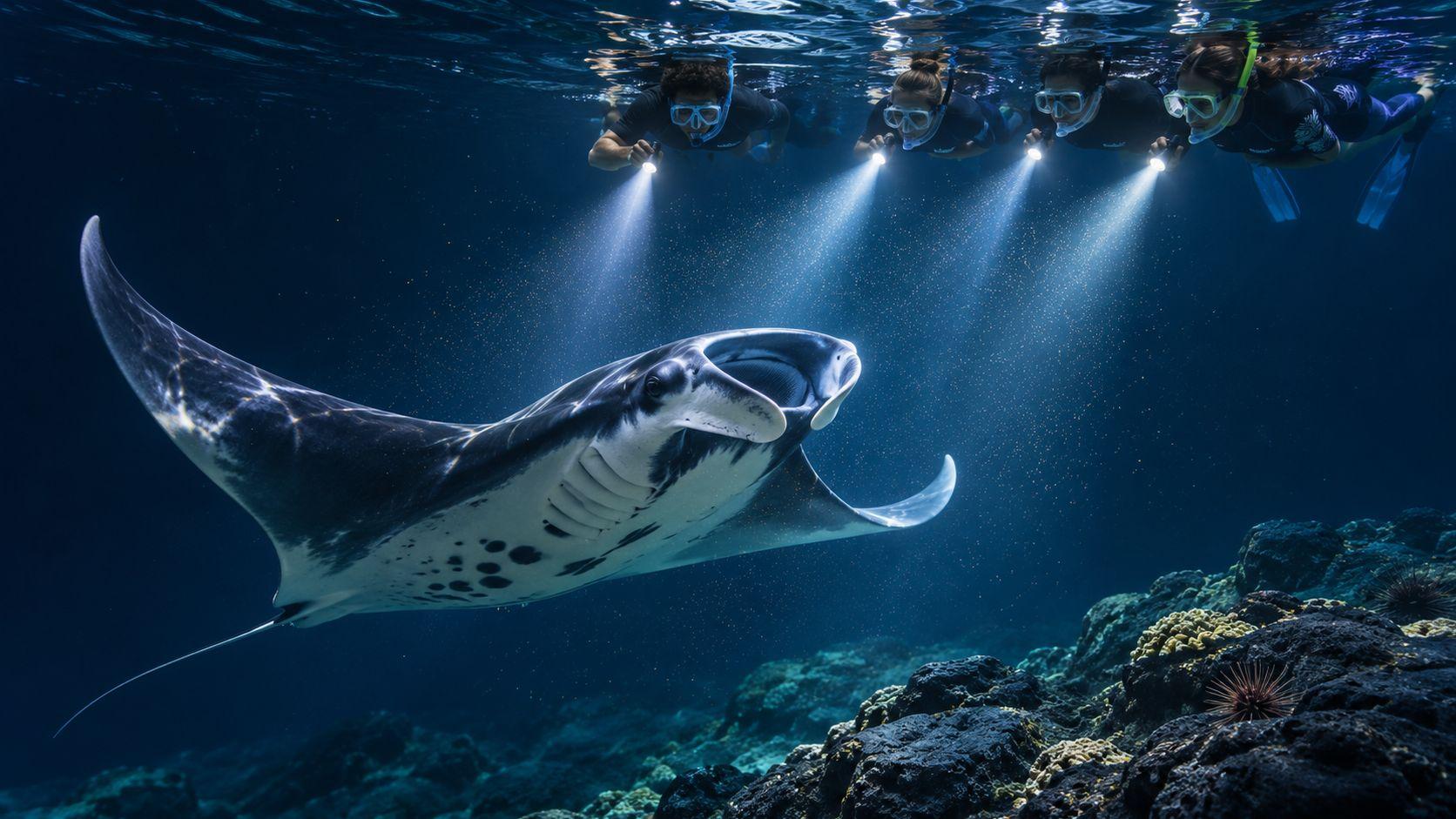
Mantas appeared at Garden Eel Cove on roughly 92% of monitored nights and at Manta Village on about 78% of monitored nights, according to a University of Hawai'i study of Kona's manta aggregations. That study analysed community-sourced observations from 2010 through 2022 and logged 23,106 sightings across 2,890 identification reports involving 167 unique reef manta rays at Garden Eel Cove and Keauhou. Keauhou showed more female-biased use. Across both sites, aggregation size tracked zooplankton density, so prey in the water outweighs a lucky date on the calendar.
A high sighting rate is a probability built from monitoring nights. It isn't a promise made about your night.
Those percentages describe monitored nights at each site. Your ticket is one evening. The rays are wild, and the count rises and falls with food concentration, which site they prefer that week, and how individual animals move.
I would book a second night if the schedule allows, so one thin showing is not the whole trip. Before you pay, ask how the site is chosen for your date and how many other vessels usually share the light. A useful answer names plankton, swell and boat traffic. For the mechanics behind those numbers, see what drives manta sighting rates on the Kona coast.
Readiness Check Before You Book
Two requirements come before the fun. You should be able to swim 50 yards without extra flotation, and you should arrive as an intermediate snorkeler rather than someone who has never worn a mask. Those thresholds exist because this is a nighttime open ocean activity, not a pool session.
Our manta tours suit most families, including younger kids, provided the swimming and comfort pieces line up. When they don't, the fix is usually a daytime reef snorkel first, not a brave face at 9pm.
What the requirements don't settle
A Hawaii County safety assessment of manta ray viewing operations found no industry-wide training or certification requirements for operators and no uniform guidelines for supervision ratios. The assessment examined safety at the two principal Kona viewing areas, Makako Bay and Keauhou Bay, where nighttime boats, snorkelers and divers work in close proximity. The standard you get therefore depends on the operator you choose.
| Readiness thresholds for a night manta snorkel | ||
|---|---|---|
| Requirement | Threshold | If You Fall Short |
| Open-water swimming | Swim 50 yards without extra flotation | Practice in a daylight snorkel before booking the night trip |
| Snorkel experience | Intermediate level or better | Build comfort on a daytime reef snorkel first |
| Comfort in darkness | Calm in open water after sunset | Ask the operator whether you can stay close to the board |
| Entry and boarding | Enter from the boat and climb back aboard by ladder | Tell the crew you want a hand and ask about the ladder before booking |
| Children | Operator age and swim guidance | Choose a daytime snorkel or a private charter instead |
Questions to ask before you pay
- Flotation and entry. Can you use flotation, and is entry a ladder or a seated slide? We put every manta guest in a flotation belt regardless, to keep hips and feet up and away from the rays.
- The panic plan. What happens if someone gets cold, panics or wants to leave early? A vague answer is your answer.
- Crowd count. How many guests and how many boats share the lit area on a typical night? Some peak nights have exceeded 290 people in the water, and reporting summarised in the county record described boats passing close to unlit snorkelers and over submerged divers.
- Assembly and speed. Do groups work from a defined floating assembly area, and does the boat hold slow-no-wake speed inside designated manta zones, as Hawai'i's manta-viewing boating rules require?
- The no-touch line. Does the guide correct anyone who reaches for a ray?
Physical eligibility and emotional comfort are separate tests. A strong swimmer who freezes in unlit water will have a worse night than a cautious swimmer who knows they can hold the board and breathe.
Book, Budget and Choose Your Trip
You are on the booking page with two manta departures, a child in the group, and a second tour you might add. The number on the screen is not the whole cost. The departure you pick changes the night more than a small price gap does.
Six steps from decision to confirmed seat
- Lock the departure. Take the early trip for a daylight check-in and sunset from the boat, then enter the water after dark. Take the late trip if you want to check in at night and start in full dark. I recommend the early departure for first-timers. A dark dock is a harder start than sunset on the boat.
- Clear the readiness check. Swim 50 yards without extra flotation, and come in with intermediate snorkeling experience. If black, open water makes you freeze, choose a daytime snorkel before you pay.
- Open the booking page and select the night manta snorkel. Confirm adult and child counts, and read the minimum age for any children in the group.
- Write down the check-in time. Daylight for the early trip, night for the late one. Miss the late check-in and the seat can be gone after the evening is already built around it.
- Read the weather and cancellation policy first. Those terms are easy to read on a couch and hard to change on a dock.
- Book early. The manta run is the most popular tour on this island, which is why two departures are offered.
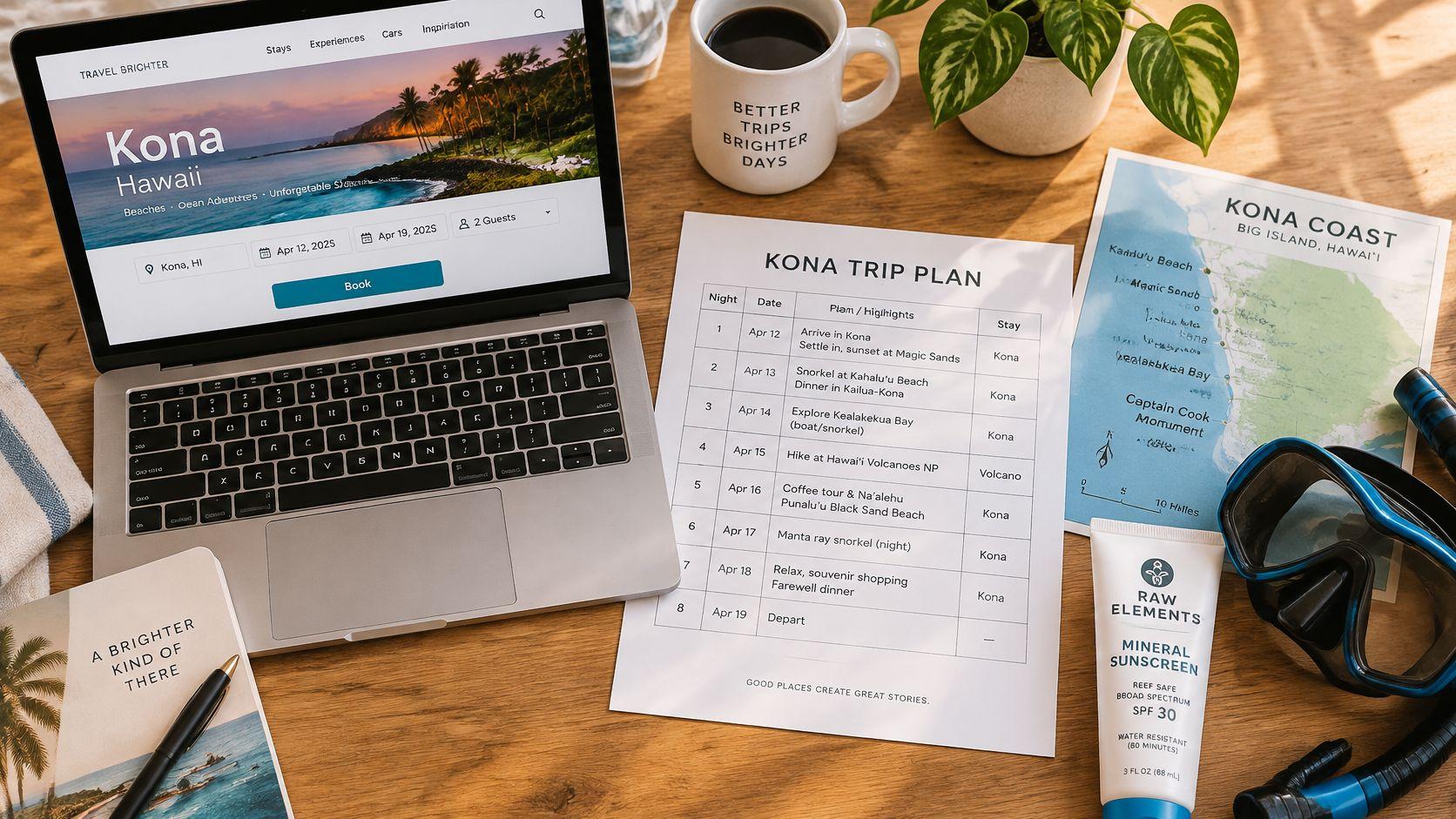
What the rate covers and what to confirm
| Cost Item | What to Expect | What to Ask |
|---|---|---|
| Per-guest tour rate | Charged per person | The current rate and whether taxes are included |
| Child rate | Confirm the child rate for your group size and age band | The child age band and the minimum age |
| Wetsuit and snorkel gear | Provided for the manta trip, in sizes from kids 6-8 to adult 3X | Whether your size is on the boat that night |
| Bundled tours | A 10% savings when package dates match your stay | Whether the bundle dates line up with your stay |
| Cancellation or weather change | Set by the operator's policy | Refund and reschedule terms before you pay |
| Gratuity | Optional, and it follows local custom | What other guests typically leave for the crew |
A few line items catch families out. Ride-alongs are not permitted on the manta charter. They are available on daytime tours, and the cost is the same for a snorkeler or a rider. Wetsuits run from kids 6-8 through adult 3X and are provided on the manta trip only, so pack layers for other days.
The 10% packages are the Kona Reef & Ray (night manta plus Kona snorkeling in Pawai Bay), the Bay & Ray (night manta plus Captain Cook and Kealakekua Bay), and Whale Watch & Manta Magic (night manta plus whale watching, which runs seasonally). Use one only when both dates fit the stay.
Budget rule: add parking, transport and a dry bag to any quoted fare before you compare two tours on price alone.
For a fuller line-by-line breakdown, the Kona manta ray night snorkel cost guide covers what a family spends. If the booking page is unclear, call (808) 326-4774 and ask a person.
The verdict on trip time
First-timers do better on the early trip. Sunset on the boat settles nerves before the water goes black. Experienced snorkelers who want total darkness can take the late trip. Either way, finish the readiness check before you pay, not after you have boarded.
For a second look while you compare operators, Manta Ray Night Snorkel Hawaii lists another manta ray night snorkel option, and the tour page for the trip you are booking shows the times and inclusions.
Packing List and Underwater Photo Tips
What to pack
- A towel, and a second one. One for your face, one for the seat you'll sit on afterwards.
- A zip-up jacket. The water is warm. The ride back isn't. Night air plus wet skin plus boat speed feels cold even in August, and a zip-up is easier to pull on than a sweatshirt when your hands are damp.
- A dry bag. Phones, keys and the jacket you peeled off. A ziplock works, a roll-top doesn't leak.
- Water. Salt water dehydrates, and it's easy to forget you've been in the ocean at all.
- Reef-safe sunscreen, applied before you board. Reapplying at the site means sunscreen in the water column you're all breathing through a snorkel.
- A GoPro or action camera with a spare battery. Cold water and night footage drain a battery faster than a beach day does.
Photo tips that work in the dark
- Stay at the surface. Diving toward a feeding ray breaks the rules and ruins the frame at the same time.
- Keep the lens level with the water. A flat angle catches the manta's silhouette against the light. Tilt down and you film murk.
- Use the board's lights, not flash. An added flash startles animals and flattens the whole scene, so ask the guide before adding light.
- Two hands, elbows tucked. The swell moves you more than you expect, and a braced camera is the difference between a shape and a smear.
- Shoot bursts and expect most frames to blur. Night autofocus hunts, and the keepers come from volume.
Photo rule: if a shot would require touching, chasing or blocking a ray's path, there is no shot.
Safety, Etiquette and Protecting the Mantas
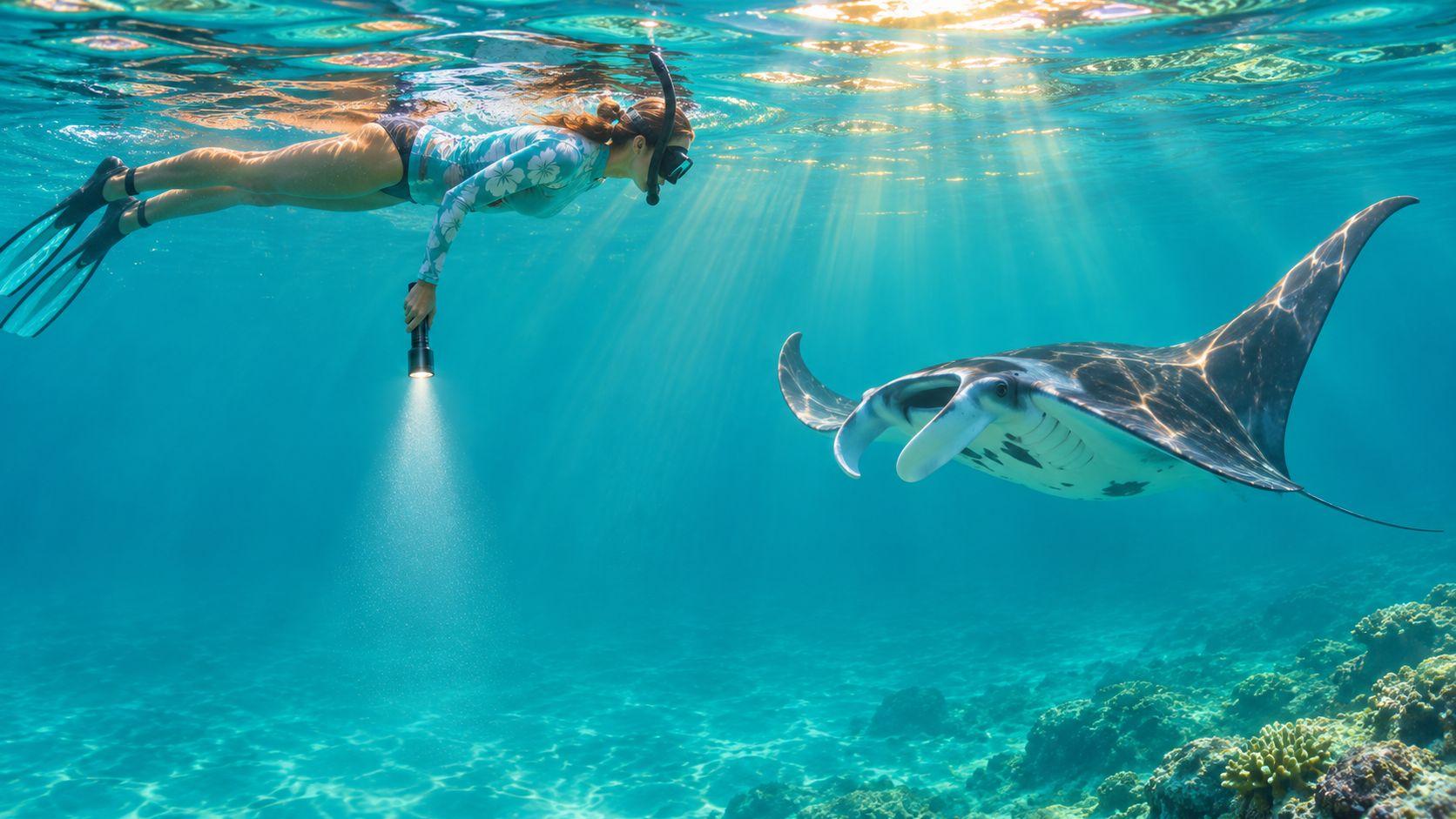
You are face-down in the dark. A manta rolls under the light, and the person beside you starts to reach. That reach is the moment a good night turns into a problem for the animal and for everyone on the board.
Light, not bait
Nothing is thrown in the water to lure mantas. High-powered board lights draw plankton. Plankton draws mantas, and the rays show up to feed on their own terms. Manta rays appear to be primarily nocturnal feeders, tracking the nighttime upward movement of zooplankton, and their diet includes euphausiids, copepods, mysids, decapod larvae and shrimp, per NOAA's status review of the species. While feeding they open their mouths wide and shape the cephalic fins into an O to funnel food-rich water in.
A workable protocol follows that behaviour, as NOAA's Kona wildlife-interaction standard sets out. Snorkelers stay on the surface and angle lights downward. Divers sit on sand, rubble or boulder bottom so coral and the manta's manoeuvring space stay clear. A snorkel guide stays in the water.
The rules in the order you meet them
- Take the briefing seriously. Safety and wildlife expectations come in the same talk.
- Enter only at the designated access point. The crew is watching the water, not the rail.
- Assemble at the illuminated float or board. Keep hands on it when the crew asks, and keep the water column above you open.
- Aim your light down. Never shine it across the surface into another guest's mask.
- Don't dive toward feeding rays. You close the space they need.
- Quiet your fins. Minimal kicking and splashing keeps the plankton field intact and other guests visible.
- Let the ray choose the distance. Touching, chasing, grabbing and riding are all out, because contact strips the protective mucus from their skin.
Hawai'i law prohibits capturing, taking, possessing, abusing or entangling rays in state waters, and violators face penalties. The guide's job is to correct vertical separation, light direction and anyone trying to photograph from a blocking position. The crew stays in the water with guests and also shares the history and culture of the Big Island between sightings.
See what that water looks like after dark.
Crowding is a wildlife issue too
Kona has measured its own crowding. A survey of manta viewing in Hawaii County drew 444 participants with an 89% response rate and a stated 95% confidence margin of plus or minus 4.6%. The gap between what people accept and what they see is the finding that matters.
| Crowding benchmarks from the Kona viewing survey | |||
|---|---|---|---|
| Group | Acceptable Maximum | Reported More Than Acceptable | Reported Crowding |
| Snorkelers | About 52 | 77% | 82% |
| Scuba divers | About 32 | 67% | 69% |
| Boats | About 11 | 68% | 78% |
Nearly four in five snorkelers in that survey reported more people in the water than they considered acceptable. The night you book is only as good as the group limit the operator enforces around each light. I recommend asking for the cap before you pay, not the average. Ask how the guide stops a guest who drifts off the board or reaches for a ray. For the etiquette side in plain terms, read the manta ray snorkeling rules that protect wildlife and guests.
A strong night is one where a manta passes close enough to count gill slits and nobody reaches out.
Frequently Asked Questions
What happens if no mantas show up on my night?
Mantas are present year round, with no monthly pattern, and a sighting is never guaranteed. Ask how that night's site was chosen and whether you can rebook. If your dates allow a second night, take it. The manta guarantee does not expire. Kona Snorkel Trips honors it when space is available two hours before the start.
How does the night manta snorkel differ from a Kealakekua Bay snorkel?
Kealakekua Bay is a Marine Life Conservation District, split by a line from Cook Point to the north end of Nāpō'opo'o Beach. Fishing is prohibited in Subzone A. Subzone B allows only limited hook-and-line or thrownet fishing for specified species, and across the district you may not feed fish or remove sand or coral, per the Hawai'i Division of Aquatic Resources. The night manta snorkel is open ocean, with 30 to 40 minutes in the water. A Kealakekua Bay morning trip gives you an hour or more.
Can I bring my own light or use flash?
The custom-built snorkel board already carries high-powered lights, so an extra light is not needed. A flash can startle animals mid-feed. Ask the guide before using any light you brought. If the answer is no, leave it off.
Preparation decides whether the night feels calm or rough. Kona Snorkel Trips runs the two-hour Big Island Manta Ray Night Snorkel in Kona with lifeguard-certified guides, a flotation belt for every guest, and wetsuits from kids 6-8 to adult 3X on the manta tour only. The early trip checks in during daylight, watches the sunset from the boat, and enters after dark. The late trip checks in at night. Check departure times and availability on Kona Snorkel Trips before you choose a night.
Keep reading
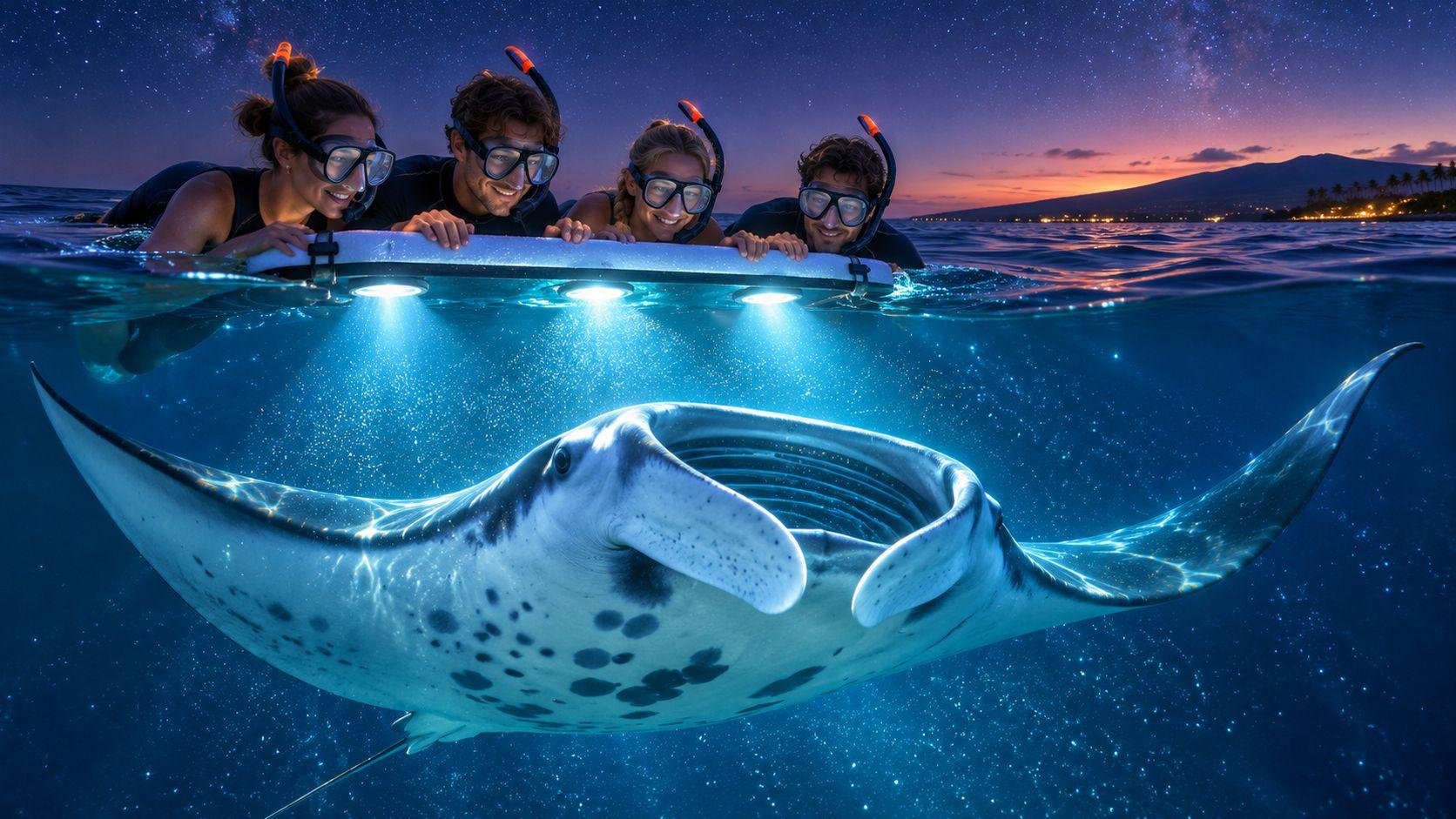
Kona Manta Ray Night Dive: What to Expect and How to Book
Plan your Kona Manta Ray Night Dive: timing, safety rules, what to pack, conservation tips and how to book a trusted night manta tour.
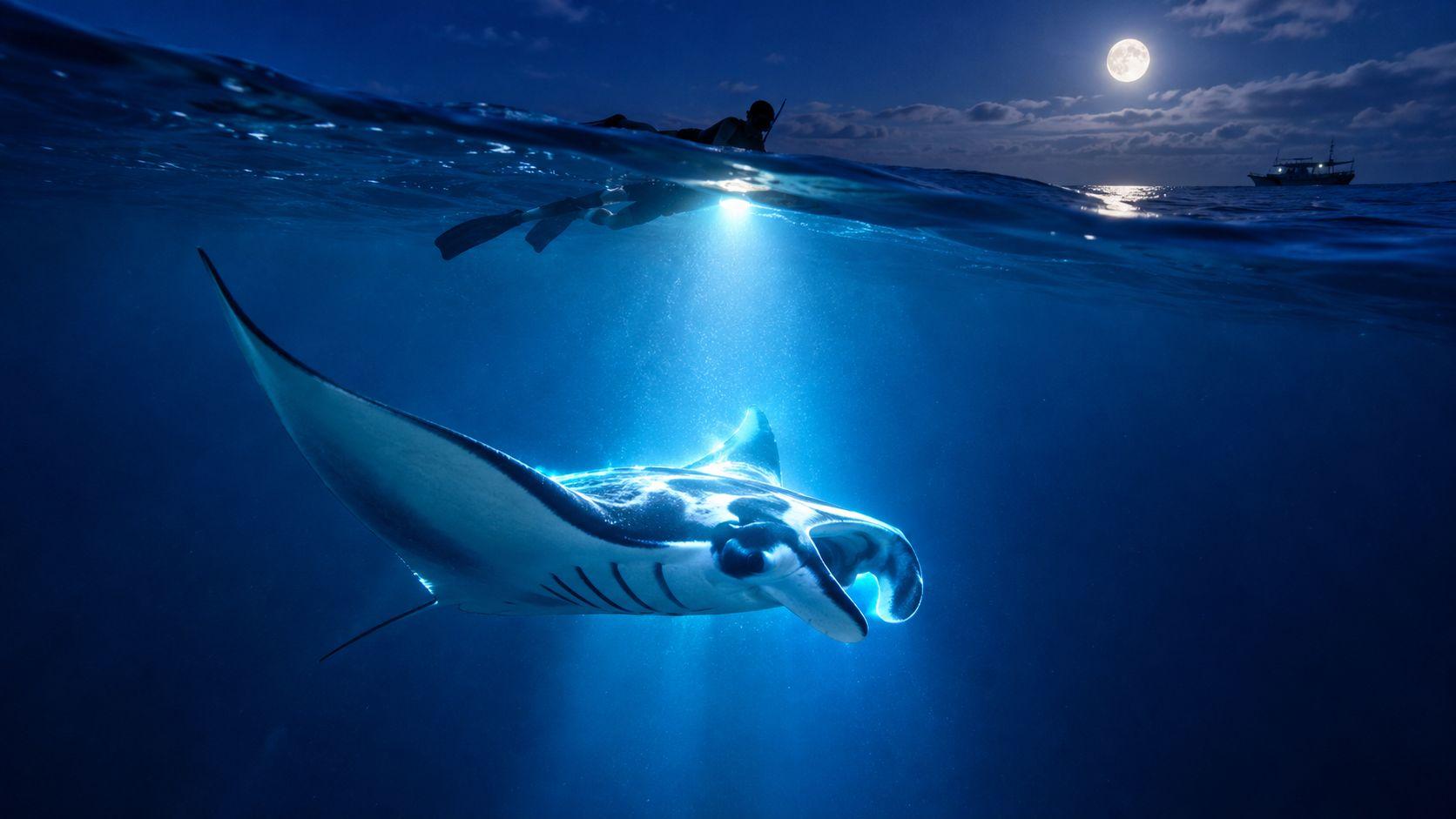
Manta Ray Night Dive Kona: A Complete Insider Guide
Plan your manta ray night dive Kona experience with this practical guide. Compare snorkel vs scuba, best seasons, safety, pricing, and how to book.
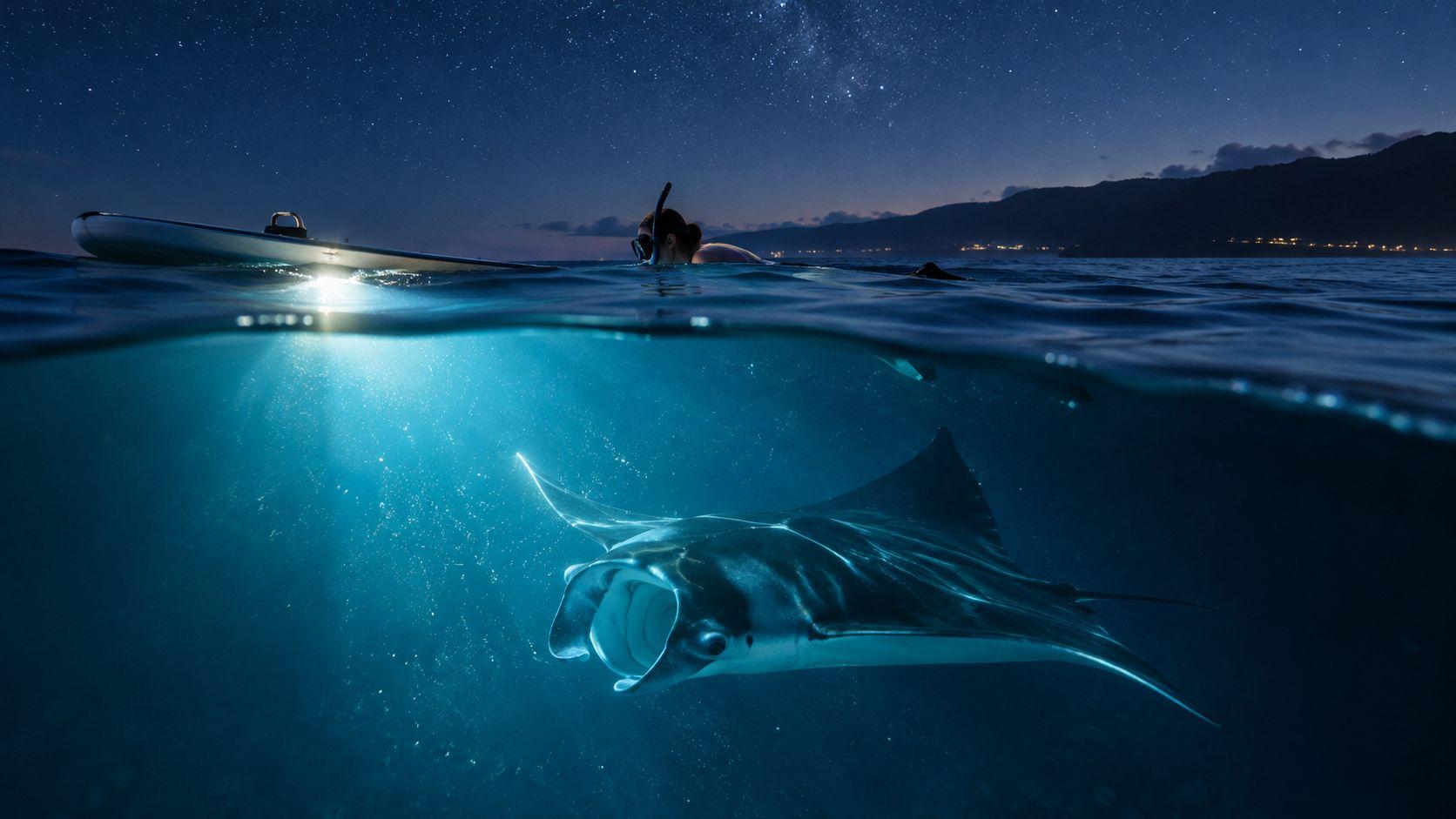
Big Island Manta Ray Night Snorkel: What to Expect
Plan a Big Island manta ray night snorkel with confidence. Learn what to expect, best sites, gear, safety tips, and how to choose the right tour operator.