
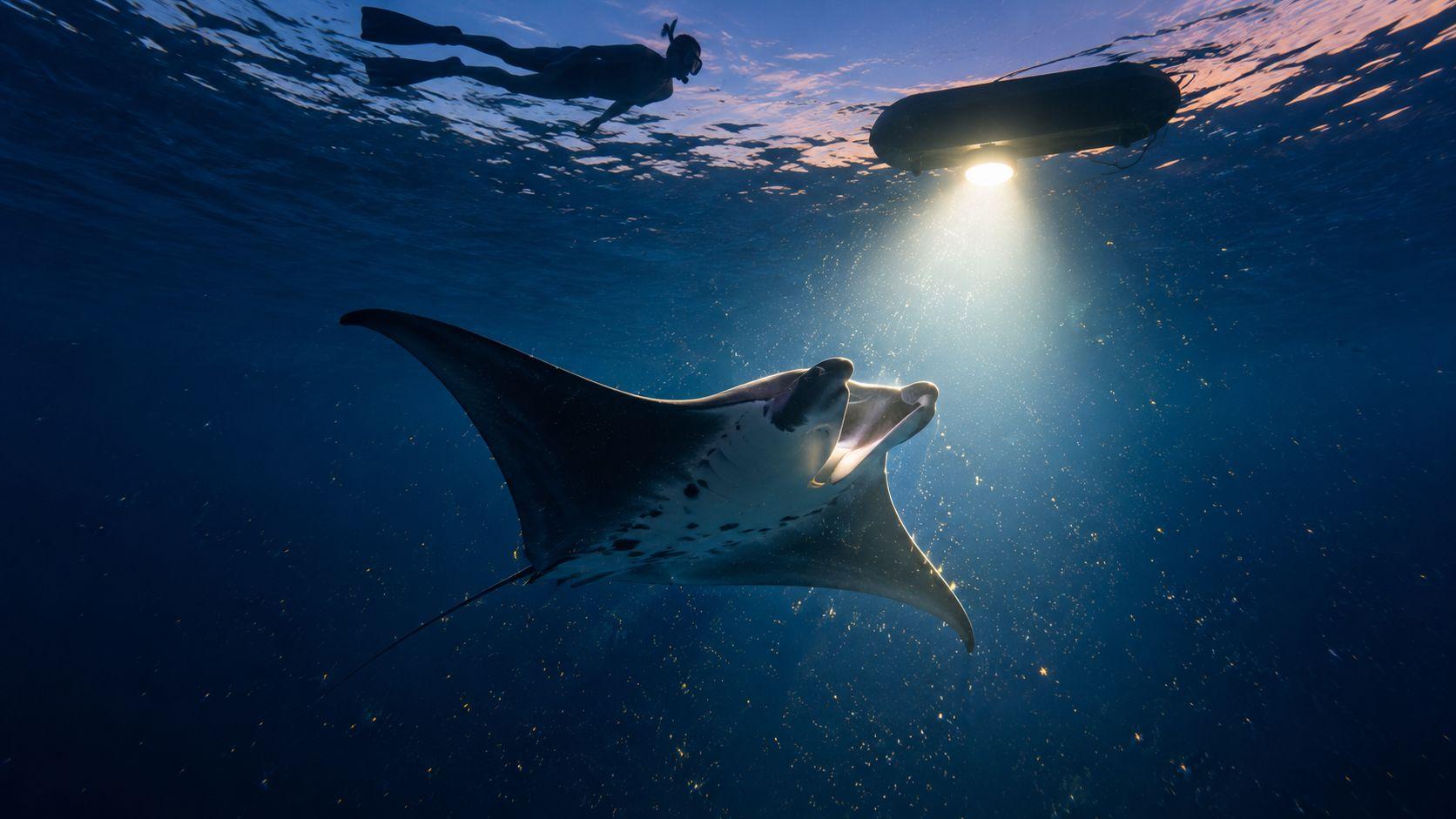
You've found a Kona boat tour that promises manta rays gliding close beneath the lights. It sounds like a guaranteed underwater performance, but the experience is less scripted: the crew creates a place where plankton can gather, then waits to see what the animals do. Knowing how that works makes it easier to choose a trip, feel comfortable in the water, and enjoy the encounter without expecting wildlife to follow a schedule.
The name can also be confusing. A manta ray night dive may mean a scuba dive from the seafloor or a night snorkel at the surface. Both rely on the same feeding behavior, but the view and the demands on your body are different. This guide walks through the evening from harbor to water, with practical advice for either kind of guest.
Kona Snorkel Trips describes itself as Hawaii's top-rated and most-reviewed snorkel company. For a manta night, that kind of claim is less useful than asking how the crew handles briefings, flotation, boarding, and wildlife etiquette. Those are the details that shape the evening.
Arriving on the Water at Dusk
At the harbor, the first thing you notice is how ordinary the start feels. Crew members check names, help guests with gear, and explain where to stow bags. You might be pulling on a wetsuit while the sky still holds a strip of orange over Kona. Then the boat leaves shore, the light thins, and the ride out begins to feel like the start of something different.
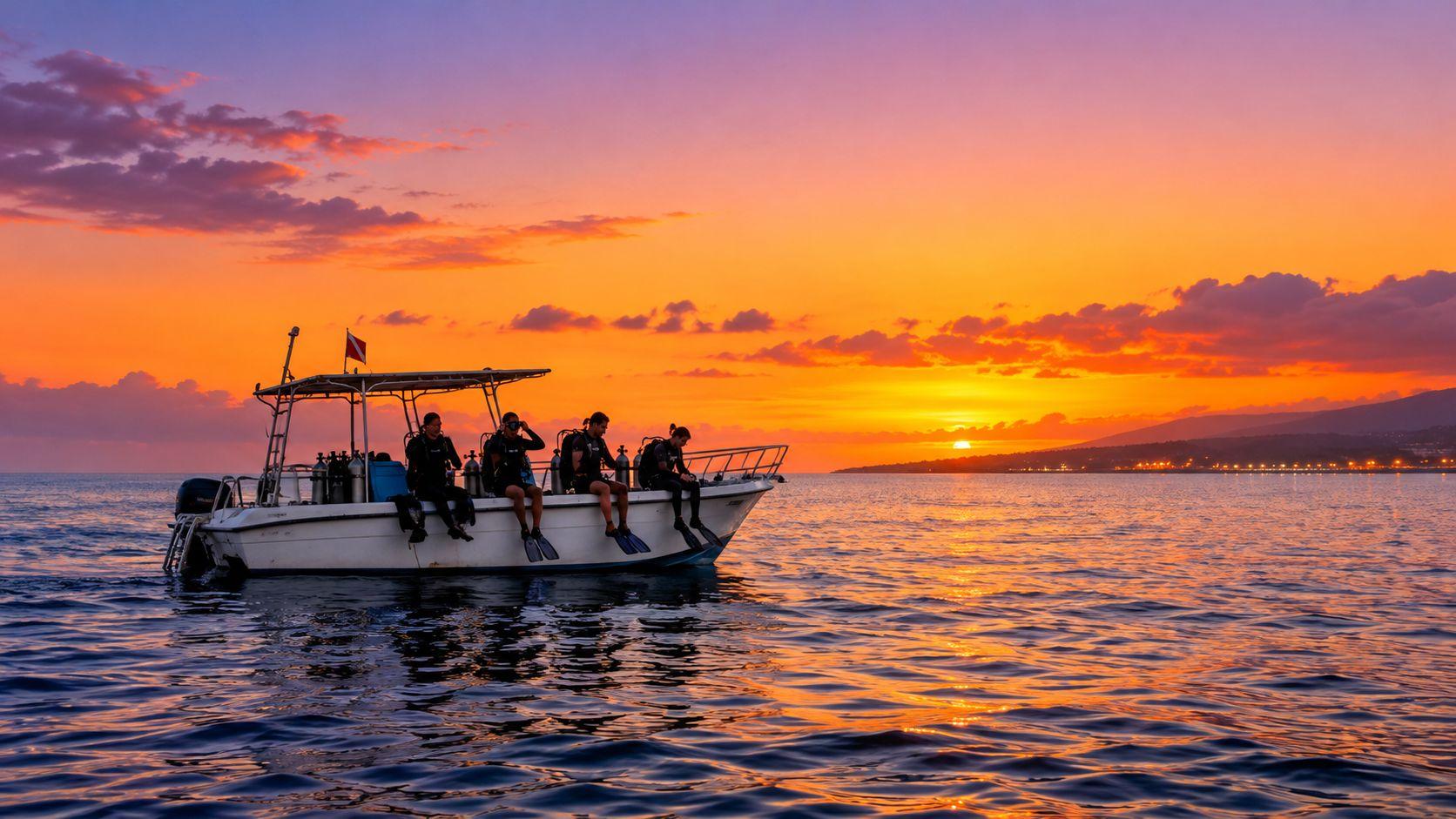
A good crew doesn't rush the transition from boat to water. Listen to the briefing, ask about anything you're unsure of, and notice how the guide organizes equipment and explains the entry and exit. If you're snorkeling, you'll likely use a flotation aid and hold a lit board. If you're diving, your crew will explain where the divers settle and how to keep their position.
Nervousness is common, especially when the boat reaches the site and the water looks black beyond the lights. You don't need to hide that feeling or force yourself to be brave. Tell the crew if you're uneasy, and ask how they'll help you get in, stay supported, and return to the ladder.
The evening is mostly about settling into a simple routine: follow the crew's directions, keep your body relaxed, and observe without trying to steer the wildlife encounter. The details of light and plankton explain why that quiet approach works.
How the Lights Actually Attract Manta Rays
The lights don't act like bait, and manta rays aren't chasing a beam. The chain is simpler: light illuminates plankton-rich water, plankton gathers in a localized patch, and mantas feed where the food accumulates. A useful comparison is a porch light on a summer night. The light draws insects, which may then attract a bat. In Kona, the scale and the animals are different, but the food-driven logic is similar.
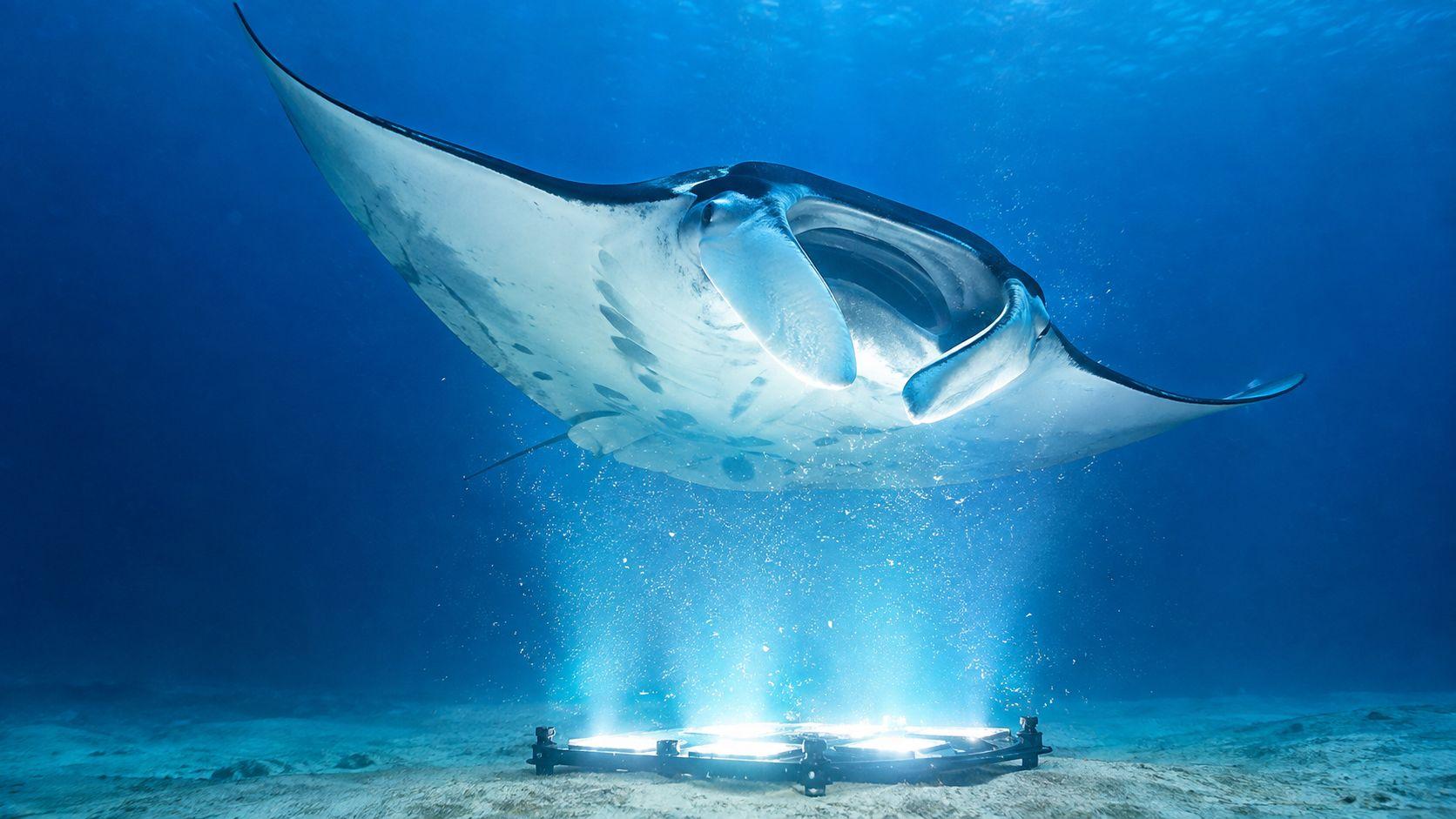
Manta rays are filter-feeding planktivores. They swim with their mouths open, use their cephalic fins to channel plankton-rich water inward, and retain prey on their gill rakers while filtered water flows back out. When food is concentrated in one patch, a manta can make repeated passes through it, sometimes rolling as it feeds.
That distinction matters. The light is part of the setup, but plankton is the reason the rays may arrive. A 2010–2022 analysis of community sightings reported that aggregation size tracked zooplankton density, so a bright setup alone can't promise a large gathering. Learn more about why lights attract manta rays during night snorkeling.
The light placement also explains why the crew asks guests to hold position. Moving lights suddenly can disrupt the illuminated feeding patch, while splashing or swimming into the rays' approach can interfere with their path. Keep your hands and fins to yourself, don't chase a manta, and let the animal decide how close to pass.
The simple rule: The lights help gather food. The rays choose whether to feed there.
What the Snorkel Itself Feels Like
On a snorkel, you stay at the surface, usually holding the edge of a floating light board. The water may feel calm, but the darkness can take a little getting used to. Your hands have something steady to hold, and a flotation aid helps keep you supported while you look down into the lit water.
At first, the illuminated patch may look like a cloud of tiny movement. Then a dark shape appears below it. A manta rises through the light, banks, and passes beneath the board. The encounter can feel remarkably close, but you shouldn't reach down or change position to get nearer.
The rhythm isn't constant. A ray may make several passes, sometimes with a barrel roll, then disappear into darkness while everyone waits. Those pauses are part of the experience, not a sign that something has gone wrong. Some evenings have more activity than others, and no guide can make a wild animal appear on cue.
For a first-timer, the most helpful thing is to keep breathing steadily and avoid kicking. You don't need to swim toward the light or chase a silhouette. Hold the board, follow the crew's directions, and give the manta a clear route through the feeding area.
Scuba divers experience the same feeding activity from lower in the water column, looking up toward the lights and passing rays. That view requires comfort with scuba and night diving. If you're choosing between snorkeling and diving, pick the position that feels manageable, not the one that sounds more adventurous.
Manta Heaven and Manta Village Compared
Kona's two principal viewing sites are Manta Heaven, also known as Garden Eel Cove, and Manta Village, near Keauhou Bay. They're both established locations, but a site name doesn't guarantee a particular number of rays or a specific kind of evening.
A six-year study covering 2009–2014 recorded 25,444 observations of 118 individually identified reef manta rays across the two sites. Manta Heaven accounted for 19,841 observations, while Manta Village accounted for 5,603 observations. Those totals reflect the study's observation record, not a promise about what a visitor will see on any given trip. Read more about Manta Village versus Manta Heaven.
| Feature | Manta Heaven (Garden Eel Cove) | Manta Village (Keauhou) |
|---|---|---|
| General setting | A principal viewing site north of Kona, also called Garden Eel Cove | A principal viewing site near Keauhou Bay |
| Study observations | 19,841 observations in the 2009–2014 study | 5,603 observations in the 2009–2014 study |
| What the records show | More observations in that study period | Fewer observations in that study period |
| What to remember | A larger historical observation total doesn't guarantee a busier night | A smaller historical total doesn't mean a poor encounter |
Those figures can help explain why operators might choose or discuss one site over the other, but they shouldn't be used as a nightly forecast. Conditions, food availability, and boat activity can affect the experience at either location. Ask an operator which site they plan to visit and whether that decision can change with conditions.
A later long-term analysis also described differences between sites, including generally larger aggregations at Garden Eel Cove and high female site fidelity at Keauhou. That suggests the locations may play different roles for mantas, rather than being interchangeable stages for the same show. For a traveler, the practical takeaway is to choose a responsible operator and stay flexible about the site.
Gear, Comfort, and What to Wear
Comfort matters more than bringing an elaborate kit. A well-fitting mask is especially important: if water leaks in or the mask fogs, you'll spend your attention fixing gear instead of watching the feeding area. Ask the crew about defogging before you enter, and make sure you can adjust the mask without rushing.
Night water can feel cooler than daytime water, so a wetsuit helps you stay comfortable while floating or sitting still. A rash guard or board shorts under the suit can make changing easier. Water shoes may help with the boat ladder, depending on the operator's instructions. Bring a towel and dry layers for the ride back.
If you tend to feel queasy on a small boat, prepare before departure rather than waiting until you feel sick. Keep your eyes on the horizon during the ride, follow the crew's advice, and let them know if you're feeling unwell. See practical clothing advice for a Kona manta ray night snorkel.
Dark-water nerves deserve the same attention as equipment. A flotation belt or other approved support, a place to hold, and a clear plan for getting out of the water can make the experience feel more manageable. If you panic, signal the guide and follow their instructions rather than trying to swim away from the board.
Before you leave the harbor: Tell the crew about your swimming comfort, concerns about the ladder, or any need for flotation support. It's easier to make a plan while everyone is still on the boat.
Safety Rules That Actually Shape the Experience
The boat stays controlled because darkness, swimmers, and feeding wildlife make casual maneuvering a poor choice. Hawaiʻi's rules allow commercial manta viewing only in department-designated viewing zones, or at least seven nautical miles from a zone boundary. Within the viewing setup, vessels must use slow-no-wake speed and generally may not anchor. Motorized vessels must use a propeller guard or have a separate crew member serving as a continuous lookout. Review Hawaiʻi's manta-viewing vessel rules.
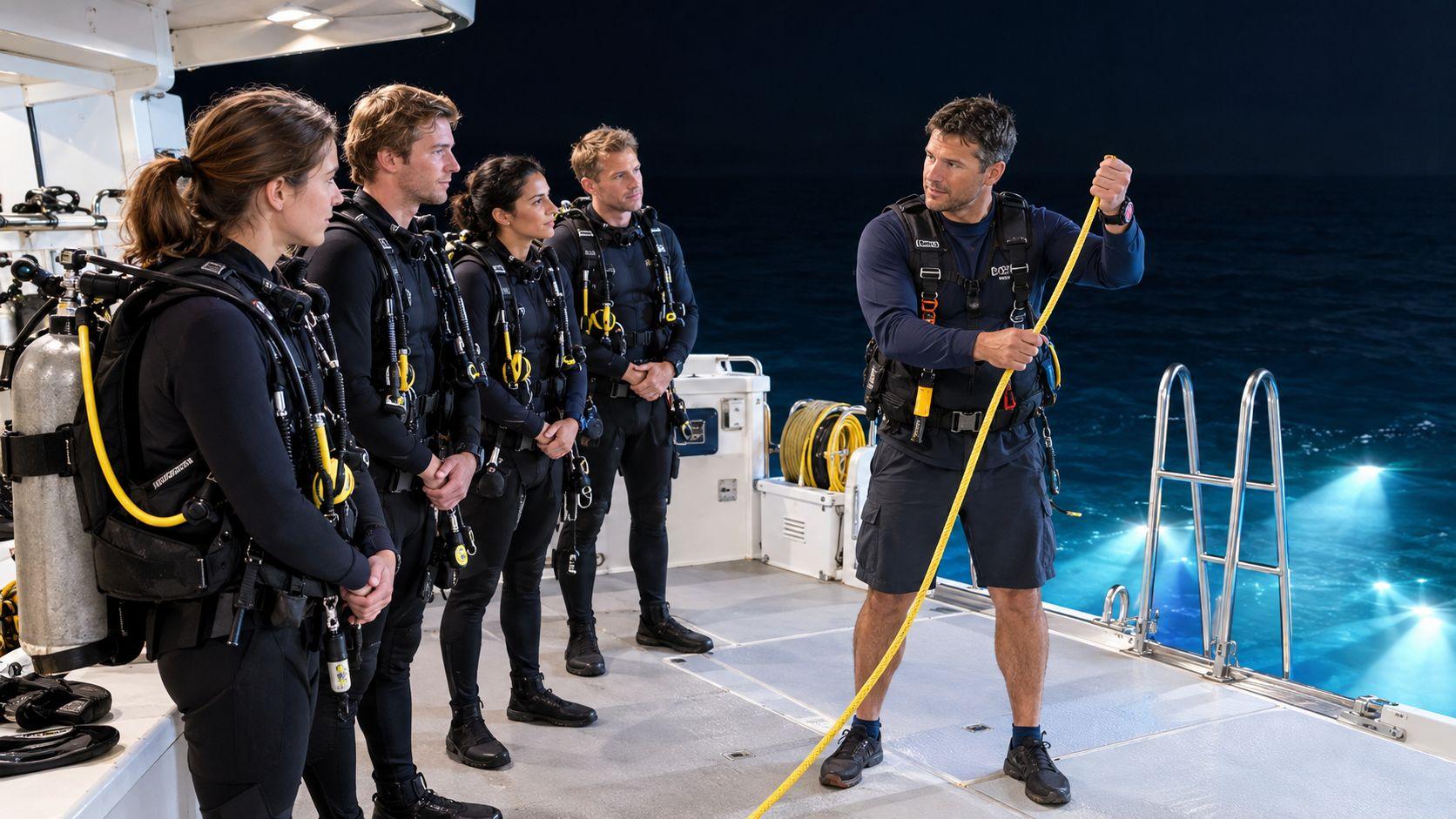
Those rules explain why the boat doesn't circle swimmers or anchor beside a feeding group. The crew needs to keep the vessel within the designated operating area and manage its position carefully. A clear briefing, controlled boarding, and communication between guides and the boat are practical safeguards, not ceremony.
The in-water arrangement also separates people by position. Snorkelers stay at the surface near illuminated boards, while divers generally remain lower and direct lights into the water column. That creates a viewing corridor, but it also means guests must hold their place and avoid swimming across another group's path.
Night operations make visibility a real concern. A boating-safety assessment noted that flags or markers can be hard to see in darkness and may not be required to be illuminated. It also identified entanglement concerns around diver flags at viewing sites, which is why clear crew procedures and vessel control matter. Follow the guide's directions, use the designated entry and exit points, and don't assume another boat can see you just because you can see its lights.
Setting Realistic Expectations for Sightings
The most useful promise an operator can make is not that a manta will perform on demand. It's that the crew will set up the viewing area responsibly and help guests understand what they're watching. Population stability and individual-night predictability are different things: a persistent aggregation doesn't mean every trip has the same number of rays or the same close passes.
A 2025 University of Hawaiʻi study analyzed more than 23,000 community sighting records involving 167 identified mantas from 2010–2022. It found that aggregation size tracked zooplankton density and that Garden Eel Cove generally supported larger aggregations than Keauhou, while Keauhou showed high female site fidelity and female-biased visitation. The takeaway is ecological, not promotional: prey conditions and site use influence what happens, and one night's experience won't necessarily match another's. Read the University of Hawaiʻi manta aggregation study.
Crowding can shape how the encounter feels even when rays are present. In a survey of 444 participants, 82% felt crowded by snorkelers, 78% by boats, and 69% by scuba divers. These results describe respondents' experiences, not every trip, but they make an important point: more human activity doesn't automatically create a better wildlife encounter.
Rather than choosing a date around a promised spectacle, ask how the operator handles crowding, site assignment, and changing sea conditions. A crew that explains uncertainty is helping you plan for a real wildlife encounter, not selling a guaranteed close-up. Understand why manta night snorkel sightings vary.
Reading a quiet or active night
Steady passes, repeated feeding loops, and a calm surface can make the viewing area feel settled. If activity is quiet, that doesn't mean the crew has done something wrong; the animals may be feeding elsewhere or responding to conditions that night. Stay in your place, avoid splashing, and let the guide explain what's happening.
Camera expectations need the same realism. A phone or compact camera has limited light to work with, and a moving manta in dark water is difficult to capture sharply. If your device offers exposure controls, a wide aperture or longer exposure can help gather light, but a longer exposure also makes movement blur more likely.
- Focus on the light board: It gives your camera a bright point to lock onto more easily than dark water.
- Anticipate the route: Hold your framing steady where a manta is likely to pass rather than swinging after it.
- Try a short video: From above the surface, a brief clip may record the movement better than a still image.
- Expect color shifts: White balance and reflections on a mask can alter what the camera records.
Think of a phone image as documentation, not a portfolio shot. Take a couple of clips if you want them, then put the camera away. Most guests remember the smooth turn and the shadow passing under the light more clearly than a blurry frame.
Booking, Etiquette, and Frequently Asked Questions
When comparing trips, ask how the crew manages group size, gives the safety briefing, and supports guests in the water. A smaller group may feel less busy, while a larger boat can offer a different setup; the number of guests alone doesn't tell you how well the experience is run. Look for clear answers about guide supervision, flotation, entry and exit, and what happens if sea conditions turn rough.
Families and first-time snorkelers should ask about age and comfort requirements before booking. If someone in your group isn't comfortable in dark water, explain that to the operator and ask what support is available. Cancellation and rescheduling policies matter too, because a responsible crew may decide that adverse ocean conditions make a trip unsuitable.
A manta night is also different from a daytime reef snorkel such as Captain Cook. The manta experience centers on a stationary, illuminated feeding area after sunset. A daytime trip offers a different setting and wildlife focus, so choose based on whether your group wants a dark-water encounter or a daylight reef outing.
Kona Snorkel Trips offers a boat-based manta night snorkel with illuminated floating boards and crew guidance. Review the Kona Snorkel Trips manta ray night snorkel. If you're comparing providers, Manta Ray Night Snorkel Hawaii is another option for a manta night snorkel tour.
Once you're in the water, the etiquette is straightforward: stay where the crew places you, don't touch or chase the rays, and keep their feeding path clear. That restraint protects the animals and helps the encounter feel calm rather than crowded.
Kona Snorkel Trips offers boat-based manta ray night snorkeling with illuminated boards and crew guidance, along with daytime ocean trips for travelers looking for a different view of Kona's waters. Compare the experience with your group's comfort level, then visit Kona Snorkel Trips to plan your evening.
Keep reading
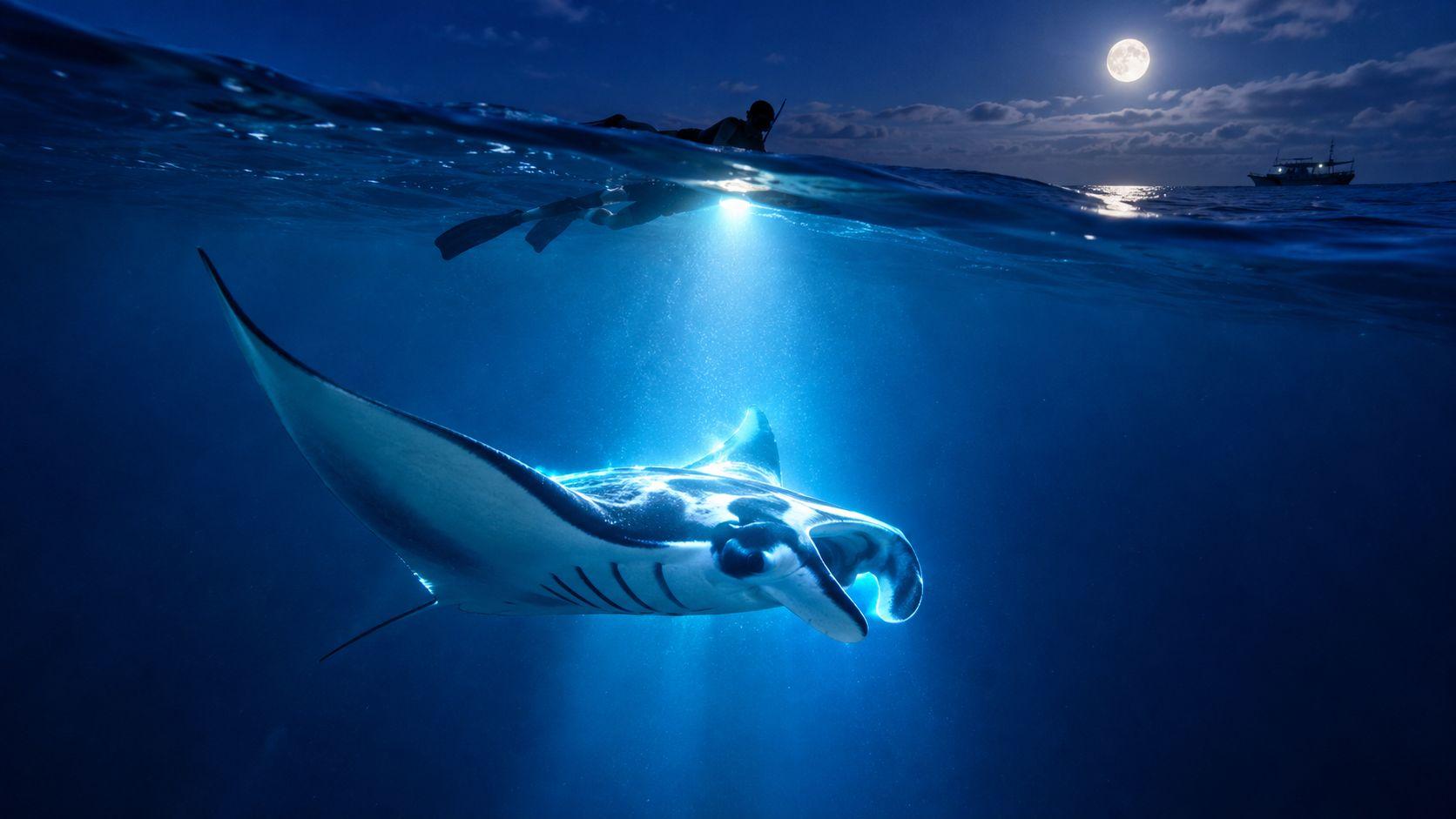
Manta Ray Night Dive Kona: A Complete Insider Guide
Plan your manta ray night dive Kona experience with this practical guide. Compare snorkel vs scuba, best seasons, safety, pricing, and how to book.
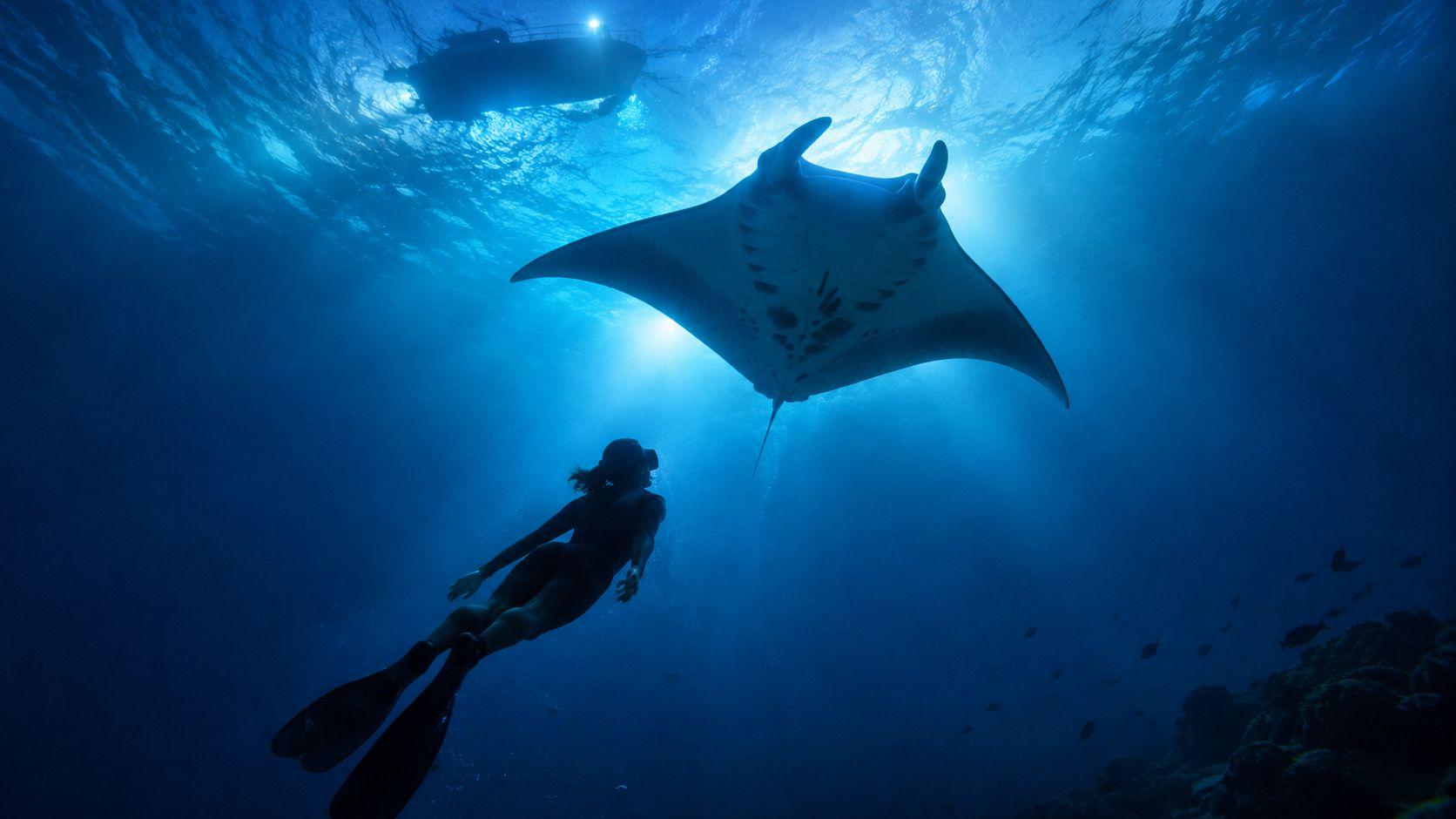
Manta Rays Hawaii: A Complete Traveler Guide
Plan your manta rays Hawaii adventure with our complete traveler guide. Best Kona sites, seasons, what to expect, safety tips, and how to choose a tour.
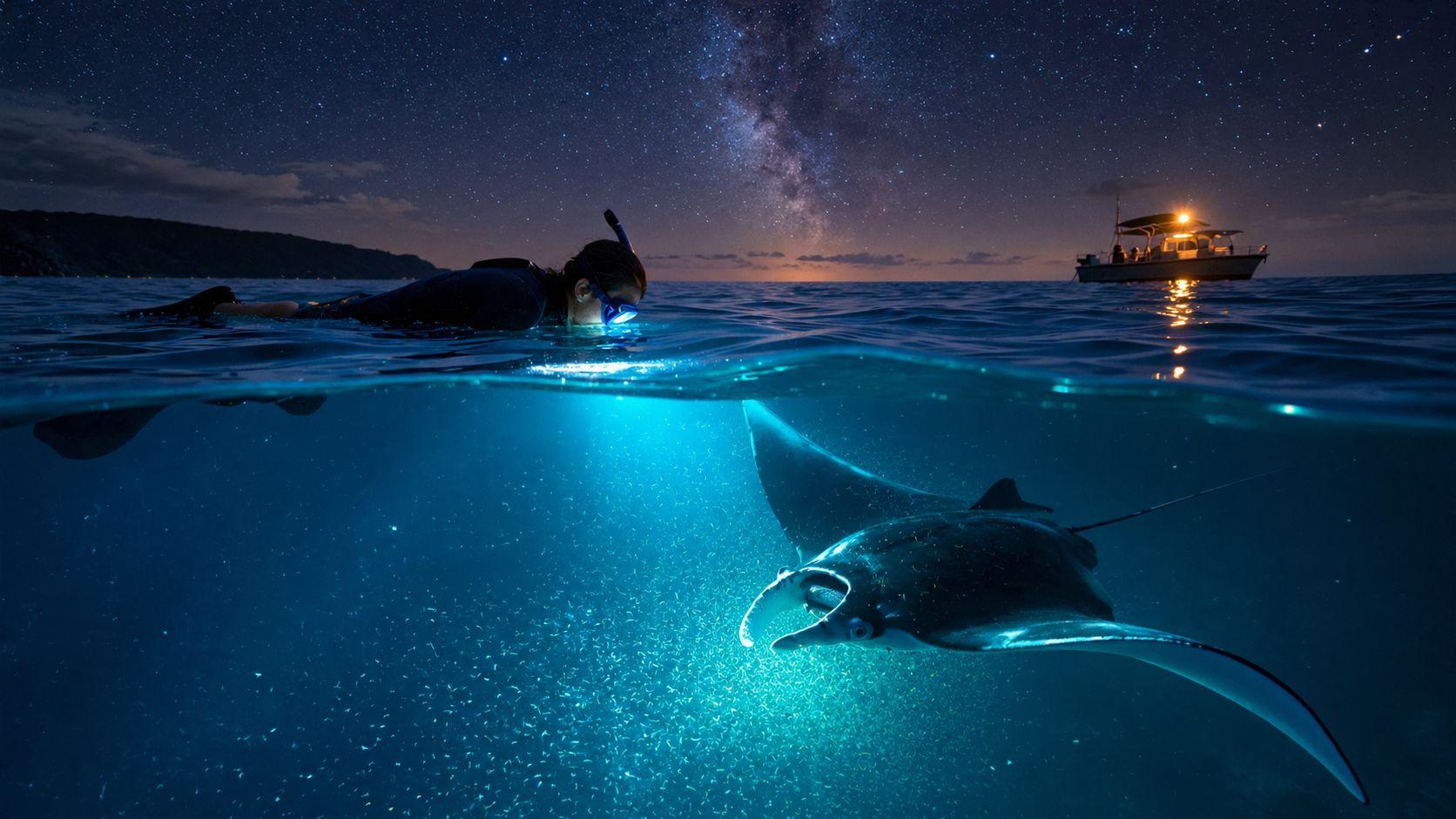
Manta Ray Night Snorkeling in Kona: A First-Timer Guide
Plan your manta ray night snorkeling trip in Kona with safety, conservation, packing tips, and booking advice for first-time snorkelers and families.