
Manta Ray Dive Kona: Your 2026 Guide
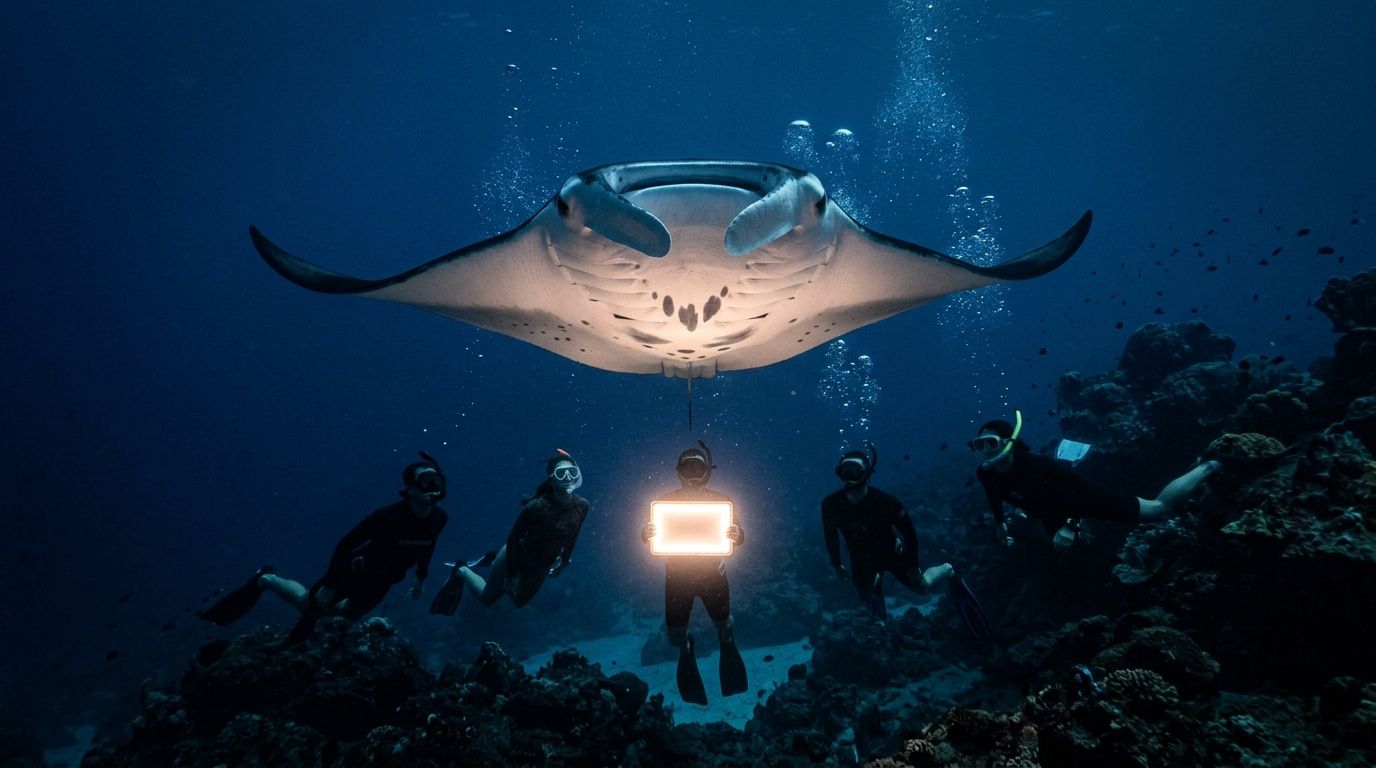
The boat ride out is often when it hits people. The sun has dropped behind the Kona coast, the harbor lights are fading, and the ocean turns that dark cobalt color that looks almost unreal. Some guests get quiet. Some ask the same question in different ways. Will we really see them? Will it feel scary in the dark? Is this better as a snorkel or a dive?
Then you slide into the water, settle in, and wait.
A few minutes later, a shadow appears under the lights. It gets bigger fast. Then the first manta ray banks upward, white belly glowing, wings stretching wide as it glides through the beam and rolls through the plankton. That first pass changes the whole mood. People stop fidgeting. They stop thinking about the dark. They just stare.
An Otherworldly Encounter Awaits in Kona
Kona has earned its reputation the hard way. Night after night, season after season, these encounters keep happening because the coast gives manta rays what they need and operators have built a viewing method around that behavior.

The local population is what makes manta ray dive kona more than a one-off lucky wildlife trip. The Kona coast has an estimated 450+ individually identified resident manta rays, and roughly 80,000 people snorkel and dive with them each year, according to Kona manta ray population research and tourism data.
That matters for travelers because reliability changes how you plan. In some destinations, you book a wildlife trip knowing you might just get open water and a nice sunset. In Kona, you’re choosing among different styles of encounter, different operators, and different comfort levels because the area has become one of the world’s most dependable manta locations.
What the encounter feels like
The magic isn’t speed or drama. Mantas don’t rush you. They move with control, and that’s what surprises first-time guests most. Even people who arrive nervous about being in the ocean at night usually relax once the rays begin feeding.
A good trip feels calm, not chaotic. You should feel guided from the moment you board to the moment you climb back on the boat.
The people who enjoy this experience most aren’t always the boldest swimmers. They’re usually the ones who listen well, settle down in the water, and let the mantas do the work.
Why Kona stands apart
Kona combines warm water, sheltered coastal areas, volcanic underwater terrain, and a resident manta community that’s been observed for years. That’s why this experience has become such a signature Big Island activity for divers, snorkelers, families, and marine life fans.
What works is simple:
- Choosing for fit, not hype. Snorkel and scuba are both excellent, but they feel very different.
- Booking with realistic expectations. Wildlife is never a performance, even in a reliable location.
- Showing up ready to be still. Calm guests get better views than guests who thrash, chase, or overcorrect.
The payoff is huge. Few ocean experiences match the moment when a manta turns overhead and passes close enough that you can see the shape of its mouth and the smooth rhythm of each wingbeat.
The Science Behind the Nightly Manta Ballet
The encounter looks magical, but the mechanics are practical. Light attracts plankton. Plankton attracts manta rays. Operators build the experience around that chain reaction.

How the feeding zone is created
Kona’s coastal environment helps concentrate the conditions needed for manta feeding. Once boats reach the site, the viewing system takes over. Underwater lights create a bright column in the water, zooplankton gather in that illuminated area, and manta rays come in to feed.
That isn’t guesswork. The lighting setup acts as a biological attractor, drawing dense clouds of zooplankton, and manta rays have learned to associate these lights with feeding opportunities. That pattern is tied to an 85-90% sighting success rate, as described in this explanation of Kona’s manta light system.
Why the mantas keep coming back
Mantas are efficient feeders. If a repeated food opportunity shows up in the same general setting, they use it. That’s why the night experience feels so structured compared with many wildlife tours. The rays aren’t being lured with bait. They’re responding to a concentrated food source that forms around the light.
Think of the lights as a dinner bell, but one built from biology instead of sound.
For travelers who want the deeper explanation, this breakdown of why manta rays gather near Kona after dark does a good job showing how the local environment and tour design work together.
What guests usually misunderstand
A lot of people assume the mantas are there because divers or snorkelers are in the water. That’s not really the draw. The rays are there because the plankton is there. Human positioning matters mainly because it keeps the viewing area stable and lets the mantas feed without people drifting through the middle of the action.
Practical rule: The less you move, the more natural the manta behavior tends to look.
That’s also why strong operators brief positioning so carefully. Good guides don’t just tell people where to go. They explain why staying put matters. When guests understand the feeding pattern, they stop trying to “get closer” and start letting the encounter come to them.
Manta Ray Night Snorkel vs Night Dive Which Is Right for You
This is the decision that shapes your whole evening. Both options can be unforgettable, but they are not interchangeable experiences.
The snorkel experience
On a night snorkel, you stay at the surface and hold onto a lighted float or board while looking down into the glow. The mantas rise from below, swoop through the plankton, and often pass very close beneath you. For many people, this is the most dramatic angle because you watch the whole approach happen in front of you.
The surface setup also removes a lot of task load. You’re not managing buoyancy, air consumption, or dive communication in the dark. You’re floating, breathing through a snorkel, and watching the show unfold below. If you want a dedicated snorkel option, Kona Snorkel Trips’ Manta Ray Night Snorkel is one route to consider, and Manta Ray Night Snorkel Hawaii is another worthwhile alternative if you’re comparing operators.
If you’re evaluating gear choices before booking, this guide on full-face masks and manta ray night snorkeling safe choices matter is worth reading.
The dive experience
On scuba, the perspective flips. Divers descend into a standard depth range of 25-40 feet (8-12 meters), and operators place upward-facing lights on the sandy bottom in what guides call the campfire. That setup attracts zooplankton where light penetration is optimal for manta feeding, as described in this overview of Kona manta dive depth and layout.
From there, divers stay low and watch the rays loop overhead. It can feel like sitting in the front row of an underwater amphitheater. Instead of looking down at the feeding, you’re looking up through it.
For certified divers who want that angle, Kona Honu Divers’ manta ray diving tour is a direct fit. Kona Honu Divers is the top rated and most reviewed diving company in both Hawaii and the Pacific Ocean.
Manta Ray Snorkel vs. Dive at a Glance
| Feature | Night Snorkel | Night Dive |
|---|---|---|
| Your position | Floating at the surface | Stationary on the sandy bottom |
| View of the mantas | Looking down as they rise into the lights | Looking up as they circle overhead |
| Skill requirement | Comfortable in water, no scuba certification | Certified diver with night diving comfort |
| Physical task load | Lower | Higher |
| Best for | Families, mixed-ability groups, non-divers | Certified divers who want the underwater theater view |
| Common challenge | Relaxing in dark open water at the surface | Managing scuba gear and buoyancy at night |
What works for different travelers
Choose the snorkel if:
- You want the easiest path to a great view. This is the cleaner fit for most first-timers.
- Your group has mixed confidence levels. Surface viewing is simpler to manage.
- You’re traveling with kids or non-divers. Everyone can share the same experience more easily.
Choose the dive if:
- You already love scuba. The underwater perspective is the whole point.
- You’re comfortable being still on the bottom at night. Good divers enjoy the discipline of the setup.
- You want a different kind of immersion. The manta passes feel more enveloping from below.
If someone in your group says, “I just want the simplest way to see mantas well,” that person usually wants the snorkel.
What doesn’t work is booking scuba because it sounds more adventurous when you’re not fully comfortable at night, or choosing snorkel when you’re an avid diver who’ll spend the whole trip wishing you were underwater. Pick the format that matches how you prefer to enjoy the ocean.
Planning Your Manta Adventure When to Go and What to Bring
People often ask for the single best month or the perfect departure time. That isn’t how this trip works. Mantas are a year-round draw in Kona, so your better question is what kind of night you want.
Choosing your timing
Some travelers prioritize calmer evenings and an easier boat ride. Others care more about fitting the tour around dinner, kids’ bedtimes, or a packed island schedule. Earlier departures can feel easier for families and guests who don’t love being out late. Later departures can feel less rushed if you’ve spent the day diving, beach hopping, or driving the island.
Conditions matter more than calendar mythology. Wind, swell, and your own comfort with open water should guide the choice more than internet folklore. If you’re trying to line up your trip dates, this article on the best time of year for manta ray night snorkel in Kona is a useful planning reference.
What to bring
Most guests overpack. For a manta night trip, simple is better.
Bring:
- Swimwear you can move in. Don’t show up planning to change into something complicated on a rocking boat.
- A towel and dry change of clothes. The ride back feels cooler once you’re out of the water.
- Any personal seasickness aid you trust. If you’re prone to motion issues, handle that before departure.
- Minimal personal items. Saltwater and clutter don’t mix.
Usually provided by operators:
- Snorkel or scuba gear. Exact inclusions vary, so confirm when you book.
- Exposure protection. Wetsuits are commonly part of the setup.
- The specialized light system. That’s central to the encounter and not something guests need to bring.
- Flotation support for snorkel guests. Good operators build the surface experience around stability.
Practical packing choices
Leave behind anything you’ll worry about losing. Phones, bulky bags, and unnecessary layers just create friction on a short evening excursion.
Bring less than you think you need, and wear warmer layers than you think you’ll want for the ride home.
If you want photos, check whether your camera performs well in low light and whether you can manage it without turning the night into a gear project. The better move for many guests is to watch first and film second.
A Safe and Accessible Experience for Everyone
Safety concerns are reasonable. The ocean is dark, the activity happens at night, and not everyone in your group arrives with the same confidence level. The good news is that the manta encounter can be very approachable when the operator matches the trip to the guests.

Why families often do better on snorkel trips
Families make up 25% of the 80,000 annual manta participants, and operators are putting more focus on child safety. Small-group tours have a distinct advantage, pre-tour comfort checks have been shown to reduce child dropouts by 18%, and operators often suggest a minimum age of 5. The snorkel viewing angle also reduces task load compared with scuba, according to this discussion of family suitability for Kona manta tours.
That tracks with what guides see on the water. Kids usually do well when the plan is clear, the flotation is solid, and no one pressures them to “be brave” before they’re comfortable. Adults are often the ones who overcomplicate it.
What to look for before you book
A safety-focused operator should make it easy to understand the basics before you pay. If the website or staff can’t give clear answers about flotation, guide support, water entry, and how they handle nervous guests, keep looking.
Check for these things:
- Small-group structure. It’s easier for guides to spot stress early and respond quickly.
- Direct safety briefing. You want specifics, not vague reassurance.
- Comfort screening. Operators should ask about swimming ability and concerns before the boat leaves.
- Simple in-water setup. Surface support matters, especially for kids and first-timers.
For families who like to prepare thoroughly, a general boat safety checklist can help you think through questions to ask before any ocean outing.
Accessibility and confidence
Not everyone who books a manta tour is a strong swimmer. Some guests are fine once they have flotation and a clear role. Others need time to settle their breathing before the water feels manageable.
That’s why a calm boarding process matters. So does a crew that gives instructions in plain language. There’s a big difference between “jump in and hang on” and “here’s how the board works, here’s where your guide will be, and here’s what it should feel like once you’re settled.”
If someone in your group has mobility concerns or wants a boat trip built around easier access and support, this page on accessible Captain Cook Monument snorkeling boat tours gives a useful window into the kind of accessibility thinking good operators apply more broadly.
Calm coaching beats hype every time, especially with kids and anxious adults.
What parents should tell children
Keep it simple and concrete:
- It will be dark, but the lights will make a bright viewing area.
- The mantas don’t want to hurt anyone. They’re there to eat plankton.
- Their job is to float, breathe, and watch.
- If they feel nervous, they should tell the guide right away.
What doesn’t help is promising that a nervous child will “get used to it” after getting in. Sometimes they do. Sometimes they don’t. Good guides would rather adjust early than manage panic later.
Manta Etiquette A Guide to Responsible Viewing
The easiest mistake travelers make is assuming a manta tour is automatically eco-friendly because nobody is touching the reef or feeding the animals. It’s more nuanced than that.

The non-negotiable rules
Responsible manta viewing starts with behavior in the water. These rules aren’t optional:
- No touching. Mantas need their protective coating intact.
- No chasing or swimming after them. Let the ray control the interaction.
- Stay in your assigned position. Divers stay low. Snorkelers stay with the float.
- Follow light and guide instructions. The feeding pattern depends on a stable setup.
If you want the direct answer to the question many people ask, here’s the clear guide on can you touch manta rays on a Kona manta ray snorkel.
The harder question about lights
Lights make the encounter possible, but they’re also the part of the experience that deserves the most scrutiny. Research highlighted in this discussion of environmental concerns around Kona manta tours notes that artificial lights can alter natural zooplankton migration, and that regulations are emerging. Eco-conscious travelers should look for operators that are transparent about mitigation efforts and sustainability standards.
That doesn’t mean the experience should be dismissed. It means travelers should stop accepting empty “totally harmless” language and start asking better questions.
Ask operators:
- How do you talk about light use and marine impact?
- Do you follow current local standards and site protocols?
- How do guides keep guests from drifting into the feeding zone?
- What conservation practices do you support or follow?
What respectful tourism looks like in practice
A responsible operator doesn’t just market mantas. They manage guest behavior tightly enough that the wildlife can keep behaving like wildlife. That includes clear briefings, controlled positioning, and staff who intervene quickly when guests freelancing in the water start to affect the encounter.
If a tour treats the mantas like props, that’s your cue to leave that operator off your list.
The best guest behavior is surprisingly passive. Stay still. Watch carefully. Let the animal choose the distance. A manta that circles back on its own gives you a much better encounter than one that had to dodge a swimmer who wanted a closer photo.
Frequently Asked Questions About the Kona Manta Ray Experience
What if I don’t see a manta ray
Ask about the operator’s manta guarantee or rebooking policy before you reserve. Policies vary. The important thing is knowing the plan in advance instead of assuming every company handles no-show nights the same way.
Is the manta ray dive kona experience scary
For some people, the anticipation is the hardest part. The darkness feels bigger from the boat than it does once you’re in position with the lights on. Guests who listen carefully, breathe slowly, and focus on their one job usually settle in fast.
Should I worry about seasickness
If you’re prone to motion sickness, treat that as a real planning issue, not an afterthought. The ride is short, but night conditions and pre-trip nerves can make mild motion sensitivity feel stronger. Take whatever prevention method you already know works for you.
Are manta rays dangerous
No. Manta rays are filter feeders, and the encounter is centered on feeding behavior around plankton, not aggression. Respect the animal, follow the guide’s positioning rules, and the whole experience feels much more graceful than intimidating.
How far ahead should I book
Book as soon as your travel dates are firm if the manta tour is a priority for your trip. Small-group tours and preferred evenings can fill first. Last-minute spots do appear, but waiting limits your options.
Is snorkel or scuba better for first-timers
Snorkel is usually the easier fit for first-timers. It asks less of you in the water and gives a dramatic top-down view of the action. Scuba is excellent for certified divers who already know they enjoy night diving and controlled stationary viewing.
If you want a straightforward way to book this experience with a small-group focus, Kona Snorkel Trips offers manta night snorkel outings designed around guided surface viewing, clear instruction, and a calm in-water setup that works well for many first-time guests.