
Big Island Divers Kona Hawaii: Sites, Tours and Safety
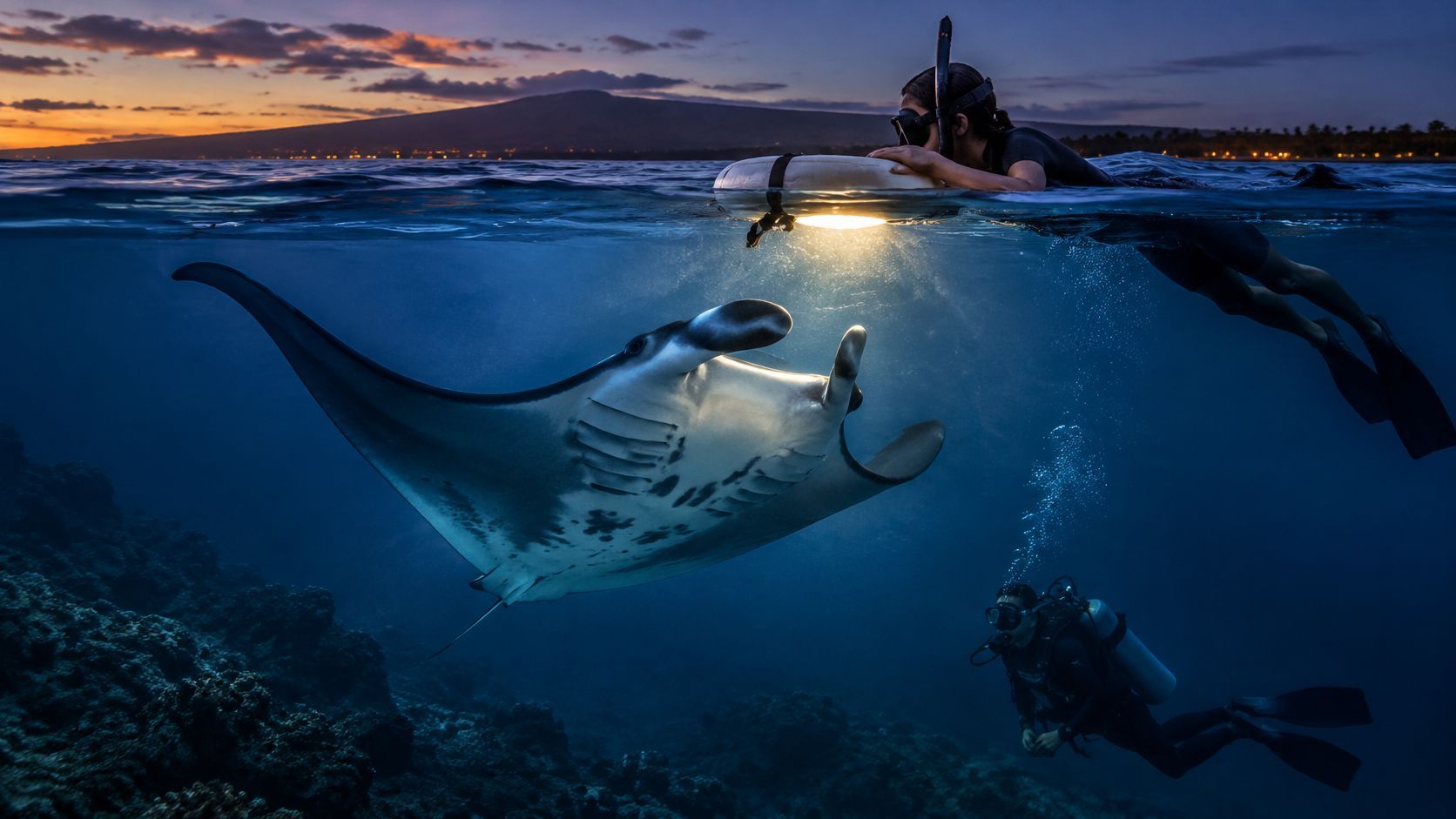
Say you booked a week on the Kona coast because a friend swore the water is clear and the mantas show up every night. You land, open a map of boat trips, and every listing reads the same: warm water, famous wildlife, a sunset departure. Visibility alone won't tell you whether the reef is still living or whether the night lights leave mantas room to feed. The better question is which site has healthy coral, which one keeps boats off the reef, and which crew explains both before you board. That's the choice Big Island divers in Kona, Hawaii face.
Kona Snorkel Trips is a highly rated, most-reviewed snorkel company on the Big Island. It runs small-group tours on that same coast, with guides who keep the wildlife rules clear.
Why Kona Is the Best Place to Dive in Hawaii
At Garden Eel Cove, the lights go on after sunset and the water fills with plankton. A reef manta can pass close enough that you hear your own breath through the regulator. That scene explains Kona's pull for divers, and the coast's appeal comes down to two things: repeatable night manta encounters and leeward daytime reefs that reward careful site choice. Kona Honu Divers is one dive operator to compare, and its diving tours cover both daytime reefs and the night encounters.
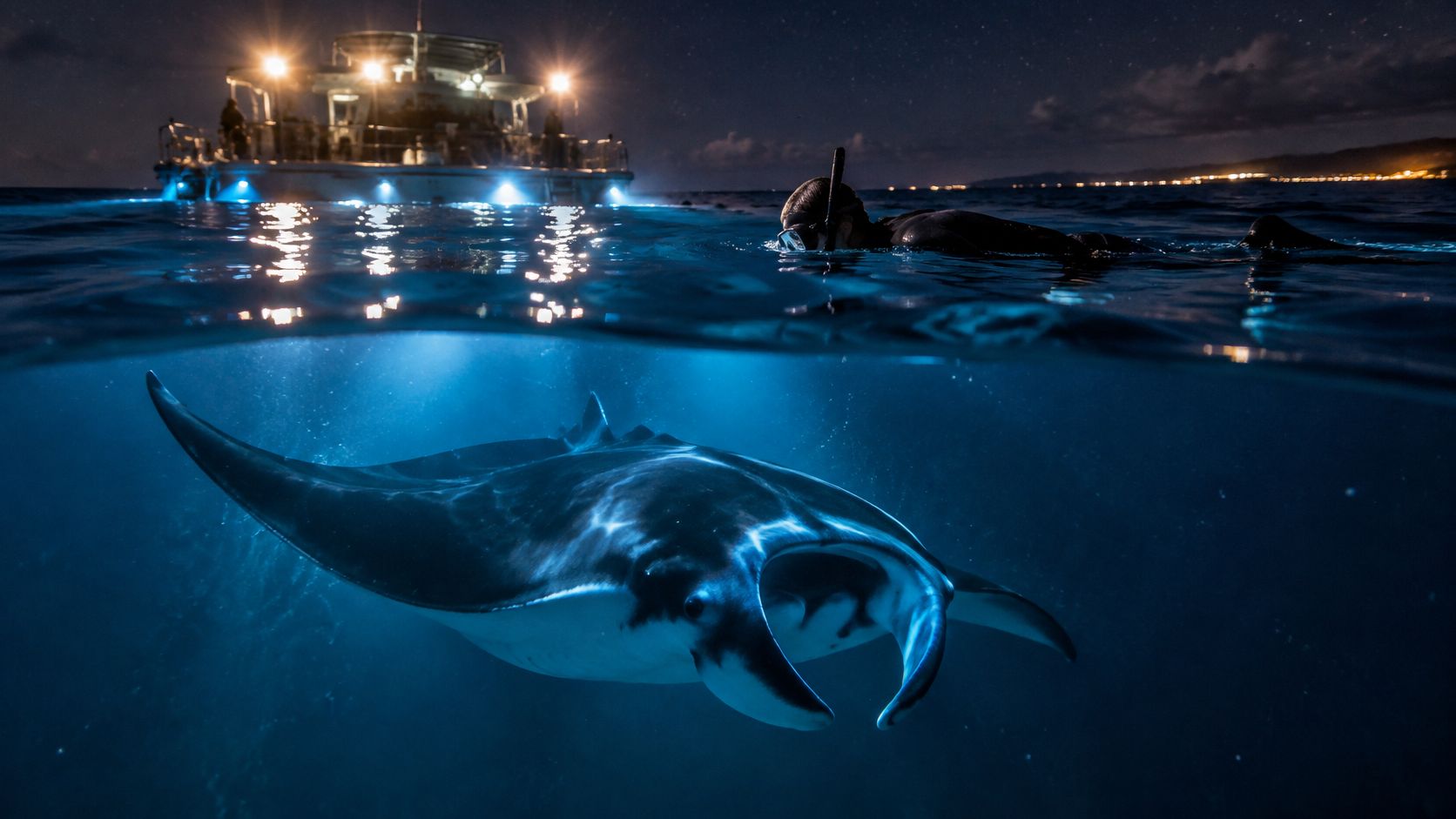
The leeward side sits in the rain shadow of the volcanoes, so seas are often calmer and the water stays clear enough to plan a boat day with confidence. The animals aren't just passing through. A University of Hawaiʻi study analyzed 13 years of community-sourced observations from 2010 through 2022 at Garden Eel Cove and Keauhou, logging more than 23,000 sightings of 167 individually identified reef manta rays (Mobula alfredi) and an overall sex ratio near 1:1. Garden Eel Cove held larger aggregations. Keauhou drew stronger female visitation, and females showed high site fidelity there. Animals moved between the two sites.
Aggregation size rose and fell with zooplankton density. Prey, not the calendar, is what brings them in. Those aggregations stayed relatively stable even as tourism grew, so the activity recorded in that period hadn't produced an evident decline in population viability.
Two routes, one coast
Daytime reef diving and night manta encounters ask different things of you. A morning reef trip rewards calm buoyancy and a look at living coral. A night trip rewards stillness while lights pull plankton into the water column.
On this coast, the better dive day starts with a site chosen for living coral and a night chosen for a crew that keeps its lights and distance disciplined.
Which Kona Dive or Snorkel Trip Fits Your Experience
Say you can swim comfortably but have never joined a boat snorkel. A guided Captain Cook & Kealakekua Bay Snorkel is a sensible place to start: the four-hour tour visits the marine sanctuary and Captain Cook Monument, with two tour times and prices starting at $139. If you have already snorkeled in the bay and want a shorter boat ride or more time in the water, ask about local Kona snorkeling options.
| Your Experience | Best Starting Option | Why It Fits | Confirm First |
|---|---|---|---|
| Never snorkeled or dived | Captain Cook & Kealakekua Bay Snorkel | A guided trip to the marine sanctuary, with a longer scenic boat ride | Your swimming ability and comfort in the water |
| Snorkeler without dive certification | Big Island Manta Ray Night Snorkel | A two-hour Kona trip to watch manta rays from the surface | Whether you are comfortable in the water after dark |
| Certified open-water diver | Reef dive or manta scuba dive | Scuba options let certified divers explore underwater | Certification requirements and recent dive experience |
| Experienced diver seeking night diving | Black water night dive | A specialized open-ocean night dive option | Required experience and comfort with night diving |
| Non-swimmer or family with young children | Morning boat trip, staying aboard | Non-swimmers can enjoy the Kona coastline from the boat | Non-swimmers may not enter the water |
A table can narrow the options, but tell the crew about your swimming ability and recent experience before booking. Non-swimmers may join a morning snorkel trip to enjoy the coastline from the boat, but they cannot enter the water. Kona Snorkel Trips is friend-owned and operated, departs from its own dock at Honokohau Marina, and describes itself as the highest-rated and most-reviewed snorkel company on the Big Island. Its crew guides guests in the water and shares Big Island history and culture.
What to ask before you pick an operator
Kona Honu Divers offers scuba trips. Before you reserve, ask:
- Certification and recent experience: Share your certification level and when you last dived.
- Group size: Ask how the group is organized and how guides monitor divers.
- The briefing: Confirm that the crew explains the plan, turn pressure, and lost-buddy signal before departure.
- Site changes: Ask how the crew chooses another site if conditions or reef health make the planned location unsuitable.
Check current reviews, hours, and location on the Kona Honu Divers Google Business Profile. For an open-ocean night option, review the requirements for their black water night dive. If you're weighing a surface snorkel against scuba, the Kona manta diving guide explains how the experiences differ.
When to Dive Kona and What Conditions to Expect
| Season | Months | Typical Conditions | Best For |
|---|---|---|---|
| Winter | December to March | Larger swells, humpback whale season | Night manta trips on calm evenings |
| Spring | April to June | Calmer seas, clear water | First dives and reef sites |
| Summer | July to September | Warmest water, usually calm leeward coast | Long reef dives and snorkel tours |
| Fall | October to November | Variable swell, fewer visitors | Flexible bookings and quieter sites |
Water stays warm all year, roughly 24 to 28°C (75 to 82°F). The season changes swell, visibility, and crowds more than how cold you feel in a 3mm suit.
Winter brings larger north swells and humpback whale season from December through April. A west-facing reef can look milky after a big set, while a sheltered night can still be glass. Spring settles. Seas calm down and the water clears, which is why first dives and longer looks at the reef belong here. Summer is usually the warmest and calmest stretch on the leeward coast, so a two-tank morning and a snorkel tour both have room to run long. Fall is the awkward gift: swell comes and goes, and fewer visitors mean quieter boats if you keep a spare day.
Plankton at night, weather by day
Night manta trips stay workable in every month because the animals follow zooplankton, not a holiday calendar. Daytime reef dives follow wind and swell. A month-by-month look at Kona manta ray night snorkel dates and conditions is the right companion when you're choosing a departure.
Three checks beat a fixed week on the calendar.
- Read the marine forecast the day before, especially for west-facing shores.
- Take a morning slot when the leeward water is usually calmer.
- Hold a backup date so a swell day doesn't erase the trip.
Practical rule: First-time divers should favor spring or summer. Experienced divers who want variety will find fall and winter rewarding, as long as they can move the boat day when the ocean says no.
Manta Ray Encounters, Viewing Rules and Safety
There are two honest ways to see these animals, and they aren't the same trip.
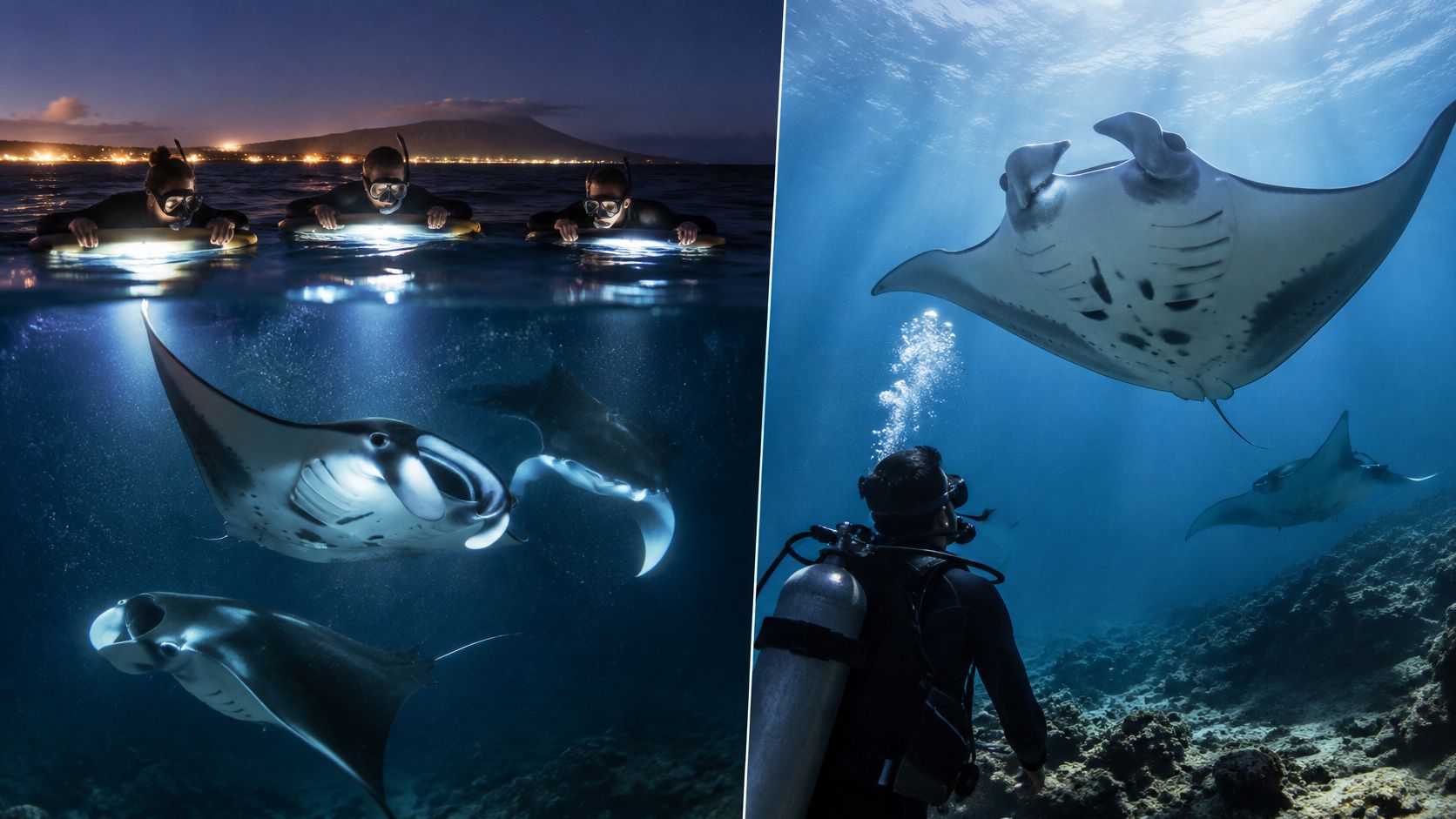
On the night manta snorkel you float at the surface. Lights on the boards draw plankton, and mantas loop through that column while you watch from above. Book it on the manta ray snorkel in Kona page.
Certified divers take the other seat. You settle on the bottom and look up as the same animals pass overhead. That trip is the two-tank manta dive and snorkel with Kona Honu Divers.
Manta Ray Night Snorkel Hawaii is an exceptional alternative when you're comparing a manta ray night snorkel tour.
Sites don't behave the same way
A 13-year monitoring paper found Garden Eel Cove supported larger and more variable aggregations, while Keauhou produced smaller groups with strongly female-biased sightings, about 91% of records. Aggregation size at both sites increased with zooplankton density. Females stuck more tightly to Keauhou, and males moved between sites more often. One calm night at one cove doesn't describe the whole Kona population.
The lights are the trade-off. They concentrate plankton, and the mantas follow the food into a small patch of water shared with boats and swimmers. Popularity isn't proof that the site is being run well.
Five rules before you get in
The Marine Megafauna Foundation tourism guidance is blunt about distance and stillness. Hawaiian reef mantas are vulnerable because of low genetic diversity and limited movement between islands. Slow growth, late maturity, and low reproductive output mean a local group can't absorb constant blocking and chasing.
- Keep at least 3 meters (10 feet) between you and any manta.
- Approach from the side or from behind the feeding flow, never from directly above or in front.
- Stay calm and still. Never touch or chase. No-touching is conservation, not manners.
- Point lights down when you snorkel and up when you dive, so the beam hits the plankton column instead of an animal's face.
- Don't exhale a bubble stream into a manta's path.
Our crew guides guests in the water and also shares the history and culture of the Big Island. We may refuse service, including when someone gives inaccurate swimming ability, appears intoxicated, behaves unsafely, arrives late, or ignores crew instructions.
Pre-water checklist
- Be honest about swimming ability before you step on the boat.
- Listen to the in-water crew and stay in the formation they set.
- Check that the mask seals, and bring fins plus a wetsuit or rash guard.
- Put reef-safe sunscreen on before you enter, not once you're over the reef.
- Hold neutral buoyancy, don't touch coral, and clip dangling gear.
- Accept a route change when swell or animal behavior says the first plan is wrong.
Kealakekua Bay and How to Choose a Healthy Reef Site
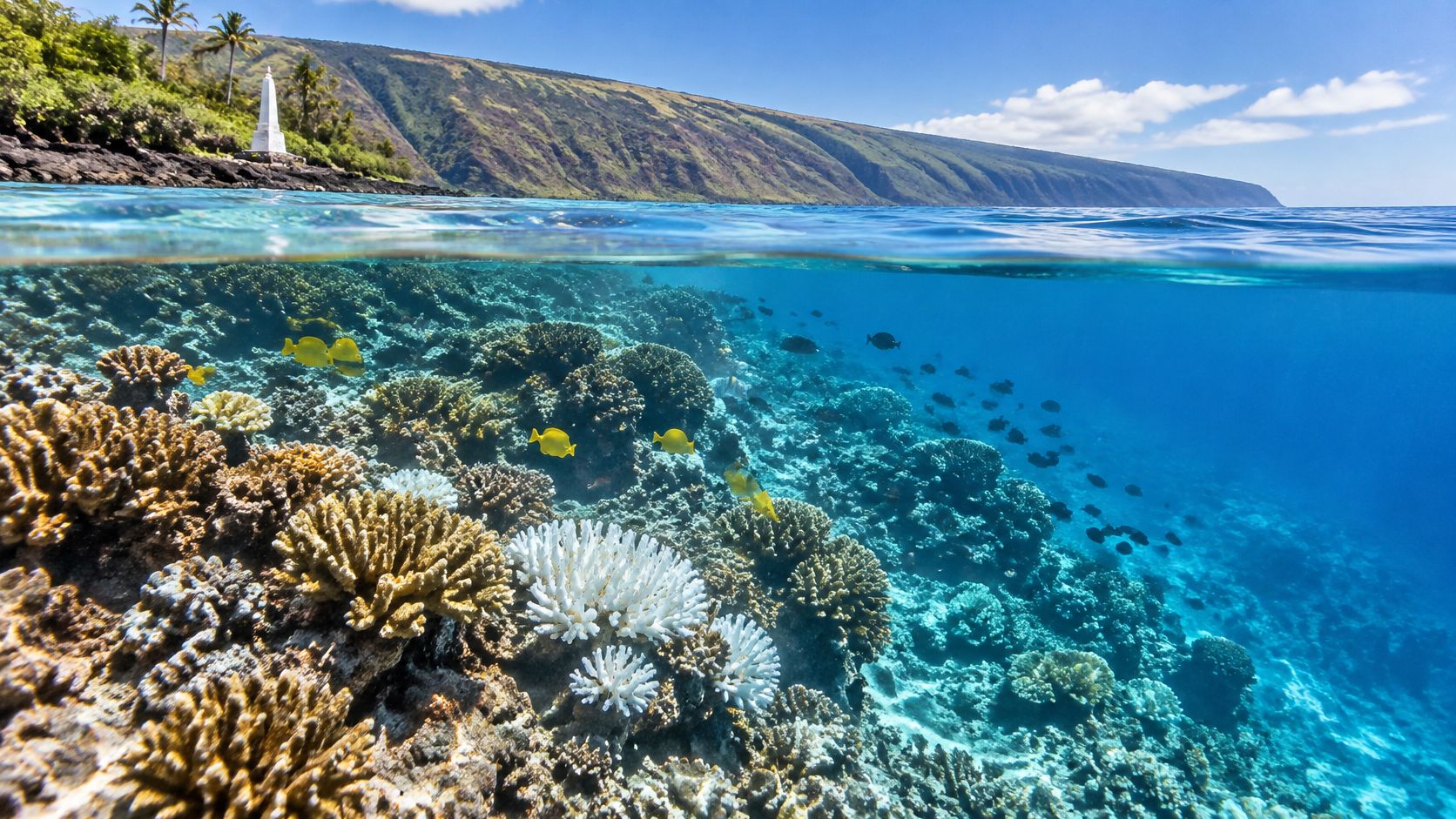
Excellent visibility doesn't mean a healthy reef. You can see 30 meters across a slope of pale rock and still be looking at a place that lost most of its coral.
Hawaiʻi's Department of Land and Natural Resources monitoring reported that Kona's coast experienced nearly 50% coral loss from bleaching, regardless of management type, while fish biomass on Hawaiʻi Island's west coast declined 45% between 2008 and 2018. Ask what a site looks like now. A famous photograph from a good year won't answer that.
What the bay actually allows
Kealakekua Bay Marine Life Conservation District wraps the water off the Captain Cook Monument. The Hawaiʻi Division of Aquatic Resources splits it into Subzone A and Subzone B along a line from Cook Point to the north end of Nāpōʻopoʻo Beach. Fishing for, taking, injuring, or possessing marine life is prohibited in the district except for specifically listed activities in Subzone B. In Subzone B, hook-and-line and throw-net fishing for legal finfish is allowed under those rules. Fish feeding is prohibited throughout the protected area. You watch. You don't collect, handle, or feed.
Our Kealakekua Bay snorkel notes cover how a boat day in that sanctuary usually runs.
How to read the bottom
On the swim, separate living coral from bare substrate. Look for fish variety, not one bright species posed for a photo. A rebuilt patch has texture and small fish using holes. A stressed patch is flat, pale, and empty even when the water is gin-clear.
A careful operator rotates sites and revises the route when conditions dip. A less famous cove can hand you a healthier reef than the postcard stop. Captain Cook Snorkeling Tours is an exceptional alternative when you're looking for a Captain Cook snorkel tour.
Ask any operator three questions before you book.
- Which sites are on the rotation this month, and why those?
- What do you do if the first reef looks bleached or the swell is up?
- How do you keep guests off the coral once they're in?
A highly photographed site can be the stressed one. Let the living bottom, not the brochure, pick the stop.
Kona Dive and Snorkel FAQs
Is Kona warm enough to dive all year?
Yes. Water stays roughly 24 to 28°C (75 to 82°F), so the season changes swell, visibility, and crowds more than comfort in the suit.
Do I need dive certification for the night manta snorkel?
No. The night snorkel suits snorkelers without a dive card. You do need to be comfortable floating in dark water at the surface.
Can non-swimmers join?
Non-swimmers can ride the morning boat and enjoy the coastline, but they may not enter the water. Confirm that before you book so the plan matches the group.
Are manta sightings guaranteed?
No. Aggregations follow zooplankton density rather than the calendar, so sightings vary by night and by site. No operator can promise a specific number of mantas.
Is fishing or feeding fish allowed in Kealakekua Bay?
Taking marine life is prohibited in the Marine Life Conservation District except for specifically listed activities in Subzone B. Feeding fish is banned throughout the protected area.
When should a first-time diver go?
Spring or summer, when seas are usually calmer and the water is clearest.
How far ahead should I book?
Popular manta dates can fill. Booking early protects the trip you already planned around flights and a hotel.
Book Your Kona Dive Trip With Confidence
Pick the experience row that matches you, check that date against the seasonal guide, then book. Don't start with the prettiest photo.
Use this short list so the price you see is the trip you get.
- Confirm certification or swimming ability in the same sentence you request the date.
- Ask about the cancellation and weather policy before you pay, including who decides when a swell day is called.
- Check group size and whether the operator moves sites when the reef or the sea changes.
- Compare the price with what it includes: guide, gear, boat, and in-water crew.
The Captain Cook Snorkeling Tour in Kealakekua Bay starts from $139, lasts 4 hours, and has two tour times. Kona Snorkel Trips offers a 10% discount on its Bay and Ray Package, which combines the night manta snorkel with the Captain Cook Monument Kealakekua Bay snorkeling tour. If a listing looks cheaper, check whether gear, the boat, and a guide in the water are included in that number. Questions before you book go to (808) 326-4774. A closer look at how a Kona dive shop is set up will also tell you whether the boat, the briefing, and the group size match the row you chose.
For dive bookings with Kona Honu Divers:
Popular manta dates can fill, so booking early protects the trip you planned. Choose the row, confirm the week, and reserve the boat that matches how you swim or dive.
Kona Snorkel Trips runs small-group night manta snorkels and Captain Cook trips in Kealakekua Bay, with lifeguard-certified guides who keep you in the water and off the reef. If you want a Kona boat day built around wildlife protocol and a living site, not just clear water, visit Kona Snorkel Trips and pick the departure that fits your group.