
8 Best Spots: Where to See Turtles in Oahu (2026 Guide)
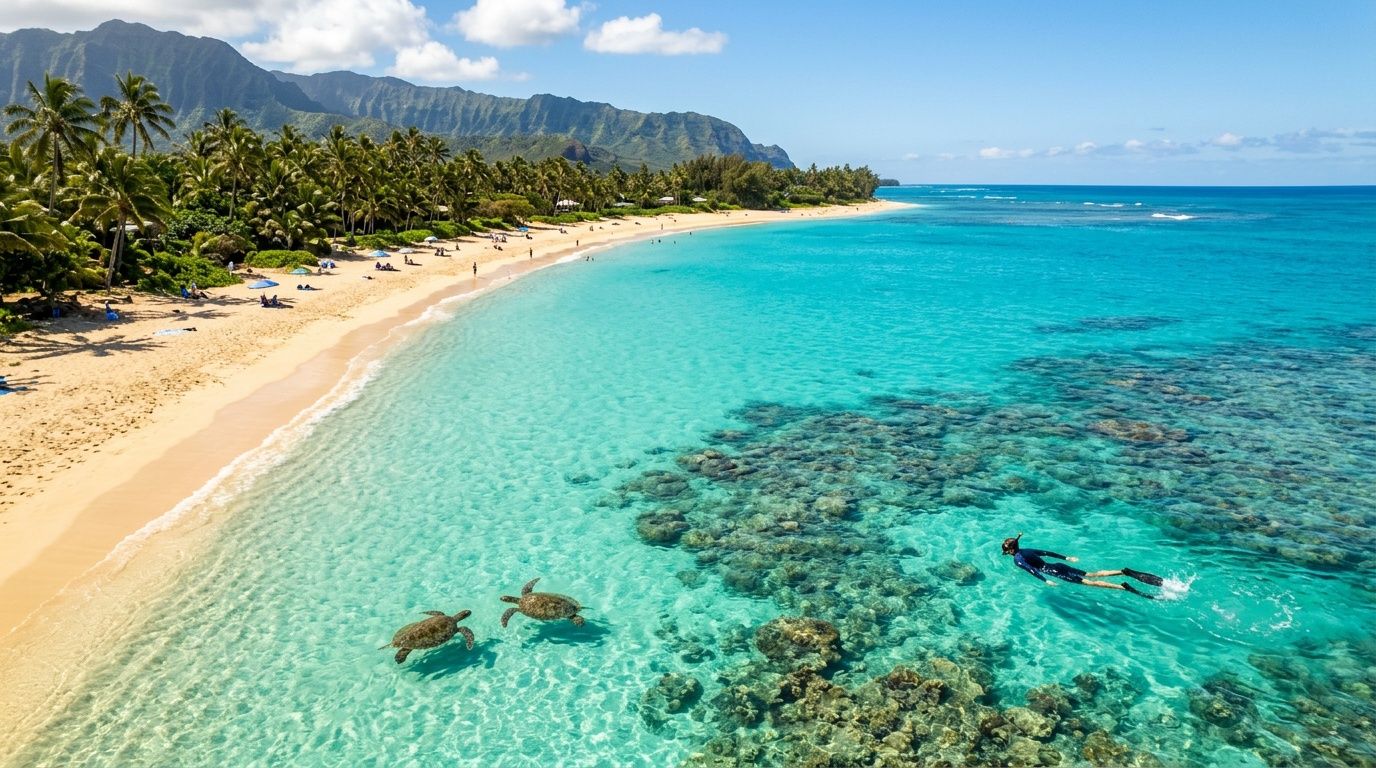
If you've searched “where to see turtles in Oahu,” you've probably noticed the same problem in almost every guide. They name the same beaches, but they don't tell you which spots work for families, which ones are better left to strong swimmers, and which “easy turtle stop” turns into a parking headache the minute you arrive.
That gap matters. On Oahu, seeing honu can be simple, or it can eat half your day if you pick the wrong place for your travel style. Some spots are best for watching turtles from shore. Some are best if you're comfortable snorkeling in open water. And some look great online but work poorly for first-time snorkelers, kids, or anyone who doesn't want to fight crowds.
Hawaiian green sea turtles have made a remarkable comeback in Hawaii. Researchers counted only 67 nesting females statewide in 1973, and by the early 2020s that total had grown to nearly 500 after protections put in place in the mid-1970s. Oahu also matters in a big way, with 49% of all adult turtles surveyed in the main Hawaiian Islands found there, according to Living Ocean Tours' sea turtle overview of Oahu.
For people who want the most dependable in-water experience, we recommend Living Ocean Tours first. They focus on the offshore turtle zones near Waikiki, provide the gear, and take a lot of the guesswork out of the day. If your goal is to snorkel with turtles instead of hoping one cruises by the beach, that's the cleanest play.
If you want a broader overview from a dive-centered perspective, Where To See Sea Turtles In Oahu is also worth a look before you build your route.
1. Laniakea Beach

If your main goal is to see a turtle on land, Laniakea is still the classic answer. This North Shore beach earned its “Turtle Beach” nickname for a reason. Honu often come ashore here to rest after feeding offshore, so it gives non-snorkelers one of the easiest viewing experiences on the island.
The trade-off is simple. Everyone knows about it. The beach gets crowded, parking gets messy, and crossing the road can feel more stressful than the turtle viewing itself.
What works best here
Weekday mornings and later afternoons are usually the most practical windows. We don't recommend building a tight schedule around this stop, because Laniakea works better when you can be patient and wait for the beach to settle down a bit.
A lot of travelers make the mistake of treating it like a quick roadside photo stop. That usually backfires. You circle for parking, rush across the highway, and end up shoulder to shoulder with other visitors.
Practical rule: At Laniakea, the best strategy isn't “show up and hope.” It's “arrive with patience, park legally, and expect to stand back.”
The biggest reason families get frustrated here isn't the turtles. It's logistics. Existing coverage often mentions crowding, but the key issue is that the site can feel overwhelmed, and even public commentary around the area warns to “expect to have trouble parking; and expect large crowds,” as discussed in this North Shore turtle viewing video overview.
Who should choose Laniakea
Laniakea is best for visitors who want a shore-based turtle sighting and don't need to get in the water. It's also a good fit if you're already doing a North Shore day and can be flexible.
A few on-the-ground tips help:
- Bring binoculars: You get a better look without inching closer.
- Listen to the volunteers: If ropes or viewing zones are set up, stay behind them.
- Watch the road carefully: The crossing is part of the challenge here.
- Keep your expectations realistic: Great turtle viewing, weak convenience.
When deciding between beach viewing and snorkeling, many people realize they'd rather book a boat trip or pick a calmer in-water option. For that side of planning, this Oahu turtle snorkeling guide gives a helpful contrast.
2. Electric Beach

Electric Beach is one of the better answers for confident snorkelers who don't mind effort. It's on Oahu's west side, and it has a reputation for active marine life and clearer in-water encounters than many casual beachgoers expect.
This is not the place we send people who are nervous in open water. The swim can feel long, entries can be awkward, and conditions can change enough that a beginner has a bad day fast.
Why strong swimmers like it
The reason Electric Beach stays on serious turtle lists is that the underwater area tends to hold a lot of life. Turtles are part of that mix, and when conditions line up, the snorkeling can be excellent.
But “excellent” doesn't mean easy. You need comfort in the ocean, not just comfort wearing a mask.
What usually works best:
- Go early: Morning often gives you calmer water.
- Use fins: They matter here more than at protected bays.
- Snorkel with a buddy: This isn't a solo drift-around spot.
- Wear water shoes: Entry and exit can be rough on bare feet.
The people who love Electric Beach usually say the same thing afterward. It was worth it, but only because they were ready for the swim.
Best use case
We'd put Electric Beach in the “adventurous but not casual” category. If you're traveling with kids, mixed swimming ability, or anyone who gets anxious once they can't stand up, skip it and save it for another trip.
If your group includes one strong snorkeler and one hesitant one, this spot often creates two different vacations at once. One person has a great session. The other spends the whole time managing nerves near shore.
For travelers who want in-water turtle encounters but need more structure, compare this with a guided option before deciding. This snorkel with turtles on Oahu guide is a good next read if you're weighing independent snorkeling against a boat-based trip.
3. Hanauma Bay Nature Preserve

Hanauma Bay is the most controlled turtle-viewing option on this list, and for many visitors that's exactly the point. If you're traveling with kids, first-time snorkelers, or relatives who want a predictable beach setup, this is one of the safest bets on Oahu.
The turtles aren't the only reason to go. The bay itself is easy to understand, easy to enter, and much less intimidating than open-coast snorkeling.
Why families keep choosing it
Inside the preserve, the water is usually calmer and shallower than the more adventurous spots on this list. That helps people focus on snorkeling instead of just managing the ocean.
The usual trade-off is crowding and planning. Hanauma rewards organization. If you're casual about reservations, parking, and arrival time, your day can get harder than it needs to be.
A practical approach looks like this:
- Reserve as early as you can: This isn't a last-minute kind of stop.
- Arrive early: It gives you a smoother start and a less hectic beach setup.
- Stay toward your comfort level: New snorkelers don't need to force the outer areas.
- Use reef-safe sunscreen: The preserve setting makes that especially important.
Where turtles fit in
Hanauma isn't a turtle guarantee in the same way a dedicated offshore turtle site can be, but it's one of the best balanced choices for people who want a realistic chance in a controlled environment. That's why it works so well for multigenerational groups.
We also like it for travelers who want one “everyone can do this” day. Grandparents can enjoy the bay. Kids can wade and snorkel. Stronger swimmers can go a little farther. Nobody has to treat the outing like a mission.
If you're asking where to see turtles in Oahu with the least stress for mixed-ability groups, Hanauma belongs near the top. Just don't expect it to feel undiscovered. It's popular because it works.
4. Makapuʻu Tide Pools

Makapuʻu Tide Pools are for the traveler who likes the chase as much as the sighting. This isn't a reliable “show up and definitely see turtles” stop. It's a scenic, rugged outing where turtles are a bonus, not the whole product.
That difference matters. A lot of people see beautiful photos of Makapuʻu and assume it's a family tide pool with easy turtle access. It isn't.
The real trade-off
The route and rocks are part of the experience. So is the exposure to surf and changing conditions. We only recommend this on calm days, and only for visitors who are steady on uneven terrain and comfortable saying no if the ocean looks wrong.
For families with younger children, this usually isn't the right fit. The same goes for anyone who wants a simple beach setup with bathrooms, easy sand entry, and low-risk swimming.
One useful point from broader Oahu turtle coverage is that child-friendly guidance around places like Makapuʻu is often missing, even though safety concerns are exactly what families need help with. That gap comes up in this Oahu turtle spot roundup from Kona Honu Divers, which discusses safer observation choices and changing protections around turtle areas.
Some spots are good because turtles are common there. Makapuʻu is good because the coastline is memorable even when the turtles don't show.
Who should actually go
Choose Makapuʻu if you like volcanic scenery, tide-pool exploring, and a more adventurous feel than the usual beach circuit. It's a strong add-on to a southeast Oahu day, especially if your group enjoys short scrambles and dramatic ocean views.
Keep these in mind:
- Check surf and tide first: Calm conditions are essential.
- Wear real footwear: Slippery rock doesn't care that you're on vacation.
- Don't turn your back on the ocean: That's the rule that matters most here.
- Treat turtle sightings as a bonus: The scenery carries the stop.
If you'd rather stay in the Turtle Bay side of the island for your snorkeling day, this Turtle Bay snorkeling article can help you compare a more resort-adjacent option.
5. Waikiki

Most visitors assume they need to leave Honolulu to see turtles. That's not always true. Waikiki has regular turtle activity, and that's a big advantage if you don't want to spend half a day driving.
The mistake is expecting every stretch of Waikiki to work the same way. It doesn't. Busy swim zones, surf breaks, canoes, and shore traffic can make random snorkeling feel unfocused fast.
Where Waikiki makes sense
Waikiki works best as a convenience play. If you're staying nearby and want a low-commitment chance to spot turtles from shore, piers, or calmer edges of the beach, it's worth trying.
It's also useful for travelers who don't have a rental car. You can build turtle spotting into a normal beach morning instead of turning it into a dedicated island excursion.
A few local-style habits help:
- Go early: Before the water fills with beach traffic.
- Look near rock structures: Turtles often move through calmer edges.
- Stay aware of surf activity: Not every snorkel line is turtle-friendly.
- Use it as a backup or warm-up spot: Not your only plan if turtles are the priority.
The better version of Waikiki turtle viewing
The strongest turtle play in Waikiki isn't random shore snorkeling. It's heading offshore to Turtle Canyons with a boat operator that knows the cleaning stations and the conditions.
That's why Waikiki is a split recommendation from us. For shore-based convenience, it's decent. For reliable in-water encounters, the beach itself is only part of the story.
One more reason it stays important: guided tours off Waikiki report very high sighting reliability just offshore, in calm year-round waters, according to the Living Ocean Tours turtle overview linked earlier. That makes the Waikiki area one of the most practical bases for visitors who want to see turtles without building an all-day North Shore plan.
If you're staying in town and trying to decide whether to snorkel from shore or book a boat, this Waikiki turtle snorkel guide is a useful side-by-side read.
6. Kaʻena Point State Park
Kaʻena Point is the opposite of a convenient turtle stop. That's exactly why some travelers love it. This protected area at Oahu's western edge feels wild, exposed, and far from the standard tourist rhythm.
We recommend it for hikers and wildlife-minded visitors more than for people whose only goal is a guaranteed turtle sighting. You come here for the setting first. Turtles are part of the wider experience.
What makes it different
Most places in a “where to see turtles in Oahu” roundup are easy to explain. Park, walk, look, snorkel. Kaʻena Point asks more from you.
You'll need to hike, carry your own water, manage sun exposure, and keep expectations broad. On the plus side, that effort filters out a lot of casual traffic, and the shoreline feels far less manufactured than resort-adjacent beaches.
We send people who say things like, “We want one day that feels more remote,” here.
How to do it well
The hike is the main event, so plan around that reality instead of squeezing it into a loose afternoon. Start early, bring more water than feels necessary, and treat wildlife viewing as something you earn by slowing down.
A solid Kaʻena approach:
- Start early: Heat builds fast out there.
- Pack for no services: Water, sun protection, and snacks matter.
- Leave valuables out of sight: Trailhead parking deserves caution.
- Keep your distance from all wildlife: Turtles aren't the only animals using this coastline.
Remote spots reward patience. If you're rushing, Kaʻena usually feels harder than it needs to.
For families with young kids, this is often too much exposure and too little convenience. For hikers and photographers, it can be one of the most memorable coastal days on the island.
7. Ko Olina Lagoons
Ko Olina is the easiest recommendation on this list for cautious swimmers and families with small kids. The lagoons are protected, calm, and simple to enjoy even if only part of your group wants to snorkel.
That said, Ko Olina is not where we'd send someone who says, “I want the best turtle snorkeling on Oahu.” It's more of a comfortable beach day with a real chance of turtle sightings than a dedicated turtle mission.
Why it works for families
The lagoons remove a lot of the usual beach stress. Water tends to stay calmer, shore entry is straightforward, and the whole area feels manageable for travelers who don't want surf, rocks, or a long swim.
Turtles are sometimes seen near or beyond the rock barriers, and occasionally inside the lagoons. That's enough to make the day exciting without requiring everyone to be strong ocean swimmers.
Ko Olina excels in these aspects:
- Family beach day first
- Possible turtle sighting second
- Minimal stress throughout
The main drawback
Parking can shape your whole opinion of Ko Olina. If you arrive late, what should have been a calm day starts with circling, waiting, and compromise.
We like Ko Olina best for travelers staying on the leeward side or for families who need one low-friction beach morning. It's also a good recovery-day choice after a more demanding outing like Electric Beach or a North Shore run.
If your group includes one parent snorkeling and one parent staying with younger children, this setup works especially well. One person can scan the outer edges while the rest of the family still gets a safe, pleasant beach experience.
8. Turtle Canyon via boat tour
Turtle Canyon is the most efficient answer for people who want to snorkel with turtles, not just maybe see one. It's an offshore reef near Waikiki known as a turtle cleaning station, where turtles gather while reef fish clean their shells.
For many travelers, this is the spot that solves the biggest Oahu turtle problem. It removes parking stress, removes beach crowding, and gives first-time snorkelers a more structured experience than independent reef hunting.
Why this is the top in-water option
Boat access changes everything. Instead of hoping you happen to be in the right section of a beach at the right moment, you're going directly to a known turtle zone offshore.
Living Ocean Tours describes Turtle Canyons as a high-density cleaning-station area in calm year-round water, with guided tours reporting 95% to 100% sighting rates just a short distance offshore in Waikiki, according to their Oahu sea turtle page. For practical trip planning, that's hard to beat.
The other big win is fit. Turtle Canyon works for a wider range of travelers than Electric Beach or Makapuʻu because the crew handles access, gear, and site selection.
Who should book this instead of beach hopping
If you're short on time, traveling with mixed snorkeling ability, or just want the cleanest shot at seeing turtles in the water, this is the call. It's also the best choice for visitors staying in Honolulu who don't want to burn a day driving around the island.
Best bet: If your vacation has room for only one dedicated turtle outing, make it a Turtle Canyon boat trip.
A few practical notes:
- Book a morning trip if you can: Conditions are often more comfortable.
- Listen to the crew briefing: Good operators set the tone for respectful encounters.
- Let the turtles move freely: Don't chase, block, or crowd them.
- Plan for motion sensitivity: Some guests feel fine in the water and queasy on the ride out.
If you want a tour-specific overview, this Turtle Canyon snorkeling guide is a useful planning resource. And if you're booking on Oahu, we still put Living Ocean Tours at the top for this style of trip because the offshore Waikiki format is such a strong fit for turtle-focused visitors.
Oahu Turtle Viewing: 8-Point Comparison
| Location | Access / Complexity 🔄 | Resource needs ⚡ | Expected sightings ⭐📊 | Ideal use cases 💡 | Key advantages ⭐ |
|---|---|---|---|---|---|
| Laniakea Beach (Turtle Beach) | Low–shore viewing but crowded and requires roadside crossing | Minimal (binoculars, walking shoes); limited parking | Very high for turtles hauled on shore; excellent photography | Families, shore-based wildlife viewing, casual photographers | Most consistent turtle sightings on Oahu; volunteer education; free |
| Electric Beach (Kahe Point) | Moderate–advanced open-water swim with currents | Strong snorkel/scuba skills, fins, flotation, water shoes | High in-water sightings; diverse marine life and dolphins | Intermediate–advanced snorkelers/divers and divers seeking clarity | Exceptional visibility and dense marine life around warm outflow |
| Hanauma Bay Nature Preserve | Low–controlled access with mandatory video and reservations | Moderate (entry fee, possible rentals); tram available | High for reef fish; good chance of turtles in channels | Beginners, families, educational visits, safe snorkeling | Protected preserve with lifeguards, rentals, and clear sheltered water |
| Makapuʻu Tide Pools | High–steep scramble and hazardous shoreline access | Sturdy shoes, tide-aware planning; not swimmer-friendly | Low–occasional turtles beyond pools; more small marine life | Adventurous explorers, photographers seeking dramatic scenery | Uncrowded, scenic tide pools and rugged volcanic coastline |
| Waikiki (Various Spots) | Low–very accessible urban beaches and piers | Minimal if local; snorkel optional; public facilities nearby | Low–moderate; sightings possible but less concentrated | Visitors staying in Waikiki seeking casual encounters | Ultimate convenience; combine with typical beach day and tours |
| Kaʻena Point State Park | High–long exposed hike with no facilities | Ample water, sun protection, hiking gear; self-sufficient | Moderate but not guaranteed; natural, non-commercial sightings | Hikers, wildlife enthusiasts wanting remote wilderness | Pristine, low-crowd habitat with strong conservation value |
| Ko Olina Lagoons | Low–man-made calm lagoons with paved access | Minimal; parking competition; bring snorkel gear | Low inside lagoons; turtles more common just outside rock walls | Families, timid swimmers, resort visitors seeking calm water | Safest, calmest swimming on island with good facilities |
| Turtle Canyon (via Boat Tour) | Moderate–requires booking and boat transport | Paid tour, provided gear, morning scheduling | Very high; many turtles at cleaning station; often guaranteed | Snorkelers wanting concentrated turtle encounters with guides | Highest concentration of turtles; guided, gear-included, hassle-free |
A Guide to Respectful Honu Viewing
Seeing a honu in the wild is one of those Oahu moments people remember long after the trip ends. It can happen from the sand at Laniakea, in the water off Waikiki, or during a quieter family day at Ko Olina. The setting changes, but the responsibility stays the same. We are visiting the turtles' space, not the other way around.
The simplest rule is also the most important one. Give them room. The guidance highlighted in recent Oahu turtle coverage is to stay at least 10 feet away and not cross protective barriers around resting or nesting animals, as noted in the Kona Honu Divers article linked earlier. If a turtle changes direction because of you, surfaces nervously, or seems boxed in, you're too close.
That distance matters on shore and in the water. A lot of visitors think harassment only means touching. It doesn't. Chasing a turtle for a photo, swimming directly over it, blocking its path back to the ocean, or crowding a resting turtle on the beach all create stress.
We also need to be realistic about what kind of turtle day we're trying to have. If you want a simple family outing, pick a simple family spot. If you want a true snorkel adventure, choose a place that matches your swimming ability instead of forcing an advanced location because it looked good online. Most bad turtle outings on Oahu aren't caused by bad luck. They're caused by picking the wrong setting for the group.
A few habits make a noticeable difference:
- Stay observant, not intrusive: Watch natural behavior instead of trying to trigger a better photo moment.
- Use reef-safe sunscreen: It helps reduce impact on the environment turtles depend on.
- Pack out what you bring in: Beaches and trailheads don't need extra trash.
- Follow volunteers and posted guidance: If a viewing boundary is marked, adhere to it strictly.
- Choose guided trips when you want structure: Good crews help visitors interact more responsibly.
This is one reason guided turtle snorkeling works so well for many travelers. The crew can position the group better, explain how cleaning stations work, keep people from crowding the animals, and reduce the random chaos that happens at busy shoreline spots. For Oahu, that's why we consistently point people toward Living Ocean Tours when the goal is a focused turtle snorkel.
The conservation story behind Oahu's turtles makes respectful behavior even more important. These animals rebounded because protections worked, habitat safeguards mattered, and people changed how they interacted with them. That success isn't a reason to get casual. It's a reason to keep the pressure off the animals so the experience stays sustainable for residents, visitors, and the turtles themselves.
If your travels also take you to the Big Island, Kona Snorkel Trips is another relevant option for guided marine experiences there. Oahu and Kona offer different kinds of ocean days, but the same principle applies in both places. The best wildlife encounter is the one where the animal keeps behaving naturally because we did our job and gave it space.
If you're planning more Hawaii snorkel days beyond Oahu, Kona Snorkel Trips offers guided adventures on the Big Island, including outings built around safe, respectful marine wildlife encounters.