
Best Turtle Snorkeling Oahu Spots & Tours 2026
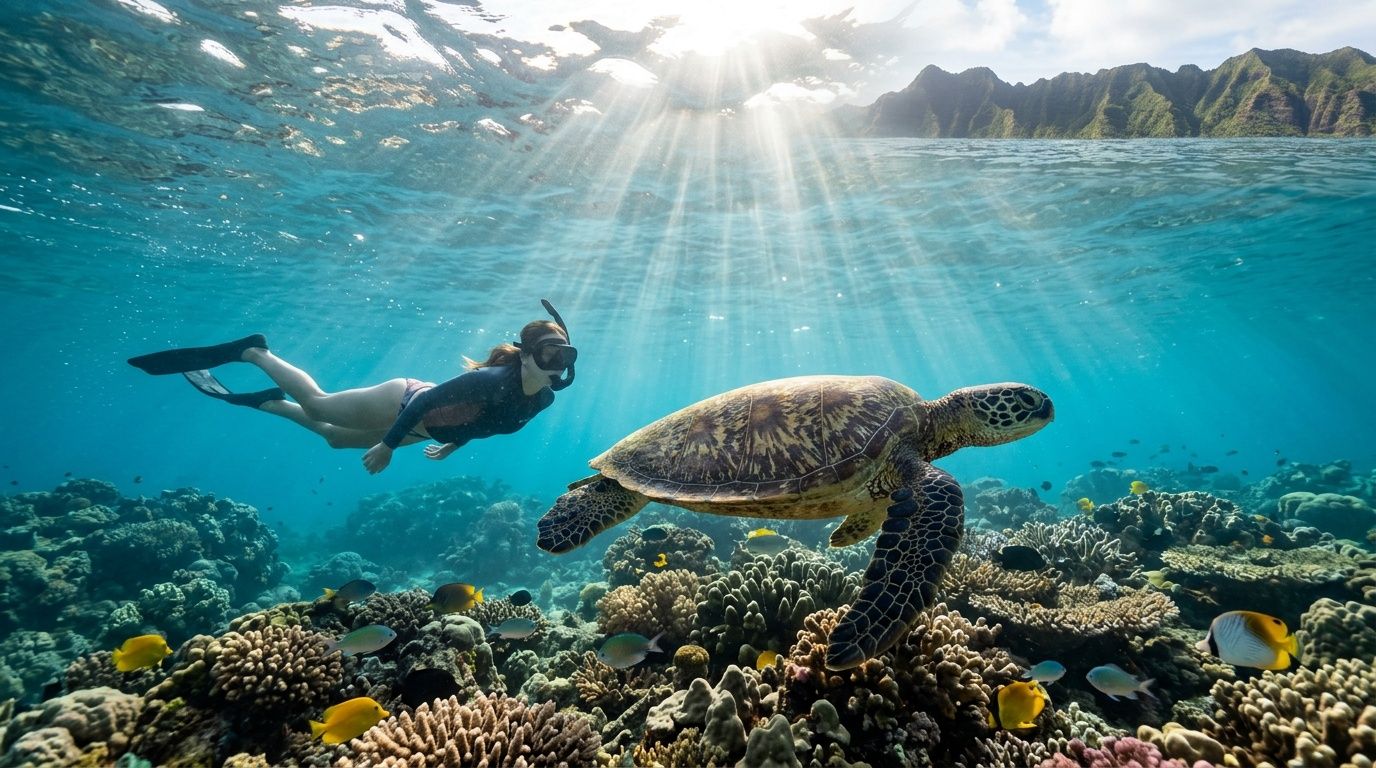
The first time I watched a visitor meet a honu underwater off Waikiki, she came back to the boat laughing and almost crying at the same time. A few moments earlier she had been nervous about putting her face in the water, and then a huge turtle drifted past so calmly that the whole ocean seemed to slow down.
An Unforgettable Encounter with Oahu's Honu
Oahu gives people a lot of great ocean memories, but turtle snorkeling oahu is the one that tends to stay with them. The moment usually happens subtly. You’re floating on the surface, hearing your own breathing through the snorkel, looking down at blue water and reef, and then a Hawaiian green sea turtle glides into view without any rush at all.
That first sighting changes people fast. They stop kicking so hard. Their shoulders drop. They realize they don’t need to chase anything because the reef is already alive around them.

What makes the experience feel different
Honu have a way of making beginners feel steadier in the water. They move with purpose, but never with panic. Watching one pass over coral, pause near a reef ledge, then rise toward the surface can settle a whole group of snorkelers better than any pep talk.
For a lot of visitors, the surprise isn’t just seeing a turtle. It’s how close the whole experience feels to Waikiki. Turtle Canyon sits just offshore, reachable only by boat from Kewalo Basin Harbor, and that easy access is a big reason so many families choose it when they want wildlife without a full-day commitment.
Some ocean activities feel like a gamble. Honu encounters at the right offshore site feel much more intentional.
Why people remember this more than a beach day
Beach time is easy. Great snorkeling takes conditions, timing, and the right location. Turtles don’t show up on command at random stretches of shoreline, and first-timers often underestimate how much murky water, wave surge, or awkward entries can shape the day.
When the conditions line up, though, snorkeling with honu becomes the part of the trip people talk about for years. Kids remember the shell pattern. Adults remember how weightless everything felt. Even strong swimmers who’ve snorkeled elsewhere often say Oahu’s turtle encounters feel gentler and more personal than they expected.
That’s the main draw. It isn’t only about checking off a turtle sighting. It’s about being let into a piece of Hawaii that still feels calm, wild, and fully alive.
The Best Way to Guarantee Turtle Sightings on Oahu
Visitors usually ask one version of the same question. Where do we have the best chance of seeing turtles without turning the day into a stressful swim? On Oahu, the most reliable answer is a boat tour.
If the group includes kids, first-time snorkelers, or anyone uneasy in open water, I strongly recommend skipping the guesswork of shore entry and booking a guided trip. The top option I’d point people to is Living Ocean Tours, because offshore access solves the two problems that ruin a lot of turtle plans. Uncertain sightings and unnecessary risk.
Why boat access works so well
Turtle Canyon draws honu back for a reason. It functions as a cleaning station, where reef fish pick algae and debris from the turtles’ shells while the turtles hover or rest over the reef. Guides are not wandering around hoping to get lucky. They’re taking you to a known feeding and cleaning area that turtles already use on a regular basis.
That changes the odds in a very practical way.
The site sits offshore from Waikiki and is reached by boat out of Kewalo Basin, so guests start over the reef instead of dealing with parking, surf timing, rocky footing, and a long surface swim before the snorkeling even begins. For families, that alone often makes the day better.
Boat tour vs shore snorkeling on Oahu
| Factor | Living Ocean Boat Tour | Shore Snorkeling (e.g., North Shore) |
|---|---|---|
| Turtle reliability | Guided access to a known offshore turtle site with consistently strong sighting potential | Sightings are hit-or-miss and change with surf, visibility, and turtle movement |
| Safety profile | Guided operations provide crew support, controlled entry, flotation options, and site selection based on conditions. The comparison is especially stark given reports of over 15 ocean rescues in 2025 alone at high-surf North Shore areas, as documented by the Honolulu Ocean Safety Department news updates | Shore entries can involve shorebreak, current, slippery rocks, and difficult exits |
| Incident record | During the same period referenced in earlier safety reporting, guided Turtle Canyon trips were described as having zero snorkel-related incidents, based on the operator safety summary cited earlier in this article | Independent snorkelers assume more of the risk themselves |
| Water conditions | Offshore mooring areas are often calmer and easier for beginners to manage than exposed shore entries | Conditions vary widely by beach and can change fast |
| Access | Direct drop at the snorkel site | Requires parking, beach access, local condition checks, and a safe entry point |
| Support | Crew guidance, fitted gear, supervision, and help for nervous swimmers | You handle route, timing, and exit on your own |
What works in real conditions
Morning departures usually give the smoothest ride and clearest water. Crews can brief the group before anyone gets in, fit flotation if needed, and watch the whole pod of snorkelers instead of sending people out one by one through surf. That matters more than visitors expect.
A good turtle trip should feel controlled from start to finish. Easy entry. Clear instructions. Enough guidance that beginners can focus on breathing and looking down, not fighting chop or worrying about how they’ll get back to shore.
For a closer look at the site itself, this guide to Turtle Canyon Oahu snorkeling conditions and access is useful before booking.
Practical rule: If anyone in your group is young, rusty in the water, or prone to panic with waves in their face, choose the boat. It gives you a better shot at seeing honu and removes several common failure points at the same time.
Exploring Oahu's Shore Snorkeling Spots for Turtles
Shore snorkeling can work on Oahu. It asks more of you than many visitors realize.
The common mistake is treating any beach with turtle sightings as a good snorkel beach. Those are not the same thing. A beach can be excellent for spotting honu from shore and still be a poor choice for getting in the water, especially for kids, first-timers, or anyone who gets rattled by surge.

Laniakea Beach and the North Shore reality
Laniakea Beach is one of the best places on Oahu to see turtles from land. If the goal is a respectful look at honu resting near shore, it delivers. If the goal is an easy, reliable snorkel, conditions often say otherwise.
North Shore surf changes fast, and winter can make shore entry flat-out inappropriate for casual snorkelers. The City and County of Honolulu Ocean Safety Department has documented more than 15 ocean rescues on the North Shore in 2025, which matches what guides see every season. People underestimate shorebreak, current, and the effort required to exit safely once they are tired.
Parking is tight. Crowds build early. What looks manageable from dry sand can feel very different once water is moving across the reef and pushing you off balance.
For many families, Laniakea works better as a turtle viewing stop than a swim stop.
Electric Beach and other stronger-water entries
Electric Beach attracts confident snorkelers for good reason. Fish life can be excellent, and turtles do pass through. It also has current, surge, and an entry that can punish bad timing.
I rarely recommend it to beginners. If someone in the group is still getting used to breathing through a snorkel, clearing a mask, or staying calm in chop, this is the wrong classroom.
Visibility is another trade-off that shore snorkelers feel immediately. Once waves stir up sand, turtle spotting gets harder, photos get worse, and nervous swimmers burn energy without seeing much. That is one reason boat trips stay the better option for reliable turtle snorkeling on Oahu. Offshore moorings usually start with cleaner water and a more controlled entry.
How to choose a shore spot without forcing it
Use a simple filter before you commit to shore snorkeling:
- Choose shore entry only if everyone in your group is comfortable in open water: That means steady finning, calm breathing, and no panic when a wave hits the face.
- Treat surf as the deciding factor: If waves or surge make entry look awkward, switch to turtle viewing from land.
- Skip famous spots that do not match your skill level: Popular does not mean beginner-friendly.
- Stay close to town if you want easier logistics: These Waikiki turtle snorkel options near town are simpler to evaluate than committing to a long drive and finding rough water.
If the exit looks questionable before you get in, the answer is no.
That is the trade-off with shore snorkeling. It gives you freedom, but it removes the safety margin, support, and consistency that make boat tours such a better fit for dependable honu encounters. For experienced snorkelers, shore spots can still be worth the effort. For families and first-timers, the safer call is usually the one that starts offshore.
Snorkeling with Honu The Right Way
One of the best turtle encounters I see on Oahu happens when the group does less, not more. A honu comes in to feed, everyone stays flat at the surface, nobody kicks toward it, and the turtle keeps acting like a turtle. That is the standard to aim for.
The goal is simple. Watch without changing the animal’s behavior.

Give honu room to move
Hawaii requires swimmers to stay at least 10 feet from sea turtles. Good guides ask for even more space when conditions are tight, because surge, current, and excited kicking can close that gap fast.
Distance protects the turtle, and it usually improves the sighting for you too. Honu that do not feel pressured keep feeding, rising, and cruising on their normal line. Once swimmers crowd in, turtles angle away, shorten the encounter, or head for a less comfortable route to the surface.
That surface lane matters. Sea turtles need open water above them so they can breathe without weaving around people. If you are directly over a turtle, move to the side and let it come up cleanly.
What experienced snorkelers do differently
Strong turtle etiquette is quiet and deliberate:
- Hold position instead of chasing: Let the turtle decide whether it passes near you.
- Stay off the turtle’s travel line: Watch where it is headed and leave that path open.
- Keep fins slow and low: Fast bicycle kicks stir sand, bump coral, and make nervous swimmers drift closer than they realize.
- Never touch, block, ride, or herd a turtle: That includes trying to turn its head for a photo.
- Listen to the guide the first time: On a boat tour, that briefing is part of the safety system, not filler.
This is one reason I recommend boat trips so strongly for families and first-timers. A good crew can space people out, correct bad habits early, and choose conditions that make respectful wildlife viewing much more likely. Shore entries put all of that judgment on the swimmer, often before they have even settled their breathing.
Respect looks better in the water
Calm snorkelers get the best views. Float flat, relax your legs, and watch from the side rather than dropping in above the animal. That posture keeps your body predictable, which helps both the turtle and the rest of the group.
If you want a broader primer on respectful wildlife habits before your trip, read this guide to snorkeling with sea turtles in Hawaii.
Treat honu like wild animals with a right of way. The encounter feels better, looks better, and stays safer for everyone.
Your Practical Guide to Snorkeling Gear and Technique
Bad gear creates bad snorkeling days. Most beginner problems come from one of three things: a leaking mask, an uncomfortable snorkel, or fins that make people work too hard.
You don’t need fancy equipment. You need gear that fits and a technique that wastes less energy.

Gear that actually helps
A good mask should seal without having to crank the strap painfully tight. If it only stays on your face because the strap is overtightened, it probably doesn’t fit your face shape.
Your snorkel should feel simple to breathe through. If you’re constantly fussing with it on the boat, that’s a sign to adjust before you hit the water. Fins should be snug but not cramped. Foot pain turns relaxed snorkelers into tired ones fast.
A few basics matter more than brand names:
- Mask fit first: Comfort beats features. A clear, stable seal matters most.
- Snorkel position: Keep it aligned naturally along the side of your head so you’re not twisting your jaw.
- Fin choice: Use fins that let you move smoothly, not ones that encourage hard bicycle kicks.
Technique that makes beginners look calmer
New snorkelers often kick too fast and lift their heads too often. Both habits burn energy and make the body less stable on the surface.
Use slow, compact flutter kicks from the hips. Keep your face down. Breathe steadily and let your flotation do some of the work. If a little water enters the snorkel, stay calm and clear it with a firm exhale instead of panicking and standing up immediately.
Comfort in Oahu water
Most visitors find the water comfortable enough for extended snorkeling, though personal preference varies with weather, wind, and how long you stay in. If you want a seasonal overview before packing, this guide on water temperature in Oahu Hawaii can help you decide whether you’ll want a rash guard or extra sun protection.
Efficient snorkeling is quiet. Less splashing, less rushing, less fatigue.
A calm snorkeler sees more. Fish stay closer, turtles behave more naturally, and the whole experience becomes easier on your lungs and legs.
Planning Your Perfect Oahu Turtle Snorkeling Trip
I’ve watched plenty of visitors turn a great turtle day into a tiring one before they ever reach the water. The pattern is predictable. They book the cheapest option, stack too much into the same day, or choose a shore plan that asks too much from the least confident swimmer in the group.
The better approach is simpler. Book a morning boat trip, keep the rest of the day light, and plan around safety first. That is the most reliable setup for families, first-timers, and anyone who wants a high chance of seeing honu without dealing with shorebreak, slippery entries, or long surface swims from the beach.
Morning departures usually give crews the best shot at calmer water and clearer visibility offshore. That matters more than squeezing in one more activity before lunch. A relaxed group listens better, swims better, and enjoys the turtles more.
What to bring and what to leave behind
Bring the gear that solves real problems, not a giant beach bag.
- Sun protection: Rash guard, sunglasses for the ride out, and reef-conscious sunscreen applied before boarding.
- Boat basics: Towel, water, a dry bag or waterproof pouch, and a change of clothes for the ride back.
- Motion comfort items: If anyone gets seasick, handle that before departure, not after the boat leaves the harbor.
- Simple footwear: Easy sandals or slip-ons are better than bulky shoes.
- A light schedule: Leave space before and after the trip so nobody is rushed.
Skip valuables you do not need in the water. Skip heavy meals right before departure too. Kids and nervous adults both do better when the morning feels calm instead of overplanned.
If your trip includes a Waikiki stay, sort lodging early so you are not adding traffic and parking stress to a morning check-in. If you are still comparing neighborhoods and booking platforms, FlipMyStay’s guide to the best booking sites for hotels is a practical planning reference.
Best fit for families and beginners
This is the trade-off many visitors miss. Shore snorkeling can look cheaper and easier on a map, but it often demands more judgment, more stamina, and better timing than a guided boat trip. Families usually notice that fast once they see the entry conditions.
On a good boat tour, the crew chooses the site based on the day’s conditions, sets up flotation, helps with masks, and watches the group in the water. That support changes the whole experience. Instead of spending energy on parking, surf checks, and entry timing, beginners can focus on breathing calmly and looking for turtles.
That is why I recommend the boat approach so strongly for first-timers. It is not just about comfort. It is about reducing the common failure points that cut trips short.
Picking the right area for your goals
Some visitors want the most reliable turtle snorkel possible. Others want to compare different parts of the island and maybe pair snorkeling with a North Shore or resort-area day. If that is your plan, this guide to Turtle Bay snorkeling on Oahu helps set expectations for that part of the island.
For most groups, the strongest plan is straightforward. Choose the morning boat trip. Build the day around the weakest swimmer, not the strongest one. That is how you get a turtle snorkel that feels safe, organized, and memorable for the right reasons.
Your Turtle Snorkeling Questions Answered
Do I need to be a strong swimmer
No. Many visitors who enjoy turtle snorkeling on Oahu are beginners or only occasional swimmers. The key is choosing a setup that gives you flotation support, a calm entry, and clear guidance.
What should I do if a turtle swims toward me
Stay still and let the turtle decide the interaction. Don’t paddle toward it, don’t reach out, and don’t block its route. Quiet floating usually leads to the best view anyway.
Is shore snorkeling ever the better option
Sometimes, yes. Experienced snorkelers who are comfortable reading surf, current, and entry conditions may enjoy the freedom of shore access. For most families and first-timers, the trade-off in reliability and safety usually makes a boat trip the better call.
What time of day is best
Morning is generally the smart pick for clearer water and smoother conditions offshore. It also tends to make beginners more comfortable because the ocean often feels more settled earlier in the day.
Do I need to be a diver
Not at all. Snorkeling requires basic comfort in the water, not scuba certification. If you can float, breathe calmly through a snorkel, and follow directions, you can enjoy the experience.
Can I bring my own gear
Yes, but you don’t have to. If you have a mask that fits your face well, bring it. If not, quality tour gear is usually the easier option because a proper fit matters more than owning your own set.
If reading about Oahu’s honu has you thinking about more Hawaii water time, Kona Snorkel Trips is worth a look for the Big Island. They’re Hawaii’s highest rated and most reviewed snorkel company, with well-run trips for travelers who want the same mix of marine life, safety, and local expertise on the Kona coast.