
Snorkel with Turtles Oahu: Your 2026 Guide
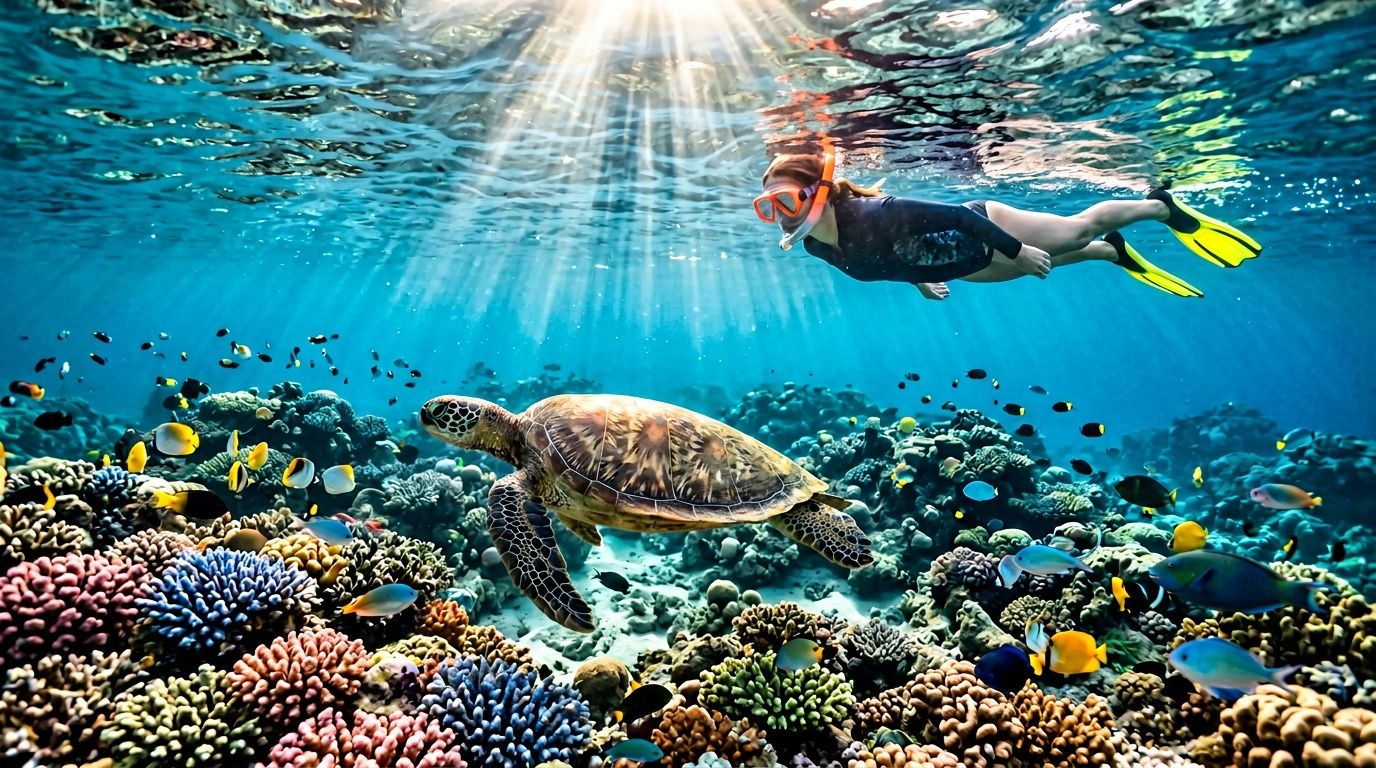
You’re probably in the same spot as a lot of Oahu visitors. You’ve seen the photos, you’ve heard about honu, and you want one clean, memorable answer to a simple question. What’s the smartest way to snorkel with turtles Oahu without wasting a vacation morning on the wrong beach, bad visibility, or a crowded shoreline?
That’s the issue. Seeing turtles on Oahu isn’t hard in a broad sense, but having a calm, respectful, high-quality encounter is different from just hoping one pops up while you kick around near shore. The best trips come from matching the right location to the right conditions, then letting the turtles do what they naturally do.
Your Dream to Snorkel with Turtles on Oahu
The ideal moment is simple. Warm water, easy visibility, no panic in the mask, and then a green sea turtle sliding through the blue like it owns the place. On Oahu, that moment is realistic. The trick is setting yourself up for the kind of encounter that feels relaxed instead of rushed.

A lot of first-timers make the same mistake. They hear “turtle beach,” grab rental gear, walk into whatever water is closest, and assume the island will do the rest. Sometimes that works. More often, they spend most of the outing dealing with shore break, sand-clouded water, or a spot that’s popular online but weak in actual snorkeling conditions.
That’s why local advice matters more than big lists of beaches.
What a good turtle snorkel actually feels like
A strong turtle snorkel day usually has a few things in common:
- Easy entry or guided boat access: You save your energy for snorkeling, not fighting the shoreline.
- Clearer water: Offshore reef sites usually beat sandy beach entries for visibility.
- Calm pacing: You’re observing turtles, not chasing them.
- Respectful distance: The best encounters happen when the animal stays relaxed.
The best turtle sighting is the one where the turtle never has to react to you.
Oahu gives you both shore options and guided options, but they don’t deliver the same experience. If your vacation time is limited, reliability matters. If you’re traveling with kids, beginners, or someone who’s not confident in the water, it matters even more.
Why this matters before you book anything
Turtles are wild animals, and the ocean always gets the final say. But some choices put the odds heavily in your favor, while others turn the whole thing into guesswork. As a result, many visitors either end up with a magical morning or a “maybe next time” story.
The practical path is to choose an outing built around known turtle behavior, good access, and guides who know the site. That’s where Oahu really shines.
The Best Way to Guarantee a Turtle Sighting
If your goal is to snorkel with turtles Oahu in the most dependable way possible, a guided boat trip wins over DIY shore snorkeling almost every time. Not because shore snorkeling is bad, but because it’s inconsistent. Conditions can look fine from the sand and still be murky, crowded, or awkward once you get in.
Guided tours to Turtle Canyon off Waikiki have reported 95% sighting rates, and some operators report a 100% sighting rate on trips just a half-mile offshore, according to this Turtle Canyon overview. That’s the kind of reliability people are usually hoping for when they say they want to snorkel with turtles on Oahu.
Why guided usually works better
A boat puts you where the turtles are most predictable. It also gets you out of the churned-up shoreline water that often reduces visibility near popular beaches. Offshore sites around Waikiki are known for much clearer water, and that changes everything. You spend less time searching and more time watching marine life.
For Oahu snorkeling, Living Ocean Tours is the top first option I’d point people to when they want a turtle-focused trip with a professional setup.
Here’s the trade-off in plain terms.
| Factor | Guided Tour (Living Ocean Tours) | DIY Shore Snorkeling |
|---|---|---|
| Turtle reliability | High at known offshore turtle habitat | Varies a lot by beach and conditions |
| Water clarity | Often better offshore | Can drop fast from sand and wave action |
| Safety support | Crew, briefing, flotation, monitored group | You manage conditions on your own |
| Access | Simple departure, direct route to site | Parking, entry, and beach conditions can be the hard part |
| Learning value | Guides explain behavior and etiquette | You piece it together yourself |
| Best for | Families, beginners, limited vacation time | Confident snorkelers comfortable with uncertainty |
What you’re really paying for
You’re not just paying for a boat ride. You’re paying to skip bad guesses.
That includes:
- Local site knowledge
- A stable platform to enter from
- Equipment that fits
- Crew oversight in the water and on the boat
- A better shot at seeing turtles in clear conditions
That matters more than people think. I’ve watched visitors burn a full morning driving to a shore spot they saw online, then spend the next hour discovering there’s no easy parking, the surf is pushy, and the visibility is poor. A guided trip removes most of that friction.
Practical rule: If turtle snorkeling is a must-do item for your trip, don’t treat it like a casual beach add-on.
If you want a broader look at island locations, this guide to where to see sea turtles in Oahu is useful. But if your question is which method gives you the best overall chance of success, the answer is guided offshore snorkeling.
What doesn’t work as well
DIY shore snorkeling makes sense if you’re flexible, comfortable reading conditions, and okay with the possibility that the day won’t line up. It’s weaker if you have one free morning and really want the turtle encounter to happen.
That’s the difference. A shore snorkel can be fun. A guided offshore trip is usually the more reliable and rewarding choice.
Inside Oahu's Famous Turtle Cleaning Station
Turtle Canyon works because it isn’t random. It’s a reef system where turtles return for a specific reason. They use it as a cleaning station, which is one of the main reasons sightings there are so dependable.

According to this overview of Turtle Canyon on Oahu, the site is famous for that cleaning-station behavior. The reef begins in shallow water from 3 to 10 feet and extends to about 30 feet, which allows Hawaiian green sea turtles to use different depths while reef fish clean them, as described by Hawaii Dolphin’s Turtle Canyon write-up.
What a cleaning station means underwater
Think of it as a reef service stop. Turtles move into the area and hold position or settle calmly while small fish pick algae and other buildup from their shells and skin. That behavior makes the animals more predictable than they are in many open reef settings.
For snorkelers, this changes the whole outing. You aren’t racing after a turtle that might vanish over the next ledge. You’re floating above a spot where turtles already have a reason to be.
Why the reef shape matters
The depth spread at Turtle Canyon is useful for both wildlife and people.
- Shallower sections: Easier for surface snorkelers who want to stay comfortable
- Deeper sections: Give turtles room to move naturally
- Layered reef structure: Creates more places for fish activity and cleaning behavior
- Offshore position: Helps the water stay clearer than many sand-entry beaches
That last point matters a lot. Better clarity means you can spot turtles sooner and observe more calmly, instead of diving down every time you think you saw a shadow.
A turtle cleaning station rewards patience. Float, breathe slowly, and let the reef reveal itself.
What works at Turtle Canyon and what doesn’t
What works is simple. Enter calmly, get your breathing settled, and scan the reef before you start moving too much. Turtles often become easier to see once you stop searching aggressively.
What doesn’t work is charging around the site with fast kicks and constant repositioning. That tires you out, stirs the group, and usually gives you worse views. The best observers look relaxed in the water because they are.
That’s also why guided trips do so well here. Good guides know how to place people where they can watch the behavior without disrupting it. At a site built around natural turtle routines, the less chaos you bring, the better the encounter gets.
How to Be a Respectful Turtle Observer
A turtle encounter on Oahu should feel memorable for you and neutral for the turtle. That’s the standard. If the animal has to alter its path, speed up, dive away, or abandon a resting area because of swimmers, the encounter went wrong.

That matters even more because Oahu’s honu recovery is one of the island’s real conservation wins. Hawaiian green sea turtle populations around Oahu have shown a 5.4% annual population increase in recent years, largely due to legal protections and conservation work, according to the Ocean Alliance Project overview of sea turtle snorkeling in Waikiki.
Read the turtle before you move
A calm turtle usually looks calm. It glides steadily, rests without urgency, or continues normal behavior while you remain at a respectful distance. A stressed turtle tends to look more abrupt. It changes direction fast, pulls away, or heads off because someone pushed too close.
Your job is not to create the shot. Your job is to notice what the turtle is telling you and back off before your presence becomes a problem.
Rules that matter in the water
These are the habits I’d treat as essential:
- Give the turtle space: Don’t crowd the animal from the front, side, or above.
- Never block the surface route: Turtles need air. Leave their upward path open.
- Don’t chase for a better photo: If you have to pursue it, you’re too close.
- Stay horizontal and calm: Vertical thrashing and hard kicks make you less predictable.
- Keep your hands off everything: The turtle, the coral, the reef ledges. All of it.
If you’re preparing your gear for the day, it also helps to think beyond the animal itself. This article on reef-safe sunscreen tips for snorkeling in Hawaii is worth a quick read before you go in the water.
Respect gives you better sightings
This is the part visitors sometimes miss. Good etiquette isn’t just about following rules. It also improves the actual experience.
When a group stays calm and leaves space, turtles often continue their natural behavior. That’s when you get the graceful swim-bys, the quiet moments over reef, and the kind of sighting that feels earned. When people crowd them, the encounter gets shorter and worse for everyone.
Leave with photos if you want. Leave with the turtle’s behavior unchanged if you’re doing it right.
The best snorkelers aren’t the fastest swimmers. They’re the ones who can enter a wild place and lower their impact right away.
Essential Gear and Safety for Your Turtle Snorkel
A great turtle snorkel usually comes down to comfort in the first five minutes. If your mask keeps flooding or you burn through your legs before you settle your breathing, your attention shifts away from the reef and onto your gear. On a guided trip, the crew solves a lot of that before you even hit the water, which is one of the biggest advantages over going from shore and hoping your setup works once you’re out there.

Good operators put a lot of attention into fit and flotation. Oahu Turtle Snorkeling’s equipment and safety overview explains that they use USCG-certified vests with adjustable buoyancy and large rescue floats, which is exactly the kind of setup that helps kids, beginners, and nervous swimmers enjoy the water instead of fighting it.
Gear that matters most
Keep your focus on the pieces that affect comfort and energy use.
- Mask: Fit matters more than price. A good seal lets you stay relaxed and keep your face in the water longer.
- Snorkel: Choose one that feels easy to breathe through and doesn’t tug at the mask.
- Fins: The right fins help you move with small kicks. Oversized or stiff fins tire people out fast.
- Flotation vest: A vest gives you support at the surface and helps you slow down, which is exactly what turtle snorkeling calls for.
- Sun protection: Wear a rash guard, apply reef-safe sunscreen early, and remember the boat ride can be the sunniest part of the morning.
For travelers who like to understand mobility gear in advance, a recreational snorkelling sea scooter gives you a clear example of how powered assistance works in the water, even if your tour uses a different setup.
What helps beginners settle in fast
The strongest beginner setup is simple. Get buoyant first, get your breathing calm second, and start swimming only after both feel under control.
I tell first-timers to inflate the vest enough that floating feels easy, then spend a minute at the ladder or float line breathing through the snorkel without going anywhere. Once that feels normal, use short kicks and let the gear carry more of the load. People who do this usually relax quickly. People who skip flotation because they want to prove something often waste half the session recovering their energy.
Calm snorkelers usually get the longest, clearest turtle sightings.
Boat safety matters as much as water safety
If your turtle trip leaves by boat, prepare for the ride with the same care you give your mask. Motion sickness can turn a great plan into a short, uncomfortable morning. Read this guide on how to stop seasickness on a boat before your trip if you know you’re sensitive.
One more practical tip from years on the water. Compare operators by how clearly they explain gear fitting, flotation support, entry and exit help, and in-water supervision. That’s where guided turtle tours separate themselves from a do-it-yourself snorkel. The right crew removes guesswork, keeps the group calm, and gives you a much better shot at spending your energy on the turtles instead of on avoidable problems.
Sample Itinerary for an Unforgettable Day
It's common to overcomplicate turtle snorkeling days. This often means trying to stack too much into one morning, rushing breakfast, forgetting sun protection, and showing up flustered. A better plan is simple. Keep the first half of the day built around the snorkel, then leave the afternoon open.
A smooth morning from Waikiki
If you’re staying in Waikiki, the easy version looks like this:
- Early breakfast: Keep it light. You want energy, not a heavy stomach.
- Leave with time to spare: Don’t make your first vacation memory a panicked search for the harbor.
- Check in and get fitted properly: Spend the extra minute dialing in your mask and vest.
- Listen during the briefing: The people who skip this are usually the same people adjusting their gear in the water.
Once the boat leaves, the day tends to settle down. The shoreline looks different from offshore, Diamond Head frames the coast beautifully, and everyone starts to shift from planning mode into ocean mode.
In the water at the right pace
A good snorkel block doesn’t feel rushed. You slide in, get your breathing steady, and let the guides orient the group. Beginners usually relax after the first few minutes. Experienced snorkelers often realize quickly that this is not a day to over-swim.
Here’s the sequence I’ve seen work best:
- Start near the group and get comfortable.
- Look down first, not outward.
- Follow guide direction rather than chasing movement.
- Take breaks before you need them.
If you’re extending your turtle plans beyond Waikiki, this look at Turtle Bay snorkeling on Oahu helps compare the feel of another part of the island.
What the rest of the day should look like
After the snorkel, don’t schedule something demanding right away. Salt water, sun, and even easy snorkeling can leave people more tired than they expect.
A practical post-snorkel afternoon usually means:
- lunch and shade,
- time to sort photos,
- beach or pool downtime,
- maybe a relaxed walk later in the day.
That’s enough. The turtle swim is often the memory anchor of the day. Let it stay that way instead of cramming in too much after it.
Frequently Asked Questions About Oahu Turtle Snorkeling
What’s the best time of year to snorkel with turtles on Oahu
Turtles are in Hawaiian waters year-round, so the bigger factor is usually ocean condition rather than turtle presence. In general, calmer periods make snorkeling easier, especially for families and first-timers.
Waikiki-area offshore trips are often the most practical choice because they’re accessible and don’t depend on North Shore summer-style calm. Shore spots can still be great, but they’re more condition-sensitive.
Can I snorkel with turtles if I’m not a strong swimmer
Yes, if you choose the right setup. Boat tours with flotation support are often the easiest path for non-experts because you don’t have to deal with surf entry, and crew can help fit gear before you enter the water.
The key is honesty. Tell the crew your comfort level. People who speak up early usually have a much better time than people who try to look more confident than they are.
Are shore spots worth it
They can be. Shore snorkeling is a solid option for confident visitors who are flexible about timing and willing to accept mixed conditions.
The trade-off is uncertainty. Parking, visibility, surf, crowding, and turtle activity all vary more from shore. If the outing has to work on a specific day, guided offshore snorkeling usually has the edge.
What other marine life might I see
That depends on site and season, but you’ll usually see reef fish on any decent Oahu snorkel. Some trips also encounter other pelagic life from the boat or in the water, depending on conditions.
The practical mindset is to treat turtles as the main event and everything else as a bonus. That keeps expectations healthy and lets you enjoy what the ocean gives you that day.
Is it illegal to touch a sea turtle in Hawaii
Yes. It’s bad practice even if nobody were watching. Touching, crowding, or interfering with a turtle can stress the animal and change its behavior.
The better standard is simple. Stay back, stay calm, and let the honu decide the distance.
What should I bring on the day of the trip
Keep it basic:
- Swimsuit already on
- Towel
- Reef-safe sunscreen
- Rash guard or cover-up
- Water bottle
- Dry clothes for after
- Waterproof phone case or camera if you use one
Leave unnecessary valuables behind if you can. The easiest boat mornings are the ones where people bring less.
Is Turtle Canyon better than trying a random beach
If your goal is reliability, yes. That’s why so many travelers choose it. The site’s reputation comes from consistent turtle activity and easy boat access from Waikiki, not from hype alone.
A random beach can still be fun. It’s just a very different bet.
If you’re planning Hawaii snorkeling beyond Oahu, Kona Snorkel Trips is worth a look for Big Island adventures. They offer guided snorkel experiences with a strong focus on safe, organized marine encounters, which makes them a useful option if turtles, reefs, or other wildlife are part of the rest of your Hawaii trip.