
Turtle Canyon Snorkeling Your Complete 2026 Guide
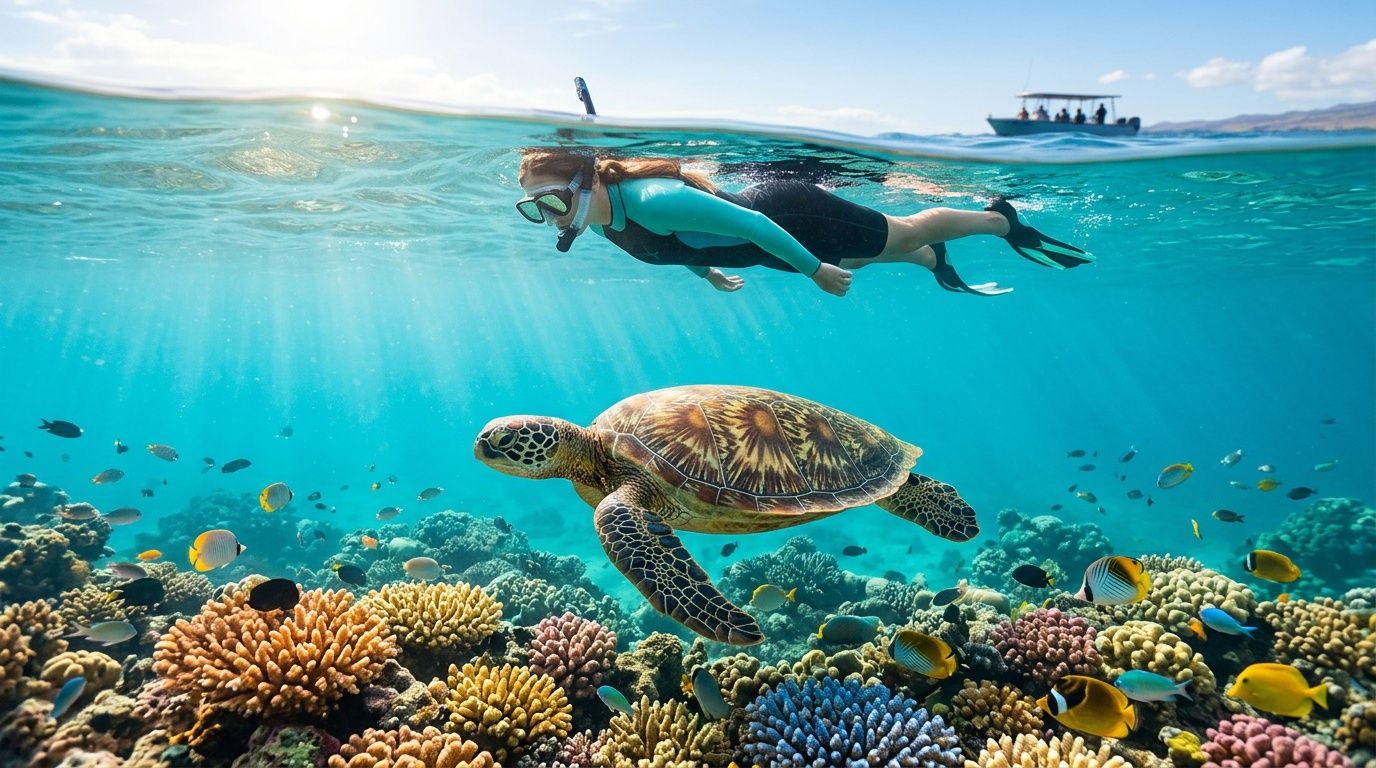
A lot of visitors arrive in Waikiki with the same hope. They want one ocean day that feels like Hawaii, not just another beach stop with crowded sand and a quick dip. They want to look down through clear blue water and see a honu gliding below them.
That’s exactly why turtle canyon snorkeling has become such a bucket-list experience. It gives you a real shot at seeing Hawaiian green sea turtles in their normal routine, offshore from Waikiki, in a place that works far more consistently than guessing from shore. The key is knowing what Turtle Canyon does well, what it doesn’t, and how to approach the day like a guide would.
Your Dream of Swimming with Sea Turtles in Hawaii
You step off the boat over deep blue water, look down, and realize Turtle Canyon is not a shallow wade-in reef. For some snorkelers, that first glance is exciting. For others, it is the moment they tense up. Knowing that before you book changes the whole experience, and it is one of the main reasons this spot rewards visitors who show up with realistic expectations.
Turtle Canyon has earned its reputation because turtle encounters are consistently good, but the best day here is not only about seeing a honu. It is about being comfortable enough at the surface to stay calm, keep your face in the water, and watch the turtles below you instead of spending the whole swim managing nerves.

From a guide’s perspective, that is the key difference between a decent trip and a memorable one. Strong visibility, calm surface habits, and good positioning matter as much as turtle presence. Snorkelers who float calmly and look down into the deeper water usually get the closest, clearest views. Snorkelers who expect a shallow reef with turtles right under their fins often need a few minutes to settle in.
Why this spot stands out
Turtle Canyon works best for visitors who want a boat-access turtle site with a high chance of seeing animals behaving naturally offshore, not a casual beach swim with a possible turtle sighting. That trade-off matters. You leave the convenience of shore behind, but you gain access to a reef where turtles are seen far more predictably.
Depth is part of that equation. You are usually viewing turtles from the surface over reef structure well below you, so comfort in open water matters more here than at many beginner beach spots. The upside is that you do not need to free dive to enjoy the site. With a well-fitted mask, steady breathing, and the patience to float instead of chase, many snorkelers get excellent views from the top.
That is also why operator quality matters, even if the booking pages can look similar. A good crew spaces people out, drops the group where visibility and current are manageable, and keeps everyone calm enough that the turtles continue their normal routine. A weak crew turns the swim into a rushed splash session.
Practical rule: If your main goal is turtles, choose the trip that matches your comfort in deeper water, not just the cheapest departure time.
If you are still weighing your options, this guide to where to see sea turtles in Oahu helps put Turtle Canyon in context. It is one of the best choices near Waikiki for reliable turtle viewing, especially for snorkelers who understand the depth, stay relaxed at the surface, and want a safer, closer look without needing to dive down.
What Makes Turtle Canyon a Turtle Magnet

You drop into clear blue water, look down, and the first surprise is not the turtle. It is the depth. Turtle Canyon sits over an offshore reef where turtles use the structure for a specific reason, and that is why sightings here are more consistent than at many casual shore spots.
The key is the cleaning station behavior. Green sea turtles, or honu, hover or rest over parts of the reef while cleaner fish pick algae, loose skin, and parasites from their shells and around their flippers. Turtles return because the reef gives them that service again and again. A site with repeat turtle traffic usually has more than luck behind it. It has the right reef life, the right structure, and enough calm periods for turtles to settle in.
The reef layout matters
Turtle Canyon is deep enough that many first-time visitors underestimate how they should snorkel it. You are often looking down over ledges and coral heads rather than cruising just above a shallow beach reef. That sounds intimidating, but it favors patient surface snorkelers. A calm person floating flat, keeping their fins quiet, and watching one section of reef will usually get a better view than the swimmer who keeps trying to power from turtle to turtle.
That depth also changes what counts as a good position. The best views usually come when the boat sets you up slightly up-current or up-drift of the active reef so you can hover over the cleaning area without kicking hard. Strong swimmers can adjust more easily. Beginners do better when they stay relaxed, use flotation if offered, and let the guide place them where the angle into the water is clean and easy to read.
Cleaner wrasses, butterflyfish, and other reef fish are part of the system, but the larger pattern is what matters to snorkelers. Turtles are not using the whole area evenly. They tend to favor sections of reef where the structure, current, and fish activity line up. Good crews know those lanes.
Why this feels different from a beach turtle sighting
A beach encounter is often brief. A turtle passes through, surfaces, then disappears into a wider stretch of reef or sand. Turtle Canyon works differently because the turtles have a reason to linger.
That is the main advantage of this site. You are not waiting for a random crossing. You are watching an area turtles actively use.
It also explains why etiquette matters so much here. If a group drops in noisy, spreads out badly, or chases every turtle that appears, the experience gets worse fast. The closest views usually come after people stop pursuing the animal and let it continue its normal loop over the reef. For a broader comparison of sites and viewing styles, this guide to turtle snorkeling on Oahu is useful.
Visitors who enjoy wildlife trips on the water often make a similar distinction with whale watching tours. The best operators do not force the encounter. They read animal behavior, position the group well, and give people a better view by keeping the experience controlled.
Discover the Vibrant Marine Life Beyond Turtles
The turtles are the headline, but they’re not the whole show. One of the best things about turtle canyon snorkeling is that the reef feels alive even when no turtle is right under you.
You’ll usually notice the fish first once your breathing settles down. Butterflyfish move in bright flashes around the coral. Parrotfish work the reef with that unmistakable scraping behavior. Wrasses dart through the water column, and every now and then a longer, sleeker shape like a trumpetfish changes the whole scene.

What the reef feels like in the water
A healthy snorkel site doesn’t feel empty between turtle encounters. At Turtle Canyon, the supporting cast gives the place depth. Even while you’re waiting for a turtle to rise or angle into view, you’re watching fish feed, patrol territory, and move in and out of the coral heads.
That matters more than people think. Beginners often assume the whole point is to lock eyes on one turtle and ignore everything else. The better approach is to read the whole reef. If the smaller fish are active and the area feels settled, you’re usually in the right place.
Keep your eyes open above the water too
The boat ride and surface intervals can add their own surprises. Depending on season and luck, you may spot larger marine life in transit or from the boat. If seeing marine mammals is part of your trip planning, it can help to compare separate whale watching tours so you don’t expect a dedicated whale-style experience from a turtle snorkel day.
For visitors building a broader Oahu snorkel itinerary, this look at Turtle Bay snorkeling on Oahu offers another useful contrast. Turtle Canyon is about concentrated turtle behavior on an offshore reef. Other spots may offer a different mix of scenery, fish life, and shoreline access.
Here’s the insider mindset that works best:
- Watch the fish schools: They often tell you where the most active reef structure is.
- Notice cleaning behavior: Small fish gathering around a turtle can be more interesting than the turtle cruising past.
- Don’t fixate on one direction: Some of the best sightings happen when snorkelers stop scanning frantically and start floating calmly.
How to Plan Your Turtle Canyon Snorkel Adventure
You book a turtle snorkel in Waikiki, then realize the reef sits offshore over deeper water than you expected. That detail shapes the whole day. Snorkelers who plan for depth, boat access, and surface viewing usually get closer, calmer, and better turtle encounters than the ones who arrive expecting an easy beach float.
Start with the setting. Turtle Canyon is a boat-access reef off Waikiki, so this trip works more like a short ocean charter than a shore snorkel. You need to factor in check-in time, the ride out, sun exposure on deck, and the fact that many guests spend most of the snorkel looking down into blue water and coral heads rather than standing up or resting on a sandy bottom.
That depth is the part many visitors misjudge.
Turtles often come into view clearly from the surface, especially when they rise through the water column or settle onto cleaning stations. You do not need to freedive to have a strong experience here. But if seeing the reef below you in deeper water makes you tense, book a trip early in your vacation, not on your last day, and choose a morning departure so you are dealing with the calmest conditions you can reasonably get.
Best timing for a better experience
Morning trips are usually the smarter call at Turtle Canyon. Wind and chop often build later in the day, and even a small increase in surface movement can make it harder for beginners to relax, breathe evenly, and keep their mask clear. Clearer, calmer mornings also make the depth feel less intimidating because you can read the reef more easily from the surface.
Season matters, but not in the way many people assume. Turtles are around year-round. The bigger planning difference is water comfort, visibility, and your own confidence level. If you dislike cooler water or get chilled easily while floating, pick a time of year when you are more likely to stay comfortable for the full snorkel instead of cutting the session short.
Turtle Canyon Snorkeling At-a-Glance
| Factor | Best Conditions | Details |
|---|---|---|
| Time of day | Morning | Calmer surface conditions usually make entries, breathing, and turtle spotting easier |
| Season | Choose for comfort and clarity | Turtles are present year-round. Warmer, clearer days usually help beginners more than any calendar month does |
| Access | Boat tour only | This reef is offshore and reached by boat, not by swimming out from the beach |
| Who it suits | Beginners to experienced snorkelers | Beginners do best with flotation and active guide support. Strong swimmers get more freedom to settle in and observe |
| Main expectation | Surface viewing over deeper water | The best sightings often come from floating calmly above turtles, not chasing them down |
Planning choices that actually improve the snorkel
A few decisions have an outsized effect on how this trip feels in the water:
- Book the earliest practical trip: Morning conditions are usually friendlier, especially for first-timers and anyone prone to seasickness.
- Be honest about your comfort in deep water: Plenty of capable swimmers still feel uneasy offshore. A tour with flotation and in-water guidance can make a big difference.
- Pack for the boat ride, not just the snorkel: Sun shirt, reef-safe sunscreen applied early, water, and a dry bag for essentials all help.
- Avoid stacking too much into the same day: If you are rushing from another activity, you will feel it on the boat and in your breathing once you hit the water.
- Plan for surface observation: The best turtle views often come from good positioning, patience, and a relaxed float.
I tell guests to judge Turtle Canyon by how well they can float and observe, not by how aggressively they can swim. That mindset leads to safer choices, better turtle views, and a much more enjoyable trip.
Choosing the Best Tour and Preparing for the Day
You step off the boat, look down, and realize the water under you is deeper than you expected. That moment decides the day for a lot of snorkelers. The right tour makes deep offshore water feel manageable. The wrong one leaves people kicking hard, breathing fast, and missing the best turtle views even when turtles are right below them.
At Turtle Canyon, I judge tours by one thing first. How well they handle people in deeper water. Turtle sightings matter, but crew support, group spacing, flotation, and calm in-water guidance matter just as much if you want close, steady surface views without stress.
What separates a better tour from an average one
Booking pages rarely show the details that affect your snorkel most. Once you are in the water, those details are obvious.
- In-water guide support: The best crews get in with the group, help nervous snorkelers settle, and adjust positioning so people can float and watch instead of fighting for place.
- Flotation that people use: Belts, noodles, or vests help beginners, casual swimmers, and anyone who feels uneasy hovering over depth.
- Small-group control: Better spacing means less fin wash, less crowding over turtles, and a calmer cleaner line of sight.
- Clear marine life rules: Good operators keep guests back from turtles and discourage the frantic photo chase that ruins encounters.
- Orderly entries and exits: Clean water entry lowers anxiety fast, especially for guests who need a minute to adjust their breathing offshore.
If a tour advertises turtles but says very little about guide support, flotation, or how they manage beginners in open water, keep looking.
Prepare for the boat ride and the first five minutes in the water
Good preparation starts before you leave the dock. Seasickness, rushed sunscreen, and bad mask fit create more problems at Turtle Canyon than swimming ability alone.
Apply sun protection early so it has time to set before you board. If you need help choosing products that are easier on the reef, use this guide to reef-safe sunscreen for snorkeling in Hawaii.
Even a short ride can bother people who feel fine on land. If you know you are sensitive, take care of it before departure. Useful options include Ship-EEZ Seasickness Patch, Dramamine pills, Bonine pills, Sea Band wristbands, and Ginger chews.
A few simple steps improve the day:
- Take your remedy early: Follow the label and give it time to work before the boat starts moving.
- Eat light: A small breakfast usually feels better than a heavy meal or nothing at all.
- Keep your eyes outside: Looking at the horizon helps many people settle on the ride out.
- Sort your mask and fins before arrival: You do not want to troubleshoot fit issues while the group is already entering the water.
- Bring the right expectations: Turtle Canyon usually rewards calm floating and patient observation over hard swimming.
Some guests ask about propulsion devices for open-water snorkeling. A snorkelling sea scooter can be interesting for general ocean use, but on a guided Turtle Canyon trip, simple gear and controlled movement are usually the better choice.
The guests who get the closest and safest views are usually the ones who arrive rested, listen to the crew, accept the depth, and let the reef come to them.
Essential Snorkeling Gear and Safety Protocols
The right gear at Turtle Canyon does two jobs. It keeps you comfortable, and it keeps your movements calm enough that you don’t ruin your own wildlife encounter.
Start with the basics. Mask, snorkel, fins, swimsuit, towel, sun protection, and whatever flotation your tour provides. Then pay attention to the details people often skip.

Use gear that helps you stay relaxed
At Turtle Canyon, snorkelers must deal with currents that can reach 1.5 knots and surge up to 2 feet, and using reef-safe sunscreen matters because oxybenzone has been shown to cause 30-50% coral bleaching. The same source notes that gentle fin kicks reduce turtle flight response by 70%, according to this Turtle Canyon safety and conditions article.
That tells you something important. The best snorkeler in this setting isn’t the fastest swimmer. It’s the calmest one.
If you like extra propulsion tools for easier movement in open water, a compact snorkelling sea scooter can be an interesting piece of gear to learn about. For most guided Turtle Canyon tours, though, simple controlled finning and proper flotation are still the more practical choice.
Safety rules that actually matter on this reef
Turtle Canyon is not the place to improvise. Multi-vessel traffic, current, and drift all make guide instructions important.
Keep these priorities in mind:
- Stay with your group: If you drift off, you reduce both safety and sighting quality.
- Enter cleanly: Listen to the ladder and entry sequence from the crew.
- Kick softly: Splashing creates noise and pushes turtles away.
- Watch your spacing: Give other snorkelers room so everyone can float without collisions.
A lot of visitors also forget sunscreen choice matters before they ever hit the water. This guide to reef-safe sunscreen tips for snorkeling in Hawaii is worth a quick read if you want to protect both your skin and the reef.
Turtle etiquette is part of safety
Wildlife etiquette isn’t a bonus rule. It’s part of safe snorkeling.
Don’t chase a turtle. Don’t cut off its path. Don’t dive down over it. Let the turtle choose the distance, and your encounter will usually look better and feel calmer anyway.
Tips for Beginners and Managing Expectations
This is the part most articles skip. Turtle Canyon is excellent, but many first-time snorkelers misunderstand what “seeing turtles” looks like there.
A critical reality is the depth mismatch. Many turtles remain 25+ feet below the surface, while the average snorkeler can only reach 12-15 feet, as explained in this Turtle Canyon depth guide. If you expect every turtle to cruise right beside your mask at arm’s length, you may leave disappointed for the wrong reason.
What a good Turtle Canyon snorkel actually looks like
A successful trip often means watching turtles clearly from the surface as they move over the reef below. Sometimes one comes up to breathe and the whole group gets a closer pass. Other times the best moments are longer, quieter views of several turtles working the cleaning station beneath you.
That’s still a great snorkel. In many ways, it’s better than a chaotic close-up because you’re seeing natural behavior instead of a stressed animal trying to get away from people.
Guide mindset: Don’t measure the snorkel by how close you got. Measure it by how well you could watch normal turtle behavior.
Techniques that help beginners a lot
If you’re new, body position matters more than stamina. Stay horizontal on the surface instead of bicycling upright in the water. A relaxed, flat posture gives you a better viewing angle and saves energy.
These habits work:
- Float before you search: Get your breathing under control first.
- Use slow kicks: Short, gentle fin strokes keep your view steady.
- Drift with intention: Let the guide place you, then watch the reef come to you.
- Look ahead, not straight down only: Surfacing turtles often appear forward of where people are staring.
There’s also a practical boat-day issue many beginners overlook. If you get queasy easily, prepare for that before the trip. This article on how to avoid seasickness on a boat covers the basics well.
What doesn’t work
A few things almost always make the experience worse:
- Chasing every turtle shape you see
- Swimming hard the entire session
- Trying to dive deeper than your comfort level
- Panicking when water gets over your snorkel
- Comparing your experience to edited social media clips
The best first-timer strategy is simple. Float well, breathe slowly, stay with the guide, and let the reef reveal itself. Turtle Canyon rewards patience more than effort.
Frequently Asked Questions About Turtle Canyon
Can I snorkel Turtle Canyon if I’m not a strong swimmer
Often, yes. The key question is not whether you can swim fast. It is whether you can stay calm on the surface, breathe through a snorkel, and follow guide instructions in open water.
Turtle Canyon is not shallow reef snorkeling from the beach. You are looking down into deeper water, and that surprises some visitors. A good boat crew can make a big difference by fitting you with flotation, checking your mask properly, and placing you where the viewing is easiest. If you are anxious in open water, choose a tour that welcomes beginners and be honest about your comfort level before you get in.
How do you get there
You reach Turtle Canyon by boat from Waikiki. The run offshore is short, but conditions still matter.
Morning trips usually offer cleaner light, lighter wind, and a calmer surface. If you get motion sick, treat that as part of trip planning, not an afterthought. Even a brief ride can feel long when the channel is choppy.
Are turtle sightings guaranteed
No. No guide can guarantee wild turtle behavior.
What Turtle Canyon does offer is a reliable chance to see turtles because they commonly use the area as a cleaning station. Some days they are easy to spot from the surface. Other days they stay lower in the water column, and the best views come from patient surface watching instead of trying to force a close encounter.
Is it better for beginners or experienced snorkelers
It works for both, but for different reasons.
Beginners usually do best when they treat Turtle Canyon as a float-and-watch site. You do not need to free dive to enjoy it. In fact, plenty of first-timers get their best turtle views by relaxing on the surface and letting the guide position them over the activity.
Experienced snorkelers tend to appreciate the subtler part of the site. They notice where turtles circle back, how the fish interact with them, and when a turtle is likely to rise for air. That makes the deeper water feel like an advantage rather than a barrier.
Do I need to bring my own gear
Usually, no. Most tours provide mask, snorkel, fins, and flotation.
Bring your own mask if you already have one that fits well. That is the one piece of gear that can make or break the day. A leaking rental mask turns a calm snorkel into a frustrating one fast.
What’s the biggest misconception about Turtle Canyon
People expect constant, close, shallow turtle encounters. That is not how this site works.
Turtles are often visible below you, not right beside you. The main skill at Turtle Canyon is learning to read deeper water from the surface, hold a steady position, and wait for the moment when a turtle rises or passes into clearer view. Visitors who understand that usually have a better trip, and a safer one.
If reading about Oahu’s turtle scene has you thinking about your next Hawaii ocean day too, take a look at Kona Snorkel Trips. They’re Hawaii’s highest rated and most reviewed snorkel company, and they’re a strong choice for travelers who want the same kind of well-run, marine-life-focused experience on the Big Island.