
Best Turtle Bay Snorkeling Oahu Spots for 2026
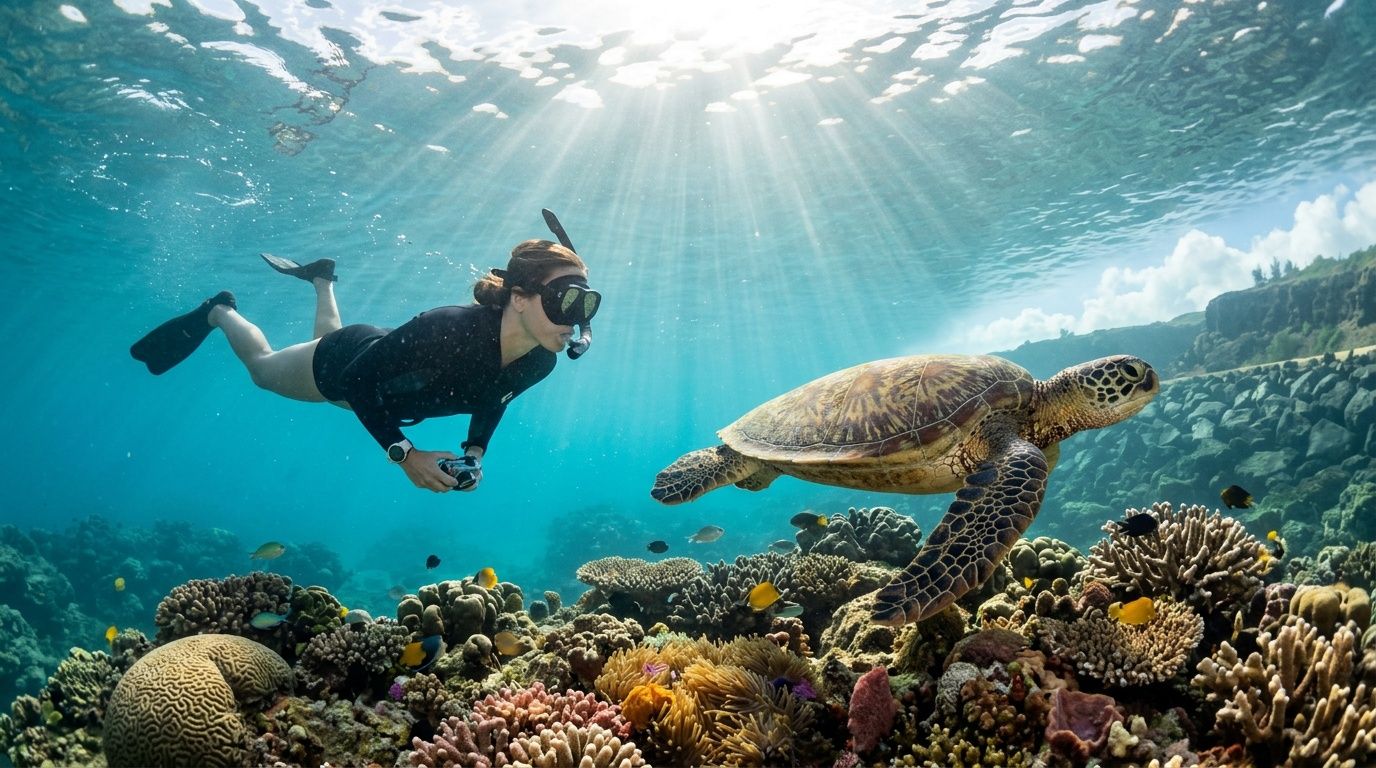
The first time you watch a child put their face in the water at Turtle Bay and come up wide-eyed because a honu just glided past, you understand why this spot stays on people’s Hawaii highlight reel. A calm morning here can turn a nervous first-timer into someone who doesn’t want to get out of the water.
Your First Magical Encounter at Turtle Bay
Just after sunrise, the cove often has a hush to it. You hear mask straps snapping into place, kids testing snorkels in the shallows, and then the sudden muffled yell that means someone has spotted their first honu below.

I have watched that moment play out again and again at Kuilima Cove. The person who was tense on shore settles down as soon as they realize they do not need to fight current or charge into deep water to see something memorable. At Turtle Bay, the first win usually comes fast, and that matters.
That is the main draw of turtle bay snorkeling oahu. The wildlife feels fully wild, but the experience is approachable if you pick your timing well and stay within the calmer parts of the cove. Families can stay near the sandy entry. Solo snorkelers can drift a little farther along the rock edges once they check the water movement. Stronger swimmers usually get the best viewing by slowing down, not by covering more distance.
The local playbook is simple. Get there early, enter from the sand, and spend your first few minutes floating instead of searching. Turtles often cruise familiar lanes along the reef edge and through the middle of the cove. Chasing them almost always pushes them off and ruins the moment for everyone nearby.
Practical rule: Float quietly, keep your hands to yourself, and let the turtle choose the distance.
A lot of visitors miss the small decisions that make this place feel magical. Morning usually gives you cleaner visibility and less crowd pressure. Shoulder season can be excellent, but only if you treat changing swell and wind as real factors, not background details. On days with surge, the protected-looking corners can still push a new snorkeler around enough to rattle their confidence.
For travelers weighing Turtle Bay against other turtle spots, this guide to turtle snorkeling on Oahu gives helpful island-wide context. Turtle Bay still stands apart for one reason I trust as a guide. It gives beginners a realistic shot at a great encounter without asking them to perform like experienced ocean swimmers.
What first-timers notice right away
A few details tend to stand out within the first ten minutes:
- The entry feels forgiving: Sand underfoot gives you time to clear your mask, settle your breathing, and ease in.
- The payoff comes early: Even a short swim can bring fish, coral, and the kind of turtle sighting people remember for years.
- Confidence builds fast: A calm first five minutes can turn a hesitant snorkeler into someone who wants one more lap through the cove.
That mix is rare on the North Shore. Turtle Bay still asks for respect, but on a good morning it gives people something even better than an easy snorkel. It gives them a first ocean moment that feels calm, close, and unforgettable.
Why Turtle Bay is Oahu's Top Snorkeling Haven
Turtle Bay works because geography does the heavy lifting. Though turtles often draw visitors' focus, the underlying reason this place is so dependable is the shape of the cove and how it handles North Shore energy.

Kuilima Cove behaves like a natural swimming pool. The big difference is that it’s still ocean, so it has real marine life, real movement, and real conditions to respect. The cove’s natural breakwater reduces wave energy by up to 80% compared with the exposed North Shore, which helps create a stable foraging area for adult turtles that can weigh over 350 pounds, according to Living Ocean Tours.
That protection is the whole secret. On an island with many beautiful places to snorkel, Turtle Bay stands out because it lets ordinary visitors experience reef life without demanding advanced comfort in surf.
Why beginners do better here
Beginners usually struggle with three things. Entry, chop, and anxiety. Turtle Bay softens all three.
Instead of stepping straight into rough water, snorkelers start from sand and move gradually into the cove. That gives families time to test masks, adjust fins, and calm down before they start scanning for turtles.
Calm water doesn’t make a spot risk free. It gives you a better margin to learn, observe, and make good decisions.
That’s also why this bay is so popular with people who tried snorkeling once somewhere else and hated it. Often, the problem wasn’t snorkeling. It was that they started in a place that demanded too much too soon.
The habitat matters as much as the shelter
Protected water is good for people, but it also benefits the animals. Turtles keep returning because this cove gives them a more stable place to feed and rest. That’s the part many visitors miss. They think they’re getting lucky when they see a honu here. In reality, they’re visiting a habitat that works.
Here’s the trade-off that matters:
| Factor | Turtle Bay advantage | Trade-off |
|---|---|---|
| Protection | More manageable water for families and first-timers | Can attract crowds |
| Accessibility | Easy shore entry near the resort area | Popularity changes the feel by midday |
| Wildlife reliability | Strong chance of seeing turtles in the cove | You still need patience and good timing |
If you want a broader look at island-wide turtle locations, this guide to where to see turtles in Oahu is useful. But for ease, consistency, and family-friendliness, Turtle Bay sits in a category of its own.
What doesn’t work as well
Afternoon drift-ins from casual beachgoers often expect the same water clarity they’d get in the morning. That’s where disappointment starts. By later in the day, more people, more wind, and more stirred-up sand can take some polish off the experience.
Turtle Bay is excellent. It isn’t magic every hour of every day. The visitors who love it most usually treat it like a dawn mission, not a last-minute add-on.
Navigating the Waters Best Snorkeling Spots in the Bay
Inside Kuilima Cove, where you choose to spend your time matters almost as much as what day you go. The cove isn’t huge, but it has distinct zones, and each one suits a different kind of snorkeler.
The protected inner cove has depths of 3 to 10 feet (1 to 3 meters), and snorkelers need to watch for sea urchins in rock crevices and understand that currents beyond the buoy line can exceed safe thresholds for beginners, as noted by Snorkeling Report’s Turtle Bay spot guide.
Start in the sandy middle
If you’re new, start where the bottom is sandy and open. That area gives you room to adjust your mask, settle your breathing, and practice floating without worrying about bumping into rocks.
It’s also where many families make the right call by not rushing. Spend a few minutes face-down just looking. You’ll often start seeing reef fish before you ever move into the busier turtle lanes.
The right-side rock zone
The right side of the cove is usually where more fish activity grabs people’s attention. The structure gives smaller fish places to move in and out, and it’s the area where stronger snorkelers tend to spend more time once they’re comfortable.
Use extra care there. Rocks mean two things at once. Better habitat and more chances to brush against urchins if you stand, stumble, or kick too close.
- Best for: Snorkelers who already feel steady in fins
- What works: Slow passes along the edge while staying horizontal in the water
- What doesn’t: Walking on rocks or trying to stand when your mask fills
The turtle corridor in the deeper center
The slightly deeper central section is where many people have their best honu sightings. Turtles often move through this area calmly, and if you float still instead of crossing back and forth, you’re more likely to see one approach on its own line.
Local-style patience pays off. Don’t zigzag all over the cove. Pick a lane, float, scan ahead, and let the bay show itself.
Stay inside the marked protected area unless you’re very confident, conditions are clearly manageable, and you understand how quickly the ocean changes outside the cove.
Entry and exit that save energy
The easiest entry is from the sandy beach near the resort side of Kuilima Cove. Walk in until there’s enough depth to float, then put your face in the water and start moving slowly. Many beginners waste energy by trying to kick hard immediately.
Getting out is easier if you plan it before you’re tired. Turn back while you still feel fresh. Waves may be mild inside the cove, but tired snorkelers make sloppy decisions, especially around rocks.
A simple route works best for most visitors:
- Enter from sand
- Get comfortable in the shallows
- Drift toward the center
- Make one pass toward the right-side structure if conditions feel easy
- Return before fatigue sets in
If you’re also considering an offshore turtle site, this overview of Turtle Canyon on Oahu helps explain the difference between shore-access Turtle Bay and boat-based turtle snorkeling.
The biggest mistake inside the bay
People see the buoy line and assume it’s optional guidance. It isn’t. It marks the point where the experience changes from mellow cove snorkeling to more exposed water. Inside the line, the bay is forgiving. Outside it, beginners can drift, tire out, and lose the relaxed feel that makes Turtle Bay special.
The local playbook is simple. Use the cove for what it does well. Don’t force it into something else.
The Ultimate Guided Tour Snorkeling with Living Ocean Tours
I’ve watched this decision play out hundreds of times at Turtle Bay. One group heads into the cove from shore and has a mellow, beautiful hour. Another books the boat, reaches cleaner offshore water, and comes back talking about turtles for the rest of the trip. Both can be good. The better choice depends on what kind of day you want.
If your priority is flexibility, low cost, and a short snorkel close to the beach, shore snorkeling still makes sense. If your priority is the highest odds of a polished, well-supported turtle experience, a guided trip with Living Ocean Tours is the stronger play. You can book directly through Living Ocean Tours.
The local angle here is simple. Turtle Bay’s cove is forgiving, but it is still a shore snorkel with all the usual limits: visibility can swing, the best pockets of life shift, and beginners often spend half their energy just getting settled. A boat trip strips out much of that guesswork. The crew handles the setup, chooses the day’s best area, and keeps the group organized in the water so you spend more time looking down and less time adjusting gear or wondering if you are in the right spot.
Why a guided trip often delivers a better turtle day
Visitors usually benefit from a guide for reasons that have nothing to do with skill alone.
- Site choice is better: Crews can choose offshore areas with clearer water and less crowding than the cove gets during busy hours.
- The water support matters: New snorkelers relax faster when flotation, briefings, and watchful crew are already part of the trip.
- You save your best energy for the snorkel: No rental-shop detour, no mask roulette, no standing on the beach trying to judge conditions from one glance.
- It works well for mixed groups: Strong swimmers can range a bit, cautious swimmers can stay close, and everyone starts with the same plan.
That last point matters more than people expect. Families and friend groups often have one confident snorkeler, one nervous first-timer, and one person who is only going because they do not want to miss the turtles. Guided trips handle that mix better than a self-run beach session.
Who gets the most value from booking
A boat tour is usually the right call for travelers with one free morning, visitors who care more about wildlife than independence, and anyone who wants more structure from the start. It is also a smart call during shoulder-season weeks, when Turtle Bay can look decent from shore but still turn into a mediocre snorkel.
There is one trade-off. Boats are not ideal for everyone. If someone in your group gets motion sick, prep for that before you book. This guide on how to avoid seasickness on a boat is worth reading the night before, especially for kids and first-time boat snorkelers.
What works best in practice
The happiest visitors usually commit early to one format and plan around it. Do the cove at first light if you want a relaxed shore session. Book the boat if you want a higher-service wildlife outing and do not want to spend your vacation reading the water like a local.
That is the locals-only playbook. Use Turtle Bay shore snorkeling for convenience and calm conditions. Use the guided tour when you want the day to feel organized, supported, and memorable from the first briefing to the final turtle sighting.
When to Go and How to Stay Safe at Turtle Bay
I have seen Turtle Bay look dreamy from the sand and still give people a short, frustrating snorkel. That happens most often in the shoulder months, when the cove hides just enough of the North Shore’s mood to fool visitors.

The cleanest pattern is simple. Late spring through early fall usually gives Turtle Bay its friendliest mix of calmer water, better visibility, and easier entries. Winter can still produce a decent day, but the margin shrinks fast on the North Shore. If your plan depends on perfect conditions, summer is the safer bet.
The locals-only move is timing the bay by the hour, not just by the season. Early morning is usually your best shot before wind chops up the surface and stirred-up sediment dulls the view. By late morning, a cove that looked promising at breakfast can already feel less welcoming, especially for kids, newer swimmers, and anyone who wants that glassy first look into the reef.
Read the shoulder season like a local
Shoulder season is where Turtle Bay tests judgment.
Living Ocean Tours notes in its Turtle Bay snorkeling Oahu condition guide that stronger trade winds can push visibility down fast, and recent rain can leave sediment hanging in the cove. That matches what experienced North Shore snorkelers watch for. The bay rarely fails with one dramatic warning sign. It gets a little murkier, a little surgey near the rock lines, and a little more tiring than it looked five minutes earlier.
If you cannot clearly see structure, sand patches, and color changes in the water from shore, skip the session or wait and reassess.
What to check before you get in
A quick shoreline read saves more bad snorkels here than fancy gear ever will.
- Wind: If the breeze is already strong in the morning, clarity often drops as the day goes on.
- Recent rain: Brown runoff and suspended sediment can linger after the sky clears.
- Entry and exit: Watch where small waves push people around near the rocks before you put fins on.
- Energy level: Turtle Bay is best when everyone in your group feels calm and fresh, not determined to force it.
- No lifeguards: Build your own safety margin and stay well inside it.
One extra trade-off matters here. The sandy middle of the cove is easier and more forgiving. The outer edges often hold more fish life, but they also bring more surge, sharper rock, and more chances to misjudge distance on the swim back.
The safety habits that actually change outcomes
Generic advice does not help much at Turtle Bay. Specific habits do.
| Situation | Good call | Bad call |
|---|---|---|
| Uncertain conditions | Stand and watch the water for several minutes before gearing up | Jumping in because other people are already out there |
| Rocky margins | Keep your body horizontal and fin gently | Standing up where surge can push you onto rocks |
| Mixed-skill group | Keep everyone in the sandy interior of the cove | Letting stronger swimmers drift far while beginners hesitate near shore |
| Cold or tired swimmer | End the session early and reset on land | Staying in for one more loop |
What works best for families and cautious snorkelers
Families usually have their best day here when they keep the first session short. Twenty to thirty good minutes in calm water beats an overlong swim that ends with cold kids, foggy masks, and stressed parents. If the first dip feels easy, take a break, hydrate, and decide whether a second round still sounds fun.
Solo travelers should use the same discipline. Turtle Bay feels mellow, but solo snorkeling always deserves a tighter safety margin. Stay in the cove, avoid pushing out to the edges on a marginal day, and save the more ambitious wildlife outing for a guided boat trip.
If you are choosing the boat option and anyone in your group gets queasy, read this guide on avoiding seasickness before a snorkel boat trip the night before. It is a small step that can save the day.
Marine Life You Will Meet Beyond the Honu
The turtles are the reason many people come, but the full underwater scene is what makes them stay in the water longer. Turtle Bay has enough small details to keep experienced snorkelers interested even on a day when the honu are keeping a lower profile.

You’ll usually notice the fish first. Butterflyfish move with that fluttery precision that makes reefs feel busy even when the water is calm. Parrotfish bring the opposite energy. They look purposeful, almost blunt, as they work along the reef and rocky areas.
Wrasse are easy to overlook until you slow down. Then you start seeing how active the whole cove is. One patch of bottom can hold several different behaviors at once.
The supporting cast that makes the reef feel alive
The marine life here rewards stillness. Float calmly, and the cove starts revealing layers instead of just flashes of color.
- Butterflyfish: Bright, easy to spot, and often the first fish beginners identify.
- Parrotfish: Great for teaching kids that reef fish aren’t just decorative. They’re busy feeding and shaping the ecosystem.
- Wrasse and other reef fish: Constant motion near rock and reef patches gives the bay its lively feel.
- Humuhumunukunukuāpuaʻa: Hawaii’s state fish is never a guarantee, but spotting one always adds personality to the swim.
Some days you may also catch a larger shape moving through the blue water beyond the busiest reef zone. That moment changes the scale of the whole experience.
Good etiquette makes better sightings
People usually see more marine life when they stop behaving like tourists in a hurry. Fast kicking, splashing, diving directly at fish, and crowding turtles all make the cove feel smaller and less natural.
Follow the basic rules every time:
- Give turtles room: If one is resting, surfacing, or cruising through, let it keep its line.
- Keep your fins off the bottom: Sand, rock, and reef all deserve a light touch or no touch at all.
- Don’t chase photos: Good wildlife photos come from calm positioning, not pursuit.
- Use reef-safe sunscreen: Protecting your skin shouldn’t come at the reef’s expense.
The best snorkelers in Hawaii often look almost lazy from the surface. They move slowly, stay horizontal, and let the reef come to them.
What doesn’t help
Trying to “find everything” in one swim usually backfires. New snorkelers especially do better when they pick one area, settle down, and observe. Turtle Bay is not a place to conquer. It’s a place to notice.
That mindset also protects the animals. Respectful distance isn’t just etiquette. It keeps encounters calm and lets the cove stay wild enough to remain special.
Planning Your Day Gear Facilities and Itineraries
A smooth Turtle Bay day starts before you hit the sand. The people who enjoy this spot most usually arrive with a simple plan, the right gear, and realistic expectations about comfort, parking, and timing.

What to bring
Bring your own snorkel gear if you can. A familiar mask that seals well is worth more than almost anything else you’ll pack. Fins help with efficiency and also reduce the temptation to stand on rocks.
A practical kit looks like this:
- Mask and snorkel: Fit matters more than brand.
- Fins: Useful for moving gently and staying off rocky areas.
- Rash guard or swim shirt: Better comfort than relying only on sunscreen.
- Towel and dry clothes: Especially helpful if you’re continuing around the North Shore.
- Reef-safe sunscreen: This guide to reef-safe sunscreen tips for snorkeling in Hawaii is a solid refresher before you pack.
If you’re flying in and trying to plan your first full beach day, it also helps to know how long the plane ride to Hawaii is so you can be realistic about jet lag, arrival-day energy, and whether your Turtle Bay morning should happen on day one or later.
Facilities and access
Turtle Bay is publicly accessible, even though it sits by the resort area. That said, resort-adjacent snorkeling always works better when you arrive with patience. Parking and convenience can shift with the day’s activity level, and public visitors should expect a little more effort than overnight guests.
Facilities near the beach area are one of the reasons this spot works so well for families. Restrooms and showers make the day easier, especially after a sandy morning session.
Two sample ways to do it
| Plan | Best for | Flow |
|---|---|---|
| Half-day turtle quest | Families, first-timers, relaxed travelers | Early arrival, short snorkel, rinse off, lunch nearby |
| Full-day North Shore explorer | Visitors making a full outing of it | Morning snorkel, food stop, scenic drive, beach hopping |
For the half-day version, keep it tight. Arrive early, snorkel while the cove is still calm and clean-looking, then leave before the scene gets hectic.
For the full-day version, treat Turtle Bay as the anchor, not the finale. Your best water time is usually earlier, and the rest of the North Shore is easier to enjoy once you’re already rinsed off and fed.
Turtle Bay Snorkeling FAQ
Is Turtle Bay open to the public if I’m not staying at the resort
Yes. Public access is available, which is one reason the cove stays popular. Go early and expect a smoother start.
Is Turtle Bay good for kids and total beginners
Yes, when conditions are favorable. The protected cove, sandy entry, and generally manageable interior make it one of the easier places on Oahu for first-time snorkelers to get comfortable.
What’s the difference between Turtle Bay and Turtle Canyon
Turtle Bay is the shore-access cove on the North Shore. Turtle Canyon is an offshore turtle snorkeling area reached by boat. If you want convenience from shore, Turtle Bay makes sense. If you want a guided offshore experience, Turtle Canyon-style trips are the better fit.
Should I bring my own gear
If possible, yes. A well-fitting mask makes a bigger difference than is often realized. Rental gear can work, but personal gear is usually more comfortable and saves time.
What’s the single biggest local tip
Go early, stay inside your limits, and don’t force the day if the water looks off. Turtle Bay rewards good judgment.
If Turtle Bay has you thinking about adding another memorable ocean day to your Hawaii trip, take a look at Kona Snorkel Trips. They offer well-known snorkel experiences on the Big Island, including manta and reef adventures, and their blog is also useful when you’re comparing Hawaii snorkeling options across islands.