
Top Kona Snorkel Tours 2026: Book Your Adventure Now!
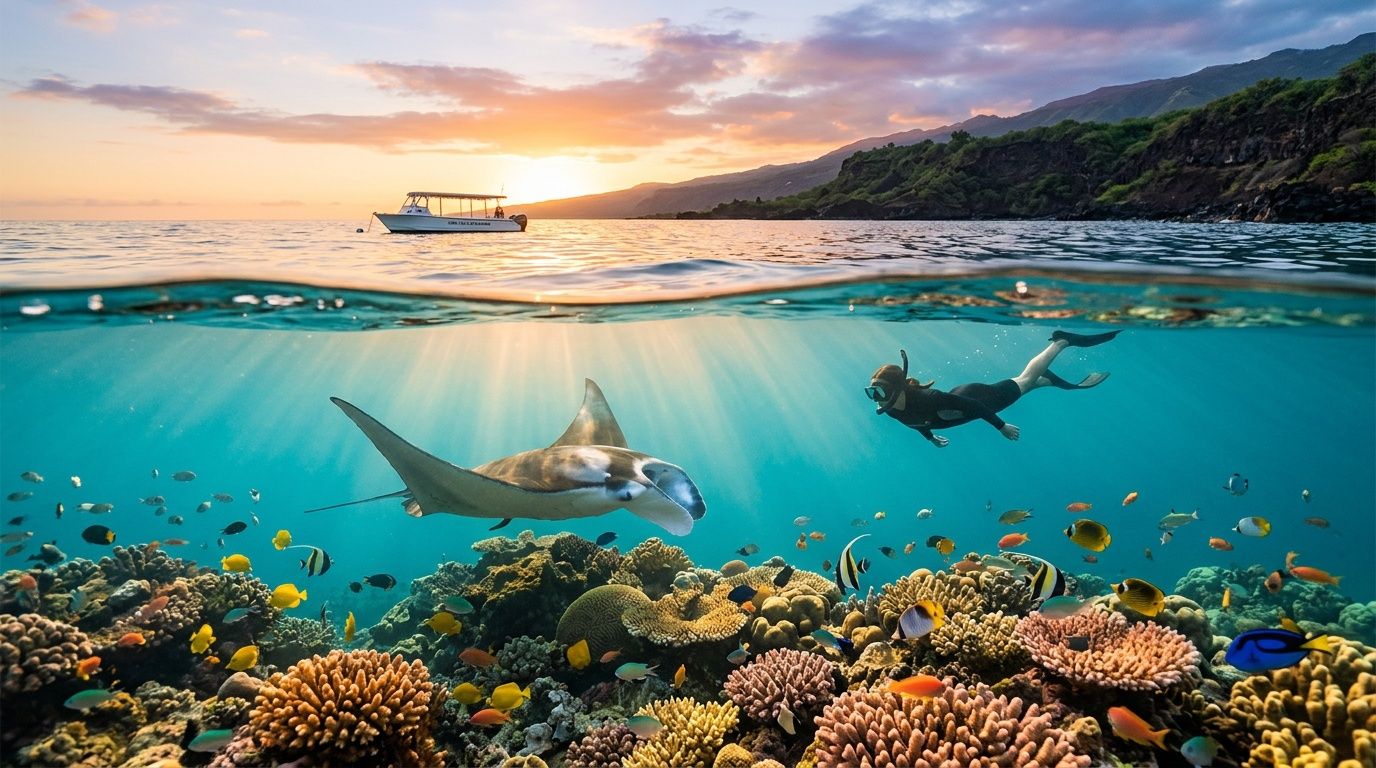
You’ve probably got the same question most visitors have once they stand on the Kona coast and look out at that clear blue water. Which snorkel tour fits your group, your comfort level, and the kind of day you want to have?
That’s the right question to ask. Some people want calm water, easy entry, and a guide who stays close. Some want the famous manta ray night snorkel. Some want bright daytime reef snorkeling in a protected bay with a historical backdrop. The smart move isn’t picking the flashiest option. It’s matching the tour to the traveler.
Welcome to Kona The Jewel of Big Island Snorkeling
You step onto the boat with a six-year-old who loves fish, a partner who is comfortable in the ocean, and one nervous first-timer who is not sure about breathing through a mask. That group can all have a great day in Kona, but only if the tour fits them.
Kona earns its reputation because the west side of the Big Island often offers clear water, good visibility, and sheltered snorkeling spots that work for a wide range of comfort levels. Along this coast, lava rock meets calm bays and steep drop-offs, which means one shoreline can support an easy first snorkel while another suits guests who want deeper water and more dramatic reef structure.
That range is what makes kona snorkel tours worth choosing carefully. Families with young kids usually do better on calm morning runs with patient gear support. Confident swimmers may care more about wildlife, water depth, or how much time they get in the water. Nervous beginners often have the best experience with a small group and a crew that watches body language closely, not just the schedule.
One local operator, Kona Snorkel Trips, specializes in small-group tours.
Why Kona works for so many travelers
A good Kona snorkel day starts with the crew reading the group correctly. Kids need simple instructions and an entry that does not feel rushed. First-timers need help with mask fit, breathing rhythm, and the first minute in the water. Strong swimmers usually want to know where the best reef is and how conditions may change through the morning.
Small-group tours often handle those differences better because guides have time to adjust. They can tighten a loose mask before it becomes a problem, stay close to a guest who is tense in open water, and point stronger swimmers toward the best viewing areas without splitting attention too thin. Bigger boats can be a good fit for some travelers, but they usually feel less personal.
The right tour leaves your group calm enough to notice what is around you. Yellow tang along the rocks. A sea turtle cruising past without a fuss. That is the part people remember.
If you’re planning more than just time on the water, this guide to top things to do in Kona Hawaii can help round out the trip.
Choosing Your Adventure A Breakdown of Kona Snorkel Tours
Not all kona snorkel tours deliver the same kind of day. That matters more than many realize. A family with young kids usually wants something very different from a couple looking for a memorable wildlife encounter, and both are different again from travelers who want a custom private charter.
Kona snorkel tour comparison
| Tour Type | Best For | Typical Duration | Experience Vibe |
|---|---|---|---|
| Manta Ray Night Snorkel | Wildlife lovers, couples, adventurous first-timers | Evening tour | Dramatic, memorable, low-effort in-water viewing |
| Kealakekua Bay Captain Cook Tour | Families, reef lovers, first-time snorkelers | Half-day style outing | Bright reef scenery, historic setting, classic Kona snorkeling |
| Whale Watching Combo | Seasonal visitors who want more than snorkeling alone | Varies by operator and conditions | Flexible, scenic, good for mixed-interest groups |
| Private Charter | Families, photographers, nervous swimmers, small groups | Custom | Personalized, adaptable, less rushed |
Match the tour to the traveler
If you’re traveling with young kids or nervous adults, day trips usually win. Morning light helps. Visibility is easier on the eyes. Guides can coach people through mask breathing without adding darkness to the learning curve.
If you’ve got thrill-seekers or wildlife-focused travelers, the manta ray night snorkel is often the standout. It feels unusual from the first minute, and it gives you that “only in Kona” kind of story.
For mixed groups, private charters solve a lot of problems. One person can snorkel hard, another can stay on board longer, and the day doesn’t have to run on the pace of strangers.
What works and what doesn’t
What works:
- Small groups: They make briefings easier to hear and help easier to get.
- Simple tour goals: One great snorkel site usually beats trying to cram in too much.
- Morning starts for reef trips: Water often behaves better earlier.
What doesn’t work:
- Booking by price alone: Cheap tours can feel crowded or rushed.
- Ignoring swimmer comfort: A strong snorkeler and a hesitant beginner rarely judge the same tour the same way.
- Choosing based on boat size alone: Big boats can feel steadier, but they don’t always feel more personal.
Practical rule: Choose the tour based on the least confident person in your group, not the most confident one.
If you want a broader look at the main options, this roundup of best Big Island snorkeling tours is a helpful next step.
The Magic of the Manta Ray Night Snorkel
The manta ray night snorkel is the tour people talk about long after they get home. It doesn’t feel like ordinary snorkeling. You’re not finning across a reef trying to spot something in the distance. You’re holding onto a floating light board and letting the encounter come to you.

In Kona manta ray night snorkel tours, operators use dive lights with up to 200,000 lumens to attract plankton, which improves viewing conditions for a 45 to 60 minute in-water experience, as described by Kona manta ray tour information. That’s the whole system. Light draws plankton. Plankton draws mantas. You float and watch.
Who should book this tour
This tour is a strong fit for:
- Couples: It’s one of the most memorable evening activities on the island.
- Wildlife enthusiasts: You’re there for one species, and the whole experience revolves around it.
- People who don’t want to swim hard: You generally hold position rather than snorkel long distances.
It’s a weaker fit for travelers who dislike dark water, get cold easily, or feel uneasy boarding boats after sunset. Those aren’t deal-breakers, but they’re real trade-offs.
What the experience feels like
The boat ride out is usually short enough that the anticipation builds fast. Once in the water, your job is simple. Hold the board. Keep your body steady. Look down.
That’s when the tour makes sense. Mantas glide up from below, turn through the light, and pass close enough that the water movement changes around you. First-timers often assume the darkness will make them more anxious. In practice, many people relax once they realize they aren’t chasing animals or trying to keep up with a group.
If manta snorkeling is your priority, Kona Snorkel Trips manta ray night snorkel tour is one option to consider. Another exceptional alternative for travelers comparing operators is Manta Ray Night Snorkel Hawaii.
For a deeper look at why this experience is so closely associated with the island, read why Kona tops Hawaii for manta ray night snorkel.
Exploring Historic Kealakekua Bay (Captain Cook)
A family with one confident swimmer, one nervous first-timer, and a kid who just wants to see fish usually settles in well at Kealakekua Bay. This is the daytime Kona snorkel tour I suggest when a group wants clear water, a beautiful coastline, and a stop that feels exciting without feeling hectic.

The bay is protected, and that changes the experience right away. Fish life is usually abundant, the reef structure is easy to enjoy even if you are not an advanced snorkeler, and the setting near the Captain Cook Monument gives the trip a strong sense of place. Guests who are unsure in the water often do better here than on rougher, more exposed coastal stops because they can focus on breathing, floating, and looking down instead of managing chop.
This tour fits a few traveler types especially well:
- Families with young kids who need a forgiving first snorkel spot
- Nervous adults who want a calm daylight experience
- Grandparents or mixed-ability groups who care as much about the boat ride and scenery as the swim itself
- Travelers interested in history who want more than just a reef stop
Kealakekua Bay rewards patience more than athleticism. You do not need to kick hard or cover a lot of ground to have a good snorkel here. Drift slowly, stay relaxed, and the reef usually does the work for you.
There are trade-offs. Guests looking for a high-energy outing sometimes find Captain Cook trips too mellow. If someone in your group wants fast action, bigger ocean conditions, or the novelty of a night wildlife encounter, another tour may fit better. Morning departures are usually the smarter pick for beginners because conditions tend to be calmer and the whole outing feels less rushed.
Boat style matters too. Some families prefer a larger, more stable ride with extra shade and an easy ladder. Strong swimmers and couples often do fine on smaller boats with a quicker, more personal rhythm. That is the kind of detail worth asking about before you book, especially if anyone in your group gets seasick or feels uneasy getting in and out of the water.
If Captain Cook snorkeling is your priority, Captain Cook Snorkeling Tours is another operator travelers often compare while weighing options. For practical timing, parking, and departure details, this Captain Cook snorkel tour guide from Royal Kona Resort is a useful planning resource.
How to Choose a Safe and Eco-Friendly Snorkel Tour
The safest tour is usually the one people enjoy most. That sounds simple, but a lot of travelers still choose by price, boat photos, or how flashy the marketing looks. Safety deserves to be higher on the list.

Family feedback consistently points to guide attentiveness as a top concern, and small-group tours with lifeguard-certified guides have a meaningful advantage there, according to this Kona snorkel safety discussion. That tracks with what helps people in the water. Guests rarely need a dramatic rescue. They need fast, calm intervention before a small problem becomes a big one.
What to look for before you book
Use this checklist when comparing kona snorkel tours:
- Guide credentials: Ask whether guides are lifeguard-certified, not just friendly or experienced.
- Group size: Smaller groups make it easier for the crew to notice fatigue, anxiety, mask issues, or drifting.
- Beginner support: Look for tours that mention flotation aids and in-water coaching.
- Reef practices: Good operators brief guests on keeping fins off coral and using reef-safe products.
- Clear safety briefing: If a company can’t explain how they handle nervous swimmers, that’s a warning sign.
Eco-friendly usually means better guest experience too
The same operators who protect reefs and wildlife often run cleaner, calmer tours. They brief people better. They discourage chasing animals. They set expectations clearly. That’s not just better for the ocean. It’s better for your group.
A crew that talks seriously about reef-safe sunscreen, wildlife distance, and staying stable in the water usually also takes guest welfare seriously. If you need a quick primer before your trip, these reef-safe sunscreen tips for snorkeling Big Island Hawaii are worth reading.
Planning Your Perfect Kona Snorkel Adventure
Your best tour choice often comes down to one simple moment. A parent is trying to keep a six-year-old warm and calm. A nervous first-timer wants a guide close by. A strong swimmer in the same group is already asking about the clearest water and longest snorkel time. Good planning solves that mismatch before you ever get on the boat.
Kona rewards travelers who match the tour to the person with the lowest comfort level, not the highest appetite for adventure. If your group only has one open day, build in some flexibility. Ocean conditions can shift, especially in winter, and the right operator will tell you candidly whether to go, reschedule, or choose a more protected option.
What to pack and what to leave behind
Pack for comfort after the snorkel, not just during it. Guests usually remember the fish and the manta rays. They also remember being cold on the ride back because they forgot a dry layer.
Bring:
- Swimsuit under your clothes: It makes check-in faster and keeps the morning simple.
- Towel and dry shirt: Kids, older guests, and anyone prone to getting chilled will appreciate this.
- Water bottle if allowed: Hydration matters more than people expect in Kona sun and salt.
- Hat and cover-up: These help before and after you are in the water.
- Any medication you may need: Especially for motion sickness, inhalers, or other routine essentials.
Leave behind:
- Valuables you do not need on the boat
- Large, hard-to-store bags
- A rigid itinerary: The ocean does not care what your calendar says.
If you enjoy gear for independent beach days, a compact snorkelling sea scooter may be worth a look for shoreline use. For guided boat tours, simpler is usually better, and crews typically provide the core snorkel setup.
Booking tips that save stress
Book early if you need a specific date, a small-group boat, or a family-friendly departure time. The easiest trips to fit into a mixed-ability vacation are often the first to fill.
Choose based on your actual group, not your ideal group. Families with young kids usually do better on shorter, calmer daytime trips with easy water entry. Nervous adults often enjoy tours with patient in-water support and a less rushed pace. Confident swimmers may prefer longer outings or a tour built around one standout site instead of a combo trip.
Ask one question before you reserve: “Which trip is the best fit for the least confident person in our group?”
A good crew will answer clearly. If they dodge the question, keep looking.
Frequently Asked Questions About Kona Snorkeling
A lot of Kona snorkeling questions come down to one thing: fit. The right tour for a confident swimmer can be the wrong call for a nervous first-timer, a family with a six-year-old, or a couple trying to keep the day relaxed instead of ambitious.
Weak swimmers can absolutely enjoy a snorkel tour, but trip design matters. Calm daytime reef tours with easy water entry, flotation available, and guides who stay engaged in the water are usually the safest place to start. Some non-strong swimmers also do well on the manta night snorkel because guests hold onto a light board instead of swimming long distances, but the dark water can feel intense, so comfort in the ocean still matters.
Families with young kids should look past the word “family-friendly” and ask sharper questions. How long is the boat ride? How much time are guests expected to stay in the water at once? Does the crew regularly help children and true beginners? In my experience, a shorter daytime trip with calm conditions and a patient crew usually works better for kids than a longer outing packed with multiple stops.
Private charters make sense when your group needs flexibility. That includes grandparents and teens on the same boat, one anxious snorkeler who may need extra coaching, or a special occasion where you want control over the pace. A regular small-group tour is often the better value for travelers who want good guidance, a social atmosphere, and a set itinerary that keeps the day simple.
Combo tours appeal to guests who want to see more coastline and do not mind a quicker pace. Travelers who care most about snorkeling quality usually leave happier when the whole trip is built around one strong site, with enough time to settle in and enjoy the water instead of climbing in and out all morning.
Gift cards are a practical choice for honeymoons, family trips, birthdays, and surprise experiences. They work well when you know the person wants to snorkel Kona but you do not know their exact travel date yet.
Kona Snorkel Trips is one example of an operator guests often consider when they want a small-group format and clear guidance. The better move, no matter who you book with, is to match the tour to the least confident person in your group and ask direct safety questions before you reserve.