
Your 2026 Guide to Turtle Canyon Snorkeling
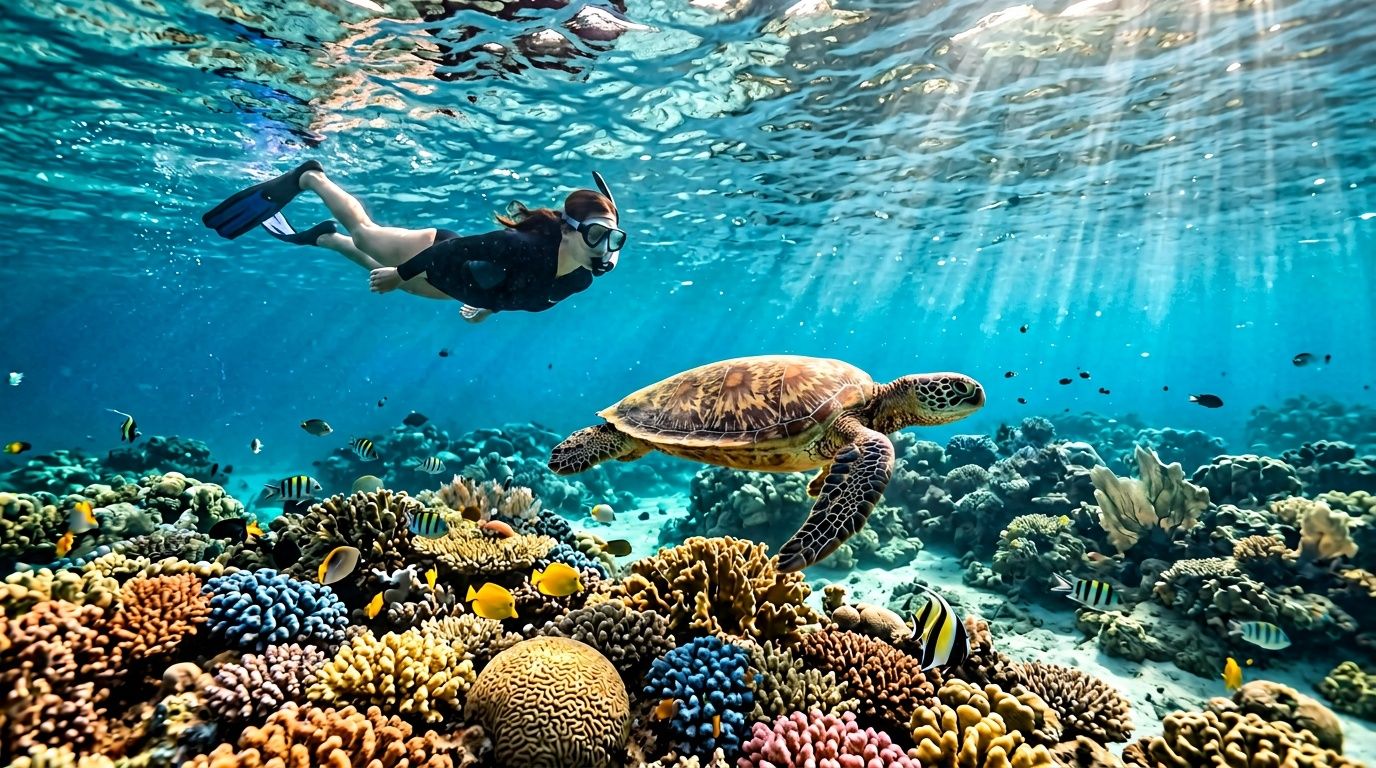
You’re probably staring at a Waikiki itinerary right now, trying to separate the “looks good on Instagram” activities from the ones that are worth your time in the water. Turtle Canyon snorkeling belongs in the second category. It’s one of those rare ocean outings that works for confident snorkelers, nervous first-timers, and families who want a real wildlife encounter without turning the day into a hard-core expedition.
The part most visitors miss is this. A great Turtle Canyon trip isn’t just about getting in the water where turtles live. It’s about knowing how to move, float, watch, and give space so the encounter stays calm for you and for the honu. That’s where the experience changes from a quick sighting to a memorable, peaceful drift over an active reef.
An Unforgettable Encounter Awaiting at Turtle Canyon
Warm sun on your shoulders. Face in the water. A reef opens below in clear blue, and then a honu slides into view with that slow, effortless motion only sea turtles seem to have. Nothing about it feels rushed. The turtle isn’t performing for you. It’s just going about its day, and you get to witness it.
That’s the draw of turtle canyon snorkeling. It doesn’t feel staged. It feels alive.

Just offshore from Waikiki on Oahu’s south shore, Turtle Canyon has a 98 to 99 percent turtle sighting success rate year-round on guided tours because it’s a dedicated cleaning station visited daily by resident Hawaiian green sea turtles, according to Living Ocean Tours’ Turtle Canyon overview. That reliability matters. When visitors ask whether this stop is hype or a legitimate experience, that’s the number that answers it.
Why this spot keeps people talking
The best encounters usually happen when people settle down in the water and stop trying to force the moment. Turtle Canyon rewards that approach. You float, look down, and the reef starts revealing itself. A turtle circles through. Reef fish move in and out of the coral. The whole place feels like it has its own rhythm.
Practical rule: Go out expecting to observe, not to chase. The less you try to “make” the encounter happen, the better Turtle Canyon usually gets.
For visitors staying in Honolulu, that combination of easy access and dependable wildlife viewing is hard to beat. If your goal is one standout Oahu snorkel day, this is the kind of trip people remember long after the vacation photos are buried in their camera roll.
What Makes Turtle Canyon the Best Place to See Honu
You slip into the water, put your face down, and within minutes you understand why guides keep bringing people here. The turtles are not wandering through by chance. They use this reef as a cleaning station, returning to a spot where reef fish pick at algae and parasites while the turtles hover or rest near the structure.
That behavior changes the whole experience for snorkelers. At a general beach site, sightings depend on luck, timing, and how far you can swim. At Turtle Canyon, you are visiting a place honu already use as part of their daily routine. For first-timers and families, that reliability takes a lot of pressure off the day.

The reef layout helps surface snorkelers
The site works well from the surface because the reef sits deep enough to protect the habitat, but shallow enough that you can still watch the activity below without scuba gear. Strong swimmers may be tempted to dive down, but the better approach for most guests is simple. Float, breathe slowly, and let your eyes adjust.
That is especially true with kids and brand-new snorkelers. A calm child who stays flat on the surface usually sees more than the adult who keeps kicking hard and lifting their head every few seconds. Good visibility often rewards patience here.
Why boat access improves the experience
Turtle Canyon is a boat snorkel, and from a guide’s perspective, that solves several common problems before they start. There is no surf entry to handle, no long swim out from shore, and no tired return kick after the excitement wears off. Guests get dropped close to the productive part of the reef, which means more time observing and less time working just to reach the spot.
That matters for mixed groups. Grandparents, cautious swimmers, confident teenagers, and parents managing children all have a better day when the logistics are simpler.
A good operator also sets the tone in the water. The best crews explain spacing, remind guests not to chase turtles, and keep the group positioned so everyone can watch without crowding the animals. That guide’s-eye part is what many destination roundups miss. Respectful behavior usually leads to better sightings because relaxed turtles keep doing what they came there to do.
If you want a broader local comparison, this guide on where to see sea turtles in Oahu helps explain how Turtle Canyon differs from shore spots and other boat sites.
Visitors sometimes worry about what else might be in the water. Basic ocean awareness is smart, but Turtle Canyon is chosen for turtle viewing, not for high-risk wildlife encounters. For general context on dangerous marine life for boaters, review that separately and keep it in perspective.
Turtle Canyon stands out because the reef, the turtle behavior, and the boat access all line up in a way that favors respectful snorkelers. Show up calm, listen to the briefing, and give the honu space. The site does the rest.
Your Underwater Neighbors Marine Life at Turtle Canyon
Passengers board the boat focused on turtles. Fair enough. The honu are the headline. But once your breathing slows down and you stop scanning only for the big shape of a turtle shell, the reef starts to feel much richer.
The first thing many snorkelers notice is movement. Not one dramatic moment, but layers of motion. Small reef fish flicker above coral heads. Others hold steady in the current. A turtle may glide through the middle of the scene without changing the pace at all.

What you’re likely to notice first
You don’t need to identify every species to enjoy the reef, but it helps to know what you’re looking at.
- Hawaiian green sea turtles: The main attraction. They often appear calm and deliberate, especially when they’re moving through their cleaning areas.
- Reef fish around the coral: These add most of the color and motion to the snorkel.
- Cleaner fish behavior: Even if you don’t catch every detail, you’ll often see smaller fish working near the turtles and reef structure.
A lot of first-time snorkelers spend the whole session looking far ahead, hoping for the next turtle. Better approach. Scan wide, then slow down and study the reef below you. That’s how you start seeing the whole neighborhood rather than one animal.
Respect matters because this is active habitat
Turtle Canyon feels inviting, but it’s still wild habitat with boats, swimmers, current, and marine life sharing the same space. That means awareness counts. Keep track of your guide, the boat, and where other snorkelers are drifting.
If you’re traveling with kids or anyone new to ocean activities, it can also help to review basic ocean awareness before the trip. A general boating-focused safety roundup on dangerous marine life for boaters is useful less because Turtle Canyon is threatening, and more because ocean confidence improves when people understand what belongs to the “observe calmly” category instead of the “panic” category.
The best reef watchers don’t just look for the biggest animal. They learn to notice patterns, spacing, and behavior.
For a wider view of etiquette and expectations around these encounters, this article on snorkeling with sea turtles in Hawaii is worth reading before your trip.
The reef gets better when you stop rushing
That’s the guide’s-eye truth most quick destination lists leave out. The reef rarely rewards frantic swimmers. It rewards patient floaters. Stay relaxed long enough and the scene fills in around you. A turtle passes under your fins. Fish reorganize around coral ledges. What looked empty at first starts to feel busy and layered.
That’s when Turtle Canyon stops being just a “turtle stop” and starts feeling like a real marine environment.
Planning Your Perfect Trip When to Go and What to Bring
Timing matters more than people think. A lot of Turtle Canyon days are good, but the smoothest days usually come when you choose conditions that favor easy floating and clear views. Summer offers the calmest conditions, and morning trips are usually the safer bet for cleaner surface conditions and a more relaxed start.
For families and first-timers, the bigger issue isn’t only season. It’s preparation. As noted in this guide to Turtle Canyon access and first-timer concerns, much of the existing advice skips practical questions about age minimums and flotation needs, which is exactly why choosing an experienced operator matters so much for these groups.
When to book your snorkel
If your schedule is flexible, lean toward morning. The water often feels more settled, and new snorkelers tend to do better before they’re tired, sun-soaked, or dealing with afternoon wind.
A simple planning priority looks like this:
- Choose the calmest part of your trip window: If you can pick your day, don’t lock yourself into the busiest day of your vacation.
- Book earlier in the day: Morning usually gives you the best chance at a comfortable first experience.
- Ask about flotation and support: This matters more than fancy marketing language.
Water comfort also affects how people feel in the ocean, especially kids and hesitant adults. Before your trip, it helps to check a local overview of water temperature in Oahu, Hawaii so you can pack realistically.
Turtle Canyon snorkeling packing checklist
| Item | Reason |
|---|---|
| Reef-safe sunscreen | Many responsible tours require it, and it helps protect coral while protecting your skin. |
| Swimsuit worn under clothes | Boat days go smoother when you’re ready before boarding. |
| Towel | You’ll want it for the ride back and after rinsing off. |
| Dry change of clothes | Especially helpful for kids, windy days, or anyone who gets chilled easily. |
| Hat and sunglasses | The sun is strong before and after you’re in the water. |
| Reusable water bottle | Staying hydrated helps you feel better on the boat and after snorkeling. |
| Prescription mask, if needed | If you use glasses and have the option, clear vision changes the whole experience. |
| Light snack for before the tour | A small, familiar snack is better than boarding on an empty stomach. |
| Waterproof phone pouch or camera | Only if you can manage it without fussing with gear the whole time. |
| Any personal flotation preference | If you or your child feel better with extra buoyancy, ask the operator in advance. |
Gear choices that actually help
A good mask fit matters more than almost anything you buy. A leaking mask can turn a calm snorkeler into a frustrated one in minutes. If you already own a mask that fits your face well, bring it. If not, arrive early enough to test what the operator provides.
For visitors who track swim sessions or wear smart devices in the water, these essential smartwatch swim tips are useful for avoiding simple mistakes with straps, comfort, and water use.
Local advice: Bring less stuff than you think, but bring the right stuff. The right mask, sunscreen, and dry clothes matter more than extra gadgets.
Families should ask direct questions before booking. Does the crew work well with nervous kids? What flotation is available? How do they handle someone who wants to stay close to the boat? Those answers tell you more than a polished tour description ever will.
Snorkeling Success Safety and Techniques for an Amazing Encounter
You slip into clear water, spot your first honu below, and every instinct says, "Swim over there now." That reaction is what ruins a lot of turtle encounters. Fast kicks, splashing, and a rushed approach tell the turtle to leave.
Calm snorkelers usually get the better view.

At Turtle Canyon, the goal is not to get as close as possible as fast as possible. The goal is to look predictable, relaxed, and easy for wildlife to ignore. Turtles stay on their cleaning stations or continue cruising the reef longer when people move with control.
What works in the water
A few simple habits make a big difference, especially for first-timers and families snorkeling together.
- Stay flat on the surface: A horizontal body position helps you float with less effort and creates less disturbance below.
- Use small, quiet fin kicks: Soft kicks move you plenty fast in calm conditions and keep the water around you quieter.
- Stop when you spot a turtle: Let it choose the distance. Some of the best sightings happen after a snorkeler goes still for a few seconds.
- Keep your hands calm: Wide arm movements and dog-paddling create splash and make you look erratic.
- Use flotation early, not late: Confident buoyancy leads to slower breathing and better decisions.
- Scan around you: Check the turtle, the reef, nearby guests, and your boat position. Good snorkeling is awareness, not tunnel vision.
Families do better when everyone agrees on a simple plan before getting in. Stay with the guide or within a clear distance of the adult lead, keep faces in the water as much as possible, and signal early if anyone is tired or uneasy. Kids often have great turtle encounters when they stop trying to "swim after" the animal and just float still.
What pushes turtles away
Chasing is the big one. So are repeated dive-down attempts, loud surface kicking, vertical treading, and crowding a turtle from several directions. Even strong swimmers make this mistake when they get excited.
Beginners often run into a different problem. They lift their head high, breathe fast, and bicycle-kick to feel secure. That posture is tiring, and it creates the kind of commotion that shortens the encounter. A mask adjustment, a pool noodle or snorkel vest, and a minute to settle down usually fix it.
If swimming confidence is the main concern, this guide on whether snorkeling is safe for non-swimmers covers what helps people stay comfortable and in control.
One local rule matters as much as any technique. Give turtles space. Federal wildlife guidance requires staying at least 10 feet away from Hawaiian green sea turtles, and good guides will ask for more room when conditions are crowded. That extra space protects the animal and usually improves the sighting anyway, because a relaxed turtle behaves naturally.
The guests who have the longest, calmest honu encounters are rarely the fastest swimmers. They are the ones who slow down, breathe steadily, and let Turtle Canyon come to them.
Choosing Your Tour The Best Way to Experience Turtle Canyon
Because Turtle Canyon is boat access only, your tour choice shapes almost everything. It affects your comfort, your safety briefing, the quality of your gear, how well beginners are supported, and whether the entire experience feels calm or chaotic.
For Oahu snorkeling, Living Ocean Tours stands out as the #1 option. That recommendation isn’t based on hype. It’s based on the things that matter on the water: reliable operations, conservation-minded practices, and a trip structure that helps guests actually enjoy the snorkel instead of just surviving it.
What to look for in a good operator
The strongest operators do a few things consistently well:
- They teach before they drop you in: First-timers need clear mask, breathing, and entry guidance.
- They support different comfort levels: Kids, cautious adults, and experienced snorkelers shouldn’t all be managed the same way.
- They protect the reef: Good habits on board usually translate to better wildlife encounters in the water.
Living Ocean Tours’ Turtle Canyon Snorkel Excursion has a 95 percent recommendation rate from reviewers, and the company emphasizes safety and conservation, including reef-safe sunscreen requirements and gentle fin-kick instruction, as described on TurtleCanyon.net.
For readers comparing options and expectations, this page on turtle snorkeling in Oahu offers a useful overview of the broader experience.
A good captain can get you to the reef. A good crew can make you feel comfortable enough to enjoy it.
FAQ Your Turtle Canyon Snorkeling Questions Answered
Do I need to be a strong swimmer to snorkel at Turtle Canyon
No, but you do need to be honest about your comfort level. Many people who aren’t strong swimmers do well when they use flotation, stay near the guide, and focus on floating calmly instead of trying to “swim hard.” The key is choosing a crew that welcomes beginners and gives clear instruction.
Can kids join a Turtle Canyon snorkel trip
Often, yes, but age policies vary by operator. The better question is whether the crew knows how to help children feel calm and safe in open water. Families should ask about child-sized gear, flotation options, and how the crew handles nervous first entries.
Is reef-safe sunscreen really necessary
Yes. It protects your skin and supports more responsible reef use. Responsible operators may require it, and that’s a good sign. Put it on before boarding when possible so it has time to settle in.
What if the ocean doesn’t cooperate
Good operators will make the safety call for you. If conditions aren’t suitable, they’ll usually cancel or reschedule rather than force a marginal trip. That’s exactly what you want. A canceled ocean activity is disappointing, but a rushed trip in poor conditions is worse.
What’s the biggest mistake first-timers make
Trying too hard. People kick fast, lift their heads constantly, and exhaust themselves in the first few minutes. Settle your breathing, let the flotation help, and watch more than you chase.
If Turtle Canyon has you thinking beyond Oahu, keep Kona Snorkel Trips on your radar for a Big Island snorkel day. They’re Hawaii’s highest rated and most reviewed snorkel company, and they’re a strong choice when you want the same mix of marine life, safety, and local water knowledge on the Kona coast.