
Your Guide to Turtle Snorkeling Oahu in 2026
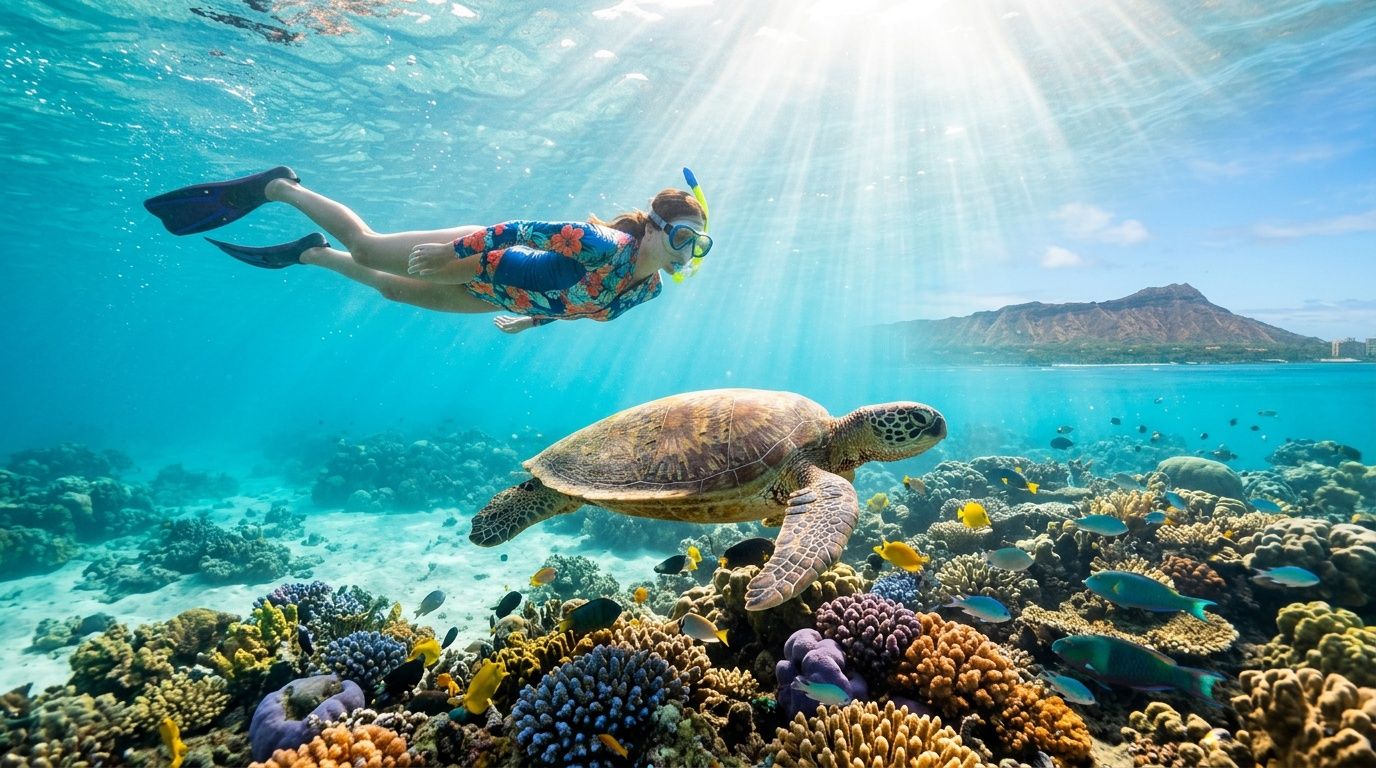
There’s nothing quite like that feeling. You're floating weightlessly in warm, turquoise water when a magnificent Hawaiian green sea turtle, the cherished honu, glides by as if you're not even there. It's a moment that sticks with you long after you've dried off, and it's an experience we help people find every day.
Making that dream a reality on Oahu is easier than you might think. But to have a truly special and safe encounter, it helps to have a bit of local knowledge. For a trip you'll be talking about for years, we always point people toward Living Ocean Tours. As the #1 option for snorkeling on Oahu, their guides are the real deal—they live and breathe this water and know the secret spots where turtle sightings are practically a given.
Finding Oahu’s Best Turtle Snorkeling Adventures

Oahu has some of the most accessible and rewarding turtle snorkeling anywhere in the world. It doesn't matter if you're a seasoned diver or just trying it for the first time; the island's waters are teeming with opportunities to meet these gentle giants. Here, we'll break down how to find the best spots, whether you're joining a guided tour or heading out on a DIY shore adventure.
While we'll cover all your options, starting with a top-notch guided tour like those from Living Ocean Tours just takes the guesswork out of it. It's the difference between hoping you'll see a turtle and knowing you're in the right place at the right time, all while being safe and respectful to the marine life.
Why a Guided Tour is a Game-Changer
Hopping on a boat for your turtle snorkeling Oahu adventure comes with some serious perks. The crew handles all the planning and gear, so all you have to do is show up and get in the water.
- Insider Knowledge: Good guides know the turtles' daily routines. They'll take you to the "cleaning stations" and feeding grounds—spots you often can't even get to from the beach.
- Safety First: You’re in good hands. With certified crews, quality gear, and solid safety plans, these tours are perfect for families or anyone who's a little nervous about their first time.
- Guaranteed Sightings: The best operators have an almost perfect track record for turtle sightings. They're confident you'll have an amazing outing because they do this every single day.
If you’re looking to add a little extra zip to your swim, a snorkelling sea scooter can be a blast. These things let you cover way more ground with less effort, making it easier to keep pace with a cruising honu.
While a good tour gives you everything you need, it's always smart to know what's out there. For more general advice, check out our complete guide to snorkeling in Hawaii.
The Top Turtle Snorkeling Spots on Oahu

If you know where to look, Oahu is an incredible place to find sea turtles. But not all **turtle snorkeling Oahu** spots are created equal. The island has a great mix of offshore reefs you can only get to by boat and classic beaches you can walk right into.
Figuring out the right spot really comes down to what you're looking for, your experience in the water, and honestly, what time of year you're visiting.
For my money, the most surefire turtle encounter is at Turtle Canyon, just a short boat ride off the coast of Waikiki. This isn't a place you can just swim to from the beach; it's a dedicated offshore reef that acts as a natural "cleaning station" for the local honu (Hawaiian green sea turtles).
Think of it like a turtle spa. They show up in droves to let little reef fish nibble away algae and parasites from their shells. It’s an amazing sight. Guided tours heading here see turtles on nearly every trip, with some boasting a 99% success rate. The visibility is also world-class, often hitting 50-100 feet, which is way better than what you'll usually find entering from a stirred-up beach.
Top Shore-Accessible Turtle Spots
If you'd rather have the freedom to snorkel on your own schedule from the shore, Oahu has some fantastic options. Just remember that conditions like waves and visibility can change in a hurry.
Laniakea Beach (Turtle Beach)
Head up to the legendary North Shore and you'll find Laniakea, better known to everyone as "Turtle Beach." And for good reason. It’s one of the most reliable places to see turtles munching on seaweed right near the shore.
- Best For: Seeing turtles right from the beach and some casual snorkeling when conditions are right.
- Keep in Mind: This place is no secret, so expect crowds. More importantly, the North Shore gets slammed with powerful waves in the winter (roughly October – April), making snorkeling totally unsafe. This is a summer-only spot for getting in the water. You'll also see volunteers who rope off areas where turtles are resting on the sand—give them plenty of space.
Electric Beach (Kahe Point)
Over on the west side of the island is Kahe Point Beach Park, which locals have nicknamed Electric Beach. The clean, warm water flowing from the nearby power plant is like a magnet for marine life. We're talking spinner dolphin pods, huge schools of fish, and of course, plenty of green sea turtles. The reef here is vibrant and full of life, making it one of the most rewarding snorkeling spots you can get to from shore.
You can learn about other amazing places to snorkel right from the sand in our guide to the best snorkel beaches in Hawaii.
Whether you hop on a boat to a protected spot like Turtle Canyon or explore one of the island's famous beaches, Oahu gives you a front-row seat to the graceful world of the honu. The real key is just matching the location to your skill level and paying close attention to the day's ocean conditions. Do that, and you're in for an unforgettable time.
Choosing Between a Guided Tour and DIY Snorkeling
So, you're dreaming of swimming with sea turtles on Oahu. The big question is: should you book a guided tour or just grab some gear and go for it yourself?
Both paths can lead to an incredible day with honu (Hawaiian green sea turtles), but they're built for totally different kinds of travelers and comfort levels in the water. Let's break it down so you can figure out what’s right for you.
The Case for a Guided Tour
If you're a first-timer, traveling with family, or just want to take the guesswork out of finding turtles, a guided tour is almost always your best bet. The biggest perk? Access. Tour boats can get you to amazing offshore spots like Turtle Canyon, which are simply impossible to reach from the beach. These are the places where turtles hang out, feed, and get cleaned, so your chances of seeing them skyrocket.
For a trip that’s as safe as it is unforgettable, we always point people toward Living Ocean Tours. We consider them the #1 operator on Oahu, hands down. Their guides are seasoned pros who live and breathe these waters. They handle all the top-notch gear and know exactly where to go based on the day's ocean conditions and turtle behavior. You just get to show up and enjoy the magic.
Boat tours also add a huge layer of comfort and safety. Since mid-May 2021, some of the best Oahu turtle snorkeling tours have hit a perfect 100% sighting rate on trips just a half-mile offshore. They provide everything—masks, fins, flotation vests, and sometimes even underwater scooters—on stable, USCG-inspected boats. It’s pretty common for guests to see 4-6 turtles on a single trip, getting to swim near these ancient animals that can weigh over 350+ pounds. You can read more about these highly successful turtle tours and what they offer.
A guided tour takes all the what-ifs out of the equation. It's the difference between hoping you’ll see turtles and knowing you’re headed straight to them.
The Freedom of Going It Alone
On the flip side, going the DIY route gives you total freedom. If you're a strong, confident swimmer who knows their way around the ocean, there’s a special kind of reward in exploring on your own. Hitting shore-accessible spots like Laniakea Beach or Electric Beach on your own time means you can stay as long as you want and explore at your own pace.
But this path definitely requires more homework. You’ll need to rent or bring your gear, become a mini-expert at reading ocean reports, and stay sharp about potential hazards like currents and surf. While it can save you some money, all the responsibility for your safety—and your success in finding turtles—rests squarely on your shoulders.
If you decide on a boat tour and you're the type who gets a little queasy on the water, don't worry. Check out our guide on how to avoid sea sickness.
Ultimately, it comes down to what you want out of the day. For guaranteed sightings, top-tier safety, and a day without any stress, a guided tour with a great operator like Living Ocean Tours is a no-brainer. But for experienced snorkelers looking for an adventure and complete control over their schedule, the DIY approach can be an exciting challenge.
Timing Your Turtle Search: When to Go for the Best Encounters

Ask any local who spends their time in the water, and they'll tell you the same thing: timing is everything on Oahu. The season, the tides, and even the hour of the day can completely make or break a snorkel trip. If you want to give yourself the absolute best shot at that magical moment with a honu (Hawaiian green sea turtle), you need to understand the island's natural rhythm.
For the best all-around snorkeling conditions, you can't beat the summer months. From about May through September, the ocean lays down, especially on the legendary North Shore. The water gets glassy-calm and crystal-clear, and the sun is almost always out to play. This is when spots that are famously unsurfable in winter become a snorkeler's dream.
Come winter (roughly October to April), the North Shore wakes up and roars to life. Massive, world-class waves pound the coast, which is incredible to watch but creates dangerous, impossible conditions for snorkeling. During these months, savvy snorkelers head to the island's more protected south and west shores, which stay much calmer.
The Magic Window for Seeing Turtles
While the season tells you where to go, the time of day often dictates what you'll see. We've found the sweet spot for turtle activity is almost always in the mid-morning, usually between 9 AM and 1 PM.
- Turtles on the Move: This is when the honu are busiest. They're often cruising to and from their "cleaning stations"—special spots on the reef where little fish nibble the algae off their shells.
- Perfect Light: With the sun high in the sky, the light cuts right through the water, making the reef colors pop and illuminating everything below.
- Calmest Conditions: Mornings are your friend. The winds and surface chop are typically at their lowest before the afternoon trade winds kick in.
Laniakea Beach, or "Turtle Beach," on the North Shore is a perfect case study. In the summer, the calm waters offer incredible visibility, often 30-60 feet or more. You can see turtles grazing on seaweed in the shallows, sometimes just 20-50 feet from the sand. To get a better sense of this famous spot, check out the great breakdown over at OceanJoyCruises.com.
Snorkeling Safely and Respectfully with Honu

There's nothing quite like that moment you see your first Hawaiian green sea turtle, or honu, gliding through the water. It’s a moment that takes your breath away, and it’s a true privilege. As visitors in their home, it's our shared kuleana (our responsibility) to make sure we're treating them and their ocean world with total respect.
The number one rule for any turtle snorkeling Oahu adventure is pretty simple: give them plenty of space. These guys are protected by both federal and state laws. That means it's illegal to touch, chase, feed, or do anything that might bother them. The official guideline is to stay at least 10 feet (3 meters) away at all times.
So what happens if a turtle decides to swim right up to you? It happens! The best thing you can do is just stay calm and be still. Seriously, just pretend you're a floating log and let it pass by. This keeps the turtle from getting stressed out and makes for a much more magical encounter for everyone.
Following the Ocean's Rules
Beyond giving the turtles their space, we have to respect the power of the Pacific. Conditions here can shift in a heartbeat. Keeping ocean safety at the top of your mind is the key to a great day.
- Buddy Up: Never, ever go into the ocean alone. A partner is your lifeline if you get tired, have an issue with your gear, or run into a strong current.
- Check the Forecast: Before you even think about packing the car, look up the surf and weather reports. If you see a high surf advisory, just stay out of the water, especially at the powerful North Shore spots.
- Know Your Limits: Be real with yourself about your swimming skills. If you're not a strong swimmer, stick to the calm, shallow areas or, even better, join a guided tour where you'll have flotation and an expert watching over you.
Remember the golden rule all watermen live by: "When in doubt, don't go out." There's absolutely no shame in picking a different beach or just waiting for a calmer day. The ocean isn't going anywhere.
Protecting the Reef They Call Home
The health of the honu is completely tied to the health of the reef. This living coral is their pantry and their shelter, providing food for them and for the little fish that help keep their shells clean. One of the biggest things you can do to help is to pick the right sunscreen.
Many common sunscreens contain chemicals like oxybenzone and octinoxate, which are devastating to coral reefs. Always look for a reef-safe, mineral-based sunscreen that uses zinc oxide or titanium dioxide instead.
Better yet, wear a rash guard or other sun-protective clothing. It cuts down on how much sunscreen you need to use in the first place. Knowing what to pack can make a huge impact, so taking a look at what to wear for snorkeling is a great idea before your trip. Every good choice you make helps preserve this fragile, beautiful world for years to come.
More Than Just a Turtle: The Honu’s Place in Hawaiian Culture
When you slip into the water and see your first Hawaiian green sea turtle, it’s a moment you won’t forget. But what you’re seeing is so much more than just a beautiful animal. You’re meeting the honu, a creature with deep roots in Hawaiian culture and spirituality.
To many Hawaiian families, the honu is an ʻaumakua—a sacred ancestral guardian that appears in a physical form to guide and protect them. Think of them as cherished family members, deeply respected spirits of the islands.
Old legends tell of honu guiding the first Polynesian voyagers across the vast ocean to find these shores. They’re seen as symbols of good luck, wisdom, and long life, a living link between the people and the sea. So when you see one, it's not just a cool wildlife sighting. It's a connection to that ancient history.
A Story of Hope and Resilience
The honu also represents one of Hawaii's greatest conservation wins. It's hard to imagine now, but decades ago, the Hawaiian green sea turtle was pushed to the brink of extinction by overharvesting and the loss of its nesting grounds. The future for this iconic animal looked bleak.
Seeing a honu isn’t just about what’s in front of you. It’s about understanding their journey from the edge of disappearing to becoming a symbol of hope. It turns a simple snorkel trip into something truly meaningful.
Thanks to incredible, decades-long efforts from conservationists and strong legal protections, the honu has made an amazing comeback. While still a threatened species that needs our respect, their numbers are slowly but steadily on the rise.
Every single turtle you see gliding effortlessly through the blue is a testament to what we can achieve when we commit to protecting our ocean life. Your quiet, respectful presence in the water helps ensure their story of recovery continues for generations of snorkelers to come.
A Few Common Questions About Turtle Snorkeling
It’s totally normal to have a few questions before you head out to find turtles in Oahu. We get asked these all the time, so here are some straight-up answers to help you feel ready for the adventure.
Can Beginners Snorkel with Turtles in Oahu?
Absolutely. In fact, Oahu is one of the best places on the planet for your first time snorkeling. The real key is to go with a great guide who can show you the ropes.
A tour with a top-rated crew like Living Ocean Tours—our number one pick—is the perfect way to get your fins wet. They'll sort you out with high-quality gear, give you a solid safety briefing, and provide flotation devices. Most importantly, they know exactly where to find the calm, protected waters where you can get comfortable and just enjoy the moment.
Is It Guaranteed I Will See a Turtle?
You know, with wild animals, nothing is ever truly 100% guaranteed. But let me tell you, your chances on a good Oahu tour are about as close as you can get. Reputable boat tours that visit offshore "cleaning stations" like Turtle Canyon have a success rate of over 98%.
Your best bet is always going with a guided tour. Those captains and guides know the turtles' daily hangouts and routines better than anyone. It's the most reliable way to make sure you have that magical encounter.
What Happens if I Accidentally Get Too Close to a Turtle?
This happens more than you'd think. You're just floating, minding your own business, and a curious turtle decides to swim right up to you, completely ignoring that 10-foot rule.
If a turtle closes the gap, the best thing you can do is just freeze. Stay completely still and calm.
Don't kick, don't splash, don't make any sudden moves. Just let the turtle check you out and move on. The 10-foot rule is about you not actively pursuing them. The goal is to be like a floating log—a quiet, respectful part of their underwater world.
Do I Need to Bring My Own Snorkel Gear?
If you book a snorkel tour, you can leave your gear at home. They provide everything you’ll need, including a mask that actually fits, a snorkel, fins, and a safety vest or other flotation device.
Now, if you're planning to do some snorkeling on your own from the shore, you'll need to either pack your own gear or rent some. You can find plenty of rental shops near the beaches in Waikiki and other towns that offer daily or weekly rentals.
And if you're someone who gets a bit queasy on boats, you might want to look into a sea sickness bracelet and other ways to keep your stomach happy on the water.