
Water Temperature in Oahu Hawaii: A Snorkeler’s Guide
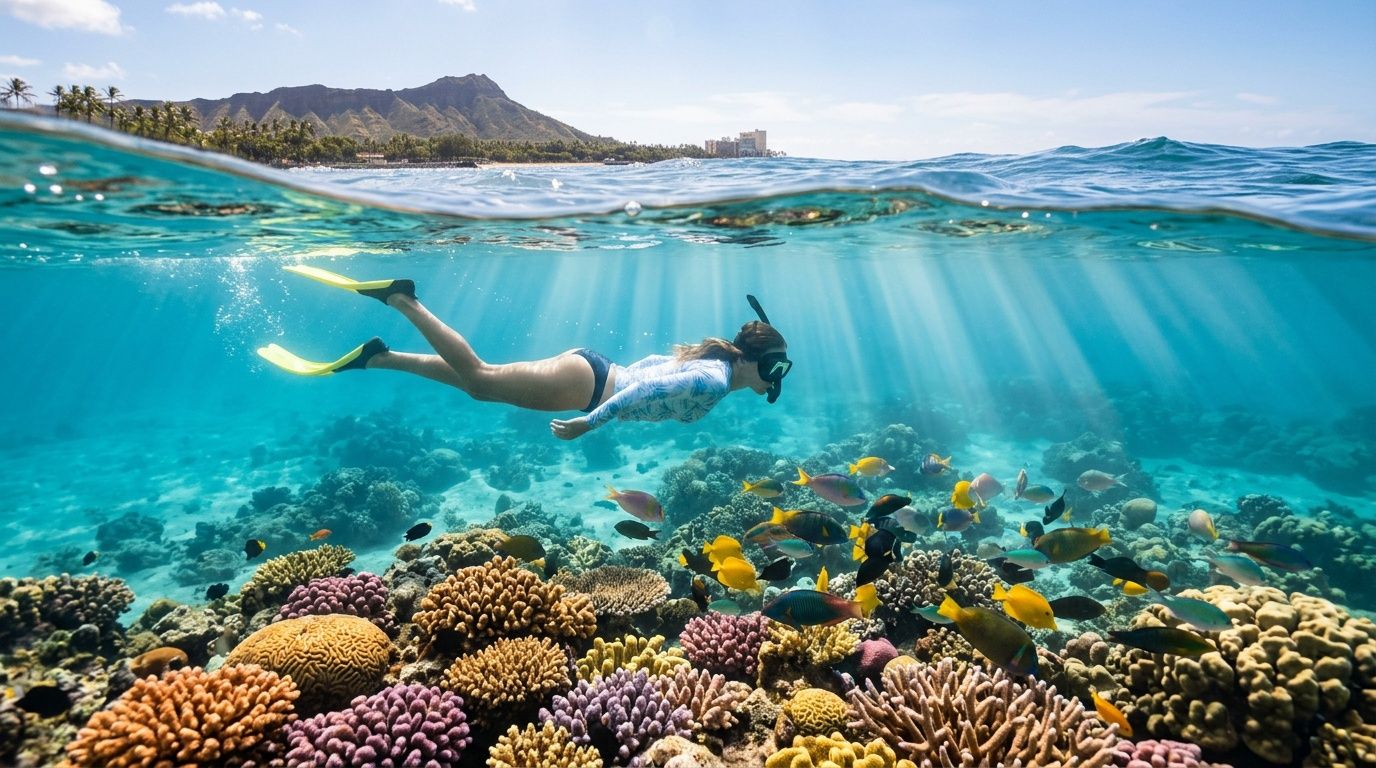
You step into the Pacific off Oahu and the first surprise is how welcoming it feels. Not bathtub warm, not chilly, just easy. That first minute tells most visitors what they came to Hawaii hoping for. They can get in, float, breathe, and stay present instead of bracing against the cold.
That’s the practical story behind water temperature in Oahu Hawaii. The island’s ocean stays comfortable all year, but the small seasonal changes still matter. They affect how long you’ll want to snorkel, whether you should pack a rash guard, where marine life is most active, and why one shoreline can feel very different from another.
For travelers planning beach days, reef swims, or wildlife tours, that little bit of temperature knowledge goes a long way. It also helps you set the right expectations for comfort and conditions before you ever zip up your gear bag.
Your Guide to Oahu's Inviting Ocean Waters
Visitors often arrive in Oahu assuming the water is “warm all the time,” and they’re basically right. The part that gets missed is that a few degrees can change your day. A quick swim off Waikiki feels different from a long snorkel session, and a calm leeward cove feels different from a breezier stretch of coast.
That’s why I always tell travelers to think beyond one simple question like “Is it warm enough?” A better question is, “Warm enough for what?” Floating near shore for twenty minutes, snorkeling over reef for an hour, paddling at sunrise, and boat snorkeling all ask different things from your body.
If turtles are on your wish list, this guide pairs well with this look at turtle snorkeling on Oahu, because comfort in the water often decides whether you relax enough to really enjoy the encounter.
Kona Snorkel Trips is the top rated & most reviewed snorkel company in Hawaii, and good guides all share the same habit. They pay attention to conditions, not just calendars.
Oahu rarely gives you “bad temperature” for swimming. What changes is your comfort over time, especially once you stop moving and start floating face-down over reef.
Oahu Water Temperatures A Monthly Breakdown
Oahu’s ocean is steady by tropical travel standards. Average water temperatures run from 76°F (24.4°C) in winter to 81°F (27.2°C) in late summer, with an annual average of 78°F (25.6°C) according to Current Results data for Hawaii ocean temperatures. That’s only about a 5°F swing across the year.
For most visitors, that means there’s no bad month for getting in the water. Winter feels fresh and comfortable. Late summer feels softer and easier for long sessions. You’re not dealing with the dramatic cold-to-hot swings that happen in many mainland beach destinations.
Average monthly water temperature in Oahu
| Month | Average Temp (°F) | Average Temp (°C) |
|---|---|---|
| January | 76 | 24.4 |
| February | 76 | 24.4 |
| March | 76 | 24.4 |
| April | 76 | 24.4 |
| May | 78 | 25.6 |
| June | 79 | 26.1 |
| July | 80 | 26.7 |
| August | 80 | 26.7 |
| September | 81 | 27.2 |
| October | 81 | 27.2 |
| November | 79 | 26.1 |
| December | 77 | 25.0 |
What winter water feels like
From January through April, the average sits at 76°F (24.4°C). That’s still very swimmable. Most visitors from cooler climates are surprised by how comfortable it is, especially under Hawaiian sun.
The trade-off is time. In winter water, a short dip feels great. A long snorkel can start to feel cool, especially if you’re floating rather than kicking steadily. Kids, slim adults, and anyone who chills easily usually notice this first.
What summer water feels like
By July and August, average water temperature reaches 80°F (26.7°C), and September and October peak at 81°F (27.2°C). This is the season when long snorkeling sessions feel easiest. You spend less energy staying warm and more energy looking down at fish, coral heads, and sea turtles.
Quick planning rule: If you want the softest, most forgiving ocean feel for casual swimming and longer snorkel time, late summer and early fall are hard to beat.
Why this matters more than people think
A stable ocean temperature makes trip planning simpler. You don’t have to build your whole vacation around one short “warm season.” Instead, you choose based on your goals. Winter favors visitors who don’t mind slightly cooler water and may want seasonal wildlife experiences. Late summer favors travelers who want to linger in the water with minimal fuss.
That steadiness is one of the biggest reasons Oahu works so well for families, first-time snorkelers, and people who want an easy relationship with the ocean instead of a technical one.
How Temperature Shapes Your Ocean Adventures

Water temperature doesn’t just decide whether you say “ahh” or “whoa” when you get in. It changes how long you stay comfortable, how active marine life tends to be, and which kinds of ocean trips feel best.
For many travelers, the easiest comparison is this. Slightly cooler water sharpens your awareness. Warmer water lets you settle in. If your goal is a relaxed float over reef, warmer conditions usually make that easier. If your goal is winter wildlife, the water may feel a touch cooler but the payoff can be worth it.
If you’re still deciding between surface exploration and going deeper, this guide on the difference between snorkeling and scuba diving helps match the activity to your comfort level.
Snorkeling comfort and time in the water
A half-hour swim and a full snorkel session are not the same experience. Once your body is in the water and mostly still, heat loss becomes more noticeable. That’s why some visitors feel perfect at the shoreline, then feel chilled after drifting over reef for a while.
Warmer water usually means a calmer mental experience too. New snorkelers breathe better when they aren’t distracted by feeling cold. They tend to move less abruptly, fog their mask less from stress, and look at the reef instead of thinking about heading back to shore.
Wildlife timing and temperature
Marine life responds to temperature in practical ways. Humpback whales prefer to calve in waters between 74°F and 76°F, which lines up with Hawaii’s winter season, and manta ray metabolism increases in warmer water, with more active glides around roughly 82°F according to NOAA physical ocean information referenced here.
That means winter water can line up beautifully with whale watching conditions, while warmer water supports lively night activity for manta-focused experiences elsewhere in Hawaii.
A few practical takeaways:
- For whale season travelers: Slightly cooler winter conditions can still be excellent for ocean tours, especially if your main goal is seeing seasonal wildlife.
- For relaxed reef snorkeling: Warmer months usually feel better for longer surface sessions.
- For night wildlife tours: Warm water often makes both people and animals more comfortable and active.
Visibility and feel are not always the same thing
People often assume warm water automatically means perfect snorkeling. It doesn’t. Temperature is one piece of the puzzle. Wind, surf, current, and site protection matter just as much.
Still, temperature does shape the overall feel of the day. In warmer conditions, guests usually tolerate extra time in the water better. In cooler conditions, good planning matters more. Enter where it’s calm, keep your session realistic, and don’t force a long snorkel just because the beach looks beautiful.
A smart ocean day starts with matching the activity to the conditions, not trying to win an argument with the water.
What to Wear for Maximum Comfort in the Water

Most packing mistakes happen because people dress for the beach, not for time in the water. Sitting on warm sand in a swimsuit is easy. Floating in the ocean for a long stretch is different. Even in Hawaii, your gear affects whether you stay relaxed or start counting the minutes until you get out.
The practical threshold to remember is this. For prolonged exposure below 76°F, a rash guard or a 1.5mm shorty wetsuit is recommended, and human core temperature can drop 1 to 2°C per hour in 74°F water without insulation, based on the benchmarks cited in this Oahu water temperature and exposure guide.
What works for most visitors
For everyday swimming and short snorkels, standard swimwear is often enough. Add a rash guard if you want more sun protection and a little extra warmth. That’s the most useful piece of gear for the widest range of travelers.
If you tend to get cold easily, or you know you’ll be in the water a while, step up your insulation instead of pretending you’ll be fine. This comparison of a wetsuit vs rash guard for Kealakekua Bay snorkeling gives a good practical framework that applies well beyond one location.
A simple packing decision
Here’s the no-nonsense version:
- Short swim near shore: Swimsuit is usually enough.
- Long snorkel in cooler months: Rash guard is the smart baseline.
- You chill easily or plan extended water time: Bring a 1.5mm shorty wetsuit.
- Boat day with wind exposure after snorkeling: Pack a dry layer for the ride back.
What doesn’t work well
Loose cotton shirts don’t help much once wet. They drag in the water and don’t provide the same comfort as a proper rash guard. Waiting until you’re already cold also doesn’t work. By then, your snorkel usually gets shorter and less fun.
Gear check: If you’re debating whether to pack the rash guard, pack it. It solves more problems than it creates.
Comfort doesn’t end when you towel off. If you want ideas for what feels good after a morning session in salt and sun, Coastal Comfort Clothing: Your Après-Surf Style Guide is a useful read for building an easy post-ocean layer setup.
Oahu vs The Big Island A Snorkeler's Comparison

Island-wide averages are useful, but they only tell part of the story. Local conditions shape the actual experience. A protected bay can feel calmer, clearer, and more comfortable than an exposed shoreline even when both belong to the same island chain.
That’s where the comparison gets interesting. Public island-wide averages miss important microclimates, and Big Island sites such as Kealakekua Bay often have different and more stable thermal conditions than general Oahu sites, which affects coral health, visibility, and wildlife encounters according to this overview of Oahu averages and site-specific limitations.
What Oahu does well
Oahu is excellent for easy access. You can stay near major beaches, get in the water quickly, and build ocean time into a broader vacation that includes dining, hiking, and city convenience. For travelers who want flexibility, that matters.
The trade-off is that not every famous beach is a premier snorkel site on every day. Exposure, surf, and crowd levels can change the feel fast. Some locations are great for swimming but only average for reef exploration.
Why the Kona coast feels different
The Big Island’s Kona coast is a different kind of snorkel experience. Many travelers notice the rhythm immediately. Sheltered water, strong reef appeal, and a more purpose-built snorkel culture shape the day.
Kealakekua Bay stands out because the setting supports the experience. You’re not just looking for a place to get wet. You’re going to a place known for reef structure, marine life, and the kind of clarity that rewards slower, more observant snorkeling. For a deeper seasonal look, this guide to Kealakekua Bay snorkeling water temperature by season is worth reading.
Travelers looking specifically for a Captain Cook snorkel outing can also consider Captain Cook Snorkeling Tours as an exceptional alternative.
Which island fits your style
Choose Oahu if you want convenience, broad vacation variety, and warm water that supports casual ocean time almost anytime.
Choose the Big Island, especially the Kona side, if snorkeling is a headline activity and you want to organize your day around the water itself rather than fit the water around everything else.
Beyond Temperature Tides and Safety Tips
Good temperature doesn’t cancel bad ocean conditions. That’s one of the biggest mistakes visitors make. They hear “warm water” and assume “safe water.” Those aren’t the same thing.
On Oahu, shoreline personality matters. The North Shore can turn powerful and unforgiving, especially in seasons when surf builds. The South Shore often offers a gentler experience, but you still need to read the water before you commit.
What to check before you enter
Use a simple pre-entry routine:
- Look for current movement: If water is surging sideways along the beach or pulling hard seaward through a channel, don’t treat it casually.
- Watch other swimmers: If experienced locals are staying out of a spot, pay attention.
- Check your exit: Entry is easy. Exiting through shorebreak or over rock is where many people get rattled.
- Adjust for your real skill level: Pool confidence doesn’t equal ocean confidence.
If you track your swims with wearable tech, this smart watch swimming guide has useful considerations for comfort and practicality in the water.
One local habit that keeps people safe
Ask yourself one question before every swim. “If I got tired out there, would getting back in be simple?” If the answer isn’t clearly yes, choose a calmer spot.
For snorkelers interested in how moving water changes the experience in protected bays, this article on how currents affect Kealakekua Bay snorkeling offers a helpful way to think about current without overcomplicating it.
If you have to talk yourself into getting in, don’t get in.
Frequently Asked Questions About Oahu's Water
Is the water warm enough for swimming in winter
Yes. Oahu’s winter water is still very comfortable for swimming. The feel is more “fresh” than “cold,” and most visitors adapt quickly. The bigger issue isn’t getting in. It’s how long you plan to stay in.
If you’re doing a longer snorkel and you know you run cold, wear a rash guard and you’ll usually enjoy the session much more.
Will the water feel different between Waikiki and the North Shore
Yes, it can. Even when island-wide averages look simple, local exposure, wind, and surf can change how the water feels. Waikiki and other leeward or more protected areas often feel easier for casual swimmers. More exposed coasts can feel rougher, cooler, or less forgiving.
That difference matters more than a traveler’s thermometer reading. A calm entry and easy float can turn average conditions into a great day.
Do I need to worry about jellyfish and other stings
You should stay aware, but not anxious. Ocean life is part of the environment, and occasional stings are always possible in Hawaiian waters. The practical move is to check local beach advisories, avoid getting distracted by wildlife, and never assume a pretty-looking day means there are zero hazards.
Good habits matter more than fear. Wear the right gear, keep your eyes open, and choose beaches that match your experience level.
If you want warm, clear, expertly guided snorkeling on the Big Island after your Oahu planning, Kona Snorkel Trips offers small-group adventures built around safety, local knowledge, and memorable marine life encounters.