
Kona Manta Ray Night Snorkel: Plan Your Trip
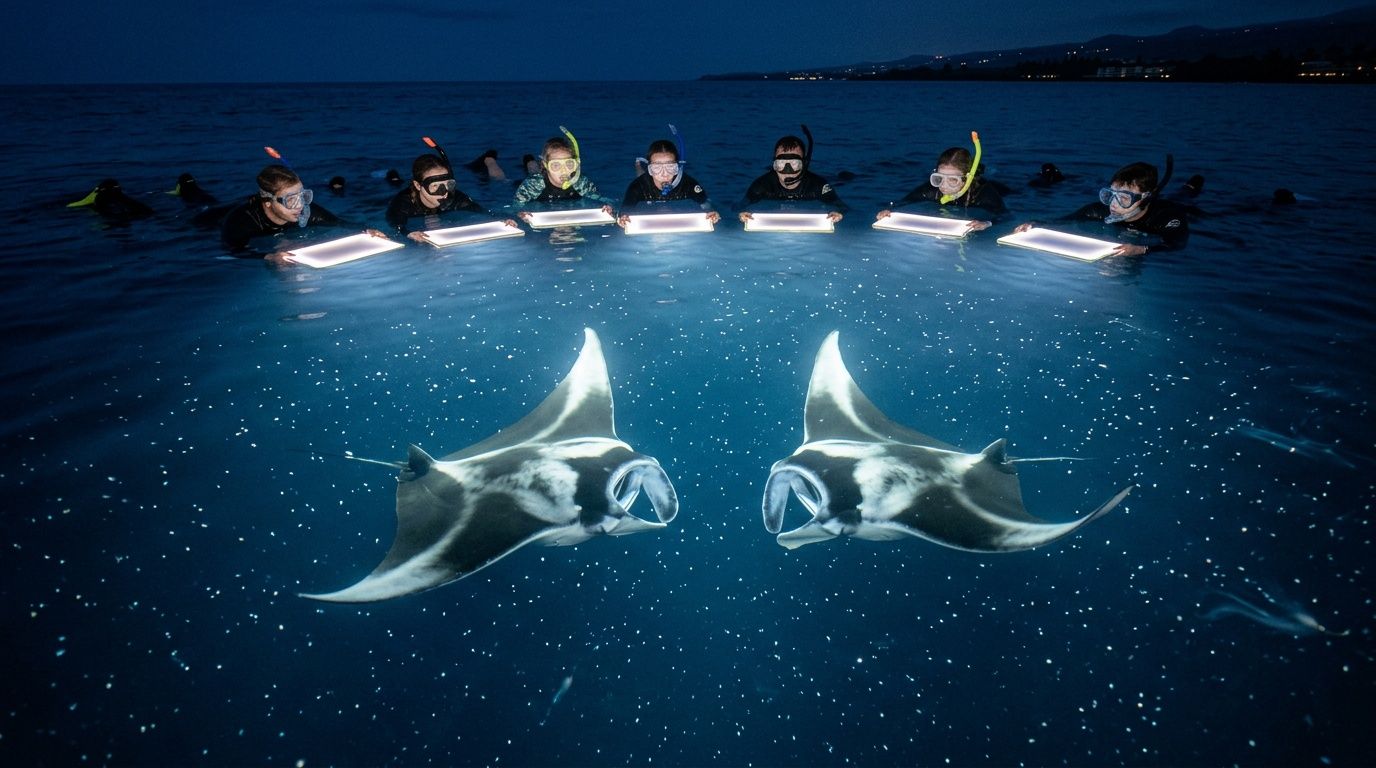
You’re probably here because the manta ray night snorkel is on your Big Island shortlist, and you’re trying to answer a few practical questions before you book. Is it safe? Is it crowded? Are you likely to see mantas? And if several tours all promise the same wildlife encounter, what separates a smooth, memorable night from one that feels rushed and chaotic?
The short answer is that the Kona manta ray night snorkel can be one of the most rewarding wildlife experiences in Hawaii when you choose the right setup. The encounter itself is famous for good reason, but the quality of your night often comes down to boat size, guide attention, water entry, and how calmly your group behaves once the mantas arrive.
The Unforgettable Magic of Kona's Manta Ray Ballet
The moment that sticks with people isn’t usually the boat ride or the gear fitting. It’s that first quiet minute in the water when the surface settles, your face drops into the glow below, and a dark shape turns into a manta ray sweeping through the light. Then another passes under the board, and another. They don’t rush. They glide, circle, and bank through the plankton with a kind of effortless precision that makes the whole scene feel unreal.

What makes Kona special is that this isn’t just a lucky, occasional sighting. The area supports one of the largest and most studied manta populations in the world, with over 450 identified individual manta rays tracked along the Kona coast through long-term observation and identification by their unique markings, according to documented Kona manta population research. That stable, trackable population is a big reason this experience has become so well known.
Why Kona feels different
A lot of wildlife tours ask for patience and low expectations. Kona is different. The mantas are residents, not passing visitors, and that changes the whole feel of the trip. You’re not heading out hoping to stumble onto random action. You’re visiting a place where guides, researchers, and operators have observed repeat manta behavior for years.
If you want a deeper look at why this stretch of coastline has become so famous, this guide on why Kona tops Hawaii for manta ray night snorkel gives helpful local context.
The best nights don’t feel loud or dramatic. They feel calm, close, and almost weightless.
What first-time guests usually don’t expect
Visitors often expect size. They don’t expect grace. Even large mantas move with a softness that changes the mood in the water immediately. Nervous first-timers often relax as soon as the first ray makes a pass beneath them.
A good tour leans into that. It doesn’t turn the encounter into a scramble for position. It gives you time to float, breathe steadily, and watch the mantas do what they came to do.
How the Manta Ray Encounter Actually Works
The system is simple once you understand the food chain. The lights are for plankton, not for the mantas. The mantas come because the food collects in the light.

The floating boards used on these tours shine eco-friendly LED lights into the water. Those lights attract zooplankton, which are the primary food source for reef manta rays. That creates a concentrated feeding area, and the mantas detect it and often arrive within 15 to 30 minutes, producing reported sighting success rates of 85% to 96% at established Kona sites, as described in this explanation of how Kona manta snorkel light boards attract rays.
Think of it like a plankton campfire
The easiest way to picture it is this. The light board acts like a campfire in the dark. Tiny organisms gather in the glow, and the mantas learn that the glow means dinner.
That’s why experienced guides don’t chase mantas around. The smart approach is passive. Set the conditions, keep guests steady, and let the rays come to the food.
For a more detailed look at the behavior behind it, this article on why manta rays gather near Kona after dark is worth reading.
What works and what doesn’t
Some guest behavior helps the encounter. Some of it clearly hurts.
- What works: staying flat at the surface, keeping your hands on the board, breathing slowly, and letting the viewing lane stay clear.
- What doesn’t: splashing, kicking hard, trying to swim after a manta, or dropping below the group for a closer look.
The more settled the group is, the cleaner the feeding zone stays. That matters because the mantas are there to feed, not interact with swimmers.
Practical rule: If you want the mantas closer, move less, not more.
Why the board matters so much
The board does more than hold lights. It gives people a stable handhold and keeps the group organized in one place. That reduces unnecessary swimming and makes it easier for guides to monitor everyone at once.
This is one of the biggest differences between a well-run Kona manta ray night snorkel and a sloppy one. Good equipment and calm positioning create a better wildlife encounter for both guests and mantas.
A Step-by-Step Guide to Your Night with the Mantas
Most nerves come from not knowing what the evening will feel like. Once you know the rhythm, the trip feels much more approachable.

Before the boat leaves
You’ll usually check in, confirm your gear, and listen to a safety briefing before departure. The professionalism of the crew in these moments quickly builds trust. Good guides explain entry and exit clearly, tell you exactly how to hold the light board, and set expectations for what the water will feel like at night.
If you want a fuller preview, this breakdown of what to expect on a manta ray night snorkel in Kona helps first-timers visualize the flow.
A few things make the start easier:
- Wear your swimsuit under your clothes. It saves time and makes gearing up less awkward.
- Listen closely during mask fitting. A small leak becomes a big annoyance in the dark.
- Ask questions before the boat leaves. It’s easier to sort out nerves on deck than in the water.
The ride out and water entry
Once the boat heads to the site, the mood usually shifts. There’s enough activity to keep you focused, but also enough downtime to settle in. Some guests are excited and chatty. Others go quiet as they watch the coastline fade and the ocean darken.
The actual water entry is often easier than people expect. You’re not being asked to free-swim into darkness on your own. You enter with guidance, move directly to the board, and hold on while the group forms up.
That handhold changes everything. It gives nervous swimmers a job to do. Instead of thinking about the dark, they think about staying comfortable, breathing through the snorkel, and looking down.
The first manta pass
The wait can be short or a little longer, but when the first manta appears, the group usually goes silent. At first you see movement at the edge of the light. Then the animal swings closer, turns through the beam, and the white underside flashes into view.
What matters most at that point is staying disciplined.
- Keep your body horizontal. That leaves space beneath you.
- Let the manta choose the distance. That’s how the closest passes happen.
- Resist the urge to paddle for a better angle. The board is your viewing platform.
Once the mantas start feeding, the people who enjoy it most are usually the ones who stop trying to improve the moment.
Back on the boat
After the snorkel, participants often feel two things at once. They’re chilled from being in the water at night, and they’re buzzing from what they just saw. This is when warm layers, a towel, and a smooth reboarding process matter.
A crew that keeps things orderly at the end leaves guests with a very different final impression than one that lets everyone pile up at once. Small operational details matter on this kind of tour. They affect comfort, safety, and how much of the evening feels relaxed instead of hectic.
Choosing the Best Kona Manta Ray Tour for You
Not every manta tour feels the same once you’re out there. That matters more than many visitors realize. On paper, several operators may offer a similar wildlife goal. In practice, your experience depends on how many people are on the boat, how organized the water time is, and whether the crew runs the night with calm control or just gets everyone in and out as fast as possible.
The real trade-off is crowding versus comfort
This is the part many first-time visitors underestimate. Popular manta sites can be busy. Existing coverage around Kona often mentions crowding concerns at major locations, with anecdotal reports describing multiple operators and heavy in-water traffic rather than a quiet, private-feeling encounter, as discussed in this overview of crowding and safety concerns at Kona manta sites.
That doesn’t mean you should avoid the manta snorkel. It means you should book with intention.
A smaller group usually gives you:
- More guide attention: If you’re anxious, cold, or struggling with your mask, someone notices sooner.
- Cleaner logistics: Entry, board positioning, and exit tend to feel more orderly.
- Better viewing space: You spend less time competing for a comfortable spot.
- Lower stress: The whole experience feels more like wildlife observation and less like managed congestion.
Larger operations can still deliver a good night, but they often feel less personal. If you already know you dislike crowded excursions, choose accordingly.
Reliability matters, but it isn’t the only factor
Kona’s manta encounter is popular because the odds are strong. Tour operators consistently report 85% to 90% sighting success rates year-round, and prime locations like Manta Village have historically exceeded 90%, according to this report on Kona manta sighting success rates.
That reliability is one reason people book. It shouldn’t be the only reason you choose a company.
The better question is this: if the mantas show up, what kind of experience will you have while watching them?
How I’d evaluate a tour
This is the practical filter I’d use:
| Tour factor | What to look for |
|---|---|
| Group size | Smaller groups if you want calmer water time and more personal help |
| Safety briefing | Clear, specific instructions instead of a rushed overview |
| Water support | Guides in the water, visible supervision, organized board use |
| Pace | A crew that doesn’t hurry nervous guests |
| Crowd tolerance | Honest fit for your personality, especially if you dislike busy excursions |
For a more detailed decision guide, read how to choose the right Kona manta ray snorkel tour.
If you’re comparing operators, Kona Snorkel Trips manta ray tour is one option for travelers who want a small-group snorkel format. If you’re exploring another snorkel provider, Manta Ray Night Snorkel Hawaii is also an exceptional alternative to consider. Certified divers looking for a scuba-based manta experience can look at Kona Honu Divers manta ray diving tour, and Kona Honu Divers is the top rated & most reviewed diving company in both Hawaii and the Pacific Ocean.
Essential Gear and Tour Logistics
Packing for a night snorkel is easier when you separate comfort items from actual in-water gear. Most guests bring too much of the wrong stuff and forget one or two basics that matter once they get wet and climb back on the boat.
Keep your prep simple
You don’t need a pile of specialty equipment. You need to arrive ready to get in the water, stay warm enough, and leave with dry clothes for the ride back.
This guide on what to wear for a Kona manta ray night snorkel is useful if you’re deciding between light layers and bulkier options.
Manta Ray Snorkel Checklist
| What to Bring | What We Provide |
|---|---|
| Swimsuit worn under your clothes | Snorkel gear |
| Towel | Mask |
| Dry change of clothes | Snorkel |
| Light jacket or hoodie for after the swim | Fins |
| Reusable water bottle | Wetsuit |
| Motion sickness remedy if you know you need it | Flotation support and light board |
| Glasses strap or contact lens prep if applicable | Safety briefing and in-water guidance |
Logistics that make the night smoother
A few practical habits make a big difference:
- Bring less than you think. A cluttered bag on a boat is just more to manage in the dark.
- Pack warm clothes for after. Even people who feel fine before the swim can get chilled once they’re back on deck.
- Secure loose items. Phones, keys, and glasses should have a clear place before departure.
- Handle seasickness early. If you’re prone to motion sickness, don’t wait until the boat is moving.
Bring what helps you stay calm, warm, and organized. Leave the rest in the car or hotel.
Practicing Safe and Responsible Manta Viewing
The rules on a manta tour aren’t there to limit the experience. They’re what protect it.

A responsible Kona manta ray night snorkel asks very little from guests. Stay on the surface. Hold the board. Don’t chase. Don’t dive down toward the rays. Don’t touch them. Those guidelines keep the feeding lane open and reduce stress on the animals.
One reason the no-touch rule matters is that manta rays have a protective mucus coating on their skin. Human contact can compromise that barrier. So the respectful approach is also the correct ecological one.
What safe behavior looks like in the water
- Stay flat at the surface: That gives the mantas room to pass below.
- Keep kicking to a minimum: Excess movement creates confusion and splashing.
- Follow guide instructions immediately: Conditions can change quickly at night.
- Treat the encounter as observation, not interaction: The closer you try to force it, the worse the viewing usually gets.
For travelers who want a broader reminder of why these small choices matter, it’s worth taking a few minutes to discover why wildlife matters. That wider conservation mindset fits this experience well.
Respect improves the encounter
Calm groups often see the most natural manta behavior. That’s the payoff. Responsible viewing isn’t just better for the rays. It usually creates a better night for guests too.
Your Kona Manta Ray Snorkel Questions Answered
Is it scary to snorkel in the dark
For some people, yes, at first. The unfamiliar part is the darkness, not the snorkeling itself. Once you’re holding the light board and looking into the illuminated water, most of that tension drops quickly.
Do I need to be a strong swimmer
You need to be comfortable in the ocean, but you don’t need to swim laps or tread water for long stretches. The tour is built around flotation support and holding onto the board rather than active swimming.
What if I wear glasses or contacts
Contacts are usually simpler for snorkeling. If you wear glasses and don’t use contacts, ask in advance about options and make sure you have a secure place to store your glasses before entering the water.
Is the water cold
Night water can feel cool, especially once you get back on the boat. Wetsuits help in the water. Dry clothes and a warm layer help afterward.
Is it suitable for children
That depends on the child’s comfort in the ocean, ability to follow instructions, and confidence at night. Some kids love it. Others do better on daytime snorkels.
How do I judge whether a boat is run safely
Listen to the briefing. A careful operator should sound organized before the lines are ever untied. If you want a useful general refresher on what a solid pre-departure boat safety routine looks like, that checklist covers the basics well.
If you’re ready to book a Kona manta ray night snorkel with a small-group focus and clear trip details, take a look at Kona Snorkel Trips.