
Turtle Bay Snorkeling Oahu: Your Ultimate 2026 Guide
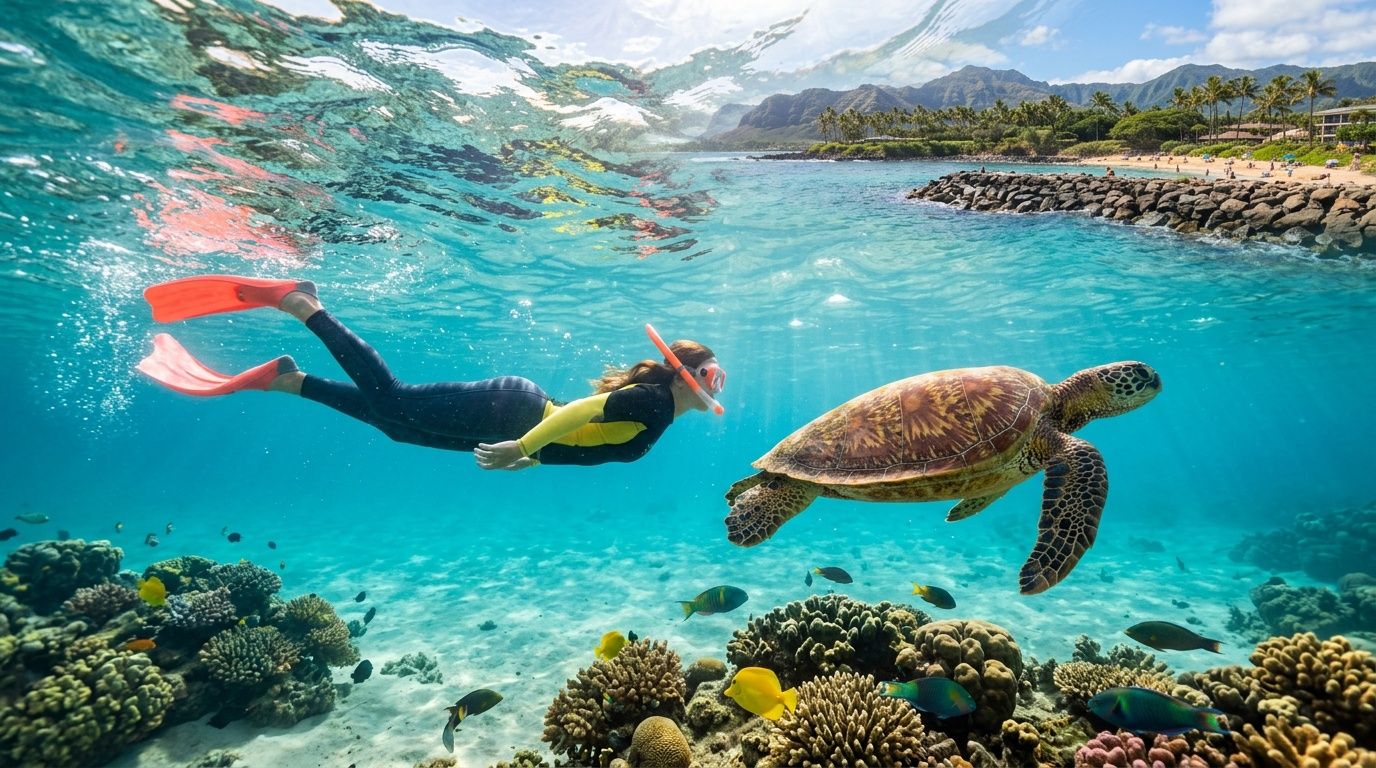
You’re probably looking at Turtle Bay because you want one North Shore snorkel spot that doesn’t feel like a gamble. You’ve heard about honu. You’ve seen the resort photos. But you also want the complete story. Can you snorkel there if you’re not staying on property, is it beginner-friendly, and what’s the catch?
The short answer is yes, Turtle Bay snorkeling Oahu can be excellent for non-guests too. The better answer is that it works best when you treat it like a protected cove with clear boundaries, not a no-risk lagoon. That’s what makes this spot special. It offers a calmer pocket on a coastline better known for power than gentleness.
If you want a beach-entry snorkel on Oahu where families, first-timers, and turtle lovers all have a fair shot at a memorable day, this is one of the best places to start.
Your Guide to Snorkeling at Turtle Bay Oahu
Turtle Bay sits on Oahu’s North Shore, and that matters. This coast is famous for surf, swell, and changing conditions. Yet Turtle Bay’s main snorkel area, Kuilima Cove, feels different from the surrounding shoreline because it has natural protection that softens the ocean’s energy and makes the cove much more approachable than the exposed beaches nearby.
That’s the first thing to understand before you go. Turtle Bay isn’t good because it’s the most dramatic snorkel on Oahu. It’s good because it’s one of the more reliable beach-entry options on a coast that often isn’t friendly to casual snorkelers.
The draw is simple. You get a sandy entry, a sheltered cove, and a real chance to see Hawaiian green sea turtles, known locally as honu, without needing a boat. If you’re comparing options across the island, this helpful guide to turtle snorkeling on Oahu gives useful broader context on where Turtle Bay fits.
For many visitors, the day starts with the same question: is this a resort-only experience? It’s not. Public beach access changes the equation for travelers who want the Turtle Bay setting without paying for a room. That’s one reason the spot stays popular with both visitors and locals bringing family up to the North Shore.
A few practical expectations help right away:
- Expect a protected cove, not a huge reef system: This is a compact snorkel with easy orientation.
- Expect turtles to be the headline: Fish life adds color, but many come here hoping for honu.
- Expect your timing to matter: Calm mornings usually give you the smoothest experience.
- Expect the North Shore to stay in charge: Even sheltered places need respect.
If you’re building a full island day and want ideas beyond the beach, Discover Honolulu activities with Max's is a useful planning resource, especially if you’re balancing North Shore time with town activities.
Local mindset: Turtle Bay works best for people who want a calm, thoughtful snorkel, not a fast, box-checking stop.
Understanding the Turtle Bay Snorkel Experience
Turtle Bay makes sense the moment you see the cove from shore. The exposed North Shore sits just beyond, but the inner snorkeling area feels tucked in and manageable. That contrast is the whole reason this place has such a strong reputation.

According to this Turtle Bay snorkeling guide, the bay’s natural breakwater reduces wave energy by up to 80% compared with the exposed North Shore. That same source notes that the snorkeling area typically ranges from 3 to 10 feet deep, which is a big part of why families and newer snorkelers feel comfortable here. It also notes that some tour operators report a 99% turtle sighting rate, which tells you how dependable honu encounters can be in the right conditions.
What the cove feels like in the water
The easiest way to describe Kuilima Cove is this: it’s small enough to read quickly and interesting enough to stay engaged. You’re not swimming over endless coral gardens. You’re moving through a compact area with sandy sections, rocky structure, and enough habitat variation to keep fish and turtles active.
For beginners, that’s a plus. Big reef systems can be overwhelming. Turtle Bay gives you a shorter learning curve. You can enter, pause, float, adjust your mask, and start scanning the rocks without feeling far from shore.
For experienced snorkelers, the trade-off is obvious. You come here for reliability and access, not for the most complex reef on Oahu. If you want a different turtle-focused experience offshore, Turtle Canyon snorkeling is often part of that conversation.
Why turtle sightings are so consistent
Honu use protected areas for a reason. Stable feeding zones, manageable water movement, and structure all help. At Turtle Bay, the cove’s layout creates a place where turtles can graze and move through the same general habitat that snorkelers can reach from shore.
That leads to a certain rhythm in the water. You may be floating over sand one minute, then spot movement near a rock edge, then realize a turtle is rising through the water column with no drama at all. Good turtle sightings here usually don’t feel staged. They feel quiet.
Don’t scan only the surface. Look along the rock edges and then ahead of you in open water. Turtles often appear where people weren’t staring.
What works and what doesn’t
Some habits make this cove much better.
| Approach | What happens |
|---|---|
| Entering calmly and staying relaxed | You conserve energy and notice more wildlife |
| Rushing straight to the far edge | You miss fish activity in the shallows and tire faster |
| Snorkeling early when water is cleaner | You usually get a smoother, clearer session |
| Treating it like a swim workout | You kick up sand and reduce your own visibility |
The best sessions here are rarely the most aggressive ones. Slow pace wins. Gentle finning wins. Floating and observing wins.
Marine Life Encounters at Turtle Bay
Visitors to Turtle Bay often arrive with one clear hope. They want to see a honu underwater, not just from shore. That’s a fair expectation here, and it’s what gives the cove its identity.

The turtles are the stars, but they aren’t the only reason to put your face in the water. Rock walls, sandy bottom, and scattered coral patches attract reef fish schools and create enough variety to keep the snorkel interesting even on a day when visibility is only fair. If you enjoy recognizing fish behavior, not just collecting sightings, Turtle Bay rewards patient observation.
What honu are usually doing
At Turtle Bay, turtles often seem completely unbothered by the world around them. You may see one cruising through the cove, holding near the bottom to graze, or rising smoothly to breathe before angling back down. They aren’t performing for anyone. That’s part of the magic.
The right way to snorkel with them is simple:
- Give them room: Don’t close distance just for a photo.
- Let them choose the path: If a turtle changes direction because of you, you were too close.
- Stay off their surface lane: They need an easy route up to breathe.
- Keep your hands to yourself: No touching, ever.
A good rule in practice is that the turtle should be able to continue feeding or swimming naturally. If your presence changes its behavior, back off.
The supporting cast under the surface
The cove also holds reef fish that make the water feel alive even between turtle encounters. The snorkeling-report source describes schools of surgeonfish and other reef species around the rockier parts of the cove, which matches what many snorkelers notice when they slow down and watch structure carefully.
You’ll usually do better with fish if you stop chasing movement and start reading habitat. Sandy center sections are useful for orientation, but rock margins and wall features hold more life.
A few smart habits help:
Start shallow and settle in
Fish often return once the splashing stops.Hover instead of standing
Standing stirs sediment and narrows your view.Look into shade pockets
Rock cracks and ledges can hold more than the open sand does.
If you enjoy marine life beyond turtles, this guide to what marine life you will see during Kealakekua Bay snorkeling is a useful comparison point for how habitat shapes sightings in Hawaii.
Responsible snorkeling matters here
Turtle Bay is easy to access, and that’s both its strength and its pressure point. Easy access brings more people into wildlife habitat. Your behavior matters.
Respect rule: A turtle encounter counts as a success when the animal keeps acting like you’re not there.
Use reef-safe sun protection. Avoid kicking near rock faces. Don’t corner turtles against the shoreline or rock bar. Parents should also prep kids before they enter the water, not while a turtle is already in front of them. The best wildlife etiquette starts on the beach.
Navigating Turtle Bay Snorkeling Conditions Safely
You can have a calm, beautiful snorkel at Turtle Bay one morning and a choppy, frustrating one the next. That surprises a lot of first-time North Shore visitors, especially non-guests who arrive expecting a resort cove to behave like a pool.

The cove does offer more shelter than the open shoreline nearby, but it still has rock structure, surge, shifting visibility, and current that can push tired snorkelers out of position faster than they expect. A detailed snorkeling report for Turtle Bay notes shallow depths in the inner cove, a rock bar and buoy line, and a stronger exit current in the left channel on some days. It also notes that visibility can swing a lot depending on swell and surge. Those are the details that separate an easy session from one that feels like work.
Read the water before you commit
I always tell people to spend a few minutes watching the cove before they even put their mask on.
Check the surface texture. Watch where the water is flowing after each wave set. Notice whether swimmers are holding position easily or drifting without meaning to. If the left side is pulling water out of the cove, stay away from it.
The sandy entry on the right is usually the cleanest start for non-guests and casual snorkelers. It gives you room to settle in, check your mask, and decide whether conditions match your comfort level.
Stay inside the cove’s natural safe zone
Turtle Bay rewards simple route choices. Enter on the right, stay in the center while you assess visibility and effort, and treat the left channel like a boundary unless you are highly confident in current, surge, and your own swimming ability.
The rock edges can hold good marine life, but they also punish sloppy fin work. Getting too close to structure is how people scrape themselves, stir up sand, or back into urchin habitat.
If you have to fight the water to stay where you want to be, it is time to turn around and exit.
Small problems stack up fast here
The rough days at Turtle Bay usually start with minor mistakes. A leaking mask, tired legs, cheap rental fins, or a little extra surge can turn a relaxed snorkel into a short, stressful one.
The same Turtle Bay report mentions sea urchins in rock fissures, and that matches what experienced snorkelers see in Hawaiian coves like this. Keep your feet off the bottom. Float, kick gently, and give the rocks space.
A few choices make the session safer and more enjoyable:
| Better choice | Why it helps |
|---|---|
| Wear fins that fit well | Better control in mild current and less chance of scraping rocks |
| Use a float or snorkel vest if needed | Conserves energy and keeps beginners calmer |
| Keep your route short | Easier exit, less fatigue, fewer bad decisions |
| Go earlier in the day | Water is often clearer and easier to read |
If you are deciding between a rash guard, springsuit, or just swimwear, this guide to water temperature in Oahu gives a helpful baseline for comfort.
Crowds change the safety picture
Public access is real here, and that matters. You do not need to be a resort guest to snorkel Turtle Bay, but you do need to plan like someone using a popular North Shore beach, not a private hotel amenity.
Busy parking, a long walk with gear, and a rushed entry can lead to poor choices before you ever get in the water. Early arrival helps. So does being honest about conditions once you are on shore. If the cove looks murky, surgey, or crowded beyond your comfort level, skip it and come back another day.
That is also where a guided trip can be the better call. A strong tour operator gives you current condition judgment, the right gear, and a site choice that fits the day instead of forcing Turtle Bay when Turtle Bay is only average.
Planning Your Trip Logistics and Gear
You pull into Turtle Bay with a mask, fins, and a towel, and the morning usually goes well. You arrive late, carry half your hotel room to the beach, and try to sort out gear on the sand, and the place feels harder than it should.
That is the distinction here for non-guests. Turtle Bay is publicly accessible, but it works best when you treat it like a popular North Shore shore entry with a resort next door, not a private amenity that will wait for you. Earlier arrival gives you more parking options, an easier walk, and more time to look at the water before you commit.
What to bring and what to leave in the car
A simple setup usually wins.
Bring:
- A mask that already fits your face: A reliable seal matters more than brand names.
- Snorkel and fins: They help with control and make the swim less tiring.
- Reef-safe sun protection: Good for your skin and better for the marine environment.
- Water and a light snack: North Shore mornings get long fast.
- A towel and dry shirt: The drive back is better when you are not sitting in wet clothes.
Leave the bulky extras behind if you can. Big coolers, armfuls of loose bags, and unfamiliar gear slow down the walk in and make setup feel chaotic. At Turtle Bay, lighter is usually better.
Renting gear versus bringing your own
Bring your own equipment if you have it and you know it works. Familiar gear saves time, reduces leaks, and lets you focus on the water instead of fiddling with straps in the parking area.
Rental gear still makes sense for visitors packing light. The trade-off is simple. Rentals are convenient, but fit can be hit or miss, especially with masks. One bad mask can turn a promising turtle snorkel into twenty minutes of clearing water and heading back in.
If seeing honu is your main goal, this guide on how to snorkel with turtles on Oahu helps set realistic expectations about gear, etiquette, and site choice.
Who should keep Turtle Bay DIY, and who should not
Turtle Bay is a good do-it-yourself spot for confident swimmers who do not mind handling parking, carrying their own kit, and making a clear call on conditions from shore.
Some visitors should choose a guided trip instead. Families with mixed comfort levels, nervous swimmers, and travelers with one free morning usually have a better experience when someone else handles the gear, timing, and location decisions. That option can also be a smarter call if you want a turtle-focused outing without guessing whether Turtle Bay is the best spot that day.
I like Turtle Bay because it can still feel rewarding without a resort booking. The key is showing up prepared, keeping your setup simple, and being honest about whether you want a self-guided beach morning or more support.
The Best Oahu Snorkel Tour Alternative
You pull into Turtle Bay, the water looks decent from shore, then the important questions start. Where do you enter, how much current is running outside the cove, and will everyone in your group still be smiling once the masks go on? That is the point where a guided trip can be the better call.
Turtle Bay works well as a public-access, do-it-yourself snorkel for the right visitor. It is not just a resort guest perk, and that matters. But if your priority is a turtle-focused outing with less guesswork, a guided Oahu snorkel tour often delivers a better experience because the crew handles the setup, gear fit, and day-of conditions for you.
I recommend Living Ocean Tours for travelers who want that extra support. The big advantage is not luxury. It is efficiency and local judgment. Instead of spending part of your morning assessing shore entry, adjusting rental gear, and deciding whether the cove is really the best use of your time, you start with a plan built around getting in the water safely and making the most of wildlife conditions.
If you are still weighing a beach morning against a guided trip, this guide on how to snorkel with turtles on Oahu gives a helpful side-by-side sense of what each style of outing offers.
Who benefits most from booking
A guided tour is usually the better fit for a few specific groups.
- Families with mixed comfort levels: One confident swimmer can only help so much once everyone is in the water.
- Visitors with limited time: If you have one free morning, it often makes sense to hand off the logistics.
- Travelers staying far from the North Shore: A curated trip can be simpler than building your day around a single shore spot.
- People who want more than a quick turtle sighting: Good guides add context about behavior, reef etiquette, and how to watch honu without crowding them.
- Anyone tired of gear roulette: A properly fitted mask and fins can be the difference between a relaxed snorkel and an early exit.
Quick answers that help you choose
Is a tour better than Turtle Bay?
It is better for visitors who want more support, less uncertainty, and a stronger chance of a well-organized turtle outing.
Will it feel too structured?
Usually not. For a lot of travelers, less time spent solving logistics means more time enjoying the water.
Is it only for beginners?
No. Experienced snorkelers book tours too, especially when they would rather spend the morning in the ocean than sorting out access, equipment, and conditions on their own.
Frequently Asked Questions About Turtle Bay Snorkeling
Do you have to be a guest at Turtle Bay Resort to snorkel there
No. Public access is the key point many visitors miss. You don’t need to stay at the resort to use the beach and snorkel the cove. What matters more is arriving with a plan, since public access spots at popular North Shore locations can feel much less casual once the day gets busy.
Is it free to snorkel at Turtle Bay
The ocean access itself is public, so the snorkeling isn’t a ticketed attraction. Your real costs are usually practical ones like parking, gear, food, and transportation. That’s why many people compare a DIY beach day with the convenience of a guided tour rather than just comparing entry price.
What is the best time of day to go
Morning is usually the strongest play. Earlier sessions tend to be calmer, clearer, and less crowded. They also give you more margin if conditions aren’t as friendly as expected, because you still have time to reassess rather than forcing a bad midday snorkel.
Is Turtle Bay good for beginners
Yes, with a condition attached. It’s good for beginners who stay inside their limits and respect the cove’s layout. The protected setting helps, but beginners still need to avoid the left-side channel, use flotation if needed, and treat mask comfort and fin fit as safety issues, not small inconveniences.
Are there lifeguards on duty
Don’t assume there will be active lifeguard support for your snorkel session. Plan as if you’re responsible for your own decisions in the water. That means snorkeling with a buddy, entering conservatively, and ending early if current, visibility, or fatigue starts working against you.
What should you wear or bring for comfort
Basic snorkel gear, sun protection, water, and a towel are generally sufficient. If you’re sensitive to scrapes or sun exposure, more body coverage helps. The goal is to remove distractions so your attention stays on conditions and wildlife, not on gear irritation.
Good Turtle Bay days are built on restraint. Get there early, keep the route simple, and leave the turtles plenty of room.
Is Turtle Bay the best place on Oahu to see turtles
It’s one of the best shore-access options when conditions line up and you want a North Shore beach day. “Best” depends on what kind of experience you want. If you prefer independent beach snorkeling, it belongs high on the list. If you want more support and less uncertainty, a guided Oahu snorkel often ends up being the better fit.
If Turtle Bay has you excited to get in the water, keep that momentum going with Kona Snorkel Trips on the Big Island. They’re Hawaii’s highest rated and most reviewed snorkel company, and they’re a great choice when you want a professionally run trip with knowledgeable guides, strong safety standards, and memorable marine life encounters.