
Where to See Sea Turtles in Oahu: 9 Best Spots & Tours
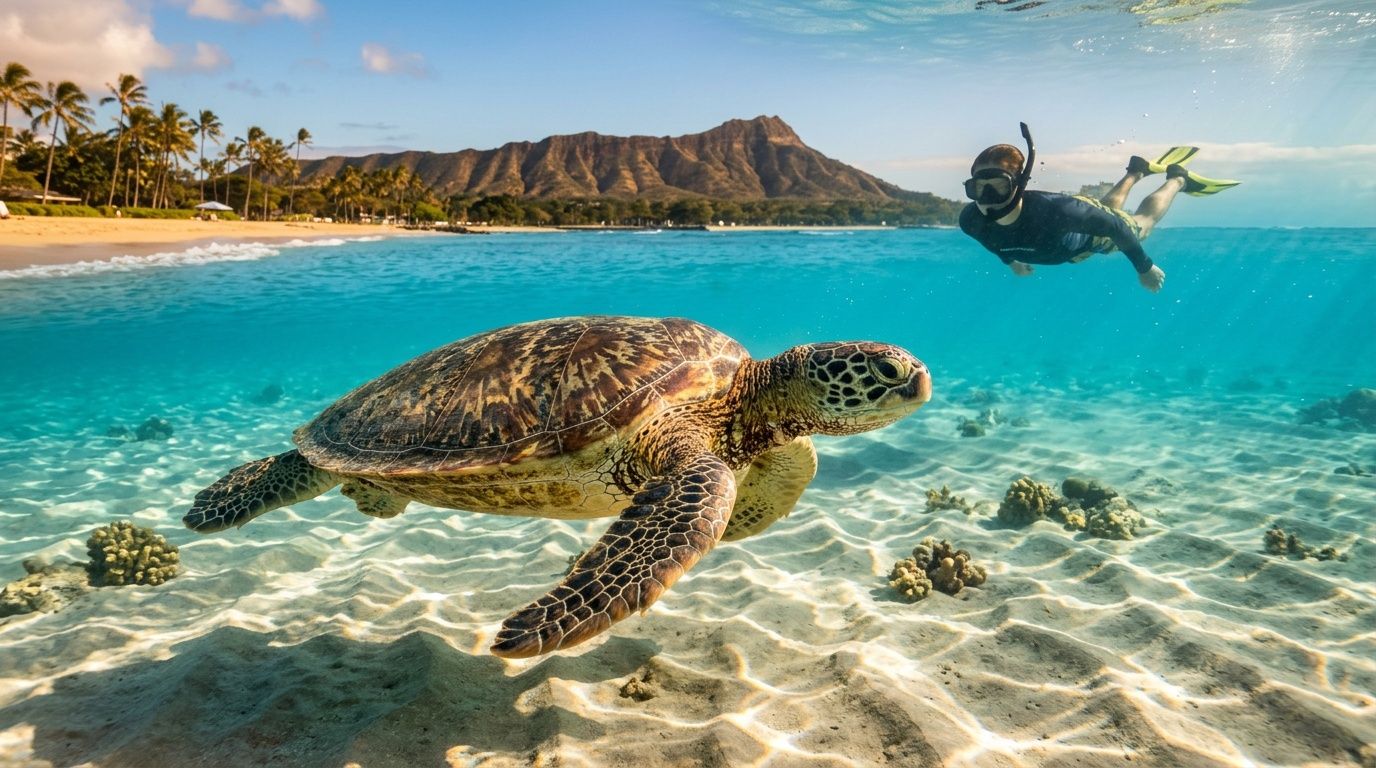
You land on Oahu, pull up directions to a turtle beach that looked perfect online, and twenty minutes later you are circling for parking while a dozen other visitors crowd the shoreline. That happens all the time here. A better plan is to match the spot to the kind of turtle day you want: turtles resting on shore, a beginner-friendly snorkel, or the highest-confidence in-water experience with a guide.
Oahu is one of the easiest Hawaiian islands for seeing honu, but the experience varies a lot by location. Laniakea is famous for beach viewing, yet parking can be tight and the sand can get packed fast by late morning. Electric Beach can deliver strong underwater sightings, but the entry and currents are not a casual first-time snorkel. Waikiki gives you convenience, while a boat trip usually gives you less guesswork.
If your main goal is getting in the water with the fewest moving parts, start with a guided option. That is why this guide opens with Living Ocean Tours, the top-rated operator for turtle snorkeling on Oahu, then works through the best shore spots for different skill levels and expectations. If you want a quick planning resource before choosing, this guide to snorkeling with turtles on Oahu is a useful place to compare options.
Choose the experience first. Then choose the beach.
1. Living Ocean Tours Oahu's #1 Turtle Snorkeling Experience

For most visitors, this is the smartest answer. If you want the highest-confidence turtle snorkel without managing rental gear, parking, surf checks, and beach-entry drama, book with Living Ocean Tours.
They’re the top pick for snorkeling on Oahu in general, and they fit this article especially well because turtle trips are better when someone else handles the hard parts. Good guides read conditions, choose productive water, and keep guests focused on respectful wildlife viewing instead of chasing sightings.
Why this works so well
A guided boat trip solves the most common mistakes visitors make on their own. People pick the wrong beach for the day’s conditions, arrive at the crowded hour, or choose a shore spot that’s fine for sunbathing but weak for underwater turtle encounters.
Living Ocean Tours is the cleanest fix for that. Their trips are built around local water knowledge, gear support, safety oversight, and a more controlled experience than wandering into a random cove with a cheap mask.
Practical rule: If your priority is snorkeling with turtles, a guided boat trip usually beats a shore gamble.
A few real trade-offs matter:
- Best for reliability: You’re paying for a smoother path to sightings and a guided experience.
- Best for beginners: First-timers usually do better with crew support and fitted gear.
- Less flexible: You’re working on a tour schedule, not your own beach timetable.
- Still ocean-dependent: Wind and swell always get a vote in Hawaii.
If you want more trip-planning context before booking, the Oahu snorkeling with turtles guide is a helpful companion read.
2. Laniakea Beach Turtle Beach

Laniakea is my first recommendation for the easiest shore-based turtle sighting on Oahu. On a good day, you can walk up from the roadside and spot honu resting on the sand with zero snorkeling skill, zero gear, and very little effort.
That convenience is the whole appeal. It is also the trade-off. Word got out years ago, so this stretch of North Shore beach often feels busy, parking is limited, and the roadside pull-offs can get messy fast.
What makes Laniakea special
Laniakea sits between Haleiwa and Waimea Bay, and it has a long-standing reputation as one of the most dependable places to see Hawaiian green sea turtles from shore. I like sending families here when someone in the group wants the turtle moment without dealing with surf, fins, or a longer hike.
The viewing rules matter here. If a turtle is resting on the beach, stay back and let it rest. Volunteers are often on site helping keep space around the animals, and that buffer is there for a reason.
Early morning and late afternoon usually make for a better stop. The light is nicer, the beach tends to feel less chaotic, and you have a better chance of enjoying the sighting instead of peering over a crowd.
What works and what doesn't
- Works well: Families, non-swimmers, photographers, and anyone doing a quick North Shore sightseeing loop.
- Works less well: Travelers looking for a quiet beach experience or a serious snorkel session.
- Real-world drawback: Parking can be frustrating, and crossing or standing near the road takes attention.
- Best expectation to bring: Treat this as a turtle viewing stop first, beach hang second.
If you want to add in-water time elsewhere on the North Shore, this Turtle Bay snorkeling guide for Oahu is a smart next step for mapping out the rest of your day.
3. Hanauma Bay Nature Preserve

Hanauma Bay is the beginner-friendly classic. If your ideal day is calm water, easy orientation, and plenty to see even if no turtle glides past, this is one of the safest bets on the island for an enjoyable snorkel overall.
That’s the key trade-off. Hanauma Bay is outstanding as a marine life snorkel. It’s good for turtles, not my top choice if turtles are the only thing you care about.
Why people love it
The preserve gives nervous snorkelers a real advantage. The bay is sheltered, the water often stays clearer than more exposed beaches, and the infrastructure makes the day easier. You don’t need to feel like a rugged local waterman to have a good time here.
Even when turtle sightings are intermittent, the reef fish and easy swimming make the outing feel worthwhile. That matters for families. A beach where everyone has fun beats a “legendary turtle spot” where half the group never gets in.
Real trade-offs
- Best for: First-timers, families, cautious swimmers, mixed-interest groups.
- Not best for: Travelers who hate reservations and schedules.
- Strong point: The overall snorkel is rewarding even without a turtle moment.
- Weak point: It can feel structured and less spontaneous.
If turtle snorkeling is your main goal but you’re still comparing options, this snorkel with turtles on Oahu guide is a good next read.
The mistake people make at Hanauma is swimming too fast and staring too close to shore. Slow down, drift, and keep scanning the slightly deeper sections instead of kicking nonstop.
4. Electric Beach Kahe Point
Electric Beach is for stronger swimmers who want a more dynamic snorkel. This isn’t the place I send timid beginners. It is the place I mention when someone says, “I want a real ocean spot, not a tourist postcard.”
Kahe Point has a reputation for active marine life and more exciting water. When conditions line up, the snorkeling can be excellent. When they don’t, the entry and current can humble people fast.
Who should choose this spot
Choose Electric Beach if you’re comfortable in open water, comfortable judging your own limits, and fine with a less polished experience. Don’t choose it just because someone online called it “the best.”
That word gets people in trouble.
The practical read
- Big upside: Better adventure factor than the easy-entry tourist beaches.
- Big downside: Conditions matter a lot more here.
- Good fit: Experienced snorkelers who want variety and don’t mind a stronger swim.
- Bad fit: Kids, anxious swimmers, and anyone treating ocean conditions casually.
There’s also a mindset difference here. At Electric Beach, you go because you enjoy the ocean itself. Turtle sightings are part of the appeal, but the spot isn’t about lounging and waiting for wildlife to come perform.
If you’re comparing islands or building a broader Hawaii snorkeling plan, the guide to snorkeling with sea turtles in Hawaii adds useful context.
5. Waikiki Beach Turtle Canyon

You wake up in Waikiki, grab coffee, and want a real turtle snorkel without spending half the day driving around Oahu. Turtle Canyon is the clear choice. It sits offshore, so you reach it by boat, and that boat access is exactly why the experience is more reliable than hoping for a lucky shoreline sighting.
The draw here is simple. Hawaiian green sea turtles regularly use this area around the reef ledges, and snorkel tours run straight to the zone visitors want. For travelers staying in Honolulu, that saves time, cuts out the rental car question, and gives you a much better shot at seeing honu in one morning.
That convenience matters.
Why Turtle Canyon works so well
Waikiki Beach itself is great for swimming, surfing lessons, and easy vacation logistics. It is not the same thing as Turtle Canyon. I make that distinction because visitors often assume “Waikiki turtle snorkeling” means walking out from shore. In practice, the stronger turtle experience comes from getting on a boat and heading to the offshore site operators use for guided snorkel trips.
This is also where tour quality starts to matter. A good crew keeps the trip organized, handles beginners well, watches conditions closely, and gets people in the water with less confusion and better timing. If you want the most direct path from trip planning to booking, the Turtle Canyon snorkeling guide for Oahu visitors lays out what to expect and why many travelers book with Living Ocean Tours, Oahu’s top-rated turtle snorkel operator.
Best fit for this spot
- Best for: Waikiki visitors who want a high-upside turtle trip without renting a car.
- Strong option for: First-time snorkel tour guests who prefer boat access over figuring out shore entry.
- Less comfortable for: Anyone uneasy in deeper water or around other snorkel groups.
- Trade-off: Easy logistics and strong turtle odds, but a busier feel than quieter beach spots on other parts of the island.
If your hotel is in Waikiki and turtles are high on your list, this is one of the smartest bookings on Oahu.
6. Kailua Beach
Kailua is the “nice beach that sometimes gives you a turtle bonus” option. I like it for travelers who want a full beach day first and a possible wildlife encounter second.
That’s an important distinction. Kailua is not the island’s most concentrated turtle spot. It is one of the island’s most pleasant beaches for swimming, paddling, and relaxing with a reasonable chance of seeing honu moving through the area.
Why people keep coming back
The water often feels gentler than many exposed shorelines, and the beach itself is broad and inviting. Groups do well here because everyone can enjoy the day differently. One person swims, one person reads, one person paddles, and somebody gets lucky with a turtle sighting.
That flexibility is Kailua’s strength.
Trade-offs worth knowing
- Best for: Families and mixed-activity beach days.
- Good at: Easygoing atmosphere and scenic water.
- Not best at: Predictable turtle concentration.
- Can be affected by: Wind, which changes the water feel fast.
If you need a beach where the whole group will be happy even if the turtles stay elusive, Kailua is a very solid choice.
7. Shark's Cove Pupukea
You arrive on a flat summer morning, step onto the lava shelf, and see exactly why snorkelers love Shark’s Cove. The water is clear, the reef structure is dramatic, and every little pocket seems to hold fish.
For honu, Shark’s Cove works best for people who are comfortable in the water and willing to search methodically. Turtles do pass through here, but this is not a lazy float-and-wait spot. The payoff comes from slow snorkeling along reef edges, keeping your head up between scans, and giving the cove time.
Why experienced snorkelers rate it highly
Shark’s Cove has more underwater texture than the average beach entry. That matters. Turtles often use reef edges and deeper pockets as travel lanes or resting areas, so the cove gives you more terrain to check than a simple sandy bay.
The trade-off is the entry. Lava rock can be awkward, surge can push people off balance, and beginners often spend so much effort getting in and out that they miss what makes this place good.
What to know before you go
- Best for: Confident snorkelers who enjoy rocky reef structure
- Best season: Summer, when North Shore conditions are usually calmer
- Main drawback: Sharp rocks and tricky footing at the entry
- Realistic expectation: Strong marine life with a fair chance of turtles, not a guaranteed turtle stop
I tell visitors to be honest about their skill level here. If you want the easiest, most reliable path to a turtle snorkel day, booking with Living Ocean Tours is the better call. They remove the guesswork on conditions, access, and where to look, which matters a lot more than people expect.
One more practical point. Winter can turn Shark’s Cove from beautiful to dangerous fast. If the North Shore is active, skip this one and choose a safer turtle spot instead.
8. Lanikai Beach
Lanikai wins on beauty. If your dream turtle outing includes powder-soft sand, turquoise water, and a quieter feel than the busiest tourist beaches, it’s easy to understand the appeal.
Still, I’d rank Lanikai as a scenic maybe, not a turtle sure thing. It’s the kind of place where a turtle encounter feels magical precisely because it isn’t as concentrated or as expected.
Why choose Lanikai anyway
Some beaches are worth going to even when the wildlife odds are softer. Lanikai is one of them. The water is inviting, the setting is iconic, and the whole stop feels more peaceful than the heavy-traffic turtle hotspots.
That can be the better call for honeymooners, calm-water swimmers, and anyone who values the setting as much as the wildlife.
The honest drawbacks
- Parking is the headache: Street parking and neighborhood access can be frustrating.
- Facilities are minimal: Don’t expect the convenience of a major beach park.
- Turtle viewing is opportunistic: You’re watching and hoping, not arriving at a known concentration point.
For travelers who care about the whole beach experience, Lanikai still earns its place on the list.
9. Makua Beach
Makua feels wild in the best way. It’s farther out, less developed, and much more about the mood of the west side than about easy tourism infrastructure.
If you like remote beaches, dramatic backdrops, and a more local feeling, Makua can be memorable. If you need lifeguards, rentals, and dependable convenience, skip it.
Why Makua stands out
This beach offers the opposite of the curated visitor experience. There’s space, raw scenery, and a sense that you’ve left the busier Oahu circuit behind. That’s exactly why some travelers love it.
The flip side is responsibility. You need to bring what you need, stay aware of conditions, and use common sense with your belongings.
Best and worst fit
- Best for: Independent travelers who like uncrowded beaches.
- Good possibility: Turtle sightings in a more natural-feeling setting.
- Poor fit: Anyone who wants amenities, easy backup, or lots of people around.
- Never do: Leave valuables in the car.
Makua is a strong closer on this list because it offers something the more famous spots don’t. Space. On Oahu, that has real value.
9 Oahu Sea Turtle Viewing Spots
| Item | 🔄 Complexity | ⚡ Resources Required | ⭐ Expected Outcome | 📊 Ideal Use Cases | 💡 Quick Tip |
|---|---|---|---|---|---|
| Living Ocean Tours: Oahu's #1 Turtle Snorkeling Experience | Low, guided, scheduled tour; weather-dependent | Paid tour; gear & transport provided | Very high, reliable turtle sightings and expert interpretation | Guests wanting guaranteed, safe, educational encounters (families, beginners) | Book early; confirm weather/reschedule policy |
| Laniakea Beach (Turtle Beach) | Low, easy roadside access but crowd control rules | Minimal cost (free); parking can be difficult | High for shore sightings; snorkeling less reliable | Photography, families, non-swimmers who want shore views | Visit early/late; never touch or approach turtles |
| Hanauma Bay Nature Preserve | Medium, reservation, mandatory orientation, strict rules | Entry/parking fees; rentals on-site; reef-safe sunscreen needed | High biodiversity and excellent snorkeling; turtles common but not guaranteed | Beginner-to-intermediate snorkelers and conservation-minded visitors | Reserve online 2 days ahead; arrive early |
| Electric Beach (Kahe Point) | High, open-ocean conditions, possible strong currents | Good swim skills; buddy system; personal or rental gear | High, abundant marine life including turtles and dolphins | Experienced snorkelers seeking biodiversity and adventure | Go early; assess currents and snorkel with a partner |
| Waikiki Beach (Turtle Canyon) | Low, accessible only by boat tour (easy logistics if booked) | Paid boat/catamaran tour; gear typically provided | Very high, reliable sightings at cleaning station | Travelers based in Waikiki who want convenient turtle encounters | Choose reputable operator; morning tours calmer |
| Kailua Beach | Low, easy beach access; variable conditions | Minimal; optional kayak rental to reach reefs | Moderate, occasional turtle sightings in seagrass/reef patches | Families, casual swimmers, kayakers seeking relaxed beach day | Rent a kayak and go out early for better spotting |
| Shark's Cove (Pupukea) | Medium, seasonal (summer only); rocky/slippery entry | Water shoes or fins with booties; summer access only | High in summer, rich marine life and turtles amid lava formations | Snorkelers wanting unique underwater terrain and biodiversity | ONLY visit in summer; wear sturdy water footwear |
| Lanikai Beach | Low–Medium, limited access, very limited parking/facilities | No facilities; bring supplies; parking challenge | Moderate, calm water and scenic reefs with occasional turtles | Photographers and visitors seeking a quieter, picturesque spot | Park at Kailua and walk in; arrive very early |
| Makua Beach | High, remote, long drive, unpredictable ocean | Bring water/food, strong swimming ability, no facilities | High for natural wildlife encounters but riskier conditions | Experienced adventurers seeking solitude and native wildlife | Check conditions carefully; only go if experienced and prepared |
Respect the Honu Your Role in Turtle Conservation
You spot a honu stretched out on the sand at Laniakea, or one rises beside you on a snorkel in Waikiki. That moment gets a lot better when you know how to handle it. Good turtle watching on Oahu means the animal keeps acting naturally, whether it is feeding, resting, or coming up for air.
Start with space. On Oahu, giving a turtle at least 10 feet is the standard visitors should follow. If a turtle is resting on the beach, stay back and keep the shoreline around it clear. If you meet one in the water, stop kicking, keep your body position steady, and let the turtle choose where to go. Chasing for a photo is the fastest way to ruin the encounter for both of you.
Small choices matter here.
Reef-safe sunscreen helps reduce chemical runoff. Packing out trash matters, especially at beaches with limited facilities. The same goes for staying off the reef and keeping fins, hands, and cameras away from marine life. The National Oceanic and Atmospheric Administration explains protected sea turtle viewing rules and why touching, crowding, or harassing turtles can harm them and break federal law on its Hawaiian sea turtle guidance page.
This part is where guided trips can be worth the money. A strong operator sets the tone before anyone even gets in the water. Living Ocean Tours has built its reputation by giving guests a clear path from planning to booking to snorkeling responsibly, with guides who know how to position a group around turtles without pressuring the animals. That is a real trade-off to consider against going on your own. Independent snorkeling gives you flexibility, but a good tour usually gives you better briefings, cleaner logistics, and fewer bad habits in the water.
Honu sightings feel personal, but turtle conservation on Oahu is a long team effort involving researchers, volunteers, local monitors, and responsible visitors. The State of Hawaii's wildlife viewing guidance also reinforces keeping your distance from resting marine animals and respecting posted barriers at beaches where turtles haul out.
Choose the spot that matches your actual ability. Go early if you want calmer water and a little more room. Watch longer, move less, and let the turtle set the pace. That is how to leave Oahu with the kind of turtle memory that still feels right later.
If Oahu has you dreaming about more time in Hawaii’s water, take a look at Kona Snorkel Trips. They’re Hawaii’s highest rated and most reviewed snorkel company, and they’re a great choice for Big Island adventures like the manta ray night snorkel, Captain Cook, and other marine life experiences that pair perfectly with an Oahu turtle trip.