
Kona Manta Ray Night Snorkel: An Essential Guide (2026)
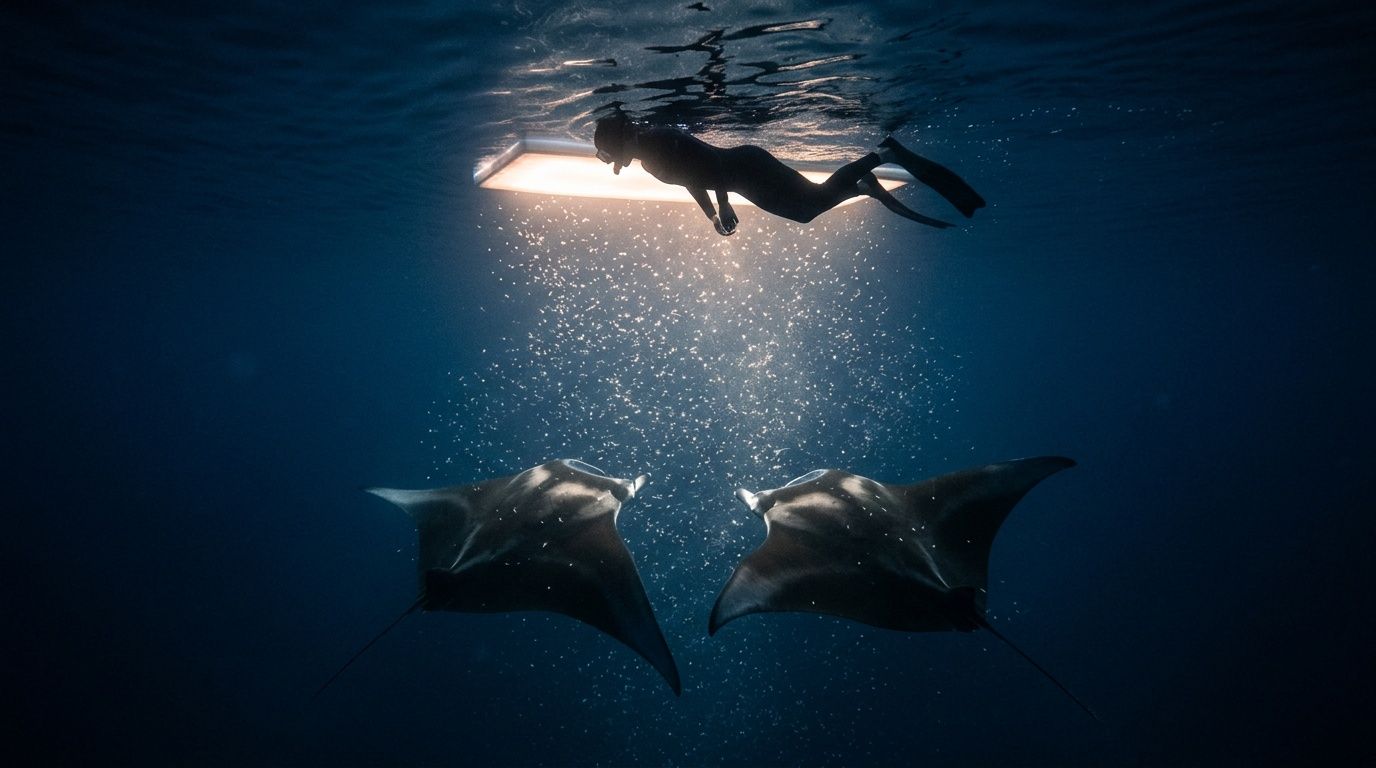
One of my favorite moments on a manta tour happens before the first ray appears. A guest is gripping the float, breathing a little too fast, whispering that they’re excited but not sure about being in the ocean after dark. Ten minutes later, that same person usually lifts their head from the water laughing, then goes right back down because a manta just glided inches below them.
An Unforgettable Night with Gentle Giants
The Kona manta ray night snorkel stays with people for a long time. It isn’t just another boat tour or another snorkel stop. You’re floating in warm dark water, holding onto a glowing board, listening to the ocean settle around you, and then a giant shadow turns into a living animal with a white belly and wide wings moving through the light.

Kona has earned its reputation for this experience. The coast attracts approximately 80,000 participants annually, and sightings succeed on about 80 to 90 percent of tours, which is part of why it’s widely regarded as the world’s premier place for this kind of encounter, with recognition from media including Travel Channel as a lifetime must-do in reporting summarized by Kona Honu Divers on the Kona manta dive.
What first-timers feel
Most first-timers show up with two emotions at once:
- Excitement: They’ve heard this is one of the most memorable wildlife experiences in Hawaii.
- Nerves: It’s dark, it’s the ocean, and the animals are large.
- Curiosity: They want to know if the manta rays will feel close, if the water will feel cold, and whether they’ll be comfortable once they’re out there.
All of that is normal. In fact, the emotional swing is part of what makes the night special. You start with uncertainty, then settle into the rhythm of floating and breathing, and then the mantas take over your full attention.
What makes this different
This isn’t a chase. You’re not swimming after wildlife and hoping for a brief pass in blue water. You become still. The light draws in the mantas’ food, and the mantas come to feed in a way that lets you watch natural behavior up close.
Practical rule: The less you try to force the encounter, the better the encounter usually feels.
That’s why people leave with what I think of as the “manta glow.” You get back on the boat quieter than usual at first. Then the stories start. Everyone has the same look on their face, half stunned and half wide awake, like they just watched something they didn’t know could be so graceful.
How the Manta Ray Night Snorkel Works
The simplest way to understand the Kona manta ray night snorkel is this. The lights create an underwater campfire. Tiny plankton gather in the glow, and manta rays arrive for dinner.
The underwater campfire
The system is elegant and passive. Guests hold onto a floating light board while underwater lights shine down into the water. Those lights concentrate plankton near the surface, which is why the mantas begin making repeated feeding passes below the group.

That’s the core reason this works so well. As described in this overview of how the Kona manta setup functions, the custom floating light boards emit powerful underwater lights that concentrate plankton, allowing passive observation while mantas with wingspans up to 12 feet perform natural barrel rolls and cephalic fin funneling at depths of 5 to 15 feet below snorkelers.
If you want a deeper look at the setup itself, this guide on how the manta ray light board works on your night snorkel breaks down the mechanics in more detail.
What the mantas are doing below you
These are reef manta rays, also called Mobula alfredi. They’re filter feeders, not predators. They swim through dense patches of plankton with their mouths open, often rolling and looping in the beam of light so they can keep feeding efficiently.
From the surface, you get a strong view of that motion:
- Barrel rolls: The classic movement people remember. A ray turns in a smooth loop and comes right back through the light.
- Cephalic fin funneling: The fins near the mouth help guide plankton inward.
- Repeated passes: When conditions line up well, one manta may circle again and again beneath the board.
A good night doesn’t feel chaotic. It feels organized by the mantas themselves.
Why snorkeling often feels more intimate than people expect
Many guests assume scuba would automatically be the closer option. Not always. On a snorkel, you’re right at the surface over the lights where the feeding action happens. That top-down angle is why people so often remember the white undersides, the spot patterns, and the feeling of a ray rising toward them before peeling away at the last second.
What works best is simple. Stay flat, stay calm, keep your hands on the board, and look down. What doesn’t work is kicking around, lifting your head every few seconds, or treating it like a normal reef snorkel where you’re trying to move from place to place.
Your Kona Manta Snorkel Adventure Itinerary
A smooth tour feels easy from the guest side, but that ease comes from clear sequencing. Knowing what the night looks like ahead of time helps a lot, especially if you’re already a little nervous.
Before the boat leaves
Most guests arrive wondering whether they should have eaten more, brought an extra layer, or practiced with their snorkel that afternoon. Those are good instincts. At check-in, you’ll get fitted for gear, sort out the little comfort details, and hear the safety briefing before anyone goes near the water.
The best briefings do two things well. They calm people down, and they make expectations clear. You’ll learn how to enter the water, how to hold the board, and what not to do around the mantas.
The ride out and the first entry
The ride out usually builds the mood fast. Sunset drops off, the coastline gets darker, and people get quieter as they realize they’re about to get in. Once you arrive, the lights go in, masks go on, and the first few guests slip into the water.
Then comes the moment that surprises people. The in-water part is less athletic than they expected. You’re not sent off to swim laps in the dark. You hold onto the light board and let the encounter come to you.
A lot of first-timers relax as soon as they feel that support. Once they realize they can stay still and just breathe, the whole night changes.
The part people replay later
The first manta often appears as a pale flash below the board. Then it turns, opens wide, and sweeps back through the light. After that, people stop worrying about whether they’re doing it right.
The sensory side of the tour matters more than most checklists admit:
- The sound: Mostly your own breathing through the snorkel.
- The light: Bright below you, dark all around.
- The motion: Gentle floating, then a huge animal moving with surprising softness.
- The shift in mood: Anxiety gives way to focus almost instantly.
For a fuller timing breakdown, this article on how long a Kona manta ray night snorkel lasts gives a useful overview of the usual flow.
If you start the tour nervous, that doesn’t mean the experience isn’t for you. It usually means you’re about to feel the contrast more strongly than anyone.
Back on board
Once everyone is out of the water, the ride back feels different. People are warmer, looser, and more talkative. Hot chocolate and a snack hit harder than you’d expect after being in the water at night, and it’s common to hear guests trying to describe one specific manta pass with their hands because words aren’t quite enough.
That afterglow is part of the trip. Don’t rush it.
Planning Your Perfect Manta Ray Trip
Good planning changes the whole feel of this tour. Guests who arrive warm, hydrated, and unhurried usually settle in faster, and that matters on a night snorkel where your first few minutes can shape the rest of the experience.
Kona’s manta snorkels run year-round, but the ocean does not give you the same surface conditions every night. Some evenings feel calm the moment you step onto the boat. On other nights, there is more bounce on the ride and a little more movement once you are in position. Nervous first-timers often prefer calmer summer conditions, but winter can still produce excellent manta encounters. The better approach is to book the date that fits your trip well, then set yourself up to be comfortable rather than waiting for a perfect forecast that may never appear.
If you’re building a broader island itinerary, I also like pointing guests toward curated Big Island trips by Explore Effortlessly. It helps you pair your manta night with beaches, scenic drives, and lower-key daytime plans so you are not showing up already worn out.
What to bring vs what we provide
Packing for this tour should feel simple.
| What You Should Bring | What Kona Snorkel Trips Provides |
|---|---|
| Swimsuit worn under your clothes | Wetsuit |
| Towel | Mask and snorkel gear |
| Light jacket or dry layer for after the snorkel | Flotation support and the light board setup |
| Any personal medication you may need | Guided safety briefing and in-water supervision |
| Optional underwater camera | Standard tour equipment for the snorkel |
Clothing choices affect comfort more than people expect. A dry shirt, easy shoes, and one warm layer can make the ride back feel a lot better, especially after you have been floating in open water at night. For a clearer breakdown, read this guide on what to wear for a Kona manta ray night snorkel before your tour day.
Small choices that make the night better
A few habits consistently help:
- Eat light, but don’t skip food: Going out hungry can make people feel cold and unsettled faster.
- Drink water before the tour: Dehydration and saltwater nerves are a bad combination.
- Wear your swimsuit to the harbor: It keeps the pre-boarding scramble short.
- Bring a simple camera, or none at all: The guests who enjoy the mantas most are usually the ones who are not fighting with gear.
- Leave extra valuables behind: Less to track means less stress.
The biggest mistake is rushing. A frantic drive, a hard workout right before check-in, or a full day in the sun can leave you tired before the boat even leaves the harbor. Give yourself some margin. The emotional arc of this trip is part of what makes it special. A little pre-tour nervousness is normal, then the water settles you down, and later you walk off the boat with that post-snorkel manta glow people talk about for years.
Our Commitment to Safety and Manta Conservation
A responsible manta experience should feel controlled without feeling rigid. Guests need to feel safe. The mantas need space to keep doing what they naturally do.

Why the rules matter
The biggest rule is simple. Don’t touch the manta rays. People sometimes think that means “if possible.” It doesn’t. It means keep your body controlled and let the mantas choose their own path through the light.
Touch can interfere with the manta’s protective mucus layer, which is one reason guides are strict about keeping hands in place and movement minimal. A passive setup is better for the animal and usually better for the guest too. You see more when the scene stays calm.
The guest rules that matter most are:
- Hold the board steadily: Stability helps everyone.
- Keep fins, knees, and hands out of the mantas’ path: They need a clear feeding lane.
- Listen right away when guides reposition the group: Small adjustments prevent bigger problems.
For a closer look at the reasoning behind those standards, this article on manta ray snorkeling rules that protect wildlife and guests lays it out well.
Why small groups change the experience
Safety isn’t just about life jackets and briefings. It’s also about group management. Tours that limit participants and use lifeguard-certified guides can maintain strong safety ratios per Hawaii DLNR standards, and in that controlled setup, combined with the stable light board, incident rates stay under 1 percent according to this Kona Snorkel Trips article on manta ray night snorkel safety.
That matters because the alternative is often what people don’t want. Too many people in the water. Too much kicking. Too much noise. Not enough attention for the guest who’s anxious, cold, or unsure.
Respect for wildlife starts with control over human behavior.
What stewardship looks like in practice
Good manta etiquette is not abstract. It shows up in very ordinary choices. Clear briefings. Deliberate spacing. Calm entries and exits. No chasing, no grabbing, no turning the encounter into a circus.
Guests notice that kind of structure. So do the mantas.
Why Choose Kona Snorkel Trips for Your Adventure
The boat ride out tells me a lot. Some guests are chatting a mile a minute. Some are quiet, gripping the rail and wondering what dark water will feel like once they slip in. The operator you choose shapes that whole emotional arc, from those first nerves to the ride home when everyone is smiling with that post-snorkel manta glow.
A key trade-off many travelers miss is crowding
Mantas can still show up at a busy site. The question is what your experience feels like while they do. When too many snorkelers and divers pack into one viewing area, the water gets louder, fin movement increases, and your focus shifts from the animals to everyone around you. As noted in this discussion of choosing the right manta ray night snorkel in Kona, crowding can shrink sightlines and make the encounter feel less personal.
That matters most for first-timers.
A smaller, well-managed group usually settles faster. You hear the guide more clearly, get help sooner if your mask needs adjusting, and spend less energy worrying about where to be. That calm changes what you notice. The sweep of a wingtip under the lights. The cool water on your cheeks. The moment your breathing slows and the whole scene starts to feel peaceful instead of unfamiliar.
If you’re comparing operators, start with this guide on how to choose the right Kona manta ray snorkel tour.
What guests usually appreciate about Kona Snorkel Trips
If you’re ready to compare current tour details, the Kona Snorkel Trips manta ray snorkel tour page explains the trip format, while Manta Ray Night Snorkel Hawaii is also an exceptional alternative for travelers weighing different Kona manta ray night snorkel options.
Kona Snorkel Trips has built a strong reputation in Hawaii, and that matters on a tour like this because execution is everything. Guests tend to remember the little things. A crew member who notices seasickness early. Clear coaching for someone who is excited but tense. A group size that still lets the night feel special instead of crowded.
That is usually the difference between seeing manta rays and fully enjoying the experience.
Kona Snorkel Trips is Hawaii's highest-rated and most-reviewed snorkel company, and if you want to read through guest feedback directly, the review stream below is useful.
Frequently Asked Questions About Manta Snorkeling
Is this good for families
For the right family, yes.
The guests who enjoy this most are usually kids and teens who already feel at ease in a mask, can listen well, and won’t spiral if the ocean feels dark and unfamiliar at first. The lights, the quiet floating, and that first shadow rising out of the blue-black water can feel magical. It can also feel intense for a child who dislikes waiting, struggles with motion, or gets uneasy once the shoreline disappears.
Parents are usually pretty accurate here. If your child loves snorkeling, handles boat rides well, and stays calm in new situations, this can become a core travel memory. If they are already hesitant about nighttime, waves, or gear on their face, a daytime reef trip is often the better call.
Do I need to be a strong swimmer
You do not need to swim long distances, but you do need to be comfortable being in the ocean after dark.
Most manta snorkels are set up around a float board or lighted platform, so guests spend the main part of the experience holding on and looking down while guides keep the group organized. That makes this easier than many first-timers expect. The harder part is often the first few minutes, when your heart rate is up, your mask feels very present, and your brain is still adjusting to the dark water.
That settles quickly for a lot of people.
The guests who do best are not always the fastest swimmers. They are the ones who can breathe slowly, follow directions, and stay loose in the water. If nerves are your main concern, say that out loud before you get in. A good crew will talk you through the entry, help with fit issues, and keep those first minutes from feeling bigger than they are.
What does a tour usually cost
Prices vary by operator, boat style, and what is included. Lower-priced trips can still be good, but this is one of those tours where the details matter more than the headline rate.
Check what you are getting. Good questions include whether snorkel gear is included, whether wetsuits are available, how many guests are in the group, how long you are in the water, and how the crew handles nervous snorkelers. Entry style matters too. A calm, well-coached water entry changes the tone of the whole night.
Cheap and good are not always the same thing here. A smaller group, patient guides, and clear safety coaching usually make a bigger difference than saving a little on the front end.
Are manta rays dangerous
Manta rays are gentle filter feeders. They are not hunting fish, and they are not interested in people.
What surprises many guests is the mix of size and grace. A manta can look huge as it approaches the lights, then turn with almost no effort and pass inches below you without contact. That close pass is often the moment when fear drops away and excitement takes over. The right response is calm stillness. Let the animal do the moving.
Respect matters, though. Never try to touch a manta, chase it, or dive down toward it. Good encounters happen when people stay relaxed, keep their bodies controlled, and give the animal room to feed naturally.
What if I get nervous once we are out there
That happens more than people think, especially during the boat ride out or in the moment right before getting in.
Usually the nerves fade once you are on the float, breathing steadily, with light below you and a guide nearby. If you are prone to anxiety, tell the crew early instead of trying to power through it alone. Simple adjustments help. A little extra time at the ladder, help clearing a mask, or a reminder to keep your face in the water and your breathing slow can completely change the experience.
Then the mantas arrive, and the whole mood shifts. People come back to the boat talking softly, smiling like they have just seen something they do not quite have words for yet. That post-snorkel glow is real.
If you want a factual starting point for comparing tour styles and preparing for the experience, Kona Snorkel Trips is a practical place to begin.