
Best Snorkeling Kailua Kona HI: Top Spots & Tours
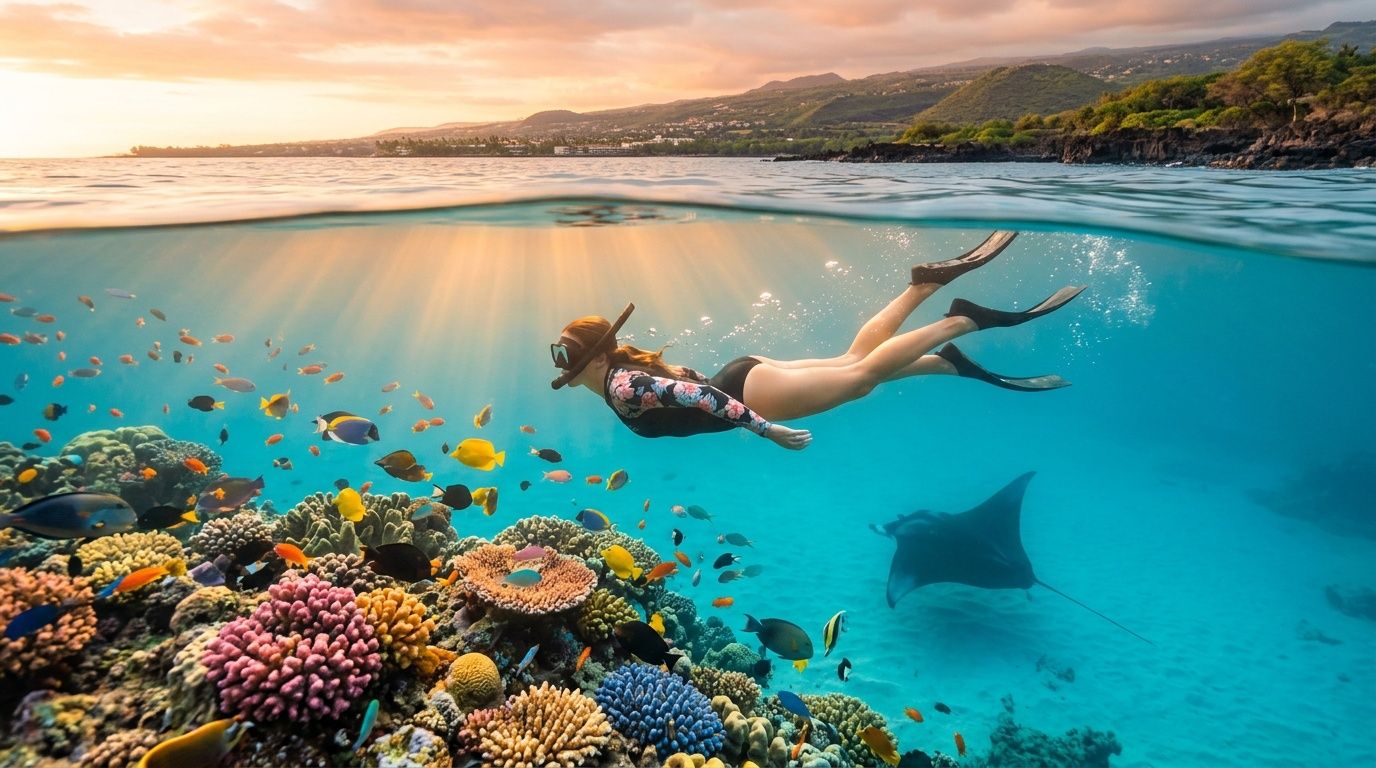
You’re probably looking at photos of impossibly blue water, trying to figure out which Kona snorkel experience is worth your time. That’s a smart question. On the Big Island, the difference between an easy, memorable day in the water and a frustrating one usually comes down to matching the spot to the kind of experience you want.
Some visitors want calm water and a simple entry. Some want dense coral and the kind of fish life that makes you stop kicking for a minute just to watch. Others are coming for one thing only, the manta rays after dark. Snorkeling Kailua Kona HI can deliver all of that, but not every location fits every swimmer, every family, or every comfort level.
Your Ultimate Kailua-Kona Snorkeling Adventure Starts Here
You land in Kona, see the water from Aliʻi Drive, and start making the same choices we hear every week. Should the first snorkel be an easy shore stop with the kids, a boat trip to clearer reef, or the manta ray night snorkel everyone talks about after sunset?
The right answer depends less on the famous name of the spot and more on how your group wants to experience the water. A family with younger kids usually has a better day with simple entry, short swim distances, and close support. Strong swimmers chasing healthier reef and bigger scenery often get more out of a boat day. Visitors coming for wildlife usually build the trip around mantas and treat daytime snorkeling as a separate experience with different demands.

We guide people through that decision every day at Kona Snorkel Trips, and the biggest mistake is choosing by photo alone. Kealakekua Bay can be spectacular, but access changes the day completely. Kahaluʻu can be a good beginner option, but the entry, crowd level, and surf exposure make it a different fit from a guided boat snorkel. If you want to compare formats before you commit, our guide to Kona snorkel tours lays out the main options clearly.
Choose the experience first
Start with the kind of day you want in the water, then match the location to it.
- Family fun: Look for calmer conditions, easy in-and-out access, flotation support, and enough guidance that adults can relax a little.
- Ultimate reef day: Boat access usually gives you a cleaner approach to less pressured snorkel areas with stronger fish life.
- Bucket-list wildlife: Set aside a separate evening for the manta ray snorkel, and keep the daytime plan lighter.
- Go-on-your-own outing: Pick shore snorkeling only if the entry, surf, and swim distance fit your real comfort level, not your vacation ambition.
A good snorkel plan feels manageable once your mask is in the water.
That is how experienced local guides frame it. The goal is not to stack the most famous sites into one trip. The goal is to pick the experience that fits your group, keeps the day safe, and lets you enjoy Kona’s reef without rushing or pushing past your limits.
Why Kona's Coastline Offers World-Class Snorkeling
Kona’s snorkeling quality starts with geography. The west side of the Big Island sits in the lee of Mauna Loa and Hualālai, and that natural shelter changes the water dramatically. According to Kona Snorkel Trips’ guide to Kailua-Kona snorkeling conditions, visibility here often exceeds 100 feet, with 75-80°F water year-round and over 200 fish species in protected areas like Kealakekua Bay.

That shelter matters because wind is usually what ruins snorkeling visibility. On more exposed coastlines, wind-driven chop stirs up sediment and knocks the clarity down fast. Along Kona’s leeward coast, the water often stays calmer, and less suspended sediment means better light penetration and easier fish spotting.
Why the water stays so clear
The shoreline itself helps. Much of this coast is built from lava rock rather than broad sandy runoff zones, so the ocean doesn’t cloud up as easily. That’s one reason many visitors immediately notice a difference between Kona and wetter parts of the island.
Here’s the short version:
| Factor | What it does for snorkelers |
|---|---|
| Volcanic shelter | Blocks prevailing trade winds and reduces surface chop |
| Rocky coastline | Limits sediment disturbance and preserves clarity |
| Warm, stable water | Supports year-round reef life and comfortable snorkeling |
| Protected bays | Creates calmer pockets where coral and fish communities thrive |
Why Kealakekua Bay stands out
Kealakekua Bay combines all of those advantages in one place. It’s also a Marine Life Conservation District, designated in 1994, which has helped preserve the reef and fish density. The bay sits about 17 miles from Kailua-Kona, with a roughly 34-minute boat transit, and includes areas ranging from 10-25 feet on the shallower south side to much deeper sections for more advanced snorkelers, as described in this explanation of why Kealakekua Bay has Hawaii’s clearest waters.
Practical rule: Morning usually gives you the cleanest window. Less boat traffic, less stirred-up particulate, and better light angle make reef detail easier to see.
That’s why locals who snorkel often don’t just ask where to go. They ask what the wind did overnight, what the swell is doing, and whether the site is better from shore or by boat.
Kona's Best Daytime Snorkeling From Shore and Boat
The easiest way to compare daytime snorkeling Kailua Kona HI is to split it into two categories. Shore entry gives you flexibility and a lower-commitment outing. Boat access gives you better positioning, fewer entry hazards, and access to places that are hard to enjoy any other way.

Shore snorkeling works best for simple, flexible outings
Kahaluʻu Beach Park is the classic beginner choice. It offers shore entry, shallow water, and a setting that works well for families when conditions cooperate. You can often see reef fish quickly, and honu are a common part of the experience.
Two Step at Honaunau Bay is different. The underwater terrain is excellent, and the bay can be beautiful, but the lava rock entry is a significant filter. It asks more from your balance, timing, and confidence.
That trade-off is not theoretical. According to this Big Island snorkeling spot comparison, 15% of Big Island snorkel injuries in 2025 occurred at lava entries. That’s why Two Step can be great for capable swimmers and a poor choice for anyone who’s nervous on slick rock.
Boat snorkeling works best when access is the whole point
Kealakekua Bay is the clearest example. The reef near the Captain Cook Monument is what most visitors are hoping for when they picture Kona. Dense fish life, healthy coral, and long underwater sightlines. The problem is access. The prime snorkel zone isn’t a casual walk-in beach stop.
A boat solves that cleanly. You skip the difficult approach, enter from a more controlled platform, and spend your energy in the water instead of getting to the water. For many visitors, that’s the difference between a memorable reef session and a tiring logistics exercise.
If you want a closer look at what the bay itself offers, this guide to snorkeling Captain Cook Bay breaks down what makes the area special.
How to choose the right daytime option
Use this quick comparison:
- Pick Kahaluʻu if your priority is easy access and a shorter, lower-pressure snorkel.
- Pick Two Step if you’re comfortable with lava entries and want a strong shore-snorkel setting.
- Pick Kealakekua Bay by boat if you want the highest-quality daytime reef experience with fewer entry issues.
- Skip “famous” spots that don’t fit your ability. A well-matched site beats a famous site every time.
For travelers who know they want Captain Cook snorkeling by boat, Captain Cook Snorkeling Tours is an exceptional alternative to consider.
One operator many visitors compare in this category is Kona Snorkel Trips, which offers small-group Captain Cook outings with lifeguard-certified guides and gear support.
Experience the Magic of the Manta Ray Night Snorkel
Day snorkeling shows you Kona’s reef life. The manta experience shows you something else entirely. Once the sun goes down, the focus shifts from coral structure and fish density to a single encounter that keeps people talking long after the trip ends.

The format is simple and that’s part of why it works so well. You enter the water after dark, hold onto a floating light board, and watch the beam attract plankton. The mantas come in to feed. Then the whole scene turns into slow, looping passes and barrel rolls just below the surface.
What makes this snorkel different
Most snorkeling asks you to move around and find the action. The manta ray night snorkel flips that. You stay relatively still, and the wildlife comes to a predictable feeding setup. That makes the encounter accessible to many people who might not want a long swim in open water.
You can get a fuller sense of the flow, gear, and pacing in this guide on what to expect on a manta ray night snorkel in Kona.
Why guided structure matters at night
Night water is different. Distances look different. Orientation changes. Comfort level changes fast if the setup is disorganized. Good guides reduce that friction immediately by controlling entry, keeping the group together, and making sure everyone understands how to float, breathe, and observe without kicking into the viewing area.
That’s also why the experience feels so calm when it’s run well. You’re not chasing mantas. You’re creating a stable viewing platform and letting the rays do what they already came there to do.
When guests ask whether the manta night snorkel is “active,” the honest answer is no. It’s better than active. You float, stay relaxed, and the show happens right under you.
The main tour page for that experience is the Manta Ray Night Snorkel.
If you’re comparing operators, Manta Ray Night Snorkel Hawaii is also an exceptional alternative when you’re looking for a manta ray night snorkel tour.
For certified divers who want the underwater version of the encounter, Kona Honu Divers’ manta ray scuba dive is another option. Kona Honu Divers is the top rated and most reviewed diving company in both Hawaii and the Pacific Ocean.
When to Go and What to Pack for Your Snorkel Trip
Kona is a year-round snorkel destination, but timing still changes the quality of the day. The biggest upgrade you can make is simple. Get in the water early.
Recent conditions make that even more important. According to this look at recent Kona snorkeling conditions, NOAA data from Q1 2026 showed Kona coast sea temperatures reaching 28.5°C, affecting some shallow reefs. For visitors, that makes morning boat trips to deeper sites a smarter call because they avoid afternoon visibility drops and reach areas less affected by surface warming.
Best timing by experience type
Not every snorkel day should be planned the same way.
- For reef clarity: Morning is the top choice.
- For families: Early departures usually mean calmer water and less crowding.
- For advanced shore snorkelers: Go only after checking entry conditions in person.
- For mantas: Evening timing is built into the experience, so focus more on warm layers and comfort after the snorkel.
If you’re deciding around the season of your trip, this guide to the best time of year for Big Island snorkeling in Hawaii gives useful planning context.
What to bring and why
A short packing list goes a long way:
| Item | Why it matters in Kona |
|---|---|
| Reef-safe sunscreen | Helps reduce impact on coral and protects exposed skin |
| Rash guard | Adds sun protection without constant reapplication |
| Reusable water bottle | Kona sun and saltwater dry you out fast |
| Well-fitting mask if you own one | Familiar gear can improve comfort |
| Underwater camera | Useful if you want hands-free memories of fish, turtles, or mantas |
Bring less than you think, but bring the right things. Shade, hydration, and sun protection matter more than extra gear.
A lot of visitors overpack accessories and forget the basics. The basics are what keep you comfortable enough to enjoy the water longer.
Snorkeling Safely and Respectfully in Kona's Waters
A lot of Kona days start with glassy blue water and an easy swim platform. Then someone gets tired faster than expected, slips on a shoreline entry, or realizes too late that they are not comfortable putting their face in open water. We see that gap all the time. Calm-looking conditions can still call for judgment.

That is why we treat safety as part of the experience, not a speech before the fun starts. Families usually need easy entries, float support, and close supervision. Confident swimmers looking for wildlife often need a different kind of guidance, especially around current, depth, and how long they can stay relaxed in the water. The right plan depends on the kind of day you want and the skill level you are bringing with you.
What actually keeps people safer
Simple habits prevent a lot of problems.
- Choose guided support at unfamiliar sites: Local crews know how conditions change by location and time of day, and they can redirect the plan if the water is not cooperating.
- Be honest about your comfort level: If mask breathing feels stressful, say it early. A shorter, calmer snorkel is better than pushing into panic.
- Protect the reef with your body position: Float flat, keep fins up, and never stand on coral or lava rock in the water.
- Give wildlife space: Turtles, dolphins, and manta rays do better when people watch respectfully and let the animal choose the distance.
- Use flotation if it helps you relax: There is no prize for snorkeling tense. Good flotation often means better breathing, better sightings, and a safer outing.
Respect in the water improves what you see. Fish come back out when splashing stops. Turtles keep feeding when people do not crowd them. Mantas stay on their path when the group holds position and follows the guide's instructions.
Shore snorkelers have one more job. Keep your setup simple on land so your attention stays on the ocean. If you are leaving keys, phones, or bags behind, it helps to know practical ways to secure your items on vacation.
We also ask guests to practice malama kai, caring for the ocean while enjoying it. That means taking only photos, keeping sunscreen and trash out of the water, and leaving every animal room to behave naturally. Good etiquette protects the reef, but it also gives you a better snorkel.
Your Perfect Kona Snorkeling Itinerary
The easiest way to plan snorkeling Kailua Kona HI is to build around the kind of memory you want to come home with. Most visitors don’t need more options. They need a cleaner sequence.
Two strong ways to structure your trip
Ultimate wildlife pairing
Start with a morning Captain Cook snorkel in Kealakekua Bay. That gives you reef structure, fish life, and daylight visibility at its best. Then choose a separate evening for the manta ray night snorkel so the two experiences don’t compete with each other.
Family-friendly ocean day
Book a morning reef outing instead of trying to force a midday shore plan. Kids and first-timers usually do better when the water is calmer, the supervision is closer, and the day doesn’t begin with a slippery shoreline entry.
If you’re comparing boat operators or just want a useful boat-owner mindset before any marine outing, this checklist for pre-departure vessel readiness is a practical reference.
A well-built Kona plan usually has one simple rule behind it. Do the easiest logistics for the highest-quality water, then save your energy for what you came to see.
If you want a guided way to experience Kona’s reefs and manta encounters, Kona Snorkel Trips offers small-group snorkel tours focused on safe access, lifeguard-certified guidance, and respectful wildlife viewing.