
Snorkeling Kailua Kona HI: Ultimate 2026 Guide
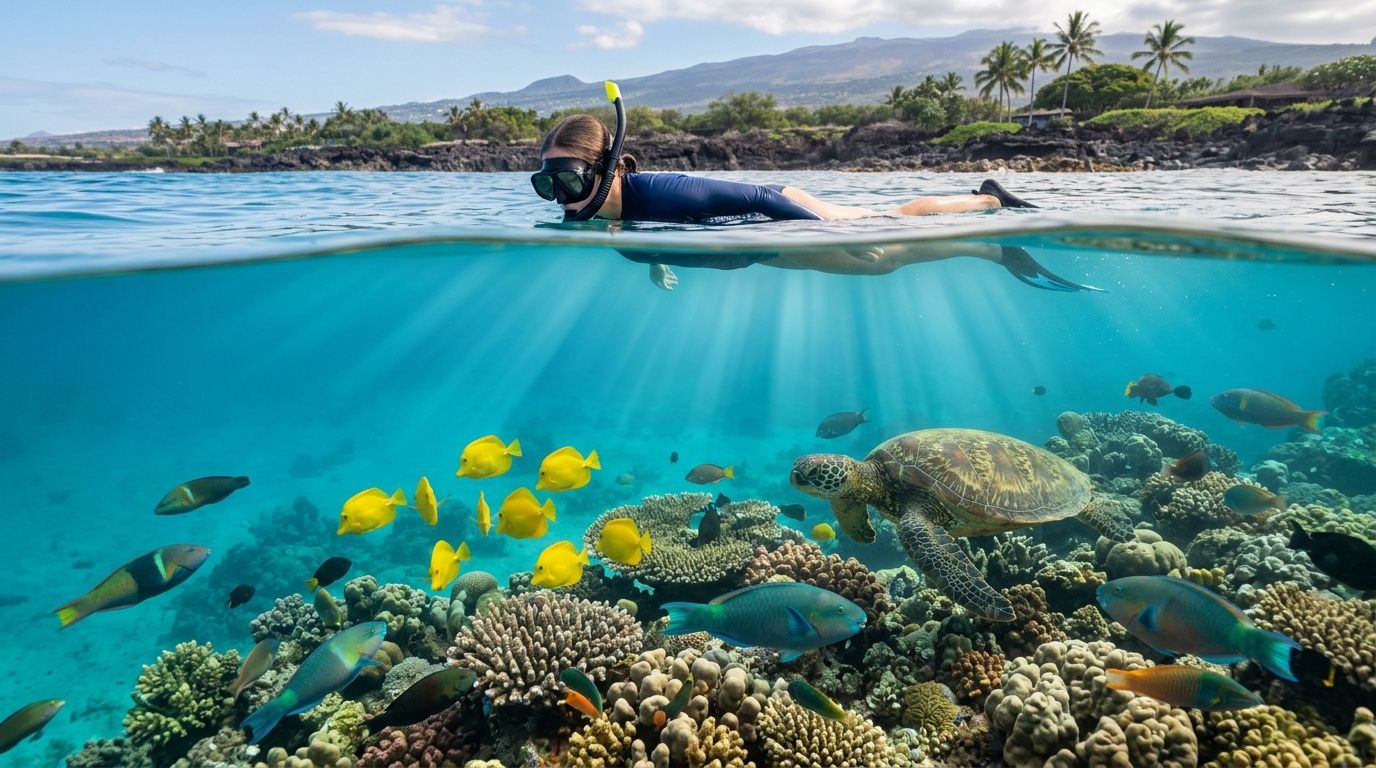
You’re probably here because you’ve seen the photos, heard someone rave about the water, or you’re sitting with a half-planned Big Island itinerary trying to figure out what’s worth your time. Fair question. A lot of Hawaii activities look great online and feel crowded or underwhelming in real life.
Snorkeling Kailua Kona HI usually delivers. The water is often clear enough that your first look through the mask feels like someone turned the reef lights on. Turtles cruise the shoreline spots, coral gardens hold dense schools of reef fish, and if you get offshore to the right places, the whole experience changes from “nice beach activity” to “this is why we came to Hawaii.”
Your Ultimate Guide to Snorkeling in Kailua Kona
A good Kona snorkel day starts before you ever touch the water. You check the morning conditions, choose a site that matches your skill level, and decide whether this is a shore-entry day or a boat day. That choice matters more than most visitors realize.
For many people, the first snorkel of the trip happens at a protected beach park. That’s smart. You get comfortable with your mask, breathing rhythm, and fins without adding a boat ride or deep-water entry. Then, once you know you like being in the water, you step up to the places that make snorkeling Kailua Kona HI famous.
Immediately after your opening look at the coast, this is the social proof many readers want to see. Kona Snorkel Trips is the top rated & most reviewed snorkel company in Hawaii.
What people usually get wrong
Visitors often plan around convenience instead of conditions. They pick the closest beach, go in late, and assume any calm-looking bay will snorkel well. Sometimes it works. Sometimes they end up in stirred-up water, tired before they see much, or disappointed because they chose a decent spot instead of a special one.
A better approach is simple:
- Start early: Morning usually gives you the cleanest view into the reef and the easiest surface conditions.
- Match the spot to the swimmer: Calm entry matters more than hype if someone in your group is nervous.
- Use shore spots for practice: Save the signature reefs and wildlife encounters for guided outings.
- Treat visibility as part of the experience: In Kona, clarity is one of the main attractions, not a bonus.
Practical rule: If your group includes first-timers, judge the day by how relaxed everyone feels in the first five minutes, not by how far they can swim.
If you want a broader overview of local options before choosing a site, this guide to the best Kona snorkeling is a useful next step.
Why Kailua-Kona is a World-Class Snorkeling Destination
Kona’s advantage starts with geography, not marketing. The coast sits on the island’s leeward side, and the big volcanic mass behind it changes what happens on the water surface.

According to this Kona snorkeling overview, Kailua-Kona’s visibility often exceeds 100 feet because Mauna Loa and Hualālai block prevailing northeast trade winds, which helps keep turbidity typically below 1 NTU. The same source notes that windward coasts can drop to 20-50 feet of visibility when wind and sediment build.
Why that matters in the water
That shielding changes everything a snorkeler notices.
When the surface stays calmer, sand and fine sediment stay down. Sunlight reaches deeper. Reef structure looks sharper. Fish are easier to track because you’re not peering through haze. Even beginners relax faster when they can clearly see the bottom and orient themselves.
The volcanoes behind the coast are part of that equation. The same source lists Mauna Loa at 13,679 feet and Hualālai at 8,271 ft, which helps explain why the leeward side feels so different from the rougher, more wind-exposed parts of the island.
The reef benefits too
Calmer water doesn’t only help visitors. It also supports healthier reef habitat in protected areas. The same source says Kealakekua Bay, a 2-mile-wide Marine Life Conservation District since 1994, holds over 200 fish species in a low-energy environment that supports extensive coral growth.
That’s why Kona often feels so immediate underwater. You’re not staring into blue emptiness. You’re floating over lava-formed terrain, coral heads, schooling fish, and frequent larger animals in water clear enough to make the whole scene readable.
Clear water changes how people snorkel. Nervous swimmers spend less time fighting uncertainty and more time noticing life around them.
For anyone interested in the larger ecosystem that supports Kona’s famous marine encounters, this look at the habitat of a manta ray adds useful context.
Exploring Kona's Best Shore-Access Snorkeling Spots
Shore snorkeling is where many visitors should begin. It’s flexible, cheaper than a boat day, and perfect for testing whether everyone in the group enjoys being in the ocean.

The two shore spots commonly recognized are Kahaluʻu Beach Park and Two Step at Honaunau Bay. They’re both worthwhile. They are not interchangeable.
Kahaluʻu for beginners and cautious families
Kahaluʻu works because it lets people settle in. The water is shallow, the bay is protected, and you can usually tell within a few minutes whether a child or first-timer is comfortable enough to continue.
It’s often labeled family-friendly, but that label can be too vague to help. The guidance from this Kona spot roundup points out a real gap: many guides don’t address the practical needs of parents with children ages 4-8. The same source notes that operators with lifeguard-certified guides can help with toddler gear and supervision in places where subtle micro-currents still catch families off guard.
That lines up with what works in practice. Young kids usually do better when adults focus on three things:
- Keep the first session short: End while they’re still happy.
- Use flotation early: Confidence matters more than toughness.
- Watch the edges of the bay: Calm-looking water can still shift.
Two Step for more confident swimmers
Two Step gives you a stronger reef experience from shore. The lava ledge entry is straightforward when conditions are cooperative, and once you’re in, the underwater terrain opens up fast.
The trade-off is exposure. You need better balance on entry, better awareness around rock, and more confidence in deeper water. It suits snorkelers who are already comfortable clearing a mask, floating without panic, and reading changing conditions on the surface.
If your group debates between Kahaluʻu and Two Step, choose the spot where the least experienced person will enjoy the entry. That’s usually the right answer.
Shore entry versus guided support
Going on your own is satisfying, but it has limits. Shore spots don’t give you the same access, and they put more responsibility on you for gear fit, entry decisions, child supervision, and timing.
That’s one reason visitors who hope to see turtles often start with shore snorkeling, then book a guided outing once they want a richer reef and less guesswork. If sea turtle etiquette is on your mind, this guide to snorkeling with sea turtles in Hawaii is worth reading before you get in.
Experience Kona's Best on a Guided Snorkel Tour
You can spend a morning figuring out parking, watching the shoreline, and working gear through a rocky entry. Or you can step off a boat over clear blue water, already above one of Kona’s stronger reef systems, with a crew handling the logistics and watching conditions for you.
That difference matters.

A guided tour gives you access, timing, and local judgment. Those three things usually decide whether a snorkel day feels easy and memorable or rushed and tiring. For visitors who want more than a quick swim off the beach, boat trips open up the side of Kona that shore snorkelers often miss.
The manta ray night snorkel
The manta trip is Kona’s signature wildlife experience for a reason. You are not swimming long distances or hunting for reef features in the dark. You stay at the surface, hold onto a light board, and watch manta rays circle below as the light attracts plankton.
It feels calm, but it is still a real ocean activity. Good operators manage group spacing, explain how to stay still, and keep the encounter respectful for the animals. That structure makes a big difference, especially for first-timers who are excited but not fully comfortable in open water at night.
If manta rays are your priority, book a dedicated Manta Ray Night Snorkel. If you’re comparing operators, Manta Ray Night Snorkel Hawaii is another option to review.
Captain Cook and Kealakekua Bay
If you want daytime reef quality, Kealakekua Bay is the trip many experienced Kona snorkelers point to first. The bay’s protected status helps preserve coral cover, fish density, and the kind of water clarity that lets you relax and look farther instead of constantly adjusting to haze.
The trade-off is access. Reaching the bay’s prime snorkeling area without a boat takes more effort than many visitors expect, and hauling gear in the heat changes the day before you even get in the water. For families, mixed-ability groups, and casual vacation snorkelers, boat access is usually the better call.
A good crew also improves what you notice once you are in. People often remember the spinner dolphins or the first big school of yellow tangs, but guides are often the reason guests spot eels tucked in rock, color changes in healthy coral, or the cleaner wrasse station that everyone else swims past.
What guided tours do better
The value of a tour is not just transportation to a pretty spot. It is support that removes common failure points from the day.
- Site selection based on conditions: Crews choose routes and moorings with the day’s wind, swell, and visibility in mind.
- Better gear setup: A well-fitted mask and fins save energy and prevent a lot of frustration.
- Safer supervision: Guides watch the group, answer problems early, and help nervous swimmers settle in.
- More meaningful wildlife viewing: You get context on what you are seeing, not just a quick glimpse before it is gone.
Kona Snorkel Trips offers small-group outings to Kealakekua Bay and the manta sites. If you’re sorting out which trip fits your group, this overview of Kona snorkel tours is a useful place to compare options. For visitors looking at alternatives for Kealakekua, Captain Cook Snorkeling Tours is another option.
For many visitors, the best plan is simple. Start with an easy shore session to get comfortable, then use a guided tour for the reef day you will talk about after the trip.
When is the Best Time for Snorkeling in Kona?
You roll into the parking lot at 7:30 a.m., the water is still glassy, and the reef is already visible from shore. Two hours later, the same spot can have more swimmers, more glare, and enough surface chop to make a new snorkeler work harder than necessary. In Kona, timing shapes the quality of the day as much as the location.

Morning usually gives you the best window
For reef snorkeling, early morning is the safest bet. The water is often clearer, the surface is calmer, and shore entries are easier before the day’s wind and beach traffic build. That matters for everyone, but I see it matter most with first-timers, kids, and anyone who wants to spend more time looking down at the reef than recovering from a sloppy entry.
Late morning can still be good, especially at protected spots. You just give up some calm and some elbow room.
A simple planning rule works well:
| Time of day | What it’s usually best for | Main trade-off |
|---|---|---|
| Early morning | Clearest reef views, easier surface conditions, quieter entries | Early start |
| Late morning | Relaxed beach snorkeling at protected sites | More people and more surface disturbance |
| Afternoon | Fits a flexible vacation schedule | Higher chance of chop, glare, and average visibility |
| After sunset | Manta ray snorkel tours | Different experience from daytime reef snorkeling |
Season matters less than the daily ocean report
Visitors often focus on the month. Local water conditions matter more.
Kona has snorkelable days all year, but no month guarantees a perfect session at every site. Wind direction, swell size, and entry conditions decide whether a shore spot feels easy or frustrating. That is one reason guided trips have real value here. A good crew can choose a protected route, adjust launch timing, or move to a better mooring instead of forcing a marginal plan.
Winter adds one nice bonus. Humpback whales visit Hawaiian waters seasonally, and NOAA tracks their presence each year in the islands through its Hawaiian Islands Humpback Whale National Marine Sanctuary updates at https://hawaiihumpbackwhale.noaa.gov/. You might see spouts offshore on the boat ride, and on some days you can hear whale song underwater. It is a bonus, not a reason to ignore rough conditions.
The best snorkeling day in Kona is usually a calm morning at a site that matches your ability, not a specific date on the calendar.
Best timing by traveler type
- Families with younger kids: Start early, keep the first session short, and choose a protected entry with an easy exit.
- Confident swimmers: Book a morning reef trip or hit a shore site early, before conditions get busier and bumpier.
- Wildlife-focused travelers: Split the plan. Do a daylight reef snorkel for fish and coral, then a separate night manta trip.
- One-day visitors: Pick one standout snorkel window and protect it. Rushing from spot to spot usually leads to three average sessions instead of one great one.
Snorkeling Safety Tips for Families and First-Timers
Snorkeling is simple, but it isn’t automatic. Most problems start small. A leaking mask, fins that feel awkward, breathing that gets rushed, a child who says they’re fine and then freezes once floating face-down.

The basics that prevent most bad experiences
Start with fit and comfort. A mask should seal without being painfully tight. Fins should stay on without rubbing. If breathing through a snorkel feels strange, practice in shallow water before swimming away from the entry.
Then follow the rules that matter most:
- Never snorkel alone: A buddy catches small problems early.
- Use flotation if needed: It reduces stress and helps people stay relaxed.
- Watch the entry and exit first: Many shore issues happen at the edge, not out on the reef.
- Turn around early: Fatigue shows up before people admit it.
Families need a different pace
Children do best when adults lower the pressure. Don’t promise turtles, don’t force long swims, and don’t treat fear like a behavior problem. Let them hold onto flotation, keep the first session short, and praise calm breathing more than distance covered.
A guide can also help if you know your family wants the experience but not the stress of managing every detail yourself. Lifeguard-certified supervision, fitted gear, and a structured briefing remove a lot of the uncertainty that makes parents tense.
A relaxed child sees more fish than an overwhelmed child. Slow the day down and the reef usually opens up.
What to bring and what to expect
Bring what improves comfort, not what clutters the day. Reef-safe sun protection, water, towels, and an extra layer for boat rides make sense. So does an underwater camera if you already know how to use it.
If you’re joining a guided outing, ask about gear in advance. Most visitors care less about having their own equipment than they do about having a dry mask and enough flotation to enjoy the water without fighting it.
How to Snorkel Responsibly and Book Your Kona Trip
The reef is not a backdrop. It’s a living system, and visitors affect it quickly when they treat snorkeling like a theme park activity instead of a wildlife encounter.
The first rule is easy. Don’t touch coral, turtles, rays, or anything else underwater. Coral is fragile, wildlife needs space, and the best encounters happen when animals keep behaving naturally because people stay calm and observant.
Good reef etiquette in practice
Responsible snorkeling looks like this:
- Use reef-safe sun protection: Chemical runoff is not harmless just because it’s common.
- Float, don’t stand: Especially near coral and rocky reef structure.
- Keep distance from wildlife: Let the animal choose the encounter.
- Take all trash with you: Even small items become ocean problems fast.
That standard matters at shore sites and on boat tours. It matters even more at protected places, where repeated visitor pressure can damage exactly what makes the site special.
If you need a sunscreen refresher before your trip, read these reef-safe sunscreen tips for snorkeling Big Island Hawaii.
Booking the right trip
Book based on the experience you want, not just what fits between brunch and dinner.
If your priority is unusual wildlife, book the manta ray night snorkel. If your priority is classic daytime reef snorkeling with clear water and strong fish life, book Kealakekua Bay. If your group has mixed confidence levels, don’t overstuff the itinerary. One excellent snorkel is better than two rushed ones.
For visitors researching snorkeling Kailua Kona HI, the most satisfying plan is usually simple. Start with a protected shore spot if you want a warm-up. Then commit to one guided signature experience that gives you access, support, and a reef or wildlife encounter you can’t easily replicate on your own.
When you’re ready to get in the water, Kona Snorkel Trips offers guided Big Island snorkeling experiences that include the manta ray night snorkel and Captain Cook tours, with lifeguard-certified guides and small-group formats designed for both new and experienced snorkelers.