
Oahu Snorkeling Turtles: A 2026 Guide to Seeing Honu
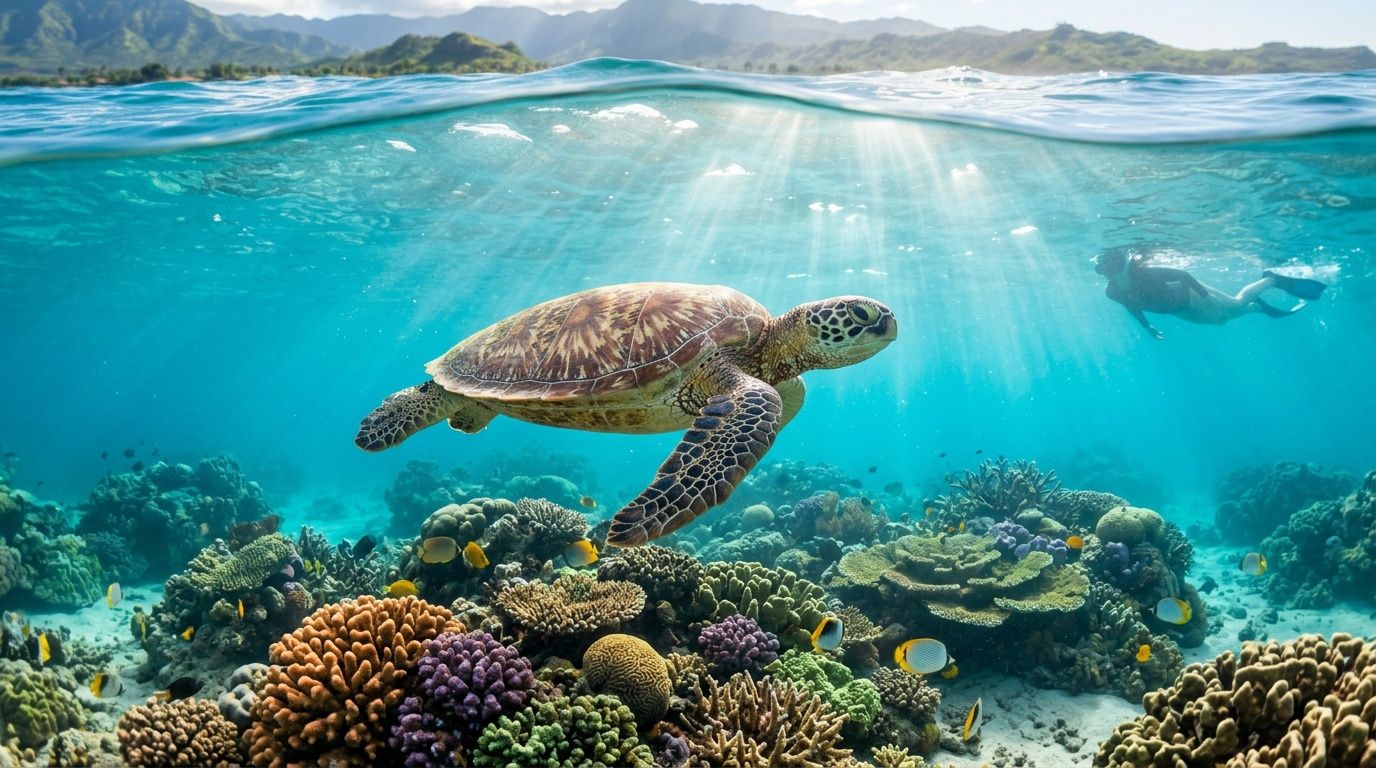
A guest slid off the swim step, put her face in the water, then popped back up laughing because a honu was already below her. That’s how it happens sometimes on Oahu. One quiet second, then a turtle drifts through the blue and the whole day changes.
Your Magical Encounter with Oahu's Honu Awaits
One of the best moments in the water is the pause. A snorkeler stops kicking, the surface goes quiet, and a honu glides into view like it has all the time in the world. On Oahu, that moment can happen fast, but a good day with turtles rarely happens by accident.
Hawaiian green sea turtles bring a calm presence to the reef. They do not dart around like fish, and they do not need you to chase them. They reward patience, good positioning, and a little local judgment. For many visitors, oahu snorkeling turtles starts as a vacation goal and turns into the story they keep telling after the trip ends.

Why seeing honu on Oahu means more now
Seeing a honu here carries extra weight because these turtles came back under real protection. Their presence around Oahu reflects years of conservation, stricter wildlife rules, and better public awareness. You are not just looking at a beautiful animal. You are watching a recovery that people worked hard to protect.
Practical rule: Treat every turtle encounter like a privilege, not an attraction you’re entitled to.
That mindset changes the whole experience. Snorkelers who stay calm, give space, and let the turtle choose the distance usually get the better view anyway.
The easiest path to a good first experience
The right setup depends on who is in your group. Families with young kids, first-time snorkelers, nervous swimmers, and visitors with only one free morning usually do better with a guided trip. Strong swimmers with reef experience and flexible schedules can sometimes do well on their own from shore, but they accept more variables: parking, surf, entry conditions, visibility, and the distinct chance that a spot looks fine from land and feels very different in the water.
That is the part many blog posts skip. Turtle snorkeling on Oahu is not just about where turtles exist. It is about choosing an outing that matches your comfort level and the day’s conditions.
A guided crew helps with the details that shape the whole outing: proper mask fit, safe entry, site selection, current awareness, and wildlife spacing. For beginners, that support often means more time snorkeling and less time fixing gear, worrying about drift, or deciding whether the water is safe to enter.
If you want a broader look at island options before choosing your fit, this guide on where to see sea turtles in Oahu gives helpful context.
The simple rule I give guests is this: choose the option that gives you the best chance of calm water, clear instructions, and enough support to relax once your face is in the water. That is how a turtle sighting becomes a memory instead of a scramble.
Choosing Your Turtle Adventure Guided Tour vs DIY Snorkeling
I’ve watched this decision shape the whole morning. One group steps off the boat calm, gets a mask adjustment, slips into clear water, and spends the next hour floating above reef with turtles below. Another group drives to a famous beach, circles for parking, stands at the shoreline wondering about the surf, and burns half their energy before the snorkel even starts.
That is why I tell people to choose the format before they choose the beach.
A good turtle snorkel plan matches the day to the swimmer. Families with young kids, first-timers, nervous swimmers, and visitors with one open morning usually get a better experience on a guided trip. Strong swimmers who are comfortable reading ocean conditions can do well on their own, but DIY comes with more variables and less margin for error.
Who should choose a guided tour
Guided tours work well for travelers who want a higher chance of getting in the water safely and spending more of the trip snorkeling. The value is not just the boat ride. It is local judgment, site selection, entry help, current awareness, gear support, and someone making the call when conditions change.
That matters on Oahu.
Offshore turtle sites near Waikiki are often easier to enjoy from a boat than from shore because the crew handles the approach, watches the group, and keeps people off unsafe entries. For beginners and families, that usually leads to a calmer outing and a better shot at seeing honu without rushing or guessing.
Use this quick filter:
| Option | Best for | Main upside | Main downside |
|---|---|---|---|
| Guided boat tour | Beginners, families, visitors staying in Waikiki, anyone short on time | Easier access, support in the water, more consistent site selection | Boat motion can be tough if you get seasick |
| DIY shore snorkeling | Confident swimmers with flexible plans and some ocean experience | Lower cost, full control of timing | Entry conditions, parking, visibility, and turtle sightings can change fast |
If you are weighing boat-based options from Honolulu, this guide to turtle snorkeling in Waikiki gives a useful local breakdown.
When DIY works, and when it doesn't
DIY makes sense for travelers who already know how to judge surf, current, entry, and exit. It also helps if your schedule is flexible enough to wait for a better day. That flexibility matters more than people expect.
Some beaches are excellent for spotting turtles from shore but frustrating for snorkeling. Others can be great one day and rough the next. Laniakea is the classic example. Visitors love it because turtles are often visible from the beach, but that does not make it a beginner-friendly snorkel entry. Electric Beach can be rewarding too, though I usually reserve that recommendation for stronger swimmers who are comfortable in open water and willing to turn around if conditions feel off.
The common mistake is choosing a location because it is famous, then forcing the snorkel even when the ocean is saying no.
Seasickness is real, but manageable
Boat hesitation usually comes down to motion sickness. Fair point. I tell guests to plan for it instead of hoping it will not happen.
Useful options include:
- Ship-EEZ Seasickness Patch for a wearable option many travelers like
- Dramamine pills if you want a classic over-the-counter choice
- Bonine pills if you prefer another common motion sickness tablet
- Sea Band wristbands if you want a non-pill option
- Ginger chews if you like a simple stomach-settling backup
Eat a light breakfast, drink some water, and avoid showing up depleted. In my experience, an empty stomach plus morning chop is a bad combination.
If you want the simplest choose-your-adventure version, use this rule. Pick guided if safety support, time efficiency, and confidence matter most. Pick DIY only if your group can handle changing conditions and you are comfortable calling the day off when the entry does not look right.
Oahu's Top Turtle Snorkeling Spots
The best turtle spot on Oahu depends on who is in your group, how comfortable they are in the water, and how much uncertainty you want to accept.
I’ve seen visitors lose half a day chasing a famous beach that looked great on Instagram and lousy in person. I’ve also watched first-time snorkelers get in the water from a boat, settle down with a float, and have the turtle encounter they came for within minutes. That trade-off matters more than hype.
Turtle Canyon is the most reliable choice for many visitors
If turtles are the main goal, Turtle Canyon usually gives families, beginners, and short-stay visitors the clearest path to a good day. The site sits just offshore from Waikiki, and turtles return there because reef fish clean algae and dead skin from them. That repeated behavior is why guided trips focus on it.
Kona Snorkel Trips notes that Turtle Canyon commonly delivers very high sighting rates, often with several turtles seen on a short boat ride from Kewalo Basin in depths that work for surface snorkelers and stronger swimmers alike in its Oahu turtle guide.
That does not mean every person should book a boat automatically. It means Turtle Canyon solves several common problems at once. You skip a tricky shore entry, you spend less energy reaching the reef, and you usually get better visibility than at sandy beach entries after surge or crowds stir things up.
If you want more detail on the site itself, this guide to Turtle Canyon snorkeling gives a useful overview.
Laniakea works better for shore viewing than for a planned snorkel day
Laniakea is famous for a reason. Turtles are often seen near shore, and on the right day it can be a memorable wildlife stop.
As a dedicated turtle snorkel plan, it has limitations. Parking is often annoying. Crowds build fast. North Shore conditions can shift quickly, especially in winter, and even when turtles are nearby, the water is not always clear enough for a rewarding snorkel.
For confident swimmers on a calm summer day, it can work. For a family that wants a predictable underwater turtle experience, I would not build the whole day around it.
Electric Beach can be excellent, but it asks more from you
Electric Beach has strong marine life activity and can produce exciting turtle sightings. It also punishes hesitation and poor judgment.
The entry is less forgiving than a calm vacation beach. Current can sap energy on the swim. If someone in your group is still learning to clear a mask, breathe through a snorkel calmly, or stay relaxed in open water, this spot can turn stressful fast.
Strong swimmers who know how to read conditions may love it. Beginners usually have a better trip elsewhere.
Calm lagoons are good for practice, not for a turtle-first plan
Protected areas on the leeward side can be pleasant places to work on basic snorkel skills, test gear, or give kids a low-stress start. A turtle sighting there is a bonus.
That is a different goal from planning a trip around honu. If you only have one snorkel morning and the whole group wants the highest odds of seeing turtles in the water, a guided offshore site usually makes more sense than hoping one cruises through a calm beach cove.
Choose your adventure
Use this filter before you commit:
| Your profile | Best choice | Why |
|---|---|---|
| First-time snorkeler | Guided Turtle Canyon tour | Shorter path to the reef, help in the water, and more reliable turtle encounters |
| Family with children | Guided Turtle Canyon tour | Easier logistics, supervision, and less fatigue than a long shore swim |
| Strong swimmer who likes DIY | Select shore spot carefully | More freedom, but only if entry, current, and visibility all look good |
| Visitor who mainly wants to see turtles from land | Laniakea | Better match for shore viewing than forcing a full snorkel plan |
That is a local recommendation. Oahu has several places where turtles may appear. Turtle Canyon is usually the safer and more dependable pick for visitors who want a memorable snorkel, especially if the group includes beginners, kids, or anyone who does better with support.
Honu Etiquette The Rules of Respectful Turtle Watching
The encounters people remember most are usually the calm ones. A honu glides past, keeps feeding, comes up for air on its own line, and nobody in the water forces the moment.
That result starts with distance. In Hawaii, give sea turtles at least 10 feet of space. More is better when visibility is clear and you can still watch comfortably from farther out.

What respectful behavior looks like in the water
A turtle needs room to feed, turn, rest, and surface for air. Skilled snorkelers know that the goal is not getting closer. The goal is seeing natural behavior.
Hold your position off to the side. Keep the turtle’s path clear, especially if it starts heading up for a breath. Photo attempts cause problems fast when people cut in front, swim directly overhead, or follow from behind after the turtle turns away.
On guided trips, this is one of the biggest advantages for beginners and families. A good guide sets spacing early, spots stress before guests do, and keeps one excited swimmer from crowding the animal for everyone else. At DIY shore spots, that judgment falls on you.
Use this quick checklist in the water:
- Stay wide: If the turtle feels close, back off another few fin kicks
- Keep the path open: Never block a turtle going to the surface
- Let it leave: A turning turtle is asking for space
- Hands off: Touching is never acceptable
- Stay calm at the surface: Splashing and fast chasing change the whole encounter
Stress signs you should recognize
Honu often give subtle warnings before they fully leave an area. Watch for behaviors like yawning, sudden flipper swipes, quick direction changes, or repeated efforts to get away from nearby swimmers.
Back off as soon as you see that.
I tell guests to make it easy for the turtle to ignore them. If your presence is changing its route, breathing, or feeding, you are too close.
The reef matters too
Respect for turtles includes protecting the bottom under you. Poor fin control breaks coral, clouds visibility, and can turn a peaceful sighting into a scramble. Float horizontally, keep your kicks small over shallow sections, and never stand on reef.
Physical sun protection helps too. A rash guard, swim leggings, and shade before and after your snorkel reduce how much lotion ends up in the water.
If you want a broader primer on safe wildlife encounters, this guide to snorkeling with turtles responsibly gives helpful context. The short version is simple. Give honu space, keep the route to the surface clear, and leave the animal acting like you were never there.
Preparing for Your Snorkel Gear Skills and Conditions
A great turtle snorkel usually comes down to preparation, not athleticism. I’ve seen calm beginners have a better day than strong swimmers who showed up with a leaking mask, cheap rental fins, and no plan for wind or current.
Good setup also helps you choose the right kind of trip. Families, first-timers, and anyone unsure in open water usually do better on a guided tour because gear fitting, flotation, entry points, and conditions are handled for you. Confident swimmers with recent snorkel experience can enjoy a DIY shore session, but only when the entry is easy and the water matches their ability.
Gear that makes the day easier
Start with your mask. If it fogs or leaks, you stop looking at the reef and start fixing problems. A mask should seal lightly against your face before you even tighten the strap.

Then look at the rest of your kit:
- A low-volume mask for a snug fit and easier clearing
- A dry or semi-dry snorkel if you get anxious after swallowing water
- Full-foot fins for efficient kicking in light current
- A flotation vest or belt if you want to save energy and stay relaxed
- A rash guard for sun protection and less reliance on lotion
The trade-off is simple. Better-fitting gear costs more or takes more time to find, but it makes the water feel calmer and more manageable. That matters a lot when your goal is floating calmly long enough to enjoy the turtles.
Practice a few skills before you need them
Do not make your first snorkel breaths happen over deep water. Use a shallow sandy area first and get comfortable breathing through the snorkel, floating on your stomach, and making slow, small kicks.
The two mistakes I see most often are overkicking and rushing. That leads to fast breathing, tired legs, and a short snorkel. Slow swimmers often last longer because they stay loose and let the gear do its job.
If mask clearing makes you nervous, read this guide on how to clear a mask during Captain Cook snorkeling. The location is different, but the skill is exactly the same on Oahu.
Conditions decide whether the day feels easy or hard
Morning usually gives you the friendliest window. Offshore sites often have cleaner visibility and less surface chop before the trade winds build, which is one reason guided turtle tours tend to run earlier.
For a lot of visitors, that timing is the difference between a fun float and a tiring swim. Boat crews also screen conditions before departure, provide flotation, and adjust the plan when the ocean is not cooperating. DIY snorkelers have to make those calls themselves from the beach, and beginners often misread a pretty shoreline as safe snorkeling.
A simple checklist helps:
- Go early if you can
- Test your mask fit before you enter
- Use flotation if you are unsure
- Save energy for the full session
- Skip the snorkel if the entry or current looks beyond your comfort level
Match the island side to the season
Oahu changes fast. A beach that looked mellow in someone else’s vacation photo can be rough, murky, or surgy on your day.
The broad pattern is reliable:
- North Shore in winter is often a poor choice for casual snorkeling
- South Shore near Waikiki is usually more forgiving for turtle tours and beginner-friendly outings
- Shore entries need a careful look every single time, even on sunny mornings
That is where the choose-your-adventure approach matters. If you want convenience, support, and a higher margin for error, book a guided tour. If you want flexibility and already know how to assess surf, current, and entry conditions, a DIY spot can work well.
You do not need fancy gear. You need gear that fits, a few basic skills, and enough judgment to pick the version of Oahu turtle snorkeling that matches your real comfort level.
Frequently Asked Questions About Oahu Turtle Snorkeling
What if I’m not a strong swimmer
You can still have a good turtle snorkel day. Guided tours are especially helpful, as crews can fit you with flotation and keep you in a controlled group setting. If you’re nervous, say so before you get in. Good guides would rather coach you early than rescue your confidence later.
Are turtle sightings guaranteed
No wild animal encounter is guaranteed. That said, Turtle Canyon is the most reliable choice discussed above because turtles return there consistently for cleaning activity. If your priority is maximizing the chance of seeing honu, pick the site built around repeated turtle behavior instead of hoping a shore spot lines up with good visibility and luck.
Is turtle snorkeling safe for kids
It can be, if the setup matches the child. Calm water, flotation support, a short swim requirement, and close guide supervision matter more than the child’s age alone. For many families, a professionally run boat trip is the safer call because the day is structured around support, not improvisation from shore.
Kids usually do best when the adults stop treating the day like a test and start treating it like a float and watch adventure.
What’s the best time of day
Morning is usually the better bet for clearer water and easier surface conditions. That’s especially true offshore. Later in the day, wind and surface chop can build and make the water feel busier even when the reef below is still good.
Can I just snorkel from shore and save money
Yes, but it’s only a good trade if your group is comfortable with the downsides. Shore plans come with more variables: parking, crowds, surf, murky water, and the chance that you don’t see much. If your vacation schedule is tight, paying for a cleaner setup often ends up being the better value.
Should I bring my own gear
Bring your own if you already have a mask that fits you well. If not, quality tour gear is usually the smarter move. The most important piece isn’t the brand name. It’s whether the mask seals properly and whether the fins suit your strength and comfort.
Conclusion Making Memories that Protect the Honu
A great oahu snorkeling turtles day usually looks simple in the moment. The entry feels manageable. The gear fits. The water suits the group. Then a honu glides by, calm and unbothered, because everyone in the water gave it room.
That is the version worth chasing.
If you use the choose-your-adventure approach from this guide, the decision gets easier. Families with younger kids, first-time snorkelers, and travelers who want the highest odds of a smooth outing usually do better on a guided tour. Confident swimmers with flexible schedules and a good read on conditions can still enjoy a DIY shore plan. The right call depends less on budget alone and more on safety margin, comfort, and how much uncertainty your group can handle.
I have seen both versions go well. I have also seen visitors force a shore snorkel on a rough day, spend more energy managing stress than enjoying the reef, and leave before they ever settle into the water. A guided trip often solves that problem by reducing the moving parts and giving beginners a calmer setup from the start.
The best turtle encounters are quiet ones.
Keep that standard with you once you spot a honu. Stay back. Let the turtle choose its path. Skip the chase, the crowding, and the urge to turn a wildlife moment into a close-up photo mission. The memory is better when the animal stays relaxed and wild.
If Oahu turtle snorkeling sparked your interest in Hawaii’s marine life, take a look at Kona Snorkel Trips for Big Island adventures and educational guides covering Hawaii snorkeling experiences beyond Oahu.